
Council Property Surveyor: Your Complete Guide to Roles, Responsibilities, and Career Pathways in 2026
When a family discovers damp spreading through their council flat or a local authority needs to assess thousands of properties for safety compliance, one professional stands at the center of these critical situations: the council property surveyor. These specialized professionals ensure that millions of residents across the UK live in safe, well-maintained, and legally compliant social housing.
A council property surveyor plays a vital role in managing and maintaining public housing stock, conducting inspections, preparing valuations, and ensuring that local authorities meet their legal obligations to tenants. As housing standards continue to evolve and regulations become more stringent in 2026, the demand for qualified council property surveyors has never been higher.
Key Takeaways
- Council property surveyors are specialized professionals who inspect, assess, and manage social housing on behalf of local authorities and housing associations
- These surveyors conduct building surveys, valuations, and compliance checks to ensure tenant safety and property standards
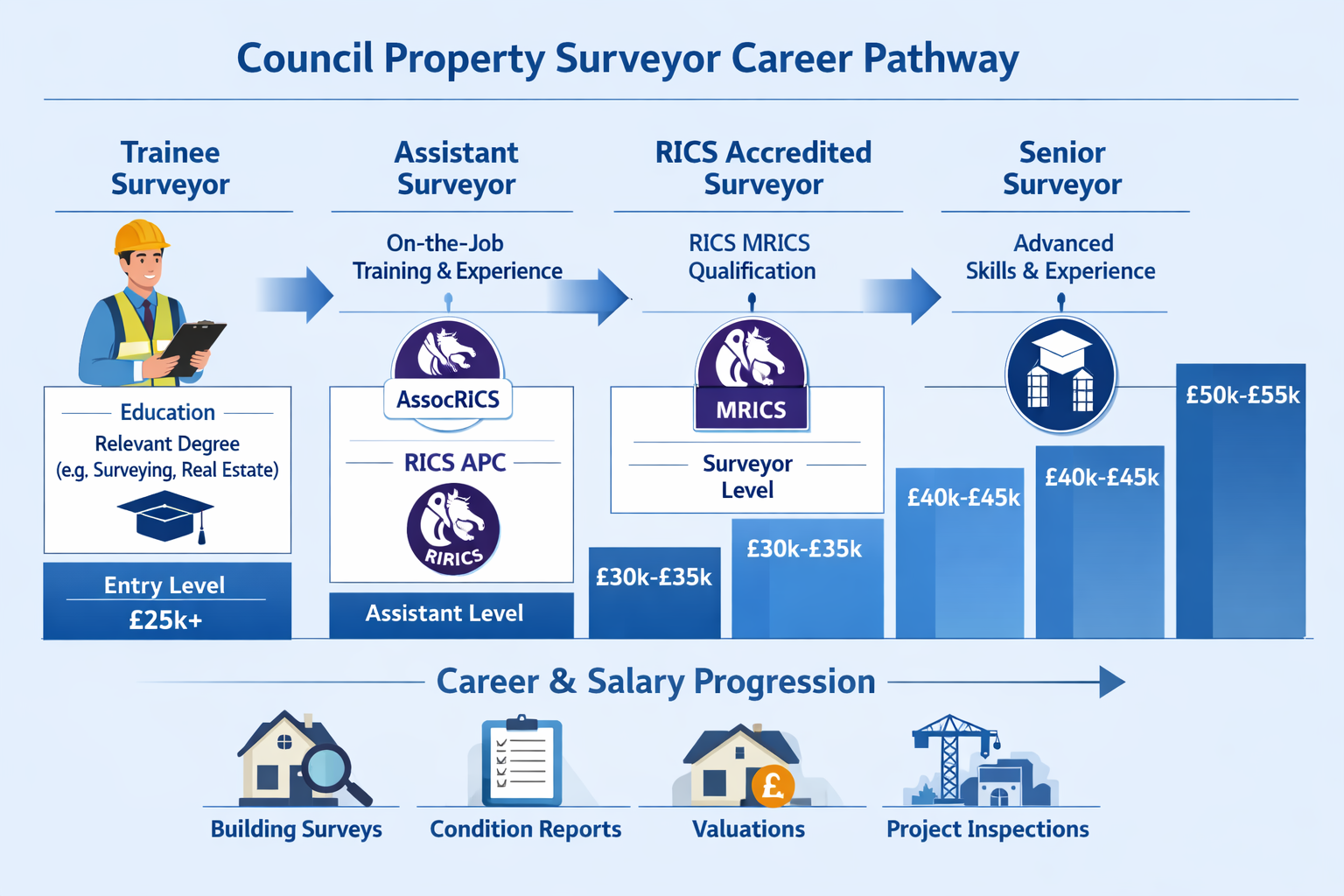
- Career pathways typically require RICS accreditation, with salaries ranging from £25,000 for trainees to £55,000+ for senior positions
- Council surveyors handle diverse responsibilities including disrepair claims, planned maintenance programs, and stock condition assessments
- The role combines technical surveying expertise with public service, requiring strong communication skills and regulatory knowledge
What Is a Council Property Surveyor?
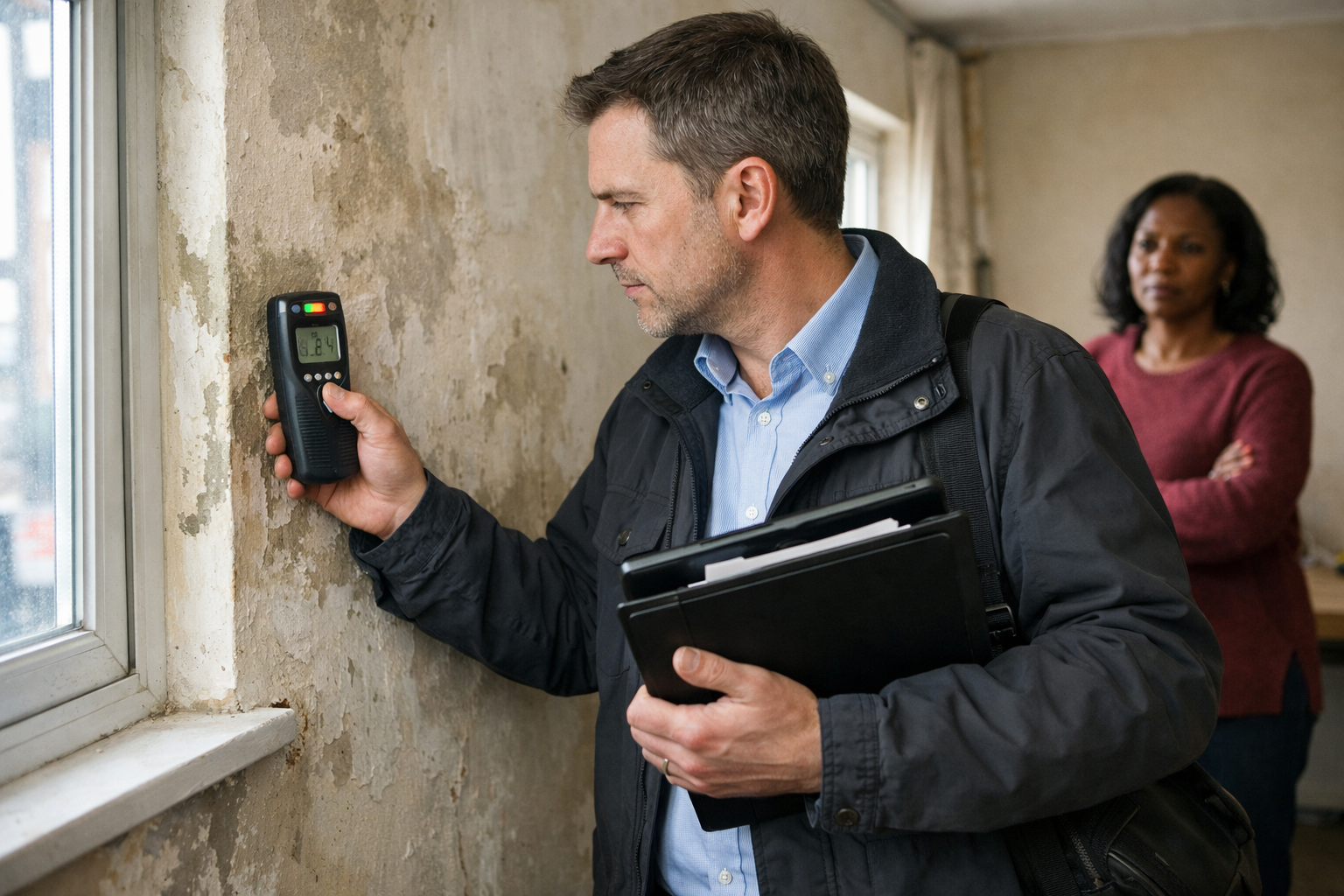
A council property surveyor is a chartered or qualified surveyor who works specifically within the public housing sector, managing and assessing properties owned by local councils or housing associations. Unlike commercial property surveyors who focus on business premises, council surveyors specialize in residential social housing.
Core Responsibilities
Council property surveyors wear many hats throughout their working day. Their primary duties include:
Building Inspections and Surveys 🏘️
- Conducting pre-acquisition surveys for new council housing stock
- Performing routine condition assessments on existing properties
- Investigating tenant reports of structural defects, damp, or disrepair
- Carrying out health and safety inspections
Valuations and Financial Assessments
- Preparing property valuations for council asset registers
- Assessing reinstatement costs for insurance purposes
- Evaluating properties for Right to Buy applications
- Determining compensation values for improvements
Compliance and Regulatory Work
- Ensuring properties meet Decent Homes Standards
- Verifying compliance with building regulations and safety legislation
- Managing fire safety assessments following updated regulations
- Coordinating energy efficiency improvements
Project Management
- Overseeing planned maintenance programs
- Managing capital works projects and refurbishments
- Coordinating responses to disrepair claims
- Working with contractors and construction teams
The role requires a balance between technical surveying skills and public service responsibilities, as council surveyors frequently interact with vulnerable tenants and must navigate complex social situations while maintaining professional standards.
The Difference Between Council Property Surveyors and Private Sector Surveyors
While all property surveyors share fundamental skills in building assessment and valuation, council property surveyors operate within a unique framework that distinguishes them from their private sector counterparts.
Key Distinctions
| Aspect | Council Property Surveyor | Private Sector Surveyor |
|---|---|---|
| Client Base | Single employer (local authority/housing association) | Multiple private clients |
| Property Types | Social housing, council estates, public buildings | Residential homes, commercial properties, mixed portfolios |
| Priorities | Tenant welfare, compliance, budget management | Client satisfaction, market value, investment potential |
| Regulatory Focus | Decent Homes Standards, social housing regulations | General building regulations, lender requirements |
| Pace of Work | High volume, systematic inspections | Variable, project-dependent |
| Salary Structure | Public sector pay scales, pension benefits | Commission potential, variable earnings |
Working Environment Differences
Council property surveyors typically manage larger portfolios with hundreds or thousands of properties under their responsibility. This volume-based approach contrasts sharply with private surveyors who might conduct detailed building surveys on individual properties for homebuyers.
The public accountability aspect also sets council surveyors apart. Their work directly impacts public spending and tenant welfare, requiring meticulous documentation and adherence to transparent procurement processes. Private sector surveyors, while equally professional, operate with different accountability structures focused on individual client relationships.
Specialized Knowledge Areas 💡
Council property surveyors develop expertise in:
- Social housing legislation and tenant rights
- Local authority procurement procedures
- Stock condition modeling and asset management
- Disrepair litigation and expert witness testimony
- Retrofit and sustainability programs for existing housing stock
How to Become a Council Property Surveyor
Entering the profession of council property surveyor requires a combination of formal education, practical experience, and professional accreditation. The pathway has become more structured in recent years, with clear progression routes available.
Educational Requirements
University Degree Path
Most aspiring council property surveyors begin with an RICS-accredited degree in:
- Building Surveying
- Quantity Surveying
- Real Estate Management
- Construction Management
These undergraduate programs typically last three years and combine theoretical knowledge with practical modules covering building pathology, construction technology, and property law.
Alternative Entry Routes
For those without a surveying degree:
- RICS-approved postgraduate conversion courses (1-2 years)
- Apprenticeship schemes offered by larger local authorities
- Graduate trainee programs with on-the-job training
Professional Qualification Journey
RICS Assessment of Professional Competence (APC)
The gold standard for council property surveyors remains Royal Institution of Chartered Surveyors (RICS) membership. The APC process involves:
- Structured Training (typically 24 months)
- Working under a qualified supervisor
- Gaining experience across mandatory competencies
- Maintaining detailed records of professional development
- Competency Requirements
- Demonstrating technical knowledge in building surveying
- Developing client care and communication skills
- Understanding ethics and professional conduct
- Final Assessment
- Written submission documenting experience
- Professional interview with RICS assessors
- Case study presentation
Timeline Expectations ⏱️
- Undergraduate degree: 3 years
- APC training period: 2 years minimum
- Total time to chartered status: 5-6 years from starting university
Essential Skills Development
Beyond formal qualifications, successful council property surveyors cultivate:
Technical Competencies
- Building pathology and defect diagnosis
- Understanding of construction methods across different eras
- Knowledge of building regulations and housing standards
- Proficiency with surveying equipment and software
Soft Skills
- Clear communication with diverse tenant populations
- Empathy and patience when dealing with vulnerable residents
- Conflict resolution for contentious disrepair situations
- Report writing for both technical and non-technical audiences
Practical Knowledge
- Local authority procedures and governance
- Budget management and cost control
- Health and safety legislation
- Equality and diversity awareness
Many chartered surveyors working in the council sector also pursue additional certifications in specialized areas like fire safety assessment, asbestos awareness, or energy efficiency evaluation to enhance their professional capabilities.
Council Property Surveyor Salary and Career Progression in 2026
Understanding the financial rewards and advancement opportunities helps prospective council property surveyors make informed career decisions. The public sector offers structured progression with competitive benefits packages.
Salary Benchmarks
Entry-Level Positions (Graduate Trainee/Assistant Surveyor)
- Salary Range: £25,000 – £32,000
- Experience: 0-2 years
- Responsibilities: Conducting basic inspections under supervision, preparing preliminary reports, assisting senior surveyors
Mid-Level Positions (Surveyor/Building Surveyor)
- Salary Range: £35,000 – £45,000
- Experience: 3-7 years, typically RICS qualified
- Responsibilities: Independent survey work, managing small projects, handling disrepair cases
Senior Positions (Senior Surveyor/Principal Surveyor)
- Salary Range: £48,000 – £58,000
- Experience: 8-15 years
- Responsibilities: Team supervision, complex projects, strategic planning, expert witness work
Management Positions (Head of Property Services/Asset Management Lead)
- Salary Range: £60,000 – £75,000+
- Experience: 15+ years
- Responsibilities: Department leadership, budget oversight, policy development, stakeholder management
Geographic Variations
Location significantly impacts council property surveyor salaries:
London and Southeast 🏙️
- Premium of 15-25% above national averages
- Inner London weighting adds £3,000-£5,000
- Higher cost of living offset by allowances
Regional Variations
- Major cities (Manchester, Birmingham, Leeds): 5-10% above baseline
- Rural and smaller authorities: Competitive but lower than urban centers
- Surrey and Berkshire councils offer strong packages due to housing market pressures
Benefits Package Considerations
Council employment typically includes valuable non-salary benefits:
- Pension Schemes: Local Government Pension Scheme (LGPS) with employer contributions of 15-20%
- Annual Leave: 25-30 days plus bank holidays, increasing with service
- Professional Development: Funded RICS membership and CPD training
- Flexible Working: Increasingly common post-2020, with hybrid arrangements
- Job Security: Greater stability compared to private sector roles
- Additional Perks: Car allowances, travel expenses, occupational health services
Career Advancement Pathways
Progression for council property surveyors follows several routes:
Vertical Progression
Moving up within the same organization through:
- Demonstrating technical excellence
- Taking on additional responsibilities
- Completing professional qualifications
- Managing larger portfolios or teams
Horizontal Specialization
Developing expertise in niche areas such as:
- Lease extensions and leasehold management
- Party wall matters for council-owned properties
- Energy efficiency and sustainability programs
- Major works project management
Sector Mobility
Experienced council surveyors can transition to:
- Housing associations with larger portfolios
- Private consultancies specializing in social housing
- Expert witness roles in disrepair litigation
- Teaching and training positions
The structured nature of local government means progression can be more predictable than private practice, though potentially slower. However, the combination of competitive salaries, excellent pensions, and meaningful public service work makes council property surveying an attractive long-term career choice for many professionals.
Common Challenges Faced by Council Property Surveyors
Working as a council property surveyor brings unique challenges that require resilience, adaptability, and strong problem-solving skills. Understanding these difficulties helps prepare aspiring surveyors for the realities of the role.
High-Volume Workload Management
Council surveyors typically manage extensive property portfolios, often numbering in the hundreds or thousands. This creates pressure to:
Balance Competing Priorities ⚖️
- Emergency inspections requiring immediate response
- Scheduled condition surveys with fixed deadlines
- Disrepair claims with legal timeframes
- Planned maintenance program assessments
The sheer volume means surveyors must develop efficient systems for triaging work, prioritizing safety-critical issues while maintaining progress on routine assessments. Unlike property valuations for individual clients, council work demands systematic approaches to large-scale property management.
Dealing with Complex Social Situations
Council property surveyors regularly encounter challenging circumstances that extend beyond technical surveying:
Vulnerable Tenants
- Residents with mental health conditions
- Elderly tenants with mobility limitations
- Families in temporary accommodation
- Individuals facing financial hardship
These situations require surveyors to demonstrate empathy while maintaining professional boundaries. A surveyor might inspect a property where living conditions are poor, requiring them to balance technical assessment with sensitivity to the tenant’s circumstances.
Contentious Disrepair Claims
When tenants pursue legal action for property disrepair, surveyors must:
- Conduct objective assessments despite potential hostility
- Prepare detailed evidence for litigation
- Provide expert witness testimony in court
- Navigate the emotional aspects of housing disputes
Budget Constraints and Resource Limitations
Local authorities operate within tight financial constraints, creating ongoing challenges:
Funding Pressures 💰
- Limited budgets for repairs and improvements
- Competing demands across council services
- Political pressure to minimize expenditure
- Balancing tenant needs against available resources
Council property surveyors must frequently make difficult recommendations about which repairs to prioritize, knowing that budget limitations may delay necessary work. This requires strong justification skills and the ability to present compelling cases for essential expenditure.
Aging Housing Stock
Many councils manage properties built decades ago, presenting:
- Outdated construction methods requiring specialist knowledge
- Higher maintenance costs for older buildings
- Compliance challenges with modern standards
- Retrofit complexities for energy efficiency improvements
Regulatory and Compliance Pressures
The regulatory landscape for social housing has intensified significantly, particularly following high-profile safety incidents:
Evolving Standards
- Frequent updates to building safety legislation
- Stricter fire safety requirements
- Enhanced energy performance mandates
- Increasing tenant rights and protections
Staying current with regulatory changes requires continuous professional development and adaptation of survey methodologies. Council surveyors must ensure their assessments capture all compliance-related issues while managing the administrative burden of extensive documentation.
Political and Public Accountability
Unlike private sector surveyors, council professionals work within a politically sensitive environment:
Public Scrutiny
- Media attention on housing conditions
- Freedom of Information requests for survey reports
- Tenant scrutiny panels reviewing performance
- Elected members questioning decisions
This visibility demands exceptional record-keeping and the ability to justify professional decisions to non-technical audiences. Surveyors must prepare reports that withstand public examination while maintaining technical accuracy.
Technology and System Limitations
Many local authorities operate legacy IT systems that create inefficiencies:
Digital Challenges 💻
- Outdated asset management databases
- Limited mobile surveying technology
- Poor integration between systems
- Time-consuming manual data entry
Progressive councils are investing in modern surveying tools and digital platforms, but many surveyors still work with cumbersome systems that reduce efficiency compared to private sector equivalents.
Maintaining Work-Life Balance
The demanding nature of council surveying can impact personal wellbeing:
Pressure Points
- Emergency callouts outside normal hours
- Emotional toll of difficult housing situations
- Large caseloads creating overtime pressure
- Stress from balancing tenant needs against constraints
Successful council property surveyors develop coping strategies, including strong time management, peer support networks, and clear boundaries between work and personal life. Organizations increasingly recognize the importance of wellbeing support for staff managing these pressures.
Despite these challenges, many surveyors find the role deeply rewarding, knowing their work directly improves living conditions for thousands of residents. The combination of technical problem-solving, public service, and tangible impact makes council property surveying a meaningful career choice for those prepared to navigate its complexities.
The Future of Council Property Surveying: Trends and Opportunities
The landscape for council property surveyors is evolving rapidly as technology, regulation, and social priorities reshape the profession. Understanding emerging trends helps current and aspiring surveyors prepare for future demands.
Digital Transformation and Technology Adoption
Building Information Modeling (BIM) 🏗️
Local authorities are increasingly adopting BIM technology for asset management, creating opportunities for tech-savvy surveyors to:
- Develop digital twins of council housing stock
- Integrate condition data with 3D building models
- Improve maintenance planning through predictive analytics
- Enhance collaboration between surveying, planning, and maintenance teams
Mobile Surveying Applications
Modern surveying apps enable:
- Real-time data capture during inspections
- Automated report generation with photographic evidence
- GPS-tagged property information
- Instant access to historical survey records
Council property surveyors who embrace these tools gain significant efficiency advantages, completing more thorough inspections in less time while improving data quality.
Drone and Thermal Imaging Technology
Advanced inspection methods are becoming mainstream:
- Drone surveys for roof and high-level inspections
- Thermal imaging for identifying insulation defects and moisture ingress
- 3D laser scanning for accurate building measurements
- AI-powered defect recognition in photographs
These technologies enhance surveyor safety by reducing the need for high-level access while providing more comprehensive condition data.
Sustainability and Net-Zero Targets
Government commitments to achieve net-zero carbon emissions by 2050 are transforming council property surveying:
Retrofit Assessment Expertise 🌱
Surveyors increasingly need skills in:
- Energy performance evaluation and EPC improvement strategies
- Retrofit coordination for insulation and heating upgrades
- Assessing properties for heat pump suitability
- Identifying opportunities for renewable energy installation
This specialization creates career opportunities for surveyors willing to develop expertise in building physics and sustainable construction methods.
Whole-Life Carbon Assessment
Forward-thinking councils are incorporating embodied carbon considerations into property decisions, requiring surveyors to:
- Evaluate repair versus replacement from a carbon perspective
- Recommend materials with lower environmental impact
- Assess the carbon cost of major refurbishment programs
Enhanced Regulatory Environment
Post-Grenfell building safety reforms continue to reshape surveying practice:
Building Safety Act Implications
Council property surveyors working with higher-risk buildings must:
- Understand the role of Accountable Persons and Building Safety Managers
- Conduct comprehensive fire risk assessments
- Maintain detailed building safety case documentation
- Coordinate with fire and rescue services
This regulatory complexity increases the professional responsibility and expertise required, potentially raising the profile and value of qualified council surveyors.
Social Housing Regulation
The Social Housing (Regulation) Act 2023 and subsequent updates strengthen tenant protections, requiring:
- More frequent property inspections
- Faster response times to disrepair reports
- Enhanced tenant communication about survey findings
- Transparent reporting of property conditions
These changes increase workload but also provide clearer frameworks for professional practice and potentially additional resources for surveying teams.
Changing Housing Needs and Stock Composition
Demographic shifts are influencing the council housing landscape:
Aging Population Adaptations 👴
Growing numbers of elderly tenants create demand for:
- Accessibility assessments and adaptation surveys
- Specialist knowledge of mobility aids and assistive technology
- Understanding of dementia-friendly design principles
- Evaluation of properties for aging-in-place suitability
Modular and Modern Methods of Construction (MMC)
Councils increasingly procure properties built using innovative construction techniques, requiring surveyors to develop knowledge of:
- Offsite manufacturing quality assessment
- Warranty and defect liability for non-traditional construction
- Long-term performance characteristics of new building systems
- Inspection methodologies for unfamiliar construction types
Career Development and Professional Recognition
The profession is gaining greater recognition and structure:
Specialized Qualifications
New accreditation pathways are emerging for:
- Building safety competence frameworks
- Energy assessment and retrofit coordination
- Disrepair litigation and expert witness work
- Stock condition surveying methodologies
Improved Professional Status
Growing awareness of housing quality issues has elevated the importance of council property surveyors, leading to:
- Higher professional standing within local authorities
- Greater involvement in strategic decision-making
- Enhanced career progression opportunities
- Improved salary recognition for specialized expertise
Collaboration and Integrated Working
Modern council surveying increasingly involves multi-disciplinary collaboration:
Partnership Approaches 🤝
Surveyors work alongside:
- Housing management teams to improve tenant services
- Social workers addressing housing-related health issues
- Environmental health officers on hazard assessments
- Party wall surveyors managing boundary issues
This integrated approach creates more varied and interesting work while improving outcomes for residents.
Data-Driven Decision Making
Advanced analytics enable:
- Predictive maintenance modeling to prevent failures
- Portfolio-level condition trending and forecasting
- Evidence-based investment prioritization
- Performance benchmarking against other authorities
Surveyors who develop data literacy skills position themselves for leadership roles in strategic asset management.
The future for council property surveyors appears both challenging and opportunity-rich. Those who embrace technological change, develop specialized expertise, and maintain commitment to public service will find rewarding careers with genuine social impact. The profession continues to evolve from traditional building inspection toward strategic asset management, offering diverse pathways for professional growth and development.
Conclusion: Building a Rewarding Career as a Council Property Surveyor
The role of council property surveyor represents a unique intersection of technical expertise, public service, and social impact. These professionals ensure that millions of residents across the UK live in safe, well-maintained homes while helping local authorities manage valuable housing assets responsibly.
Throughout this comprehensive guide, we’ve explored the multifaceted nature of council property surveying—from the core responsibilities of building inspections and compliance work to the challenges of managing high-volume workloads and navigating complex social situations. We’ve examined the clear career pathways available, with structured progression from graduate trainee positions earning £25,000 to senior management roles commanding £75,000+, all supported by excellent pension benefits and job security.
The profession demands a combination of formal qualifications (typically RICS accreditation), practical experience, and essential soft skills including empathy, communication, and resilience. Yet for those willing to invest in their professional development, council property surveying offers genuine career satisfaction through meaningful work that directly improves people’s lives.
Key Advantages of Council Property Surveying ✅
- Job Security: Public sector stability with structured employment
- Social Impact: Direct contribution to housing quality and tenant welfare
- Professional Development: Funded training and clear progression pathways
- Work Variety: Diverse responsibilities across different property types and project scales
- Benefits Package: Excellent pensions, generous leave, and supportive working conditions
Looking ahead to 2026 and beyond, the profession faces exciting evolution through digital transformation, sustainability initiatives, and enhanced regulatory frameworks. Surveyors who embrace technology, develop specialized expertise in areas like retrofit coordination or building safety, and maintain commitment to continuous learning will find abundant opportunities for career advancement.
Next Steps for Aspiring Council Property Surveyors
If you’re considering this rewarding career path, take these actionable steps:
- Research Educational Options: Investigate RICS-accredited degree programs or conversion courses at universities near you
- Gain Relevant Experience: Seek work placements, internships, or entry-level positions with local authorities or housing associations
- Connect with Professionals: Join RICS student membership and attend industry events to build your network
- Develop Technical Knowledge: Familiarize yourself with building regulations, housing standards, and construction technology
- Explore Local Opportunities: Check vacancy listings with councils in areas like Central London, Surrey, or other regions where you’d like to work
- Consider Professional Guidance: Consult with established chartered surveyors to understand the profession better
For those already working in property surveying but considering a move to the council sector, your existing skills transfer well. The transition offers the opportunity to apply your technical expertise toward broader social benefit while enjoying the stability and structure of public sector employment.
The housing challenges facing the UK—from building safety to energy efficiency to addressing the legacy of decades of underinvestment—ensure that skilled council property surveyors will remain in high demand for years to come. By choosing this career path, you’re not just building a profession; you’re contributing to one of society’s fundamental needs: safe, decent housing for all.
Whether you’re a student exploring career options, a graduate planning your next move, or an experienced surveyor considering a sector change, council property surveying offers a compelling combination of technical challenge, professional development, and meaningful public service. The journey requires dedication and resilience, but the rewards—both professional and personal—make it a career choice worth serious consideration.
For more information about property surveying services and professional guidance, visit the Kingston Surveyors blog for additional resources and insights into the surveying profession.