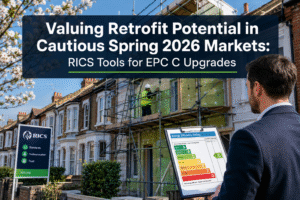

The landscape of property renovation in the UK has fundamentally shifted. With the government's ambitious Warm Homes Plan committing £15 billion over five years to upgrade 5 million homes, and the shocking revelation that 92% of installations under recent schemes had major issues requiring immediate remediation, the retrofit industry faces a critical moment of reckoning[4]. At the heart of this transformation lies a crucial intersection: where Party Wall Agreements for Retrofit and Renovation Projects: Meeting 2026 RICS Retrofit Summit Standards becomes not just a legal requirement, but a cornerstone of quality assurance and consumer protection.
The Quality in Retrofit Summit, held on January 20, 2026, at RICS Surveyor's House in London, brought together built environment professionals in a sell-out event that addressed the urgent need for competent, accountable retrofit delivery[4]. For property owners undertaking retrofit projects on shared boundaries, understanding how party wall procedures align with emerging RICS standards has never been more critical.
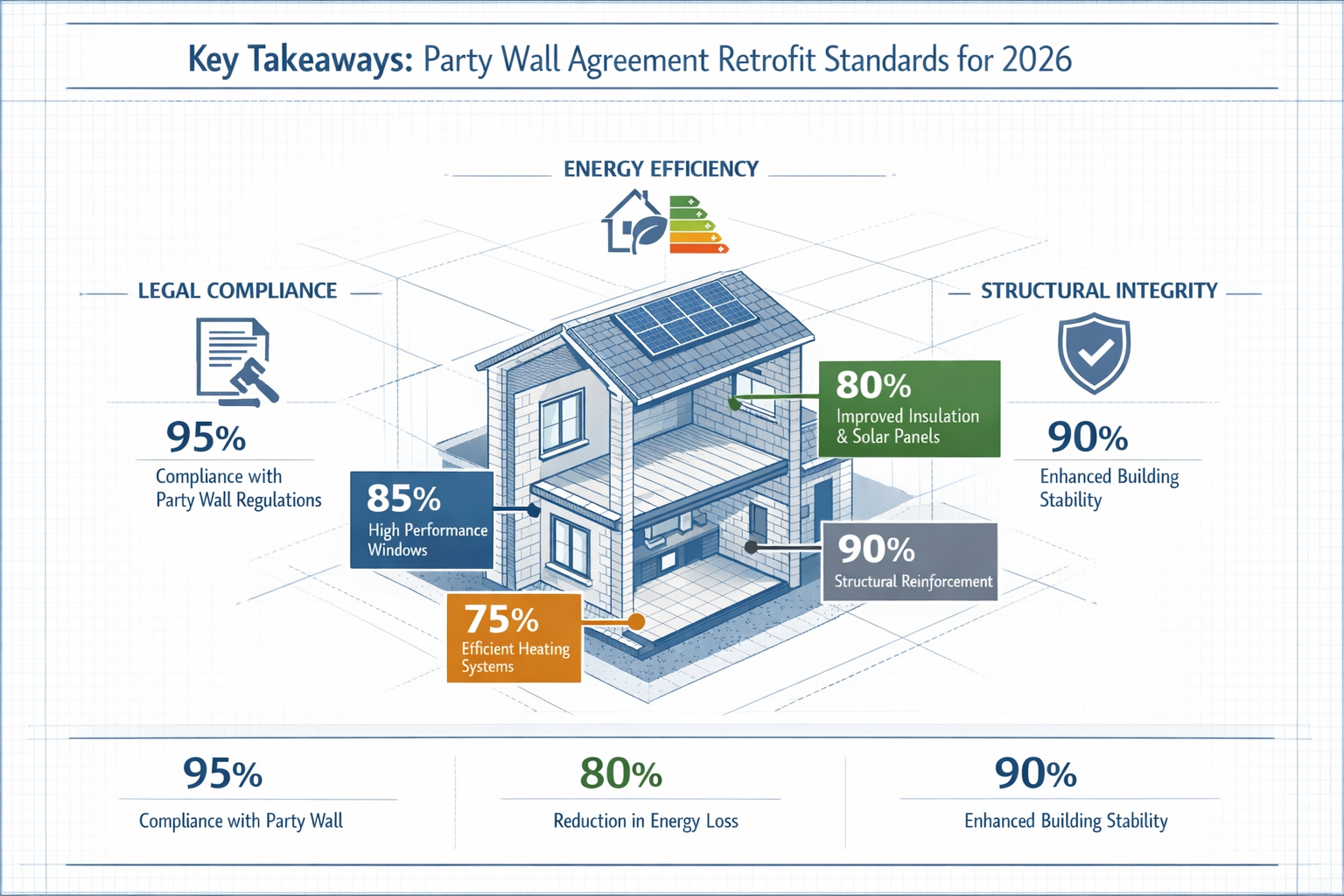
Key Takeaways
✅ Professional competence is mandatory: RICS now emphasizes that retrofit work must be delivered by competent professionals with measurable outcomes to protect homes and residents[4].
✅ Party wall compliance integrates with retrofit standards: The 2026 RICS framework requires party wall agreements to align with PAS 2035:2023 and the RICS Residential Retrofit Standard effective from October 2024[2].
✅ Quality failures are widespread: With 92% of recent installations requiring immediate remediation, proper party wall procedures serve as a critical quality control checkpoint[4].
✅ Consumer protection is paramount: Party wall agreements now function as essential safeguards within the broader retrofit quality framework, ensuring accountability and documented outcomes.
✅ Professional independence matters: RICS leadership confirms that independent professional oversight is essential "from start to end" of retrofit projects involving shared structures[3].
Understanding Party Wall Agreements in the Retrofit Context
What Makes Retrofit Projects Different?
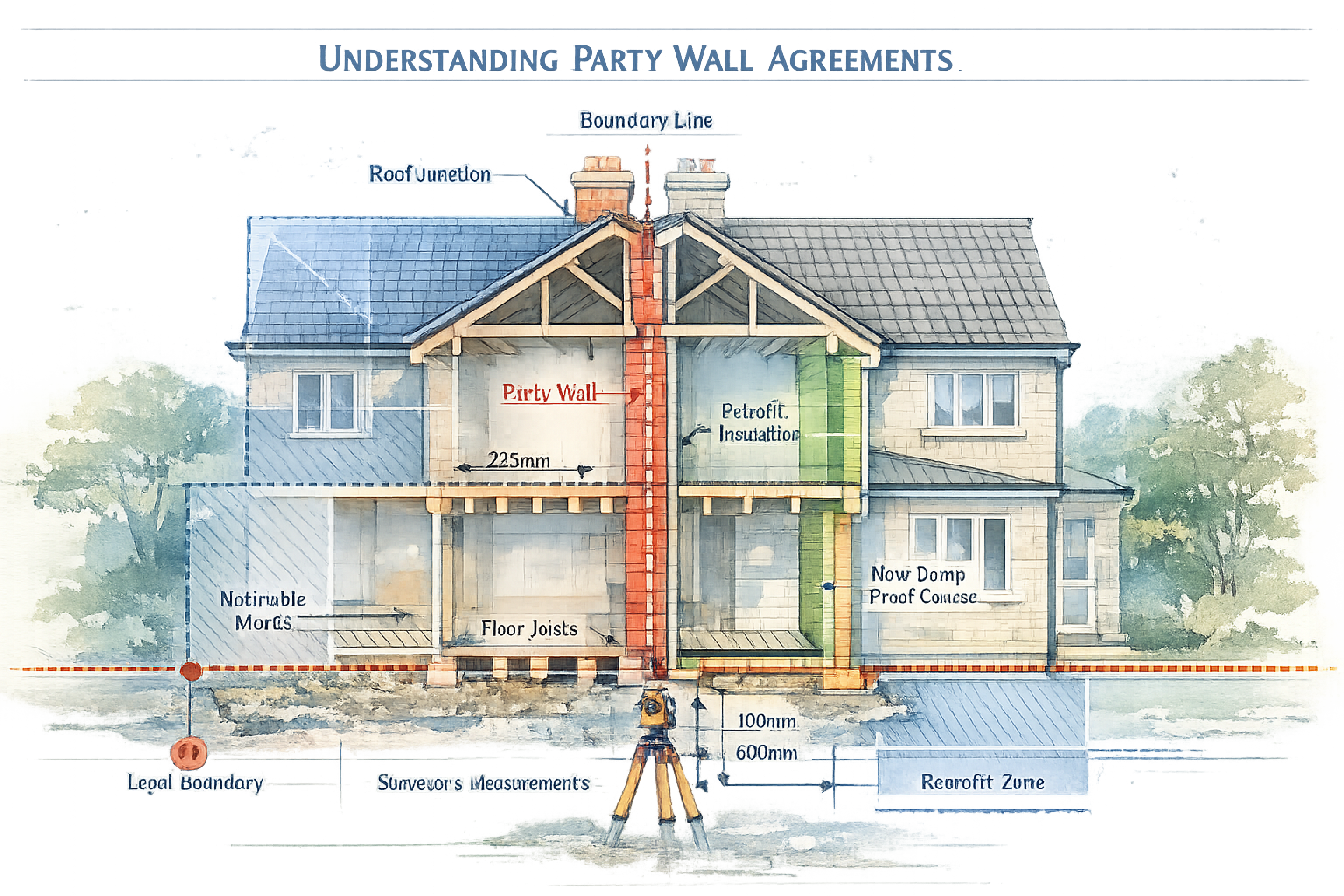
Retrofit and renovation projects present unique challenges compared to traditional building work. When improving a property's energy efficiency, structural modifications often involve shared walls, boundaries, and building elements that fall under the Party Wall etc. Act 1996. These projects typically include:
- External wall insulation (EWI) systems that extend beyond the building line
- Cavity wall insulation affecting party walls
- Internal wall insulation (IWI) modifications
- Structural alterations to accommodate heat pumps or ventilation systems
- Roof upgrades involving shared chimney stacks or party walls
- Basement or foundation work for ground source heat pump installations
The party wall agreement process ensures that these essential energy efficiency improvements proceed legally while protecting the interests of all affected property owners.
The 2026 RICS Quality Framework
The 2026 RICS Retrofit Summit established clear expectations for professional standards in retrofit delivery. RICS President Nicholas Maclean OBE RD FRICS emphasized that retrofit "must be delivered by competent professionals" with "measurable outcomes" that avoid harm to homes and residents[4]. This represents a fundamental shift toward accountability in an industry that has experienced significant quality failures.
Key components of the 2026 framework include:
| Framework Element | Purpose | Party Wall Integration |
|---|---|---|
| PAS 2035:2023 | Quality framework for retrofit projects | Requires documented pre-work condition surveys |
| RICS Residential Retrofit Standard | Benchmark for quality and consumer protection | Mandates professional competence verification |
| BS 40104 Standard | Assessment of existing buildings | Informs party wall surveyor's condition reports |
| Professional Independence | Ensures unbiased oversight | Aligns with party wall surveyor's statutory role |
The integration of party wall procedures within this quality framework creates multiple checkpoints that protect both building owners and their neighbors from the consequences of poor workmanship.
The Critical Role of Party Wall Surveyors in Retrofit Projects
Professional Competence and Accountability
The 2026 RICS Summit highlighted a concerning skills gap in the retrofit sector. While PAS 2035:2023 exists as an "excellent framework that embeds quality from the outset," speakers noted it is "evidently not being followed by many in the sector"[4]. This makes the role of qualified party wall surveyors even more critical.
Party wall surveyors bring several essential competencies to retrofit projects:
🔍 Technical expertise in building pathology and construction methods
📋 Documented condition assessment before work commences
⚖️ Independent professional judgment free from contractor influence
🛡️ Consumer protection through formal award procedures
📊 Quality verification aligned with RICS standards
When selecting a party wall surveyor for retrofit work, building owners should verify that the professional holds relevant RICS qualifications and understands both traditional party wall procedures and modern retrofit standards. The party wall surveyor cost represents an investment in quality assurance that can prevent far more expensive remediation work later.
Pre-Work Condition Surveys: The Foundation of Protection
One of the most valuable aspects of the party wall process for retrofit projects is the mandatory condition survey. This detailed assessment creates an indisputable record of the property's state before any work begins, which proves invaluable when:
- Establishing baseline conditions for thermal performance and structural integrity
- Identifying existing defects that might be exacerbated by retrofit work
- Documenting moisture levels before insulation installation
- Recording structural movement that could affect retrofit interventions
- Creating photographic evidence of pre-existing conditions
This aligns perfectly with the PAS 2035:2023 requirement for comprehensive building assessment before retrofit work commences. The party wall surveyor's condition report becomes part of the quality documentation chain that the 2026 RICS standards now demand.
Party Wall Agreements for Retrofit and Renovation Projects: Meeting 2026 RICS Retrofit Summit Standards – The Process
Step 1: Early Identification and Planning
Successful retrofit projects that involve party walls begin with early identification of potential party wall implications. Building owners should consult with both their retrofit assessor and a party wall surveyor during the design phase to:
✓ Determine which elements of the retrofit design trigger party wall requirements
✓ Assess whether party wall insulation work requires formal notices
✓ Plan the timeline to accommodate the statutory notice periods
✓ Identify potential concerns that neighbors might raise
✓ Integrate party wall procedures with PAS 2035 project planning
The Party Wall etc. Act 1996 requires specific notice periods: typically two months for most party wall works and one month for excavation work. These timelines must be factored into retrofit project schedules, particularly when accessing government funding schemes with completion deadlines.
Step 2: Serving Party Wall Notices
Once the retrofit design is finalized, the building owner must serve appropriate party wall notices to adjoining owners. For retrofit projects, this typically involves:
Line of Junction Notice – For new walls or modifications at the boundary
Party Structure Notice – For work directly to party walls (most common in retrofit)
Notice of Adjacent Excavation – For ground source heat pump installations or basement work
The notice must include:
- Detailed description of the proposed retrofit work
- Technical drawings showing insulation systems and structural modifications
- Proposed start date (respecting minimum notice periods)
- Contact information for the building owner
- Clear explanation of the adjoining owner's rights
RICS has published a Consumer Guide: Party Walls that simplifies these requirements for property owners in England and Wales[5]. This resource helps ensure compliance with both legal requirements and the professional standards emphasized at the 2026 Summit.
Step 3: Appointing Surveyors and Achieving Agreement
If the adjoining owner does not consent to the proposed works within 14 days, a "dispute" is deemed to arise under the Act. This is a technical term and doesn't necessarily indicate conflict – it simply means the formal surveyor appointment process begins.
The adjoining owner has three options:
- Agree to the same surveyor as the building owner (an "Agreed Surveyor")
- Appoint their own surveyor (creating a "two surveyor" scenario)
- Take no action (allowing the building owner to appoint a surveyor on their behalf after 10 days)
For retrofit projects meeting 2026 RICS standards, the surveyor appointment process offers important quality benefits:
💼 Professional oversight ensures work complies with both party wall law and retrofit standards
🤝 Independent mediation resolves technical concerns before they become disputes
📑 Documented procedures create accountability aligned with RICS quality requirements
🔧 Technical specifications in the award can reference PAS 2035 and building regulations
The party wall agreed surveyor approach often works well for straightforward retrofit projects where both owners recognize the benefits of energy efficiency improvements.
Step 4: The Party Wall Award
The party wall surveyor(s) will prepare a Party Wall Award – a legally binding document that sets out:
- Precise description of the permitted retrofit works
- Conditions and restrictions to protect the adjoining property
- Schedule of condition documenting pre-work state
- Access arrangements for monitoring and inspection
- Working hours and noise limitations
- Insurance requirements for the building owner
- Dispute resolution procedures if issues arise during work
For retrofit projects, the award should specifically address:
🏗️ Insulation installation methods and moisture management strategies
🌡️ Thermal bridging prevention at party wall junctions
🔊 Acoustic performance requirements for party wall modifications
🏛️ Heritage considerations for listed or conservation area properties
⚡ Building regulations compliance verification procedures
📸 Photographic monitoring protocols during installation
This comprehensive documentation aligns with the "measurable outcomes" emphasis from the 2026 RICS Summit[4], creating clear accountability for retrofit quality.
Step 5: Work Execution and Monitoring
Once the Party Wall Award is in place, retrofit work can proceed. The party wall surveyor's role continues throughout the project:
- Monitoring compliance with award conditions
- Conducting site inspections at critical stages
- Addressing concerns raised by either owner
- Verifying workmanship quality against agreed specifications
- Documenting progress through photographs and reports
This ongoing oversight provides a crucial quality control layer that complements the PAS 2035 retrofit coordinator role. The party wall surveyor focuses specifically on protecting shared structures and adjoining properties, while the retrofit coordinator ensures overall project quality and performance outcomes.
Step 6: Post-Completion Verification
After retrofit work completion, the party wall surveyor conducts a final inspection to:
✅ Verify all work complies with the Party Wall Award
✅ Assess any damage to adjoining properties
✅ Compare post-work condition to the original schedule
✅ Arrange remediation of any damage caused
✅ Issue completion documentation
This final verification step is particularly important given the National Audit Office finding that 92% of recent retrofit installations had major issues[4]. The party wall process creates an independent checkpoint that can identify problems before they cause long-term damage to properties.
Common Retrofit Scenarios Requiring Party Wall Agreements
External Wall Insulation (EWI) Systems
External wall insulation represents one of the most effective retrofit interventions for improving thermal performance, but it frequently triggers party wall requirements. EWI systems typically involve:
- Extending beyond the building line onto or over the boundary
- Modifying the appearance of party walls visible from neighboring properties
- Affecting shared rainwater goods and drainage systems
- Creating potential moisture risks if improperly installed
The party wall agreement process ensures that EWI installation:
🎯 Respects boundary locations and property rights
🎯 Maintains adequate weather protection for both properties
🎯 Addresses fire safety at party wall junctions
🎯 Prevents moisture penetration into adjoining structures
🎯 Complies with planning and building regulations
For loft conversions combined with roof insulation upgrades, party wall considerations become even more complex, particularly when shared chimney stacks or party walls extend above the roofline.
Cavity Wall Insulation in Party Walls
Many Victorian and Edwardian terraced properties have cavity party walls that could benefit from insulation. However, this work requires careful consideration:
Technical challenges include:
- Risk of moisture transfer between properties
- Potential for sound transmission increase
- Difficulty ensuring complete cavity fill
- Unknown condition of wall ties and cavity cleanliness
Party wall protection includes:
- Pre-work borescope inspection of cavity condition
- Agreement on insulation material and installation method
- Moisture monitoring protocols
- Remediation procedures if problems arise
The 2026 RICS standards emphasize that retrofit work must avoid causing harm[4]. Party wall procedures create the documentation and accountability framework to ensure cavity wall insulation meets this requirement.
Internal Wall Insulation (IWI) Modifications
While IWI work typically occurs entirely within the building owner's property, it may still trigger party wall requirements when:
- Fixing systems penetrate into the party wall structure
- Work affects shared structural elements
- Modifications impact fire resistance ratings
- Changes affect sound insulation performance
The party wall surveyor can verify that IWI installation:
- Maintains structural integrity of party walls
- Preserves fire resistance ratings
- Doesn't create moisture traps at party wall junctions
- Complies with building regulations for sound insulation
Ground Source Heat Pumps and Foundation Work
Installing ground source heat pumps often requires excavation near party walls or shared boundaries. This triggers the party wall excavation notice requirements, particularly when:
- Excavating within 3 meters of a neighboring structure and going deeper than its foundations
- Excavating within 6 meters of a neighboring structure and cutting a line drawn at 45° from the bottom of its foundations
The party wall surveyor ensures that:
🔨 Excavation methods protect adjoining foundations
🔨 Temporary support is provided where necessary
🔨 Monitoring detects any settlement or movement
🔨 Remediation addresses any damage caused
This protection is essential given the structural risks associated with excavation work near existing buildings.
Integrating Party Wall Compliance with PAS 2035:2023
The PAS 2035 Framework
PAS 2035:2023 establishes a comprehensive quality framework for retrofit projects that includes:
- Initial assessment by a qualified retrofit assessor
- Retrofit design by competent professionals
- Installation by certified installers
- Quality assurance through independent monitoring
- Post-installation evaluation and performance verification
Party wall procedures integrate naturally with this framework, providing:
At Assessment Stage:
- Party wall surveyor's condition report informs the retrofit assessment
- Identification of party wall constraints influences retrofit design options
- Pre-existing defects are documented before work begins
At Design Stage:
- Party wall requirements shape technical specifications
- Surveyor input ensures designs protect adjoining properties
- Award conditions reference building regulations and quality standards
During Installation:
- Party wall surveyor monitoring complements retrofit coordinator oversight
- Independent verification of workmanship quality
- Documentation of compliance with agreed specifications
Post-Completion:
- Final party wall inspection verifies no damage to adjoining properties
- Completion documentation contributes to overall project quality records
- Performance outcomes can be measured against baseline conditions
Professional Coordination
The 2026 RICS Summit emphasized the importance of professional competence across all retrofit roles[4]. Effective coordination between the retrofit team and party wall professionals requires:
📞 Early communication between retrofit assessor and party wall surveyor
📞 Shared documentation including technical drawings and specifications
📞 Coordinated site visits to minimize disruption
📞 Integrated quality monitoring across all project aspects
📞 Clear responsibility allocation for different compliance requirements
This multi-professional approach aligns with RICS's emphasis on "independence" and ensuring quality "from start to end"[3].
Avoiding Party Wall Disputes in Retrofit Projects
Common Dispute Triggers
Despite the protective framework of party wall legislation, party wall disputes can arise during retrofit projects. Common triggers include:
⚠️ Inadequate notice or poor communication about planned works
⚠️ Unexpected disruption exceeding what was described
⚠️ Visible damage to adjoining properties
⚠️ Noise and dust beyond reasonable expectations
⚠️ Access issues for monitoring or inspection
⚠️ Quality concerns about workmanship or materials
Understanding what is a party wall dispute helps building owners take preventive action before problems escalate.
Prevention Strategies
The 2026 RICS quality framework provides several tools for preventing disputes:
1. Transparent Communication
- Provide detailed information about retrofit plans early
- Explain the energy efficiency and comfort benefits
- Address concerns proactively and honestly
- Maintain regular updates throughout the project
2. Professional Expertise
- Engage qualified party wall surveyors with retrofit knowledge
- Use PAS 2035-certified retrofit coordinators
- Verify installer competence and certification
- Ensure all professionals carry appropriate insurance
3. Quality Documentation
- Comprehensive condition surveys before work begins
- Clear Party Wall Awards with detailed specifications
- Photographic records at all project stages
- Formal sign-off procedures upon completion
4. Considerate Working Practices
- Respect agreed working hours and conditions
- Minimize noise, dust, and disruption
- Protect adjoining properties from damage
- Maintain clean and safe working areas
5. Swift Issue Resolution
- Address concerns immediately when raised
- Provide access for monitoring as agreed
- Rectify any damage promptly
- Document all issues and resolutions
When Disputes Arise
If disputes do occur despite preventive measures, the party wall framework provides resolution mechanisms:
- Surveyor mediation to find technical solutions
- Third surveyor appointment for deadlocked issues
- Formal dispute resolution through the award process
- Legal remedies if necessary, though rarely required
Understanding damage to property in party wall scenarios helps both owners and surveyors address problems effectively.
Cost Considerations and Value Protection
Party Wall Surveyor Fees
Building owners often question the cost of party wall procedures, particularly when facing the expense of retrofit work. However, the fees represent essential protection:
Typical cost ranges:
- Agreed Surveyor approach: £700-£1,500 for straightforward retrofit projects
- Two surveyor approach: £1,500-£3,000+ depending on complexity
- Complex projects with multiple adjoining owners: £3,000-£5,000+
These costs should be viewed in context:
💰 Compared to retrofit project costs (typically £10,000-£50,000+), party wall fees represent 2-5% of total expenditure
💰 Compared to potential dispute costs, professional fees prevent far more expensive legal proceedings
💰 Compared to remediation costs, proper procedures prevent damage requiring costly repairs
💰 Compared to project delays, timely party wall compliance keeps retrofit work on schedule
The party wall consent process, while adding upfront costs, protects the substantial investment in retrofit improvements.
Protecting Property Value
Properly executed retrofit work with compliant party wall procedures protects and enhances property value by:
🏡 Improving energy efficiency and reducing running costs
🏡 Enhancing comfort and living conditions
🏡 Increasing marketability to environmentally conscious buyers
🏡 Demonstrating compliance with legal and quality requirements
🏡 Preventing future disputes that could complicate sales
🏡 Maintaining good neighbor relations essential for property enjoyment
The 2026 RICS standards emphasize measurable outcomes[4]. Party wall procedures contribute to these outcomes by ensuring retrofit work achieves its intended benefits without causing unintended harm.
The Future of Retrofit and Party Wall Integration
Emerging Standards and Requirements
The retrofit landscape continues to evolve rapidly. Key developments include:
RICS AssocRICS Pilot Pathway
A new credentialing pathway is being explored to expand the retrofit workforce with professional qualifications[2]. This will increase the pool of competent professionals who understand both retrofit standards and party wall requirements.
Simplified Standards Access
Experts at the 2026 Summit called for "all relevant Standards to be made freely available" with "zero barriers to retrofit" through free, searchable, downloadable documentation[3]. This will help party wall surveyors and building owners access the technical guidance needed for compliant retrofit projects.
Enhanced Training Programs
The government has committed to subsidized courses for retrofit assessors and coordinators, alongside continuation of the Warm Homes Skills Programme and Heat Training Grant[4]. This investment in professional competence will raise quality standards across the industry.
Increased Consumer Protection
The RICS Residential Retrofit Standard, effective from October 2024, sets benchmarks for quality and consumer protection[2]. Party wall procedures align with and reinforce these consumer safeguards.
Technology and Innovation
Emerging technologies are transforming both retrofit delivery and party wall procedures:
📱 Digital condition surveys using photogrammetry and 3D scanning
📱 Thermal imaging to verify insulation performance and identify defects
📱 Moisture monitoring systems providing real-time data during and after installation
📱 Building Information Modeling (BIM) for complex retrofit projects
📱 Electronic document management streamlining party wall award administration
These technologies support the "measurable outcomes" emphasis from the 2026 RICS Summit, providing objective data on retrofit performance and party wall compliance.
The Role of Professional Bodies
RICS and other professional bodies continue to strengthen retrofit quality standards:
- Professional competence frameworks ensuring practitioners have necessary skills
- Continuing professional development requirements keeping knowledge current
- Quality assurance schemes providing consumer confidence
- Complaint and disciplinary procedures maintaining professional standards
- Research and guidance on emerging retrofit technologies and methods
This professional infrastructure supports the integration of party wall procedures with broader retrofit quality requirements.
Practical Guidance for Building Owners

Before Starting Your Retrofit Project
Building owners planning retrofit work involving party walls should:
1. Engage Professional Advice Early
- Consult a qualified party wall surveyor during project planning
- Discuss party wall implications with your retrofit assessor
- Understand the timeline requirements for notices and agreements
2. Research Your Property
- Identify all party walls and shared structures
- Review property deeds for any relevant restrictions
- Check planning and conservation area requirements
- Understand your building's construction and condition
3. Plan Your Budget
- Include party wall surveyor fees in project costs
- Allow contingency for addressing pre-existing defects
- Consider potential remediation costs if damage occurs
- Factor in extended timelines for party wall procedures
4. Communicate with Neighbors
- Discuss your retrofit plans informally before serving notices
- Explain the benefits of energy efficiency improvements
- Address concerns and answer questions honestly
- Maintain positive relationships throughout the project
During the Retrofit Project
Once work begins:
✓ Comply with Party Wall Award conditions strictly
✓ Provide access for surveyor inspections as agreed
✓ Maintain communication with neighbors and surveyors
✓ Address issues immediately if they arise
✓ Document progress through photographs and records
✓ Ensure contractor compliance with all quality standards
After Project Completion
Following retrofit work completion:
🎯 Arrange final party wall inspection and sign-off
🎯 Obtain completion certificates for building regulations
🎯 Document energy performance improvements achieved
🎯 Maintain records of all party wall and retrofit documentation
🎯 Address any snagging items promptly
🎯 Thank neighbors for their cooperation and patience
Conclusion: Quality, Compliance, and Consumer Protection
The convergence of party wall requirements with the emerging RICS retrofit quality framework represents a significant opportunity to raise standards across the renovation sector. The shocking statistic that 92% of recent retrofit installations required immediate remediation[4] demonstrates the urgent need for professional oversight and accountability.
Party Wall Agreements for Retrofit and Renovation Projects: Meeting 2026 RICS Retrofit Summit Standards is not merely about legal compliance – it's about ensuring that the billions of pounds being invested in home energy efficiency improvements deliver genuine benefits without causing harm to properties or relationships.
The 2026 RICS Summit's emphasis on professional competence, measurable outcomes, and consumer protection aligns perfectly with the party wall framework's requirements for independent professional oversight, documented procedures, and accountability. Together, these frameworks create multiple quality checkpoints that protect building owners, their neighbors, and the substantial investments being made in retrofit improvements.
Actionable Next Steps
For building owners planning retrofit projects:
1. Assess party wall implications – Review your retrofit plans with a qualified party wall surveyor to identify all party wall requirements early in the project planning process.
2. Verify professional competence – Ensure all professionals involved in your retrofit project hold appropriate RICS qualifications and understand both party wall law and PAS 2035:2023 requirements.
3. Plan comprehensive timelines – Factor in the statutory notice periods and party wall agreement process when scheduling your retrofit work, particularly if accessing funding schemes with deadlines.
4. Prioritize quality documentation – Invest in thorough condition surveys and comprehensive Party Wall Awards that create clear accountability for retrofit quality and protect all parties' interests.
5. Maintain professional independence – Engage party wall surveyors who are independent from your retrofit contractors to ensure unbiased oversight throughout the project.
6. Communicate proactively – Keep neighbors informed, address concerns promptly, and maintain positive relationships that facilitate smooth project delivery.
The future of retrofit in the UK depends on delivering the Warm Homes Plan's ambitious targets while avoiding the quality failures that have plagued recent schemes. By integrating proper party wall agreement procedures with the professional standards emphasized at the 2026 RICS Retrofit Summit, building owners can ensure their renovation projects achieve genuine energy efficiency improvements, protect property values, maintain good neighbor relations, and contribute to the UK's net-zero ambitions.
The path to quality retrofit is clear: professional competence, documented procedures, independent oversight, and measurable outcomes. Party wall agreements, when properly integrated with PAS 2035 and RICS standards, provide an essential framework for achieving these goals and protecting the interests of all stakeholders in the retrofit revolution transforming UK housing.
References
[1] Rics Building Surveying Conferece 2026 Agenda – https://www.rics.org/content/dam/ricsglobal/documents/event-programmes/RICS-Building-Surveying-Conferece-2026_Agenda.pdf
[2] Uk Influence Advocacy Update October 2025 – https://www.rics.org/news-insights/uk-influence-advocacy-update-october-2025
[3] Sparks Of 2026 9 Rics And The Return Of Professional Trust In Retrofit – https://www.refurbandretrofit.com/sparks-of-2026-9-rics-and-the-return-of-professional-trust-in-retrofit/
[4] Quality In Retrofit Summit 2026 – https://retrofitacademy.org/quality-in-retrofit-summit-2026/
[5] Rics Consumer Guide Party Walls – https://www.ricsfirms.com/residential/legal-issues/party-walls/rics-consumer-guide-party-walls/
[6] Turning Ambition Into Action Housing And Climate Resilience As The Grand Challenges Post Cop30 – https://www.rics.org/news-insights/turning-ambition-into-action-housing-and-climate-resilience-as-the-grand-challenges-post-cop30