
The institutional buy-to-let market has undergone dramatic transformation over the past few years, with professional landlords now driving expansion in a landscape marked by constrained supply and rising tenant demand. As 2026 unfolds, Building Survey Protocols for Institutional Buy-to-Let: Assessing High-Yield Rentals in 2026 has become a critical competency for investors seeking to maximize returns while minimizing long-term maintenance risks. With institutional single-family rental purchases having declined over 90% since 2022[3], the players remaining in this market are increasingly sophisticated, demanding comprehensive due diligence that goes far beyond traditional residential surveys.
The evolving regulatory environment, including the introduction of the 2026 ALTA/NSPS Land Title Survey standards effective February 23, 2026[1], has created new requirements for property assessment that directly impact institutional investors. These changes, combined with shifting market dynamics, mean that building survey protocols must now evaluate not just structural integrity but also yield potential, tenant appeal, and long-term portfolio performance.
Key Takeaways
- Comprehensive survey protocols are essential for institutional buy-to-let investors to assess both structural condition and rental yield potential in 2026's constrained supply market
- New 2026 ALTA/NSPS standards introduce standardized encroachment reporting and expanded certification options, providing greater protection for institutional buyers in transaction chains[1]
- Yield-focused assessments must evaluate maintenance risks, tenant demand factors, and long-term capital expenditure requirements to ensure sustainable returns
- Professional landlords are leveraging detailed building surveys to identify high-yield opportunities while avoiding properties with hidden defects that could erode profitability
- Risk mitigation strategies embedded in survey protocols help institutional investors navigate a market where even cities with higher institutional presence show only 3-5% institutional ownership[3]
Understanding the Institutional Buy-to-Let Landscape in 2026
The Current State of Institutional Investment
The institutional buy-to-let sector has experienced significant contraction since its peak in 2022. According to recent data, institutional single-family rental purchases have declined over 90% since that time[3], representing a dramatic retreat by major players. Even Blackstone, one of the largest institutional investors in residential real estate, reported owning 22% fewer homes than eight years ago and is currently a net seller in the single-family rental market[3].
Despite this pullback, institutional ownership remains a relatively small percentage of local housing markets. Even in cities with higher institutional presence such as Charlotte, Las Vegas, Phoenix, and Nashville, institutional buyers comprise only 3-5% of the market[3]. This reality contradicts common perceptions about institutional dominance and highlights the importance of strategic property selection for the remaining professional landlords.
Why Professional Landlords Are Driving BTL Expansion
While large institutional players have retreated, professional landlords and smaller institutional investors continue to see opportunity in the buy-to-let market. Several factors are driving this continued interest:
📊 Constrained Supply Markets: Housing supply remains tight in many urban areas, creating favorable conditions for rental property owners who can offer quality accommodation.
🏘️ Rising Tenant Demand: Demographic shifts, affordability challenges in the homeownership market, and lifestyle preferences continue to support strong rental demand.
💰 Yield Opportunities: For investors who can accurately assess property condition and maintenance requirements, high-yield rental opportunities still exist, particularly in secondary and tertiary markets.
The key differentiator for successful institutional buy-to-let investors in 2026 is the ability to conduct thorough due diligence through comprehensive building surveys that evaluate both structural integrity and rental yield potential.
Building Survey Protocols for Institutional Buy-to-Let: Core Components
Comprehensive Structural Assessment
A robust building survey protocol for institutional buy-to-let properties must begin with a thorough structural assessment that goes beyond standard residential surveys. Professional landlords require detailed information about:
Foundation and Structural Elements
- Foundation type, condition, and any evidence of movement or settlement
- Load-bearing walls and structural alterations
- Floor joists, beams, and structural timbers
- Evidence of subsidence, heaving, or other ground movement issues
For properties showing signs of structural concerns, specialized subsidence surveys may be necessary to fully assess risk and remediation costs.
Building Envelope Assessment
- Roof condition, including coverings, flashings, and drainage systems
- External walls, render, and cladding condition
- Windows and doors, including thermal efficiency
- Damp-proofing and waterproofing measures
Internal Systems Evaluation
- Electrical systems and compliance with current regulations
- Plumbing and heating systems, including boiler condition and efficiency
- Drainage systems and potential for blockages or failures
- Ventilation and moisture control measures
Yield Potential Assessment Framework
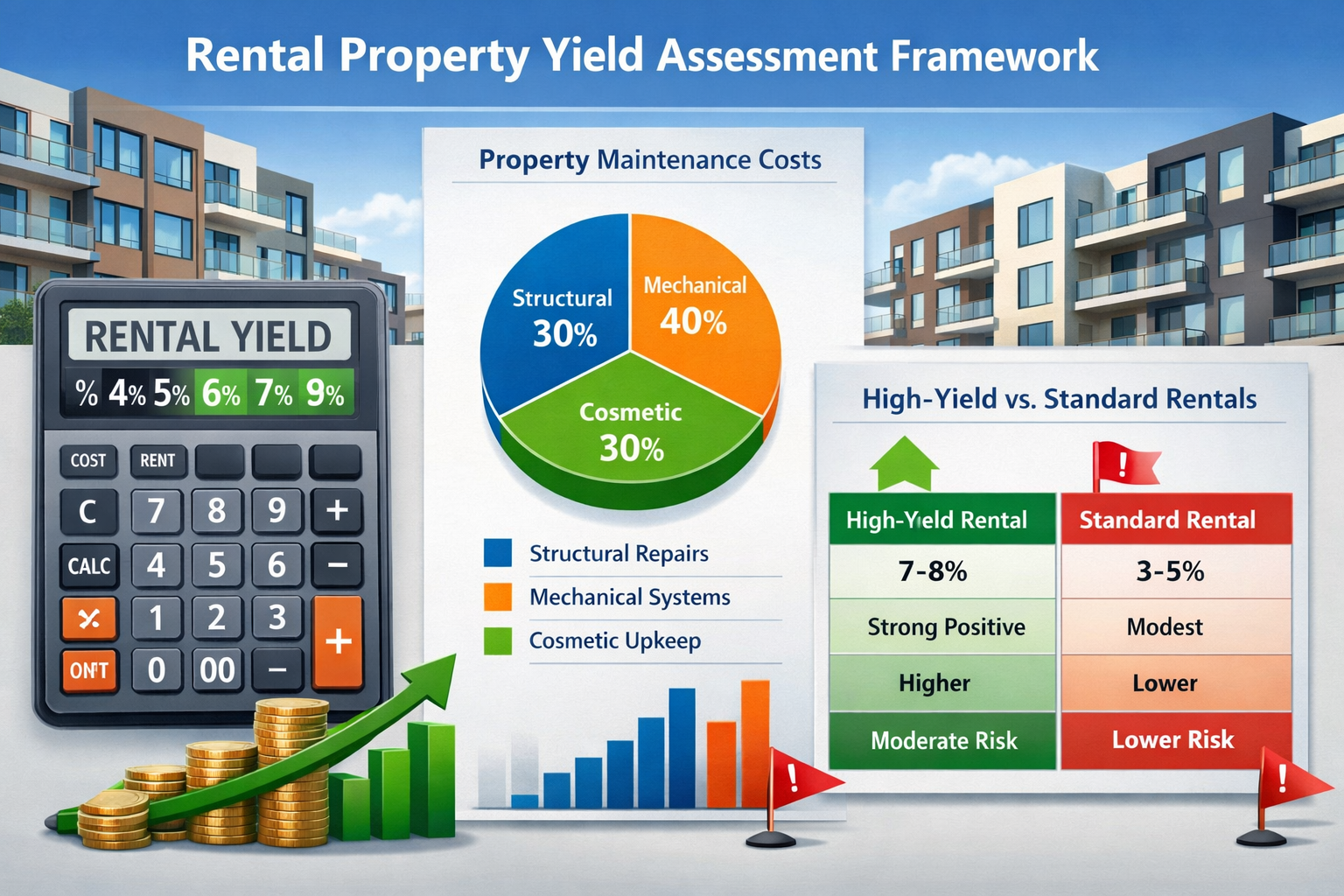
Beyond structural condition, Building Survey Protocols for Institutional Buy-to-Let: Assessing High-Yield Rentals in 2026 must incorporate a systematic approach to evaluating rental yield potential. This framework should include:
| Assessment Category | Key Metrics | Impact on Yield |
|---|---|---|
| Location Analysis | Transport links, amenities, employment centers | High – drives tenant demand |
| Property Configuration | Bedroom count, layout efficiency, storage | Medium – affects rental rate |
| Condition Grade | Immediate repairs needed, cosmetic condition | High – impacts void periods |
| Energy Efficiency | EPC rating, heating costs, insulation | Medium – affects tenant appeal |
| Maintenance Forecast | 5-year capital expenditure projection | High – impacts net yield |
Rental Market Positioning
The survey should evaluate how the property compares to local rental stock:
- Current market rents for comparable properties
- Tenant demographic and demand patterns
- Competition analysis and vacancy rates
- Potential for rental growth based on area development
Value-Add Opportunities
Institutional investors should identify potential improvements that could enhance yield:
- Reconfiguration possibilities (e.g., adding bedrooms)
- Energy efficiency upgrades that justify higher rents
- Amenity additions valued by target tenant demographic
- Cosmetic improvements with favorable cost-to-value ratios
Compliance and Regulatory Considerations
In 2026, regulatory compliance represents a significant component of building survey protocols for institutional buy-to-let properties. Surveyors must assess:
✅ Safety Certifications
- Gas safety certificates and boiler servicing requirements
- Electrical Installation Condition Reports (EICR)
- Fire safety measures, including smoke and CO detectors
- HMO licensing requirements where applicable
✅ Energy Performance
- Current EPC rating and minimum standards compliance
- Cost and feasibility of achieving higher ratings
- Impact of energy efficiency on rental appeal and tenant retention
✅ Accessibility Standards
- Compliance with relevant accessibility regulations
- Potential for adaptation to meet changing requirements
- Impact on tenant pool and rental demand
For properties requiring detailed condition documentation, a schedule of condition report provides baseline evidence that can protect landlords in disputes and support maintenance planning.
Advanced Survey Methodologies for High-Yield Rental Assessment
Leveraging New 2026 ALTA/NSPS Standards
The introduction of the 2026 ALTA/NSPS Land Title Survey standards, which became effective February 23, 2026[1], has significant implications for institutional buy-to-let investors. These updated standards provide enhanced protection and clarity in several critical areas:
Standardized Encroachment Reporting
The most significant update is the introduction of Table A Item 20, which requires surveyors to opine on significant observations including[1]:
- Potential encroachments over boundary lines in either direction
- Encroachments into rights-of-way or easements
- Encroachments into setbacks
This standardization eliminates previous inconsistencies where surveyors used varying language and methods when opining on encroachments, or declined to opine at all[1]. For institutional investors, this provides clearer risk assessment regarding boundary disputes and potential title insurance issues.
Enhanced Access and Use Documentation
Under the 2026 standards, surveyors must now memorialize observations regarding[1]:
- Use of property by third parties without the benefit of an easement
- Property access available only through common ownership with adjacent parcels
These requirements are critical for obtaining accurate title insurance coverage and mitigating risk[1], particularly for institutional portfolios where access issues could affect multiple properties or future disposition strategies.
Expanded Certification Options
The survey can now be certified to a lender's successors and assigns if requested[1], providing greater flexibility for institutional buyers in transaction chains. This is particularly valuable for institutional investors who may refinance or transfer properties within their portfolios.
Technology Integration
The 2026 standards include expanded acceptance of aerial or satellite imagery[1], enabling more efficient and comprehensive property assessment. This technological advancement supports institutional investors who need to conduct due diligence on multiple properties simultaneously.
Technology-Enhanced Survey Protocols
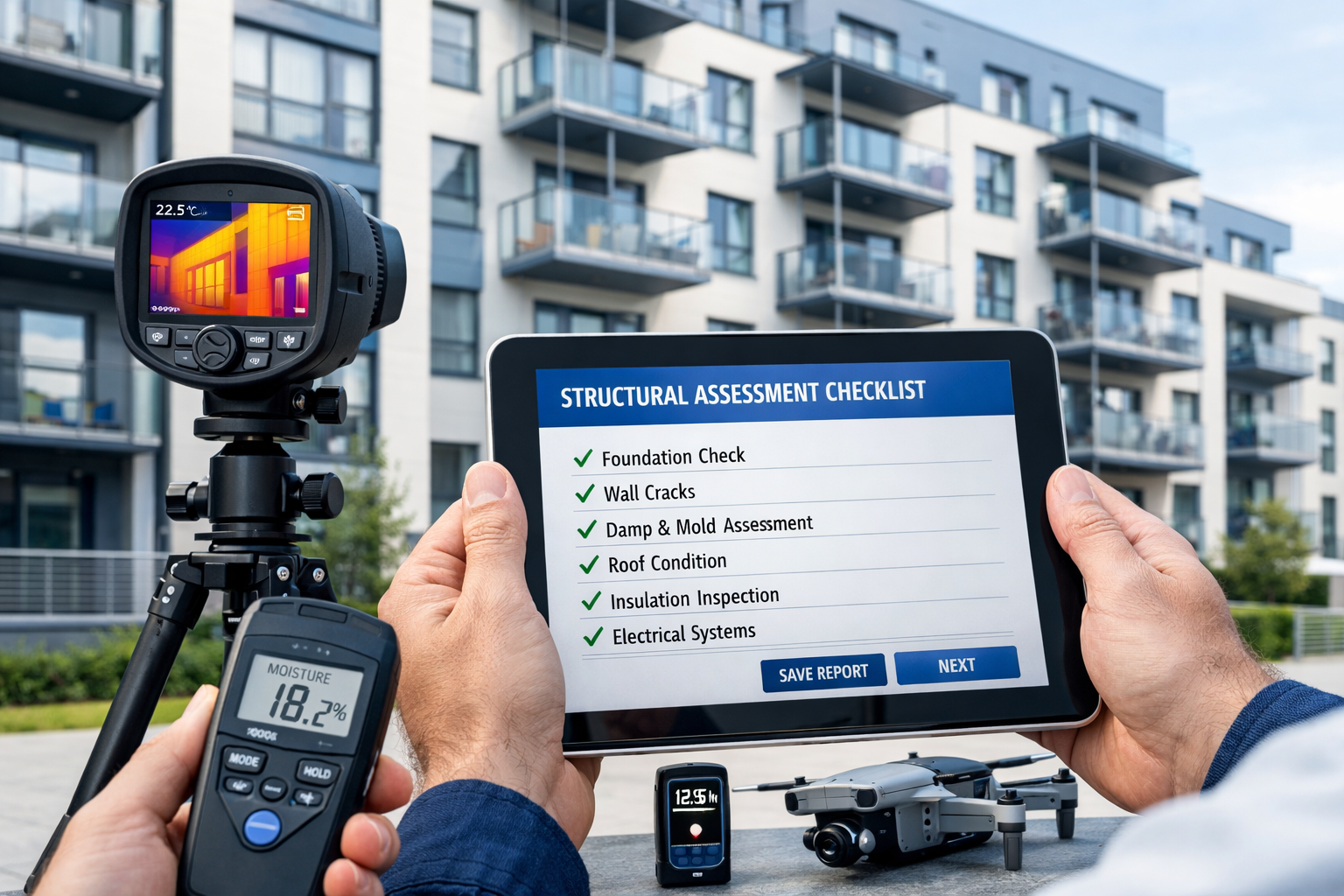
Modern building survey protocols for institutional buy-to-let properties increasingly incorporate advanced technologies that provide more accurate and comprehensive assessments:
🚁 Drone and Aerial Surveys
Drone roof surveys offer significant advantages for institutional investors:
- Comprehensive roof condition assessment without scaffolding costs
- High-resolution imagery documenting current condition
- Thermal imaging capabilities to identify heat loss and moisture intrusion
- Safer inspection of difficult-to-access areas
📸 Thermal Imaging and Moisture Detection
Advanced diagnostic tools provide insights invisible to the naked eye:
- Identification of hidden moisture problems before they cause visible damage
- Detection of insulation deficiencies affecting energy performance
- Location of thermal bridges and air leakage points
- Early warning of potential condensation and mold issues
📱 Digital Documentation and Reporting
Modern survey protocols leverage digital tools for comprehensive documentation:
- Photographic records with GPS tagging and timestamp verification
- Interactive floor plans with defect annotations
- Cloud-based reporting accessible to all stakeholders
- Integration with property management systems for ongoing maintenance tracking
Multi-Property Portfolio Assessment Strategies
For institutional investors acquiring multiple properties, survey protocols must be adapted to support portfolio-level decision-making:
Standardized Assessment Criteria
Developing consistent evaluation criteria across properties enables:
- Comparative analysis of investment opportunities
- Risk stratification and portfolio balancing
- Prioritization of capital expenditure across the portfolio
- Performance benchmarking and optimization
Batch Survey Efficiency
When assessing multiple properties, institutional buyers can achieve economies of scale through:
- Coordinated survey scheduling with preferred providers
- Standardized reporting formats facilitating comparison
- Volume pricing negotiations with qualified surveyors
- Centralized data management and analysis
Risk-Adjusted Yield Modeling
Portfolio-level protocols should incorporate sophisticated financial modeling that accounts for:
- Probability-weighted maintenance costs based on survey findings
- Correlation of risks across similar property types
- Geographic diversification benefits
- Lifecycle cost analysis over expected holding periods
Identifying and Mitigating Maintenance Risks in High-Yield Properties
Common Defects That Erode Rental Yields
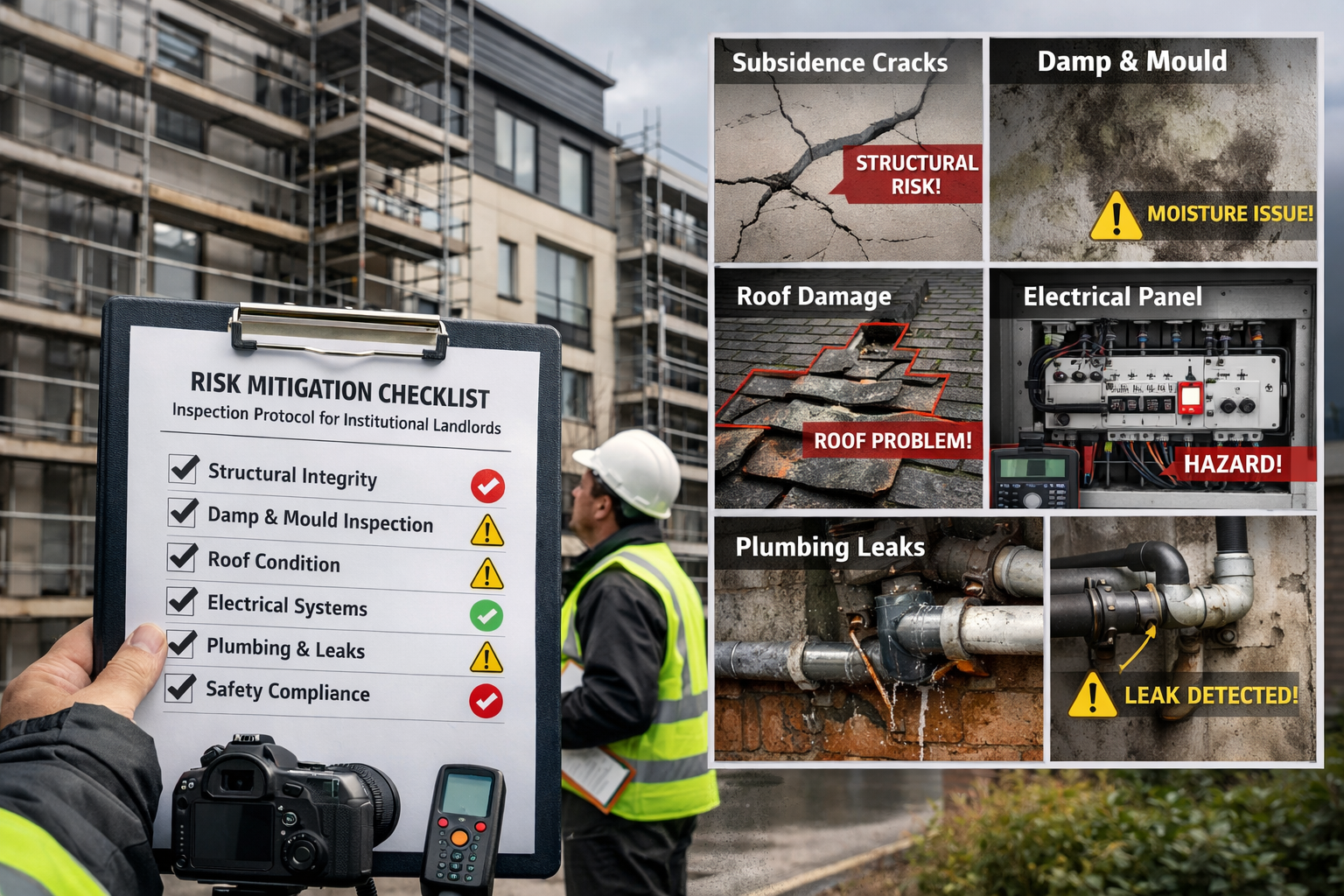
Experienced institutional investors understand that undiscovered maintenance issues can quickly transform an apparently high-yield property into a financial burden. Building survey protocols must specifically target common defects that disproportionately impact rental returns:
Critical Structural Issues
- Subsidence and settlement: Can require expensive underpinning and cause ongoing insurance complications
- Roof deterioration: Deferred maintenance often results in water ingress affecting multiple areas
- Damp and moisture problems: Lead to tenant complaints, health concerns, and accelerated property deterioration
- Structural alterations: Unauthorized or poorly executed modifications may require costly remediation
Building Systems Failures
- Aging electrical systems: Non-compliant installations require complete rewiring
- Obsolete heating systems: Inefficient boilers increase running costs and tenant dissatisfaction
- Plumbing deficiencies: Hidden leaks cause water damage and inflated utility costs
- Inadequate ventilation: Contributes to condensation, mold growth, and tenant health issues
For properties with specific concerns identified during initial inspection, a specific defect report can provide detailed analysis and remediation recommendations for targeted issues.
Maintenance Cost Forecasting
A comprehensive building survey protocol for institutional buy-to-let properties must include forward-looking maintenance cost projections that inform investment decisions:
Immediate Repairs (0-12 months)
- Essential safety and compliance issues
- Items affecting habitability and tenant retention
- Defects likely to worsen rapidly if not addressed
- Estimated costs with contingency allowances
Short-term Maintenance (1-3 years)
- Replacement of systems nearing end of useful life
- Preventive maintenance to avoid larger future costs
- Upgrades to improve energy efficiency and tenant appeal
- Anticipated regulatory compliance requirements
Long-term Capital Expenditure (3-10 years)
- Major component replacements (roof, windows, heating systems)
- Structural repairs and building envelope maintenance
- Modernization to maintain competitive positioning
- Lifecycle replacement schedules for major systems
Risk Mitigation Strategies for Institutional Landlords
Effective Building Survey Protocols for Institutional Buy-to-Let: Assessing High-Yield Rentals in 2026 incorporate risk mitigation strategies throughout the assessment process:
Due Diligence Enhancement
- Engage chartered surveyors with specific experience in rental property assessment
- Conduct surveys at appropriate scope for property value and complexity
- Understand the difference between homebuyer reports and building surveys to select the right level of inspection
- Request specialist investigations for identified concerns
Warranty and Insurance Considerations
- Evaluate availability and cost of structural warranties
- Assess impact of survey findings on insurance premiums and coverage
- Consider defects liability insurance for properties with known issues
- Document baseline condition for future claims and disputes
Acquisition Price Adjustments
- Use survey findings to negotiate price reductions reflecting repair costs
- Request seller remediation of critical defects before completion
- Structure retention amounts for incomplete repairs
- Build contingency reserves into acquisition pro forma
Portfolio-Level Risk Management
- Diversify across property types, ages, and construction methods
- Avoid concentration of similar defects across portfolio
- Establish reserve funds based on aggregated maintenance forecasts
- Implement preventive maintenance programs to minimize emergency repairs
Commercial and Multi-Unit Considerations
Adapting Protocols for Larger Rental Properties
Institutional buy-to-let investments frequently include multi-unit buildings and commercial residential properties that require adapted survey protocols. These larger assets demand more comprehensive assessment approaches:
Building-Wide Systems
- Central heating and hot water systems serving multiple units
- Common area electrical distribution and emergency lighting
- Shared drainage and sewerage infrastructure
- Lifts, access control, and building management systems
Common Areas and Shared Facilities
- Structural condition of lobbies, corridors, and stairwells
- Fire safety systems and means of escape compliance
- Shared amenities (laundry facilities, bike storage, refuse areas)
- External works including parking areas and landscaping
For commercial rental properties, specialized commercial building surveys provide the detailed assessment required for institutional investment decisions.
Regulatory Compliance for Multi-Occupancy
- Fire risk assessments and fire safety order compliance
- Building regulations approval for conversions and alterations
- HMO licensing requirements and standards
- Health and safety obligations for common areas
Dilapidations and Lease-End Considerations
For institutional investors acquiring properties with existing tenancies or planning to lease commercial elements, understanding dilapidations is essential:
Pre-Acquisition Dilapidations Assessment
- Review existing lease terms and tenant repair obligations
- Assess current condition against lease requirements
- Identify potential dilapidations claims against outgoing tenants
- Evaluate likelihood of recovery and potential costs
A schedule of dilapidations documents the condition of leased premises and identifies breaches of lease covenants, providing essential information for investment analysis.
Lease Structure Impact on Maintenance
- Full repairing and insuring (FRI) lease implications
- Service charge recovery mechanisms for multi-let properties
- Landlord's retained obligations and cost exposure
- Sinking fund adequacy for major works
Regional Market Variations and Local Expertise
Geographic Considerations in Survey Protocols
Building survey protocols for institutional buy-to-let properties must account for regional variations in construction methods, regulatory requirements, and market conditions. Professional landlords operating across multiple locations benefit from engaging surveyors with specific local expertise.
Regional Construction Characteristics
Different areas exhibit distinct building types and construction methods:
- Victorian and Edwardian terraces in inner-city areas
- Post-war construction with specific defect patterns
- Modern developments with different maintenance profiles
- Regional materials and construction techniques
Local Market Dynamics
Survey protocols should incorporate understanding of:
- Local rental market conditions and tenant expectations
- Regional yield benchmarks and performance standards
- Area-specific regulatory requirements and enforcement patterns
- Local authority licensing and compliance standards
Access to Local Expertise
Institutional investors benefit from engaging surveyors with established presence in target markets, such as chartered surveyors in Central London, West London, or other specific locations where portfolio properties are concentrated.
Urban vs. Suburban Rental Property Assessment
Survey protocols should be adapted to reflect the different characteristics and risks associated with urban versus suburban rental properties:
Urban High-Density Properties
- Shared party walls and potential for party wall issues
- Limited external access for maintenance
- Higher tenant turnover and wear-and-tear
- Noise transmission and sound insulation considerations
Suburban Family Rentals
- Larger gardens and external maintenance requirements
- Parking provision and driveway condition
- Greater space for storage and utilities
- Different tenant demographic and maintenance expectations
Financial Modeling and Investment Decision Framework
Integrating Survey Findings into Yield Analysis
The ultimate purpose of Building Survey Protocols for Institutional Buy-to-Let: Assessing High-Yield Rentals in 2026 is to support informed investment decisions. Survey findings must be systematically integrated into financial analysis:
Adjusted Acquisition Cost
Total Acquisition Cost = Purchase Price + Transaction Costs +
                        Immediate Repairs + Short-term Maintenance Reserve
Net Yield Calculation
Net Rental Yield = (Annual Rent - Operating Costs - Maintenance Reserve) /
                   Total Acquisition Cost × 100%
Risk-Adjusted Return Metrics
- Probability-weighted maintenance costs based on survey findings
- Void period assumptions reflecting property condition
- Tenant turnover costs influenced by property quality
- Capital appreciation potential considering required improvements
Scenario Analysis and Sensitivity Testing
Sophisticated institutional investors use survey findings to conduct scenario analysis:
Base Case Scenario
- Expected maintenance costs as identified in survey
- Market rental rates for property in current condition
- Standard void periods and tenant turnover
Optimistic Scenario
- Lower-than-expected maintenance costs if preventive measures succeed
- Rental growth if property improvements enhance appeal
- Extended tenant retention reducing turnover costs
Pessimistic Scenario
- Discovery of additional defects during remediation
- Higher-than-expected maintenance costs
- Market rental pressure or extended void periods
Break-Even Analysis
Determine the maximum acquisition price that still delivers target returns given survey-identified maintenance requirements and yield potential.
Portfolio Optimization Through Survey Intelligence
Institutional investors managing multiple properties use aggregated survey data to optimize portfolio performance:
Strategic Capital Allocation
- Prioritize improvements with highest yield enhancement potential
- Identify properties requiring disproportionate maintenance investment
- Evaluate disposition candidates based on lifecycle cost projections
- Balance portfolio risk through diversification of property conditions
Performance Benchmarking
- Compare actual maintenance costs against survey projections
- Track yield performance relative to condition assessments
- Refine survey protocols based on predictive accuracy
- Develop institutional knowledge about defect patterns and costs
Acquisition Strategy Refinement
- Establish condition criteria for portfolio additions
- Define acceptable maintenance cost thresholds
- Identify preferred property characteristics based on performance data
- Develop specialized expertise in specific property types or vintages
Implementation Checklist: Building Survey Protocols for Institutional Buy-to-Let
Pre-Survey Preparation
✅ Define Investment Objectives
- Target yield requirements and acceptable risk levels
- Preferred property types and geographic focus
- Portfolio strategy and diversification goals
- Holding period and exit strategy considerations
✅ Assemble Professional Team
- Engage qualified chartered surveyors with rental property expertise
- Identify specialist consultants for specific issues (structural engineers, M&E specialists)
- Establish relationships with reliable contractors for cost estimates
- Coordinate with legal and financial advisors
✅ Gather Property Information
- Obtain existing surveys, plans, and building documentation
- Review property history and previous ownership records
- Collect information on alterations, extensions, and repairs
- Research local planning and building control records
Survey Execution
✅ Comprehensive Inspection
- Conduct thorough visual inspection of all accessible areas
- Document condition with photographs and detailed notes
- Identify areas requiring specialist investigation
- Test building systems and verify operation
✅ Technology Deployment
- Utilize drone surveys for roof and external elevations
- Employ thermal imaging for moisture and insulation assessment
- Conduct damp meter surveys in susceptible areas
- Document findings with GPS-tagged imagery
✅ Compliance Verification
- Review electrical installation condition reports
- Verify gas safety and boiler servicing records
- Assess fire safety measures and means of escape
- Evaluate energy performance and EPC rating
Post-Survey Analysis
✅ Maintenance Cost Quantification
- Obtain contractor quotes for identified repairs
- Develop short-term and long-term maintenance forecasts
- Calculate contingency reserves for uncertain items
- Assess impact on net yield calculations
✅ Risk Assessment
- Evaluate severity and urgency of identified defects
- Determine potential for hidden or consequential issues
- Assess regulatory compliance risks
- Consider impact on insurance and warranties
✅ Investment Decision Support
- Integrate survey findings into financial models
- Conduct scenario and sensitivity analysis
- Compare risk-adjusted returns against alternatives
- Develop recommendations for acquisition pricing or withdrawal
Emerging Trends and Future Considerations
Sustainability and ESG Integration
As 2026 progresses, environmental, social, and governance (ESG) considerations are increasingly integrated into building survey protocols for institutional buy-to-let properties:
🌱 Energy Efficiency Mandates
- Anticipated tightening of minimum EPC requirements
- Cost-benefit analysis of energy efficiency improvements
- Impact on rental demand and achievable rents
- Carbon reduction targets and reporting obligations
🏗️ Sustainable Construction Materials
- Assessment of embodied carbon in existing buildings
- Evaluation of retrofit opportunities using sustainable materials
- Lifecycle analysis of building components
- Circular economy considerations in maintenance planning
👥 Social Value Assessment
- Contribution to affordable housing supply
- Quality of accommodation and tenant wellbeing
- Community impact and local economic contribution
- Accessibility and inclusive design features
Technological Advancement in Survey Methodologies
The future of building survey protocols will be shaped by continuing technological innovation:
Artificial Intelligence and Machine Learning
- Automated defect detection from imagery and sensor data
- Predictive maintenance algorithms based on property characteristics
- Portfolio-level risk assessment and optimization
- Enhanced accuracy in maintenance cost forecasting
Building Information Modeling (BIM)
- Digital twins of rental properties for ongoing condition monitoring
- Integration of survey data into comprehensive building models
- Lifecycle management and maintenance planning tools
- Enhanced visualization for stakeholder communication
Internet of Things (IoT) Integration
- Continuous monitoring of building systems and environmental conditions
- Early warning systems for developing defects
- Tenant comfort and satisfaction monitoring
- Data-driven maintenance optimization
Market Evolution and Adaptation
The institutional buy-to-let market continues to evolve, requiring ongoing adaptation of survey protocols:
Changing Tenant Expectations
- Demand for smart home technology and connectivity
- Expectations for sustainability and energy efficiency
- Preferences for flexible living spaces and remote work accommodation
- Enhanced amenity requirements
Regulatory Development
- Evolving safety standards and compliance requirements
- Changes to landlord obligations and tenant rights
- Environmental performance mandates
- Licensing and registration requirements
Market Dynamics
- Continued constrained supply in many markets supporting rental demand
- Potential for measured expansion in housing markets[8]
- Geographic variations in institutional investment opportunities
- Competition from build-to-rent developments
Conclusion: Strategic Advantage Through Comprehensive Survey Protocols
As the institutional buy-to-let market continues to mature in 2026, Building Survey Protocols for Institutional Buy-to-Let: Assessing High-Yield Rentals in 2026 represents a critical competitive advantage for professional landlords. While large institutional players have substantially reduced their market presence, opportunities remain for sophisticated investors who can accurately assess both structural condition and rental yield potential.
The introduction of the 2026 ALTA/NSPS Land Title Survey standards[1] provides enhanced protection and standardization for property assessments, while technological advances enable more comprehensive and efficient due diligence. Success in this market requires:
🎯 Rigorous Assessment: Comprehensive building surveys that evaluate structural integrity, building systems, compliance, and maintenance requirements
📊 Yield-Focused Analysis: Integration of survey findings into financial models that accurately project net returns and risk-adjusted performance
⚙️ Technology Leverage: Utilization of drones, thermal imaging, digital documentation, and emerging technologies to enhance survey accuracy and efficiency
🛡️ Risk Mitigation: Systematic identification and quantification of maintenance risks with appropriate contingency planning and portfolio diversification
🌍 Local Expertise: Engagement of surveyors with specific knowledge of regional construction characteristics and market conditions
Actionable Next Steps
For institutional investors and professional landlords seeking to implement or enhance building survey protocols:
-
Develop Standardized Assessment Criteria: Create consistent evaluation frameworks that enable comparison across properties and support portfolio-level decision-making
-
Establish Surveyor Relationships: Build partnerships with qualified chartered surveyors who understand rental property investment and can provide consistent, reliable assessments
-
Integrate Technology: Invest in or require use of advanced survey technologies including drones, thermal imaging, and digital documentation systems
-
Refine Financial Models: Ensure investment analysis frameworks properly incorporate survey findings and maintenance cost projections
-
Monitor Performance: Track actual maintenance costs and yields against survey-based projections to continuously improve protocol accuracy
-
Stay Informed: Keep abreast of regulatory changes, market developments, and technological advances affecting property assessment and rental investment
-
Build Institutional Knowledge: Document lessons learned from survey experiences to enhance future acquisition decisions and portfolio management
The institutional buy-to-let market in 2026 rewards investors who combine comprehensive due diligence with sophisticated financial analysis. By implementing robust building survey protocols that assess both structural condition and yield potential, professional landlords can identify high-performing investments while avoiding properties with hidden defects that erode profitability. In a market characterized by constrained supply and evolving tenant expectations, this disciplined approach to property assessment provides the foundation for sustainable, high-yield rental portfolios.
References
[1] Nsps Land Title – https://www.parkerpoe.com/news/2026/02/key-takeaways-from-the-2026-alta/nsps-land-title
[2] Single Family Rental Survey – https://jbrec.com/research/single-family-rental-survey/
[3] Article.3017504 – https://www.ubs.com/us/en/wealth-management/insights/market-news/article.3017504.html
[4] 2026 Commercial Real Estate Outlook – https://investments.metlife.com/insights/real-estate/2026-commercial-real-estate-outlook/
[5] 2026 Alta Nsps Land Title Survey Updates What Surveyors And Clients Must Know Before The February Deadline – https://nottinghillsurveyors.com/blog/2026-alta-nsps-land-title-survey-updates-what-surveyors-and-clients-must-know-before-the-february-deadline
[6] Perspectives 2026 Investors Rekindle Their Ambitions For Private Real Estate – https://www.perenews.com/perspectives-2026-investors-rekindle-their-ambitions-for-private-real-estate/
[7] Cap Rates Expected To Continue To Decline Into 2026 Survey – https://www.mcknightsseniorliving.com/news/cap-rates-expected-to-continue-to-decline-into-2026-survey/
[8] Measured Expansion Expected To Define The Housing Markets Next Phase In 2026 – https://www.mortgage-underwriters.org/mortgage-underwriting-news/2026/1/20/measured-expansion-expected-to-define-the-housing-markets-next-phase-in-2026