

}

The buy-to-let sector is experiencing a remarkable resurgence in 2026, with professional landlords and institutional investors aggressively deploying capital despite lingering economic uncertainties. As the Bank of England's base rate settles at 3.75% following six consecutive cuts since August 2024, a more favorable lending environment has emerged[2][3]. Yet beneath this bullish surface lies a complex landscape of structural risks, regulatory challenges, and asset quality concerns that demand rigorous due diligence. Building Surveys for Buy-to-Let Institutional Investments: Spotting Risks in 2026's Bullish Landlord Market has never been more critical, as institutional buyers prioritize durable cashflow and future-proofed assets capable of weathering rate volatility and increasingly stringent sustainability regulations[1].
Professional landlords are no longer simply acquiring properties—they're building portfolios designed to deliver consistent returns across economic cycles. This shift toward institutional-grade thinking requires a fundamentally different approach to property assessment, one that goes far beyond traditional homebuyer surveys to encompass comprehensive defect identification, yield optimization, and regulatory compliance verification.
Key Takeaways
- 🏢 Institutional buyers are prioritizing comprehensive building surveys to identify structural defects, compliance gaps, and capital expenditure requirements before acquisition in 2026's competitive market
- 📊 Regional markets like Belfast (+7.8%), Liverpool (+3.3%), and Manchester (+2.4%) are delivering strong capital appreciation, but require rigorous structural assessments to validate investment fundamentals[2]
- ⚡ Energy Performance Certificate (EPC) ratings and sustainability credentials now directly impact valuations, tenant appeal, and regulatory compliance, making energy surveys essential components of institutional due diligence[1]
- 💰 Conservative interest rate stress-testing remains mandatory despite falling base rates, with institutional underwriting assuming rates will remain higher for longer[1]
- 🔍 Asset obsolescence risk represents a critical threat to long-term returns, particularly for properties lacking modern amenities, energy efficiency, or adaptability to changing tenant demands
Understanding the 2026 Buy-to-Let Investment Landscape
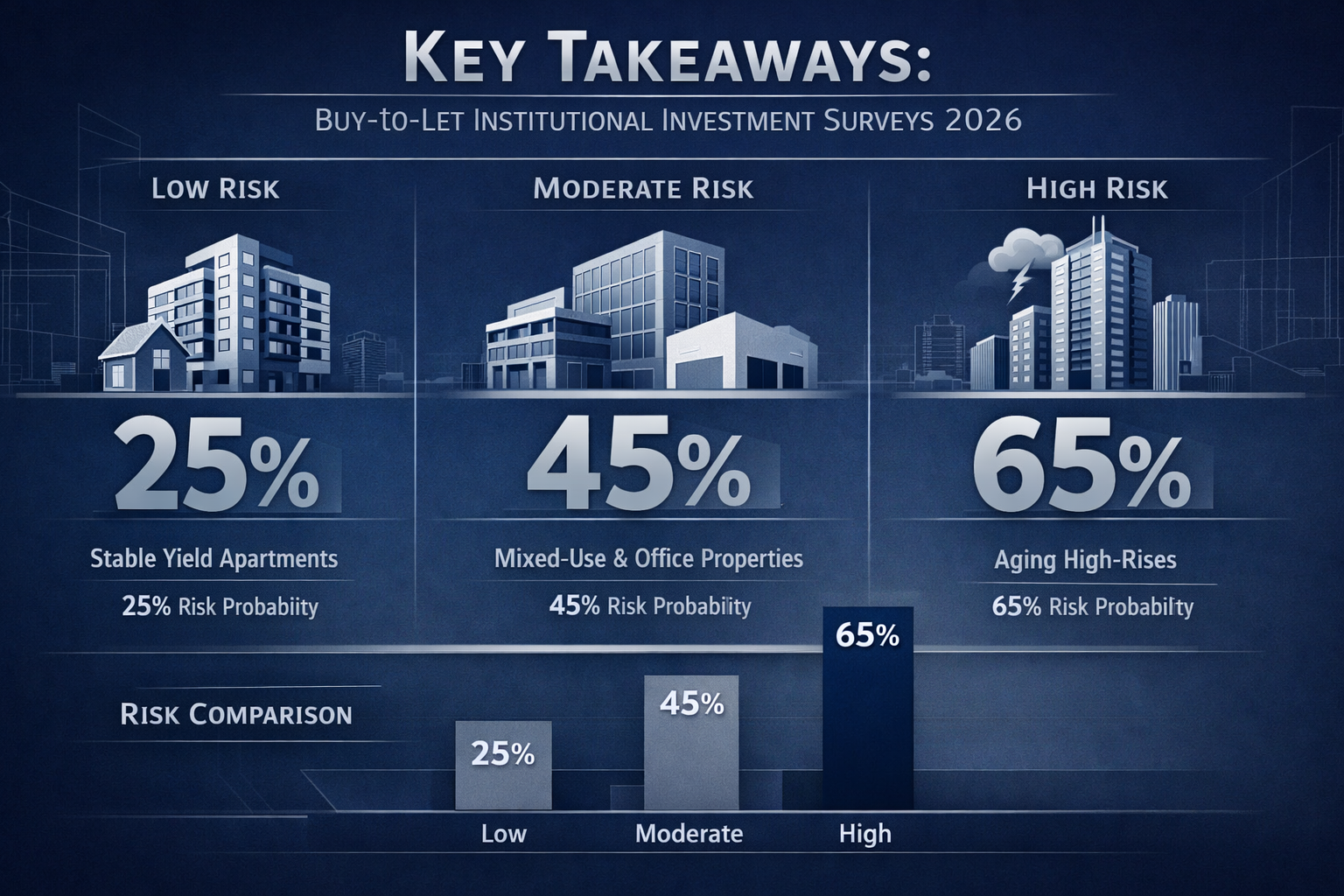
The buy-to-let market in 2026 presents a compelling paradox: improving affordability conditions coupled with heightened risk awareness. Professional landlords are witnessing a fundamental shift in how institutional capital evaluates residential investment opportunities.
The Interest Rate Environment and Investment Dynamics
The Bank of England's monetary policy trajectory has created a more favorable lending environment than many anticipated. With the base rate now at 3.75% and market speculation pointing toward further easing throughout 2026, mortgage costs have become more manageable for leveraged investors[2][3]. However, institutional underwriting explicitly assumes interest rates will remain higher for longer, requiring conservative rate-stress testing in all investment appraisals[1].
This cautious approach reflects lessons learned from recent volatility. Professional investors are modeling scenarios where rates could climb back to 5% or higher, ensuring their acquisitions can sustain profitability even under adverse conditions. This conservative stance makes comprehensive building surveys absolutely essential—unexpected capital expenditure on structural repairs or compliance upgrades can quickly erode returns in a higher-rate environment.
Regional Performance and Capital Deployment Patterns
The geographic distribution of buy-to-let returns has shifted dramatically. Top-performing regional markets include Belfast (up 7.8%), Liverpool (up 3.3%), Glasgow (up 2.6%), Newcastle (up 2.4%), and Manchester (up 2.4%)[2]. These cities offer compelling fundamentals: strong rental demand, improving infrastructure, and comparatively affordable entry points for institutional portfolios.
Savills forecasts UK property values will rise 22.2% over five years, with Yorkshire and The Humber and the North West projected at +28.8%, and Scotland, Wales, and the North East at +27.6%[2]. These projections have attracted significant institutional attention, but they also underscore the importance of rigorous property assessment. Not all properties within these high-growth regions will deliver equivalent returns—asset quality, location micro-factors, and structural condition create substantial performance dispersion.
Institutional Investment Priorities in 2026
Capital is flowing toward institutional-grade, future-proofed assets with hands-on value creation potential[1]. The dominant themes include:
- Durable cashflow generation through properties with strong tenant appeal and minimal void periods
- Energy efficiency and sustainability credentials that meet tightening regulatory standards
- Asset quality capable of handling rate swings without requiring distressed sales
- Value-add opportunities where strategic capital expenditure can enhance yields
This institutional mindset requires a fundamentally different approach to property surveys. Rather than simply identifying deal-breaking defects, surveys must provide comprehensive intelligence on capital expenditure requirements, yield optimization opportunities, and long-term asset positioning.
Building Surveys for Buy-to-Let Institutional Investments: Critical Assessment Areas
Institutional investors require survey reports that go far beyond basic structural assessments. The most sophisticated landlords commission multi-disciplinary inspections that evaluate properties across financial, technical, and regulatory dimensions.
Structural Integrity and Building Pathology
The foundation of any institutional building survey remains a thorough structural assessment. Professional surveyors examine:
Foundation and Substructure Analysis
- Settlement patterns and differential movement indicators
- Subsidence risk factors including soil type, drainage, and vegetation proximity
- Historic movement evidence through crack pattern analysis
- Foundation type identification and load-bearing capacity assessment
Superstructure Evaluation
- Load-bearing wall condition and structural adequacy
- Roof structure integrity including timber condition, sarking, and support systems
- Floor structure assessment for deflection, bounce, and load capacity
- Window and door frame condition affecting thermal performance and security
Building Envelope Performance
- External wall construction and weatherproofing effectiveness
- Damp penetration pathways and moisture ingress patterns
- Render, cladding, or external finish condition
- Pointing, flashing, and weatherproofing detail integrity
For institutional portfolios, even minor structural issues compound across multiple properties. A systematic approach to commercial building surveys ensures consistent assessment standards across acquisitions.
Services and Mechanical Systems Assessment
Modern tenants expect reliable, efficient building services. Survey assessments must evaluate:
| System Category | Key Assessment Points | Institutional Concerns |
|---|---|---|
| Heating Systems | Boiler age, efficiency rating, service history, capacity adequacy | Replacement costs, EPC impact, tenant satisfaction |
| Electrical Installation | Consumer unit condition, circuit protection, earthing adequacy, testing certification | Safety compliance, rewiring costs, insurance requirements |
| Plumbing and Drainage | Pipe materials, pressure adequacy, drainage effectiveness, leak evidence | Water damage risk, replacement costs, tenant disruption |
| Ventilation | Mechanical systems, natural ventilation adequacy, condensation control | Mold risk, health compliance, EPC ratings |
Institutional investors budget for lifecycle replacement of building services. Survey reports should provide clear guidance on remaining service life and replacement cost estimates for major systems.
Energy Performance and Sustainability Compliance
Energy efficiency has transitioned from a secondary consideration to a primary valuation driver. Investors are budgeting capital expenditure to improve Energy Performance Certificate (EPC) ratings as regulation tightens[1]. Sustainability credentials now command "credible sustainability premiums" underpinning valuations and tenant appeal[1].
EPC Rating Assessment
Current regulations require rental properties to achieve minimum EPC ratings, with further tightening anticipated. Survey reports must identify:
- Current EPC rating and underlying assessment data
- Cost-effective improvement pathways to higher ratings
- Barriers to improvement (listed building status, construction type, etc.)
- Projected energy cost savings from improvements
Thermal Performance Evaluation
Professional surveys increasingly incorporate thermal imaging to identify:
- Insulation deficiencies in walls, roofs, and floors
- Thermal bridging at junctions and penetrations
- Air leakage pathways affecting heating efficiency
- Glazing performance and upgrade opportunities
For properties requiring extensive energy improvements, drone roof surveys can efficiently assess roof condition and solar panel installation potential without expensive scaffolding access.
Regulatory Compliance and Statutory Requirements
Institutional investors face significant reputational and financial risks from compliance failures. Building surveys must verify:
Fire Safety Compliance
- Smoke and carbon monoxide detector provision
- Fire door integrity and escape route adequacy
- Compartmentation effectiveness in multi-unit buildings
- Electrical safety certification currency
Housing Health and Safety Rating System (HHSRS)
- Category 1 and 2 hazard identification
- Remediation cost estimates
- Enforcement risk assessment
- Tenant safety implications
Licensing Requirements
- HMO licensing compliance for multi-occupancy properties
- Selective licensing scheme requirements
- Minimum room size and amenity standards
- Management regulation compliance
Planning and Building Control
- Unauthorized alterations or extensions
- Building regulation compliance for past works
- Change of use considerations
- Conservation area or listed building constraints
Understanding what survey you need for different property types ensures appropriate scope and depth of regulatory assessment.
Yield Assessment and Financial Due Diligence Through Building Surveys
Building Surveys for Buy-to-Let Institutional Investments: Spotting Risks in 2026's Bullish Landlord Market extends beyond physical condition to encompass financial performance implications. Professional investors integrate survey findings directly into yield calculations and investment appraisals.
Capital Expenditure Forecasting
Survey reports provide the foundation for accurate capital expenditure budgeting. Institutional investors categorize expenditure into:
Immediate Requirements (Year 1)
- Critical safety issues requiring immediate remediation
- Compliance failures with regulatory deadlines
- Tenant-impacting defects affecting lettability
- Weather-protection failures risking further deterioration
Short-Term Planning (Years 2-5)
- Component replacements approaching end of service life
- Energy efficiency improvements for EPC compliance
- Preventative maintenance to avoid emergency failures
- Value enhancement opportunities
Long-Term Reserves (Years 6-10)
- Major component lifecycle replacements
- Roof covering renewal
- External redecoration and envelope maintenance
- Services infrastructure upgrades
Accurate capital expenditure forecasting prevents yield surprises and ensures adequate reserve provisioning. Many institutional investors apply a 1.5-2% annual reserve for ongoing maintenance, with additional provisions for known major works.
Rental Optimization Through Property Enhancement
Survey findings often reveal opportunities to enhance rental yields through strategic improvements:
Configuration Optimization
- Space reconfiguration to increase bedroom count
- Loft or basement conversion potential
- Annexe or outbuilding conversion opportunities
- Garden or outdoor space enhancement
Specification Upgrades
- Kitchen and bathroom modernization
- Flooring and decoration improvements
- Storage solutions and built-in furniture
- Smart home technology integration
Tenant Appeal Enhancement
- Energy efficiency improvements reducing tenant bills
- Parking provision or electric vehicle charging
- Bicycle storage and secure entry systems
- Communal space improvements in multi-unit buildings
Professional investors calculate the rental uplift per pound invested, targeting improvements delivering 15-20% annual returns through enhanced rental income.
Void Period Risk Assessment
Building condition directly impacts void periods—the silent killer of buy-to-let returns. Survey assessments should evaluate:
- Presentation condition affecting initial tenant interest
- Move-in readiness determining time-to-let after acquisition
- Ongoing maintenance requirements affecting tenant retention
- Competitive positioning relative to local market alternatives
Properties requiring extensive pre-letting works may experience 3-6 month void periods, dramatically impacting first-year returns. Institutional investors factor these delays into acquisition pricing, often negotiating discounts of 5-10% for properties requiring significant preparation.
Rental Growth Potential and Market Positioning
With rental growth forecast at 12% over the 2026-2030 period across the UK (11.5% in London)[2], understanding a property's ability to capture this growth becomes critical. Survey assessments inform positioning analysis:
Quality Tier Assessment
- Premium segment: Modern specification, energy-efficient, low maintenance
- Mid-market: Good condition, standard specification, competitive pricing
- Value segment: Basic specification, higher maintenance, price-sensitive tenants
Competitive Advantage Identification
- Unique features commanding rental premiums
- Location micro-advantages (parking, transport, schools)
- Specification elements exceeding market norms
- Energy efficiency delivering lower tenant costs
Properties positioned in the premium segment typically capture 150-200% of average rental growth, while value-segment properties may lag at 70-80% of market growth rates.
Risk Identification and Mitigation Strategies for Institutional Portfolios

Sophisticated investors use building surveys not merely to identify problems, but to develop comprehensive risk mitigation strategies. Building Surveys for Buy-to-Let Institutional Investments: Spotting Risks in 2026's Bullish Landlord Market requires systematic risk categorization and response planning.
Asset Obsolescence Risk
Asset obsolescence represents a critical threat to long-term returns, particularly for properties not meeting modern standards[1]. Survey assessments should evaluate:
Physical Obsolescence
- Outdated building systems requiring replacement
- Inefficient layouts not meeting current tenant expectations
- Aging materials approaching end of useful life
- Accessibility limitations for aging population
Functional Obsolescence
- Inadequate electrical capacity for modern appliances
- Insufficient broadband infrastructure
- Lack of home working space
- Inadequate storage or parking provision
Regulatory Obsolescence
- EPC ratings below anticipated future minimums
- Fire safety standards requiring upgrading
- Accessibility requirements for future regulations
- Environmental performance falling below market expectations
Institutional investors increasingly apply obsolescence reserves of 0.5-1% annually to fund ongoing modernization, ensuring properties remain competitive throughout the investment horizon.
Environmental and Climate Risk Assessment
Climate change introduces new risks requiring survey attention:
Flood Risk Evaluation
- Environment Agency flood zone classification
- Surface water flooding vulnerability
- Historical flooding evidence
- Drainage capacity and flood defense adequacy
Overheating and Thermal Comfort
- South-facing glazing and solar gain issues
- Ventilation adequacy for summer cooling
- Insulation levels affecting summer performance
- Climate adaptation requirements
Weather Resistance
- Extreme weather exposure and building orientation
- Roof covering wind resistance
- Drainage capacity for intense rainfall events
- Fabric durability under climate stress
Properties in flood zones may face insurance premium increases of 200-500%, fundamentally altering investment returns. Survey reports should quantify these risks and identify mitigation measures.
Legal and Title Risk Indicators
Building surveys often reveal physical evidence of legal complications:
Boundary and Access Issues
- Encroachments onto neighboring land
- Shared access arrangements and maintenance responsibilities
- Boundary feature condition and ownership
- Rights of way and easement evidence
Restrictive Covenants and Planning
- Physical evidence of covenant breaches
- Unauthorized development or alterations
- Change of use implications
- Conservation area or Article 4 direction impacts
Party Wall and Structural Interdependency
- Shared structural elements requiring party wall consent
- Evidence of neighboring works affecting the property
- Potential party wall disputes
- Structural interdependency with adjacent buildings
Understanding schedule of dilapidations principles helps institutional investors assess lease-related responsibilities in mixed-use or commercial elements.
Portfolio Concentration Risk
For investors building multi-property portfolios, building surveys inform diversification strategies:
Construction Type Diversification
- Victorian/Edwardian solid wall construction
- Inter-war cavity wall properties
- Post-war system builds
- Modern timber-frame or steel-frame construction
Age Profile Balancing
- Pre-1900 heritage properties
- Inter-war and post-war stock
- 1980s-2000s modern builds
- New-build and recently constructed
Geographic Risk Distribution
- Regional economic diversification
- Flood risk geographic spreading
- Regulatory regime variation (England, Scotland, Wales)
- Market cycle phase differences
Tenant Demographic Spread
- Family housing in suburban locations
- Professional housing near employment centers
- Student housing near universities
- Retirement housing in appropriate areas
Diversified portfolios typically experience 30-40% lower volatility in aggregate returns compared to concentrated holdings.
Advanced Survey Techniques for Institutional Due Diligence
Professional institutional investors increasingly deploy specialized survey techniques beyond traditional visual inspections. These advanced methodologies provide deeper insights into property condition and investment risks.
Thermal Imaging and Energy Assessment
Thermal imaging cameras reveal hidden defects and energy inefficiencies invisible to conventional surveys:
Insulation Deficiency Detection
- Missing or compressed loft insulation
- Cavity wall insulation voids or settlement
- Thermal bridging at structural junctions
- Floor insulation gaps and cold spots
Moisture and Damp Investigation
- Hidden water leaks in concealed pipework
- Roof leak pathways before visible damage
- Rising damp extent and moisture patterns
- Condensation risk areas and cold surfaces
Air Leakage Identification
- Draft pathways around windows and doors
- Service penetration air leakage
- Loft hatch and access point gaps
- Ventilation system performance
Thermal surveys typically cost £300-600 per property but can identify improvement opportunities delivering 10-15% energy cost reductions, significantly enhancing tenant appeal and EPC ratings.
Structural Engineering Assessments
For properties showing structural concerns, specialist engineering input provides definitive analysis:
Structural Movement Investigation
- Crack monitoring over time
- Ground investigation and soil analysis
- Foundation design adequacy assessment
- Remediation strategy development
Load-Bearing Capacity Analysis
- Floor loading for HMO or commercial use
- Roof structure assessment for solar panels
- Wall removal feasibility for reconfiguration
- Conversion potential structural constraints
Remediation Cost Certainty
- Detailed repair specifications
- Competitive tender cost estimates
- Phasing and access strategies
- Temporary works requirements
Structural engineering reports typically cost £800-2,000 but provide essential certainty for properties with significant defects, often enabling negotiated price reductions of 5-15% based on evidenced repair costs.
Environmental and Contamination Surveys
For properties with industrial heritage or commercial history, environmental assessments identify contamination risks:
Phase I Desktop Assessment
- Historical land use research
- Regulatory database searches
- Site reconnaissance and walkover
- Preliminary risk assessment
Phase II Intrusive Investigation
- Soil sampling and laboratory analysis
- Groundwater monitoring and testing
- Gas monitoring for landfill or mining
- Asbestos survey for pre-2000 buildings
Remediation Planning
- Contamination extent mapping
- Remediation strategy options
- Cost estimation and liability assessment
- Regulatory approval pathway
Environmental issues can create liabilities of £50,000-500,000+ for contaminated sites, making these assessments essential for brownfield or converted industrial properties.
Drone and Aerial Survey Technology
Modern drone technology revolutionizes roof and elevation surveys, particularly for tall or complex buildings:
Roof Condition Assessment
- Covering material condition and remaining life
- Chimney stack and flashing integrity
- Gutter and drainage system condition
- Flat roof membrane condition
Elevation and Facade Inspection
- High-level masonry and render condition
- Window and door condition at height
- Rainwater goods and drainage
- Structural movement evidence
Solar Panel Feasibility
- Roof orientation and shading analysis
- Structural capacity preliminary assessment
- Installation access route planning
- Yield estimation and financial modeling
Professional drone roof surveys cost £200-400 compared to £1,500-3,000 for traditional scaffolding access, delivering significant cost savings while providing superior photographic documentation.
Regional Market Analysis: Where Building Surveys Matter Most in 2026
The geographic distribution of buy-to-let returns creates varying survey priorities across UK regions. Understanding regional characteristics helps institutional investors tailor survey scope and focus areas.
Northern Powerhouse: Manchester, Liverpool, and Newcastle
These high-growth markets offer compelling yields but present specific survey challenges:
Victorian Terraced Housing Stock
- Solid wall construction requiring internal or external insulation
- Damp and moisture issues from lack of damp-proof courses
- Roof condition in properties with shared valley gutters
- Rear extension and outbuilding structural condition
Conversion Properties
- Building regulation compliance for flat conversions
- Sound insulation adequacy between units
- Fire safety and means of escape compliance
- Shared services and maintenance responsibilities
Energy Efficiency Challenges
- Older housing stock typically EPC D or E rated
- Significant capital expenditure required for EPC C compliance
- Solid wall insulation costs of £8,000-15,000 per property
- Double glazing and heating system upgrades
Survey focus should emphasize energy improvement pathways and conversion compliance verification, as these factors critically impact long-term lettability and regulatory compliance.
Scotland: Glasgow and Edinburgh Markets
Scottish properties present unique regulatory and construction characteristics:
Scottish Building Standards
- Different regulatory framework from England and Wales
- Repairing obligations and common property responsibilities
- Tenement maintenance and shared cost implications
- Factor arrangements and management structures
Traditional Scottish Construction
- Stone-built tenements with shared structural elements
- Slate roofing requiring specialist repair
- Sash and case windows with maintenance requirements
- Shared drainage and service infrastructure
Energy Efficiency Standards
- Scottish EPC requirements and future trajectories
- Repairing standard obligations
- Tolerable standard compliance
- Energy Efficient Scotland program implications
Understanding chartered surveyors with Scottish market expertise ensures appropriate assessment of tenement properties and shared ownership complexities.
Belfast and Northern Ireland Opportunities
Belfast's 7.8% annual growth[2] attracts institutional attention, but requires specialized local knowledge:
Construction Type Variations
- Prevalence of cavity wall construction
- Different building regulation history
- Terraced housing with specific regional characteristics
- Post-conflict regeneration area properties
Regulatory Environment
- Northern Ireland-specific landlord registration
- Different tenancy law framework
- Energy efficiency requirements and trajectories
- Planning and building control variations
Market Dynamics
- Emerging institutional market with developing standards
- Lower entry prices enabling portfolio scaling
- Strong rental demand from limited supply
- Regeneration area opportunities and risks
Survey emphasis should include regulatory compliance verification under Northern Ireland-specific frameworks and regeneration area due diligence for properties in transitioning neighborhoods.
Yorkshire and the Humber: Emerging Institutional Markets
Projected 28.8% five-year growth[2] makes this region increasingly attractive:
Diverse Property Types
- Victorian terraces in urban centers
- Inter-war semi-detached suburban stock
- Modern estates in commuter towns
- Rural and village properties
Economic Drivers
- Leeds financial and professional services growth
- Sheffield and Bradford regeneration
- Transport infrastructure improvements
- University cities driving rental demand
Survey Priorities
- Energy efficiency given older housing stock prevalence
- Structural condition of Victorian properties
- Conversion potential in larger properties
- Commuter location accessibility and parking
Regional diversity requires flexible survey approaches tailored to specific property types and local market characteristics.
Integrating Survey Findings into Investment Decision-Making
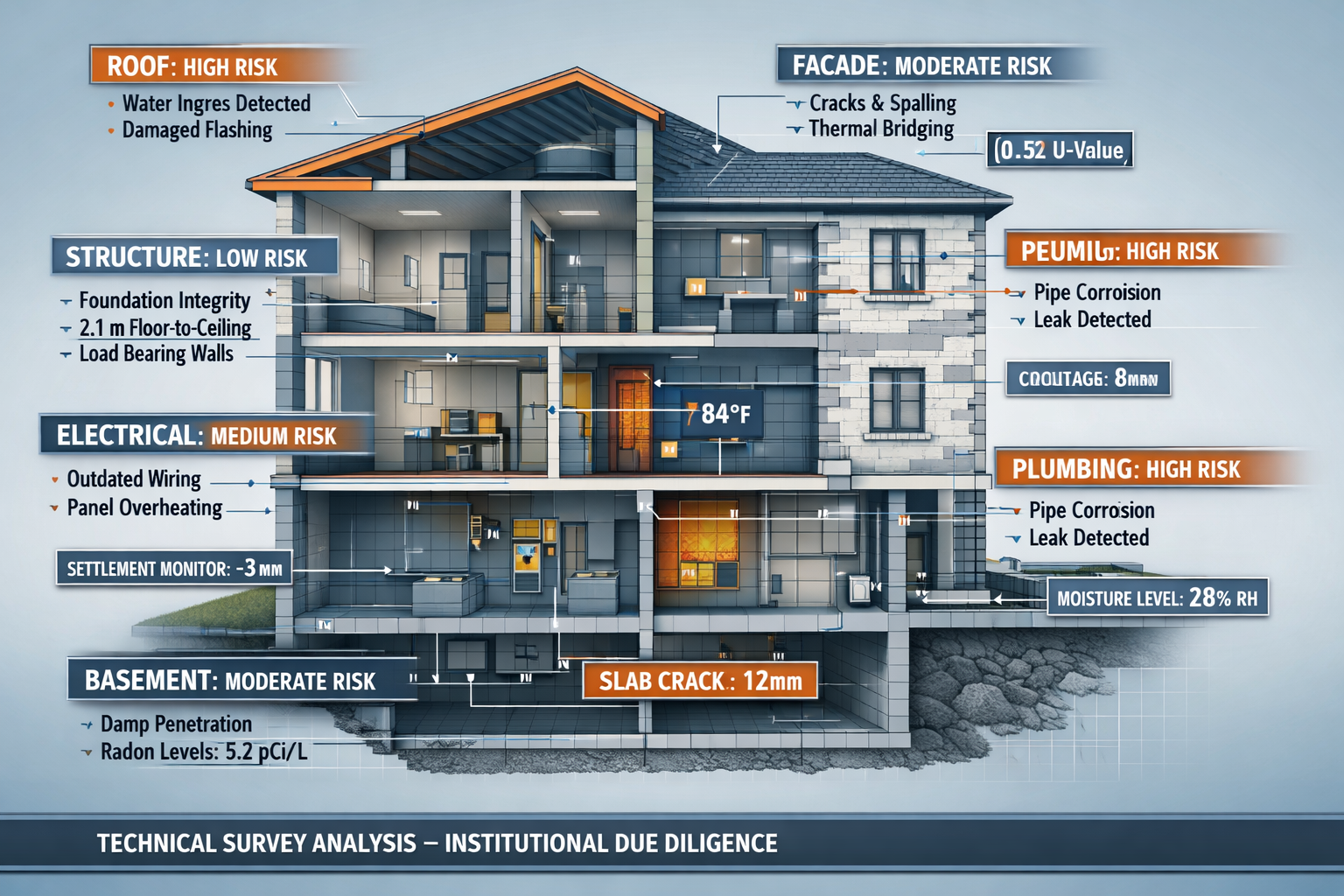
Building Surveys for Buy-to-Let Institutional Investments: Spotting Risks in 2026's Bullish Landlord Market delivers maximum value when systematically integrated into acquisition processes and investment committees.
Survey Report Analysis Framework
Professional investors apply structured frameworks to survey report evaluation:
Risk Categorization Matrix
| Risk Level | Definition | Investment Response |
|---|---|---|
| Critical | Structural safety, regulatory compliance, immediate expenditure >£20k | Reject or renegotiate 15-25% |
| Significant | Major systems near end-of-life, EPC compliance gaps, expenditure £10-20k | Renegotiate 10-15% or reserve funds |
| Moderate | Routine maintenance, minor defects, expenditure £5-10k | Reserve funds, factor into yields |
| Minor | Cosmetic issues, routine upkeep, expenditure <£5k | Note for management planning |
Financial Impact Assessment
- Immediate repair cost quantification
- Short-term capital expenditure scheduling
- Long-term reserve requirement calculation
- Yield impact modeling under various scenarios
Strategic Fit Evaluation
- Alignment with portfolio quality standards
- Energy efficiency trajectory compatibility
- Management intensity assessment
- Exit strategy implications
Systematic analysis ensures consistent decision-making across multiple acquisitions and investment team members.
Negotiation Strategies Based on Survey Findings
Survey reports provide powerful negotiation leverage when used strategically:
Price Reduction Approaches
- Direct cost offset: Deduct estimated repair costs plus 10-20% contingency
- Yield adjustment: Recalculate offer based on extended void periods or reduced rents
- Risk premium: Apply discount for uncertainty or complexity of remediation
- Competitive positioning: Reference comparable properties in better condition
Alternative Deal Structures
- Retention of funds pending completion of specified works
- Staged payments linked to remediation milestones
- Seller-funded repairs before completion
- Warranty or insurance arrangements for latent defects
Walk-Away Thresholds
Institutional investors establish clear criteria for deal abandonment:
- Structural issues exceeding 15% of property value
- Regulatory compliance costs preventing viable yields
- Obsolescence factors requiring transformation beyond investment thesis
- Environmental or contamination liabilities creating unacceptable risk
Professional investors walk away from approximately 30-40% of properties following detailed surveys, maintaining discipline to avoid value-destructive acquisitions.
Portfolio-Level Decision Integration
Survey findings inform not just individual acquisitions but portfolio-wide strategies:
Capital Allocation Optimization
- Prioritizing acquisitions requiring minimal immediate expenditure
- Balancing portfolio between turnkey and value-add opportunities
- Scheduling major works to smooth cash flow requirements
- Identifying economies of scale for multi-property improvements
Risk Aggregation Analysis
- Identifying concentration risks in specific defect types
- Assessing aggregate exposure to regulatory changes
- Evaluating portfolio-wide energy efficiency distribution
- Monitoring geographic concentration of specific construction types
Value Creation Sequencing
- Prioritizing improvements delivering highest yield enhancement
- Staging capital expenditure to maintain liquidity
- Coordinating void periods with major works
- Leveraging contractor relationships across portfolio
Sophisticated investors maintain centralized survey databases enabling portfolio-wide analysis and pattern identification across hundreds of properties.
Future-Proofing Institutional Buy-to-Let Investments
The most successful institutional investors use building surveys not just to assess current condition but to evaluate future resilience and adaptability. Building Surveys for Buy-to-Let Institutional Investments: Spotting Risks in 2026's Bullish Landlord Market requires forward-looking analysis of regulatory trajectories and market evolution.
Anticipating Regulatory Change
Survey assessments should evaluate properties against anticipated future requirements:
Energy Efficiency Trajectory
- Current EPC C minimum likely to tighten to EPC B by 2030
- Cost pathways to achieve higher ratings
- Technical feasibility constraints (listed buildings, construction types)
- Stranded asset risk for properties unable to meet future standards
Electrical Safety Evolution
- Five-year electrical testing cycles becoming standard
- Consumer unit upgrades to current standards
- Electric vehicle charging infrastructure requirements
- Smart metering and energy monitoring integration
Fire Safety Enhancement
- Sprinkler system requirements for tall buildings
- Compartmentation standards in conversions
- Detector and alarm system specifications
- External wall system safety assessments
Properties capable of meeting anticipated 2030 standards without prohibitive expenditure command premium valuations of 10-15% compared to those facing significant compliance challenges.
Climate Adaptation and Resilience
Climate change impacts require long-term resilience assessment:
Overheating Risk Management
- Passive cooling design features
- Ventilation adequacy for warmer summers
- Solar shading and glazing orientation
- Green infrastructure and urban heat island mitigation
Flood Resilience Measures
- Property-level flood protection potential
- Resilient construction materials and finishes
- Drainage capacity for intense rainfall
- Sustainable drainage system integration
Weather Resistance Enhancement
- Roof covering wind resistance ratings
- External envelope durability
- Drainage system capacity
- Landscape and boundary feature stability
Climate-resilient properties increasingly attract tenant premiums of 5-10% as awareness of environmental risks grows among occupiers.
Technology Integration and Smart Building Features
Modern tenants increasingly expect technology integration:
Connectivity Infrastructure
- Full-fiber broadband availability and capacity
- Mobile signal strength and coverage
- Wi-Fi infrastructure in common areas
- Future 5G and connectivity evolution readiness
Smart Home Readiness
- Smart heating control compatibility
- Lighting and appliance automation potential
- Security system integration capability
- Energy monitoring and management systems
Operational Technology
- Remote property management system compatibility
- Digital access control and keyless entry
- Maintenance monitoring and predictive systems
- Tenant communication platform integration
Properties with comprehensive technology infrastructure achieve 5-8% rental premiums and experience 20-30% shorter void periods compared to basic specification alternatives.
Demographic Change Adaptation
Survey assessments should evaluate adaptability to evolving tenant demographics:
Aging Population Accommodation
- Level access potential and step-free design
- Bathroom adaptation capability
- Stair lift installation feasibility
- Accessibility standard compliance potential
Home Working Accommodation
- Dedicated workspace provision or creation potential
- Natural lighting and ventilation adequacy
- Broadband capacity and reliability
- Acoustic separation for video conferencing
Flexible Living Arrangements
- Annexe or multi-generational living potential
- Bedroom count reconfiguration options
- Independent living space creation
- Parking for multiple vehicles
Adaptable properties maintain letting appeal across economic cycles and demographic shifts, reducing obsolescence risk and protecting long-term values.
Conclusion: Mastering Building Surveys for Institutional Buy-to-Let Success
Building Surveys for Buy-to-Let Institutional Investments: Spotting Risks in 2026's Bullish Landlord Market represents far more than a technical due diligence exercise—it forms the cornerstone of successful institutional property investment. As professional landlords aggressively deploy capital into regional markets offering 22.2% five-year growth potential[2] and 12% rental appreciation[2], the ability to systematically identify risks, quantify opportunities, and future-proof acquisitions separates high-performing portfolios from underachievers.
The 2026 market environment demands sophisticated survey approaches that integrate structural assessment, energy efficiency evaluation, regulatory compliance verification, and financial modeling. With interest rates stabilizing at 3.75% but institutional underwriting assuming rates will remain higher for longer[1][3], unexpected capital expenditure or compliance costs can rapidly erode investment returns. Comprehensive building surveys provide the intelligence necessary to avoid value-destructive acquisitions while identifying properties offering genuine value creation potential.
Key Success Factors for Institutional Investors
✅ Commission comprehensive, multi-disciplinary surveys that extend beyond basic structural assessments to encompass energy performance, regulatory compliance, and future-proofing potential
✅ Integrate survey findings systematically into investment decision-making through structured risk categorization, financial impact modeling, and portfolio-level analysis
✅ Prioritize energy efficiency and sustainability as these factors increasingly drive valuations, tenant appeal, and regulatory compliance in an evolving market[1]
✅ Maintain disciplined walk-away thresholds to avoid properties with structural issues, compliance gaps, or obsolescence factors that prevent achieving target returns
✅ Leverage specialized survey techniques including thermal imaging, drone inspections, and structural engineering assessments for complex properties or significant defects
Actionable Next Steps
For institutional investors building or expanding buy-to-let portfolios in 2026's bullish market:
-
Establish survey protocols defining scope, specialist requirements, and decision frameworks for different property types and investment scenarios
-
Build surveyor relationships with professionals understanding institutional investment requirements, particularly in target regional markets like Manchester, Liverpool, Belfast, and Yorkshire
-
Create capital expenditure models integrating survey findings into yield calculations, reserve planning, and investment committee presentations
-
Develop energy efficiency roadmaps for portfolio properties, budgeting improvements to meet anticipated EPC B requirements by 2030
-
Implement portfolio monitoring systems tracking survey findings across acquisitions to identify patterns, concentration risks, and value creation opportunities
-
Engage specialist advisors for commercial building surveys in mixed-use properties or homebuyer report vs building survey decisions for different property types
The institutional buy-to-let sector in 2026 offers compelling opportunities for disciplined investors who combine market insight with rigorous property assessment. By mastering building survey processes and integrating findings into systematic investment frameworks, professional landlords can build resilient, high-performing portfolios capable of delivering consistent returns across economic cycles. The bullish market rewards those who look beyond surface-level presentation to understand true asset quality, compliance positioning, and long-term value creation potential—making comprehensive building surveys the essential foundation for institutional buy-to-let success.
References
[1] Real Estate Investment In 2026 Where Are Institutional And Corporate Buyers Depl – https://www.reedsmith.com/our-insights/blogs/real-estate-legal-update/102mekq/real-estate-investment-in-2026-where-are-institutional-and-corporate-buyers-depl/
[2] Why Buy To Let Is Still Worth It In 2026 – https://www.propertynotify.co.uk/investment/why-buy-to-let-is-still-worth-it-in-2026/
[3] How Does Property Investment Stack Up In 2026 – https://www.buyassociationgroup.com/en-gb/news/how-does-property-investment-stack-up-in-2026/
[4] Institutional Buy To Let Valuation Surveys Assessing High Yield Opportunities In The 2026 Recovery – https://nottinghillsurveyors.com/blog/institutional-buy-to-let-valuation-surveys-assessing-high-yield-opportunities-in-the-2026-recovery
[5] Emerging Trends Report 2026 – https://www.pwc.com/gx/en/investment-management-real-estate/assets/emerging-trends-report-2026.pdf