
{"cover":"Professional landscape format (1536×1024) hero image featuring bold text overlay 'Building Surveys for Retail Revivals: Assessing Shopping Centres for 2026 Repurposing Opportunities' in extra large 70pt white sans-serif font with dark shadow and semi-transparent navy overlay box, positioned in upper third. Background shows dramatic split-screen composition: left side displays abandoned shopping centre interior with empty storefronts and 'For Lease' signs, right side shows vibrant mixed-use development with residential apartments, green spaces, and bustling street-level retail. Professional surveyor in high-visibility vest examining structural plans in foreground. Color scheme: deep navy, bright orange accents, white text. Magazine cover quality, editorial style, high contrast for maximum readability.","content":["Landscape format (1536×1024) detailed illustration showing professional building surveyor conducting comprehensive structural assessment inside shopping centre. Scene includes surveyor using laser measuring equipment and thermal imaging camera to inspect concrete pillars, ceiling infrastructure, and load-bearing walls. Visual overlays display technical diagrams, structural integrity ratings, and condition assessment annotations. Split-screen composition shows before/after comparison: deteriorating retail space versus proposed adaptive reuse floor plan with residential units, healthcare facilities, and community spaces. Color-coded zones indicate structural soundness levels (green, amber, red). Professional lighting, architectural blueprint aesthetic, technical precision.","Landscape format (1536×1024) comprehensive infographic displaying successful shopping centre transformation case studies. Visual features side-by-side comparison of four major projects: Mashpee Commons town center retrofit, Belmar Shopping District mixed-use conversion, Crosstown Concourse adaptive reuse, and Dead Mall Apartments housing project. Each case study includes before/after aerial photography, square footage statistics, timeline graphics, and key transformation elements (residential density, healthcare anchors, community spaces). Central flowchart illustrates repurposing decision tree from initial building survey through structural assessment to final adaptive reuse strategy. Icons represent different use categories: housing, healthcare, education, retail, recreation. Modern infographic design with clean typography and data visualization.","Landscape format (1536×1024) technical diagram illustrating comprehensive building survey methodology for retail revival assessment. Central image shows cross-section cutaway view of multi-level shopping centre revealing structural systems, mechanical infrastructure, roof condition, foundation integrity, and accessibility features. Surrounding the main illustration are detailed callout boxes highlighting specific survey elements: structural engineer examining load-bearing capacity, drone conducting roof inspection, dilapidation assessment of vacant anchor stores, boundary surveys for parcel subdivision, and defect identification systems. Professional architectural rendering style with technical annotations, measurement indicators, and color-coded condition ratings. Includes surveying equipment: total stations, moisture meters, crack monitoring devices. Clean, educational aesthetic with blueprint-inspired design elements."]"}
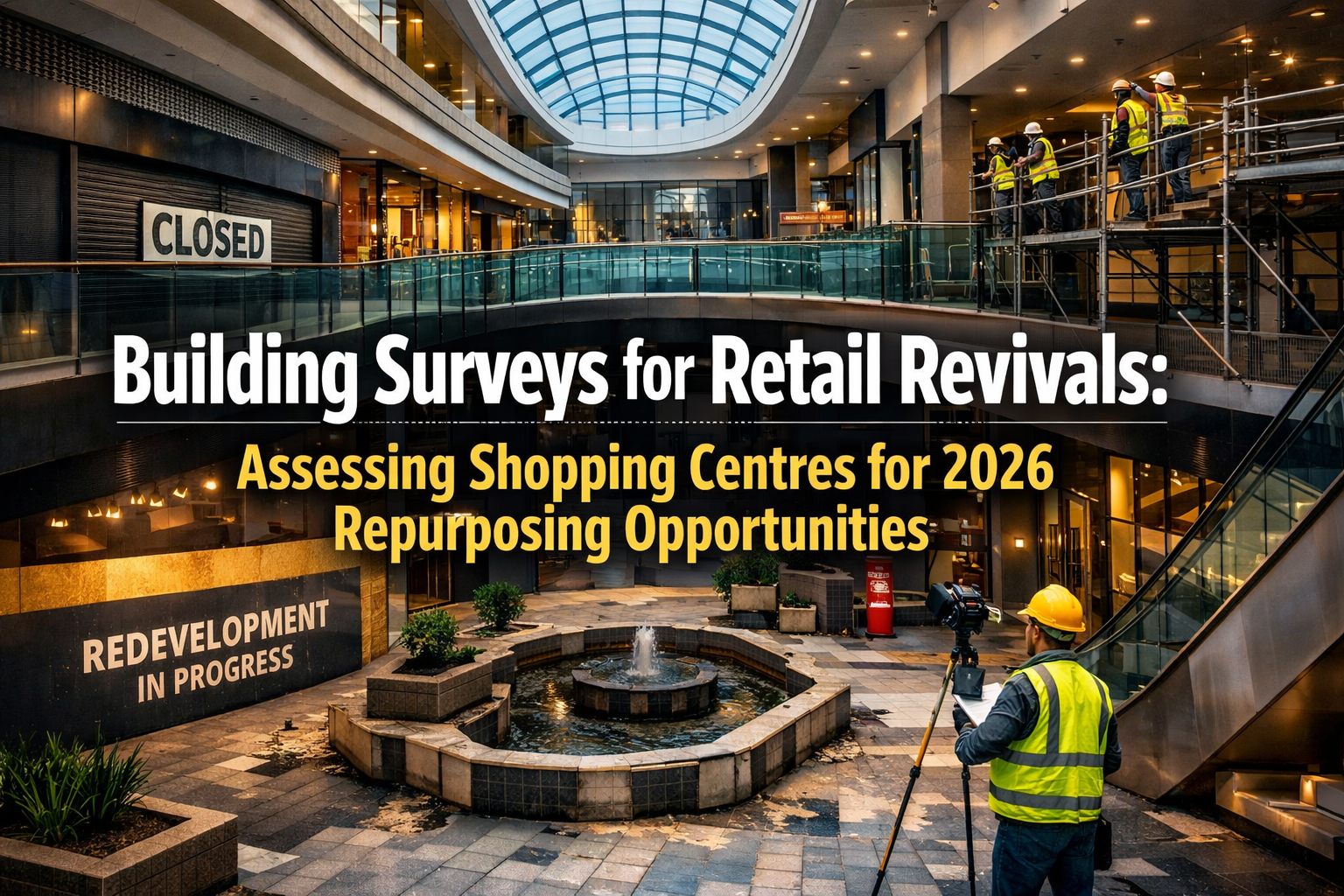
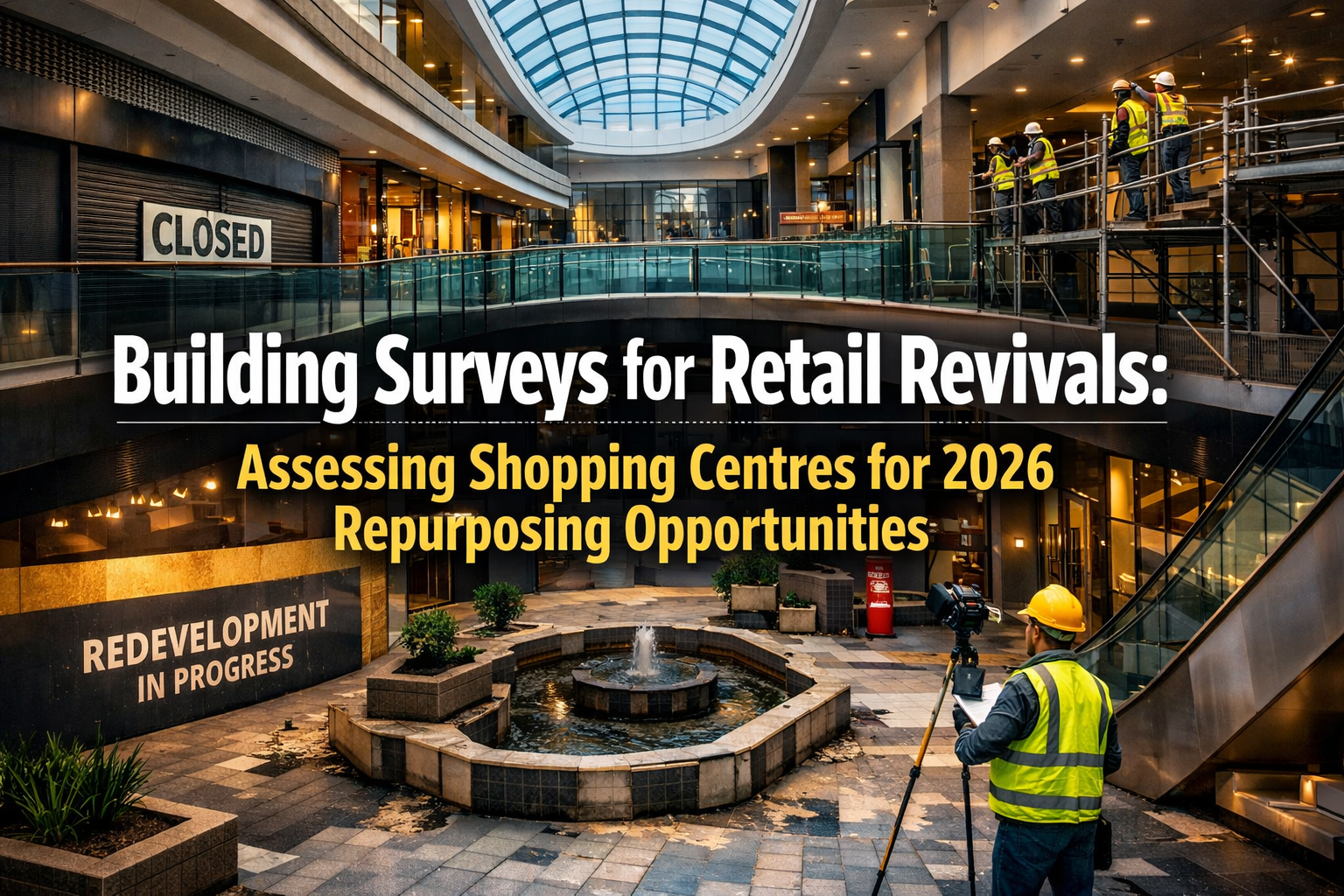
The high street is experiencing a remarkable transformation. Across the nation, shopping centres once deemed obsolete are emerging as valuable phoenix assets—properties poised for dramatic reinvention. Building Surveys for Retail Revivals: Assessing Shopping Centres for 2026 Repurposing Opportunities represents a critical evaluation process that helps investors, developers, and local authorities unlock the hidden potential within these undervalued structures. As traditional retail models continue to evolve, professional surveyors are playing an essential role in determining which centres can successfully transition into mixed-use developments, residential complexes, healthcare facilities, or vibrant community hubs.
The retail landscape has shifted dramatically, creating unprecedented opportunities for adaptive reuse. Shopping centres that once served as community anchors now stand partially vacant, yet their robust infrastructure, prime locations, and existing utilities make them ideal candidates for transformation. Professional building surveys provide the foundation for these ambitious revival projects, identifying structural capabilities, uncovering hidden defects, and assessing the feasibility of converting retail spaces into thriving multi-purpose destinations.
Key Takeaways
- Professional building surveys are essential for evaluating shopping centre structural integrity, identifying conversion feasibility, and uncovering potential risks before committing to adaptive reuse projects
- Successful retail revivals require comprehensive assessments covering structural capacity, mechanical systems, accessibility compliance, and environmental considerations to support mixed-use transformations
- Shopping centres are becoming mixed-use developments with residential units, healthcare facilities, educational spaces, and wellness anchors replacing traditional retail tenants throughout 2026
- Strategic parcel subdivision and authentic placemaking require detailed boundary surveys and dilapidation assessments to create pedestrian-friendly town center environments
- Early structural evaluation significantly reduces project risks and costs, enabling developers to make informed decisions about repurposing opportunities in the evolving retail landscape
Understanding the Retail Revival Phenomenon in 2026
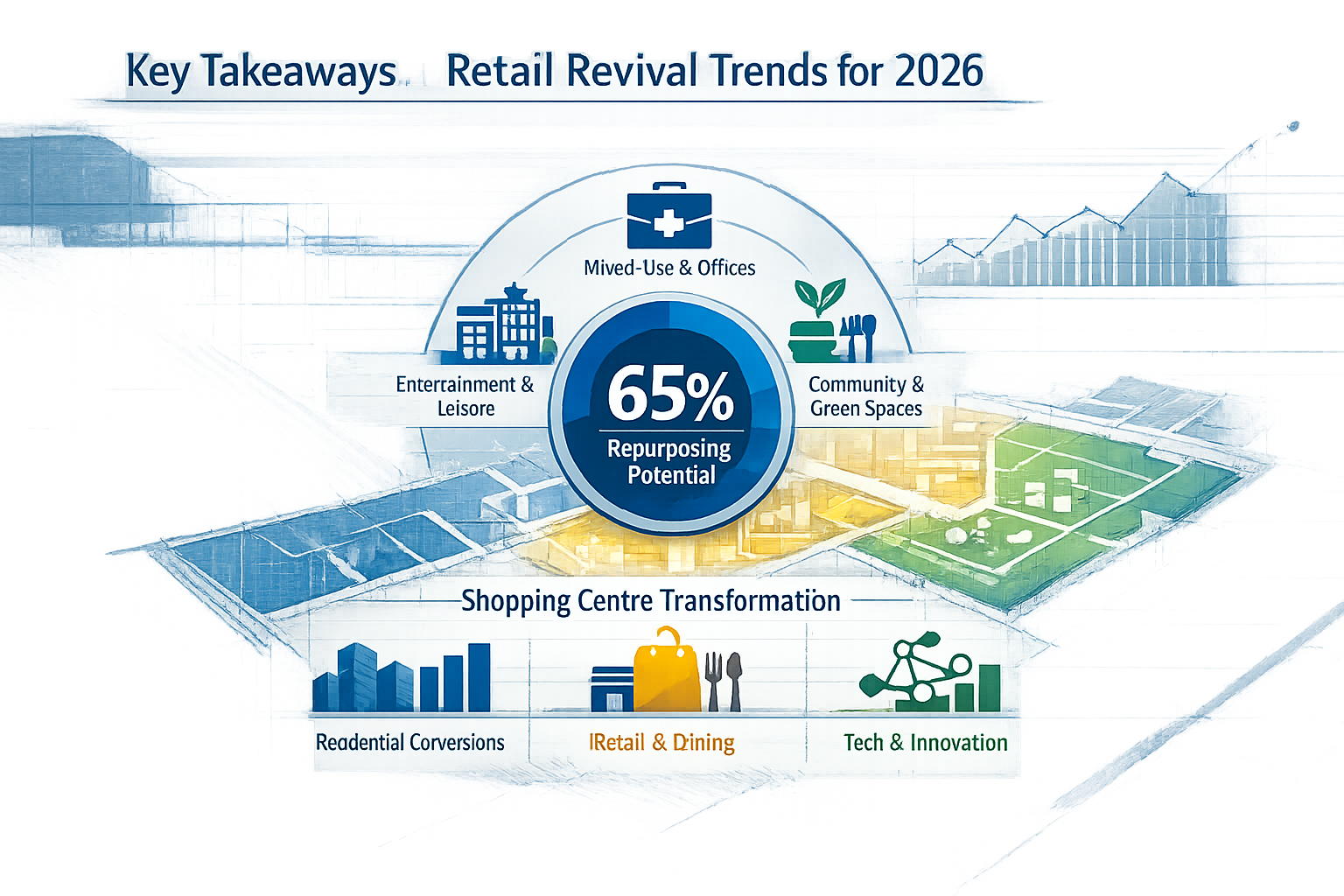
The transformation of shopping centres represents one of the most significant real estate trends of the decade. Traditional malls and retail complexes are being reimagined as mixed-use town centers that blend residential, commercial, healthcare, and recreational spaces into cohesive communities. This shift reflects changing consumer preferences, demographic trends, and the growing demand for walkable, amenity-rich neighborhoods.
The Shift from Retail to Mixed-Use Development
Shopping centres built during the retail boom of the 1970s through 1990s were designed primarily for commerce. These structures typically featured large anchor department stores, interior corridors connecting smaller retail units, and expansive parking facilities. However, the rise of e-commerce and changing shopping habits have left many of these properties underutilized or completely vacant.
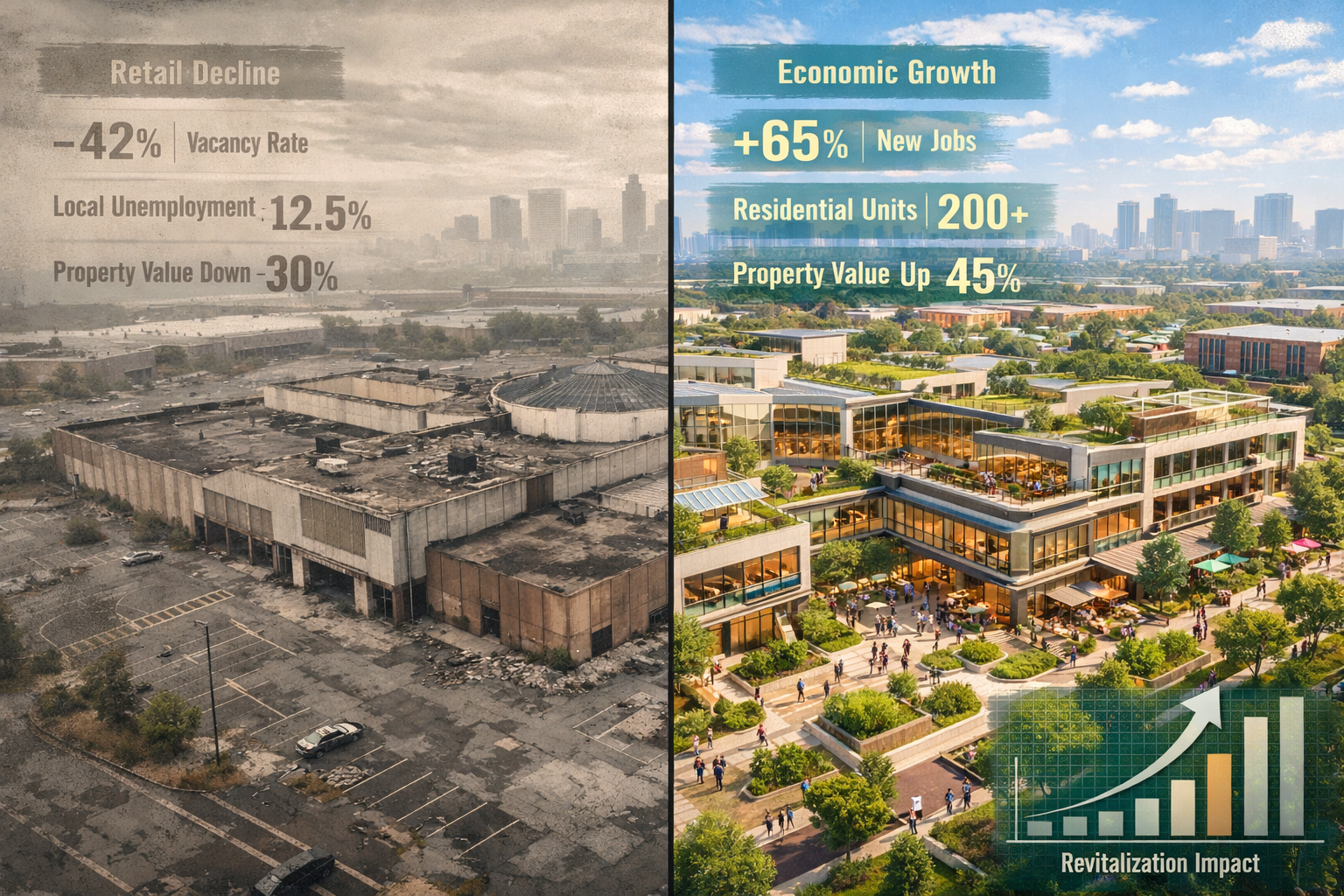
The transformation potential is remarkable. Mashpee Commons has become a "poster child for center retrofits," demonstrating how strategic redevelopment can create vibrant town centers[1]. Similarly, the Belmar Shopping District in Lakewood, Colorado successfully transformed a 1.4 million square foot structure into the heart of the community[1]. These success stories prove that with proper assessment and planning, shopping centres can evolve into thriving mixed-use destinations.
Why Shopping Centres Make Ideal Conversion Candidates
Several factors make shopping centres particularly attractive for adaptive reuse:
🏗️ Robust structural systems designed to support heavy retail loads
📍 Prime locations with excellent accessibility and established infrastructure
🚗 Ample parking that can be reconfigured for residential or mixed-use needs
⚡ Existing utilities including electrical, plumbing, and HVAC systems
🌳 Large footprints allowing creative subdivision and placemaking opportunities
The Eastern Hills Mall in Clarence, New York exemplifies this potential. The 100-acre, 1 million square foot property is being redeveloped into a mixed-use town center with groundbreaking expected in 2025 and opening targeted for 2028[1]. Such transformations require meticulous planning and comprehensive building surveys to ensure structural viability.
Emerging Use Cases for Repurposed Retail Spaces
The adaptive reuse of shopping centres has spawned diverse conversion strategies:
Residential Conversions: The Dead Mall Apartments project in Austin, Texas converted a defunct shopping mall into affordable housing units, directly addressing the city's housing demand[3]. High-density residential development in former retail spaces helps communities tackle housing shortages while revitalizing underutilized properties.
Healthcare Facilities: Traditional retail anchors are being replaced by medical centers. A former Macy's at Alexandria Mall in Louisiana was converted into a regional medical center, while RWJBarnabas Health opened a children's specialized hospital at a former department store location[3]. Wellness anchors including fitness and healthcare facilities are replacing closing department stores as primary shopping center anchors in 2026[4].
Education and Cultural Hubs: Crosstown Concourse in Memphis transformed a former Sears store into a facility housing a high school, office spaces, and arts-focused organizations[3]. These cultural conversions create community gathering spaces that serve multiple generations.
Critical Components of Building Surveys for Retail Revivals: Assessing Shopping Centres for 2026 Repurposing Opportunities
Comprehensive building surveys form the cornerstone of successful retail revival projects. These assessments go far beyond basic property inspections, examining every aspect of a structure's condition, capabilities, and conversion potential. Professional surveyors must evaluate structural integrity, mechanical systems, compliance issues, and environmental factors to determine whether a shopping centre can support its intended new use.
Structural Integrity Assessment
The foundation of any conversion project begins with understanding the building's structural capacity. Shopping centres were designed with specific load requirements for retail use, but adaptive reuse often demands different structural capabilities.
Load-Bearing Capacity Analysis: Converting retail spaces into residential units requires careful evaluation of floor loading capacities. Residential occupancy typically involves different weight distributions than retail, particularly when considering furniture, fixtures, and increased occupancy densities. Structural engineers must assess whether existing columns, beams, and floor systems can accommodate new uses without costly reinforcement.
Foundation Condition Evaluation: Many shopping centres were built on large concrete slabs designed for single-story retail operations. Multi-story conversions or significant structural modifications require thorough foundation assessments to ensure adequate support. Settlement issues, cracking, or deterioration must be identified early in the planning process.
Roof Structure and Condition: Shopping centre roofs often span large areas with minimal internal support. Comprehensive roof surveys using modern techniques including drone technology can identify membrane deterioration, structural damage, and water infiltration issues that could compromise conversion projects.
Mechanical, Electrical, and Plumbing Systems Evaluation
Existing building systems rarely meet the requirements of adaptive reuse projects without significant upgrades or replacement.
| System Component | Retail Requirements | Mixed-Use Requirements | Assessment Focus |
|---|---|---|---|
| HVAC | Zone-based cooling for retail spaces | Individual climate control for residential units | Capacity, efficiency, adaptability |
| Electrical | High-power retail lighting and equipment | Residential service panels and circuits | Distribution capacity, code compliance |
| Plumbing | Public restrooms, limited fixtures | Multiple residential units with full facilities | Water pressure, drainage capacity, pipe condition |
| Fire Suppression | Basic sprinkler coverage | Enhanced residential fire safety systems | System adequacy, code compliance |
The age and condition of these systems significantly impact conversion feasibility and project costs. Many shopping centres built before modern energy efficiency standards require complete mechanical system replacement to meet current building codes and sustainability expectations.
Compliance and Regulatory Considerations
Adaptive reuse projects must navigate complex regulatory environments that differ substantially from original retail construction standards.
Building Code Compliance: Converting retail spaces to residential, healthcare, or educational uses triggers different building code requirements. Surveyors must identify gaps between current conditions and required standards for:
- Fire safety systems and egress requirements
- Accessibility standards under current disability legislation
- Ventilation and indoor air quality standards
- Sound insulation between residential units
- Natural light and window requirements for habitable spaces
Planning and Zoning Assessments: Many shopping centres occupy land zoned exclusively for commercial use. Successful conversions often require rezoning applications supported by detailed building surveys demonstrating how proposed changes align with community development goals.
Environmental Compliance: Specific defect reports must address environmental concerns including asbestos-containing materials, lead paint, underground storage tanks, and potential contamination from former dry-cleaning or automotive service tenants.
Dilapidation and Defect Identification
Vacant or underutilized shopping centres often suffer from deferred maintenance and progressive deterioration. Comprehensive dilapidation surveys document existing conditions and identify repair priorities.
Common Defects in Aging Retail Properties:
- 💧 Water infiltration through deteriorated roofing membranes
- 🔧 Corroded or obsolete mechanical systems
- ⚡ Outdated electrical panels and wiring
- 🧱 Concrete spalling and structural cracking
- 🪟 Failed window seals and glazing systems
- 🏗️ Deteriorated parking structures and hardscaping
Early identification of these issues enables accurate cost estimation and prevents unexpected complications during construction. Schedule of dilapidations documentation provides essential baseline information for project planning and contractor bidding.
Strategic Assessment Methodologies for Shopping Centre Repurposing
Evaluating shopping centres for adaptive reuse requires systematic methodologies that combine traditional surveying techniques with modern technology. Professional surveyors must develop comprehensive assessment frameworks that address both immediate conversion requirements and long-term sustainability goals.
Multi-Phase Survey Approach
Successful retail revival projects typically employ a phased survey strategy that progressively deepens understanding of property conditions and conversion feasibility.
Phase 1: Desktop Analysis and Initial Reconnaissance
Before conducting detailed physical inspections, surveyors review available documentation including:
- Original construction drawings and specifications
- Building permit history and modification records
- Previous inspection reports and maintenance logs
- Tenant improvement documentation
- Environmental assessment reports
This preliminary research identifies potential concerns and informs the scope of subsequent physical investigations. Understanding a building's history helps surveyors anticipate hidden conditions and focus inspection efforts on high-risk areas.
Phase 2: Comprehensive Physical Inspection
Detailed on-site assessments examine every accessible area of the property. Professional surveyors utilize advanced diagnostic equipment including:
- Thermal imaging cameras to detect moisture intrusion and insulation deficiencies
- Ground-penetrating radar for subsurface investigation
- Laser scanning for precise dimensional documentation
- Structural load testing equipment
- Indoor air quality monitoring devices
Modern drone roof surveys provide safe, cost-effective assessment of large roof areas without requiring extensive scaffolding or lift equipment.
Phase 3: Specialized Technical Investigations
Complex conversion projects often require specialist consultations with structural engineers, environmental consultants, and systems engineers. These professionals conduct targeted investigations addressing specific technical concerns identified during initial assessments.
Parcel Subdivision and Boundary Analysis
Mall-to-town center retrofits increasingly involve subdividing large shopping centre parcels into smaller development sites. This strategy creates authentic placemaking that feels familiar to communities, with residential density scaled according to location[1].
Boundary surveys establish precise property lines and identify easements, rights-of-way, and encumbrances that could affect subdivision plans. Accurate boundary documentation prevents future disputes and ensures compliance with local subdivision regulations.
Key Boundary Considerations:
- Existing utility easements and service corridors
- Shared access agreements with adjacent properties
- Parking requirements for subdivided parcels
- Setback requirements for new construction
- Storm water management and drainage patterns
Adaptive Reuse Feasibility Scoring
Professional surveyors often develop scoring matrices that objectively evaluate conversion feasibility across multiple criteria. This systematic approach helps stakeholders compare different repurposing strategies and prioritize investment decisions.
Sample Feasibility Assessment Criteria:
-
Structural Adaptability (0-10 points)
- Floor-to-ceiling heights adequate for new use
- Column spacing compatible with residential layouts
- Foundation capacity for additional floors
- Roof structure suitable for modification
-
Systems Condition (0-10 points)
- Remaining useful life of mechanical systems
- Electrical capacity and distribution flexibility
- Plumbing infrastructure adaptability
- Fire safety system adequacy
-
Location and Access (0-10 points)
- Proximity to public transportation
- Walkability and pedestrian connectivity
- Parking availability and configuration
- Community amenities and services nearby
-
Regulatory Environment (0-10 points)
- Zoning flexibility and municipal support
- Building code compliance gaps
- Environmental remediation requirements
- Historic preservation considerations
-
Market Demand (0-10 points)
- Local housing shortage severity
- Healthcare facility demand
- Commercial office vacancy rates
- Community support for transformation
Properties scoring above 35 points typically represent strong conversion candidates, while scores below 25 indicate significant challenges requiring creative solutions or alternative strategies.
Integration with Commercial Property Valuation
Building surveys directly inform property valuation by identifying value-enhancing opportunities and value-limiting defects. Commercial property surveyors rely on detailed condition assessments to develop accurate market valuations that reflect both current state and future potential.
The transformation potential revealed through comprehensive surveys can dramatically impact property values. Shopping centres once valued primarily for their rental income can achieve premium valuations when surveys demonstrate viable conversion into mixed-use developments with residential components.
Implementation Strategies and Professional Guidance
Converting shopping centres into thriving mixed-use developments requires coordinated efforts among multiple professional disciplines. Building surveys provide the technical foundation, but successful implementation demands strategic planning, stakeholder engagement, and expert project management.
Assembling the Right Professional Team
Retail revival projects benefit from multidisciplinary teams that bring diverse expertise to complex challenges:
Core Team Members:
- Chartered Building Surveyors: Conduct comprehensive property assessments and coordinate technical investigations
- Structural Engineers: Evaluate load-bearing capacity and design structural modifications
- Mechanical/Electrical Engineers: Assess building systems and design infrastructure upgrades
- Architects: Develop adaptive reuse designs that maximize property potential
- Planning Consultants: Navigate regulatory approvals and community engagement
- Environmental Consultants: Address contamination and sustainability requirements
- Quantity Surveyors: Develop accurate cost estimates and manage project budgets
Understanding what survey you need for specific project requirements helps developers engage appropriate professionals from the outset.
Risk Mitigation Through Early Assessment
Comprehensive building surveys identify potential risks before significant capital commitments, enabling developers to make informed decisions and negotiate favorable acquisition terms.
Common Risk Factors Identified Through Surveys:
- Hidden structural defects requiring costly remediation
- Asbestos or hazardous materials necessitating specialized removal
- Inadequate parking for proposed residential density
- Utility infrastructure insufficient for conversion plans
- Title issues or easements limiting development flexibility
Early identification of these concerns allows developers to adjust project scope, renegotiate purchase prices, or abandon unfeasible projects before incurring substantial losses.
Phased Development Approaches
Many successful shopping centre conversions employ phased strategies that generate revenue while minimizing financial exposure:
Phase 1: Convert anchor stores or end-cap buildings into initial residential or healthcare facilities while maintaining viable retail operations in other areas.
Phase 2: Transform interior mall corridors into mixed-use streets with ground-floor retail and upper-level residential units.
Phase 3: Develop parking areas into additional residential buildings, parks, or community amenities.
This incremental approach allows developers to test market demand, refine designs based on initial results, and secure additional financing using completed phases as collateral.
Case Study Integration: Lessons from Successful Transformations
Examining successful retail revival projects provides valuable insights for future conversions:
Belmar Shopping District Success Factors[1]:
- Complete demolition of interior mall structure
- Creation of pedestrian-friendly street grid
- Mix of residential, retail, office, and entertainment uses
- Integration with surrounding neighborhood fabric
- Phased development reducing financial risk
Mashpee Commons Transformation Approach[1]:
- Preservation of viable retail components
- Addition of residential units above street-level retail
- Creation of town square and community gathering spaces
- Emphasis on local businesses and authentic placemaking
- Sustainable design principles throughout
These examples demonstrate that successful transformations balance economic viability with community needs, creating destinations that serve multiple purposes beyond simple commerce.
Ongoing Monitoring and Maintenance Planning
Building surveys should inform long-term maintenance strategies that preserve asset value and ensure occupant safety. Snagging reports identify defects in newly converted spaces before final acceptance, protecting developers from future liability.
Establishing comprehensive maintenance programs based on survey findings helps property managers prioritize repairs, budget for capital improvements, and extend the useful life of building systems.
Conclusion
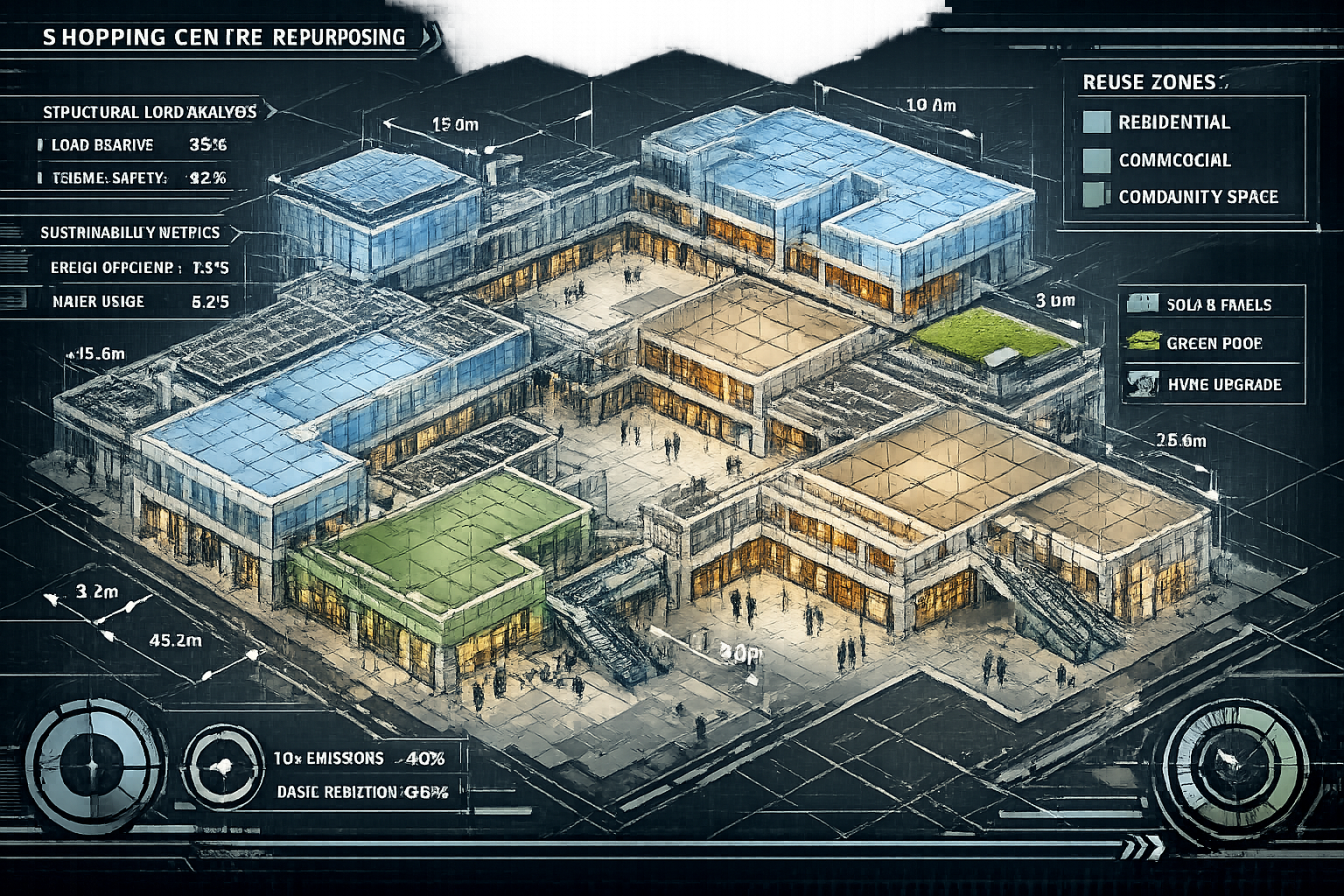
Building Surveys for Retail Revivals: Assessing Shopping Centres for 2026 Repurposing Opportunities represents a critical evaluation process that transforms undervalued retail properties into vibrant community assets. As shopping centres continue evolving from single-purpose retail destinations into mixed-use developments, professional building surveys provide the technical foundation for successful adaptive reuse projects.
The retail revival phenomenon sweeping across the nation demonstrates that properly assessed shopping centres offer tremendous potential for residential conversions, healthcare facilities, educational hubs, and mixed-use town centers. Comprehensive surveys identify structural capabilities, uncover hidden defects, evaluate mechanical systems, and assess regulatory compliance—enabling developers to make informed decisions about conversion feasibility and project scope.
Key Success Factors for Retail Revival Projects
✅ Conduct comprehensive multi-phase surveys that progressively deepen understanding of property conditions
✅ Engage multidisciplinary professional teams including chartered surveyors, structural engineers, and planning consultants
✅ Identify risks early through detailed defect assessments and dilapidation surveys
✅ Develop phased implementation strategies that minimize financial exposure while testing market demand
✅ Align conversion plans with community needs and local planning objectives
✅ Establish maintenance programs based on survey findings to preserve long-term asset value
Actionable Next Steps
For developers, investors, and local authorities considering shopping centre repurposing:
- Commission preliminary building surveys to assess conversion feasibility before committing to property acquisition
- Review successful case studies like Mashpee Commons and Belmar Shopping District to understand proven transformation strategies
- Engage with local planning authorities early to understand regulatory requirements and community priorities
- Develop comprehensive project teams that bring diverse expertise to complex adaptive reuse challenges
- Consider phased development approaches that reduce risk while creating immediate community benefits
- Invest in thorough due diligence including structural assessments, environmental investigations, and systems evaluations
The transformation of shopping centres from obsolete retail structures into thriving mixed-use developments represents one of the most significant opportunities in commercial real estate. Professional building surveys unlock this potential, providing the technical insights necessary to convert phoenix assets into community anchors that serve diverse needs for generations to come.
As 2026 unfolds, the retail revival movement continues gaining momentum. Shopping centres assessed through comprehensive building surveys are emerging as solutions to housing shortages, healthcare access challenges, and the growing demand for walkable, amenity-rich neighborhoods. The surveyors who evaluate these properties play an essential role in shaping the future of our communities—one transformation at a time.
References
[1] Reinventing U S Malls As Mixed Use Town Centers – https://urbanland.uli.org/issues-trends/reinventing-u-s-malls-as-mixed-use-town-centers
[2] 2026 Retail Design Trends – https://thelookcompany.com/blog/2026-retail-design-trends
[3] Repurposing Retail Spaces How Adaptive Reuse Is Transforming The Market – https://www.cbcworldwide.com/blog/repurposing-retail-spaces-how-adaptive-reuse-is-transforming-the-market
[4] Five Surprising Retail Trends To Watch In 2026 – https://netchoice.org/five-surprising-retail-trends-to-watch-in-2026/
[5] Retail 2026 Trends In Store Experience – https://telefonicatech.com/en/blog/retail-2026-trends-in-store-experience
[6] The Future Of Shopping Malls In The United States And Their Innovative Tran – https://eng.tourismandsocietytt.com/news-and-newsletter/2026/2026-january/ultimas-noticias/the-future-of-shopping-malls-in-the-united-states-and-their-innovative-tran
[7] Retail Design 2026 – https://www.qicre.com/News/Retail-design-2026
[8] Retail Display Trends 2026 Whats Working In Stores Right Now – https://imagecoltd.com/news/retail-display-trends-2026-whats-working-in-stores-right-now/