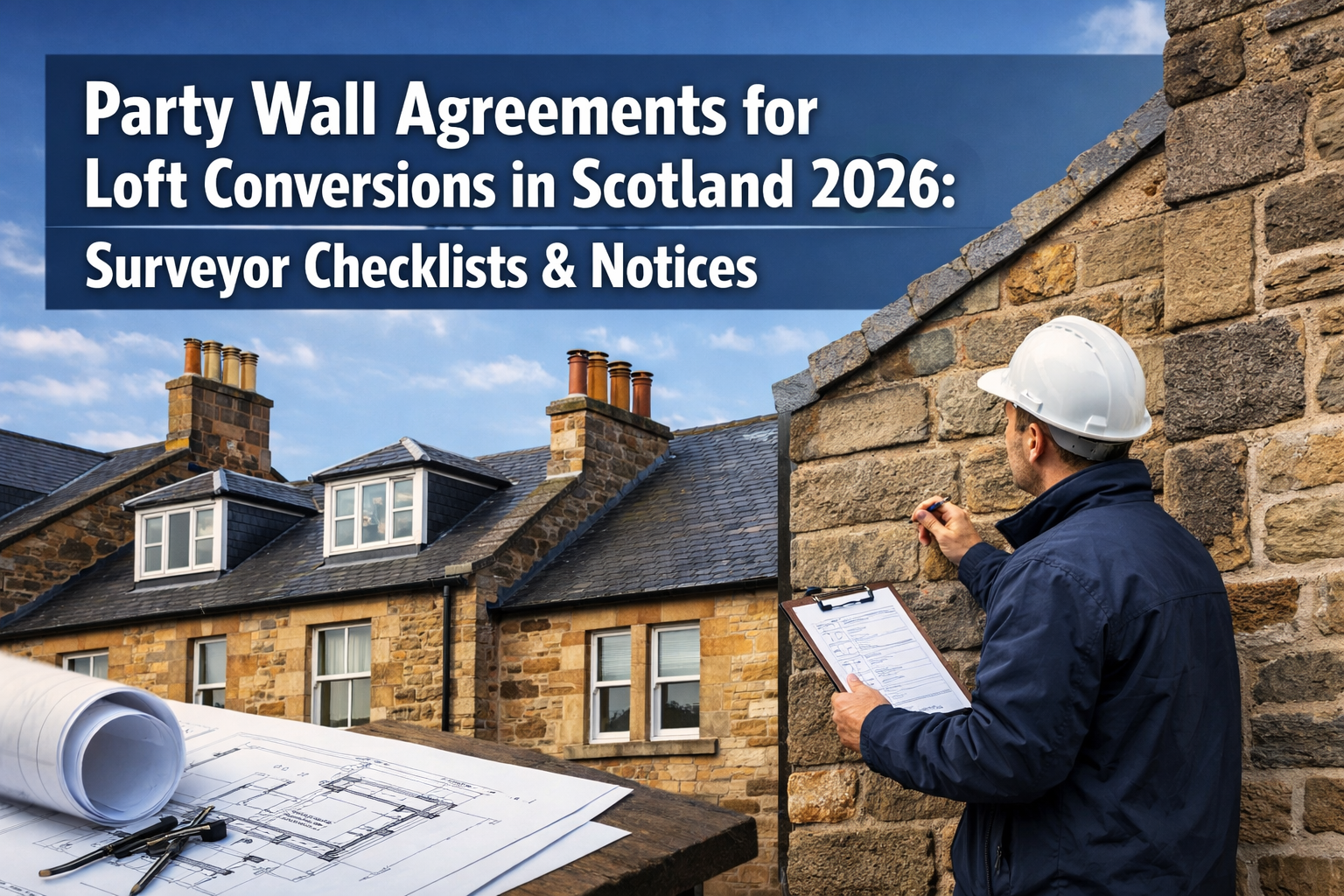

Scotland's housing market is experiencing remarkable growth in 2026, with property prices climbing and homeowners increasingly turning to loft conversions to maximize their existing space. As terraced and semi-detached properties across Edinburgh, Glasgow, and Aberdeen undergo transformation, one critical aspect often catches homeowners off guard: party wall agreements. With permitted development rights streamlining the planning process, understanding the surveyor requirements, notice procedures, and legal frameworks has never been more essential for Scottish property owners embarking on loft conversion projects.
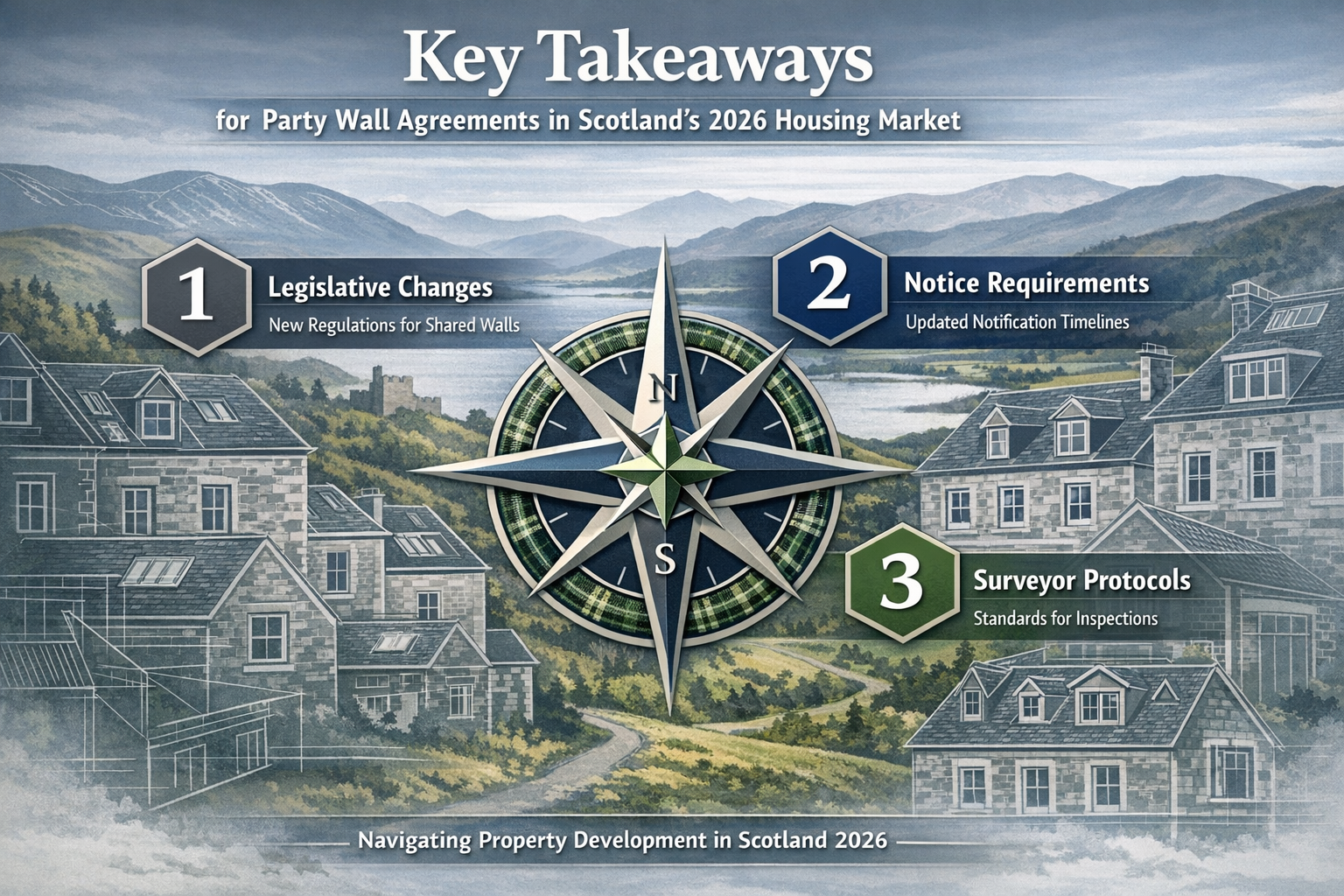
Key Takeaways
- 🏘️ Scotland's 2026 housing surge is driving unprecedented demand for loft conversions, particularly in terraced properties requiring party wall considerations
- 📋 Two-month minimum notice period must be served before starting any loft conversion work affecting shared walls
- 👥 Professional surveyors play a crucial role in documenting existing conditions, preventing disputes, and ensuring legal compliance
- ⚖️ Neighbours cannot permanently block legitimate loft conversions—surveyors resolve disagreements through Party Wall Awards
- ✅ Comprehensive checklists and RICS templates provide standardized frameworks for protecting both property owners throughout the conversion process
Understanding Party Wall Legislation in Scotland's 2026 Property Landscape
The Scottish Legal Framework Differs from England
While many property owners confuse Scottish building regulations with England's Party Wall Act 1996, Scotland operates under different legal principles. Scottish law relies on common law rights and the Title Conditions (Scotland) Act 2003 rather than specific party wall legislation. However, the practical requirements for loft conversions affecting shared structures remain equally stringent.
In 2026, with Scotland's housing market showing a 12% year-on-year increase in property values, homeowners are seeking cost-effective expansion solutions. Loft conversions offer exceptional returns on investment, but they inevitably impact shared walls, floors, and structural elements in terraced and semi-detached properties.
Why Party Wall Agreements Matter for Loft Conversions
When converting a loft in a terraced or semi-detached property, the work typically involves:
- Structural modifications to shared gable walls
- Load redistribution affecting party walls below
- Installation of steel beams that may penetrate shared structures
- Alterations to chimney breasts running through party walls
- Excavation work for additional headroom affecting foundations
Each of these elements requires careful consideration of your neighbour's property rights. A properly executed party wall agreement protects both parties by documenting existing conditions, establishing responsibilities, and creating a framework for resolving potential issues.
Party Wall Agreements for Loft Conversions in Scotland's 2026 Housing Uptick: Notice Requirements and Timelines ⏰
The Critical Two-Month Notice Period
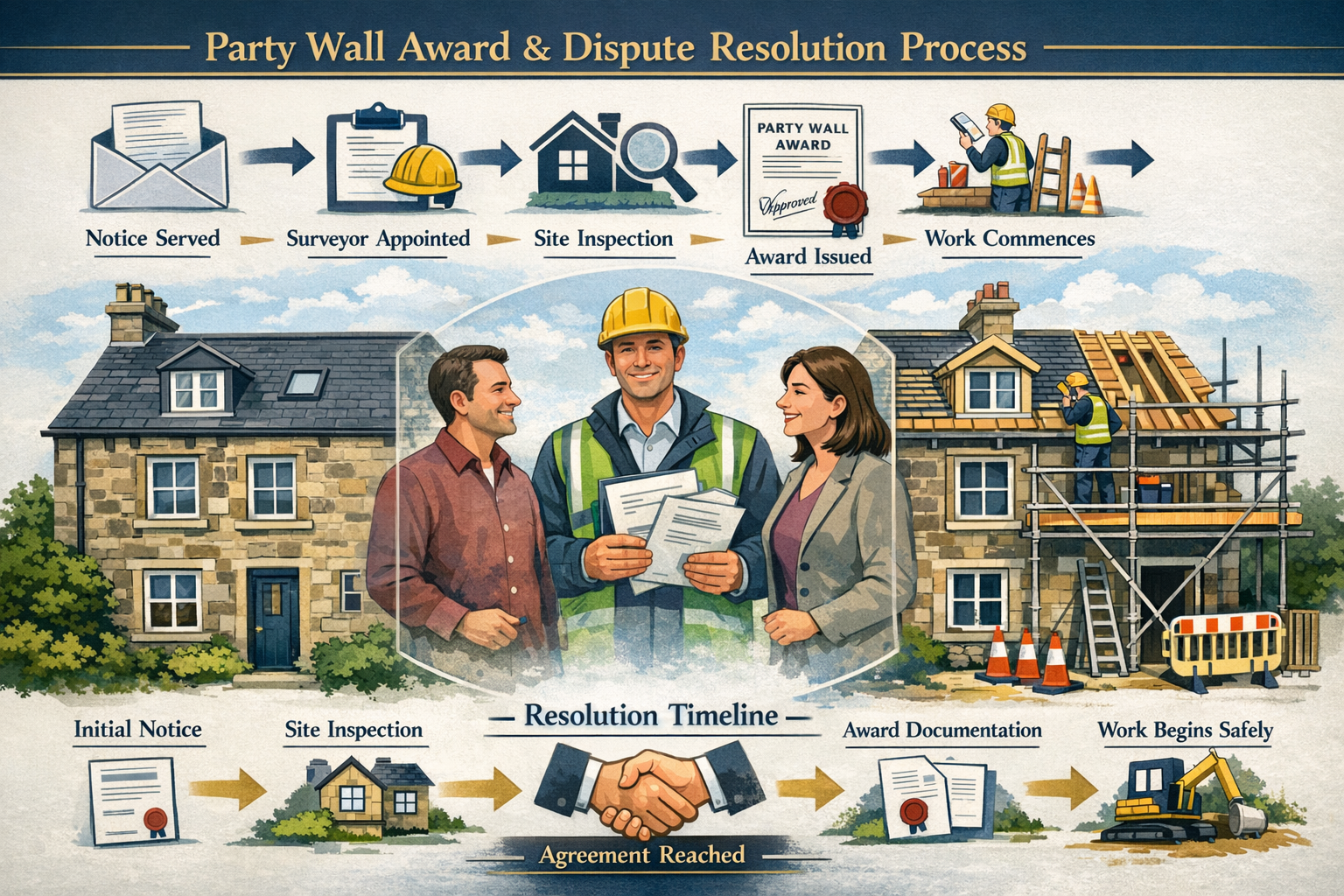
Serving notice at least two months before your planned start date is non-negotiable for loft conversion projects affecting party walls. This timeline allows neighbours adequate opportunity to:
- Review the proposed work details
- Appoint their own surveyor if desired
- Conduct pre-construction condition surveys
- Raise legitimate concerns
- Negotiate protective measures
Mid-terrace properties present unique challenges, requiring party wall agreements on both sides of the property. End-terrace homes simplify the process slightly, needing one agreement with the adjoining neighbour.
Essential Components of a Valid Notice
Your party wall notice must include specific information to be legally valid:
| Notice Component | Required Details |
|---|---|
| Property Description | Full address and legal description of both properties |
| Work Description | Detailed scope including structural alterations, beam installations, wall modifications |
| Commencement Date | Planned start date (minimum 2 months from notice) |
| Plans and Drawings | Architectural drawings showing impact on party walls |
| Surveyor Details | Your appointed surveyor's contact information |
| Response Deadline | Clear deadline for neighbour's response (typically 14 days) |
Understanding party wall consent procedures ensures your notice meets all legal requirements, preventing costly delays to your project timeline.
What Happens After Serving Notice?
Your neighbour has three response options:
Option 1: Consent – They agree to the work proceeding as described. This is the simplest outcome, though a condition survey is still recommended.
Option 2: Dissent – They object to the work, triggering the surveyor appointment process. This doesn't mean your project stops—it means formal procedures must be followed.
Option 3: No Response – After 14 days of silence, this legally counts as dissent, and surveyor appointment procedures automatically commence.
It's crucial to understand that neighbours cannot permanently stop a legitimate loft conversion. Surveyors resolve disputes through a Party Wall Award that balances both parties' rights and interests.
Surveyor Checklists for Party Wall Agreements in Scottish Loft Conversions 📝
The Role of Party Wall Surveyors
Professional surveyors serve as impartial experts who document existing conditions, assess potential impacts, and create binding agreements. In 2026's competitive Scottish housing market, engaging qualified surveyors early prevents disputes and project delays.
There are three surveyor appointment scenarios:
- Agreed Surveyor – Both parties jointly appoint one surveyor (most cost-effective)
- Two Surveyors – Each party appoints their own surveyor who then work together
- Third Surveyor – Appointed by the two surveyors to resolve disagreements
Learn more about the party wall agreed surveyor approach and its benefits for straightforward loft conversion projects.
Pre-Construction Condition Survey Checklist
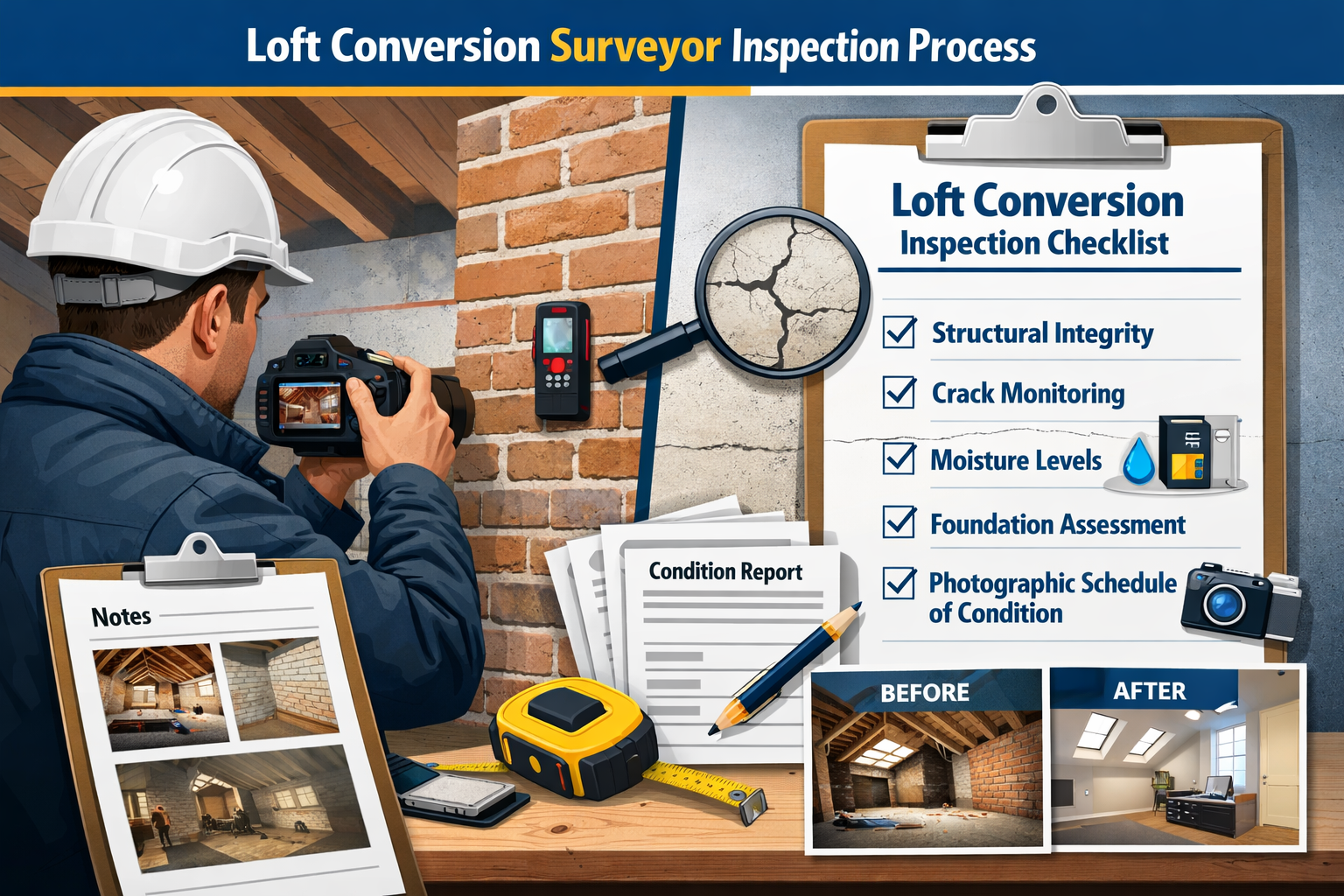
A comprehensive party wall schedule of condition forms the foundation of any party wall agreement. Surveyors should document:
Structural Elements:
- ✅ Existing cracks in party walls (location, width, pattern)
- ✅ Wall alignment and plumbness measurements
- ✅ Foundation condition and settlement evidence
- ✅ Chimney breast condition and stability
- ✅ Floor level variations across party wall line
- ✅ Ceiling condition in rooms below proposed work
- ✅ Roof structure where it meets party walls
Photographic Documentation:
- ✅ High-resolution images of all wall surfaces
- ✅ Close-up shots of existing defects
- ✅ Wide-angle room views establishing context
- ✅ External elevations showing wall condition
- ✅ Dated and annotated photographs
- ✅ Video walkthrough for comprehensive record
Technical Measurements:
- ✅ Precise crack width measurements (using crack gauges)
- ✅ Wall thickness at multiple points
- ✅ Vertical and horizontal alignment readings
- ✅ Moisture meter readings for dampness
- ✅ Temperature variations indicating insulation issues
This detailed documentation protects both parties by establishing baseline conditions. Should damage to property occur during construction, the schedule of condition provides irrefutable evidence of pre-existing versus new damage.
RICS Professional Standards and Templates
The Royal Institution of Chartered Surveyors (RICS) provides standardized templates ensuring consistency and professionalism. In 2026, Scottish surveyors increasingly adopt these frameworks to align with best practices.
Key RICS Template Components:
Party Wall Award Template includes:
- Detailed work descriptions
- Protective measures required
- Access arrangements
- Working hours restrictions
- Noise and dust mitigation
- Insurance requirements
- Dispute resolution procedures
- Cost allocation provisions
Notice Templates cover:
- Section 6 notices for loft conversions affecting party walls
- Detailed work specifications
- Structural engineer certifications
- Building control approval references
- Contractor insurance details
Understanding party wall surveyor costs helps budget appropriately for professional services, typically ranging from £700-£1,500 per property depending on complexity.
Party Wall Agreements for Loft Conversions in Scotland's 2026 Housing Uptick: Dispute Prevention Strategies 🛡️
Common Points of Contention
Scotland's 2026 housing boom has increased party wall disputes, with loft conversions representing a significant proportion. Understanding common friction points enables proactive mitigation:
Structural Concerns:
- Fear of wall destabilization during beam installation
- Concerns about increased loads on foundations
- Worry about chimney breast removal impacts
- Uncertainty about long-term structural integrity
Practical Disruptions:
- Construction noise during working hours
- Dust and debris management
- Contractor access through neighbouring property
- Parking and material storage issues
Financial Worries:
- Responsibility for repair costs if damage occurs
- Property value impacts during construction
- Insurance coverage adequacy
- Future maintenance obligations
Proactive Communication Strategies
Early Engagement – Discuss your loft conversion plans with neighbours before formal notices. Explain benefits, address concerns, and demonstrate consideration for their comfort.
Transparent Documentation – Share architectural plans, structural calculations, and contractor credentials. Transparency builds trust and reduces anxiety.
Professional Presentation – Engage reputable contractors with proven party wall experience. Provide neighbours with contractor contact information and project schedules.
Reasonable Accommodations – Offer to adjust working hours for special circumstances, provide advance notice of particularly disruptive activities, and maintain open communication channels.
The Party Wall Award Process
When disputes arise, surveyors create a Party Wall Award—a legally binding document that:
- Authorizes specific work with detailed specifications
- Establishes protective measures contractors must implement
- Defines access rights for inspections and emergency situations
- Allocates costs between parties (typically the building owner pays)
- Creates dispute resolution mechanisms for unforeseen issues
The Award protects both parties by providing clear, enforceable guidelines. Neighbours gain assurance that work will proceed professionally with their interests protected, while building owners obtain legal authorization to proceed.
For complex situations, reviewing guidance on what is a party wall dispute helps understand resolution pathways.
Technical Considerations for Loft Conversion Party Wall Work 🔧
Structural Impact Assessment
Loft conversions fundamentally alter a building's structural dynamics. Party walls designed for simple load transfer from roof structures suddenly support habitable space with increased live loads, concentrated beam loads, and altered stress patterns.
Key Structural Considerations:
Load Path Analysis:
- New floor joists bearing on party walls
- Steel beam installation points and load distribution
- Staircase integration affecting wall stability
- Dormer window construction impacting wall alignment
Foundation Adequacy:
- Existing foundation capacity for increased loads
- Settlement risk from additional weight
- Soil condition beneath party walls
- Historical movement patterns
Wall Condition Assessment:
- Existing crack patterns indicating movement
- Mortar condition and repointing requirements
- Brick or stone integrity
- Damp-proof course effectiveness
Professional surveyors collaborate with structural engineers to ensure party walls can safely accommodate loft conversion loads without compromising either property's integrity.
Insulation and Fire Safety Requirements
Scotland's 2026 building regulations emphasize energy efficiency and fire safety, both critical for loft conversions affecting party walls.
Thermal Performance:
Modern loft conversions require high-performance insulation, but party wall insulation presents unique challenges:
- Maintaining party wall fire resistance while improving thermal performance
- Avoiding cold bridging at party wall junctions
- Preventing condensation within wall cavities
- Acoustic insulation for sound transmission reduction
Fire Separation:
Party walls provide critical fire separation between properties. Loft conversions must maintain or enhance this protection through:
- Fire-resistant plasterboard specifications
- Cavity barrier installation at all junctions
- Fire-stopping around penetrations
- Smoke alarm interconnection between properties
Managing Construction Impact
The construction phase presents the highest risk for party wall damage. Comprehensive planning minimizes these risks:
Vibration Management:
- Limiting mechanical breaker use near party walls
- Hand-cutting techniques for sensitive areas
- Vibration monitoring during heavy work
- Immediate cessation if concerning movement detected
Dust and Debris Control:
- Sealed work areas with negative air pressure
- Daily cleaning protocols
- Protective sheeting on shared surfaces
- Professional cleaning upon completion
Access Protocols:
- Agreed access times and entry points
- Advance notice for inspections
- Respectful contractor behaviour
- Emergency contact procedures
Cost Implications and Financial Planning 💰
Budgeting for Party Wall Procedures
Scotland's 2026 loft conversion projects must account for party wall costs beyond basic construction expenses:
Professional Fees:
- Building owner's surveyor: £800-£1,200
- Neighbour's surveyor (if appointed): £700-£1,000
- Schedule of condition report: £300-£500
- Party Wall Award preparation: £400-£600
Insurance and Contingency:
- Enhanced contractor insurance: £200-£400
- Contingency fund for unexpected issues: 10-15% of project cost
- Potential repair costs if damage occurs
Administrative Costs:
- Legal document preparation: £150-£300
- Photographic documentation: £200-£350
- Structural engineer consultation: £500-£1,000
For a typical £35,000 loft conversion, party wall procedures add approximately £2,500-£4,500 to total costs—a worthwhile investment for legal compliance and dispute prevention.
Who Pays for What?
Building Owner Responsibilities:
The property owner undertaking the loft conversion typically pays:
- All surveyor fees (both parties' surveyors)
- Schedule of condition preparation
- Party Wall Award costs
- Any damage repairs resulting from the work
Neighbour Responsibilities:
Neighbours generally don't pay for party wall procedures related to work they didn't initiate, though they may contribute if they request:
- Enhanced protective measures beyond standard requirements
- Additional condition surveys for peace of mind
- Upgrades to shared structures benefiting both properties
Return on Investment Considerations
Despite additional party wall costs, loft conversions deliver exceptional value in Scotland's 2026 market:
- Property value increase: 15-20% on average
- Cost per square foot: £1,200-£1,800 (significantly less than moving)
- Rental income potential: £600-£900 monthly for separate loft apartment
- Energy efficiency improvements: Reduced heating costs through modern insulation
Properly executed party wall procedures protect this investment by preventing disputes that could delay completion, increase costs, or result in legal action.
Regional Variations Across Scotland 🏴
Edinburgh's Conservation Area Challenges
Edinburgh's extensive conservation areas and listed buildings add complexity to loft conversions. Party wall agreements must align with:
- Historic building preservation requirements
- Conservation officer approvals
- Traditional construction method specifications
- Aesthetic consistency with neighbouring properties
Victorian and Georgian terraces dominating Edinburgh's housing stock require particular sensitivity, with shared walls often featuring historic materials and construction techniques requiring specialist knowledge.
Glasgow's Tenement Considerations
Glasgow's distinctive tenement buildings present unique party wall scenarios:
- Vertical party walls separating flats within the same building
- Common ownership structures requiring multiple party agreements
- Shared roof spaces with complex ownership arrangements
- Factor involvement in managing communal areas
Loft conversions in tenements often require coordination with multiple neighbours and the property factor, making early engagement and professional surveyor involvement essential.
Aberdeen's Granite Construction
Aberdeen's characteristic granite construction affects party wall procedures:
- Extremely durable walls requiring specialized cutting techniques
- Higher vibration transmission during construction work
- Unique structural characteristics requiring specialist assessment
- Heritage value necessitating careful preservation approaches
Surveyors working on Aberdeen loft conversions need specific experience with granite construction to provide accurate condition assessments and appropriate protective recommendations.
Future-Proofing Your Party Wall Agreement 🔮
Long-Term Maintenance Provisions
Well-drafted party wall agreements address not just immediate construction impacts but ongoing maintenance responsibilities:
Shared Structure Maintenance:
- Future repair cost allocation
- Access rights for maintenance work
- Regular inspection schedules
- Emergency repair procedures
Upgrade Provisions:
- Procedures for future improvements affecting party walls
- Cost-sharing for mutual benefit upgrades
- Technology integration (wiring, insulation improvements)
- Climate adaptation measures
Documentation Retention
Comprehensive party wall documentation becomes valuable property history:
- Digital archives of all notices, awards, and condition surveys
- Photographic records accessible to future owners
- Surveyor reports demonstrating due diligence
- Contractor certifications proving professional execution
These records prove invaluable during future property sales, subsequent renovation projects, or if disputes arise years later.
Building Positive Neighbour Relations
Beyond legal compliance, party wall procedures offer opportunities to strengthen community relationships:
- Transparent communication builds trust
- Professional conduct demonstrates respect
- Reasonable accommodations show consideration
- Successful completion proves reliability
Homeowners who navigate party wall procedures thoughtfully often find neighbours become advocates rather than obstacles for future projects.
Conclusion
Party Wall Agreements for Loft Conversions in Scotland's 2026 Housing Uptick require careful navigation of legal requirements, professional surveyor engagement, and thoughtful neighbour relations. As Scotland's property market continues its upward trajectory, loft conversions offer exceptional value—but only when party wall procedures are properly executed.
Key action steps for Scottish homeowners planning loft conversions:
- Engage a qualified surveyor early in your planning process, ideally before finalizing architectural designs
- Serve formal notices at least two months before your intended start date, providing comprehensive work details
- Commission thorough condition surveys documenting existing party wall conditions with photographs and measurements
- Communicate proactively with neighbours, addressing concerns before they escalate into formal disputes
- Budget appropriately for party wall procedures, typically £2,500-£4,500 for professional services
- Select experienced contractors with proven party wall work credentials and appropriate insurance
- Maintain comprehensive documentation throughout the process for future reference
Scotland's housing market shows no signs of slowing in 2026, and loft conversions will continue providing cost-effective expansion solutions for terraced and semi-detached properties. By understanding party wall requirements, following professional surveyor guidance, and respecting neighbours' legitimate interests, homeowners can successfully navigate these procedures while protecting their valuable investments.
The combination of Scotland's strong property values, permitted development opportunities, and growing space demands makes loft conversions increasingly attractive. With proper party wall agreements in place, these projects proceed smoothly, enhance property values, and maintain positive community relationships—creating win-win outcomes for all parties involved.