

As the rental market shows renewed strength in 2026, institutional landlords are driving unprecedented growth in the buy-to-let sector. With property values climbing and regulatory landscapes shifting, Building Surveys for Buy-to-Let Institutional Investments: 2026 Protocols in a Recovering Rental Market have become essential tools for protecting multi-million-pound portfolios. Recent policy changes, including exemptions for build-to-rent communities, have created fresh opportunities for large-scale investors who understand the critical importance of comprehensive property assessments before acquisition.
The stakes have never been higher. Institutional investors managing portfolios of rental properties must navigate complex compliance requirements, identify hidden defects that could derail profitability, and ensure their acquisitions meet stringent safety standards. This article provides a detailed roadmap for conducting Level 3 building surveys specifically tailored to high-volume rental property investments in today's recovering market.
Key Takeaways
- 🏢 Institutional buy-to-let investments require comprehensive Level 3 building surveys to identify structural defects, compliance issues, and maintenance liabilities that could impact portfolio performance
- 📊 The 2026 regulatory environment favours build-to-rent properties, with new exemptions allowing institutional investors to continue large-scale acquisitions in purpose-built rental communities
- 🔍 Enhanced survey protocols now emphasize digital documentation, thermal imaging, and risk categorization to support high-volume property assessments and due diligence processes
- 💰 Defect detection during pre-acquisition surveys can save institutional investors 15-25% on unexpected repair costs over the first five years of property ownership
- ✅ Compliance verification across fire safety, EPC ratings, and electrical standards has become non-negotiable for institutional landlords facing increased regulatory scrutiny in 2026
Understanding Building Surveys for Buy-to-Let Institutional Investments: 2026 Protocols in a Recovering Rental Market
The buy-to-let landscape has transformed dramatically in 2026. Institutional investors now face a unique set of challenges and opportunities as the rental market recovers from previous downturns. Understanding the specific requirements for building surveys in this context is crucial for protecting investment capital and ensuring long-term portfolio performance.
The Institutional Buy-to-Let Landscape in 2026
Recent policy developments have reshaped how institutional investors approach the rental market. While restrictions on single-family home acquisitions have tightened in some jurisdictions, build-to-rent communities continue to receive favourable treatment. Properties "planned, permitted, financed, and constructed as rental communities" remain exempt from many limitations, creating a clear pathway for institutional investment[1].
This regulatory environment has accelerated the shift toward purpose-built rental developments. Institutional landlords are increasingly focusing on:
- Multi-unit residential buildings designed specifically for rental use
- Mixed-use developments with dedicated rental components
- Portfolio acquisitions of existing rental properties with strong compliance records
- Strategic investments in areas with high rental demand and limited supply
The recovering market has brought renewed confidence, with property values climbing and rental yields stabilizing. However, this optimism must be tempered with rigorous due diligence. Chartered surveyors play an essential role in validating investment decisions through comprehensive building assessments.
Why Standard Surveys Fall Short for Institutional Portfolios
Traditional homebuyer surveys, while adequate for individual residential purchases, lack the depth and scope required for institutional buy-to-let investments. The differences are substantial:
Standard Homebuyer Report Limitations:
- Surface-level inspections without invasive testing
- Limited focus on rental-specific compliance issues
- No portfolio-level risk assessment
- Insufficient documentation for institutional due diligence
- Minimal analysis of long-term maintenance costs
Institutional Survey Requirements:
- Comprehensive structural analysis with specialist testing
- Detailed compliance verification across multiple regulatory frameworks
- Portfolio-wide risk categorization and prioritization
- Extensive photographic and thermal imaging documentation
- Projected maintenance schedules and capital expenditure forecasts
For institutional investors, the difference between a homebuyer report and building survey can mean the difference between a profitable acquisition and a costly mistake. Level 3 building surveys provide the forensic detail necessary for high-stakes investment decisions.
Key Components of Level 3 Building Surveys for Rental Properties
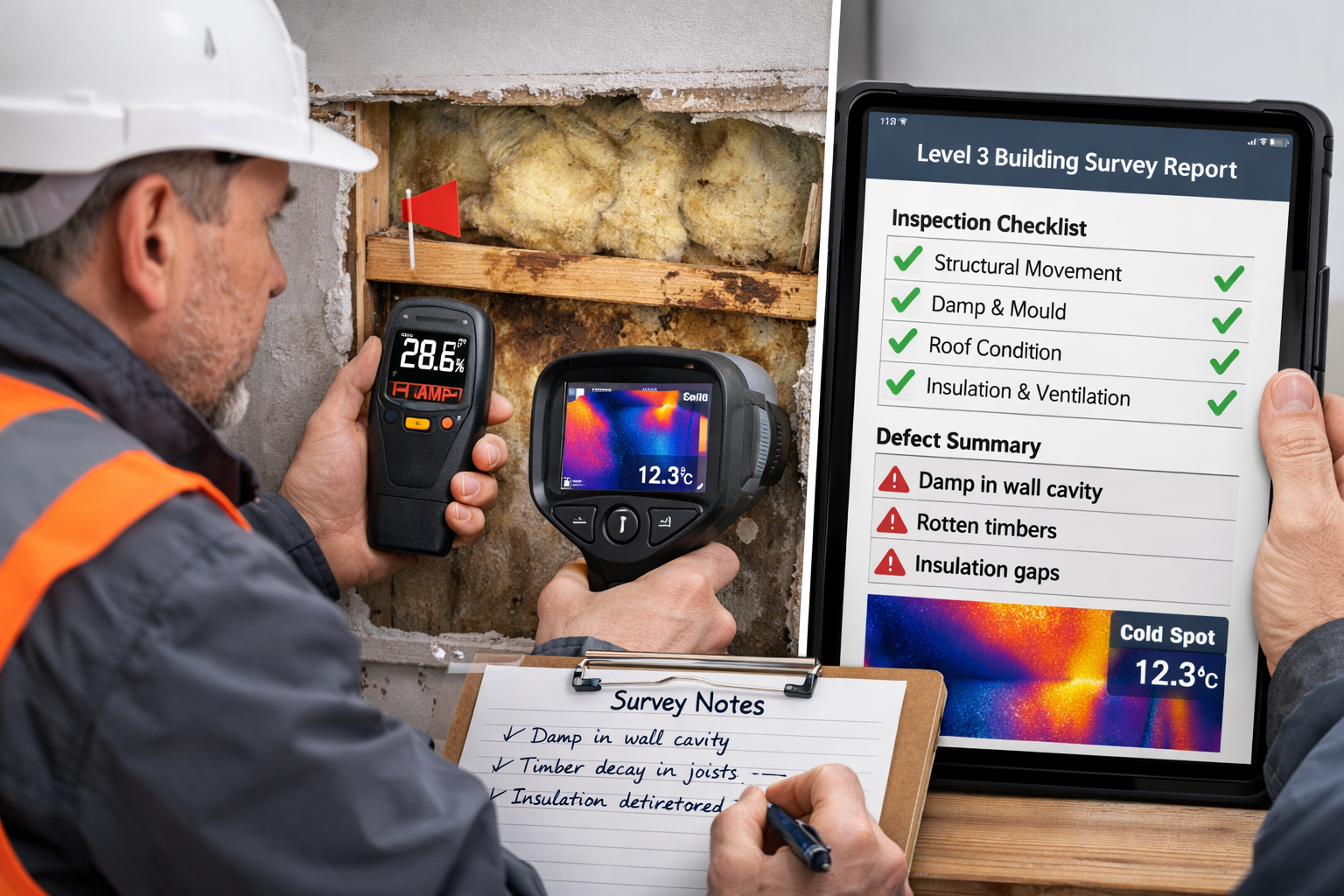
A proper institutional building survey goes far beyond basic property inspection. The 2026 protocols emphasize several critical components:
Structural Integrity Assessment:
- Foundation examination and subsidence risk evaluation
- Load-bearing wall and beam analysis
- Roof structure inspection including timber condition
- Damp and moisture penetration testing
- Drainage system functionality verification
Compliance and Safety Verification:
- Fire safety systems and escape route adequacy
- Electrical installation condition and certification status
- Gas safety compliance for all appliances
- Energy Performance Certificate (EPC) rating validation
- Asbestos presence identification in pre-2000 buildings
Rental-Specific Considerations:
- Multi-occupancy licensing requirements
- Tenant safety provisions and accessibility features
- Common area maintenance standards
- Sound insulation between units
- Security systems and entry controls
Financial Impact Analysis:
- Immediate repair cost estimates
- Medium-term maintenance projections (5-10 years)
- Compliance upgrade requirements and costs
- Impact on rental income potential
- Insurance implications of identified defects
Professional surveyors conducting institutional assessments should also prepare a schedule of condition report that establishes baseline property status for future reference.
Essential 2026 Survey Protocols for Institutional Buy-to-Let Properties
The protocols governing Building Surveys for Buy-to-Let Institutional Investments: 2026 Protocols in a Recovering Rental Market have evolved to address both technological advances and regulatory changes. Institutional investors must ensure their survey processes incorporate these updated standards.
Enhanced Digital Documentation Standards
Modern building surveys rely heavily on digital tools that provide superior documentation and analysis capabilities. The 2026 protocols mandate:
Thermal Imaging Requirements:
- Complete thermal scans of all external walls
- Identification of insulation gaps and thermal bridging
- Detection of hidden moisture ingress
- Heat loss quantification for EPC validation
Digital Reporting Platforms:
- Cloud-based survey reports with real-time updates
- Interactive floor plans with defect location mapping
- Photographic evidence linked to specific findings
- Video documentation of critical structural concerns
Data Integration:
- Compatibility with portfolio management systems
- Standardized defect categorization for cross-property comparison
- Automated risk scoring algorithms
- Historical data tracking for repeat assessments
This digital-first approach enables institutional investors to analyze multiple properties simultaneously, identify portfolio-wide trends, and prioritize capital expenditure more effectively.
Compliance Verification Checklists
Regulatory compliance has become increasingly complex in the rental sector. The 2026 protocols require surveyors to verify:
Fire Safety Compliance:
✅ Smoke alarm installation in all required locations
✅ Carbon monoxide detector placement near fuel-burning appliances
✅ Fire door integrity and self-closing mechanisms
✅ Emergency lighting in common areas
✅ Fire risk assessment completion and documentation
✅ Escape route adequacy and signage
Energy Efficiency Standards:
✅ Minimum EPC rating of E (with plans for future upgrades)
✅ Boiler efficiency and servicing records
✅ Insulation adequacy in walls, roof, and floors
✅ Window glazing performance
✅ Renewable energy system functionality (if present)
Electrical Safety:
✅ Electrical Installation Condition Report (EICR) validity
✅ RCD protection on all circuits
✅ Adequate socket provision
✅ Proper earthing and bonding
✅ Consumer unit condition and labeling
Gas Safety:
✅ Annual gas safety certificate validity
✅ Appliance condition and ventilation
✅ Gas pipe integrity
✅ Flue and chimney functionality
Surveyors should also assess whether properties meet licensing requirements for Houses in Multiple Occupation (HMO) if applicable.
Defect Categorization and Risk Assessment
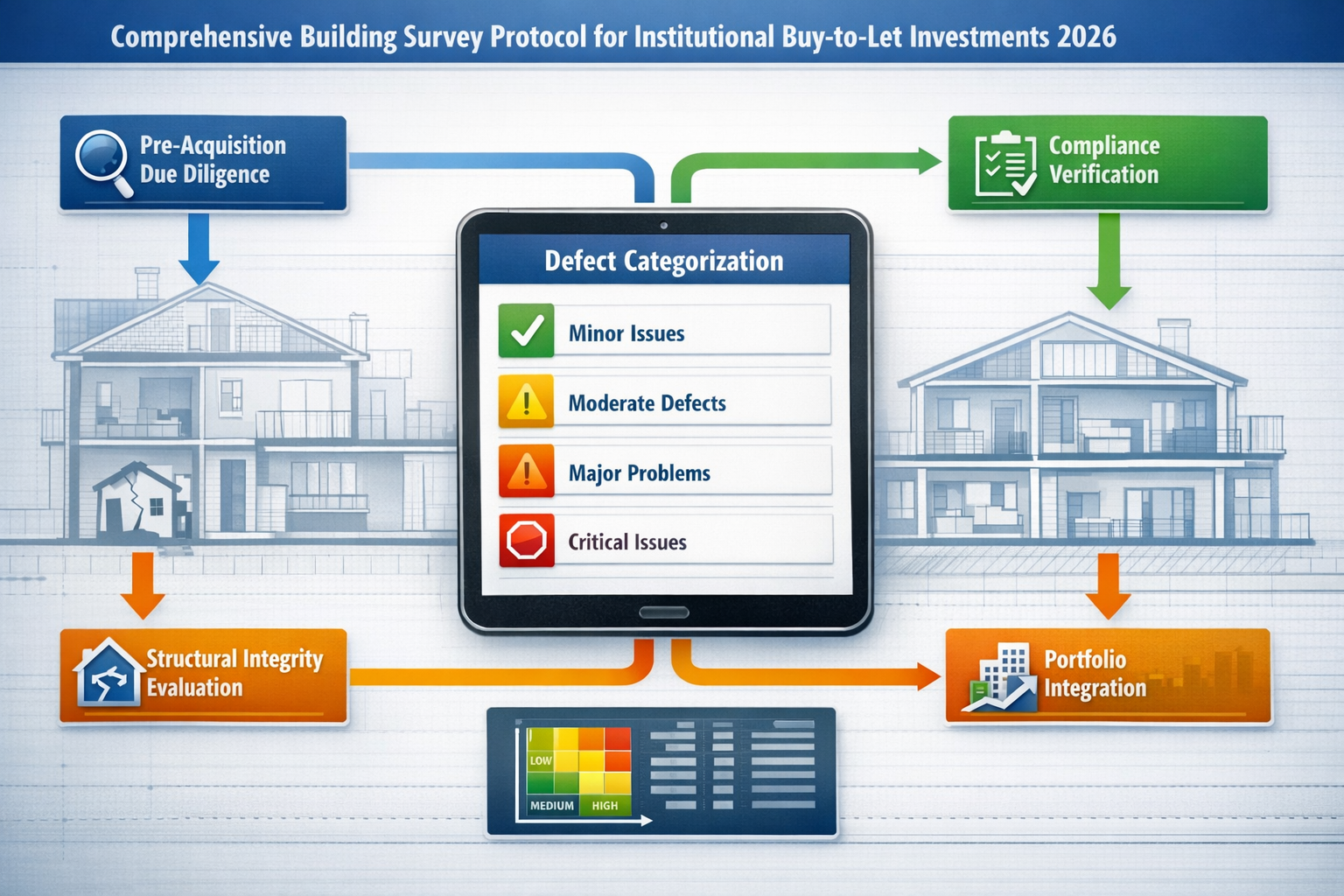
Effective institutional surveys categorize defects by severity and financial impact. The 2026 framework uses a four-tier system:
Category 1 – Critical Defects (Immediate Action Required):
- Structural instability or imminent collapse risk
- Serious fire safety violations
- Dangerous electrical installations
- Gas safety hazards
- Severe damp causing health risks
Category 2 – Significant Defects (Action Within 6-12 Months):
- Progressive structural movement requiring monitoring
- Roof covering deterioration with leak risk
- Outdated electrical systems requiring upgrade
- Inadequate insulation affecting EPC rating
- Drainage problems causing property damage
Category 3 – Moderate Defects (Action Within 1-3 Years):
- Minor structural repairs needed
- Cosmetic damage affecting rental appeal
- Window and door replacement requirements
- Heating system efficiency improvements
- External decoration and maintenance
Category 4 – Minor Issues (Routine Maintenance):
- Normal wear and tear items
- Minor cosmetic repairs
- Routine servicing requirements
- Non-urgent upgrades
This categorization enables institutional investors to:
- Negotiate purchase prices based on defect severity
- Plan capital expenditure budgets accurately
- Prioritize repairs across multiple properties
- Assess portfolio-wide risk exposure
- Make informed hold/sell decisions
For properties with significant structural concerns, engaging residential structural engineers for specialist assessment may be necessary.
Implementing Building Surveys for Buy-to-Let Institutional Investments: 2026 Protocols in a Recovering Rental Market
Successful implementation of comprehensive survey protocols requires systematic processes and clear communication between all stakeholders. Institutional investors must establish robust frameworks that ensure consistent quality across their entire portfolio.
Pre-Acquisition Due Diligence Process
The survey process should begin well before any purchase commitment. A structured approach includes:
Phase 1 – Initial Desktop Assessment (Week 1):
- Review existing property documentation
- Analyze historical planning applications
- Check flood risk and environmental data
- Verify ownership and title information
- Assess local rental market conditions
Phase 2 – Preliminary Site Visit (Week 2):
- External visual inspection
- Neighborhood assessment
- Access verification for full survey
- Identification of obvious red flags
- Initial cost-benefit analysis
Phase 3 – Comprehensive Building Survey (Week 3-4):
- Full Level 3 survey by qualified building surveyor
- Specialist inspections as needed (structural, electrical, drainage)
- Thermal imaging and moisture testing
- Compliance verification across all standards
- Detailed photographic documentation
Phase 4 – Report Analysis and Decision Making (Week 5):
- Review comprehensive survey findings
- Calculate total cost of ownership including repairs
- Negotiate price adjustments based on defects
- Determine go/no-go decision
- Plan remediation timeline if proceeding
This phased approach prevents wasted resources on unsuitable properties while ensuring thorough assessment of viable investments.
Specialist Inspections and Testing
Certain property types or identified concerns require specialist expertise beyond standard building surveys:
Structural Engineering Assessment:
Required when surveys identify:
- Significant cracking or movement
- Subsidence or heave indicators
- Structural alterations without proper certification
- Load-bearing wall removal or modification
- Foundation concerns
Subsidence surveys provide detailed analysis of ground movement and recommend appropriate remediation strategies.
Roof Specialist Inspection:
Essential for properties with:
- Flat roof systems showing deterioration
- Complex roof geometries
- Historical leak problems
- Missing structural certification for roof alterations
A dedicated roof survey provides detailed condition assessment and remaining lifespan estimates.
Drainage and Damp Surveys:
Necessary when encountering:
- Persistent damp issues
- Drainage system age exceeding 30 years
- Evidence of water ingress
- Basement or below-ground accommodation
Asbestos Surveys:
Mandatory for pre-2000 buildings before any renovation work, identifying:
- Asbestos-containing materials location
- Condition and risk assessment
- Removal or management recommendations
Electrical Condition Reports:
Required every five years for rental properties, assessing:
- Installation safety and compliance
- Circuit protection adequacy
- Earthing and bonding effectiveness
- Defect identification and remediation priorities
Portfolio-Wide Survey Management
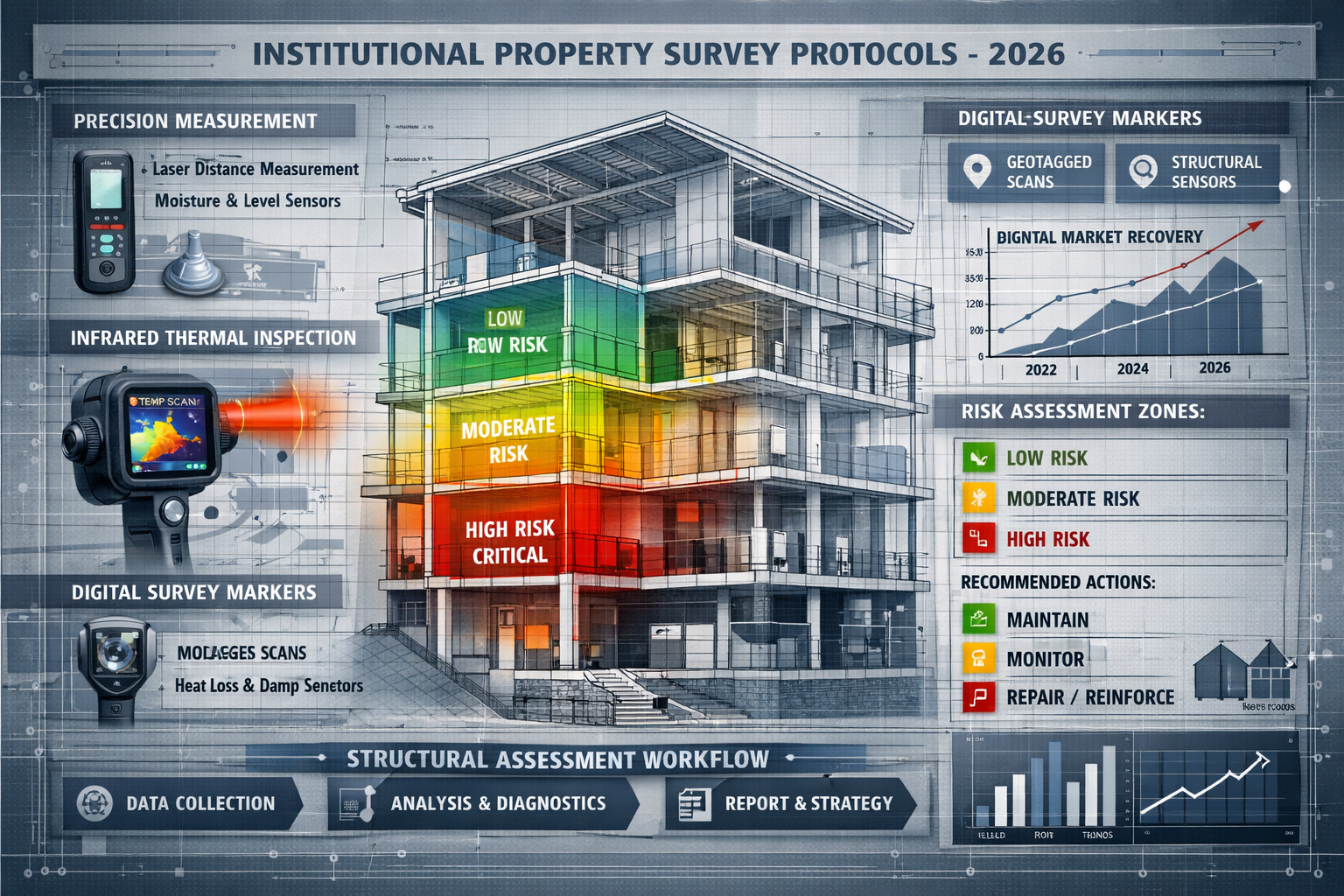
Institutional investors managing multiple properties benefit from standardized survey processes that enable portfolio-level analysis:
Standardization Benefits:
- Consistent defect categorization across all properties
- Comparable risk assessment metrics
- Aggregated capital expenditure forecasting
- Portfolio-wide compliance tracking
- Benchmarking property performance
Technology Integration:
- Centralized survey database with search functionality
- Automated alerts for compliance certificate expiration
- Capital expenditure planning tools
- Property comparison dashboards
- Trend analysis for recurring issues
Scheduled Reassessment Programs:
- Annual compliance verification inspections
- Quinquennial comprehensive building surveys
- Post-tenancy condition assessments
- Continuous monitoring of Category 1 and 2 defects
Vendor Management:
- Approved surveyor panel with consistent standards
- Regular quality audits of survey reports
- Negotiated rates for volume work
- Clear communication protocols
- Performance metrics and accountability
This systematic approach transforms building surveys from isolated assessments into strategic portfolio management tools that drive long-term investment performance.
Cost-Benefit Analysis of Comprehensive Surveys
Institutional investors may question whether extensive survey protocols justify their cost. The financial case is compelling:
Survey Investment:
- Level 3 Building Survey: £800-£1,500 per property
- Specialist inspections: £300-£800 each
- Total pre-acquisition assessment: £1,500-£3,000 per property
Potential Savings:
- Avoided purchases with major defects: £50,000-£200,000+ per property
- Negotiated price reductions: £10,000-£50,000 average
- Prevented emergency repairs: £5,000-£25,000 per property
- Compliance issue avoidance: £3,000-£15,000 per property
- Insurance claims reduction: 15-20% lower premiums
Return on Investment:
For a typical institutional portfolio of 50 properties, comprehensive surveys costing £100,000-£150,000 can prevent losses exceeding £500,000-£1,000,000 over a five-year holding period. The ROI exceeds 300-600% in most scenarios.
Moreover, thorough surveys provide defensible documentation if disputes arise, potentially serving as expert witness reports in litigation.
Future-Proofing Institutional Buy-to-Let Investments Through Strategic Surveys
The rental market continues to evolve rapidly, with regulatory changes, sustainability requirements, and tenant expectations all shifting. Forward-thinking institutional investors use building surveys not just to assess current condition, but to evaluate future-proofing potential.
Sustainability and Energy Efficiency Considerations
The 2026 rental market places increasing emphasis on environmental performance. Survey protocols must evaluate:
Current Energy Performance:
- Existing EPC rating and improvement potential
- Insulation adequacy across all building elements
- Heating system efficiency and fuel type
- Renewable energy system presence or installation feasibility
- Smart home technology integration opportunities
Upgrade Pathways:
- Cost-effective improvements to reach EPC Band C (future minimum standard)
- Solar panel installation viability
- Heat pump conversion feasibility
- Window and door replacement priorities
- Ventilation system upgrades
Financial Implications:
- Green financing availability for energy improvements
- Rental premium potential for high-efficiency properties
- Operating cost reductions benefiting tenant retention
- Regulatory compliance timeline and costs
- Carbon offset requirements and costs
Properties with clear upgrade pathways to higher energy efficiency ratings offer superior long-term value, even if initial purchase prices reflect current condition.
Technology Integration and Smart Building Features
Modern tenants increasingly expect technology-enabled properties. Building surveys should assess:
Existing Infrastructure:
- Broadband capability and fiber connectivity
- Mobile signal strength throughout property
- Electrical capacity for increased device usage
- Smart meter installation status
- Security system sophistication
Upgrade Potential:
- Smart thermostat compatibility
- Automated lighting system feasibility
- Video doorbell and security camera integration
- Smart lock installation options
- Home automation hub compatibility
Tenant Experience Enhancement:
- Digital tenancy management platforms
- Maintenance request systems
- Energy usage monitoring and reporting
- Contactless access systems
- Package delivery solutions
Properties with robust technology infrastructure command rental premiums of 5-12% in competitive markets, making these considerations financially significant.
Regulatory Compliance Forecasting
Experienced institutional investors recognize that today's compliance standards represent minimum requirements. Survey reports should include forward-looking analysis:
Anticipated Regulatory Changes:
- Minimum EPC rating increases (Band C expected by 2028)
- Enhanced fire safety requirements post-Grenfell
- Electrical safety inspection frequency changes
- Water efficiency standards
- Accessibility requirement expansions
Preparation Strategies:
- Proactive upgrades ahead of mandatory deadlines
- Budgeting for anticipated compliance costs
- Property disposal decisions based on upgrade economics
- Portfolio rebalancing toward compliant properties
- Advocacy engagement on proposed regulations
This forward-looking approach prevents regulatory surprises and positions portfolios for long-term success.
Conclusion
Building Surveys for Buy-to-Let Institutional Investments: 2026 Protocols in a Recovering Rental Market represent far more than routine property inspections—they are strategic tools that protect capital, ensure compliance, and maximize long-term returns. As the rental market recovers and institutional investment accelerates, particularly in build-to-rent communities that enjoy regulatory exemptions, comprehensive survey protocols have become non-negotiable for serious investors.
The Level 3 building survey framework outlined in this article provides institutional landlords with the forensic detail necessary to make informed acquisition decisions, negotiate favorable purchase terms, and plan capital expenditure effectively. By emphasizing digital documentation, rigorous compliance verification, and systematic defect categorization, these protocols enable portfolio-wide risk management at scale.
The financial case for comprehensive surveys is overwhelming. An investment of £1,500-£3,000 per property in thorough pre-acquisition assessment can prevent losses exceeding £50,000-£200,000 from avoided problematic purchases, while generating negotiation leverage worth tens of thousands of pounds per property. For institutional portfolios spanning dozens or hundreds of properties, this translates to millions in protected value.
Actionable Next Steps
For institutional investors looking to implement robust survey protocols:
- Establish standardized survey requirements across your entire acquisition process, mandating Level 3 building surveys for all potential purchases
- Build relationships with qualified chartered surveyors experienced in institutional buy-to-let assessments who understand rental-specific compliance requirements
- Implement digital survey management systems that enable portfolio-wide analysis, trend identification, and capital expenditure forecasting
- Develop specialist inspection protocols for properties requiring structural engineering, drainage, or asbestos assessments beyond standard surveys
- Create compliance tracking systems that monitor certificate expiration dates and schedule reassessments proactively
- Integrate survey findings into financial modeling to accurately project total cost of ownership including remediation expenses
- Establish clear decision frameworks that define acceptable defect thresholds and guide go/no-go investment decisions
The recovering rental market of 2026 offers substantial opportunities for institutional investors who approach acquisitions with appropriate diligence. Comprehensive building surveys provide the foundation for confident investment decisions that generate sustainable returns while maintaining the highest standards of tenant safety and regulatory compliance.
By adopting the protocols outlined in this article, institutional landlords can navigate the complex landscape of buy-to-let investment with confidence, building portfolios that deliver strong performance today while remaining resilient to tomorrow's challenges.
References
[1] New Executive Order Aims To Limit Institutional Investors Buying Single Family Homes Rentals – https://www.bartonesq.com/news-article/new-executive-order-aims-to-limit-institutional-investors-buying-single-family-homes-rentals/
[2] Buy To Let Valuation Surge 2026 Survey Strategies For Institutional Investors In A Recovering Market – https://nottinghillsurveyors.com/blog/buy-to-let-valuation-surge-2026-survey-strategies-for-institutional-investors-in-a-recovering-market