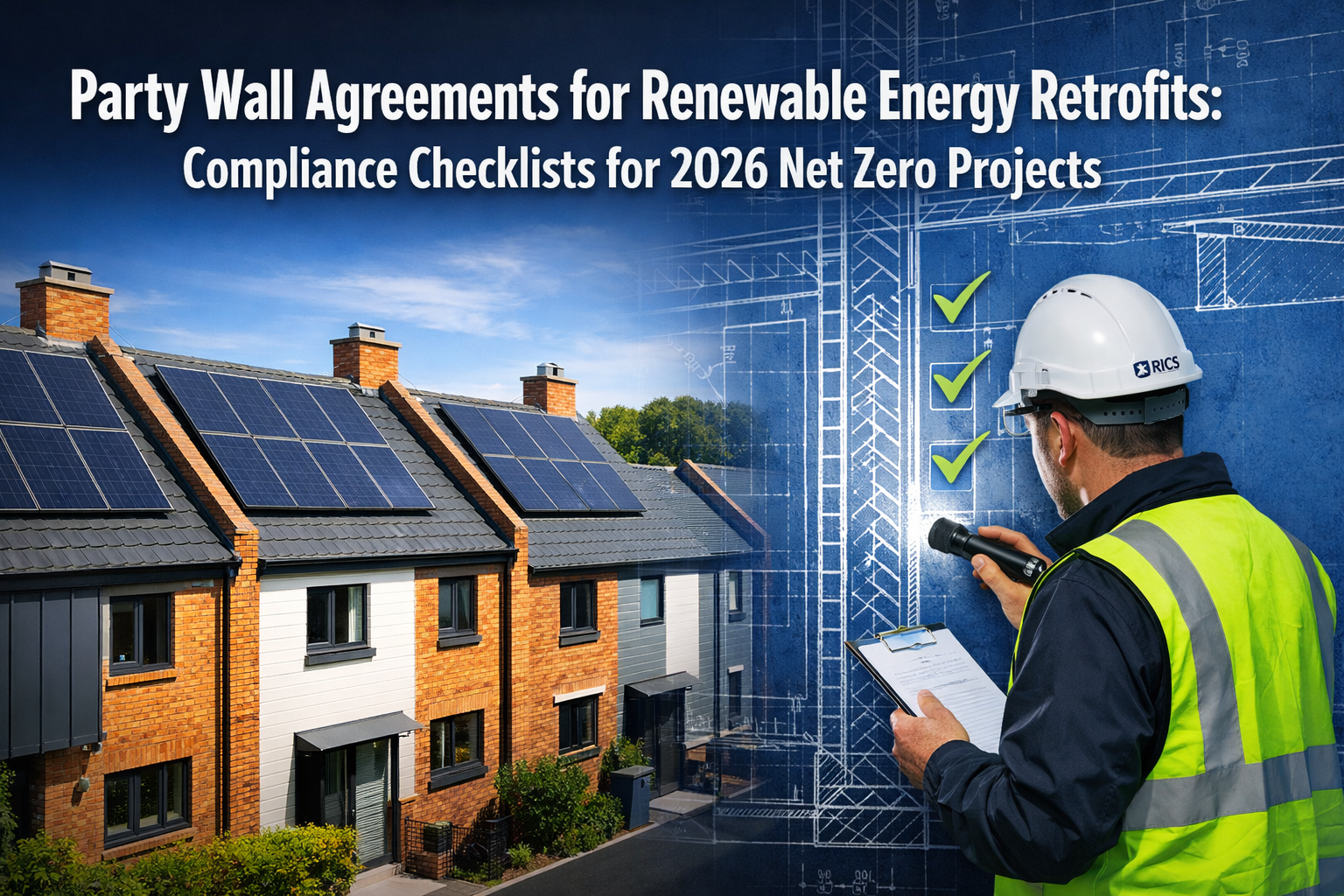
As governments worldwide push toward ambitious net zero targets, property owners face mounting pressure to retrofit homes with renewable energy systems. Solar panels, heat pumps, and battery storage installations increasingly require modifications to shared walls and boundaries—triggering complex legal obligations under party wall legislation. Understanding Party Wall Agreements for Renewable Energy Retrofits: Compliance Checklists for 2026 Net Zero Projects has become essential for homeowners, contractors, and surveyors navigating this rapidly evolving landscape.
With over 30 additional cities pledging to pass building performance standards by 2026 [7], the intersection of renewable energy mandates and party wall compliance represents a critical challenge for residential property upgrades. This comprehensive guide provides the frameworks, checklists, and best practices needed to execute compliant renewable energy retrofits while protecting both property owners and their neighbors.
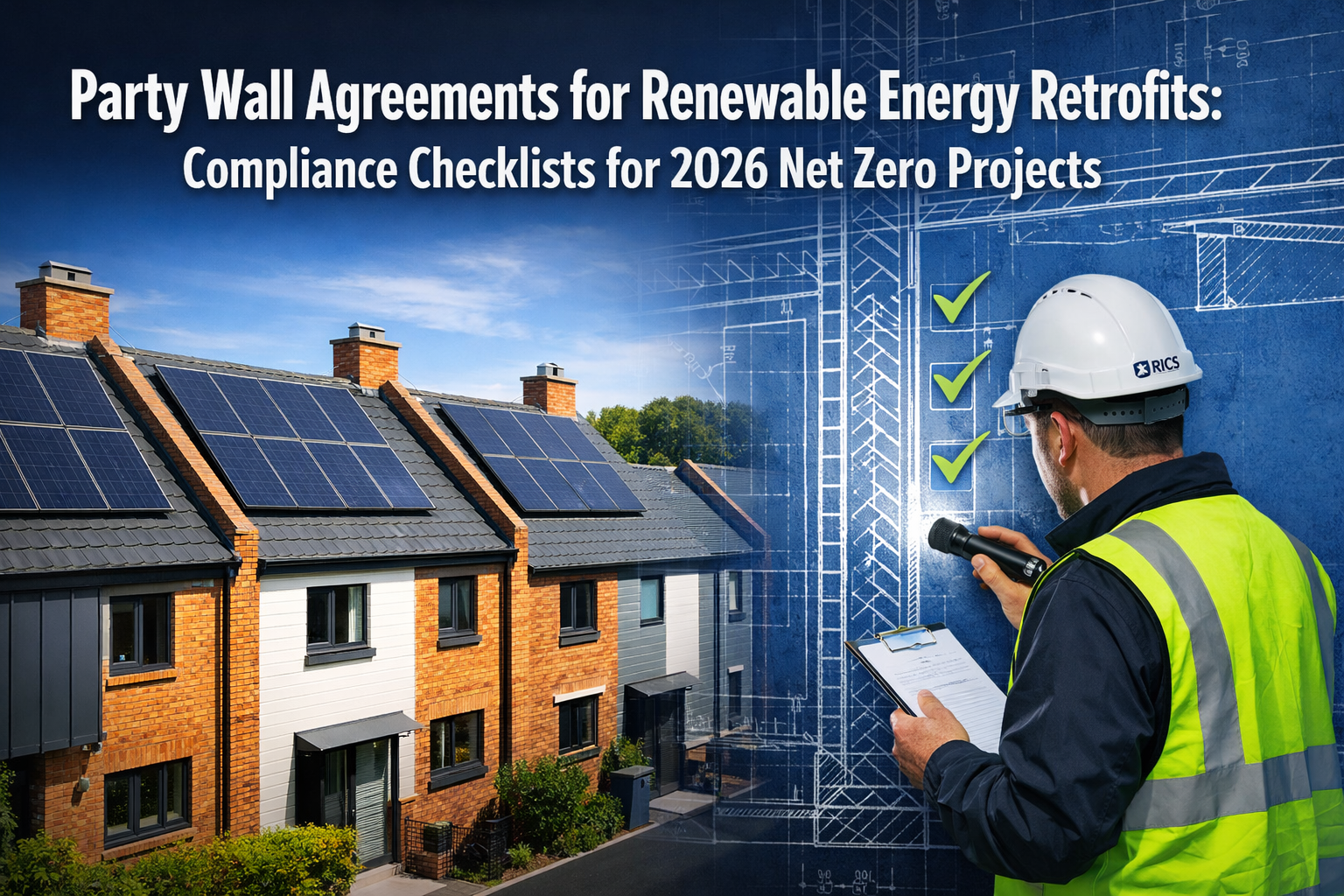
Key Takeaways
- 🏗️ Party wall procedures are mandatory for renewable energy installations that affect shared walls, boundaries, or structures within three meters of neighboring properties
- 📋 Comprehensive pre-work documentation through schedules of condition protects all parties from future disputes over installation damage
- ⚡ 2026 compliance requirements include new building performance standards, electrification mandates, and federal clean energy rules affecting retrofit projects
- 🤝 Early neighbor notification (minimum 14 days) and professional surveyor involvement significantly reduce project delays and legal conflicts
- ✅ RICS-aligned checklists ensure renewable energy retrofits meet both party wall obligations and emerging net zero regulatory frameworks
Understanding Party Wall Requirements for Renewable Energy Installations
The Party Wall etc. Act 1996 governs building work on or near shared boundaries in England and Wales. When retrofitting renewable energy systems, property owners must understand which installations trigger party wall procedures and which fall outside the Act's scope.
What Renewable Energy Work Requires Party Wall Notices?
Several common renewable energy retrofits necessitate formal party wall notices:
Solar Panel Installations:
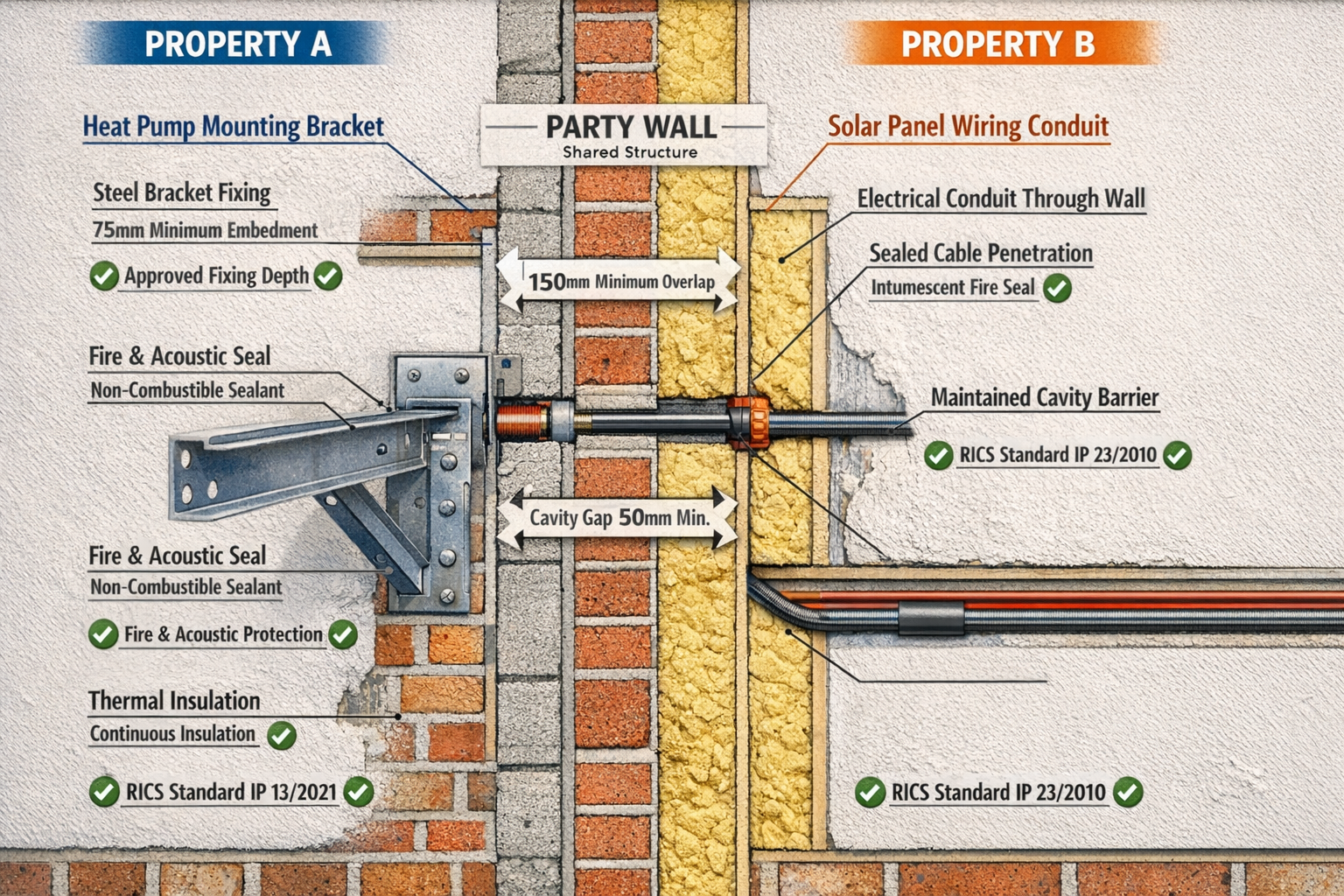
- Mounting brackets penetrating party walls or shared roof structures
- Additional structural loading on shared walls or chimney stacks
- Electrical conduit runs through party wall cavities
- Scaffolding placement within three meters of neighboring property
Heat Pump Systems:
- External unit mounting on party walls
- Pipework penetrations through shared structures
- Foundation excavations within three meters of adjacent buildings
- Structural modifications to accommodate equipment weight
Battery Storage Units:
- Floor reinforcement affecting party walls or shared foundations
- Ventilation systems requiring party wall penetrations
- Fire protection barriers installed on shared structures
The Party Wall Act 3-metre rule becomes particularly relevant for ground-mounted equipment and foundation work associated with larger renewable energy systems.
Exemptions and Gray Areas
Not all renewable energy work triggers party wall procedures. Purely cosmetic installations that don't affect structural elements or extend beyond property boundaries typically fall outside the Act's scope. However, the distinction isn't always clear-cut.
Property owners should seek professional guidance when uncertainty exists. The consequences of failing to serve proper notices can include injunctions, forced removal of installations, and liability for neighbor's legal costs.
2026 Net Zero Compliance Landscape for Residential Retrofits
The regulatory environment for building energy performance has transformed dramatically. Multiple jurisdictions have implemented or strengthened requirements that directly impact how property owners approach renewable energy retrofits.
Federal and State Energy Standards
The Federal Clean Energy Rule requires federal buildings to meet specific energy performance benchmarks, with compliance deadlines extended to May 1, 2026 [4]. While this directly affects government properties, the standards influence broader market practices and contractor capabilities.
California has introduced significant construction law changes for 2026, including enhanced electrification requirements and updated energy code provisions [3]. These regulations create ripple effects across the construction industry, establishing new baseline expectations for renewable energy integration.
Building Performance Standards Expansion
A growing patchwork of local regulations now governs building energy performance. More than 30 additional cities have committed to passing building performance standards by 2026 [7], creating compliance challenges for property owners and contractors operating across multiple jurisdictions.
These standards typically establish:
- Energy use intensity (EUI) targets measured in kBTU per square foot annually
- Greenhouse gas emission limits for residential and commercial properties
- Reporting requirements with penalties for non-compliance
- Timeline mandates for achieving specified performance levels
Solar System Regulatory Requirements
International examples provide insight into emerging compliance frameworks. Japan's FIP transition for solar installations requires resident explanation meetings and contractor supervision obligations for systems 50kW or larger [1]. While UK requirements differ, the trend toward enhanced oversight and documentation affects project planning.
The IRS has issued guidance on clean energy tax credit requirements, including restrictions on material assistance from prohibited foreign entities. For solar components, the Manufactured Alternative Crude Ratio (MACR) threshold stands at 50% for 2026 projects [5], affecting equipment sourcing decisions for tax credit eligibility.
Party Wall Agreements for Renewable Energy Retrofits: Essential Compliance Checklists
Successful renewable energy retrofits require systematic approaches that address both party wall obligations and net zero compliance requirements. The following checklists provide frameworks for different project phases.
Pre-Project Planning Checklist
Initial Assessment Phase:
✅ Identify all party walls, shared structures, and boundary features affected by proposed work
✅ Determine whether installations fall within three meters of neighboring properties
✅ Review local building performance standards and net zero requirements applicable to the property
✅ Assess structural capacity of existing walls for additional loading from renewable equipment
✅ Verify equipment specifications meet 2026 tax credit eligibility criteria if claiming incentives
✅ Confirm contractor holds appropriate licenses and insurance for party wall work
✅ Budget for party wall surveyor fees (typically £700-£1,500 per property depending on complexity)
Neighbor Engagement:
✅ Conduct informal discussions with affected neighbors before formal notices
✅ Explain project benefits, timeline, and measures to minimize disruption
✅ Address concerns proactively to reduce likelihood of disputes
✅ Document all communications for future reference
Early engagement significantly improves project outcomes. Property owners who invest time in neighbor relations before serving formal notices experience fewer delays and disputes.
Party Wall Notice and Documentation Checklist
Formal Notice Requirements:
✅ Prepare detailed party wall notice describing all proposed work affecting shared structures
✅ Include technical drawings showing equipment locations, mounting methods, and structural modifications
✅ Specify start date (minimum two months for party wall work, one month for excavations)
✅ Serve notices to all affected adjoining owners via recorded delivery
✅ Maintain proof of service with signed receipts or postal tracking
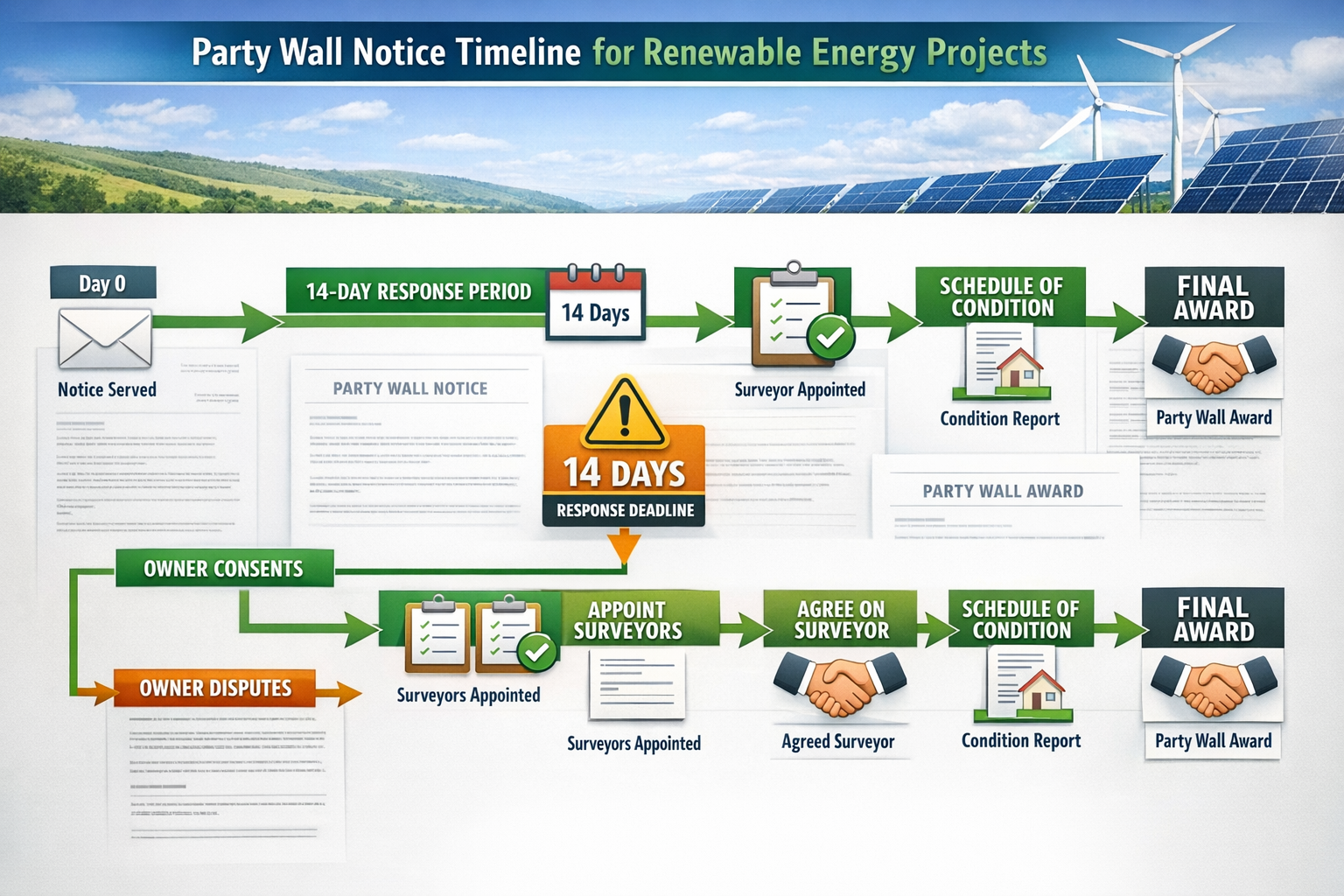
✅ Allow 14-day response period as required under the Act
The quality of initial notices directly impacts project progression. Incomplete or unclear notices invite disputes and delays. Professional assistance from experienced surveyors ensures notices meet legal requirements while providing sufficient technical detail.
For guidance on common questions, consult resources on party wall act questions.
Surveyor Appointment Process:
✅ If neighbor dissents or doesn't respond within 14 days, initiate surveyor appointment procedures
✅ Propose an agreed surveyor acceptable to both parties (most cost-effective approach)
✅ Alternatively, each party appoints their own surveyor who jointly select a third surveyor if needed
✅ Confirm surveyor holds relevant professional qualifications (RICS membership preferred)
✅ Establish clear scope of work and fee arrangements in writing
✅ Understand that building owner typically bears all reasonable surveyor costs under the Act
Understanding party wall surveyor costs helps property owners budget appropriately and avoid financial surprises.
Schedule of Condition and Award Checklist
The schedule of condition represents the most critical protection against future disputes. This detailed record documents the pre-work state of affected properties.
Pre-Installation Documentation:
✅ Commission comprehensive photographic survey of all party walls and adjacent structures
✅ Document existing cracks, defects, or damage with measurements and reference points
✅ Record current condition of finishes, decorations, and fixtures near work areas
✅ Note any pre-existing movement, settlement, or structural issues
✅ Include dated, georeferenced photographs with clear identification markers
✅ Obtain neighbor's acknowledgment of condition accuracy where possible
Professional surveyors create schedules of condition that withstand legal scrutiny. The investment in thorough documentation (typically £500-£1,000) provides invaluable protection if disputes arise post-installation.
Learn more about party wall schedule of condition requirements and best practices.
Party Wall Award Requirements:
✅ Ensure award specifies exact nature and extent of permitted work
✅ Verify inclusion of working hours, access requirements, and noise limitations
✅ Confirm provisions for making good any damage caused during installation
✅ Check insurance requirements and indemnity provisions
✅ Review dispute resolution procedures if disagreements arise during work
✅ Obtain signed copies for all parties before commencing work
The party wall award forms a legally binding agreement. Starting work before receiving a valid award exposes property owners to injunctions and potential legal action.
Installation Phase Compliance for Renewable Energy Retrofits
Proper execution during installation protects all parties and ensures work complies with both party wall agreements and building regulations.
During-Work Monitoring Checklist
Contractor Compliance:
✅ Verify contractor understands party wall award terms and limitations
✅ Ensure work proceeds according to approved plans and specifications
✅ Monitor adherence to permitted working hours and access arrangements
✅ Implement vibration and noise monitoring if specified in award
✅ Maintain clean work areas and protect neighbor's property from debris
✅ Document any variations from original plans requiring additional approvals
Structural Integrity Verification:
✅ Conduct interim inspections at critical installation stages
✅ Verify mounting systems don't compromise party wall structural capacity
✅ Confirm proper sealing of all penetrations to maintain fire resistance and weather protection
✅ Check compliance with building regulations for structural alterations
✅ Test electrical installations meet current wiring regulations
✅ Validate heat pump installations comply with MCS standards for renewable technology
Handling Issues During Installation
Despite careful planning, unexpected conditions sometimes emerge during renewable energy retrofits. Prompt communication and professional guidance prove essential when problems arise.
Issue Resolution Protocol:
- Stop work immediately if unanticipated structural issues or damage occurs
- Notify all parties including neighbors, surveyors, and contractors within 24 hours
- Document conditions with photographs and written descriptions
- Obtain professional assessment from structural engineer if needed
- Propose remediation plan through party wall surveyor
- Secure written approval before resuming work
Property owners who follow proper procedures when problems occur maintain legal protection and preserve neighbor relationships. Attempting to conceal issues or proceeding without approval creates liability and potential disputes.
For guidance on managing conflicts, review information on party wall disputes and resolution strategies.
Post-Installation Completion and Compliance Verification
The party wall process doesn't end when renewable energy equipment becomes operational. Final compliance steps ensure all obligations are fulfilled and documentation is complete.
Final Inspection and Sign-Off Checklist
Completion Documentation:
✅ Conduct final inspection comparing completed work against party wall award specifications
✅ Create post-installation photographic record matching pre-work schedule of condition format
✅ Document any making good work completed to repair installation damage
✅ Obtain neighbor's acknowledgment that work is complete and property restored
✅ Secure final sign-off from party wall surveyor(s)
✅ Compile complete project file including all notices, awards, correspondence, and inspection reports
Building Control and Certification:
✅ Obtain Building Regulations approval for structural alterations
✅ Secure electrical installation certificate from qualified electrician
✅ Obtain MCS certificate for renewable technology installations (required for certain incentives)
✅ Complete any required local authority notifications or approvals
✅ Update property insurance to reflect renewable energy installations
✅ Maintain warranty documentation for all equipment and installation work
Long-Term Compliance Considerations
Renewable energy installations create ongoing obligations beyond initial installation compliance.
Maintenance and Future Modifications:
- Regular inspections ensure equipment remains securely mounted to party walls
- Maintenance work affecting party structures may require new notices
- System upgrades or replacements trigger fresh party wall considerations
- Property sales require disclosure of party wall awards and renewable installations
- Performance monitoring demonstrates compliance with building performance standards
Property owners should retain comprehensive project documentation indefinitely. Future owners need this information to understand party wall obligations and system specifications.
Common Pitfalls and How to Avoid Them
Experience from renewable energy retrofit projects reveals recurring mistakes that create unnecessary complications, delays, and costs.
Frequent Party Wall Errors
❌ Starting work before serving notices – The most common and costly mistake. Always serve notices and obtain awards before commencing any work affecting party structures.
❌ Inadequate technical drawings – Vague or incomplete plans in party wall notices invite disputes and require resubmission, delaying projects by weeks or months.
❌ Failing to identify all affected neighbors – Work within three meters of a property triggers notice requirements even if not directly adjoining. Missing affected parties creates legal vulnerability.
❌ Ignoring the 14-day response period – Proceeding before the statutory response period expires violates the Act regardless of neighbor's verbal consent.
❌ Skipping schedule of condition – This false economy creates massive liability if neighbors claim installation caused pre-existing damage.
Net Zero Compliance Oversights
❌ Assuming all renewable installations qualify for incentives – Tax credit eligibility depends on specific equipment specifications, installation standards, and sourcing requirements that vary by year [5].
❌ Neglecting local building performance standards – Focus on party wall compliance shouldn't overshadow emerging energy performance requirements that affect property values and marketability [7].
❌ Inadequate contractor vetting – Not all contractors understand party wall obligations or possess necessary expertise for compliant renewable energy installations.
❌ Poor documentation of compliance – Future property transactions, insurance claims, and regulatory audits require comprehensive records proving installations meet all applicable standards.
Regional Variations and Jurisdiction-Specific Requirements
While this guide focuses on England and Wales party wall legislation, property owners must understand that renewable energy compliance frameworks vary significantly by location.
Understanding Local Requirements
Building performance standards, renewable energy mandates, and party wall procedures differ across jurisdictions. Property owners should:
- Research local building codes governing renewable energy installations
- Verify permit requirements which may exceed party wall obligations
- Understand regional incentive programs with specific compliance criteria
- Identify applicable energy performance standards for the property's location and building type
- Confirm contractor licensing requirements for renewable energy work
The growing patchwork of regulations creates compliance challenges, particularly for property owners with holdings in multiple jurisdictions [7]. Professional guidance from local experts proves invaluable for navigating these complexities.
Professional Support for Party Wall Renewable Energy Projects
The intersection of party wall legislation, building regulations, and net zero compliance creates complexity beyond most property owners' expertise. Professional support significantly improves outcomes while reducing stress and risk.
When to Engage Professionals
Party Wall Surveyors provide essential services including:
- Drafting compliant party wall notices
- Creating comprehensive schedules of condition
- Negotiating awards that protect all parties
- Resolving disputes through professional mediation
- Monitoring work compliance during installation
Structural Engineers assess whether existing party walls can safely support additional loading from renewable energy equipment and design appropriate reinforcement if needed.
Renewable Energy Specialists ensure installations meet technical standards, qualify for available incentives, and comply with manufacturer requirements for warranties.
Building Control Surveyors verify compliance with building regulations and issue necessary certificates for structural alterations.
The cost of professional support represents a small fraction of potential liability from non-compliant work or disputed installations. Property owners should view these services as essential project components rather than optional expenses.
For comprehensive guidance on party wall matters, explore resources on party wall matters.
Future-Proofing Renewable Energy Retrofits
As net zero targets tighten and building performance standards evolve, property owners should consider future compliance requirements when planning current retrofits.
Strategic Planning Considerations
Scalability: Design party wall agreements and structural modifications to accommodate future system expansions without requiring new procedures.
Technology Evolution: Specify mounting systems and penetrations that allow equipment upgrades as renewable technology advances.
Regulatory Trajectory: Monitor emerging building performance standards to ensure current installations contribute toward anticipated future requirements.
Documentation Systems: Establish comprehensive record-keeping that supports compliance verification for evolving regulatory frameworks.
Neighbor Relations: Maintain positive relationships that facilitate future renewable energy enhancements as net zero requirements intensify.
Conclusion
Party Wall Agreements for Renewable Energy Retrofits: Compliance Checklists for 2026 Net Zero Projects represent the convergence of traditional property law and urgent climate action. As building performance standards expand and renewable energy installations become standard practice rather than exception, understanding party wall obligations has never been more critical.
The checklists and frameworks presented in this guide provide property owners, contractors, and surveyors with systematic approaches to compliant renewable energy retrofits. By following these procedures, stakeholders protect their interests while contributing to broader net zero objectives.
Key success factors include:
- ✅ Early planning that identifies party wall requirements before project commitment
- ✅ Professional support from qualified surveyors and specialists
- ✅ Comprehensive documentation protecting all parties from future disputes
- ✅ Proactive neighbor engagement that builds cooperation rather than conflict
- ✅ Integrated compliance addressing party wall, building regulations, and energy performance standards simultaneously
Next Steps
Property owners planning renewable energy retrofits in 2026 should:
- Assess your property for party wall implications of proposed installations
- Research applicable building performance standards in your jurisdiction
- Engage qualified professionals early in project planning
- Budget appropriately for party wall procedures and compliance documentation
- Initiate neighbor discussions before formal notice requirements
- Compile comprehensive project documentation from initial planning through final completion
The transition to net zero buildings creates unprecedented opportunities for property enhancement while demanding rigorous attention to legal and technical compliance. Property owners who master Party Wall Agreements for Renewable Energy Retrofits: Compliance Checklists for 2026 Net Zero Projects position themselves for successful, dispute-free installations that enhance property value while contributing to climate objectives.
For expert guidance on party wall matters for your renewable energy retrofit project, consult with qualified RICS surveyors who understand both traditional party wall procedures and emerging net zero compliance requirements. The investment in professional support delivers returns through smoother projects, protected relationships, and compliant installations that stand the test of time.
References
[1] Fip Transition 2026 Solar Legal Guide – https://www.borderless.law/en/topics/fip-transition-2026-solar-legal-guide/
[3] 251230 8187 Construction Laws 2026 – https://www.hansonbridgett.com/publications/251230_8187_construction-laws-2026
[4] Federal Building Energy Efficiency Rules And Requirements – https://www.energy.gov/cmei/femp/federal-building-energy-efficiency-rules-and-requirements
[5] What Clean Energy Companies Need To Know About New Irs Rules On Foreign Entity Restrictions – https://www.swlaw.com/publication/what-clean-energy-companies-need-to-know-about-new-irs-rules-on-foreign-entity-restrictions/
[7] The Growing Patchwork Of Building Energy Regulations Is Making Compliance A Nightmare – https://propmodo.com/the-growing-patchwork-of-building-energy-regulations-is-making-compliance-a-nightmare/