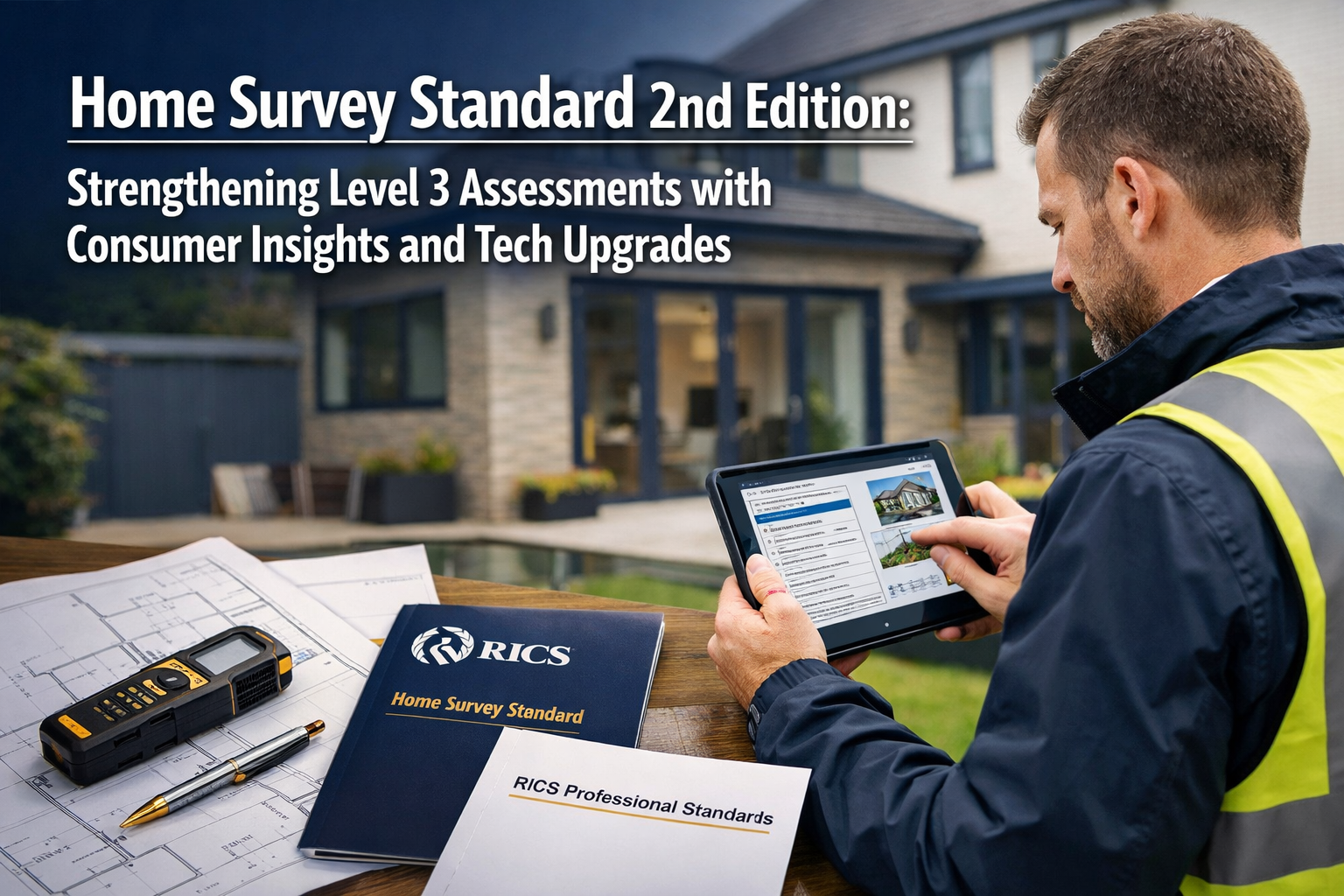

The property surveying landscape in 2026 is undergoing its most significant transformation in decades. As homebuyers demand more transparency and detailed condition assessments, the Royal Institution of Chartered Surveyors (RICS) is responding with a comprehensive overhaul of its foundational Home Survey Standard. The Home Survey Standard 2nd Edition: Strengthening Level 3 Assessments with Consumer Insights and Tech Upgrades represents more than just a technical update—it's a fundamental reimagining of how property surveys serve both consumers and professionals in an increasingly digital marketplace.
With over 1,000 consultation responses analyzed and feedback from 1,400 homeowners informing the revision, this second edition addresses critical gaps in current survey practices while embracing technological innovations that are reshaping the industry.[1] For chartered surveyors across the UK, understanding these changes is essential for maintaining competitive advantage and delivering the enhanced service quality that modern homebuyers expect.
Key Takeaways
- 📊 Extensive Research Foundation: RICS surveyed 325 members and over 1,400 homeowners to inform the standard's development, ensuring it addresses real-world needs
- 🔍 Enhanced Level 3 Focus: The updated standard strengthens requirements for comprehensive Building Surveys with clearer guidance on inspection depth and reporting
- 💻 Technology Integration: Digital tools, thermal imaging, and modern survey technologies are being incorporated into standard requirements
- 📝 Clarity Emphasis: Over 1,000 consultation comments highlighted the need for clearer, more concise requirements—especially for SME surveying firms
- ⏱️ Rigorous Development Process: More than 70 hours across 20+ expert meetings have refined the draft before it enters final approval stages
Understanding the Home Survey Standard 2nd Edition Context
The Home Survey Standard 2nd Edition: Strengthening Level 3 Assessments with Consumer Insights and Tech Upgrades emerges at a pivotal moment for the UK property market. As of February 2026, the standard remains in the analysis phase, with RICS methodically reviewing consultation feedback line-by-line before advancing to subsequent review stages.[1]
Why the Standard Needed Updating
The original Home Survey Standard served the industry well, but market evolution demanded a comprehensive refresh. Several factors drove this update:
Consumer Expectations Have Changed 🏠
Modern homebuyers are more informed and demanding than previous generations. They expect detailed, accessible information about property conditions before committing to what is typically their largest financial investment. The 1,400-homeowner survey conducted by RICS revealed specific gaps between what consumers wanted and what current survey practices delivered.[1]
Technology Has Transformed Survey Capabilities 📱
Digital tools, thermal imaging cameras, moisture meters, and drone technology have revolutionized what surveyors can detect and document. The standard needed to acknowledge these capabilities while providing guidance on their appropriate use. For those wondering what survey do you need, understanding how technology enhances modern assessments is crucial.
Professional Practice Has Evolved 📋
The way surveyors conduct inspections, document findings, and communicate with clients has shifted dramatically. The standard required updating to reflect contemporary best practices while maintaining the rigorous professional standards RICS is known for.
The Comprehensive Development Process
RICS has invested unprecedented resources into developing this second edition:
| Development Component | Scale | Purpose |
|---|---|---|
| Member Survey | 325 RICS members | Understanding professional perspectives |
| Consumer Research | 1,400+ homeowners | Identifying consumer needs and pain points |
| Public Consultation | 8 weeks (Aug-Oct 2025) | Gathering industry-wide feedback |
| Consultation Responses | 1,000+ comments | Detailed feedback for refinement |
| Industry Presentations | 1,600+ attendees | Engagement and education |
| Expert Meetings | 70+ hours across 20+ sessions | Technical development and refinement |
This level of engagement demonstrates the standard's critical importance to the residential property sector.[1]
Consumer Insights Driving Level 3 Assessment Improvements
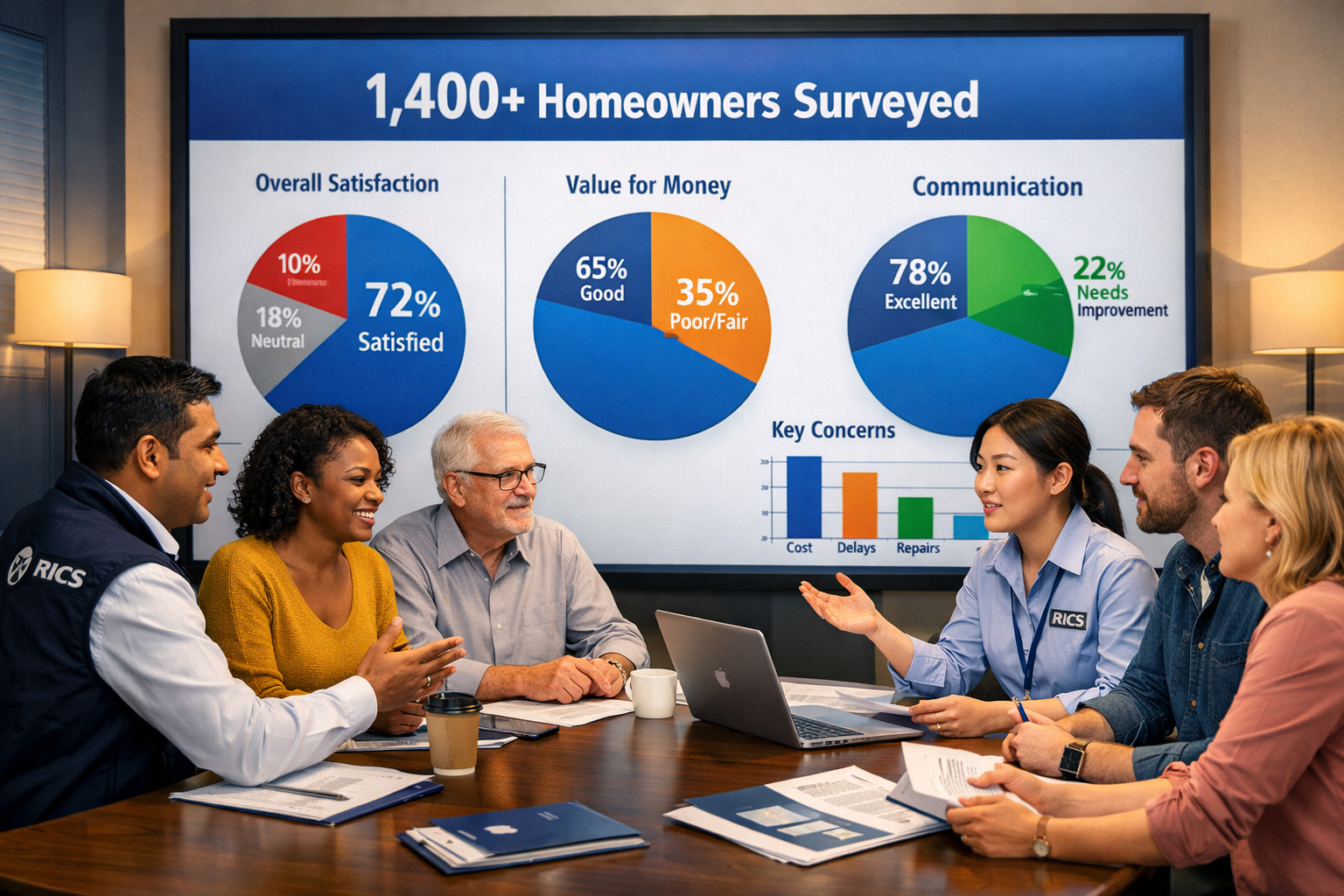
One of the most significant aspects of the Home Survey Standard 2nd Edition: Strengthening Level 3 Assessments with Consumer Insights and Tech Upgrades is its foundation in actual consumer experience. The extensive homeowner research has directly influenced how Level 3 Building Surveys will be conducted and reported.
What Homeowners Actually Want
The 1,400-homeowner survey revealed several consistent themes that are now shaping the standard's requirements:
Greater Clarity in Reporting ✍️
Consumers consistently reported difficulty understanding technical survey language. The new standard emphasizes plain English explanations alongside technical assessments, ensuring homeowners can make informed decisions without requiring a surveying degree.
More Comprehensive Upfront Information 🔎
Many homebuyers felt surprised by issues discovered after purchase that should have been identified during surveys. The strengthened Level 3 requirements address this by providing clearer guidance on inspection depth and what must be included in comprehensive Building Surveys.
Better Value Perception 💷
Understanding the difference between homebuyer reports and building surveys was often unclear to consumers. The updated standard helps surveyors better communicate the value proposition of more detailed Level 3 assessments.
Addressing the SME Surveyor Perspective
While consumer insights are crucial, RICS also recognized that the standard must work for practicing surveyors—particularly those in small and medium-sized enterprises (SMEs). A consistent theme from feedback, especially from SME firms, emphasized the need for the draft to be clearer and more concise in its requirements.[1]
This balance between comprehensive guidance and practical usability represents one of the key challenges RICS is addressing in the current analysis phase.
Key Considerations for SME Firms:
- Prescriptiveness vs. Flexibility: How detailed should mandatory requirements be while still allowing professional judgment?
- Competitive Positioning: Ensuring surveyors who follow the standard remain competitive in the marketplace
- Resource Requirements: Balancing thoroughness with practical time and cost constraints
- Clear Distinctions: Separating mandatory "must" requirements from recommended "should" practices
These considerations are actively being refined as RICS works through the consultation feedback.[1]
Technology Integration in Modern Level 3 Surveys
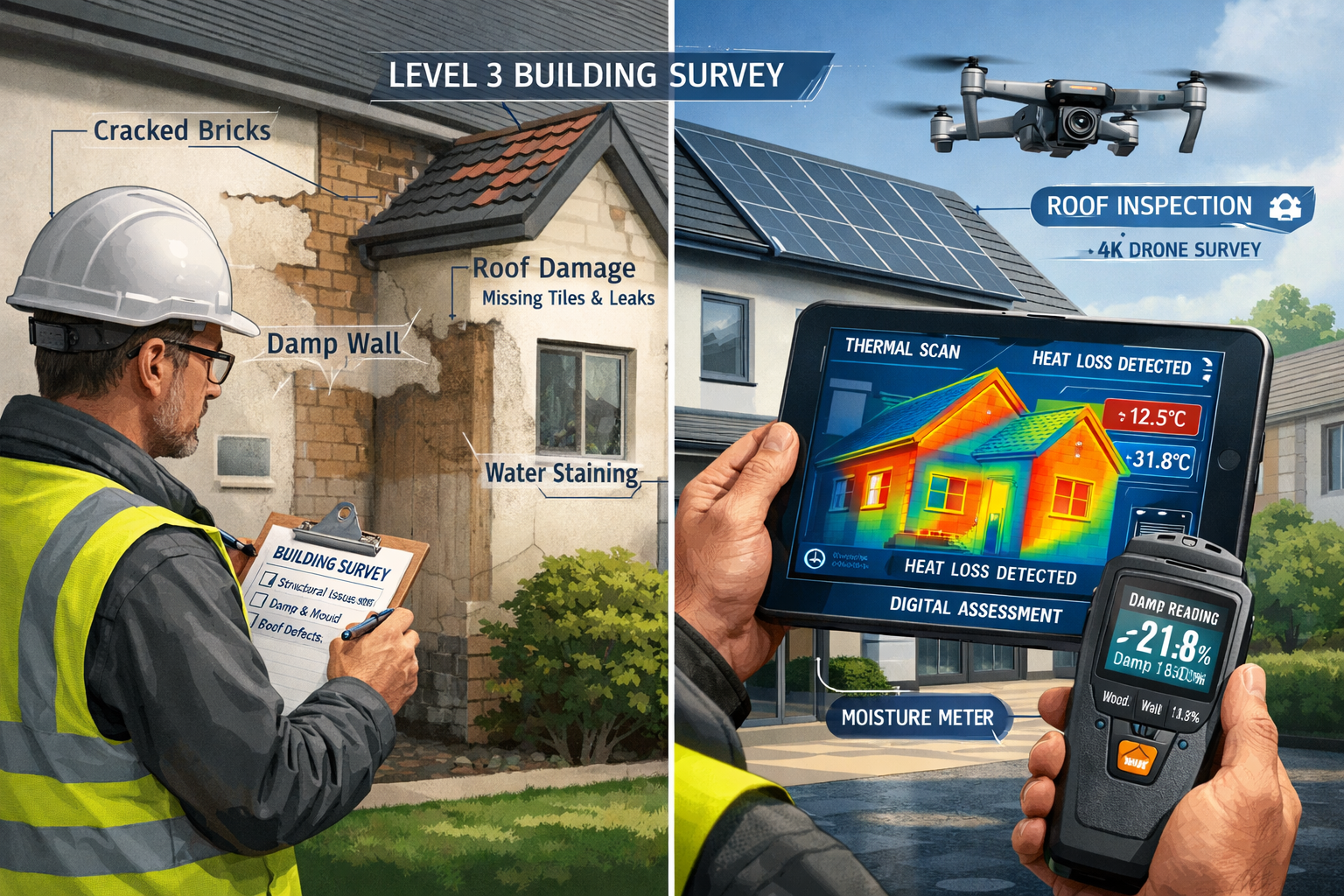
The Home Survey Standard 2nd Edition: Strengthening Level 3 Assessments with Consumer Insights and Tech Upgrades represents a watershed moment for technology adoption in residential surveying. The standard acknowledges that modern surveyors have access to tools that previous generations could only dream of.
Digital Tools Transforming Survey Practice
Several technological innovations are being incorporated into the updated standard's framework:
Thermal Imaging Cameras 🌡️
These devices reveal heat loss, moisture ingress, and insulation deficiencies invisible to the naked eye. The new standard provides guidance on when thermal imaging should be employed and how findings should be documented and reported.
Moisture Meters and Damp Detection 💧
Modern electronic moisture meters provide objective measurements rather than subjective assessments. The standard addresses how these readings should be interpreted and communicated to clients.
Drone Technology 🚁
For properties with difficult-to-access roofs or tall structures, drones offer safe inspection capabilities. The updated standard considers when drone surveys are appropriate and what qualifications surveyors need for their use.
Digital Documentation and Reporting 📲
Cloud-based platforms, digital photography with location tagging, and interactive reports are becoming standard practice. The new edition addresses how technology can enhance report clarity and accessibility for consumers.
Balancing Innovation with Professional Judgment
While embracing technology, RICS is careful to emphasize that tools supplement rather than replace professional expertise. The standard reinforces that:
- Technology must be used appropriately and competently
- Surveyors must understand the limitations of their tools
- Professional interpretation remains essential
- Traditional inspection methods retain their importance
For chartered surveyors in London and across the UK, this balanced approach ensures technology enhances rather than complicates professional practice.
The Consultation Process and Industry Engagement
The development of the Home Survey Standard 2nd Edition: Strengthening Level 3 Assessments with Consumer Insights and Tech Upgrades has been characterized by unprecedented industry engagement. RICS recognized early that a standard of this importance required extensive consultation with all stakeholders.
Scope of Industry Consultation
RICS conducted an eight-week public consultation from August 19 to October 14, 2025, during which the draft standard was made available for review and comment.[1] The response was remarkable:
Consultation Participants:
- RICS Residential Property Professional Group Panel
- Knowledge and Practice Committee members
- Standards and Regulation Board
- Centre for Effective Dispute Resolution (CEDR)
- The Property Ombudsman
- Home Buying & Selling Council
- Homeowners Alliance
- Individual RICS members and firms
- Consumer groups and advocacy organizations
Presentation and Education Efforts
Beyond formal consultation, RICS invested heavily in educating the profession about the proposed changes. The organization presented to over 1,600 people at various events, including:[1]
- Surventrix professional development sessions
- SAVA (Surveyors and Valuers Accreditation) training days
- Legal & General corporate presentations
- e-Surv technology conferences
- RICS Residential Property annual conference
This extensive outreach ensured that surveyors across different practice types and geographic regions understood the proposed changes and could provide informed feedback.
Key Themes from Consultation Feedback
The 1,000+ comments received during consultation revealed several consistent themes:[1]
Clarity and Conciseness 📝
The most frequent feedback, particularly from SME firms, emphasized the need for clearer, more concise requirements. Surveyors wanted to understand exactly what was mandatory versus recommended without wading through excessive detail.
Practical Implementation ⚙️
Many respondents asked for practical guidance on implementing new requirements, particularly regarding technology use and enhanced reporting standards.
Competitive Concerns 💼
Some surveyors expressed concern about whether following the standard would place them at a competitive disadvantage against firms taking shortcuts. RICS is addressing this by ensuring the standard establishes clear baseline expectations for all practitioners.
Consumer Communication 💬
Feedback highlighted the challenge of communicating complex technical findings to non-expert homebuyers. The standard is being refined to provide better guidance on effective client communication.
The Approval Journey: Where We Stand in 2026
As of February 2026, the Home Survey Standard 2nd Edition: Strengthening Level 3 Assessments with Consumer Insights and Tech Upgrades is in a critical analysis phase. Understanding this journey helps surveyors anticipate when the final standard will be published and what additional changes might occur.
Current Status: Analysis Phase
RICS is currently working through consultation responses line-by-line, ensuring each piece of feedback receives appropriate consideration.[1] This meticulous approach reflects the standard's importance and RICS's commitment to getting it right rather than rushing to publication.
The analysis phase involves:
- Categorizing feedback by theme and topic
- Identifying areas requiring significant revision
- Balancing competing stakeholder perspectives
- Ensuring technical accuracy and clarity
- Maintaining alignment with RICS's broader professional standards
Remaining Approval Stages
Before publication, the standard must navigate several additional review stages:[1]
1. Editorial Review ✏️
Professional editors will review the revised draft for clarity, consistency, and readability. This stage ensures the standard is accessible to all practitioners, regardless of their experience level.
2. Residential Professional Group Panel Review 👥
The specialist panel will conduct a detailed technical review, ensuring the standard reflects current best practices and is practically implementable.
3. Knowledge and Practice Committee Review and Approval 📋
This committee provides oversight of all RICS professional standards, ensuring consistency across the institution's guidance documents.
4. Standards and Regulation Board Final Approval ✅
The final approval stage ensures the standard meets RICS's governance requirements and aligns with its regulatory responsibilities.
Transparency Through Documentation
RICS has committed to publishing a Basis for Conclusions document alongside the final standard.[1] This document will:
- Summarize key themes from consultation responses
- Explain how RICS addressed significant feedback
- Provide rationale for major decisions
- Offer transparency into the development process
This documentation will help surveyors understand not just what the standard requires, but why those requirements were adopted.
Implications for Surveying Practices Across the UK
The Home Survey Standard 2nd Edition: Strengthening Level 3 Assessments with Consumer Insights and Tech Upgrades will have far-reaching implications for surveying practices throughout the United Kingdom. Chartered surveyors in diverse locations—from Surrey to Berkshire, from South West London to Hampshire—will need to adapt their practices to meet the enhanced requirements.
Regional Considerations
While the standard applies nationally, regional property characteristics may influence implementation:
Urban vs. Rural Properties 🏙️🌳
Surveyors working in dense urban areas like West London face different challenges than those surveying rural properties. The standard's flexibility must accommodate these variations while maintaining consistent quality.
Property Age and Type Variations 🏛️
Historic properties, modern developments, and everything in between require different inspection approaches. The enhanced Level 3 guidance addresses how surveyors should adapt their methodology to property characteristics.
Local Market Dynamics 📊
Property markets vary significantly across regions. Surveyors must balance standard requirements with local market expectations and competitive pressures.
Practice Development Priorities
Firms should begin preparing for the new standard by focusing on several key areas:
Technology Investment 💻
Consider which digital tools will help meet enhanced requirements efficiently. This might include thermal imaging equipment, advanced moisture meters, or digital reporting platforms.
Staff Training 🎓
Ensure all surveyors understand the new requirements and can implement them consistently. Professional development will be crucial during the transition period.
Process Refinement 🔄
Review and update internal procedures to align with the new standard. This includes inspection checklists, reporting templates, and quality assurance processes.
Client Communication 📞
Develop clear explanations for why Level 3 surveys may take longer or cost more under the enhanced standard. Emphasize the additional value clients receive.
Strengthening the Home Buying and Selling Process
The Home Survey Standard 2nd Edition: Strengthening Level 3 Assessments with Consumer Insights and Tech Upgrades doesn't exist in isolation. It's part of RICS's broader initiative to improve the entire home buying and selling process in the UK.[6]
Integration with Broader Reforms
RICS has established a Home Buying & Selling Reform Hub that coordinates various initiatives aimed at making property transactions:
- More transparent
- Less stressful
- More efficient
- Better informed
- Fairer for all parties
The enhanced survey standard contributes to these goals by ensuring buyers receive comprehensive, understandable information about property condition before committing to purchase.
The Role of Level 3 Building Surveys
Building Surveys (Level 3) represent the most comprehensive survey type available to homebuyers. The strengthened standard ensures these surveys deliver maximum value by:
Comprehensive Coverage 🔍
Detailed inspection of all accessible areas, with clear guidance on what "accessible" means and when limitations should be noted.
Detailed Reporting 📄
Enhanced requirements for explaining findings in language homebuyers can understand, with appropriate technical detail for professionals.
Condition Assessment 🏗️
Clear frameworks for assessing and communicating the condition of building elements, helping buyers understand maintenance priorities.
Defect Identification ⚠️
Improved guidance on identifying, documenting, and explaining defects, with appropriate recommendations for further investigation when needed.
Consumer Protection Enhancement
By strengthening Level 3 assessment requirements, the new standard provides better consumer protection:
- Reduced Post-Purchase Surprises: More thorough inspections mean fewer unexpected issues after completion
- Informed Decision-Making: Clearer reports enable better-informed purchase decisions
- Negotiating Position: Comprehensive condition information supports fair price negotiations
- Maintenance Planning: Detailed assessments help new owners plan for future maintenance needs
Preparing for Implementation: Practical Steps for Surveyors
While the final publication date for the Home Survey Standard 2nd Edition: Strengthening Level 3 Assessments with Consumer Insights and Tech Upgrades remains to be confirmed, surveyors can take proactive steps to prepare for its implementation.
Immediate Actions
Stay Informed 📰
Monitor RICS announcements and updates regarding the standard's progress through approval stages. Subscribe to relevant RICS communications and professional publications.
Review Current Practices 🔎
Conduct an honest assessment of current survey practices against the draft standard's requirements. Identify gaps that will need addressing.
Engage with Professional Networks 🤝
Discuss the upcoming changes with colleagues and professional groups. Share insights and practical implementation strategies.
Medium-Term Preparation
Technology Assessment 🔧
Evaluate what technology investments might be necessary to meet enhanced requirements efficiently. Consider:
- Thermal imaging cameras and training
- Advanced moisture detection equipment
- Digital reporting platforms
- Drone technology for appropriate applications
Training and Development 📚
Plan professional development activities that will prepare your team for the new requirements:
- Technical skills enhancement
- Technology training
- Report writing improvement
- Client communication workshops
Process Documentation 📋
Begin documenting and refining your survey processes to ensure consistency and quality:
- Standardized inspection checklists
- Quality assurance procedures
- Report templates aligned with new requirements
- File management and documentation systems
Long-Term Strategic Planning
Business Model Considerations 💼
Consider how the enhanced standard might affect your business model:
- Pricing structures that reflect increased thoroughness
- Service differentiation based on quality standards
- Marketing messages emphasizing compliance and quality
- Competitive positioning in your local market
Client Education 🎯
Develop resources to help clients understand the value of enhanced Level 3 surveys:
- Website content explaining the new standard
- Comparison materials showing enhanced value
- Case studies demonstrating benefits
- FAQ documents addressing common concerns
The Future of Residential Property Surveying
The Home Survey Standard 2nd Edition: Strengthening Level 3 Assessments with Consumer Insights and Tech Upgrades represents more than just an update to technical requirements—it signals the future direction of residential property surveying in the UK.
Evolving Professional Expectations
The surveying profession continues to evolve, with several trends shaping its future:
Increased Professionalization 🎓
Higher standards, better training, and more rigorous quality assurance are becoming the norm rather than the exception.
Technology Integration 💻
Digital tools are no longer optional extras but essential components of professional practice.
Consumer Focus 👥
Understanding and meeting consumer needs is increasingly central to professional standards and practice development.
Transparency and Accountability 📊
Greater transparency in processes, findings, and limitations builds trust and protects both consumers and professionals.
Continuous Improvement Culture
RICS's approach to developing this standard—with extensive research, consultation, and iterative refinement—establishes a model for continuous improvement:
- Regular review cycles ensure standards remain current
- Evidence-based development grounds requirements in real-world needs
- Stakeholder engagement ensures practical implementability
- Transparency builds trust and understanding
This culture of continuous improvement benefits the entire property sector, from consumers to professionals to related industries.
Broader Industry Impact
The enhanced standard will influence related areas of property practice:
Valuation Services 💷
More detailed condition information supports more accurate property valuations and risk assessments.
Legal Conveyancing ⚖️
Comprehensive survey reports provide better information for legal due diligence and transaction completion.
Property Management 🏢
Detailed condition assessments inform maintenance planning and investment decisions for property managers and landlords.
Insurance and Finance 🏦
Enhanced survey quality supports better risk assessment for insurance underwriting and mortgage lending decisions.
Conclusion: Embracing Enhanced Standards for Professional Excellence
The Home Survey Standard 2nd Edition: Strengthening Level 3 Assessments with Consumer Insights and Tech Upgrades represents a pivotal moment for the UK residential property surveying profession. By incorporating feedback from 325 RICS members, insights from over 1,400 homeowners, and more than 1,000 consultation comments, RICS has developed a standard that balances professional rigor with practical implementability.[1]
As the standard progresses through its remaining approval stages in 2026, surveyors across the UK—from Kingston to Buckinghamshire—have an opportunity to prepare for enhanced requirements that will ultimately benefit consumers, professionals, and the broader property market.
Key Takeaways for Moving Forward
✅ Stay Engaged: Monitor RICS communications for updates on the standard's progress and final publication
✅ Prepare Proactively: Begin assessing technology needs, training requirements, and process improvements now
✅ Embrace Quality: View enhanced requirements as opportunities to differentiate your services through superior quality
✅ Educate Clients: Help consumers understand the value of comprehensive Level 3 surveys under the new standard
✅ Invest in Development: Commit to ongoing professional development to maintain expertise as requirements evolve
Next Steps for Chartered Surveyors
- Review the Draft: Familiarize yourself with the consultation draft to understand proposed changes
- Assess Your Practice: Honestly evaluate current practices against likely new requirements
- Plan Investments: Budget for technology, training, and process improvements
- Build Capabilities: Develop skills and systems that will support enhanced survey delivery
- Communicate Value: Prepare marketing and client education materials emphasizing quality and compliance
The Home Survey Standard 2nd Edition: Strengthening Level 3 Assessments with Consumer Insights and Tech Upgrades will ultimately strengthen the profession, enhance consumer protection, and improve the home buying process. By embracing these changes proactively, chartered surveyors can position themselves as quality leaders in an evolving market.
For guidance on implementing enhanced survey standards or to learn more about comprehensive property assessments, consulting with experienced professionals who understand both current and emerging requirements remains the best approach to navigating this transition successfully.
References
[1] Home Survey Standard 2nd Edition A Progress Update – https://www.rics.org/news-insights/home-survey-standard-2nd-edition-a-progress-update
[6] What The Rics Home Buying And Selling Reform Hub Means For Surveyors – https://www.surventrix.com/blog/what-the-rics-home-buying-and-selling-reform-hub-means-for-surveyors