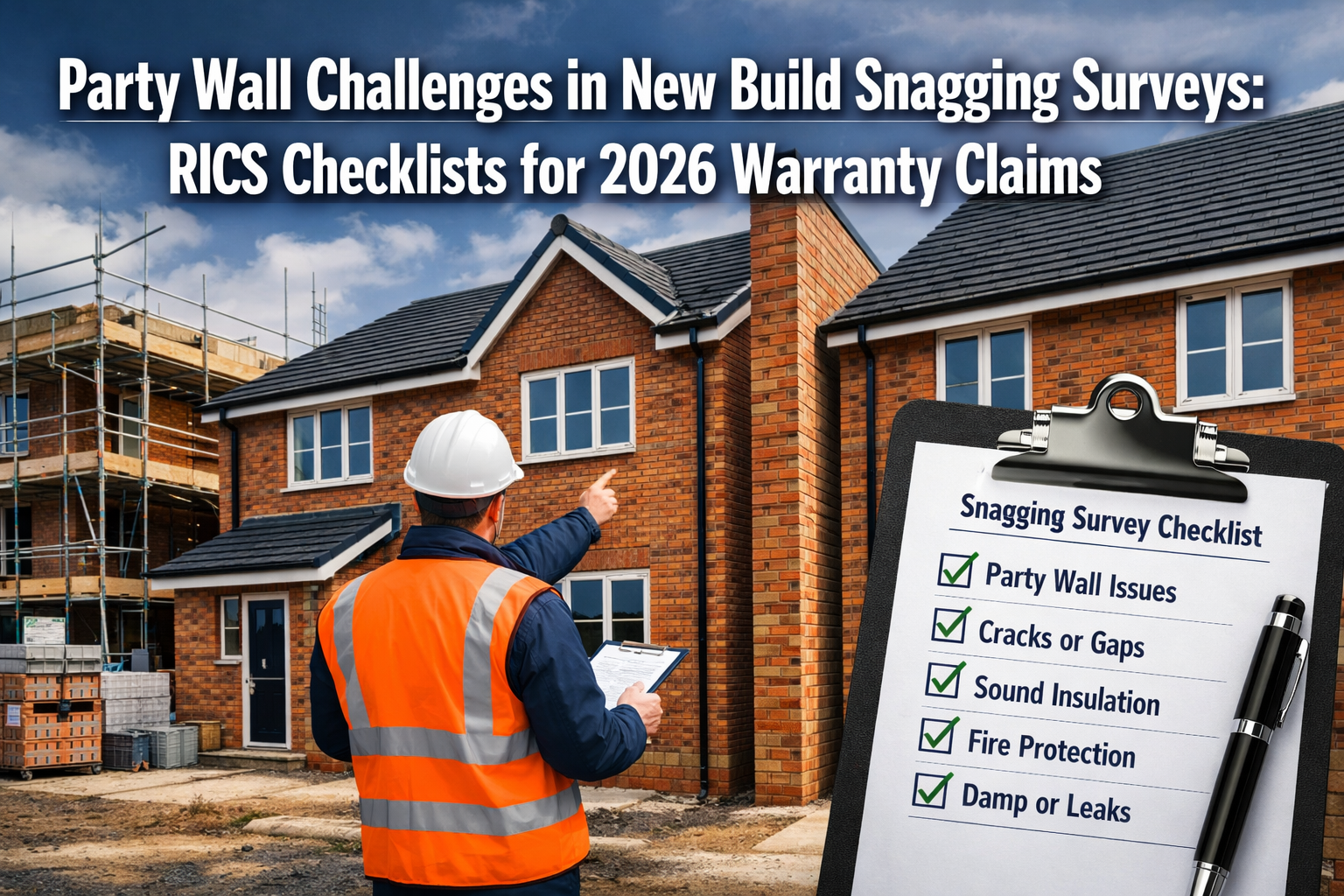

Buying a brand-new home should be an exciting milestone, but what happens when the shared wall with your neighbour harbours hidden defects that only surface months after moving in? As the UK property market experiences renewed buyer activity in 2026, Party Wall Challenges in New Build Snagging Surveys: RICS Checklists for 2026 Warranty Claims have become critical tools for protecting homeowners from costly structural and acoustic failures. With developers obligated to rectify defects within the first two years, understanding how to identify party wall issues during snagging inspections can save thousands in remediation costs and prevent neighbour disputes before they escalate.
New build developments across London and the South East continue to feature semi-detached and terraced properties where party walls form the crucial boundary between homes. Yet many buyers remain unaware that these shared structures require specialised inspection protocols beyond standard snagging checks. This comprehensive guide explores the intersection of party wall legislation, RICS professional standards, and warranty claim procedures to equip homeowners with actionable checklists for 2026.
Key Takeaways
- Party wall defects in new builds frequently include inadequate sound insulation, structural movement, moisture penetration, and fire safety non-compliance that standard snagging may overlook
- RICS-accredited surveyors provide independent, professionally qualified inspections that developers take more seriously, with costs ranging from £350-£600+ depending on property size[1]
- Two-year warranty windows require prompt identification and documentation of defects, making immediate post-completion snagging surveys essential for successful claims
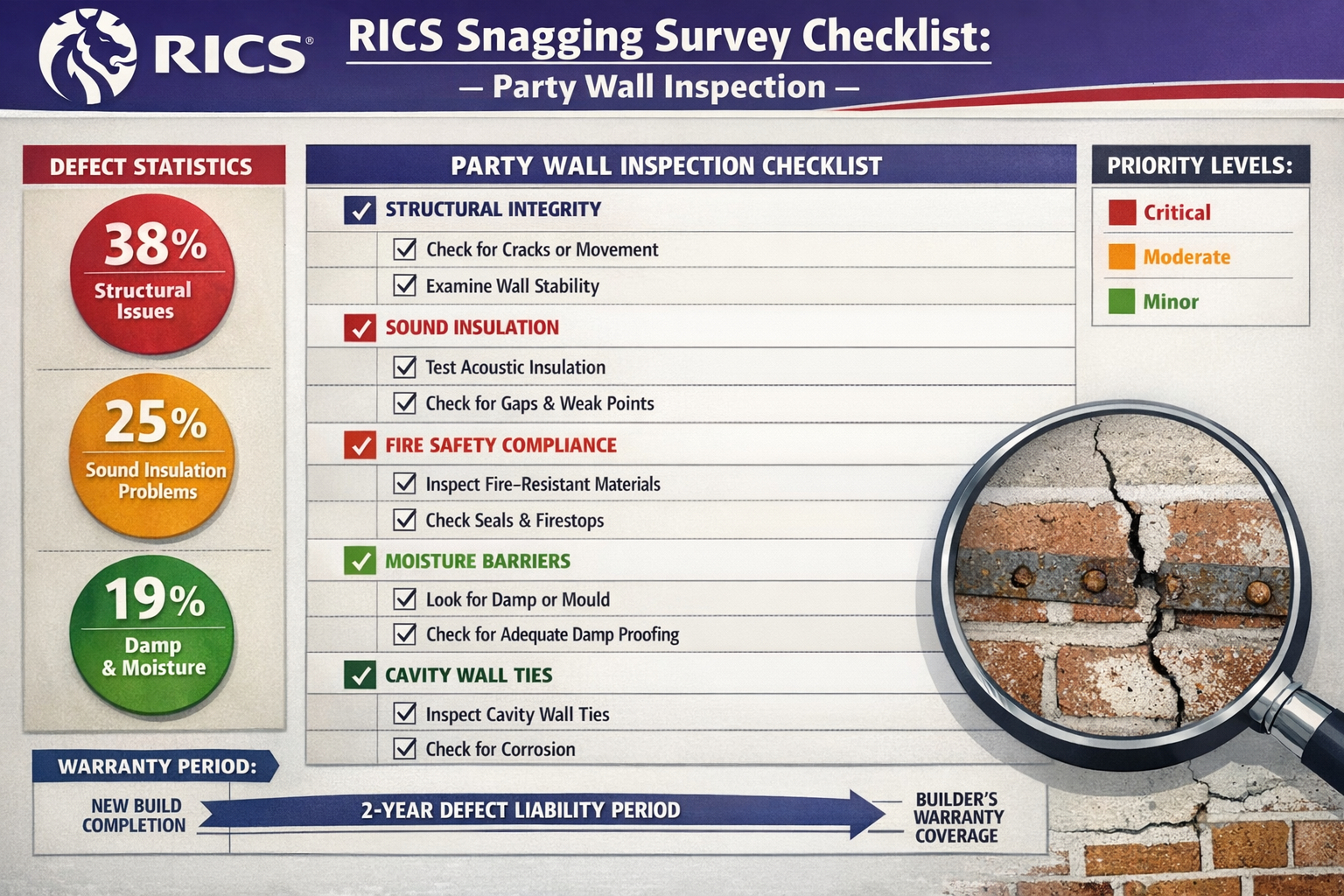
- Comprehensive party wall checklists should cover structural integrity, acoustic performance, fire resistance, moisture barriers, and compliance with Building Regulations Part E
- Professional documentation following RICS standards significantly strengthens warranty claims and provides legal protection if disputes arise with developers or neighbours
Understanding Party Wall Challenges in New Build Properties
What Makes Party Walls Vulnerable in New Developments?
Party walls in new build properties face unique challenges that differ significantly from established homes. During construction, developers work to tight schedules and budgets, creating pressure points where quality control may slip. The Party Wall Act 1996 governs work affecting shared boundaries, but its primary focus is procedural rather than quality-based[2].
Common construction-phase issues include:
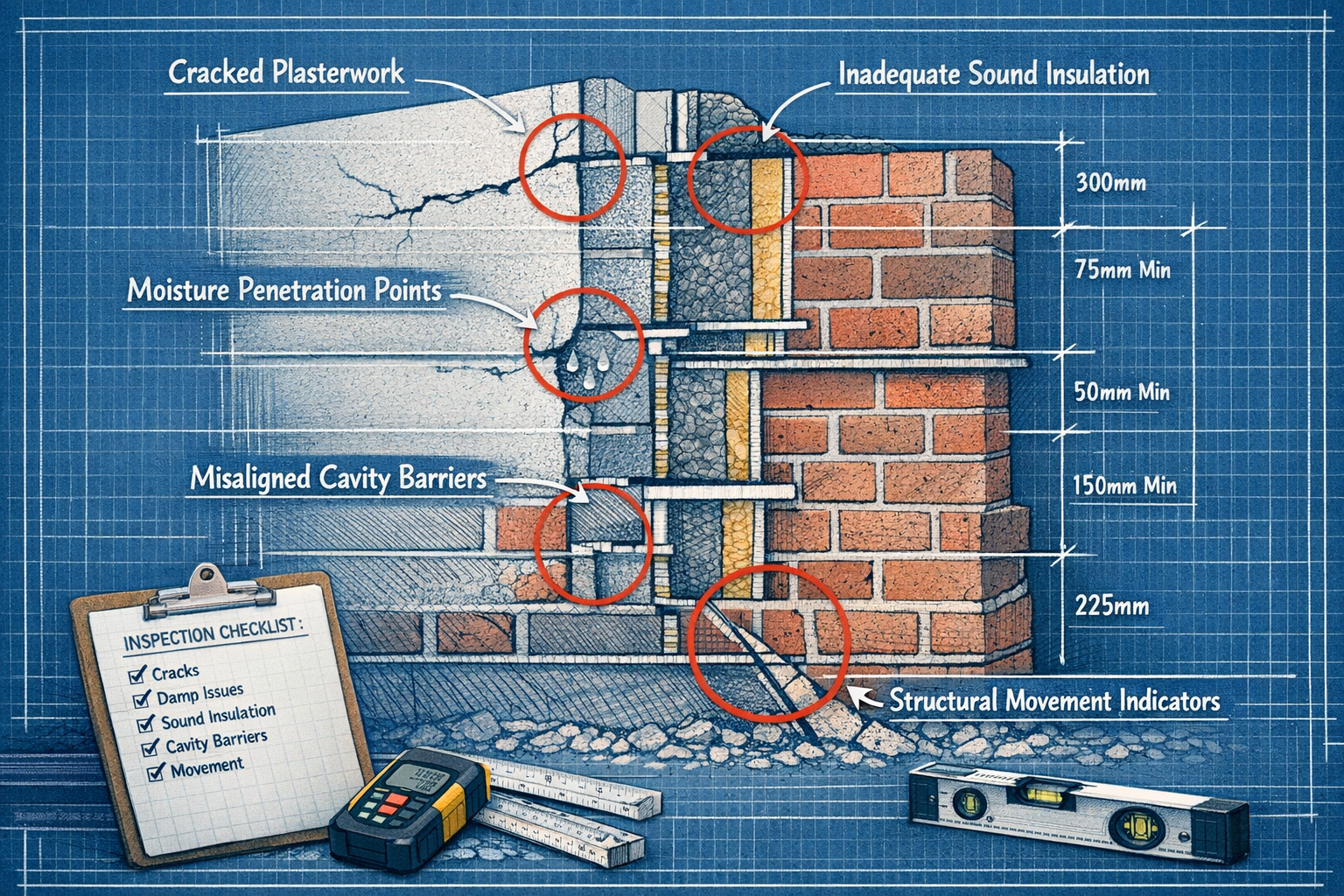
- Inadequate cavity barriers that compromise fire safety between dwellings
- Poor sound insulation installation failing to meet Building Regulations Part E requirements
- Structural movement during settling periods affecting party wall integrity
- Moisture penetration through improperly sealed party wall junctions
- Misaligned wall ties creating future stability concerns
The Party Wall Act 1996 is frequently triggered in new build developments due to excavation depths, foundation work, and boundary wall modifications[5]. However, the Act's procedural requirements don't guarantee construction quality – this is where RICS standards and professional snagging surveys become invaluable.
Why Standard Snagging Surveys Miss Party Wall Issues
Traditional snagging inspections focus on visible cosmetic defects: poor paintwork, misaligned doors, loose tiles, and superficial finishing issues[1]. While these are important, party wall defects often remain hidden behind plasterboard and within cavity spaces.
Critical party wall concerns requiring specialist attention:
| Defect Category | Standard Snagging Detection | Specialist Party Wall Assessment |
|---|---|---|
| Sound insulation | ❌ Rarely tested | ✅ Acoustic testing available |
| Fire barriers | ❌ Not visible | ✅ Specification review required |
| Structural movement | ⚠️ Only obvious cracks noted | ✅ Systematic monitoring protocols |
| Moisture ingress | ⚠️ Surface staining only | ✅ Moisture meter readings |
| Cavity wall ties | ❌ Concealed | ✅ Borescope inspection possible |
This gap in standard inspection protocols means many homeowners discover party wall defects only after warranty periods expire or when neighbours report issues. Understanding what constitutes a party wall dispute helps buyers recognise potential problems early.
The 2026 Warranty Landscape for New Builds
New build properties in 2026 typically come with NHBC (National House Building Council) warranties or similar protection schemes covering structural defects for 10 years and non-structural issues for 2 years. Party wall defects often fall into grey areas between these categories.
Key warranty considerations:
🏗️ Structural defects (10-year coverage): Major party wall movement, foundation issues affecting shared walls, structural fire safety failures
🔧 Non-structural defects (2-year coverage): Sound insulation inadequacy, minor cracking, moisture penetration, finishing defects
⏰ Critical timing: Developers must rectify defects reported within the first 2 years, making immediate post-completion snagging surveys essential[1]
The warranty window creates urgency for comprehensive party wall assessment. Professional chartered surveyors in London recommend conducting snagging surveys within weeks of practical completion, not months later when evidence may deteriorate or warranty administrators question defect timing.
RICS Standards for Party Wall Challenges in New Build Snagging Surveys
RICS Professional Framework and Independence Guarantees
The Royal Institution of Chartered Surveyors (RICS) establishes professional standards that exceed minimum legal requirements for property inspection and party wall work. RICS-qualified surveyors act with guaranteed impartiality and follow recognised professional standards, making developers more likely to take snagging issues seriously compared to non-accredited inspectors[1].
RICS party wall surveyors hold an independent statutory role under the Party Wall Act, separate from the appointing party. RICS members must comply with RICS Rules of Conduct alongside statutory obligations, with professional duties exceeding strict Act requirements[2]. This dual accountability provides homeowners with additional protection when party wall defects emerge during snagging.
For 2026, RICS has been conducting comprehensive reviews of residential survey standards, with research involving 325 RICS members and over 1,400 homeowners to strengthen standards and provide clarification reflecting consumer insight and technological changes[4]. These evolving standards increasingly recognise the importance of party wall assessment within new build inspections.
Comprehensive RICS Party Wall Inspection Coverage
RICS-accredited snagging surveys for new builds should include specific party wall assessment protocols beyond standard inspection elements. While comprehensive inspections cover interior elements (walls, ceilings, doors, windows, flooring, kitchens, bathrooms, heating, plumbing, electrics) and exterior elements (brickwork, roofing, driveways, fencing, drainage)[1], party wall specialists add focused examination of shared boundaries.
Essential party wall inspection components:
Structural Assessment:
- Visual examination of party wall alignment and plumb
- Crack pattern analysis indicating settlement or movement
- Junction inspection where party walls meet external walls
- Foundation level concerns if accessible
- Structural tie integrity where assessable
Acoustic Performance:
- Sound insulation specification review against Building Regulations Part E
- Identification of acoustic bridging through services
- Cavity barrier placement verification
- Flanking transmission pathway assessment
- Recommendation for acoustic testing if concerns arise
Fire Safety Compliance:
- Fire resistance rating verification for party wall construction
- Cavity barrier inspection at floor and roof junctions
- Service penetration fire-stopping assessment
- Compartmentation integrity review
- Compliance with Building Regulations Part B
Moisture and Weatherproofing:
- Damp meter readings at party wall surfaces
- Cavity tray and DPC continuity inspection
- Condensation risk assessment in party wall cavities
- External pointing and weatherproofing at party wall junctions
- Signs of water ingress or staining
Understanding potential damage to property in party wall scenarios helps identify which defects require immediate attention versus monitoring.
RICS Guidance Exceeding Minimum Legal Compliance
RICS has developed comprehensive guidance specifically for party wall work that establishes expectations going beyond minimum legal compliance requirements[3]. This elevated standard proves particularly valuable when warranty claims involve party wall defects, as RICS documentation carries professional weight with developers, warranty administrators, and legal proceedings if necessary.
The distinction matters because the Party Wall Act 1996 primarily addresses procedural requirements for notifying neighbours and appointing surveyors before work commences. It does not prescribe construction quality standards or inspection protocols. RICS fills this gap by providing:
- Professional inspection methodologies for party wall assessment
- Documentation standards for recording defects with evidential value
- Reporting frameworks that clearly communicate issues to developers
- Ethical guidelines ensuring surveyor independence and objectivity
- Continuing professional development requirements keeping surveyors current with construction standards
For homeowners pursuing warranty claims in 2026, RICS-compliant documentation significantly strengthens cases. Developers and warranty providers recognise RICS reports as credible, independent professional assessments rather than homeowner complaints.
Detailed RICS Checklists for 2026 Warranty Claims on Party Wall Defects
Pre-Inspection Preparation Checklist
Before conducting a party wall-focused snagging survey, proper preparation ensures comprehensive assessment and documentation that supports warranty claims:
Documentation to Gather:
- Property purchase completion documents
- Developer's specification and floor plans
- Building Control approval certificates
- Any party wall awards or agreements from construction phase
- NHBC or warranty provider documentation
- Correspondence with developer regarding defects
- Neighbour contact information (if appropriate)
Information to Verify:
- Party wall construction type (solid masonry, cavity, timber frame)
- Sound insulation specification and Building Regulations compliance
- Fire resistance rating requirements
- Warranty coverage terms and claim procedures
- Defect reporting deadlines within warranty period
Equipment for Professional Assessment:
- Moisture meter for damp detection
- Spirit level for alignment checks
- Crack width measurement gauge
- Thermal imaging camera (if available)
- High-resolution camera for photographic evidence
- Measuring tape and laser distance measurer
- Detailed checklist and recording templates
- Tablet or laptop for digital documentation
Professional surveyors conducting structural surveys in London routinely use this equipment to ensure comprehensive defect identification.
Room-by-Room Party Wall Inspection Checklist
Systematic inspection of every room adjoining the party wall ensures no defects escape notice during the critical warranty period:
Living Areas Adjacent to Party Wall:
- Wall surface flatness and plumb (use spirit level)
- Plasterwork quality: cracks, hollowness, poor finishing
- Paint or wallpaper defects indicating underlying issues
- Skirting board alignment and gaps
- Electrical socket installation quality on party wall
- Signs of moisture: staining, efflorescence, mould
- Temperature differential suggesting insulation gaps
- Acoustic performance: can normal conversation be heard?
Bedrooms Sharing Party Wall:
- Sound transmission during quiet periods
- Structural cracks particularly at ceiling junctions
- Window and door frame alignment where they meet party wall
- Radiator installation and pipework through party wall
- Built-in wardrobe installation quality against party wall
- Floor level consistency near party wall
- Signs of structural movement or settlement
Bathrooms and Kitchens on Party Wall:
- Plumbing penetrations through party wall properly sealed
- Tiling quality and alignment on party wall surfaces
- Moisture meter readings (critical in wet areas)
- Ventilation adequacy to prevent condensation
- Service ducts and boxing properly fire-stopped
- Water damage signs from plumbing defects
- Extractor fan installation and ducting routes
Staircases and Hallways:
- Party wall alignment where staircase abuts
- Structural integrity at load-bearing points
- Fire door installation quality (if required)
- Smoke alarm positioning and operation
- Handrail fixing into party wall
- Lighting installation quality
For properties requiring party wall insulation improvements, identifying deficiencies during snagging allows warranty-covered rectification.
Specialist Party Wall Defect Documentation Protocol
Proper documentation transforms observations into actionable warranty claims that developers must address:
Photographic Evidence Standards:
- Overview shots showing room context and party wall location
- Medium-range photos clearly showing defect area
- Close-up detail with measurement scale or reference object
- Multiple angles of the same defect for clarity
- Timestamp and metadata preserved for evidence dating
- Comparison photos of acceptable vs defective areas
Written Description Requirements:
- Location precision: "Master bedroom, party wall, 1.2m from front wall, 0.8m above floor level"
- Defect classification: Structural, acoustic, fire safety, moisture, finishing
- Severity assessment: Critical, significant, moderate, minor
- Measurements: Crack widths, damp readings, misalignment dimensions
- Impact description: How the defect affects use, safety, or enjoyment
- Warranty relevance: Which warranty provision covers this defect
Priority Rating System:
🔴 Critical (Immediate Action Required):
- Structural movement threatening stability
- Fire safety non-compliance
- Active water ingress causing damage
- Health hazards (mould, electrical safety)
🟠 Significant (Action Within 30 Days):
- Sound insulation failure below Building Regulations
- Progressive cracking indicating ongoing movement
- Moisture readings suggesting developing problems
- Multiple related defects indicating systemic issues
🟡 Moderate (Action Within 90 Days):
- Cosmetic defects affecting party wall finish
- Minor acoustic concerns
- Isolated moisture readings requiring monitoring
- Specification non-compliance without immediate impact
🟢 Minor (Monitoring or Cosmetic):
- Superficial finishing imperfections
- Isolated minor cracks within acceptable tolerance
- Issues requiring seasonal monitoring
This classification helps prioritise warranty claim submissions and sets expectations for developer response timelines. Understanding party wall agreement processes also helps when defects require remedial work affecting neighbours.
Common Party Wall Defects in 2026 New Builds
Based on RICS surveys and industry reporting, these party wall defects appear most frequently in new build snagging inspections:
Top 10 Party Wall Defects:
-
Inadequate sound insulation (40% of party wall complaints)
- Failure to meet Building Regulations Part E requirements
- Missing or poorly installed acoustic insulation
- Acoustic bridging through services or structural elements
-
Structural cracking (35% of cases)
- Settlement cracks at party wall junctions
- Differential movement between properties
- Inadequate structural ties or connections
-
Poor plastering and finishing (30% of cases)
- Uneven surfaces, hollowness, cracking
- Visible joints and poor tape application
- Paint defects revealing underlying issues
-
Moisture penetration (25% of cases)
- Failed cavity trays or DPC continuity
- Condensation within party wall cavities
- Water ingress at roof or external wall junctions
-
Fire safety non-compliance (20% of cases)
- Missing or inadequate cavity barriers
- Improperly sealed service penetrations
- Fire door specification failures
-
Misaligned doors and windows near party walls (18% of cases)
- Structural movement affecting openings
- Poor installation causing operation issues
- Gaps affecting acoustic and thermal performance
-
Electrical installation defects (15% of cases)
- Sockets and switches poorly fitted to party wall
- Inadequate fire-stopping around electrical penetrations
- Non-compliant cable routing through party wall
-
Plumbing penetration issues (12% of cases)
- Leaking pipes through party wall
- Poor sealing creating acoustic pathways
- Inadequate fire-stopping around pipes
-
Cavity wall tie problems (10% of cases)
- Missing or incorrectly positioned ties
- Mortar snots on ties causing cold bridging
- Inadequate tie density for party wall loading
-
Thermal bridging and insulation gaps (8% of cases)
- Cold spots indicating insulation deficiencies
- Condensation risk areas
- Energy efficiency below EPC ratings
These statistics highlight why specialist party wall assessment during snagging proves essential. Many defects remain invisible without professional inspection techniques and equipment.
Acoustic Testing Protocols for Party Wall Compliance
Sound insulation represents the most common party wall complaint in new builds. Building Regulations Part E sets minimum standards, but testing during snagging confirms compliance:
When Acoustic Testing is Recommended:
- Subjective concerns about sound transmission
- Specification uncertainty regarding insulation materials
- Previous acoustic issues reported in the development
- High-value properties where acoustic privacy is expected
- Warranty claims requiring objective evidence
Professional Acoustic Testing Process:
- Pre-completion testing (ideal but rarely accessible to buyers)
- Post-completion field testing using standardised noise sources
- Airborne sound insulation measurement (speech, TV, music)
- Impact sound insulation measurement (footsteps, dropped objects)
- Comparison against Building Regulations Part E requirements
- Detailed reporting for warranty claim submission
Professional acoustic testing costs £400-£800 but provides definitive evidence for warranty claims when sound insulation fails to meet standards. This investment proves worthwhile when developers dispute subjective complaints.
For properties with shared chimneys, acoustic pathways may exist that require specialist assessment beyond standard party wall protocols.
Navigating Warranty Claims for Party Wall Defects in 2026
Understanding Developer Obligations and Warranty Coverage
New build warranties in 2026 operate through a tiered system of coverage and responsibility:
Years 1-2: Developer Defects Period
- Developer directly responsible for all defects reported
- Non-structural and structural issues covered
- Developer must rectify within reasonable timeframe
- Party wall defects typically fall within this coverage
- No excess or claim fees for homeowner
Years 3-10: Structural Warranty Period
- NHBC or warranty provider covers major structural defects only
- Party wall structural movement may qualify
- Sound insulation and cosmetic issues typically excluded
- Excess fees apply (usually £250-£500)
- Higher evidence threshold required
Party wall defects and warranty classification:
| Defect Type | Years 1-2 Coverage | Years 3-10 Coverage |
|---|---|---|
| Structural cracking | ✅ Developer | ✅ Warranty provider |
| Sound insulation failure | ✅ Developer | ❌ Excluded |
| Fire safety non-compliance | ✅ Developer | ⚠️ Case-dependent |
| Moisture penetration | ✅ Developer | ⚠️ If structural cause |
| Poor finishing | ✅ Developer | ❌ Excluded |
| Plumbing leaks | ✅ Developer | ❌ Excluded |
This coverage structure creates urgency for comprehensive snagging surveys immediately after completion. Delaying inspection until month 18 or 20 leaves minimal time for developer rectification before the critical 2-year threshold.
Step-by-Step Warranty Claim Submission Process
Successfully claiming for party wall defects requires systematic documentation and communication:
Step 1: Formal Defect Notification (Within 2 Years)
- Submit written defect list to developer's customer care department
- Include comprehensive photographic evidence
- Reference RICS survey report if available
- Specify warranty clause covering each defect
- Request written acknowledgment and rectification schedule
- Send via email with read receipt and certified post backup
Step 2: Developer Response Period (30-60 Days Typical)
- Developer inspects reported defects
- May dispute some items or request additional evidence
- Provides rectification schedule for accepted defects
- May offer financial settlement for minor issues
- Negotiates access arrangements for remedial work
Step 3: Remedial Work Supervision
- Agree detailed scope of work before commencement
- Consider independent surveyor oversight for major works
- Document work progress with photographs
- Ensure work doesn't affect neighbour without proper party wall notice
- Inspect completed work before sign-off
Step 4: Post-Remediation Verification
- Professional re-inspection of rectified defects
- Acoustic re-testing if sound insulation was addressed
- Moisture meter readings to confirm damp resolution
- Photographic evidence of completed work
- Written confirmation that defects are satisfactorily resolved
Step 5: Escalation if Developer Refuses (Before 2-Year Deadline)
- Formal complaint to warranty provider (NHBC, Premier Guarantee, etc.)
- Provide all documentation and correspondence
- Request warranty provider inspection
- Consider independent expert report strengthening claim
- Legal advice if significant value or safety concerns
Step 6: Warranty Provider Claim (If Developer Insolvent or Unresponsive)
- Complete warranty provider claim forms
- Submit comprehensive evidence package
- Pay any applicable excess fees
- Cooperate with warranty provider inspection
- Accept approved contractor for remedial work
Professional guidance from chartered surveyors specialising in specific defect reports can significantly strengthen warranty claims, particularly for complex party wall issues.
Costs and ROI of RICS Snagging Surveys for Party Wall Issues
Investing in professional snagging surveys delivers substantial returns when party wall defects are identified within warranty periods:
RICS Snagging Survey Costs (2026):
- Small flats and homes: £350-£450
- 3-4 bedroom houses: £450-£600
- Larger detached properties: £600+
- Additional acoustic testing: £400-£800
- Follow-up re-inspection: £200-£350[1]
Typical Party Wall Defect Rectification Costs (If Not Warranty-Covered):
- Sound insulation remediation: £3,000-£8,000 per party wall
- Structural crack repair and monitoring: £2,000-£5,000
- Moisture ingress resolution: £1,500-£4,000
- Fire safety compliance upgrades: £2,500-£6,000
- Comprehensive party wall rebuild: £15,000-£30,000+
ROI Calculation Example:
- RICS snagging survey cost: £500
- Party wall defects identified: Sound insulation failure, structural cracking, moisture penetration
- Developer rectification value: £8,500
- Net benefit: £8,000 (1,600% ROI)
Beyond financial returns, professional snagging surveys provide:
- Peace of mind that party wall construction meets standards
- Legal protection if disputes arise with developers or neighbours
- Property value preservation by addressing defects early
- Relationship management with neighbours by preventing future issues
- Professional documentation supporting any legal proceedings
For flat purchases, snagging inspections often uncover communal defects (hallways, roofs, lifts) that individual buyers might miss, making them particularly valuable for apartment purchases[1]. Party walls in flats may involve complex acoustic and fire safety requirements across multiple dwellings.
Legal Considerations and Dispute Resolution
When developers refuse to address party wall defects or warranty claims are rejected, understanding legal options becomes essential:
Pre-Litigation Options:
- Alternative Dispute Resolution (ADR): Many warranty providers require ADR before litigation
- RICS Dispute Resolution Service: Professional arbitration for surveying matters
- Ombudsman schemes: New Homes Ombudsman Service for unresolved complaints
- Mediation: Facilitated negotiation between homeowner and developer
Legal Action Considerations:
- Evidence quality: RICS reports significantly strengthen legal cases
- Expert witnesses: Professional surveyors provide court testimony
- Cost-benefit analysis: Legal costs vs defect rectification value
- Time investment: Litigation may extend 12-24 months
- Settlement likelihood: Most cases settle before trial
Party Wall Act Statutory Procedures:
If remedial work affects neighbours, proper party wall awards must be obtained even for warranty rectification work. Failure to follow statutory procedures creates additional liability.
Neighbour Relationship Protection:
Party wall defects often affect both properties. Proactive communication with neighbours about identified issues and planned remediation helps maintain relationships and may reveal corresponding defects in their property, strengthening warranty claims.
Understanding common party wall questions helps homeowners navigate both warranty claims and statutory obligations when remedial work is required.
Conclusion
Party Wall Challenges in New Build Snagging Surveys: RICS Checklists for 2026 Warranty Claims represent a critical intersection of consumer protection, professional standards, and construction quality assurance. As the UK property market continues its recovery with 2-5% price growth and increased buyer activity, new build purchasers must prioritise comprehensive party wall assessment during the crucial two-year warranty period.
The evidence is clear: party wall defects represent some of the most common, costly, and contentious issues in new build properties, yet standard snagging surveys frequently overlook these critical concerns. Sound insulation failures, structural movement, fire safety non-compliance, and moisture penetration can cost thousands to rectify outside warranty coverage, while causing ongoing disputes with neighbours and diminishing property value.
Key Action Steps for 2026 New Build Buyers:
✅ Commission RICS-accredited snagging surveys within weeks of practical completion, not months later when evidence deteriorates
✅ Use comprehensive party wall checklists covering structural integrity, acoustic performance, fire safety, moisture barriers, and Building Regulations compliance
✅ Document all defects professionally with detailed photographs, measurements, and written descriptions that support warranty claims
✅ Submit formal defect notifications to developers before the critical 2-year warranty threshold, allowing time for rectification
✅ Consider specialist acoustic testing if sound transmission concerns exist, providing objective evidence for warranty claims
✅ Engage professional surveyors for complex party wall issues, leveraging RICS standards that exceed minimum legal requirements
✅ Understand warranty coverage distinctions between developer obligations (years 1-2) and structural warranty provisions (years 3-10)
✅ Maintain proper documentation throughout the warranty claim process, creating an evidence trail for escalation if necessary
The investment in professional RICS snagging surveys, typically £350-£600, delivers exceptional returns when party wall defects worth thousands are identified and rectified under warranty. Beyond financial benefits, professional assessment provides legal protection, preserves property values, and prevents neighbour disputes that can affect quality of life for years.
As RICS continues refining residential survey standards in 2026 with enhanced consumer focus and technological integration, homeowners benefit from increasingly robust professional frameworks for party wall assessment. The combination of statutory Party Wall Act procedures, Building Regulations compliance requirements, and RICS professional standards creates a comprehensive protection system – but only when homeowners actively engage these resources during critical warranty windows.
Don't wait until defects worsen or warranty coverage expires. Take control of your new build investment by implementing these RICS checklists and securing professional party wall assessment before the two-year deadline. Your future self – and your neighbours – will thank you for the proactive approach to identifying and resolving party wall challenges in new build properties.
For specialist guidance on party wall matters in new builds, consider consulting professional surveyors with expertise in boundary disputes who understand both construction quality assessment and statutory compliance requirements.
References
[1] Rics Snagging Survey – https://surveymatch.co.uk/rics-snagging-survey/
[2] Party Wall Legislation And Procedure – https://www.rics.org/profession-standards/rics-standards-and-guidance/sector-standards/building-surveying-standards/party-wall-legislation-and-procedure
[3] Party Wall Surveys And Neighbour Disputes During 2026s Construction Uptick Rics Compliance Framework – https://nottinghillsurveyors.com/blog/party-wall-surveys-and-neighbour-disputes-during-2026s-construction-uptick-rics-compliance-framework
[4] Home Survey Standard 2nd Edition A Progress Update – https://www.rics.org/news-insights/home-survey-standard-2nd-edition-a-progress-update
[5] Party Wall Agreements In Data Centre Developments 2026 Compliance Amid Ai Driven Uk Demand – https://nottinghillsurveyors.com/blog/party-wall-agreements-in-data-centre-developments-2026-compliance-amid-ai-driven-uk-demand