

The artificial intelligence revolution is reshaping the UK's real estate landscape in ways few anticipated. As AI workloads demand unprecedented computing power, data centre developers are racing to secure sites across the country—often in densely populated urban areas where boundary walls are shared between properties. This surge in construction activity brings Party Wall Surveys for 2026 Data Centre Expansions: Managing Boundary Risks in AI-Driven Demand to the forefront of property law and construction planning. According to industry roundtables, AI is fueling exceptional real estate demand, particularly in edge computing hotspots where proximity to end-users is critical.[4] For property owners, developers, and surveyors, understanding how to navigate party wall legislation while managing the unique challenges of data centre construction has never been more important.

Key Takeaways
- AI-driven demand is doubling UK data usage by 2026, creating urgent need for data centre expansion in urban areas with shared boundaries[3]
- Party wall surveys are legally required when data centre construction involves excavation within three metres of neighbouring properties or work on shared walls
- RICS-compliant protocols specifically address cooling systems, foundation work, and vibration risks unique to data centre developments[1]
- Early engagement with neighbours and qualified party wall surveyors can prevent costly disputes and project delays
- Proper documentation through schedules of condition protects all parties and establishes baseline property conditions before construction begins
Understanding the AI-Driven Data Centre Boom 📊
The UK government's National Data Strategy predicts that data usage will double by 2026, driven primarily by artificial intelligence and cloud computing growth.[3] This explosive demand is creating a construction boom unlike anything the sector has seen before.
Why Data Centres Need Urban Locations
Edge computing facilities must be located close to end-users to minimize latency. This means:
- Dense urban environments become prime development sites
- Existing commercial districts see conversion and expansion projects
- Shared boundaries with residential and commercial neighbours are common
- Space constraints require creative construction solutions
The complexity of data centre construction involves multiple parties and stakeholders, which significantly increases dispute risk. Minor delays can result in cost overruns into the millions,[3] making proper party wall management not just a legal requirement but a financial imperative.
The Unique Construction Challenges
Data centres present specific challenges that differ from traditional commercial developments:
| Challenge | Impact on Party Walls |
|---|---|
| Deep excavations for cooling systems | Triggers Party Wall Act requirements within 3 metres |
| Heavy vibration from equipment | Risk of damage to neighbouring structures |
| Continuous cooling infrastructure | Foundation work near shared boundaries |
| 24/7 operational requirements | Extended construction periods affecting neighbours |
| Power and connectivity demands | Underground utility work crossing boundaries |
Party Wall Surveys for 2026 Data Centre Expansions: Legal Requirements and RICS Protocols
When planning data centre expansions in 2026, developers must comply with the Party Wall etc. Act 1996, which governs work on shared walls and excavations near neighbouring properties. Understanding these legal requirements for party walls is essential for project success.
When Party Wall Surveys Are Required
Party Wall Surveys for 2026 Data Centre Expansions: Managing Boundary Risks in AI-Driven Demand become mandatory in several scenarios:
- Building on or near a party wall – Any work affecting a shared wall between properties
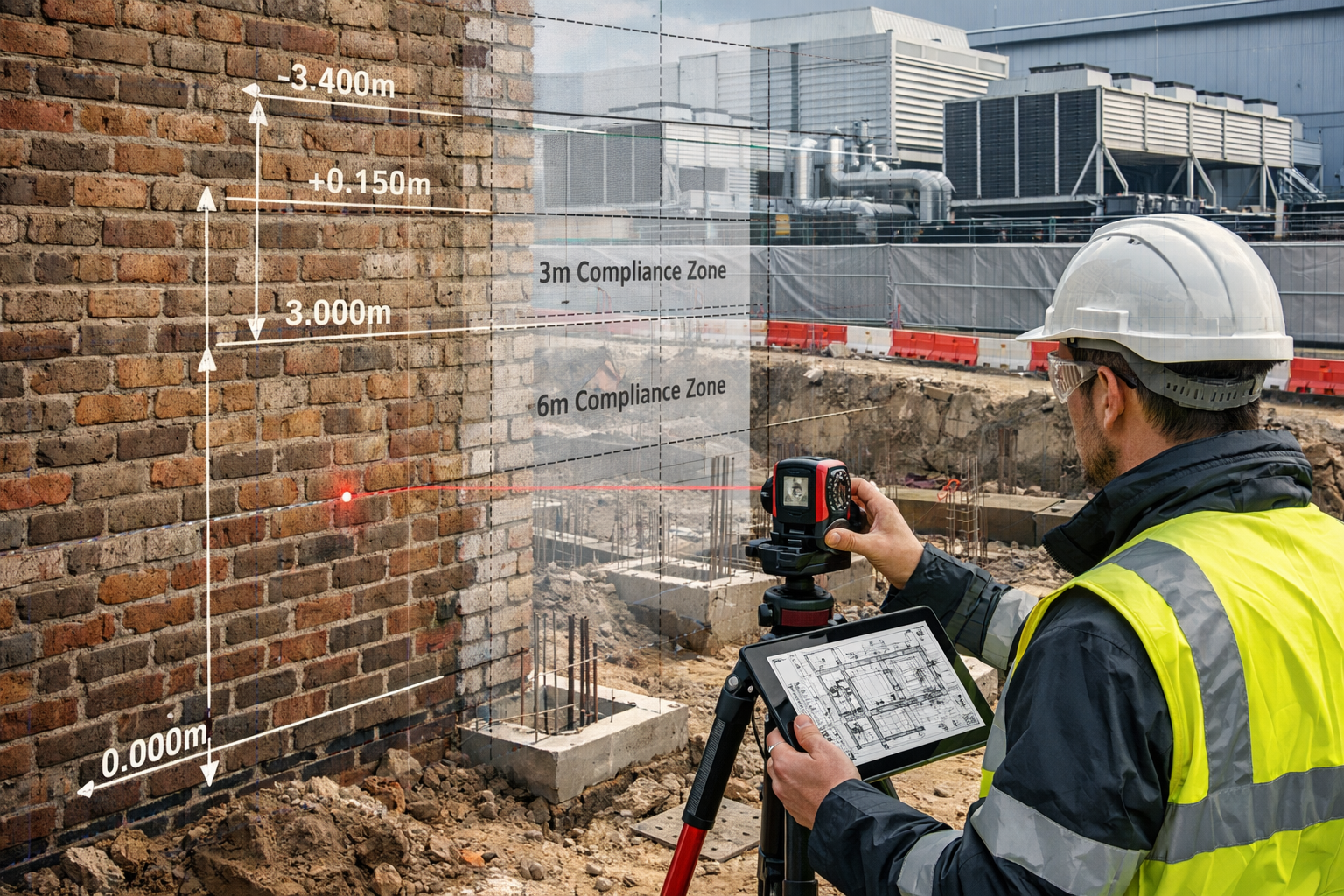
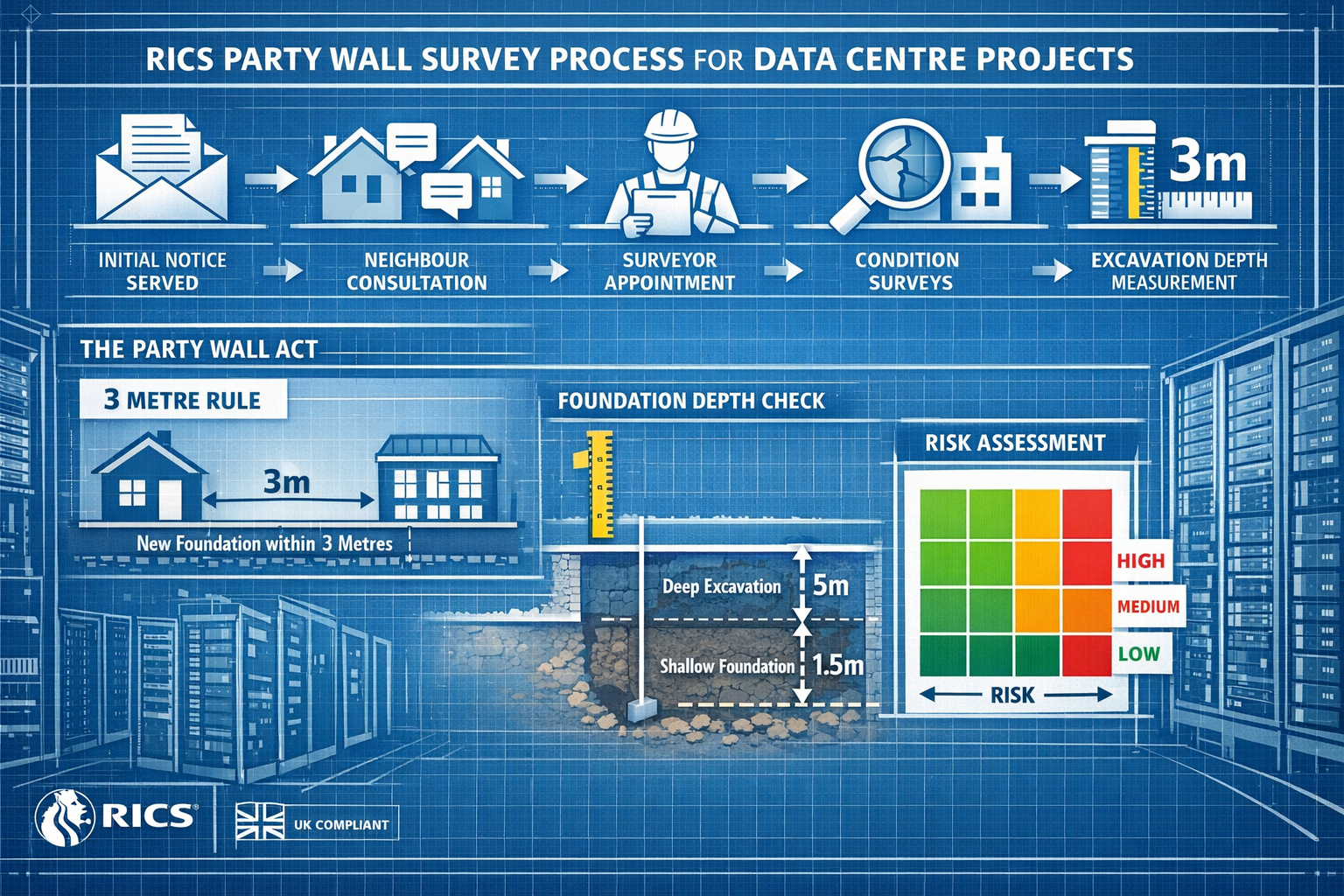
- Excavating within three metres – When foundation work occurs within 3 metres of a neighbouring building and goes deeper than its foundations
- Excavating within six metres – When digging within 6 metres and creating a depth that intersects a 45-degree plane from the neighbour's foundation base
The Party Wall Act 3-metre rule is particularly relevant for data centres, where cooling systems and server infrastructure often require substantial underground construction.
RICS Protocols for Data Centre Projects
The Royal Institution of Chartered Surveyors (RICS) has established specific protocols addressing the unique aspects of data centre developments.[1] These protocols ensure professional standards are maintained throughout the survey and construction process.
Key RICS requirements include:
- 🔍 Pre-construction condition surveys documenting existing property state
- 📋 Detailed party wall awards specifying permitted works and protective measures
- 🔊 Vibration monitoring protocols for sensitive equipment installations
- 🏗️ Foundation design reviews ensuring structural integrity
- 📸 Photographic evidence establishing baseline conditions
A qualified party wall surveyor will prepare comprehensive documentation that protects both the building owner (developer) and adjoining owner (neighbour).
The Notice Process
Developers must serve formal notices to adjoining owners before commencing work:
- Party Structure Notice – For work directly on party walls (2 months' notice)
- Party Wall Notice – For new walls at boundaries (1 month's notice)
- Excavation Notice – For foundation work near boundaries (1 month's notice)[2]
If neighbours consent in writing, work can proceed immediately. However, if they dissent or don't respond within 14 days, the Party Wall Act requires appointment of surveyors to prepare a party wall award.
Appointing Surveyors
Three appointment options exist:
- Agreed Surveyor – One surveyor acts for both parties (most cost-effective)
- Two Surveyors – Each party appoints their own (common for complex projects)
- Third Surveyor – Appointed to resolve disputes between the two surveyors
For data centre projects, many developers opt for the two-surveyor approach given the technical complexity and financial stakes involved. Understanding what a party wall agreed surveyor does can help determine the best approach for your project.
Managing Boundary Risks in AI-Driven Data Centre Demand
The rapid pace of AI-driven development creates unique risk management challenges. Party Wall Surveys for 2026 Data Centre Expansions: Managing Boundary Risks in AI-Driven Demand requires proactive strategies to prevent disputes and protect all stakeholders.
Common Boundary Risks in Data Centre Construction
Data centre projects face several specific boundary-related risks:
Structural Risks:
- Foundation settlement from deep excavations
- Vibration damage from heavy equipment installation
- Wall cracking due to ground movement
- Drainage issues affecting neighbouring properties
Operational Risks:
- Access disputes for construction vehicles and equipment
- Noise complaints during extended construction periods
- Utility conflicts with existing services
- Emergency access requirements for ongoing operations
Understanding potential damage to property in party wall scenarios helps developers implement appropriate safeguards.
Risk Mitigation Strategies
Professional surveyors recommend several protective measures:
1. Comprehensive Pre-Construction Surveys
Conduct thorough boundary surveys and schedules of condition before any work begins. This documentation:
- Establishes baseline property conditions
- Identifies pre-existing defects
- Provides photographic evidence
- Creates legal protection for all parties
2. Continuous Monitoring Programs
Install monitoring equipment to track:
- Ground movement and settlement
- Vibration levels during construction
- Structural integrity of party walls
- Crack development or progression
3. Protective Construction Methods
Implement specialized techniques such as:
- Underpinning to support neighbouring foundations
- Sheet piling to prevent ground movement
- Vibration dampening systems during excavation
- Temporary support structures for party walls
4. Clear Communication Protocols
Maintain regular contact with adjoining owners through:
- Pre-construction meetings explaining the project
- Regular progress updates
- Immediate notification of any issues
- Accessible site management contacts
The Schedule of Condition
A schedule of condition is perhaps the most important protective document in party wall work. This detailed report:
✅ Documents the current state of neighbouring properties
✅ Includes extensive photographs and descriptions
✅ Notes all existing defects, cracks, and damage
✅ Establishes what condition properties should be returned to
✅ Provides evidence if disputes arise about damage to property
For complex data centre projects, consider engaging specialists who understand both structural surveys and the specific demands of technology infrastructure.
Cooling System Considerations
Data centres require substantial cooling infrastructure, which often impacts party wall considerations:
- Chiller units may require foundation work near boundaries
- Cooling towers create vibration that affects adjacent structures
- Underground piping may cross property lines
- Air handling systems can transmit noise through party walls
RICS protocols specifically address these cooling system installations, requiring detailed engineering assessments and protective measures.[1]
Edge Computing Hotspots
Edge computing facilities in urban areas face intensified boundary challenges:
- 🏙️ Limited space increases likelihood of boundary work
- 🏢 Mixed-use neighbourhoods mean residential and commercial neighbours
- 🚧 Existing infrastructure complicates excavation planning
- ⚡ Fast deployment timelines pressure party wall processes
Developers in these hotspots must balance speed-to-market demands with thorough party wall compliance to avoid costly delays.
Navigating the Party Wall Award Process
Once surveyors are appointed, they prepare a party wall award—a legally binding document that governs how construction proceeds. Understanding this process is crucial for Party Wall Surveys for 2026 Data Centre Expansions: Managing Boundary Risks in AI-Driven Demand.
What the Award Contains
A comprehensive party wall award typically includes:
- Detailed description of proposed works
- Time and manner of construction
- Access rights for surveyors and contractors
- Protective measures required
- Monitoring requirements during construction
- Cost allocation for survey fees
- Dispute resolution procedures
Cost Considerations
The building owner (developer) typically bears the cost of:
- Party wall surveyor fees for both parties
- All survey and monitoring work
- Protective measures and remedial work
- Making good any damage caused
For data centre projects, party wall surveyor costs can range from £1,000 to £5,000+ depending on project complexity, though this is minimal compared to potential dispute costs.
Timeline Planning
Proper party wall procedures take time:
- Notice period: 1-2 months depending on work type
- Surveyor appointment: 1-2 weeks
- Award preparation: 2-4 weeks
- Dispute resolution: Additional time if needed
Developers should factor these timelines into project planning. Rushing the process often leads to disputes that cause far greater delays.
Common Pitfalls to Avoid
❌ Failing to serve notices – Starting work without proper notices is illegal
❌ Inadequate condition surveys – Poor documentation leads to disputes
❌ Ignoring neighbour concerns – Communication breakdowns escalate conflicts
❌ Choosing unqualified surveyors – Expertise matters for complex projects
❌ Underestimating timelines – Party wall processes require patience
For questions about the process, reviewing common party wall act questions can provide helpful clarity.
Best Practices for Developers and Property Owners
Successfully managing Party Wall Surveys for 2026 Data Centre Expansions: Managing Boundary Risks in AI-Driven Demand requires adopting industry best practices throughout the project lifecycle.
For Data Centre Developers
Early Planning Phase:
- Identify all potential party wall issues during site selection
- Budget adequately for surveyor fees and protective measures
- Engage experienced party wall surveyors familiar with data centre projects
- Review RICS protocols specific to technology infrastructure[1]
Pre-Construction Phase:
- Serve notices as early as possible
- Conduct thorough condition surveys of all adjoining properties
- Establish monitoring protocols before excavation begins
- Create clear communication channels with neighbours
During Construction:
- Implement all protective measures specified in the award
- Maintain regular monitoring and documentation
- Address any emerging issues immediately
- Keep neighbours informed of progress and any changes
Post-Construction:
- Conduct final condition surveys comparing to baseline
- Address any damage promptly and professionally
- Obtain sign-off from adjoining owners where possible
- Maintain records for potential future reference
For Adjoining Property Owners
If you're a neighbour to a planned data centre development:
Understand Your Rights:
- You have legal rights under the Party Wall Act
- You can appoint your own surveyor at the developer's expense
- You're entitled to a schedule of condition protecting your property
- Any damage must be made good at the developer's cost
Take Action:
- Respond to notices within the 14-day period
- Consider appointing your own surveyor for complex projects
- Document your property's current condition independently
- Maintain written records of all communications
Seek Professional Advice:
- Consult a qualified party wall surveyor
- Understand what the excavation notice means for your property
- Don't feel pressured to consent without proper protections
- Know that reasonable costs are covered by the developer
Working with Professional Surveyors
Choosing the right surveyor is critical. Look for professionals who:
- ✅ Are RICS-qualified with party wall expertise
- ✅ Have experience with data centre or technology projects
- ✅ Understand structural engineering principles
- ✅ Communicate clearly with all parties
- ✅ Maintain professional indemnity insurance
Many firms offer specialized services including commercial building surveys that complement party wall work for large-scale developments.
Future Outlook: Party Wall Considerations in the AI Era
As AI continues driving data centre demand throughout 2026 and beyond, party wall considerations will only grow in importance. Several trends are emerging:
Increased Regulatory Scrutiny
With more urban data centre projects, local authorities are paying closer attention to:
- Compliance with party wall legislation
- Neighbour notification procedures
- Construction impact mitigation
- Post-construction monitoring requirements
Technological Solutions
Innovation is improving party wall management:
- Digital monitoring systems providing real-time structural data
- 3D scanning technology for precise condition documentation
- AI-powered risk assessment identifying potential issues early
- Blockchain-based records creating immutable documentation trails
Industry Standardization
Professional bodies are developing enhanced standards specifically for technology infrastructure projects, building on existing RICS protocols to address unique data centre challenges.[1][2]
Sustainability Considerations
Modern data centres increasingly incorporate:
- Green cooling systems that may affect boundary considerations
- Renewable energy infrastructure requiring additional foundation work
- Circular economy principles influencing construction methods
- Biodiversity requirements impacting site development
Conclusion
Party Wall Surveys for 2026 Data Centre Expansions: Managing Boundary Risks in AI-Driven Demand represents a critical intersection of technology growth, property law, and construction management. As AI continues driving unprecedented demand for computing infrastructure, developers and property owners must navigate complex boundary issues with professionalism and foresight.
The key to success lies in early planning, thorough documentation, and professional expertise. By understanding legal requirements, following RICS protocols, and implementing robust risk management strategies, stakeholders can protect their interests while enabling the critical infrastructure expansion that AI-driven innovation demands.
Actionable Next Steps
For Developers Planning Data Centre Projects:
- Engage party wall surveyors during the site selection phase, not after contracts are signed
- Budget realistically for survey fees, monitoring, and protective measures
- Build extra time into project schedules for proper party wall procedures
- Establish communication protocols with neighbours before serving formal notices
- Document everything from initial surveys through project completion
For Property Owners Adjacent to Planned Developments:
- Respond promptly to any party wall notices received
- Consider appointing your own surveyor for significant projects
- Document your property independently with photographs and descriptions
- Understand your rights under the Party Wall Act
- Seek professional advice early rather than waiting for problems to develop
For All Stakeholders:
The AI revolution is transforming our built environment, creating opportunities and challenges in equal measure. By approaching party wall matters with diligence, professionalism, and mutual respect, we can enable the infrastructure growth that society needs while protecting the rights and properties of all involved.
Whether you're developing the next generation of edge computing facilities or simply own property adjacent to a planned data centre, understanding and properly managing party wall requirements isn't just about legal compliance—it's about building the future responsibly.
References
[1] Party Wall Surveys For Ai Data Centre Developments Rics Protocols Amid 2026 Infrastructure Demand – https://nottinghillsurveyors.com/blog/party-wall-surveys-for-ai-data-centre-developments-rics-protocols-amid-2026-infrastructure-demand
[2] Party Wall Agreements In Data Centre Developments 2026 Compliance Amid Ai Driven Uk Demand – https://nottinghillsurveyors.com/blog/party-wall-agreements-in-data-centre-developments-2026-compliance-amid-ai-driven-uk-demand
[3] Data Centres – https://www.brownejacobson.com/insights/2026-horizon-scanning-in-construction/data-centres
[4] New Data Center Developments March 2026 – https://www.datacenterknowledge.com/data-center-construction/new-data-center-developments-march-2026