

The UK property market in 2026 presents a unique challenge for homebuyers. While forecasts predict modest price rises between 2-5%, this steady growth doesn't eliminate the risks hidden within aging properties. As buyer enquiries improve according to recent RICS January data, the question isn't whether to buy—it's how to protect your investment. Level 3 Building Surveys for 2026 Modest Price Growth: Buyer Protection in 2-5% Forecast Uplift becomes essential when even a small percentage increase means thousands of pounds at stake, and undiscovered defects could wipe out any gains overnight.
With major forecasters like Halifax predicting 1-3% growth and Nationwide anticipating 2-4% increases, the market appears stable rather than spectacular.[2] Yet this calm surface can hide structural problems, damp issues, and costly repairs that turn a bargain into a burden. A comprehensive Level 3 survey acts as your financial shield, revealing the true condition of a property before you commit.

Key Takeaways
✅ Market stability demands thorough inspections: 2-5% price growth in 2026 means properties retain value, making pre-purchase defect detection critical for protecting your investment[2][4]
✅ Level 3 surveys uncover hidden costs: Comprehensive building surveys identify structural issues, damp, and defects that could cost £15,000-£50,000+ to repair—far exceeding survey fees
✅ Regional variations require local expertise: Growth forecasts vary significantly by region, with northern England and the Midlands outperforming the south, demanding area-specific survey knowledge[4][6]
✅ Buyer protection strengthens negotiation: Detailed survey findings provide concrete evidence for price renegotiation, potentially saving 5-15% of the purchase price
✅ RICS standards ensure quality: Chartered surveyors following RICS guidelines deliver consistent, professional assessments that mortgage lenders and solicitors trust
Understanding Level 3 Building Surveys in the 2026 Property Market
A Level 3 Building Survey (formerly called a Full Structural Survey) represents the most comprehensive property inspection available to UK homebuyers. Unlike basic valuation reports, this detailed examination investigates every accessible part of a property, from foundations to roof space, identifying defects, potential problems, and maintenance issues.
What Makes Level 3 Surveys Essential for 2026 Buyers
The Level 3 Building Surveys for 2026 Modest Price Growth: Buyer Protection in 2-5% Forecast Uplift approach recognizes that even modest appreciation makes property purchases significant financial commitments. When Savills forecasts approximately 2% growth in 2026[1][2], a £400,000 property could rise to £408,000—but undiscovered structural problems could cost £30,000 to rectify, eliminating gains and creating negative equity.
Key components of Level 3 surveys include:
| Survey Element | What's Examined | Why It Matters |
|---|---|---|
| Structural integrity | Foundations, walls, load-bearing elements | Identifies subsidence, settlement, structural movement |
| Roof condition | Tiles, timbers, flashings, guttering | Prevents £8,000-£25,000 roof replacement surprises |
| Damp and moisture | Rising damp, penetrating damp, condensation | Detects mold risks and timber decay early |
| Services assessment | Electrical, plumbing, heating systems | Flags outdated or dangerous installations |
| Timber condition | Joists, rafters, floorboards | Identifies rot, woodworm, beetle infestation |
| External elements | Brickwork, render, windows, drainage | Assesses weather-tightness and maintenance needs |
Who Needs a Level 3 Survey?
While not every property purchase requires this comprehensive approach, certain situations make Level 3 surveys absolutely essential:
🏚️ Period and older properties (pre-1950s) with traditional construction methods and aging materials
🔧 Properties requiring renovation where understanding full scope of work prevents budget overruns
🏗️ Unusual construction types including timber-frame, thatched, or non-standard builds
⚠️ Properties with visible defects such as cracks, damp patches, or structural concerns
💰 High-value investments where the survey cost (£600-£1,500) represents minimal insurance against major losses
For those considering commercial building surveys in London, similar comprehensive approaches apply to protect business property investments.
The RICS Standards Framework
Professional chartered surveyors conduct Level 3 surveys according to Royal Institution of Chartered Surveyors (RICS) standards. This ensures consistency, professionalism, and legal accountability. RICS-qualified surveyors carry professional indemnity insurance, protecting clients if negligence occurs.
The survey report typically runs 30-50+ pages and includes:
- Detailed condition ratings for every element (1=good, 2=needs attention, 3=urgent action required)
- Photographic evidence of defects and problem areas
- Repair cost estimates for identified issues
- Maintenance recommendations for future property care
- Legal and safety concerns requiring immediate attention
2026 UK House Price Forecasts: Why Protection Matters in a 2-5% Growth Market
Understanding the Level 3 Building Surveys for 2026 Modest Price Growth: Buyer Protection in 2-5% Forecast Uplift requires context about current market conditions. Multiple authoritative sources paint a consistent picture of steady but unspectacular growth.
Major Forecaster Predictions for 2026
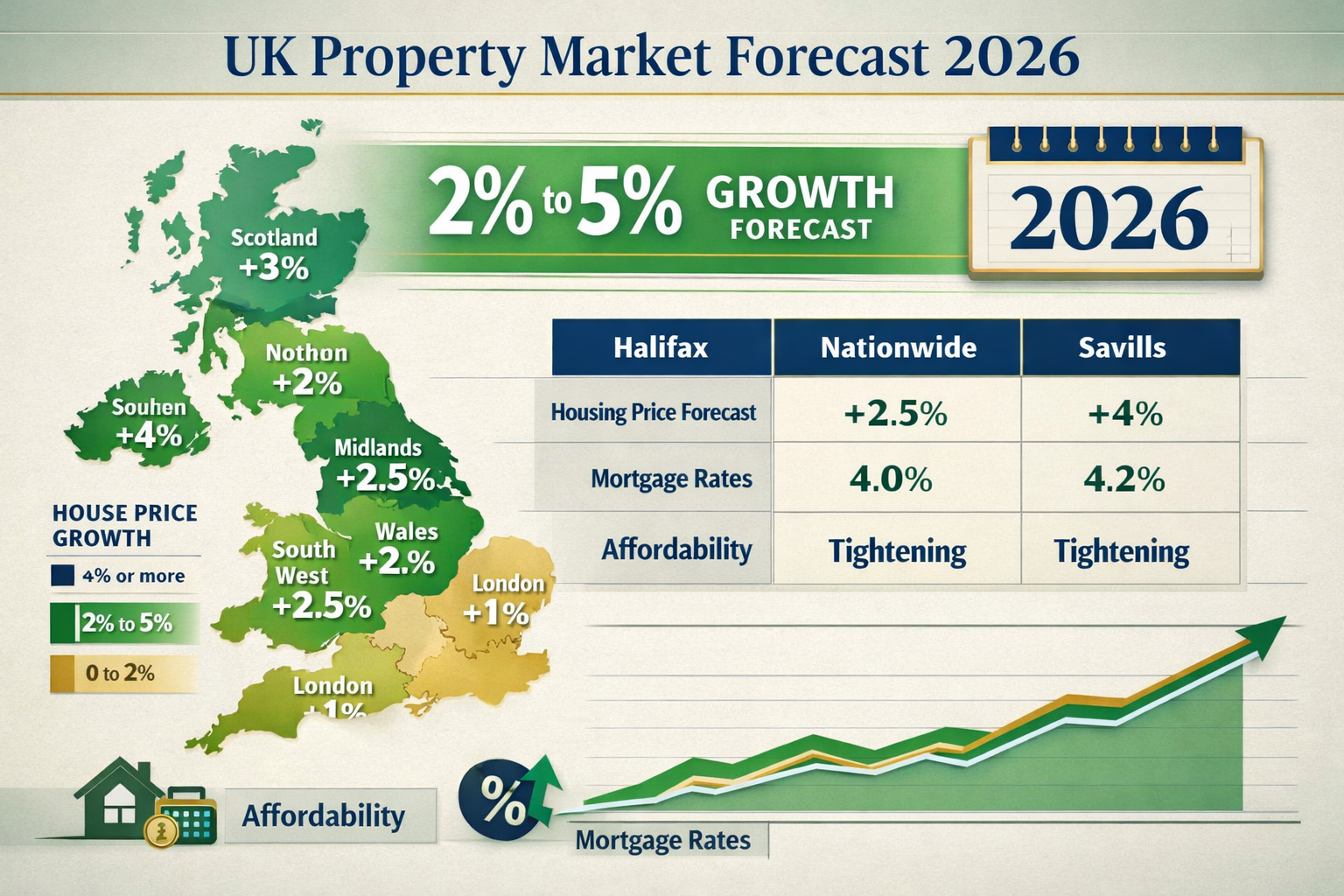
Halifax's Conservative Outlook: Britain's largest mortgage lender forecasts price rises between 1% and 3% in 2026, describing growth as "steady rather than spectacular."[2] This conservative estimate reflects continued affordability challenges despite falling interest rates.
Nationwide's Optimistic View: The building society predicts more robust growth of 2-4% in 2026, citing improving affordability as mortgage rates decline and wage growth continues.[2] Their analysis suggests the market has found a sustainable equilibrium after the turbulence of 2022-2023.
Savills' Strategic Forecast: The property consultancy anticipates approximately 2% price growth in 2026, with a revised longer-term forecast showing nearly 25% cumulative growth by 2030.[1][2] This measured approach recognizes regional variations and economic uncertainties.
Hamptons' Regional Analysis: Expecting a 2.5% increase by Q4 2026, Hamptons identifies the West Midlands, North West, and Wales as leading growth regions.[6] This geographical disparity means survey requirements vary significantly by location.
What January 2026 Data Reveals
Early indicators support these forecasts. Rightmove reported a 2.8% jump in asking prices in January 2026—the largest increase for that month on record.[2] This suggests seller confidence is returning, though whether buyers will meet these prices remains uncertain.
The HomeOwners Alliance expects prices around 2% higher in 2026, with notably stronger growth in northern England compared to the south.[4] This north-south divide reflects affordability constraints in London and the Southeast, where prices remain stretched relative to local incomes.
Why Modest Growth Demands Rigorous Surveys
"In a market growing at 2-5% annually, the difference between a sound property and one with hidden defects can mean the difference between building equity and facing financial distress."
Consider this scenario: A buyer purchases a £350,000 property expecting 3% annual appreciation (£10,500 gain). Without a Level 3 survey, they miss:
- Subsidence requiring underpinning: £15,000-£50,000
- Roof replacement needed within 2 years: £12,000-£20,000
- Rewiring for outdated electrics: £4,000-£8,000
- Damp treatment and replastering: £3,000-£10,000
Total unexpected costs: £34,000-£88,000
The £800 survey fee suddenly looks like the bargain of the century. Even negotiating a £20,000 price reduction based on survey findings delivers a 2,400% return on the survey investment.
Regional Variations Requiring Local Expertise
The 2-5% forecast uplift isn't uniform across the UK. Working with chartered surveyors in South West London or other regional specialists ensures your surveyor understands local construction methods, common defects, and area-specific issues like clay soil subsidence or coastal exposure problems.
Regional growth expectations for 2026:
- London and Southeast: 1-2% (constrained by affordability)
- North West and Midlands: 3-4% (stronger affordability ratios)
- Wales: 2.5-3.5% (continued migration from England)
- Scotland: 2-3% (stable market conditions)
- Northern Ireland: 3-4% (recovery from previous underperformance)
Comprehensive Checklist: What Level 3 Surveys Reveal to Protect Your Investment
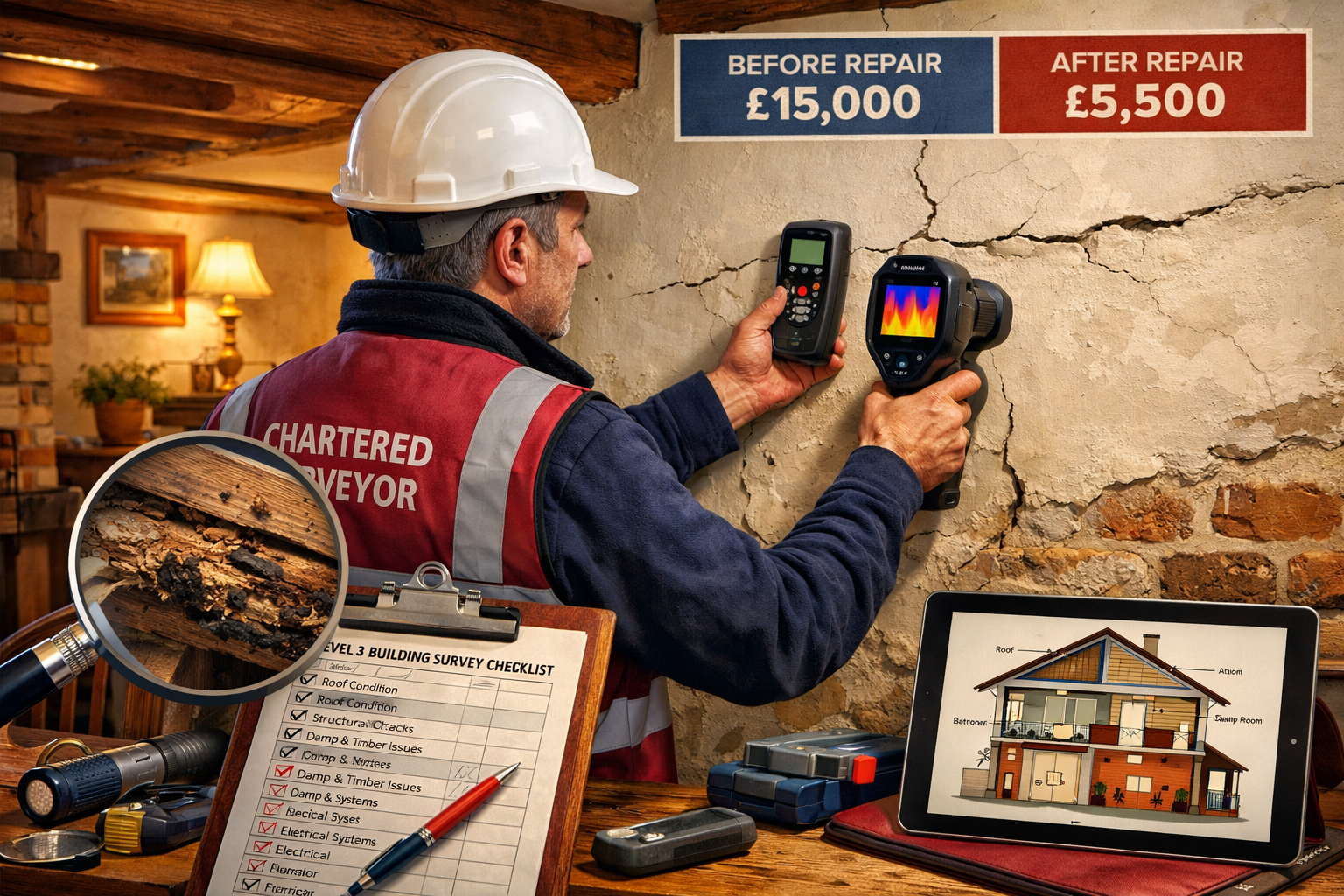
The true value of Level 3 Building Surveys for 2026 Modest Price Growth: Buyer Protection in 2-5% Forecast Uplift lies in the detailed checklist approach that leaves no stone unturned. Here's what professional surveyors examine and why each element matters.
Structural Elements: The Foundation of Value
Foundations and substructure form the literal base of your investment. Surveyors assess:
- Ground movement and settlement patterns
- Crack analysis (width, direction, age, activity)
- Subsidence or heave indicators
- Drainage around foundations
- Tree root impact zones
Walls and load-bearing structures receive microscopic attention:
- Brickwork condition and pointing quality
- Render adhesion and cracking
- Cavity wall tie corrosion
- Lintels over openings
- Wall plate condition in older properties
Floors and ceilings reveal hidden problems:
- Timber joist condition (rot, beetle, deflection)
- Concrete floor integrity
- Ceiling joist sagging or movement
- Floor level variations indicating settlement
Roof and Upper Elements
A roof survey in London or elsewhere represents critical investment protection. Level 3 surveys examine:
🏠 Roof covering: Tile or slate condition, remaining lifespan, repairs needed
🏠 Roof structure: Rafter and purlin integrity, ridge board condition, spread indicators
🏠 Roof space: Insulation adequacy, ventilation, water tank condition, electrical safety
🏠 Chimneys: Pointing, flashing, structural stability, internal condition
🏠 Guttering and downpipes: Capacity, condition, proper discharge arrangements
Modern technology enhances roof inspections. Drone roof surveys in London provide detailed photographic evidence of inaccessible areas without scaffolding costs.
Damp, Moisture, and Timber Condition
Damp problems rank among the most common and costly defects:
- Rising damp: Failed or absent damp-proof courses
- Penetrating damp: Through walls, around windows, at junctions
- Condensation: Inadequate ventilation causing mold growth
- Plumbing leaks: Hidden pipe failures causing long-term damage
Timber defects can compromise structural integrity:
- Dry rot: Fungal attack requiring extensive remediation
- Wet rot: Moisture-related timber decay
- Woodworm: Beetle infestation damaging structural timbers
- Death watch beetle: Serious hardwood timber infestation
Services and Systems
Electrical installations present safety and compliance issues:
- Wiring age and condition (pre-1970s wiring requires replacement)
- Consumer unit type (old fuse boxes need upgrading)
- Earthing and bonding adequacy
- Visible defects and DIY work
Plumbing and heating affect comfort and running costs:
- Boiler age, efficiency, and remaining lifespan
- Pipe materials (lead pipes require replacement)
- Water pressure and flow rates
- Radiator condition and system balance
- Hot water cylinder condition and insulation
Drainage systems prevent environmental health issues:
- Foul drainage connections and condition
- Surface water disposal arrangements
- Inspection chamber accessibility
- Signs of blockages or root ingress
External Elements and Boundaries
Windows and doors impact energy efficiency and security:
- Frame condition (timber rot, metal corrosion, UPVC degradation)
- Glazing type and condition
- Operation and security features
- Weather-tightness and draft-proofing
External areas affect property enjoyment:
- Paving and driveway condition
- Retaining wall stability
- Outbuilding condition
- Garden drainage
For properties with shared boundaries, understanding boundary surveys in London helps clarify ownership and maintenance responsibilities.
Legal and Environmental Considerations
Professional surveyors also flag:
- Alterations without consent: Extensions or conversions lacking building regulation approval
- Japanese knotweed: Invasive plant species affecting mortgageability
- Asbestos presence: In properties built before 2000
- Flood risk: Based on location and ground levels
- Contaminated land: Previous industrial use concerns
Maximizing Survey Value: From Report to Negotiation
Receiving your Level 3 survey report is just the beginning. Extracting maximum value requires strategic action.
Understanding Condition Ratings
RICS surveys use a traffic light system:
Condition 1 (Green): No repair currently needed, normal maintenance required
Condition 2 (Amber): Defects needing repair or replacement, but not urgent
Condition 3 (Red): Serious defects requiring urgent attention or significant expense
Focus negotiations on Condition 3 items and expensive Condition 2 repairs.
Obtaining Repair Quotes
For major defects, obtain specialist quotes:
- Structural engineers for subsidence, cracking, or movement issues
- Roofing contractors for roof replacement estimates
- Damp specialists for treatment and remediation costs
- Electricians for rewiring quotes
- Heating engineers for boiler replacement
These quotes provide concrete negotiation ammunition.
Negotiation Strategies
Armed with survey findings, buyers have several options:
💷 Price reduction: Request reduction equal to repair costs (or 50-75% if willing to manage works)
🔧 Seller remediation: Require seller to complete repairs before completion
⏰ Extended completion: Allow time for seller to arrange specialist reports and quotes
🚫 Withdrawal: Walk away if defects are too severe or costly
In the 2026 market with 2-5% growth, sellers have some negotiating power, but serious defects still provide leverage. Most sellers prefer modest price reductions to losing sales entirely.
Insurance and Warranty Considerations
Survey findings affect insurance:
- Subsidence history increases premiums and may limit coverage
- Flood risk requires specialist insurance
- Non-standard construction limits insurer options
- Underpinning must be declared to insurers
Consider purchasing structural warranties for properties with previous movement, providing peace of mind against future problems.
Working with Professional Surveyors: Choosing the Right Expert
The quality of your Level 3 Building Surveys for 2026 Modest Price Growth: Buyer Protection in 2-5% Forecast Uplift depends entirely on surveyor expertise.
Essential Qualifications and Credentials
Look for:
✅ RICS membership: AssocRICS or MRICS designation confirms professional qualification
✅ Relevant experience: Residential building surveying specialism, not just valuation
✅ Local knowledge: Understanding of regional construction methods and common defects
✅ Professional indemnity insurance: Minimum £1 million coverage (£2-5 million better)
✅ Clear communication: Ability to explain technical issues in accessible language
Questions to Ask Before Appointing
- How many Level 3 surveys do you complete annually?
- What's your experience with properties of this age and type?
- Will you personally conduct the inspection?
- What's included in the survey fee?
- How long until I receive the report?
- Can I attend the inspection?
- Do you provide follow-up consultation?
Understanding Survey Costs
Level 3 survey fees typically range:
- Small properties (1-2 bed flats): £600-£900
- Medium properties (3-4 bed houses): £800-£1,200
- Large properties (5+ bed houses): £1,200-£2,000+
- Complex properties (listed, unusual construction): £1,500-£3,000+
Cost factors include:
- Property size and complexity
- Accessibility challenges
- Surveyor experience and reputation
- Regional price variations
- Additional services (drone surveys, specialist tests)
While tempting to choose the cheapest quote, remember this survey protects a £300,000+ investment. The difference between a £700 and £1,000 survey is negligible compared to missing a £20,000 defect.
Additional Survey Services
Consider complementary services:
- Snagging reports for new-build properties
- Specific defect investigations for known issues
- CCTV drainage surveys for older properties
- Timber and damp reports from specialists
- Electrical condition reports (EICR)
For properties with complex issues, expert witness reports provide additional protection if disputes arise.
Future-Proofing Your Investment: Beyond the 2026 Forecast
While Level 3 Building Surveys for 2026 Modest Price Growth: Buyer Protection in 2-5% Forecast Uplift focuses on immediate protection, smart buyers think long-term.
Maintenance Planning
Use your survey report to create a 5-10 year maintenance schedule:
Years 1-2 (Urgent):
- Address all Condition 3 items
- Complete essential Condition 2 repairs
- Establish regular maintenance routines
Years 3-5 (Important):
- Tackle remaining Condition 2 items
- Begin planned replacements (boiler, windows approaching end of life)
- Implement preventative measures
Years 6-10 (Strategic):
- Major component replacements (roof, rewiring)
- Energy efficiency improvements
- Value-adding renovations
Energy Efficiency and Future Regulations
The UK government's net-zero targets will increasingly affect property values. Survey reports should note:
- Current EPC rating and improvement potential
- Insulation adequacy (loft, cavity walls, solid walls)
- Heating system efficiency and renewable alternatives
- Window performance and upgrade opportunities
Properties with poor energy efficiency may face future saleability challenges as regulations tighten. Budget for improvements that enhance both comfort and value.
Market Cycles and Long-Term Value
The 2-5% growth forecast for 2026 represents one year in a longer cycle. Savills' prediction of 25% cumulative growth by 2030[1][2] suggests average annual growth around 4-5% over the period—but this won't be linear.
Factors affecting long-term value:
- Location fundamentals: Transport links, schools, amenities
- Property condition: Well-maintained homes outperform neglected ones
- Market timing: Buying well matters more than selling perfectly
- Economic conditions: Interest rates, employment, wage growth
A thorough Level 3 survey helps ensure you're buying a property with solid fundamentals, not just riding a temporary market wave.
Conclusion
The Level 3 Building Surveys for 2026 Modest Price Growth: Buyer Protection in 2-5% Forecast Uplift represents essential due diligence in today's property market. With forecasters predicting steady but unspectacular growth between 1% and 4%[2][4], every pound of your purchase price matters. Hidden defects costing tens of thousands can quickly eliminate modest gains and turn your dream home into a financial nightmare.
A comprehensive Level 3 building survey provides the detailed intelligence needed to make informed decisions. From structural integrity to damp problems, from roof condition to electrical safety, professional surveyors uncover the issues that affect both immediate costs and long-term value. The £600-£1,500 investment in a quality survey delivers returns measured in thousands—through price negotiations, avoided disasters, and maintenance planning.
Your Action Plan
Before you commit to any property purchase:
- Appoint a qualified RICS surveyor with relevant experience in your property type and location
- Request a full Level 3 building survey for any property built before 1990, of unusual construction, or showing visible defects
- Review the report thoroughly and seek clarification on any technical points you don't understand
- Obtain specialist quotes for major defects identified in Condition 3 or expensive Condition 2 categories
- Negotiate strategically using concrete evidence from the survey and repair quotes
- Plan for the future by creating a maintenance schedule based on survey findings
- Protect your investment with appropriate insurance and warranties
The 2026 property market offers opportunities for well-informed buyers who understand that protection matters as much as price. Whether you're purchasing in Kingston, Richmond, or anywhere across the UK, a Level 3 building survey transforms uncertainty into confidence, risk into opportunity, and anxiety into assurance.
Don't let modest price growth lull you into complacency. In a market where every percentage point represents thousands of pounds, the difference between a sound investment and a costly mistake often lies in the thoroughness of your pre-purchase inspection. Make the smart choice—protect your investment with a comprehensive Level 3 building survey.
References
[1] March 2026 – https://www.black-brick.com/insights/market-update/march-2026/
[2] Whats Outlook Uk House Prices 2026 – https://global.morningstar.com/en-gb/personal-finance/whats-outlook-uk-house-prices-2026
[4] House Price Forecast – https://hoa.org.uk/advice/guides-for-homeowners/i-am-buying/house-price-forecast/
[6] House Prices – https://moneyweek.com/investments/house-prices/house-prices
[7] Uk Property Market Forecast For 2026 What Buyers Should Expect – https://www.farrellheyworth.co.uk/blog/uk-property-market-forecast-for-2026-what-buyers-should-expect/