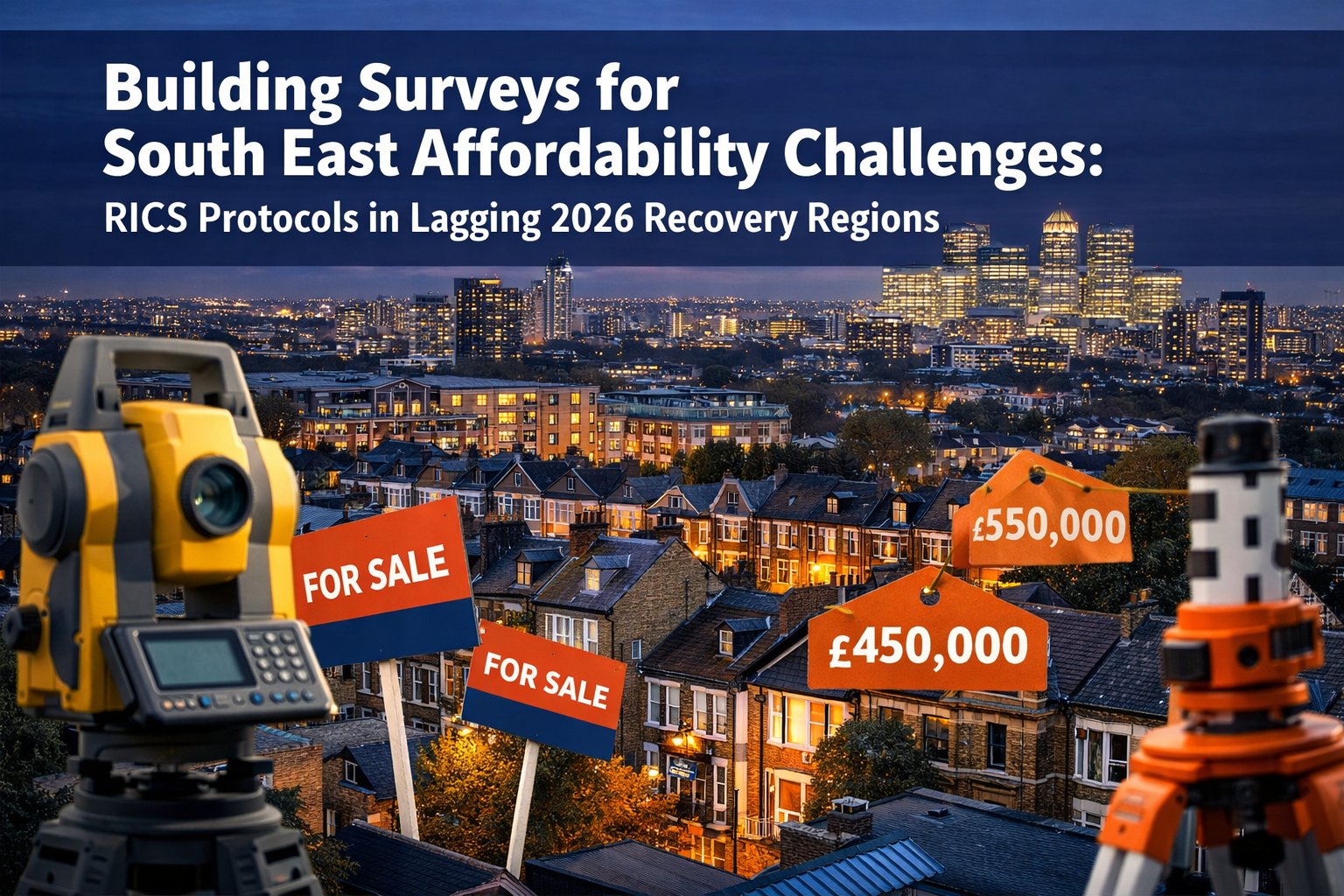
The South East property market faces a unique paradox in 2026: while national housing markets show signs of recovery, affordability pressures continue to suppress buyer confidence across London's outer boroughs and surrounding counties. With Building Surveys for South East Affordability Challenges: RICS Protocols in Lagging 2026 Recovery Regions becoming a critical concern, homebuyers and investors need robust inspection frameworks to navigate hidden defects and valuation risks in high-pressure areas. As property prices remain stubbornly elevated despite economic headwinds, comprehensive Level 3 building surveys aligned with updated RICS standards offer essential protection for those entering this challenging market.[1]
The stakes have never been higher. First-time buyers stretching budgets to secure properties in areas like Richmond, Surrey, and Sussex face the dual threat of overpaying for defective properties while lacking the financial cushion to address costly repairs. Meanwhile, RICS has strengthened survey protocols in 2026 to reflect consumer insights and technological advances, creating new opportunities for thorough property assessment.[2]
Key Takeaways
✅ Level 3 RICS surveys provide the most comprehensive examination for South East properties, uncovering structural defects that could devastate affordability calculations
🏘️ South East affordability crisis persists despite national recovery trends, making rigorous building surveys essential for protecting investment capital in high-risk areas
📋 Enhanced 2026 RICS protocols incorporate consumer feedback and technological innovations, strengthening surveyor responsibilities beyond basic inspections
💰 Hidden defects and valuation risks disproportionately impact affordability-stretched buyers in lagging recovery regions where repair costs can exceed purchase contingencies
🔍 Strategic survey checklists tailored to South East property types help identify region-specific issues like subsidence, damp, and Victorian-era structural concerns
Understanding the South East Affordability Crisis in 2026
The South East housing market remains one of the most challenging in the UK for affordability. According to RICS's January 2026 advocacy update, residential sector affordability continues to be a major barrier for both renters and buyers despite increased investment in social housing.[2] This persistent crisis creates a perfect storm for property purchasers: elevated prices combined with economic uncertainty mean buyers have less margin for error when assessing property condition.
Why affordability challenges demand rigorous surveys:
- Stretched budgets leave no room for unexpected repair costs
- Older housing stock in South East regions often harbors hidden defects
- Competitive markets pressure buyers to skip thorough inspections
- Valuation gaps between asking prices and true property condition
The lagging recovery in South East regions compared to national trends stems from several interconnected factors. Property values in areas like Chelsea, Fulham, and Hampstead remain at historic highs, pricing out middle-income families while failing to attract sufficient investment to stimulate market movement. This stagnation creates particular risks for buyers who may overpay for properties requiring substantial remedial work.
Regional Variations in Recovery Patterns
| Region | Average Price 2026 | YoY Change | Affordability Index |
|---|---|---|---|
| South East London | £485,000 | +1.2% | 12.8x earnings |
| Surrey | £520,000 | +0.8% | 13.5x earnings |
| Sussex | £425,000 | +2.1% | 11.2x earnings |
| Berkshire | £465,000 | +1.5% | 12.1x earnings |
Professional chartered surveyors in South East London report increasing demand for comprehensive building surveys as buyers recognize the need for detailed property assessments in this challenging market environment.
RICS Building Survey Protocols: Enhanced Standards for 2026
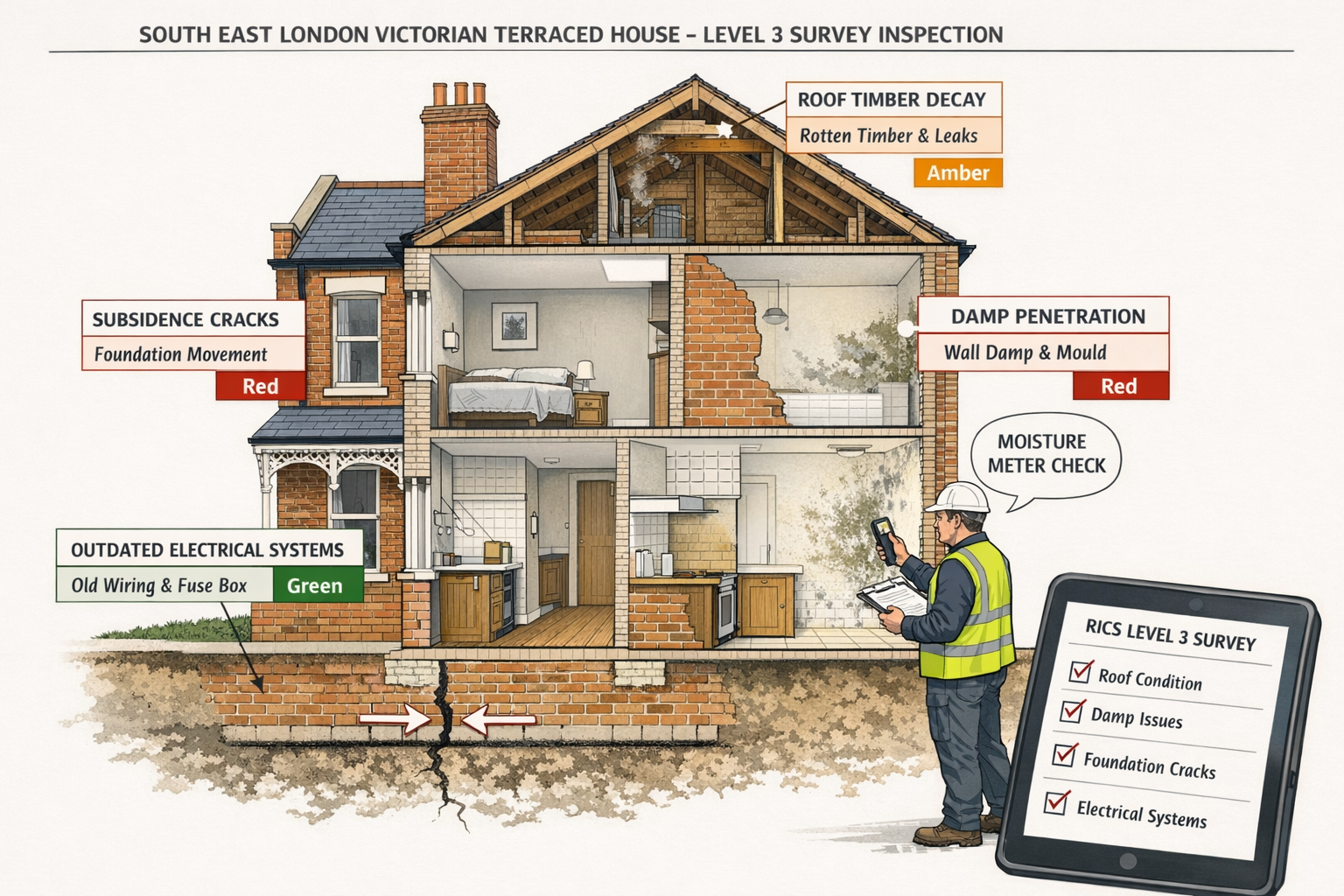
RICS has significantly updated home survey standards for 2026, with feedback from members and regulation teams highlighting the need to strengthen areas of home surveys and provide clarification reflecting consumer insight and technological changes.[2] These enhanced protocols transform building surveys from simple condition reports into strategic advisory tools that address clients' unique needs in affordability-constrained markets.
The Three Levels of RICS Home Surveys
Level 1 (Condition Report): Basic visual inspection suitable for newer properties in good condition. Not recommended for South East affordability-challenged buyers due to limited scope.
Level 2 (HomeBuyer Report): More detailed than Level 1, covering visible defects and urgent issues. Appropriate for conventional properties in reasonable condition but may miss critical defects in older South East housing stock.
Level 3 (Building Survey): The most comprehensive examination, providing detailed analysis of property condition, construction, and defects.[4] This level is essential for Building Surveys for South East Affordability Challenges: RICS Protocols in Lagging 2026 Recovery Regions, particularly for:
- Properties older than 50 years (common in South East)
- Unusual construction types
- Properties requiring renovation
- Buyers with limited financial contingency
Key Enhancements in 2026 RICS Protocols
The updated standards reflect several critical improvements:
- Technology Integration: Incorporation of thermal imaging, drone surveys, and moisture detection equipment for more accurate assessments
- Consumer-Focused Reporting: Clearer communication of defect severity and cost implications
- Strategic Advisory Role: Surveyors now provide broader guidance on property suitability and risk factors[4]
- Enhanced Structural Analysis: More rigorous examination of foundations, load-bearing elements, and subsidence risks
For properties in areas covered by chartered surveyors in Surrey, these enhanced protocols prove particularly valuable given the prevalence of clay soil subsidence issues and Victorian-era construction challenges.
Tailored Survey Checklists for High-Pressure South East Areas
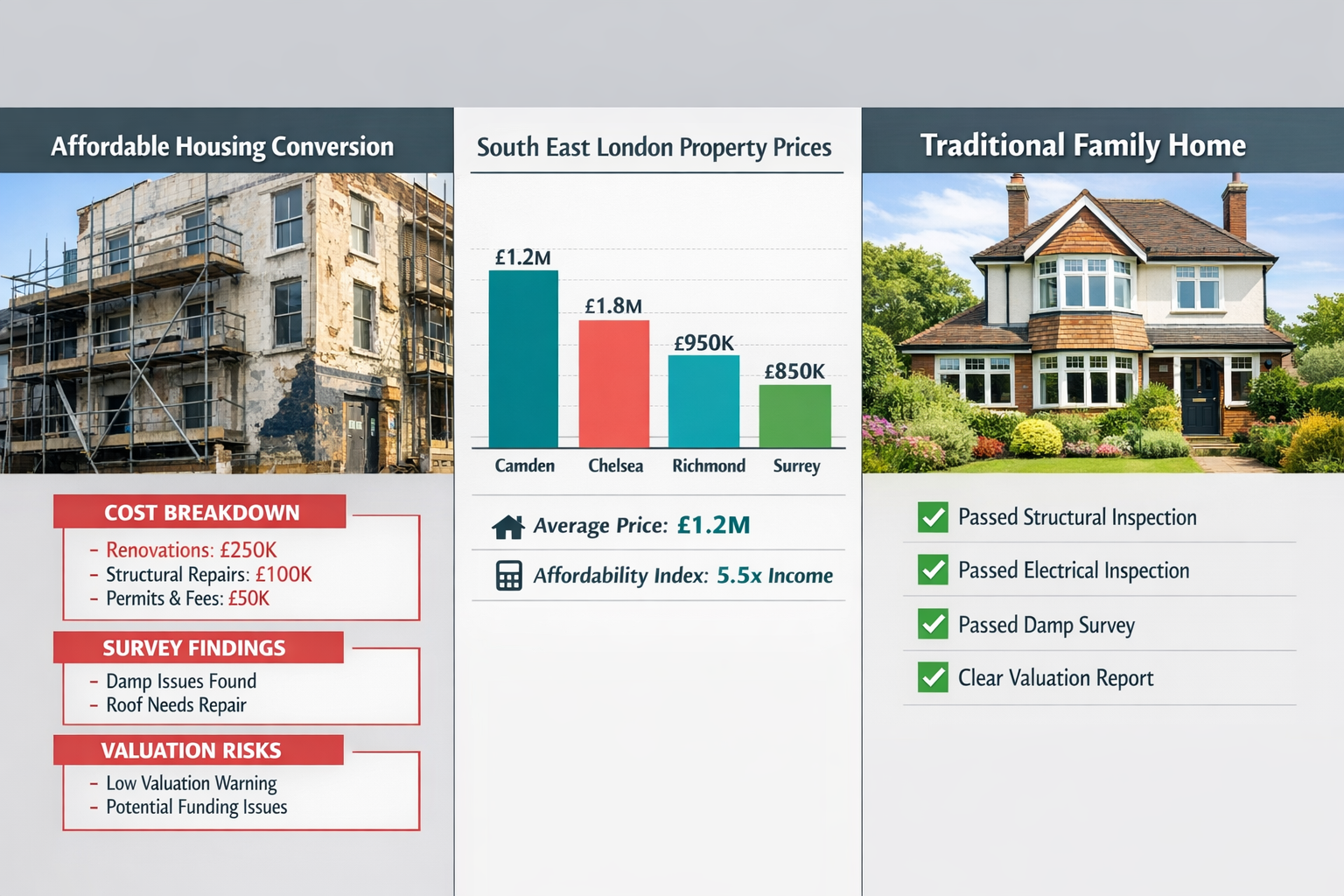
Building Surveys for South East Affordability Challenges: RICS Protocols in Lagging 2026 Recovery Regions require specialized checklists that address region-specific defects and valuation risks. Generic survey approaches often miss critical issues unique to South East properties, leaving buyers vulnerable to expensive surprises.
Essential Checklist Components for South East Properties
🏗️ Structural Integrity Assessment
- Foundation examination: Clay soil movement and subsidence particularly prevalent in Surrey and Sussex
- Load-bearing wall analysis: Victorian and Edwardian properties often have concealed structural alterations
- Roof structure: Many South East properties feature original timber that may have decay or insect damage
- Chimney stacks: Shared and independent chimneys require thorough inspection for stability
Professional structural surveys in London provide detailed analysis of these critical elements, with particular attention to defects that could compromise property value.
💧 Damp and Moisture Issues
South East properties face unique moisture challenges due to:
- High water tables in riverside areas (Richmond, Barnes, Kingston)
- Victorian-era construction without modern damp-proofing
- Inadequate drainage systems in older developments
- Condensation issues from poor ventilation
A comprehensive survey should include moisture meter readings at multiple points, thermal imaging to detect hidden damp patterns, and assessment of drainage systems. For properties with suspected issues, a specific defect report can provide targeted analysis.
🔌 Services and Systems Evaluation
- Electrical systems: Many South East properties retain outdated wiring requiring complete replacement (£3,000-£8,000)
- Plumbing infrastructure: Lead pipes, corroded systems, and inadequate water pressure
- Heating systems: Boiler age, efficiency ratings, and compliance with current regulations
- Insulation: Energy efficiency impacts ongoing costs and property value
Region-Specific Risk Factors
Different South East areas present distinct challenges:
London Boroughs (Camden, Chelsea, Hampstead):
- Listed building restrictions limiting remedial work
- Leasehold complications affecting survey scope
- Basement conversions requiring specialist assessment
- Party wall issues in terraced properties
Areas served by chartered surveyors in Camden or chartered surveyors in Chelsea often require additional expertise in conservation and listed building matters.
Outer London and Home Counties (Surrey, Sussex, Berkshire):
- Subsidence from clay soil shrinkage
- Tree root damage to foundations
- Septic tank systems in rural properties
- Agricultural building conversions with non-standard construction
Specialized Survey Types for Complex Properties
For properties with specific concerns, targeted surveys provide cost-effective alternatives to full Level 3 surveys:
- Subsidence surveys: Essential for properties showing cracking or movement
- Roof surveys: Detailed examination using drone technology for inaccessible areas
- Drone roof surveys: Non-invasive inspection of large or complex roof structures
Uncovering Hidden Defects: What South East Buyers Must Know
Hidden defects represent the greatest financial threat to affordability-stretched buyers in South East recovery regions. These concealed issues often escape notice during viewings but emerge during comprehensive RICS surveys, potentially adding tens of thousands of pounds to acquisition costs.
Most Common Hidden Defects in South East Properties
1. Structural Movement and Subsidence
Clay soil throughout much of the South East expands and contracts with moisture levels, causing foundation movement. Signs include:
- Diagonal cracking wider than 3mm
- Cracks following mortar lines in brickwork
- Doors and windows sticking or misaligned
- Visible step cracking in external walls
Typical remediation costs: £5,000-£50,000 depending on severity, with underpinning representing the most expensive intervention.
2. Concealed Damp and Water Ingress
Modern decorations and furniture often hide moisture problems:
- Rising damp from failed damp-proof courses
- Penetrating damp from defective pointing or rendering
- Condensation damp from inadequate ventilation
- Plumbing leaks within walls or under floors
Typical remediation costs: £1,500-£15,000 depending on extent and cause.
3. Roof Defects and Water Damage
Many South East properties feature original Victorian or Edwardian roofs with:
- Deteriorated lead flashings and valleys
- Slipped or damaged tiles/slates
- Timber decay in rafters and joists
- Inadequate or damaged insulation
Typical remediation costs: £8,000-£35,000 for complete roof replacement on typical terraced property.
4. Electrical System Deficiencies
Properties with outdated electrical installations face:
- Non-compliant wiring requiring complete replacement
- Insufficient circuit capacity for modern usage
- Absence of RCD protection
- Aluminum wiring (fire risk)
Typical remediation costs: £3,000-£8,000 for full rewire of three-bedroom property.
The Financial Impact on Affordability
For buyers operating at maximum affordability limits, hidden defects create devastating financial scenarios. Consider a typical case:
Case Study: A first-time buyer purchases a Victorian terraced house in Ealing for £475,000 with a 10% deposit and 90% mortgage. A comprehensive building survey reveals subsidence requiring £15,000 remediation, roof repairs costing £12,000, and electrical rewiring at £5,000. Total unexpected costs: £32,000—exceeding their entire deposit and requiring either renegotiation, additional borrowing, or transaction abandonment.
This scenario underscores why Building Surveys for South East Affordability Challenges: RICS Protocols in Lagging 2026 Recovery Regions must prioritize comprehensive defect identification before purchase completion.
Professional surveyors working in areas like Ealing and Fulham regularly encounter these scenarios, emphasizing the critical importance of thorough pre-purchase surveys.
Valuation Risks in Lagging Recovery Markets
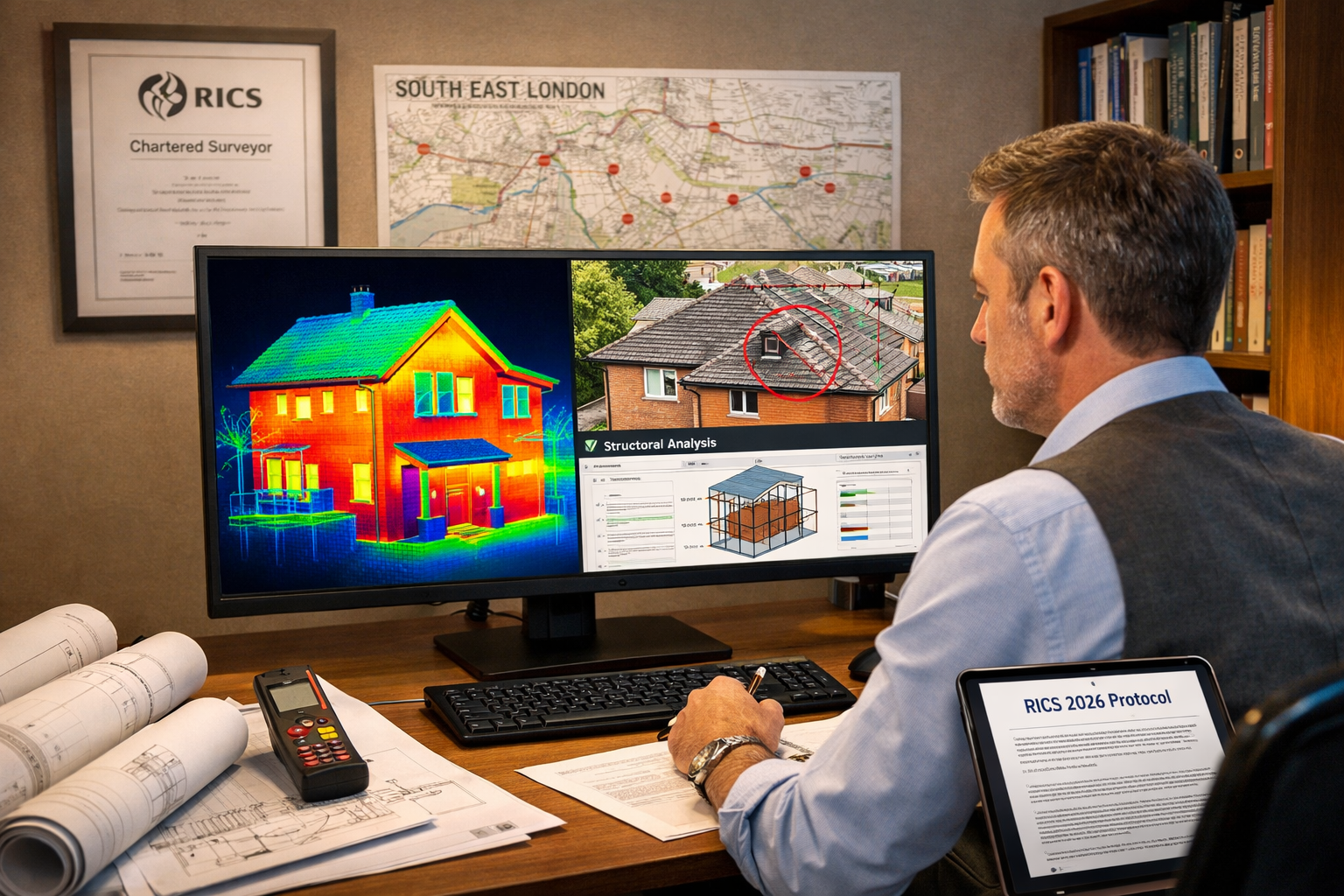
Beyond identifying physical defects, building surveys in South East affordability-challenged areas must address valuation risks that could leave buyers in negative equity or unable to secure appropriate financing. The lagging recovery creates specific valuation challenges that interact dangerously with affordability pressures.
Key Valuation Risk Factors
1. Price-to-Condition Discrepancies
In competitive South East markets, asking prices often fail to reflect true property condition. Sellers may:
- Price properties based on comparable sales without adjusting for defects
- Conceal issues through cosmetic improvements
- Overvalue properties in slow-moving markets
- Fail to disclose known problems
A comprehensive RICS survey provides objective evidence for price negotiation, potentially saving buyers 5-15% of asking price when significant defects are identified.
2. Mortgage Valuation Gaps
Lenders' valuations may differ significantly from purchase prices, particularly when surveys reveal:
- Structural defects affecting property security
- Remedial work required before mortgage advance
- Retention requirements pending repairs
- Complete mortgage refusal for severe issues
Understanding RICS valuation costs and processes helps buyers budget appropriately for comprehensive property assessment.
3. Future Saleability Concerns
Properties with unresolved defects face reduced marketability:
- Longer time on market when reselling
- Reduced buyer pool (many unable to secure mortgages)
- Lower offers reflecting remediation costs
- Potential requirement for specialist financing
Strategic Use of Survey Findings
Rigorous building surveys aligned with 2026 RICS protocols serve multiple strategic purposes:
Negotiation Leverage
Detailed defect schedules support:
- Price reduction requests based on remediation costs
- Seller-funded repairs before completion
- Retention of funds for post-completion works
- Transaction withdrawal if issues prove excessive
Financial Planning
Comprehensive surveys enable:
- Accurate budgeting for immediate repairs
- Prioritization of remedial works
- Phased renovation planning
- Contingency reserve calculation
Risk Mitigation
Professional survey reports provide:
- Documentary evidence of property condition at purchase
- Protection against mis-selling claims
- Basis for insurance claims if issues worsen
- Expert testimony if disputes arise
For buyers considering properties in areas served by chartered surveyors in West London or chartered surveyors in South West London, these strategic benefits prove particularly valuable given the high property values and competitive market conditions.
Technology-Enhanced Survey Protocols for 2026
The evolution of building surveying in 2026 reflects significant technological advancement, with RICS protocols increasingly incorporating modern inspection tools that improve accuracy while reducing costs. These innovations prove particularly valuable for Building Surveys for South East Affordability Challenges: RICS Protocols in Lagging 2026 Recovery Regions where comprehensive assessment must balance thoroughness with affordability.
Key Technological Innovations
📱 Thermal Imaging and Moisture Detection
Modern thermal cameras reveal:
- Hidden moisture patterns invisible to visual inspection
- Insulation deficiencies affecting energy costs
- Air leakage points around windows and doors
- Structural thermal bridging issues
This technology proves especially valuable for concealed defects in South East properties where decorative finishes may hide underlying problems.
🚁 Drone Roof Surveys
Unmanned aerial vehicles enable:
- Safe inspection of dangerous or inaccessible roofs
- High-resolution photography of roof condition
- Detailed examination without scaffolding costs
- Rapid assessment of large or complex structures
Professional drone roof survey services provide cost-effective alternatives to traditional access methods, particularly valuable for tall Victorian and Edwardian properties common throughout the South East.
💻 Digital Reporting and 3D Modeling
Contemporary survey reports feature:
- Interactive digital formats with embedded photographs
- 3D property models showing defect locations
- Cost estimation tools for remedial works
- Cloud-based access for all transaction parties
🔬 Advanced Materials Testing
Specialized equipment identifies:
- Asbestos presence in older properties
- Timber decay and insect infestation
- Concrete carbonation and reinforcement corrosion
- Paint lead content in pre-1960s properties
Cost-Benefit Analysis of Enhanced Surveys
While technology-enhanced surveys command premium fees, the investment proves worthwhile for affordability-challenged buyers:
| Survey Type | Typical Cost | Hidden Defects Detected | Potential Savings |
|---|---|---|---|
| Basic Level 2 | £400-£600 | 60% detection rate | £0-£5,000 |
| Standard Level 3 | £800-£1,200 | 80% detection rate | £5,000-£15,000 |
| Enhanced Level 3 with Technology | £1,200-£1,800 | 95% detection rate | £15,000-£50,000 |
The incremental cost of £400-£600 for enhanced surveys pales against potential savings from identifying major defects before purchase completion.
Selecting the Right RICS Surveyor for South East Properties
The effectiveness of Building Surveys for South East Affordability Challenges: RICS Protocols in Lagging 2026 Recovery Regions depends critically on surveyor selection. Not all RICS-qualified professionals possess equal expertise in regional property types and defect patterns.
Essential Surveyor Qualifications
RICS Membership Status:
- MRICS: Member status indicating qualified professional
- FRICS: Fellow status indicating senior practitioner with extensive experience
- AssocRICS: Associate status for newer professionals
Specialist Accreditations:
- Listed building expertise for conservation properties
- Structural engineering qualifications for complex defects
- Timber and damp specialist certifications
- Energy efficiency and sustainability credentials
Questions to Ask Prospective Surveyors
-
How many surveys have you conducted in [specific area]?
Local experience proves invaluable for identifying region-specific issues. -
What technology do you incorporate in surveys?
Thermal imaging, moisture meters, and drone capabilities enhance inspection quality. -
Can you provide sample reports?
Report clarity and detail vary significantly between surveyors. -
What is your typical turnaround time?
Fast-moving markets require prompt survey completion. -
Do you provide cost estimates for remedial works?
Budget planning requires realistic repair cost guidance. -
Are you available for follow-up consultations?
Complex defects often require additional discussion and clarification.
Regional Expertise Considerations
Different South East areas demand specific knowledge:
- Chartered surveyors in Buckinghamshire: Rural property experience, agricultural conversions
- Chartered surveyors in Hertfordshire: New town developments, 1960s construction
- Chartered surveyors in Sussex: Coastal properties, listed buildings
- Chartered surveyors in Berkshire: Executive properties, modern developments
Practical Steps for Affordability-Conscious Buyers
Navigating the South East property market in 2026 requires strategic planning and disciplined execution. Affordability-challenged buyers must maximize the value of building surveys while managing transaction costs effectively.
Pre-Survey Preparation
1. Understand Your Budget Limits
Calculate total available funds including:
- Purchase deposit
- Survey and legal fees
- Stamp duty liability
- Renovation contingency (minimum 10% of purchase price)
- Moving costs and immediate furnishing needs
2. Identify Property-Specific Risk Factors
Research before commissioning surveys:
- Property age and construction type
- Previous planning applications and building control approvals
- Local environmental factors (flooding, subsidence, contamination)
- Neighborhood development plans affecting future value
3. Determine Appropriate Survey Level
Match survey type to property and personal circumstances:
- Level 3 essential for: Pre-1900 properties, unusual construction, visible defects, limited financial contingency
- Level 2 acceptable for: Post-1980 properties, standard construction, good apparent condition, adequate financial reserves
- Level 1 rarely appropriate: Only for new-build properties with NHBC warranty
Post-Survey Action Plan
When Surveys Reveal Significant Defects:
- Obtain specialist quotations for major remedial works
- Consult mortgage lender regarding impact on financing
- Negotiate price reduction reflecting true remediation costs
- Consider transaction withdrawal if defects exceed acceptable risk
- Explore alternative properties if current option proves unsuitable
When Surveys Show Minor Issues:
- Prioritize defects by urgency and cost
- Create phased remediation plan spreading costs over time
- Negotiate seller contributions for immediate repairs
- Adjust renovation budget to accommodate findings
- Proceed with confidence knowing property condition
For guidance on determining the right survey type, consult resources on what survey you need based on specific property characteristics.
Future Outlook: South East Market Recovery and Survey Standards
As 2026 progresses, several trends will shape Building Surveys for South East Affordability Challenges: RICS Protocols in Lagging 2026 Recovery Regions:
Anticipated Market Developments
Gradual Recovery Trajectory
Economic forecasters predict:
- Modest price growth (1-3% annually) through 2027
- Continued affordability pressures limiting buyer pool
- Increased importance of property condition in purchasing decisions
- Growing demand for comprehensive pre-purchase surveys
Regulatory Evolution
Expected changes include:
- Stricter energy efficiency requirements for property sales
- Enhanced consumer protection in survey standards
- Greater surveyor liability for missed defects
- Mandatory disclosure requirements for sellers
Evolving RICS Standards
Building surveying continues to evolve beyond basic inspection to become strategic advisory service.[4] Future developments will likely include:
- Integrated sustainability assessment: Energy efficiency and environmental impact analysis
- Predictive maintenance planning: AI-powered defect progression modeling
- Lifecycle cost analysis: Long-term ownership cost projections
- Smart home integration review: Technology systems assessment
These enhancements will further strengthen the value proposition of comprehensive building surveys, particularly for affordability-conscious buyers requiring maximum certainty before committing limited capital.
Conclusion
Building Surveys for South East Affordability Challenges: RICS Protocols in Lagging 2026 Recovery Regions represent an essential investment for property buyers navigating one of the UK's most challenging housing markets. With affordability pressures continuing to constrain purchaser budgets while property prices remain elevated, comprehensive Level 3 building surveys aligned with enhanced 2026 RICS protocols provide critical protection against hidden defects and valuation risks.
The key insights for South East property buyers include:
🎯 Comprehensive surveys save money by identifying defects before purchase, enabling negotiation and informed decision-making that can preserve tens of thousands of pounds.
🏠 Regional expertise matters because South East properties present unique challenges—from clay soil subsidence to Victorian-era construction issues—requiring specialized surveyor knowledge.
💡 Technology enhances accuracy through thermal imaging, drone surveys, and digital reporting that reveal concealed defects invisible to traditional inspection methods.
📊 Strategic use of findings transforms survey reports from simple condition assessments into powerful negotiation tools and financial planning resources.
Actionable Next Steps
For buyers preparing to enter the South East property market in 2026:
- Budget appropriately: Allocate £1,200-£1,800 for comprehensive Level 3 building surveys with technology enhancement
- Select qualified surveyors: Choose RICS-qualified professionals with demonstrable local expertise and positive client reviews
- Commission surveys early: Ensure adequate time for thorough inspection and follow-up consultations before exchange deadlines
- Use findings strategically: Leverage detailed defect schedules for price negotiation and renovation planning
- Maintain financial reserves: Keep minimum 10% contingency for addressing survey-identified issues post-completion
The lagging recovery in South East regions creates both challenges and opportunities. While affordability pressures persist, buyers who invest in rigorous building surveys gain competitive advantages through superior property knowledge and negotiating power. As RICS protocols continue evolving to incorporate consumer insights and technological innovations, the strategic value of comprehensive building surveys will only increase.
For professional guidance on navigating South East property challenges with confidence, consult experienced chartered surveyors in South East London who understand both regional property characteristics and 2026 RICS protocol requirements. The investment in expert survey services today protects your financial future in one of the UK's most demanding property markets.
References
[1] Building Survey Protocols For Uk Office To Residential Conversions Rics Standards Amid 2026 Urban Recovery – https://nottinghillsurveyors.com/blog/building-survey-protocols-for-uk-office-to-residential-conversions-rics-standards-amid-2026-urban-recovery
[2] Uk Influence And Advocacy Update January 2026 – https://www.rics.org/news-insights/uk-influence-and-advocacy-update-january-2026
[3] Building Survey Quality Standards 2026 Navigating Rics Updates And Enhanced Home Inspection Requirements – https://nottinghillsurveyors.com/blog/building-survey-quality-standards-2026-navigating-rics-updates-and-enhanced-home-inspection-requirements
[4] Things About Building Surveying You Need To Know In 2026 – https://mcessex.co.uk/2026/01/23/things-about-building-surveying-you-need-to-know-in-2026/