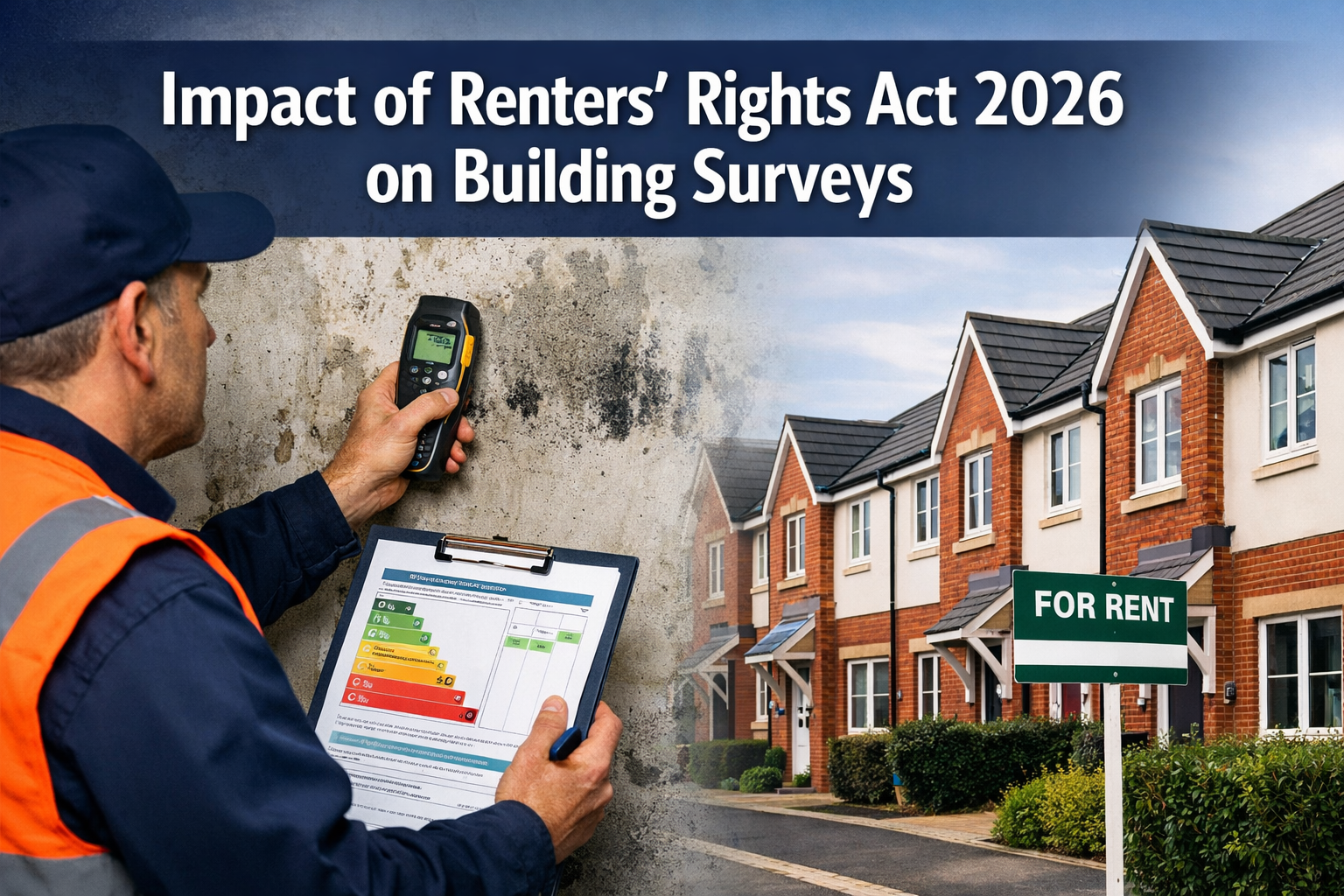

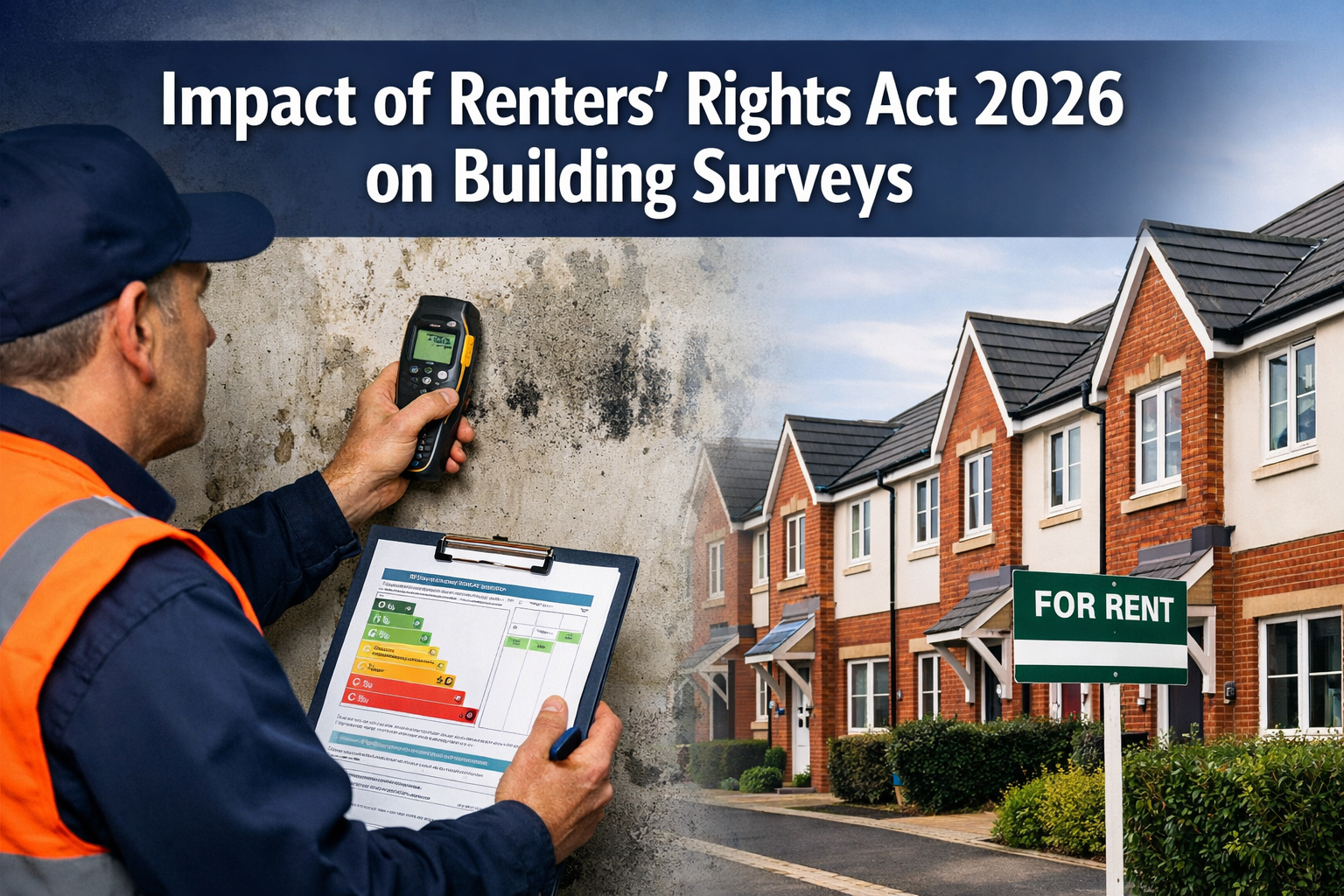
The private rented sector in England faces its most significant transformation in nearly four decades. As landlords prepare for sweeping changes under the Renters' Rights Act 2026, building surveys have evolved from optional property assessments to essential compliance tools. With Section 21 'no-fault' evictions abolished and stringent new property standards taking effect from May 1, 2026, the role of professional surveyors has fundamentally shifted to help landlords navigate this new regulatory landscape.
Understanding the Impact of Renters' Rights Act 2026 on Building Surveys: Preparing for Private Rented Sector Compliance Checks is no longer optional for property owners. The legislation introduces mandatory Decent Homes Standards, strict hazard investigation timelines under Awaab's Law, and financial penalties reaching £40,000 for non-compliance[1]. This comprehensive guide examines how these changes reshape building survey requirements and provides actionable strategies for landlords to ensure their properties meet the new regulatory framework.
Key Takeaways
- 🏠 Decent Homes Standard now applies to all private landlords from May 2026, requiring properties to be safe, well-maintained, and free from priority hazards like damp and mould
- ⏰ Awaab's Law mandates strict investigation timelines: 24 hours for emergencies, 10 working days for other issues, with completion of safety work within five days
- 💰 Non-compliance penalties range from £7,000 to £40,000, making pre-emptive building surveys a cost-effective risk management strategy
- 📋 Section 21 abolition requires comprehensive property documentation to support any future possession claims through statutory grounds
- 🔍 Professional building surveys identify compliance gaps before enforcement action, allowing landlords to spread remediation costs strategically
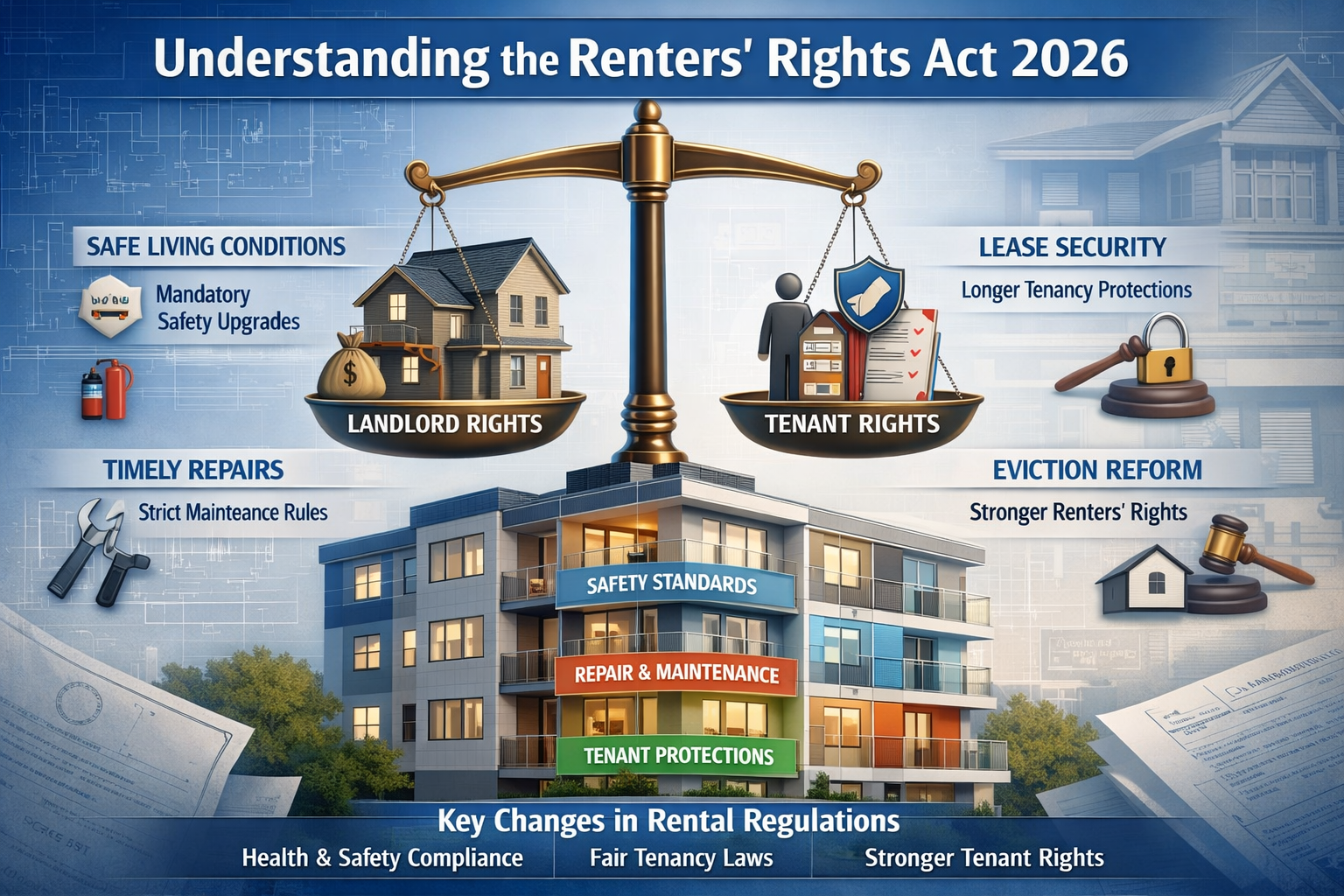
Understanding the Renters' Rights Act 2026: A Fundamental Shift in Landlord Obligations
The Renters' Rights Act 2026 represents the most comprehensive overhaul of private rental legislation since the Housing Act 1988[2]. Implementation begins in phases, with immediate changes taking effect from May 1, 2026, followed by Phase 2 from late 2026, and Phase 3 at a date yet to be confirmed[1].
Core Legislative Changes Affecting Property Standards
The Act introduces several transformative requirements that directly impact how landlords maintain and document property conditions:
Abolition of Section 21 Evictions: From May 2026, landlords can no longer use 'no-fault' evictions to remove tenants. All assured shorthold tenancies (ASTs) automatically convert to periodic tenancies, with possession only available through specific statutory grounds requiring extended notice periods and court involvement[2]. Many grounds cannot be used during the first 12 months of a tenancy, making initial property condition documentation critically important.
Decent Homes Standard Extension: Previously applicable only to social housing since 2001, the Decent Homes Standard now extends to all private rented properties[1]. This requires properties to meet four key criteria:
- Meet current statutory minimum standards for housing
- Be in a reasonable state of repair
- Have reasonably modern facilities and services
- Provide effective insulation and heating
Awaab's Law Implementation: Named after two-year-old Awaab Ishak who died from prolonged exposure to mould, this provision sets strict timelines for addressing hazards[1]:
| Issue Type | Investigation Timeline | Findings Report | Work Completion |
|---|---|---|---|
| Emergency hazards | 24 hours | 3 working days | 5 days from investigation |
| Non-emergency issues | 10 working days | 3 working days | 5 days from investigation |
| Supplementary works | N/A | N/A | Started within 12 weeks |
These timelines make proactive property assessments essential. Landlords cannot afford to discover compliance issues only after tenant complaints trigger enforcement action.
Financial Penalties and Enforcement Powers
Local authorities gain significant enforcement powers under the new legislation. Non-compliance with property standards can result in fines up to £7,000, while continued non-compliance following enforcement action may lead to prosecution or penalties reaching £40,000[1].
The Private Rented Sector Database, launching in Phase 2 from late 2026, requires all landlords to register at an annual fee and join a mandatory Landlord Ombudsman scheme[1]. This creates a transparent compliance record accessible to enforcement authorities, making it impossible for landlords to operate below regulatory standards without detection.
Impact of Renters' Rights Act 2026 on Building Surveys: New Assessment Priorities
The regulatory changes fundamentally alter what building surveys must assess and document. Traditional structural surveys focused primarily on defects affecting property value or structural integrity. Under the new regime, surveys must prioritize compliance with statutory standards and hazard identification.
Priority Hazards Requiring Enhanced Survey Focus
Professional surveyors must now conduct comprehensive assessments targeting specific hazards highlighted in the legislation:
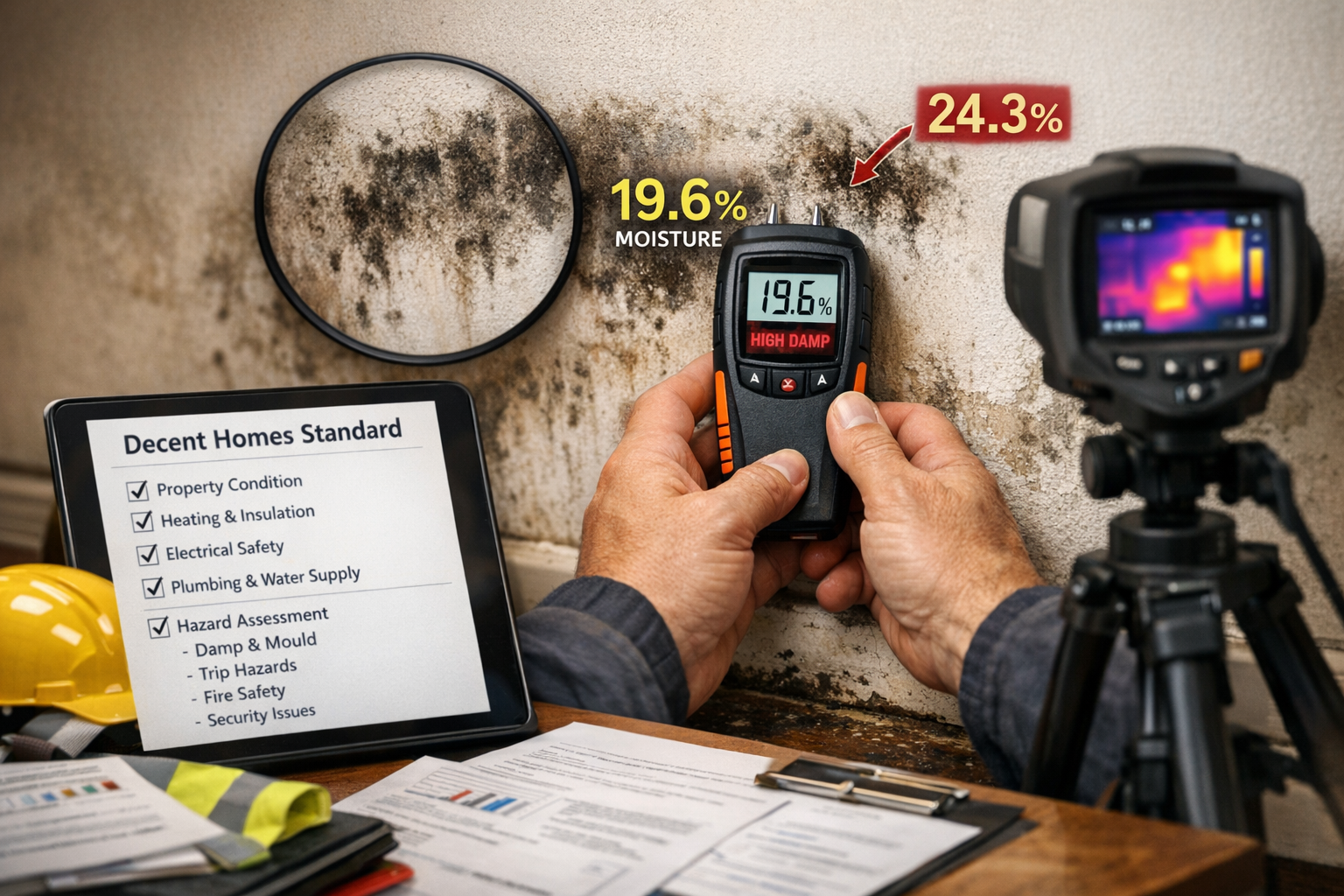
Damp and Mould Assessment: The Act explicitly identifies damp and mould as priority hazards requiring regular monitoring, especially during higher-risk periods[1]. Building surveys must now include:
- Moisture meter readings in all rooms, particularly bathrooms, kitchens, and external walls
- Thermal imaging to identify cold spots and condensation risks
- Ventilation system assessment and air flow measurements
- Identification of penetrating damp, rising damp, and condensation issues
- Documentation of existing mould growth with photographic evidence
Electrical Safety Compliance: Surveys must verify current electrical installation condition reports (EICRs) are in place and identify any electrical hazards that could trigger emergency investigation requirements.
Heating System Adequacy: Assessment of whether heating systems provide effective warmth throughout the property, meeting Decent Homes requirements for thermal comfort.
Fire Safety Provisions: Verification that smoke alarms, carbon monoxide detectors, and fire doors (where applicable) meet current standards.
Adapting Survey Methodologies for Compliance Documentation
The shift from Section 21 evictions to statutory grounds-based possession creates new documentation requirements. Landlords may need to demonstrate property condition to support possession claims under grounds such as:
- Ground 1A: Landlord intends to sell the property
- Ground 1: Landlord or family member needs to occupy
- Ground 6: Landlord intends to refurbish or carry out substantial works
Professional building surveyor services must now provide detailed condition reports that can serve as evidence in potential tribunal proceedings. This requires:
✅ Comprehensive photographic documentation with date stamps and location references
✅ Detailed defect descriptions using standardized terminology
✅ Quantified measurements of issues (crack widths, moisture levels, areas affected)
✅ Clear categorization of defects by urgency and compliance risk
✅ Remediation cost estimates to support landlord decision-making
Comparing Survey Types for Compliance Purposes
Landlords often ask which survey level provides adequate compliance assessment. Understanding the differences between homebuyer reports and building surveys helps determine the appropriate approach:
Level 2 Homebuyer Report: Suitable for relatively modern properties in good condition, but may not provide sufficient detail for comprehensive compliance documentation under the new Act.
Level 3 Building Survey: Recommended for most rental properties, offering detailed assessment of all accessible areas, comprehensive defect identification, and thorough hazard evaluation necessary for Awaab's Law compliance.
Specialist Compliance Surveys: Purpose-designed assessments focusing specifically on Decent Homes Standard criteria, priority hazards, and regulatory requirements. These surveys integrate elements from traditional building surveys with compliance-specific checklists.
For properties with specific concerns, supplementary assessments may be necessary:
- Subsidence surveys for properties showing structural movement
- Roof surveys for properties with water ingress concerns
- Specialist damp and timber surveys for properties with moisture issues
Preparing for Private Rented Sector Compliance Checks: Strategic Survey Planning
With implementation beginning May 2026, landlords face a narrow window to assess properties and address compliance gaps. Strategic survey planning helps spread costs and prioritize remediation work effectively.
Pre-Implementation Survey Strategy
Immediate Actions (Before May 2026):
- Commission comprehensive building surveys for all rental properties to establish baseline compliance status
- Prioritize properties with known issues or those that haven't been surveyed within the past three years
- Document current condition extensively to establish clear records before new standards take effect
- Identify high-risk hazards requiring immediate attention to avoid emergency investigation requirements
Cost-Benefit Analysis: While comprehensive surveys represent upfront investment, they offer substantial financial protection:
- Early identification of issues allows planned remediation at lower cost than emergency repairs
- Avoiding £7,000-£40,000 penalties provides clear return on investment
- Spreading remediation costs over several months prevents cash flow strain
- Professional documentation supports insurance claims and potential tribunal proceedings
Compliance Checklist for Building Surveys
When commissioning surveys under the new regulatory framework, ensure chartered surveyors address these specific compliance areas:
Structural and Fabric Assessment:
- External walls: condition, weatherproofing, insulation adequacy
- Roof covering: integrity, water ingress risk, ventilation
- Windows and doors: operation, seals, security, thermal performance
- Foundations and substructure: movement indicators, damp-proof course effectiveness
Services and Systems:
- Heating system: age, efficiency, adequacy for property size
- Electrical installation: EICR status, visible defects, safety devices
- Plumbing: condition, leaks, water pressure, drainage
- Ventilation: natural and mechanical systems, adequacy for property use
Priority Hazards:
- Damp and mould: moisture readings, visible growth, underlying causes
- Fire safety: detection systems, escape routes, door integrity
- Falls: stair condition, handrails, trip hazards
- Excess cold: insulation, heating, thermal bridging
Decent Homes Criteria:
- Kitchen facilities: age, condition, adequacy (less than 20 years old)
- Bathroom facilities: age, condition, adequacy (less than 30 years old)
- Common areas (if applicable): lighting, security, cleanliness
- External areas: safe access, boundary security
Working with Professional Surveyors for Compliance
Selecting the right surveyor is crucial for obtaining actionable compliance assessments. When engaging professionals, consider:
Qualifications and Experience: Ensure surveyors hold RICS (Royal Institution of Chartered Surveyors) accreditation and have specific experience with rental property compliance assessments. Ask about their familiarity with the Renters' Rights Act 2026 and Decent Homes Standard.
Survey Scope and Deliverables: Request detailed proposals outlining exactly what the survey will cover. Ensure the scope explicitly includes compliance assessment against new regulatory standards, not just traditional defect identification.
Reporting Format: Confirm reports will include:
- Executive summary highlighting compliance risks
- Prioritized defect list with urgency ratings
- Photographic evidence with clear annotations
- Remediation recommendations with cost estimates
- Compliance status against Decent Homes Standard
Follow-up Support: Inquire whether surveyors provide post-survey consultation to discuss findings, prioritize remediation work, and answer questions about compliance requirements.
Remediation Planning and Cost Management
Survey findings must translate into actionable remediation plans. Effective planning involves:
Priority Categorization:
🔴 Immediate (Complete before May 2026): Emergency hazards, Category 1 hazards under HHSRS, issues triggering Decent Homes Standard failures
🟡 High Priority (Complete within 3 months of implementation): Category 2 hazards, issues likely to deteriorate rapidly, items affecting tenant safety or comfort
🟢 Medium Priority (Complete within 6-12 months): Preventive maintenance, improvements enhancing compliance margin, aesthetic issues affecting property standards
Cost Spreading Strategies:
- Obtain multiple quotes for significant remediation work
- Consider phased approaches for extensive works (e.g., addressing damp causes before redecorating)
- Investigate whether works can be coordinated with planned void periods
- Explore whether improvements qualify for tax relief as revenue expenses
Documentation Requirements: Maintain comprehensive records of all remediation work:
- Survey reports identifying issues
- Contractor quotes and invoices
- Completion certificates for specialist work (electrical, gas, structural)
- Before and after photographs
- Updated EPC certificates if energy efficiency improved
This documentation proves compliance if challenged by enforcement authorities and supports any future possession claims requiring demonstration of property condition.
Ongoing Compliance Monitoring
The Renters' Rights Act 2026 creates ongoing compliance obligations, not just one-time requirements. Landlords should establish regular monitoring schedules:
Annual Inspections: Conduct thorough property inspections at least annually, with particular focus on priority hazards. Consider engaging professionals for schedule of condition reports documenting property status.
Seasonal Checks: Inspect properties for damp and mould during higher-risk periods (autumn and winter) when condensation issues typically emerge.
Post-Tenancy Assessments: Commission detailed surveys during void periods to identify any deterioration and ensure properties remain compliant before re-letting.
Regulatory Updates: Monitor government guidance on Decent Homes Standard implementation and any supplementary regulations issued under the Act.
Impact of Renters' Rights Act 2026 on Building Surveys: Sector-Wide Implications
Beyond individual landlord compliance, the Act creates broader implications for the rental sector and surveying profession.

Market Dynamics and Portfolio Decisions
The increased compliance burden influences landlord investment decisions. Some landlords may exit the market due to:
- Capital expenditure required to bring properties to Decent Homes Standard
- Reduced flexibility in rent setting (limited to annual reviews with two months' notice)[1]
- Loss of Section 21 eviction option reducing control over tenancy management
- Administrative burden of database registration and ombudsman membership
However, landlords who invest in compliance gain competitive advantages:
✅ Premium positioning: Properties demonstrably exceeding minimum standards command higher rents
✅ Reduced void periods: Quality properties attract and retain tenants more effectively
✅ Lower maintenance costs: Proactive maintenance prevents expensive emergency repairs
✅ Regulatory protection: Comprehensive documentation defends against unfounded complaints
For portfolio landlords, strategic property assessment helps identify which properties warrant investment versus potential disposal. Commercial rent review principles can inform these portfolio optimization decisions.
Professional Standards Evolution
The surveying profession must adapt to meet new market demands:
Enhanced Training Requirements: Surveyors need specialized knowledge of:
- Decent Homes Standard criteria and assessment methodologies
- HHSRS (Housing Health and Safety Rating System) hazard identification
- Awaab's Law investigation and reporting timelines
- Tribunal evidence requirements for possession proceedings
Standardized Compliance Reporting: Industry bodies are developing standardized reporting formats specifically for rental property compliance assessments, ensuring consistency and comprehensiveness.
Technology Integration: Modern surveying increasingly incorporates:
- Thermal imaging cameras for comprehensive damp and insulation assessment
- Digital moisture meters with data logging capabilities
- Photographic documentation systems with automatic geotagging and timestamps
- Cloud-based reporting platforms enabling rapid report delivery and updates
Tenant Rights and Enforcement Landscape
The Act significantly strengthens tenant protections, creating new dynamics in landlord-tenant relationships:
Empowered Tenants: With Section 21 abolished, tenants can more confidently report property issues without fear of retaliatory eviction. This likely increases enforcement activity and compliance scrutiny.
Ombudsman Scheme: Mandatory ombudsman membership provides tenants with accessible dispute resolution mechanisms, potentially increasing landlord accountability for property conditions.
Local Authority Resources: Whether local authorities receive adequate funding to enforce new standards remains uncertain. Landlords in some areas may face more rigorous enforcement than others, creating regional compliance variations.
Tribunal Proceedings: First-tier Property Tribunals will handle increased caseloads as possession proceedings shift from straightforward Section 21 notices to contested statutory grounds. Property condition documentation becomes crucial evidence in these proceedings.
Regional Considerations and Local Authority Variations
Compliance requirements apply nationally, but local enforcement approaches may vary. Landlords operating across multiple areas should consider regional factors:
Selective Licensing Schemes: Some local authorities operate additional licensing requirements beyond the Act's baseline standards. Properties in selective licensing areas face dual compliance obligations.
Local Housing Allowance Rates: Areas with low LHA rates relative to market rents may see landlords exit the sector if compliance costs cannot be recovered through rent increases, potentially reducing housing availability for benefit recipients.
Property Characteristics: Regional housing stock variations affect compliance challenges:
- Victorian terraced properties common in urban areas often require significant investment to meet thermal efficiency standards
- Purpose-built flats may have shared infrastructure complications affecting individual landlord compliance
- Rural properties may face higher remediation costs due to limited contractor availability
Landlords with geographically dispersed portfolios should engage local surveyors familiar with regional property characteristics and enforcement approaches. Whether operating in West London, North London, or South East London, working with area specialists ensures assessments reflect local compliance expectations.
Conclusion
The Impact of Renters' Rights Act 2026 on Building Surveys: Preparing for Private Rented Sector Compliance Checks cannot be overstated. This legislation fundamentally transforms rental property management from a relatively flexible investment class to a highly regulated sector with stringent property standards and significant penalties for non-compliance.
Building surveys have evolved from optional property assessments to essential compliance tools. The abolition of Section 21 evictions, introduction of Decent Homes Standards, and implementation of Awaab's Law create compelling reasons for landlords to commission comprehensive professional surveys before May 2026 implementation.
Key actions for landlords:
- Commission comprehensive building surveys immediately for all rental properties to establish compliance baseline
- Prioritize remediation work addressing emergency hazards and Decent Homes Standard failures
- Establish documentation systems maintaining detailed records of property condition and remediation work
- Develop ongoing monitoring schedules ensuring continued compliance throughout tenancies
- Engage specialist surveyors with expertise in rental property compliance assessments
The financial case for proactive compliance is clear: investing in professional surveys and strategic remediation costs significantly less than facing enforcement penalties ranging from £7,000 to £40,000, while also protecting rental income and property values.
Landlords who approach these changes strategically—viewing compliance as an investment in property quality rather than merely a regulatory burden—position themselves advantageously in the evolving rental market. Properties demonstrably exceeding minimum standards attract quality tenants, command premium rents, and avoid the reputational and financial damage of enforcement action.
The window for preparation is closing. With implementation beginning May 1, 2026, landlords must act now to assess properties, identify compliance gaps, and execute remediation plans. Professional building surveys provide the foundation for this preparation, offering detailed assessments, prioritized action plans, and documentation supporting both compliance and future possession proceedings if required.
The rental sector is transforming. Landlords who embrace professional standards, invest in property quality, and maintain comprehensive compliance documentation will thrive under the new regulatory framework. Those who delay risk significant financial penalties, tenant disputes, and potential forced exit from the sector.
References
[1] The Renters Rights Act What S Changing What It Means For Landlords And How To Mitigate Risks – https://www.kennedyslaw.com/en/thought-leadership/article/2026/the-renters-rights-act-what-s-changing-what-it-means-for-landlords-and-how-to-mitigate-risks/
[2] The Impact Of The Renters Rights Act On Landlords And Lenders – https://www.hilldickinson.com/our-view/articles/the-impact-of-the-renters-rights-act-on-landlords-and-lenders/