When two-year-old Awaab Ishak died from prolonged exposure to mould in his family's social housing flat in 2020, the tragedy sparked a fundamental shift in how the UK approaches hazardous living conditions. The resulting legislation—Awaab's Law—initially focused on social housing, but 2026 marks a watershed moment as Awaab's Law Extensions 2026: Building Survey Protocols for Damp, Mould, and New Hazards in Private Rentals bring comprehensive regulatory standards to the private rental sector. For building surveyors, property professionals, and landlords, understanding these expanded protocols isn't just about compliance—it's about preventing similar tragedies and establishing evidence-based approaches to tenant safety.
The 2026 extensions represent more than regulatory expansion; they fundamentally transform how building surveys must identify, document, and remediate hazards in private rentals. With strict investigation timescales, mandatory root cause analysis, and phased inclusion of new hazards beyond damp and mould, surveyors now require specialized protocols that meet legal standards while protecting both tenants and property owners.
Key Takeaways
- Private rental sector compliance begins in 2026, requiring landlords to investigate damp and mould reports within 14 days and commence repairs within specified timescales, matching social housing standards[2]
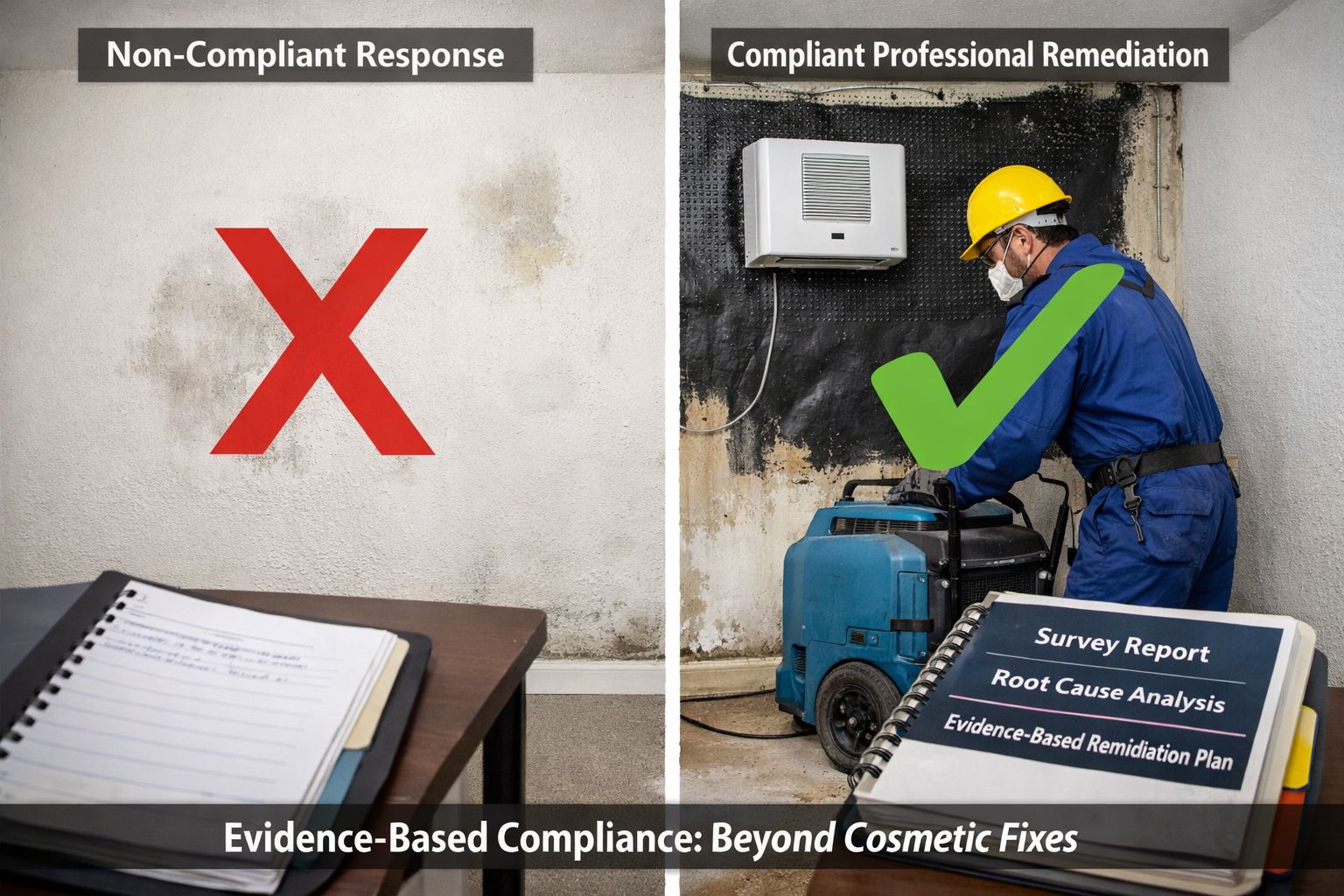
- Professional building surveys are now essential for compliance, as cosmetic fixes no longer satisfy legal requirements—surveyors must identify root causes, document moisture sources, and provide evidence-based remediation plans[2]
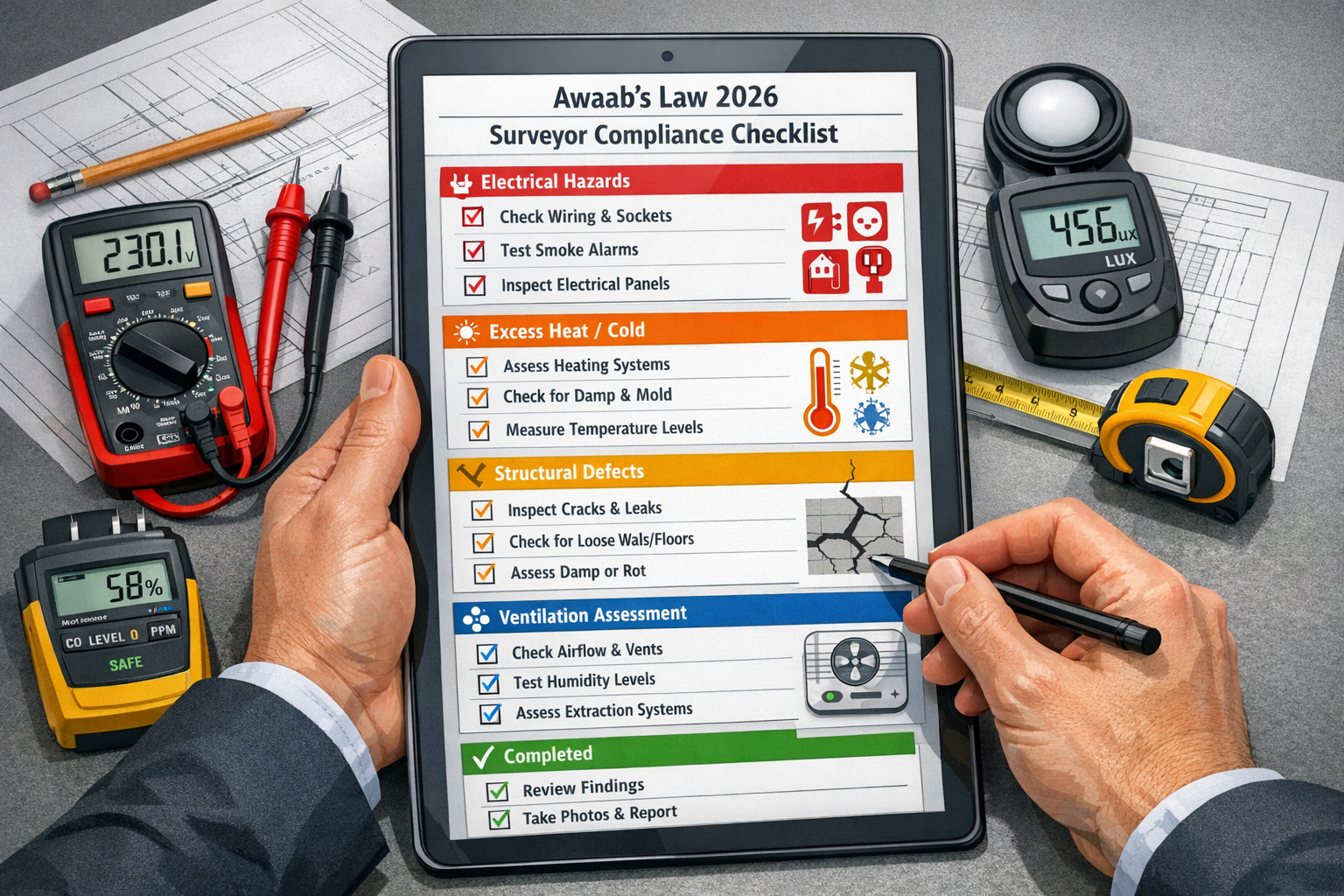
- Phase 1 focuses exclusively on damp, mould, and fungal growth, with Phases 2 and 3 scheduled to expand coverage to electrical hazards, excess heat/cold, and other Housing Health and Safety Rating System (HHSRS) risks[6]
- Documentation standards have shifted from intent to evidence, requiring landlords to maintain comprehensive records demonstrating prompt response, thorough investigation, and effective hazard removal[2]
- Scotland's stricter 10-working-day investigation requirement takes effect October 2026, creating regional variations that surveyors must navigate when operating across UK jurisdictions[3]
Understanding Awaab's Law Extensions 2026: From Social Housing to Private Rentals
The Legislative Journey and 2026 Milestone
Awaab's Law entered force for social housing providers in England on October 27, 2025, establishing a 14-day assessment requirement from tenant notification for mould and damp investigations[1]. This initial implementation phase created a compliance framework that private landlords are now expected to meet from 2026 onwards as part of wider housing reform[2].
The extension to private rentals represents recognition that housing hazards don't discriminate by tenure type. Approximately 4.5 million households in England's private rented sector face the same risks from inadequate property conditions, yet previously operated under less prescriptive regulatory frameworks. The 2026 extensions close this gap, establishing equivalent standards across all rental housing.
Key differences between social and private sector implementation:
| Aspect | Social Housing (2025) | Private Rentals (2026) |
|---|---|---|
| Investigation Timeline | 14 days from notification | 14 days from notification |
| Emergency Response | 24 hours for immediate risks | 24 hours for immediate risks |
| General Hazard Resolution | 5 days for damp/mould | 5 days for damp/mould |
| Documentation Requirements | Written investigation summary | Written investigation summary |
| Professional Assessment | Recommended | Effectively mandatory |
| Enforcement Mechanism | Housing Ombudsman | Local authority enforcement |
Scotland's Enhanced Requirements
Scotland has taken an even more stringent approach. Regulations approved by the Scottish Parliament require both social and private rented landlords to investigate damp and mould reports within 10 working days of notification, provide written investigation summaries within 3 working days, and begin repairs within 5 working days if required—all taking effect October 2026[3].
For building surveyor services operating across UK jurisdictions, these regional variations necessitate location-specific protocols and documentation practices.
Building Survey Protocols for Damp, Mould, and New Hazards in Private Rentals: Phase 1 Requirements
Mandatory Investigation Standards
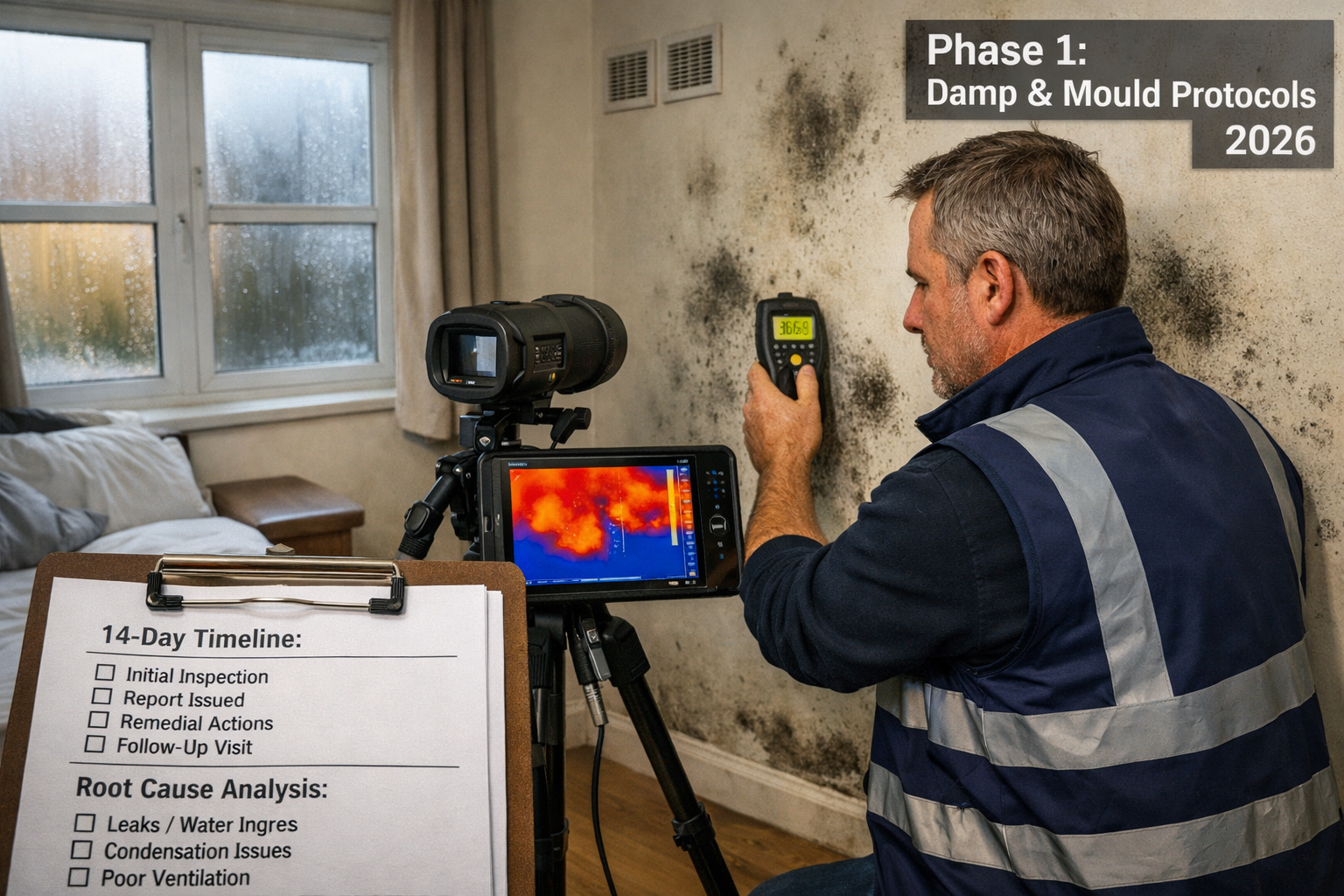
The 2026 extensions fundamentally change what constitutes an "adequate investigation" of damp and mould hazards. Landlords must now demonstrate reasonable action through professional assessments that meet specific criteria[2]:
✅ Professional Damp and Mould Assessment Requirements:
- Moisture source identification using calibrated equipment (moisture meters, thermal imaging cameras, hygrometers)
- Root cause analysis examining ventilation adequacy, insulation performance, structural defects, and building fabric issues
- Clear written reporting documenting findings, moisture readings, photographic evidence, and causal factors
- Evidence-based remediation plans specifying required interventions beyond cosmetic treatments
- Compliance timeline documentation demonstrating adherence to investigation and repair deadlines
The shift from cosmetic fixes to root cause remediation represents the most significant change for property professionals. Simply cleaning mould or applying fungicidal paint no longer satisfies legal obligations. Surveyors must identify why moisture accumulates—whether from condensation, penetrating damp, rising damp, plumbing leaks, or building defects—and recommend interventions addressing these underlying causes[2].
The "Lifestyle vs. Building Defect" Evidence Requirement
Previously, landlords could often attribute mould growth to tenant "lifestyle factors" without thorough investigation. The 2026 protocols reverse this presumption. Landlords must now provide objective evidence if claiming tenant behavior contributes to mould growth, while simultaneously demonstrating the property's ventilation, heating, and insulation systems meet adequate standards[2].
This evidence-based approach requires surveyors to assess:
- Ventilation provision: Are mechanical or passive ventilation systems present, functional, and appropriately sized for room volumes?
- Heating adequacy: Can the property maintain healthy temperatures (minimum 18°C in living areas, 16°C in bedrooms) at reasonable cost?
- Insulation performance: Do walls, roofs, and floors meet current thermal performance standards?
- Moisture barriers: Are damp-proof courses, membranes, and weatherproofing systems intact and effective?
For comprehensive property assessments, professionals should consider conducting a building survey that examines these elements systematically.
Documentation as Legal Defense
Maintaining comprehensive records has transformed from best practice to legal necessity. Landlords must document[2]:
- Prompt response: Date and time of tenant notification, acknowledgment provided, investigation scheduled
- Investigation completion: Professional surveyor engaged, assessment conducted within 14 days, findings documented
- Root cause identification: Moisture sources identified, causal factors analyzed, building defects noted
- Remedial action: Appropriate interventions specified, contractors engaged, works completed within timescales
- Evidence of compliance: Photographs, moisture readings, contractor invoices, completion certificates
Professional mould surveys provide defensible documentation that demonstrates compliance while protecting landlords from potential enforcement action or tenant compensation claims.
Awaab's Law Extensions 2026: Expanded Hazard Categories and Future Phases
Phase 1: Damp, Mould, and Fungal Growth (2026)
The initial 2026 implementation phase focuses exclusively on damp, mould, and fungal growth hazards[6]. This targeted approach allows landlords and surveyors to establish compliance protocols before expanding to additional hazard categories.
Phase 1 surveyor checklist:
- Visual inspection of all rooms for mould growth, condensation, and damp patches
- Moisture meter readings on walls, ceilings, and floors (documenting percentages)
- Thermal imaging to identify cold spots, thermal bridging, and insulation defects
- Ventilation assessment (airflow measurements, extractor fan functionality, trickle vent presence)
- Hygrometer readings documenting relative humidity levels
- Plumbing inspection for leaks, drainage issues, and water ingress routes
- External envelope examination for weatherproofing defects
- Roof space inspection for condensation, insulation adequacy, and ventilation
- Photographic documentation of all findings with scale references
- Written report with root cause analysis and remediation recommendations
For properties with significant structural concerns, a structural survey may be necessary to fully assess building fabric issues contributing to moisture problems.
Phases 2 and 3: Electrical, Thermal, and Additional Hazards (Post-2026)
While Phase 1 addresses damp and mould, subsequent phases will expand Awaab's Law coverage to additional Housing Health and Safety Rating System (HHSRS) hazards[6]. Though implementation timelines remain subject to government announcement, surveyors should prepare protocols for:
🔌 Electrical Hazards (Expected Phase 2):
- Inadequate or unsafe electrical installations
- Exposed wiring, damaged sockets, or overloaded circuits
- Absence of required electrical safety certificates (EICR)
- Insufficient electrical capacity for modern appliance loads
- Faulty or missing residual current devices (RCDs)
🌡️ Excess Heat and Cold (Expected Phase 2):
- Properties unable to maintain minimum healthy temperatures
- Inadequate heating systems or prohibitive heating costs
- Excessive heat exposure from poor insulation or inadequate ventilation
- Thermal discomfort affecting health and wellbeing
⚠️ Additional HHSRS Category 1 Hazards (Expected Phase 3):
- Falls hazards (stairs, uneven surfaces, inadequate lighting)
- Fire safety deficiencies
- Carbon monoxide and combustion product risks
- Structural collapse or instability
- Entry by intruders (inadequate security)
Building surveyors should begin integrating these expanded assessments into standard inspection protocols, even before mandatory implementation, to provide comprehensive hazard identification for landlord clients.
Surveyor Compliance Checklists: Integrating Awaab's Law into Valuations and Condition Reports
Pre-Tenancy Survey Protocol
For landlords preparing properties for rental, pre-tenancy surveys now require Awaab's Law compliance verification:
Pre-Tenancy Awaab's Law Checklist:
-
Moisture and Ventilation Baseline
- Document moisture readings throughout property
- Test all mechanical ventilation systems
- Verify trickle vents present and functional in habitable rooms
- Photograph property condition (particularly areas prone to condensation)
- Create baseline schedule of condition report documenting pre-tenancy state
-
Heating and Insulation Assessment
- Verify heating system functionality and capacity
- Document insulation presence in loft, walls, and floors
- Assess thermal performance using thermal imaging
- Confirm property can achieve minimum healthy temperatures
-
Building Fabric Inspection
- Examine external envelope for weatherproofing defects
- Check damp-proof course integrity
- Inspect roof coverings and flashings
- Verify drainage systems clear and functional
-
Documentation Package
- Provide landlord with compliance baseline report
- Recommend any pre-tenancy remedial works
- Establish monitoring protocols for ongoing compliance
- Create tenant information sheet on ventilation and heating use
Mid-Tenancy Investigation Protocol
When tenants report damp or mould concerns, surveyors must conduct investigations meeting Awaab's Law standards within the 14-day timeline:
Emergency Response (24-Hour Timeline for Immediate Health Risks):
- Attend property within 24 hours of notification
- Assess immediate health risk severity
- Document hazard with photographs and measurements
- Recommend temporary mitigation measures
- Provide written summary to landlord and tenant within 3 working days
- Specify emergency remediation requirements
Standard Investigation (14-Day Timeline):
- Schedule inspection within 14 days of tenant notification
- Conduct comprehensive damp and mould assessment
- Identify all moisture sources and contributing factors
- Determine whether building defects or ventilation inadequacy present
- Assess any tenant lifestyle factors objectively with evidence
- Provide written investigation report within 14-day window
- Specify remediation works required and estimated timescales
5-Day Repair Commencement Requirement:
- Landlord must begin remedial works within 5 days of investigation completion
- Surveyor should provide clear work specifications enabling prompt contractor engagement
- Follow-up inspection recommended post-remediation to verify effectiveness
For properties in specific locations, chartered surveyors in London and other regional specialists can provide localized expertise on common building defects and climate-related moisture issues.
Integration with Standard Survey Products
Professional surveyors should integrate Awaab's Law compliance assessments into existing survey products:
RICS Level 2 Home Survey (formerly HomeBuyer Report):
- Add specific Awaab's Law compliance section
- Document damp, mould, and ventilation findings
- Flag potential landlord compliance issues for investor buyers
- Recommend specialist investigations where concerns identified
RICS Level 3 Building Survey:
- Comprehensive Awaab's Law hazard assessment
- Detailed root cause analysis of any moisture issues
- Remediation cost estimates for compliance works
- Timeline projections for achieving compliance
Specific Defect Reports:
For targeted investigations of reported issues, specific defect reports can provide focused Awaab's Law compliance assessments without full building survey scope.
Valuation Reports:
- Consider compliance status in property valuation
- Flag potential enforcement risks affecting value
- Note remediation costs impacting investment returns
- Assess rental income risks from non-compliance
Accountability Shift: From Intent to Evidence-Based Compliance
The New Compliance Standard
The 2026 extensions fundamentally change how landlord compliance is evaluated. Previously, demonstrating "intent" to address issues—scheduling a contractor visit, providing cleaning materials to tenants, or promising future works—often sufficed. From 2026, evaluation focuses on objective evidence[2]:
Old Standard (Intent-Based):
- "We've asked the tenant to improve ventilation"
- "A contractor will visit when available"
- "We're monitoring the situation"
- "The tenant isn't heating adequately"
New Standard (Evidence-Based):
- Professional moisture meter readings documenting moisture levels
- Thermal imaging identifying insulation defects or thermal bridging
- Ventilation airflow measurements showing inadequate provision
- Documented investigation within 14-day timeline
- Root cause analysis with supporting evidence
- Remediation works commenced within 5 days
- Post-remediation verification of hazard removal
This shift places professional building surveyors at the center of compliance, as landlords require defensible evidence that can withstand local authority scrutiny or tenant challenges.
Non-Compliance Consequences
While enforcement mechanisms differ between social and private sectors, private landlords face significant consequences for Awaab's Law non-compliance:
⚖️ Enforcement Actions:
- Improvement notices requiring specific remediation works within defined timescales
- Prohibition orders preventing property occupation until hazards remedied
- Civil penalties up to £30,000 for serious breaches
- Rent repayment orders requiring landlords to refund rent for non-compliant periods
- Banning orders preventing serious or repeat offenders from letting property
💰 Financial Impacts:
- Loss of rental income during prohibition periods
- Tenant compensation payments for health impacts
- Legal costs defending enforcement actions
- Remediation costs for emergency works
- Property value depreciation from enforcement history
📋 Reputational Risks:
- Inclusion on local authority rogue landlord databases
- Difficulty securing future tenants
- Insurance complications or premium increases
- Mortgage lender concerns affecting refinancing
Professional surveyor involvement provides landlords with documented evidence of compliance, significantly reducing these risks while ensuring tenant safety.
Regional Variations and Cross-Jurisdiction Considerations
England, Scotland, and Wales: Different Timelines and Requirements
Building surveyors operating across UK jurisdictions must navigate regional variations in Awaab's Law implementation:
England:
- Social housing: October 2025 implementation
- Private rentals: 2026 onwards (specific date pending)
- Investigation timeline: 14 days
- Emergency response: 24 hours
- General hazard resolution: 5 days[1][2]
Scotland:
- All rental sectors: October 2026 implementation
- Investigation timeline: 10 working days (stricter than England)
- Written summary: 3 working days after investigation
- Repair commencement: 5 working days if required
- Applies to both social and private landlords simultaneously[3]
Wales:
- Implementation timeline: Under consultation
- Expected to align broadly with England
- May incorporate additional requirements from Renting Homes (Wales) Act 2016
Northern Ireland:
- Separate legislative framework
- Awaab's Law equivalent under development
- Timeline not yet confirmed
For surveyors providing services across regions, maintaining jurisdiction-specific protocols and documentation templates ensures compliance with local requirements. Practices like chartered surveyors in Kingston serving clients across Greater London and surrounding counties must be particularly attentive to these variations.
Portfolio Landlords and Multi-Property Compliance
Landlords with multiple properties face particular challenges in achieving Awaab's Law compliance across their portfolios. Building surveyors can provide valuable support through:
Portfolio Compliance Audits:
- Systematic assessment of all properties against Awaab's Law standards
- Risk prioritization identifying highest-risk properties requiring immediate attention
- Remediation cost projections for budget planning
- Phased compliance implementation plans
Preventative Maintenance Programs:
- Regular inspection schedules preventing hazard development
- Predictive maintenance identifying issues before tenant complaints
- Documentation systems demonstrating proactive management
- Tenant education materials on ventilation and heating use
Compliance Management Systems:
- Digital platforms tracking inspection dates, findings, and remediation status
- Automated reminders ensuring timeline compliance
- Centralized documentation repositories for enforcement defense
- Performance metrics monitoring portfolio-wide compliance rates
Practical Implementation: Case Studies and Best Practices
Case Study 1: Condensation Mould in Victorian Terrace
Property: Two-bedroom Victorian terrace, private rental, South London
Issue: Tenant reported black mould growth in bedroom and bathroom
Non-Compliant Response (Pre-2026 Approach):
- Landlord provided fungicidal wash and instructed tenant to improve ventilation
- No professional investigation
- Mould returned within weeks
- Tenant withheld rent, local authority intervened
Compliant Response (2026 Standard):
- Professional surveyor attended within 14 days
- Moisture meter readings: 25% in bedroom wall (elevated)
- Thermal imaging revealed solid wall construction with no insulation
- Hygrometer: 75% relative humidity (excessive)
- Root cause: Inadequate ventilation + poor thermal performance + insufficient heating capacity
- Remediation: Internal wall insulation, mechanical ventilation with heat recovery, upgraded heating system
- Cost: £8,500
- Outcome: Mould eliminated, tenant satisfied, compliance documented
Key Learning: Cosmetic treatments insufficient; root cause remediation required despite higher initial cost.
Case Study 2: Rising Damp in Ground Floor Flat
Property: Ground floor flat, 1930s conversion, private rental
Issue: Persistent damp and mould in living room
Investigation Findings:
- Moisture readings: 30%+ at floor level, decreasing with height
- External inspection: Damp-proof course bridged by raised ground levels
- Internal inspection: Failed damp-proof membrane behind kitchen units
- Root cause: Building defect (bridged DPC) + failed waterproofing
Compliant Remediation:
- External ground levels lowered to expose DPC
- Failed DPC sections replaced with chemical injection system
- Internal replastering with waterproof render system
- Improved underfloor ventilation
- Post-remediation verification: Moisture readings <15%
- Documentation: Before/after photographs, moisture readings, contractor certificates
Key Learning: Building defects require structural remediation; surface treatments would not achieve compliance.
Case Study 3: Whole-House Ventilation Inadequacy
Property: Modern three-bedroom house, private rental, built 2005
Issue: Mould in multiple rooms despite "modern" construction
Investigation Findings:
- Trickle vents painted shut by previous occupant
- Bathroom extractor fan non-functional (motor failure)
- Kitchen extractor venting into roof space (not externally)
- Relative humidity 70%+ throughout property
- Root cause: Ventilation system failure + inadequate maintenance
Compliant Remediation:
- All trickle vents cleaned and restored to function
- Bathroom extractor replaced with higher-capacity unit
- Kitchen extractor ducting extended to external wall
- Whole-house ventilation assessment and upgrade
- Tenant education on ventilation system use
- Scheduled annual maintenance program established
Key Learning: Modern properties not immune; mechanical ventilation requires maintenance and proper installation.
Professional Development and Training for Surveyors
Required Competencies for Awaab's Law Compliance
Building surveyors require specific competencies to provide Awaab's Law compliance services effectively:
Technical Skills:
- Moisture measurement and interpretation (capacitance, resistance, and carbide meters)
- Thermal imaging camera operation and thermographic analysis
- Hygrometry and psychrometric chart interpretation
- Ventilation assessment and airflow measurement
- Building pathology understanding (damp causes, mould growth conditions)
- HHSRS assessment methodology for hazard rating
Regulatory Knowledge:
- Awaab's Law requirements across UK jurisdictions
- Housing Health and Safety Rating System (HHSRS)
- Building Regulations Part C (moisture resistance) and Part F (ventilation)
- Landlord and tenant legislation
- Local authority enforcement powers and procedures
Documentation Skills:
- Evidence-based report writing
- Photographic documentation standards
- Root cause analysis presentation
- Remediation specification writing
- Timeline compliance demonstration
Communication Abilities:
- Explaining technical findings to non-technical clients
- Mediating between landlords and tenants
- Presenting evidence to enforcement officers
- Expert witness testimony (if enforcement proceedings occur)
Continuing Professional Development
Professional bodies including RICS (Royal Institution of Chartered Surveyors) are developing specialized training on Awaab's Law compliance. Surveyors should pursue:
- Awaab's Law implementation workshops
- Damp and mould investigation certification courses
- Thermal imaging Level 1 and Level 2 qualifications
- HHSRS assessment training
- Building pathology continuing education
- Legal and regulatory update seminars
Maintaining current knowledge ensures surveyors provide accurate, defensible advice protecting both clients and tenants.
Technology and Tools for Enhanced Compliance
Digital Inspection Tools
Modern technology significantly enhances Awaab's Law compliance capabilities:
📱 Mobile Inspection Apps:
- Standardized checklists ensuring no assessment elements missed
- Integrated photography with automatic geotagging and timestamping
- Real-time moisture reading recording
- Cloud synchronization for instant report access
- Timeline tracking ensuring 14-day compliance
🌡️ Advanced Diagnostic Equipment:
- Thermal imaging cameras (FLIR, Seek, Hikmicro) identifying thermal defects
- Bluetooth-enabled moisture meters uploading readings directly to reports
- Environmental data loggers recording temperature and humidity over time
- Borescope cameras inspecting concealed spaces
- Infrared thermometers measuring surface temperatures
📊 Reporting Software:
- Automated report generation from inspection data
- Template systems ensuring consistent documentation
- Photographic annotation tools highlighting defects
- Root cause analysis frameworks
- Remediation cost estimation databases
For properties requiring elevated inspection capabilities, drone roof surveys can identify external defects contributing to moisture ingress without requiring scaffolding or access equipment.
Predictive Analytics and Preventative Approaches
Forward-thinking surveyors are implementing predictive analytics to identify properties at risk before tenant complaints arise:
- Building age and construction type risk profiling
- Climate data correlation with moisture risk
- Historical defect pattern analysis across property portfolios
- Seasonal inspection scheduling targeting high-risk periods
- Tenant behavior pattern recognition distinguishing building defects from lifestyle factors
These approaches shift compliance from reactive investigation to proactive hazard prevention, reducing costs and improving tenant satisfaction.
Conclusion: Establishing Excellence in Awaab's Law Compliance
The Awaab's Law Extensions 2026: Building Survey Protocols for Damp, Mould, and New Hazards in Private Rentals represent a fundamental transformation in rental housing standards. For building surveyors, these changes create both professional responsibility and opportunity—responsibility to provide evidence-based assessments protecting tenant health, and opportunity to establish specialized expertise in an expanding compliance market.
The shift from intent-based to evidence-based compliance means professional surveyor involvement is no longer optional but essential for landlords seeking to demonstrate legal compliance. Cosmetic fixes, delayed responses, and inadequate investigations expose landlords to enforcement action, financial penalties, and reputational damage. Conversely, thorough professional assessments, prompt root cause identification, and effective remediation protect both tenants and property owners while ensuring rental housing meets acceptable safety standards.
As implementation progresses through 2026 and subsequent phases expand to electrical, thermal, and additional hazards, surveyors must continuously update technical competencies, documentation practices, and inspection protocols. The 14-day investigation timeline demands efficient processes, while the evidence-based compliance standard requires meticulous documentation and defensible analysis.
Actionable Next Steps
For Building Surveyors:
- Develop specialized Awaab's Law inspection protocols incorporating jurisdiction-specific requirements
- Invest in diagnostic equipment (thermal imaging, moisture meters, environmental monitors) enabling comprehensive assessments
- Create standardized documentation templates demonstrating timeline compliance and root cause analysis
- Pursue continuing professional development on damp pathology, HHSRS assessment, and regulatory requirements
- Establish relationships with remediation specialists enabling prompt landlord referrals for identified defects
For Landlords:
- Commission pre-tenancy compliance audits identifying and addressing hazards before tenant occupation
- Establish preventative maintenance programs with regular professional inspections preventing hazard development
- Respond immediately to tenant concerns engaging professional surveyors within the 14-day investigation timeline
- Implement recommended remediation works promptly addressing root causes rather than cosmetic symptoms
- Maintain comprehensive documentation demonstrating compliance for potential enforcement defense
For Property Investors:
- Factor compliance costs into acquisition decisions assessing properties for potential Awaab's Law remediation requirements
- Request Awaab's Law compliance assessments as part of pre-purchase building surveys
- Consider compliance status in property valuations recognizing enforcement risks and remediation costs
- Prioritize properties with modern ventilation systems and adequate thermal performance reducing compliance risks
- Budget for ongoing compliance maintenance including regular professional inspections and system servicing
The tragic circumstances that prompted Awaab's Law remind us that housing quality directly impacts health and wellbeing. The 2026 extensions to private rentals ensure these protections extend to all tenants, regardless of tenure type. For building surveyors, embracing these enhanced standards positions the profession as essential guardians of housing safety, combining technical expertise with regulatory knowledge to create healthier, safer rental housing across the UK.
By establishing rigorous inspection protocols, maintaining evidence-based documentation, and committing to root cause remediation, surveyors can lead the industry toward compliance excellence—ensuring no family experiences the tragedy that prompted this vital legislation.
References
[1] Awaabs Law Technical Compliance Hvac Ventilation – https://www.arm-environments.com/resources/awaabs-law-technical-compliance-hvac-ventilation
[2] Awaabs Law Private Landlords 2026 – https://www.idealresponse.co.uk/blog/awaabs-law-private-landlords-2026/
[3] Dampness And Mould In Rented Housing What Will Awaabs Law In Scotland Do – https://spice-spotlight.scot/2026/03/19/dampness-and-mould-in-rented-housing-what-will-awaabs-law-in-scotland-do/
[4] Awaabs Law Private Rented Sector Extension – https://awaabs-law.com/awaabs-law-private-rented-sector-extension
[5] Awaabs Law A Comprehensive Guide – https://fletcherprops.com/awaabs-law-a-comprehensive-guide/
[6] Awaabs Law Comes Into Force What Does It Mean For Construction – https://www.trowers.com/insights/2025/november/awaabs-law-comes-into-force-what-does-it-mean-for-construction
[7] Awaabs Law A Guide For Social And Private Landlords – https://cydinnovation.com/knowledge_hub/awaabs-law-a-guide-for-social-and-private-landlords/