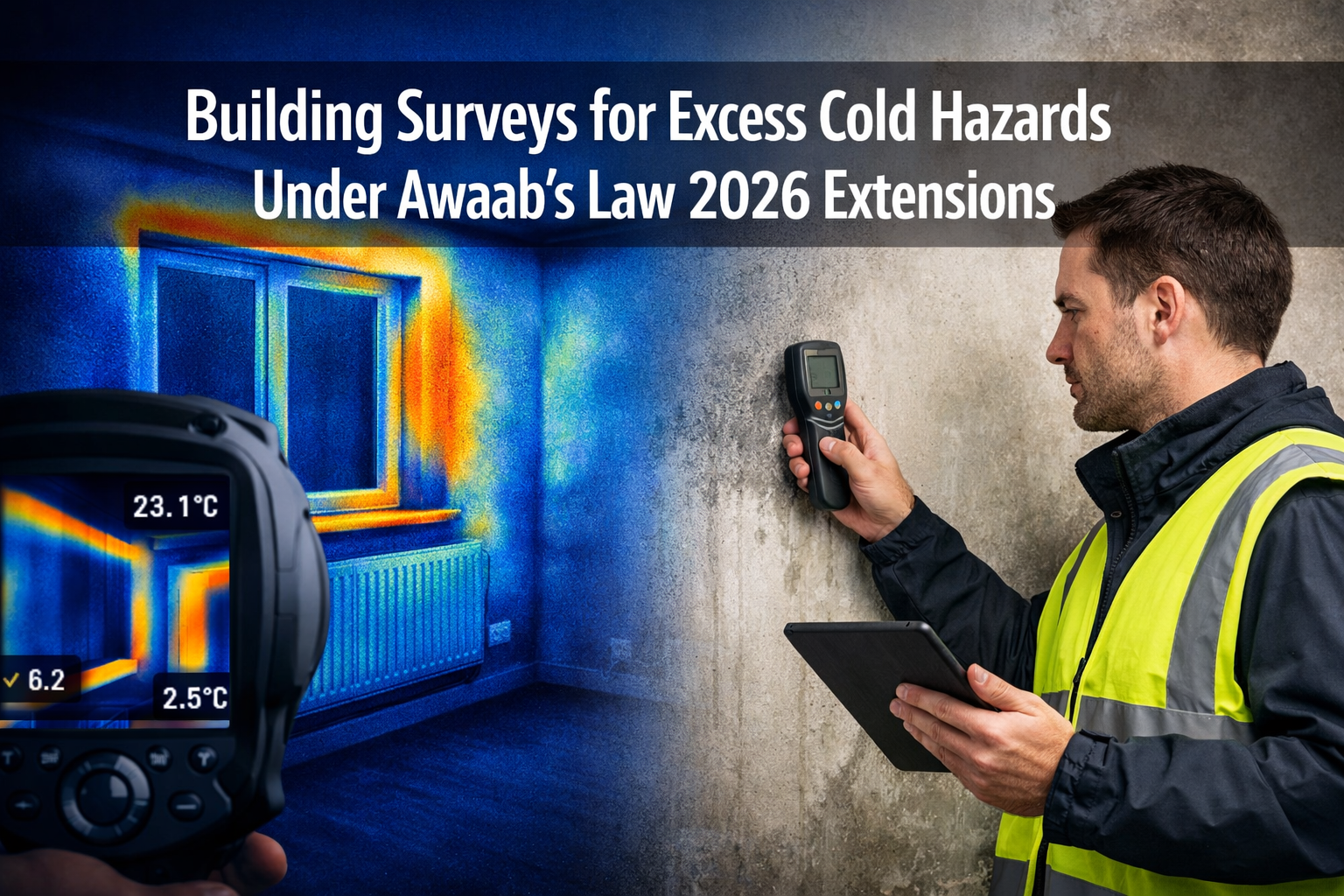

Awaab's Law will expand during 2026 to encompass excess cold and excessive heat hazards in social housing, with private landlords expected to face similar obligations under Phase 3 of the Renters' Rights Act[1][2]. This legislative shift demands that surveyors adapt their inspection protocols to identify thermal deficiencies that pose genuine health risks to tenants. Building Surveys for Excess Cold Hazards Under Awaab's Law 2026 Extensions: Protocols for Private Rented Sector Compliance represents a critical evolution in property assessment methodology, requiring chartered surveyors to integrate thermal performance evaluation with traditional structural inspection techniques.
The tragic death of two-year-old Awaab Ishak from prolonged exposure to mould in 2020 catalyzed regulatory reform that now extends beyond damp and mould to address the full spectrum of environmental hazards[5]. For private landlords managing rental portfolios, the 2026 extensions create both compliance obligations and liability exposure that demand proactive assessment strategies.
Key Takeaways
- 🏠 Awaab's Law extends to excess cold hazards in 2026, requiring landlords to address thermal deficiencies within specified timeframes across both social and private rental sectors
- 📋 Level 3 building surveys must incorporate thermal assessment protocols including infrared thermography, heating system evaluation, and insulation adequacy checks
- ⚖️ Private sector regulations remain pending consultation, but landlords should prepare for enforcement mechanisms similar to those applied to social housing providers
- 🔍 RICS-aligned survey methodologies provide defensible documentation for compliance demonstration and risk mitigation
- ⏰ Proactive surveying reduces enforcement risk by identifying excess cold hazards before tenant complaints trigger regulatory investigation
Understanding Awaab's Law 2026 Extensions and Excess Cold Hazards
Legislative Framework and Timeline
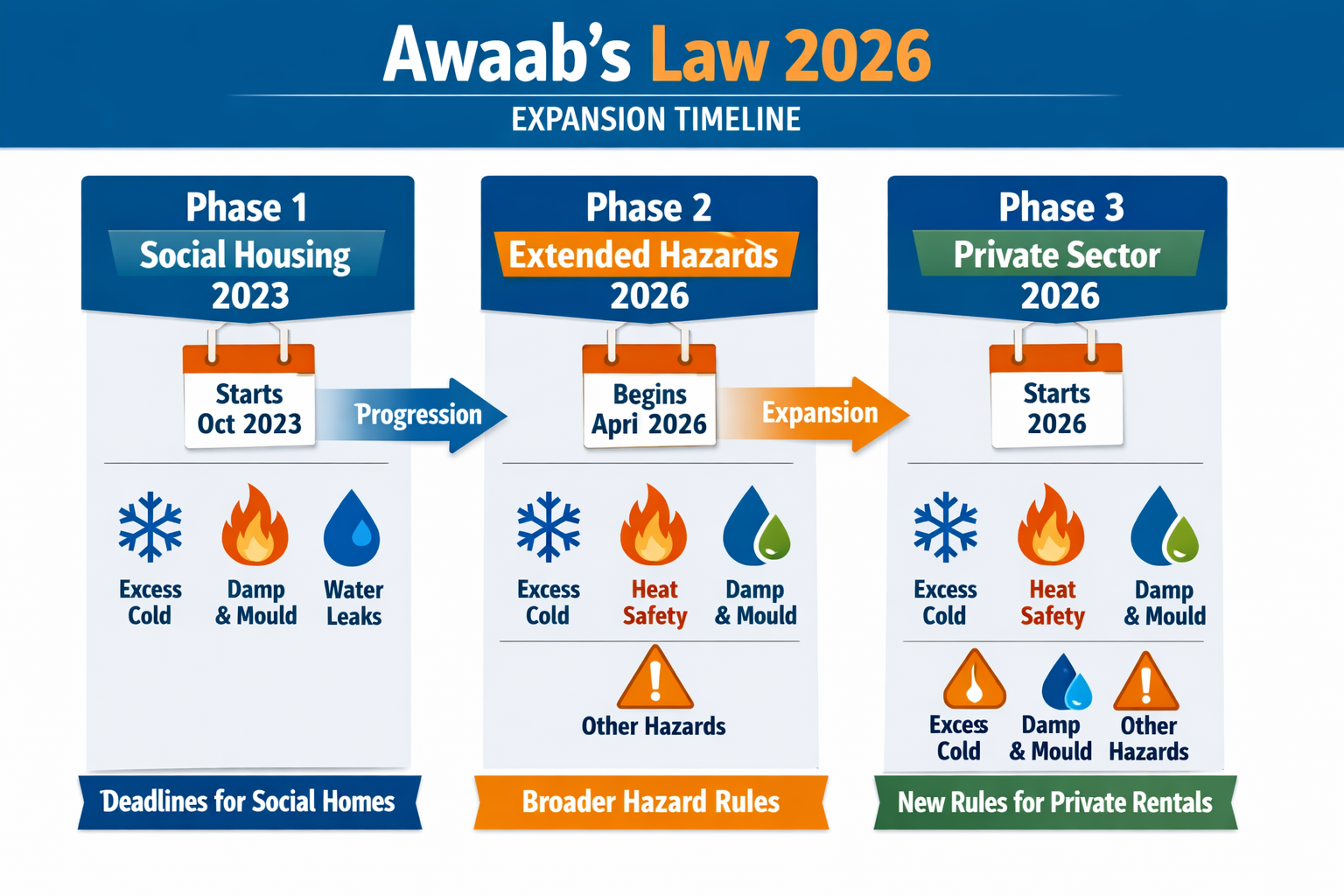
Awaab's Law initially focused on damp and mould remediation in social housing, establishing strict timeframes for hazard investigation and resolution. The 2026 Phase 2 expansion broadens the scope to include excess cold, excessive heat, falls, structural collapse, fire, electrical hazards, and hygiene issues[1][5]. This comprehensive approach recognizes that substandard thermal performance creates genuine health risks comparable to more obvious structural defects.
The legislation operates on a tiered timeline:
| Phase | Sector | Hazards Covered | Implementation Date |
|---|---|---|---|
| Phase 1 | Social Housing | Damp and Mould | 2023 (Active) |
| Phase 2 | Social Housing | Excess Cold, Heat, Falls, Fire, Electrical, Hygiene | 2026 |
| Phase 3 | Private Rented Sector | All Phase 2 Hazards | 2026 (Expected) |
For private landlords, the Renters' Rights Act creates parallel obligations, though specific timeframes and enforcement mechanisms await final regulations[4]. Government guidance emphasizes that implementation will be "fair, proportionate and effective for both tenants and landlords," but the absence of published protocols creates uncertainty for property owners seeking to ensure compliance[4].
Defining Excess Cold as a Health Hazard
Excess cold constitutes more than tenant discomfort—it represents a Category 1 hazard under the Housing Health and Safety Rating System (HHSRS). Properties qualify as excessively cold when indoor temperatures fall below thresholds that increase health risks, particularly for vulnerable occupants including children, elderly residents, and those with pre-existing medical conditions.
The World Health Organization recommends minimum indoor temperatures of 18°C (64°F) for general living spaces and 21°C (70°F) for bathrooms and rooms occupied by vulnerable individuals. Prolonged exposure to temperatures below these thresholds correlates with:
- Respiratory infections and exacerbated asthma
- Cardiovascular stress and increased blood pressure
- Weakened immune system function
- Mental health deterioration
- Increased fall risk due to reduced mobility
Chartered surveyors conducting assessments under Awaab's Law extensions must evaluate whether properties can maintain adequate thermal comfort under normal occupancy conditions, considering heating system capacity, insulation adequacy, and ventilation balance.
Building Survey Protocols for Excess Cold Hazards Under Awaab's Law 2026
Adapting Level 3 Surveys for Thermal Hazard Assessment
Traditional building surveys focus primarily on structural integrity, dampness, and visible defects. Building Surveys for Excess Cold Hazards Under Awaab's Law 2026 Extensions: Protocols for Private Rented Sector Compliance requires surveyors to integrate thermal performance evaluation throughout the inspection process.
A comprehensive thermal hazard assessment includes:
1. Heating System Evaluation 🔥
- Boiler age, capacity, and efficiency rating
- Radiator sizing and distribution adequacy
- Thermostat functionality and programmability
- Evidence of system failures or inadequate maintenance
- Fuel supply reliability and cost implications
Surveyors should calculate whether the installed heating capacity can maintain 21°C in all habitable rooms during typical winter conditions. Undersized systems or aging boilers approaching end-of-life represent latent excess cold hazards.
2. Thermal Envelope Assessment 🏗️
The building fabric's ability to retain heat determines heating system effectiveness. Key inspection points include:
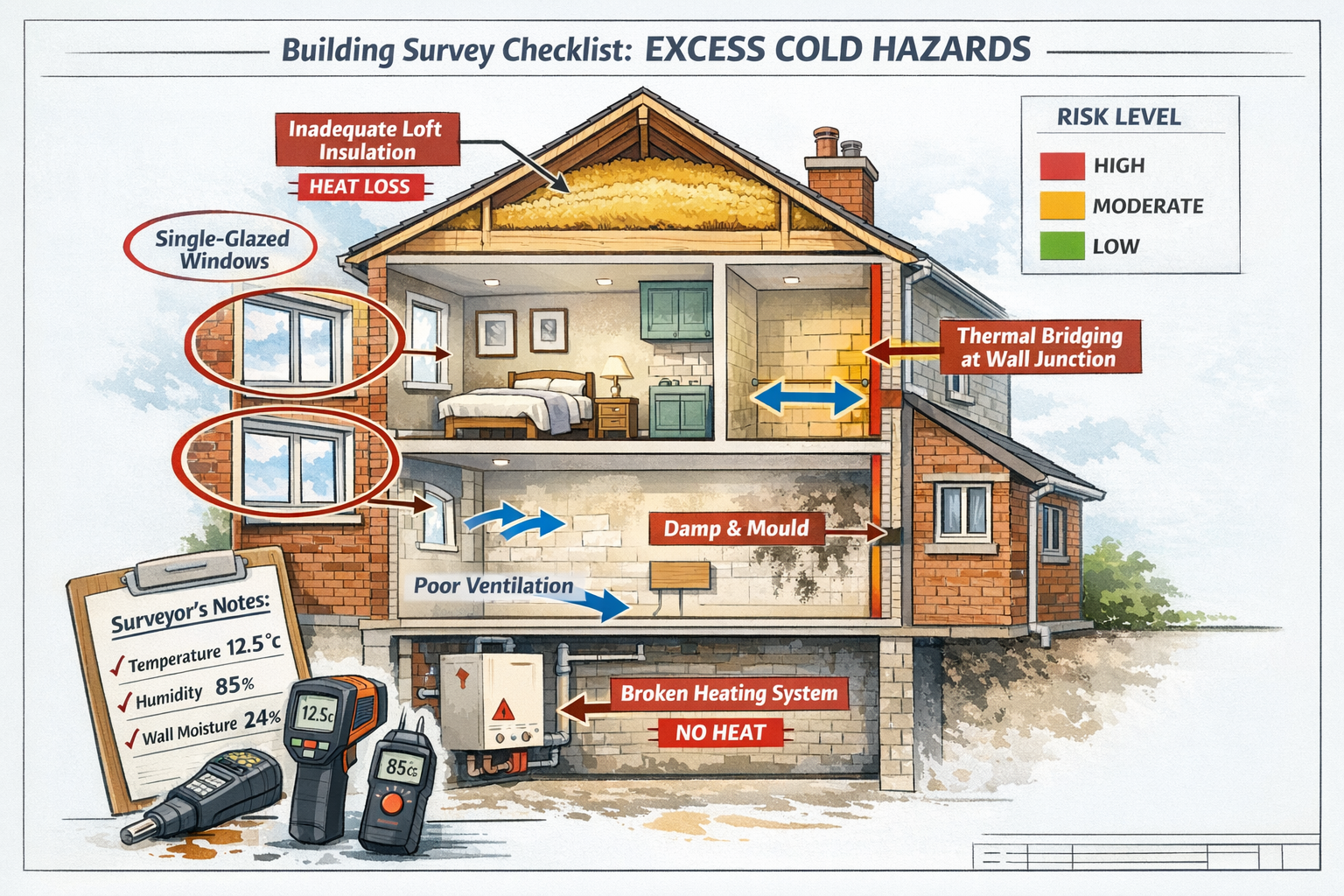
- Wall insulation: Cavity wall fill status, solid wall insulation presence, thermal bridging at junctions
- Roof insulation: Loft insulation depth (minimum 270mm current standard), condition, and coverage
- Glazing performance: Single vs. double glazing, frame condition, draught sealing
- Floor insulation: Ground floor construction type and insulation provision
- Air tightness: Draught identification around windows, doors, service penetrations, and loft hatches
Professional building surveyor services should document thermal envelope deficiencies with photographic evidence and location-specific notes that support remediation prioritization.
3. Thermal Imaging and Diagnostic Technology 📷
Infrared thermography provides objective evidence of heat loss patterns invisible to visual inspection. Thermal imaging cameras reveal:
- Missing or compressed insulation areas
- Thermal bridging through structural elements
- Air leakage paths around openings
- Heating system distribution problems
- Hidden moisture that reduces insulation effectiveness
Surveyors conducting specific defect reports for excess cold hazards should include calibrated thermal images with temperature scales and interpretative annotations.
4. Ventilation Balance Evaluation 💨
Adequate ventilation prevents condensation and maintains air quality, but excessive ventilation increases heat loss. Surveyors must assess:
- Trickle vent provision and functionality
- Extractor fan operation in kitchens and bathrooms
- Background ventilation adequacy
- Evidence of occupant ventilation blocking (indicating cold discomfort)
- Mechanical ventilation with heat recovery (MVHR) systems where installed
The balance between preventing dampness and maintaining thermal comfort requires professional judgment based on building type, occupancy patterns, and local climate conditions.
Documentation Standards for Compliance Demonstration
Building Surveys for Excess Cold Hazards Under Awaab's Law 2026 Extensions: Protocols for Private Rented Sector Compliance demands rigorous documentation that withstands regulatory scrutiny. Survey reports should include:
✅ Executive Summary identifying excess cold hazards with severity ratings
✅ Room-by-room thermal assessment with temperature measurements where possible
✅ Photographic evidence of heating system components, insulation deficiencies, and thermal envelope defects
✅ Thermal imaging analysis with annotated interpretations
✅ Prioritized remediation recommendations with estimated costs and urgency ratings
✅ Compliance statement referencing HHSRS Category 1 hazard thresholds
✅ Follow-up inspection schedule for verification of remediation works
Reports should align with RICS standards for homebuyer reports and building surveys, adapting traditional formats to incorporate thermal hazard assessment sections.
Private Rented Sector Compliance Strategies for Landlords
Proactive Assessment Before Regulatory Enforcement
While detailed regulations for private sector implementation remain under consultation, landlords face significant advantages from commissioning surveys before enforcement mechanisms activate[3]. Proactive assessment strategies include:
Pre-Tenancy Thermal Audits
Before marketing rental properties, landlords should commission comprehensive surveys that identify excess cold risks. This approach:
- Prevents tenant complaints that trigger enforcement action
- Demonstrates due diligence in negligence claims
- Enables budgeting for necessary upgrades
- Supports accurate rental pricing reflecting property condition
- Creates baseline documentation for condition tracking
Portfolio Risk Stratification
Landlords managing multiple properties should prioritize survey resources based on risk factors:
High Priority Properties:
- Pre-1920 construction with solid walls
- Properties with single glazing
- Homes with aging heating systems (15+ years)
- Previous tenant complaints about cold or damp
- Properties occupied by vulnerable tenants
Medium Priority Properties:
- 1920-1980 construction with cavity walls
- Partial double glazing
- Mid-life heating systems (8-15 years)
- No recent thermal upgrades
Lower Priority Properties:
- Post-1990 construction with building regulation insulation
- Modern heating systems with thermostatic controls
- Recent thermal upgrades documented
- No complaint history
Remediation Prioritization and Cost Management
Survey findings require strategic remediation planning that balances compliance obligations with financial constraints. Recommended prioritization framework:
Tier 1: Immediate Action Required (Category 1 Hazards)
- Non-functional heating systems
- Dangerous electrical heating equipment
- Severe insulation deficiencies causing indoor temperatures below 16°C
- Estimated timeline: 14-28 days from identification
Tier 2: Urgent Remediation (High Category 2 Hazards)
- Undersized heating systems unable to maintain 18°C
- Single glazing in primary living spaces
- Missing or severely compressed loft insulation
- Estimated timeline: 3-6 months
Tier 3: Planned Improvements (Moderate Deficiencies)
- Heating system upgrades for efficiency
- Secondary glazing installation
- Enhanced insulation beyond minimum standards
- Estimated timeline: 6-12 months
Cost-effective remediation strategies include:
💷 Loft insulation top-up: £300-£500 (highest return on investment)
💷 Heating system servicing and optimization: £150-£300 annually
💷 Draught-proofing: £200-£400 for comprehensive treatment
💷 Secondary glazing: £300-£500 per window (alternative to full replacement)
💷 Cavity wall insulation: £500-£1,500 for typical property
💷 Boiler replacement: £2,000-£3,500 for modern condensing system
Integrating Surveys with Ongoing Property Management
Excess cold hazard management extends beyond initial compliance surveys. Effective landlords integrate thermal performance monitoring into routine property management:
- Annual heating system servicing with performance verification
- Periodic thermal imaging (every 3-5 years) to detect insulation degradation
- Tenant feedback systems for early identification of heating problems
- Energy Performance Certificate (EPC) alignment ensuring thermal survey findings support EPC improvement strategies
- Maintenance records documenting all heating and insulation interventions
Commercial building surveys for multi-unit residential properties require additional complexity, including communal heating system assessment and individual unit thermal performance variation analysis.
Surveyor Selection and Professional Standards
Qualifications and Expertise Requirements
Not all surveyors possess the specialized knowledge required for Building Surveys for Excess Cold Hazards Under Awaab's Law 2026 Extensions: Protocols for Private Rented Sector Compliance. Landlords should verify:
✓ RICS membership (MRICS or FRICS designation)
✓ HHSRS assessment training and practical experience
✓ Thermal imaging certification (Level 1 or Level 2 thermography qualification)
✓ Building physics knowledge including heat transfer, moisture dynamics, and ventilation principles
✓ Awaab's Law specific training on regulatory requirements and timeframes
✓ Professional indemnity insurance adequate for compliance advice
Surveyors offering structural surveys in London should demonstrate experience with the specific building types and construction methods prevalent in your portfolio.
Survey Scope Definition and Cost Considerations
Clear scope definition prevents misunderstandings about deliverables and costs. Landlords should request:
Standard Thermal Hazard Survey:
- Visual inspection of heating systems and thermal envelope
- Basic thermal imaging of key areas
- HHSRS assessment for excess cold
- Remediation recommendations with priority ratings
- Typical cost: £500-£800 for standard residential property
Comprehensive Building Survey with Thermal Assessment:
- Full structural survey including specific defect reporting
- Extensive thermal imaging of entire property
- Detailed heating system analysis including efficiency calculations
- Insulation depth measurements
- Ventilation performance assessment
- Typical cost: £800-£1,500 for standard residential property
Portfolio Thermal Audit:
- Standardized assessment across multiple properties
- Risk stratification and prioritization
- Aggregate remediation cost estimates
- Compliance timeline planning
- Typical cost: £400-£600 per property (economies of scale for 5+ properties)
Report Interpretation and Action Planning
Survey reports contain technical information requiring interpretation for effective action planning. Key report sections include:
Executive Summary: Prioritized list of excess cold hazards with urgency ratings
Detailed Findings: Room-by-room assessment with measurements and observations
Photographic Evidence: Visual documentation of defects and conditions
Thermal Imaging Analysis: Annotated infrared images with temperature data
Recommendations: Specific remediation measures with cost estimates
Compliance Assessment: Statement regarding HHSRS Category 1 hazard status
Landlords should schedule post-survey consultations with surveyors to clarify technical findings, discuss remediation options, and establish implementation timelines aligned with regulatory requirements.
Tenant Communication and Transparency
Disclosure Obligations and Risk Management
Awaab's Law emphasizes tenant safety and landlord accountability. Proactive communication strategies include:
📢 Pre-tenancy disclosure: Sharing survey findings and planned remediation timelines before lease signing
📢 Heating system guidance: Providing clear instructions for optimal heating system operation
📢 Maintenance reporting protocols: Establishing simple processes for tenants to report heating problems
📢 Remediation updates: Keeping tenants informed about scheduled improvement works
📢 Temperature monitoring support: Offering guidance on maintaining adequate indoor temperatures
Transparent communication demonstrates good faith compliance efforts and reduces complaint escalation risk.
Vulnerable Tenant Considerations
Properties housing vulnerable occupants require enhanced attention to excess cold hazards. Surveyors should flag properties occupied by:
- Families with young children (under 5 years)
- Elderly residents (over 65 years)
- Individuals with respiratory conditions
- Disabled occupants with limited mobility
- Residents with chronic health conditions
These properties warrant Tier 1 priority for remediation regardless of technical hazard severity ratings, as vulnerable occupants experience health impacts at higher temperatures than general populations.
Enforcement Mechanisms and Penalty Avoidance
Expected Private Sector Enforcement Framework
While specific regulations remain under consultation, enforcement mechanisms will likely mirror social housing provisions[2][3]. Expected elements include:
⚠️ Prescribed investigation timeframes: Landlords must assess reported hazards within specified periods (likely 14 days)
⚠️ Mandatory remediation deadlines: Confirmed hazards require resolution within defined timeframes (likely 7-28 days depending on severity)
⚠️ Financial penalties: Non-compliance fines potentially reaching £7,000 per breach
⚠️ Prohibition orders: Local authorities may prohibit property occupation until hazards resolve
⚠️ Rent repayment orders: Tenants may claim rent refunds for periods with unresolved hazards
⚠️ Criminal prosecution: Serious or persistent non-compliance may trigger criminal proceedings
Documentation Defense Strategies
Comprehensive survey documentation provides critical defense against enforcement action:
- Demonstrates proactive hazard identification before tenant complaints
- Establishes reasonable remediation timelines based on professional advice
- Documents good faith compliance efforts even if delays occur
- Provides technical evidence challenging tenant hazard claims
- Supports appeals against local authority enforcement notices
Landlords should maintain organized compliance files including:
- Original survey reports with date stamps
- Remediation work quotations and contracts
- Completion certificates and invoices
- Before-and-after photographic evidence
- Tenant communications regarding works
- Follow-up inspection reports
Future Regulatory Developments and Preparation
Anticipated Regulatory Evolution
The 2026 implementation represents the beginning of an evolving regulatory landscape. Anticipated developments include:
🔮 Stricter thermal performance standards aligned with net-zero carbon commitments
🔮 Mandatory periodic inspections requiring regular professional surveys
🔮 Enhanced EPC minimum standards linking thermal hazard compliance with energy efficiency ratings
🔮 Tenant right to request surveys enabling occupants to trigger professional assessments
🔮 Public compliance registers creating transparency around landlord performance
Landlords investing in comprehensive thermal improvements now position themselves advantageously for future regulatory tightening.
Integration with Broader Housing Quality Initiatives
Excess cold hazard compliance intersects with multiple regulatory frameworks:
- Minimum Energy Efficiency Standards (MEES): EPC rating requirements (currently minimum E, moving toward C)
- Decent Homes Standard: Broader quality benchmarks for social and private housing
- Housing Health and Safety Rating System (HHSRS): Category 1 and 2 hazard assessment methodology
- Building Safety Act provisions: Enhanced accountability for residential property safety
Strategic landlords commission surveys addressing all relevant frameworks simultaneously, maximizing assessment value and ensuring comprehensive compliance.
Conclusion
Building Surveys for Excess Cold Hazards Under Awaab's Law 2026 Extensions: Protocols for Private Rented Sector Compliance represents a fundamental shift in rental property management obligations. The expansion of Awaab's Law to encompass thermal hazards alongside damp, mould, and other health risks creates both compliance challenges and opportunities for landlords committed to providing safe, comfortable housing.
Professional building surveys adapted to identify excess cold hazards provide the foundation for effective compliance strategies. By integrating thermal imaging, heating system evaluation, and insulation assessment into comprehensive property inspections, landlords gain the documentation and insights necessary to prioritize remediation investments and demonstrate good faith compliance efforts.
The regulatory landscape continues evolving, with private sector implementation details awaiting final consultation outcomes. However, proactive landlords who commission thorough surveys now position themselves to meet emerging requirements efficiently while protecting tenant welfare and minimizing enforcement risk.
Actionable Next Steps
✅ Commission a comprehensive building survey from a RICS-qualified surveyor with thermal imaging capabilities and HHSRS assessment experience
✅ Prioritize properties housing vulnerable tenants or exhibiting high-risk characteristics for immediate assessment
✅ Develop a remediation timeline addressing Category 1 hazards within 28 days and planning longer-term improvements
✅ Establish documentation systems maintaining organized records of surveys, remediation works, and tenant communications
✅ Monitor regulatory developments through professional associations and legal advisors to ensure ongoing compliance
✅ Integrate thermal performance into routine property maintenance schedules with annual heating system servicing and periodic thermal imaging
✅ Engage tenants proactively with clear communication about heating system operation, maintenance reporting, and planned improvements
The tragic circumstances that inspired Awaab's Law demand that the rental sector elevate standards systematically. Professional surveys provide the diagnostic foundation for this transformation, enabling landlords to identify and resolve excess cold hazards before they compromise tenant health. By embracing comprehensive assessment protocols aligned with emerging regulatory requirements, responsible landlords protect both their tenants and their business interests in an increasingly regulated market.
References
[1] Awaabs Law Timeline – https://www.glplaw.com/2026/01/23/awaabs-law-timeline/
[2] Awaabs Law A Letting Agents Guide – https://blog.goodlord.co/awaabs-law-a-letting-agents-guide
[3] Awaabs Law Private Landlords 2026 – https://www.idealresponse.co.uk/blog/awaabs-law-private-landlords-2026/
[4] Social Housing – https://theindependentlandlord.com/resources/property-investors-glossary/social-housing/
[5] Awaabs Law Uk Landlords – https://www.landlordstudio.com/uk-blog/awaabs-law-uk-landlords