The UK's buy-to-let sector faces its most significant regulatory transformation in decades: on May 1, 2026, every fixed-term Assured Shorthold Tenancy (AST) will automatically convert to an open-ended periodic tenancy, while landlords must simultaneously accommodate tenant pet requests unless they can demonstrate reasonable refusal grounds.[1][3] For property surveyors and landlords alike, this legislative shift demands entirely new assessment protocols to evaluate rental properties before these mandatory conversions take effect.
The Renters' Rights Act 2026: Building Survey Checklists for Pet-Friendly and Periodic Tenancy Conversions represents a critical framework for ensuring compliance with enhanced property standards while protecting landlord investments in this new regulatory landscape. With local authorities gaining strengthened investigatory powers from December 2025 and fines reaching £7,000 for non-compliance, professional building surveys have evolved from optional due diligence to essential risk management.[2][3]

Key Takeaways
- Automatic conversion mandate: All fixed-term ASTs convert to periodic tenancies on May 1, 2026, without requiring new agreements or landlord action
- Pet accommodation requirements: Tenants gain the right to request pets, with landlords having just 28 days to respond and unable to impose blanket bans[3]
- Enhanced property standards: Private rentals must meet the Decent Homes Standard, with potential £7,000 fines for non-compliance[2]
- Updated survey protocols: Building surveys must now assess pet-related durability, periodic tenancy implications, and compliance with strengthened habitability requirements
- Documentation obligations: Landlords face May 31, 2026 deadline to provide government information sheets to tenants, with financial penalties for failure[3]
Understanding the Renters' Rights Act 2026 Regulatory Framework
The legislative changes taking effect in 2026 fundamentally alter the landlord-tenant relationship in England. Unlike previous incremental adjustments to rental law, this comprehensive reform package eliminates the traditional fixed-term tenancy structure that has defined the private rental sector for decades.
Automatic Periodic Tenancy Conversions
Starting May 1, 2026, all existing fixed-term ASTs automatically become Assured Periodic Tenancies.[1] This conversion occurs without landlords needing to issue new agreements or obtain tenant consent. The implications for property assessment are substantial:
- Properties must maintain compliance standards indefinitely rather than for defined lease periods
- Wear-and-tear projections extend beyond typical 6-12 month fixed terms
- Exit flexibility for tenants (two months' notice) increases turnover unpredictability[4]
- Landlords lose the certainty of planned tenancy end dates for property upgrades
For professional building surveyor services, this means assessment criteria must account for longer-term structural integrity and maintenance requirements rather than short-term habitability.
Pet-Friendly Property Requirements
The Act introduces an implied right for tenants to request pets, fundamentally changing how rental properties must be evaluated.[3] Key provisions include:
🐾 Landlords cannot impose blanket pet bans across their property portfolios
🐾 28-day response window for landlords to approve or reasonably refuse pet requests
🐾 Reasonable grounds required for any refusal, with burden of proof on landlords
🐾 Pet insurance mandates permitted as a condition of approval to mitigate damage risks[3]
Tenancy clauses that categorically forbid pets become unenforceable unless supported by property-specific reasonable justifications.[2] This regulatory shift necessitates detailed pre-conversion surveys assessing pet suitability factors that were previously irrelevant to property valuations.
Decent Homes Standard Application
Previously applied exclusively to social housing since 2001, the Decent Homes Standard now extends to all private rental properties.[2] This standard requires properties to be:
- Safe and secure: Free from serious hazards under the Housing Health and Safety Rating System (HHSRS)
- In good repair: Structure, exterior, and installations maintained in reasonable condition
- Reasonably modern: Adequate heating, insulation, and facilities meeting contemporary expectations
- Well-maintained: Regular upkeep preventing deterioration
Local authorities possess enhanced enforcement powers, including the ability to issue fines up to £7,000 for properties failing to meet these standards.[2] The maximum claim period for Rent Repayment Orders has doubled to 24 months, significantly increasing financial liability for non-compliant landlords.[3]
Building Survey Checklists for Pet-Friendly Property Assessments
The Renters' Rights Act 2026: Building Survey Checklists for Pet-Friendly and Periodic Tenancy Conversions must incorporate entirely new assessment categories to evaluate properties for pet habitability and potential damage mitigation. Traditional structural surveys focused primarily on building integrity; updated protocols must balance structural concerns with pet-specific durability factors.
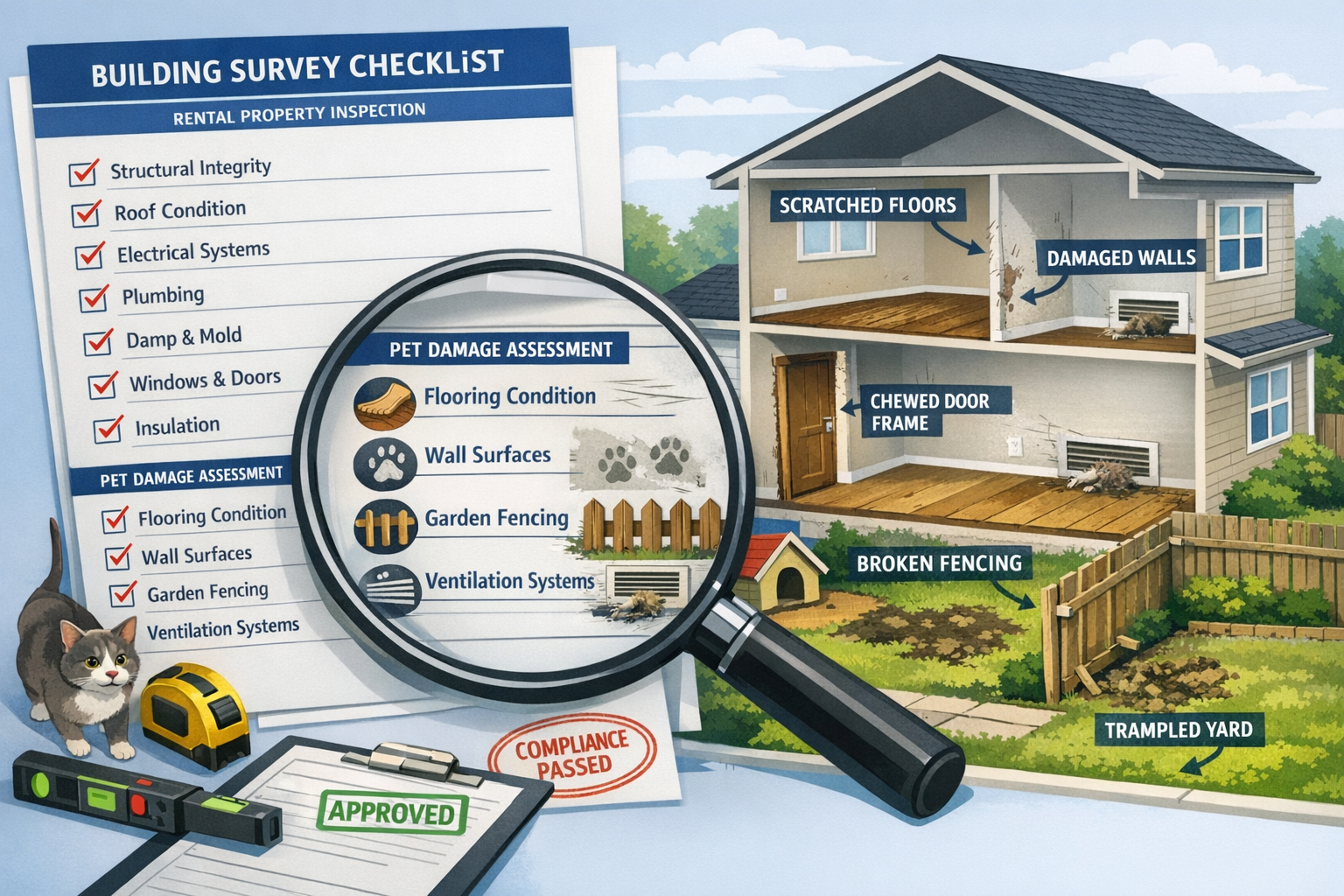
Flooring and Surface Durability Assessment
Flooring materials represent the primary concern for pet-related wear and damage. Survey checklists should evaluate:
| Flooring Type | Pet Suitability | Inspection Points | Replacement Cost Factor |
|---|---|---|---|
| Carpet | Low | Staining, odor absorption, claw snags | High (£15-40/m²) |
| Laminate | Medium | Scratch resistance, moisture damage at seams | Medium (£20-35/m²) |
| Vinyl/LVT | High | Waterproof integrity, scratch patterns | Low-Medium (£25-50/m²) |
| Hardwood | Medium-High | Surface finish condition, scratch depth | High (£40-100/m²) |
| Tile | Very High | Grout condition, crack assessment | Medium (£30-60/m²) |
Wall surfaces require similar scrutiny, particularly at lower elevations where scratching and marking commonly occur. Surveyors should document:
- Paint condition and washability rating
- Wallpaper durability and replacement complexity
- Skirting board material and damage resistance
- Door frame and architrave condition
- Corner protection presence and effectiveness
Garden and Outdoor Space Evaluation
Properties with gardens or outdoor access require comprehensive boundary and surface assessments:
✅ Fencing integrity: Height, material durability, gap sizes preventing escape
✅ Gate security: Latch mechanisms, self-closing functionality, lock condition
✅ Ground surface: Lawn condition, paving stability, drainage adequacy
✅ Toxic plant identification: Presence of pet-hazardous vegetation requiring removal
✅ Waste management: Appropriate disposal facilities and accessibility
For properties without private outdoor space, surveyors should note proximity to public parks and designated pet areas, as this affects property desirability for pet-owning tenants.
Ventilation and Odor Control Systems
Adequate ventilation becomes critical in pet-friendly properties to prevent odor accumulation and maintain air quality. Assessment should include:
- Mechanical ventilation system capacity and condition
- Natural ventilation adequacy (window placement, trickle vents)
- Extraction fan functionality in kitchens and bathrooms
- Air circulation pathways throughout property
- Evidence of existing odor issues or moisture problems
Properties with poor ventilation may require upgrades before being suitable for pet-accommodating tenancies, particularly in smaller flats or conversions with limited natural airflow.
Pet-Specific Hazard Identification
Beyond general property condition, surveys must identify pet safety hazards that could create liability concerns:
🚨 Balcony and elevated area safety: Railing gaps, fall risks
🚨 Window security: Opening restrictors preventing escape or falls
🚨 Electrical hazard exposure: Low-level outlets, exposed wiring
🚨 Sharp edges and protrusions: Injury risks at pet height levels
🚨 Small spaces and entrapment risks: Gaps behind appliances, under decking
These assessments protect both tenant pets and landlord liability, creating documentation of pre-existing conditions before pet occupation begins. Professional schedule of condition reports provide essential baseline evidence for future dispute resolution.
Periodic Tenancy Conversion Compliance Checklists
The shift from fixed-term to periodic tenancies fundamentally changes how properties must be assessed for long-term compliance and maintenance planning. The Renters' Rights Act 2026: Building Survey Checklists for Pet-Friendly and Periodic Tenancy Conversions must address the unique challenges of open-ended tenancy arrangements.
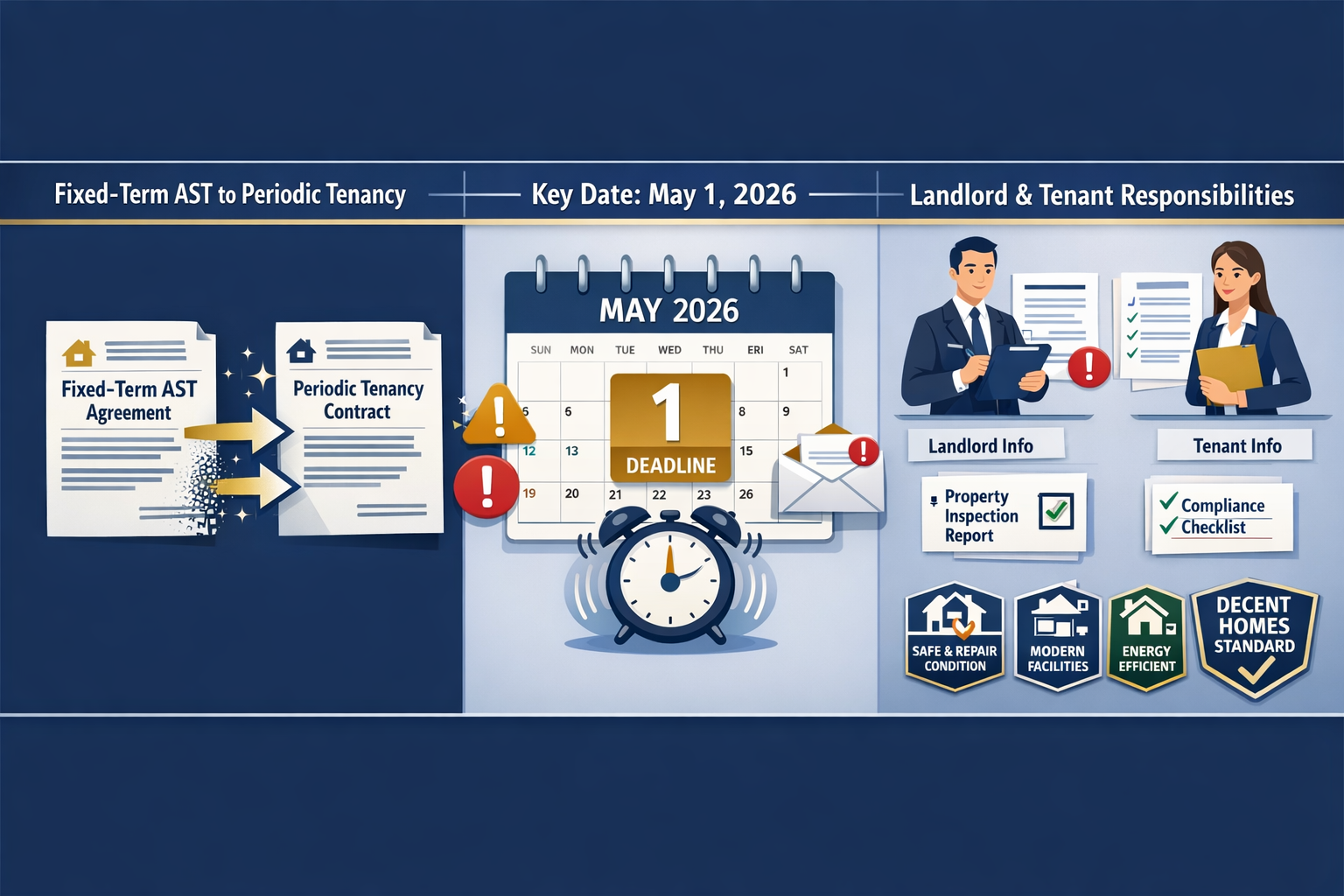
Decent Homes Standard Compliance Verification
With properties now subject to indefinite periodic tenancies, compliance with the Decent Homes Standard becomes an ongoing obligation rather than a pre-tenancy checkpoint. Comprehensive surveys should verify:
Category A: Freedom from Serious Hazards
- Complete HHSRS assessment identifying Category 1 and 2 hazards
- Electrical safety certification (current within 5 years)
- Gas safety certification (annual inspection current)
- Fire safety compliance including working smoke and CO detectors
- Structural stability and absence of dangerous defects
Category B: Reasonable State of Repair
- External elements: roof covering, rainwater goods, external walls, windows, doors
- Internal elements: walls, floors, ceilings, stairs, doors, skirting
- Heating and hot water systems functionality and efficiency
- Kitchen and bathroom facilities condition and operation
- Drainage and waste systems proper functioning
Category C: Modern Facilities and Services
- Adequate heating system (capable of maintaining 21°C in living areas, 18°C in bedrooms)
- Effective insulation meeting current standards
- Modern kitchen with adequate food preparation and storage
- Bathroom with bath or shower, wash basin, and toilet
- Adequate natural and artificial lighting throughout
Properties failing any element of the Decent Homes Standard face potential enforcement action and fines up to £7,000.[2] For landlords with multiple properties across regions like Richmond, Guildford, or Kingston, systematic surveying across portfolios becomes essential.
Long-Term Maintenance Projection
Unlike fixed-term tenancies with defined end dates for major works, periodic tenancies require continuous habitability. Survey reports should include:
Immediate Actions (0-6 months)
- Safety-critical repairs requiring urgent attention
- Compliance failures risking enforcement action
- Essential maintenance preventing property deterioration
Short-Term Planning (6-24 months)
- Component replacements approaching end of service life
- Preventative maintenance preventing future failures
- Efficiency upgrades reducing operational costs
Long-Term Strategy (2-5 years)
- Major system replacements (boilers, windows, roofing)
- Structural works and significant refurbishments
- Energy efficiency improvements and modernization
This projection framework allows landlords to budget appropriately and avoid unexpected compliance failures during ongoing tenancies.
Documentation and Information Sheet Requirements
By May 31, 2026, landlords must provide all tenants with the official government-produced information sheet explaining the Renters' Rights Act changes.[3] Non-compliance carries fines up to £7,000. Survey reports should therefore include:
- Confirmation of information sheet provision to tenants
- Documentation of tenant acknowledgment and receipt
- Record of landlord compliance with 28-day pet request response timeframes
- Evidence of reasonable grounds for any pet refusals
- Pet insurance verification where pets are approved
Professional surveyors can assist landlords by creating comprehensive documentation packages that demonstrate regulatory compliance and protect against future disputes or enforcement actions.
Tenant Exit Flexibility Considerations
Tenants in periodic tenancies can terminate with two months' notice, creating potential for increased turnover and vacancy periods.[4] Survey assessments should consider:
- Property presentation standards: Condition required to attract replacement tenants quickly
- Market competitiveness: Features and amenities meeting current renter expectations
- Maintenance backlog impact: Deferred works affecting marketability
- Pet-related modifications: Enhancements increasing appeal to pet-owning demographic
Properties requiring significant work between tenancies face extended void periods, directly impacting landlord returns. Proactive maintenance based on comprehensive survey recommendations minimizes this risk.
Implementing Survey Protocols for 2026 Compliance
Professional implementation of Renters' Rights Act 2026: Building Survey Checklists for Pet-Friendly and Periodic Tenancy Conversions requires systematic approaches tailored to property types and landlord portfolios.
Selecting Appropriate Survey Levels
Different properties require varying survey intensities based on age, condition, and complexity. Landlords should consider:
Basic Condition Assessments (suitable for modern properties in good condition)
- Visual inspection of key elements
- Compliance verification for Decent Homes Standard
- Pet suitability evaluation
- Estimated maintenance timeline
Intermediate Building Surveys (appropriate for most rental properties)
- Detailed inspection of structure and systems
- Comprehensive defect identification
- Pet-specific durability assessment
- Maintenance cost projections
- Compliance gap analysis
Full Structural Surveys (essential for older or complex properties)
- Complete structural integrity evaluation
- Hidden defect investigation
- Specialist reports (electrical, drainage, damp)
- Detailed repair specifications and costings
- Long-term maintenance strategy
For guidance on selecting appropriate survey types, landlords can review comparisons between homebuyer reports and building surveys to understand scope differences.
Regional Compliance Variations
While the Renters' Rights Act applies across England, local authority enforcement approaches and property market conditions vary significantly. Landlords operating across multiple regions should ensure surveys account for:
- Local authority enforcement priorities and inspection frequency
- Regional property market standards and tenant expectations
- Climate-specific considerations (coastal properties, flood risk areas)
- Local planning restrictions affecting modifications
Professional surveyors operating across areas like West London, South West London, and surrounding counties provide valuable local expertise for compliance navigation.
Cost-Benefit Analysis of Proactive Surveys
Investment in comprehensive pre-conversion surveys generates measurable returns through:
Risk Mitigation
- £7,000 fine avoidance for Decent Homes Standard failures[2]
- Up to 24 months rent repayment order prevention[3]
- Reduced liability for tenant injury or property damage claims
- Protection against enforcement action and prosecution
Financial Optimization
- Planned maintenance reducing emergency repair costs
- Energy efficiency improvements lowering operational expenses
- Pet-friendly enhancements increasing tenant pool and rental values
- Reduced void periods through maintained property presentation
Strategic Planning
- Informed decisions on property retention versus disposal
- Accurate budgeting for compliance upgrades
- Portfolio optimization based on compliance costs
- Exit strategy development for non-viable properties
For landlords considering portfolio restructuring, professional property valuation services provide essential data for investment decisions.
Engaging Professional Survey Services
The complexity of Renters' Rights Act 2026: Building Survey Checklists for Pet-Friendly and Periodic Tenancy Conversions typically exceeds landlord expertise, making professional surveyor engagement essential. Selection criteria should include:
✅ RICS qualification and registration: Ensuring professional standards and insurance
✅ Rental sector experience: Understanding landlord-specific concerns and compliance requirements
✅ Local market knowledge: Familiarity with regional property characteristics and authority approaches
✅ Comprehensive reporting: Clear, actionable recommendations with cost projections
✅ Specialist expertise: Access to electrical, structural, and damp specialists as needed
Chartered surveyors provide independent, professional assessments that satisfy regulatory requirements while protecting landlord interests. Their reports serve as credible evidence in any future disputes or enforcement proceedings.
Strategic Considerations for Landlords and Property Investors
Beyond immediate compliance requirements, the Renters' Rights Act 2026: Building Survey Checklists for Pet-Friendly and Periodic Tenancy Conversions framework should inform broader investment strategy and portfolio management decisions.
Property Suitability Assessment
Not all rental properties adapt equally well to the new regulatory environment. Strategic evaluation should consider:
High-Suitability Properties
- Modern construction with durable finishes
- Good natural ventilation and outdoor space
- Low-maintenance systems and materials
- Strong local rental demand
Moderate-Suitability Properties
- Older properties requiring compliance upgrades
- Limited outdoor space but good local amenities
- Some maintenance backlog requiring investment
- Adequate but not exceptional condition
Low-Suitability Properties
- Significant compliance gaps requiring major investment
- Poor pet suitability (carpeted flats without outdoor access)
- High maintenance burden and aging systems
- Weak rental demand or market saturation
Properties in the low-suitability category may warrant disposal rather than compliance investment, particularly where upgrade costs exceed property value appreciation potential.
Pet-Friendly Marketing Advantages
Rather than viewing pet accommodation as a regulatory burden, strategic landlords can leverage pet-friendly properties as competitive advantages:
🏆 Expanded tenant pool: Approximately 50% of UK households own pets, representing substantial demand
🏆 Premium pricing potential: Pet-friendly properties command rental premiums in many markets
🏆 Longer tenancies: Pet-owning tenants demonstrate lower mobility and longer tenure
🏆 Reduced vacancy rates: Limited pet-friendly supply creates strong demand
Properties specifically designed or upgraded for pet accommodation—with durable flooring, secure gardens, and adequate ventilation—can differentiate themselves in competitive rental markets.
Portfolio Optimization Strategies
For landlords with multiple properties, systematic survey implementation enables data-driven portfolio optimization:
- Compliance prioritization: Address highest-risk properties first to minimize enforcement exposure
- Investment allocation: Concentrate upgrade spending on highest-return properties
- Disposal targeting: Exit properties with unfavorable compliance cost-to-value ratios
- Acquisition criteria: Focus new purchases on naturally compliant properties
- Maintenance scheduling: Coordinate works across portfolio for efficiency and cost savings
Professional survey reports provide the objective data foundation for these strategic decisions, replacing intuition-based management with evidence-based optimization.
Conclusion
The Renters' Rights Act 2026: Building Survey Checklists for Pet-Friendly and Periodic Tenancy Conversions represents far more than a compliance exercise—it constitutes a fundamental reimagining of rental property assessment protocols for a transformed regulatory landscape. With automatic periodic tenancy conversions taking effect May 1, 2026, and pet accommodation requirements already in force, landlords face immediate pressure to evaluate properties against entirely new criteria.
Professional building surveys incorporating pet-specific durability assessments, Decent Homes Standard compliance verification, and long-term maintenance projections have evolved from optional due diligence to essential risk management tools. The financial stakes—including £7,000 fines for non-compliance and 24-month rent repayment order exposure—make proactive survey investment a clear cost-benefit winner for responsible landlords.
Actionable Next Steps
For landlords preparing for May 2026 conversions:
- Commission comprehensive surveys of all rental properties before May 1, 2026 deadline
- Prioritize compliance gaps identified in survey reports, addressing safety-critical items first
- Document pet accommodation decisions with clear reasonable grounds for any refusals
- Prepare tenant information sheets for distribution by May 31, 2026 deadline
- Develop long-term maintenance plans based on survey recommendations and cost projections
- Review portfolio strategy considering disposal of properties with unfavorable compliance economics
For property investors evaluating acquisitions:
- Require pre-purchase surveys specifically addressing Renters' Rights Act compliance
- Factor compliance upgrade costs into purchase price negotiations and investment returns
- Prioritize naturally compliant properties with durable finishes and good maintenance
- Consider pet-friendly features as value-adding differentiators in competitive markets
The regulatory transformation taking effect in 2026 challenges traditional landlord practices while creating opportunities for strategic operators who embrace professional assessment protocols and proactive compliance management. Engaging qualified chartered surveyors with rental sector expertise ensures properties meet new standards while protecting landlord investments in this evolving landscape.
References
[1] Renters Rights Bill Landmark Reforms To Put An End To No Fault Evictions – https://moneyweek.com/investments/buy-to-let/renters-rights-bill-landmark-reforms-to-put-an-end-to-no-fault-evictions
[2] The Renters Rights Act What S Changing What It Means For Landlords And How To Mitigate Risks – https://www.kennedyslaw.com/en/thought-leadership/article/2026/the-renters-rights-act-what-s-changing-what-it-means-for-landlords-and-how-to-mitigate-risks/
[3] Renters Rights Act Everything Guide – https://www.crownluxuryhomes.com/renters-rights-act-everything-guide/
[4] Landlords 2026 – https://theindependentlandlord.com/landlords-2026/