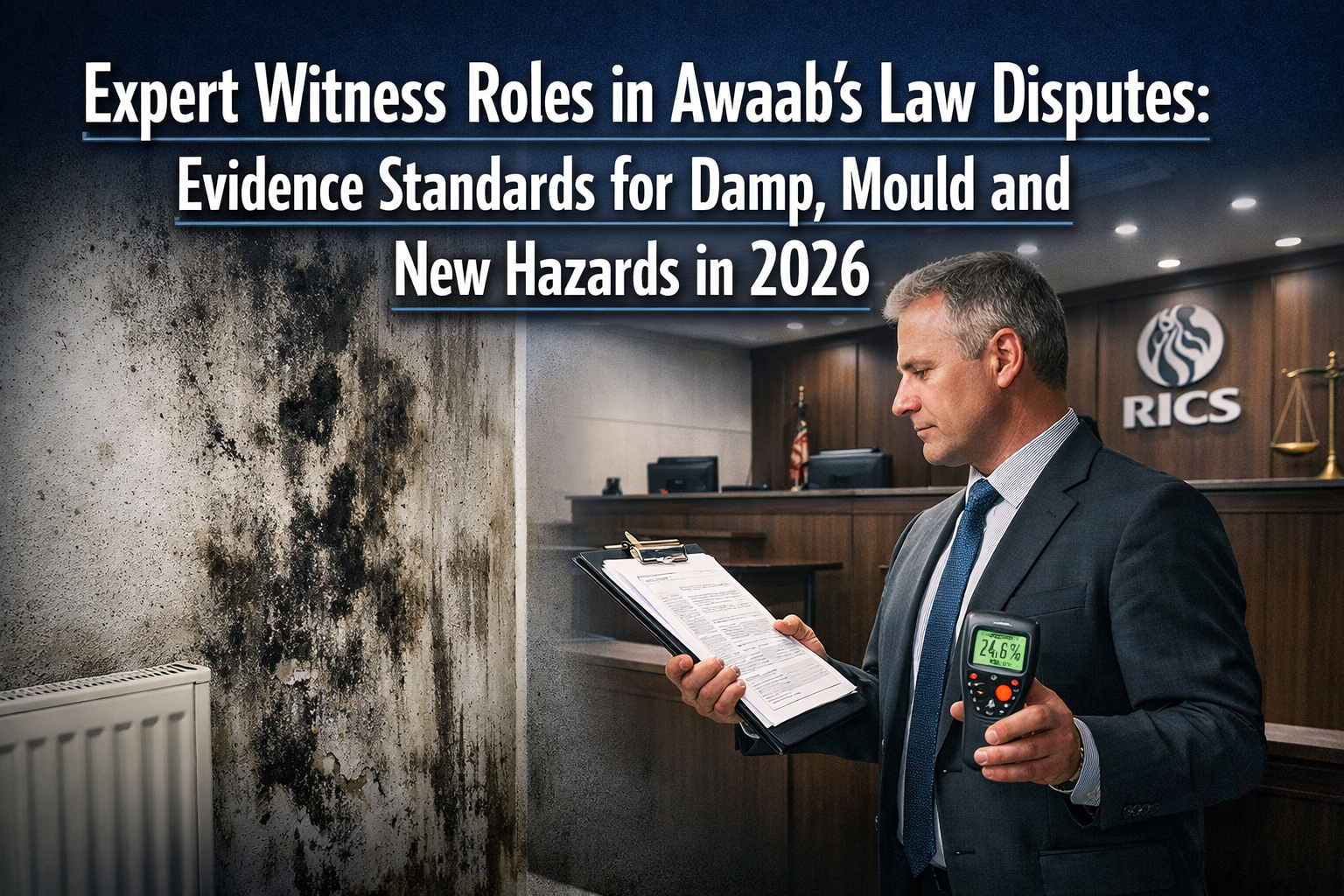

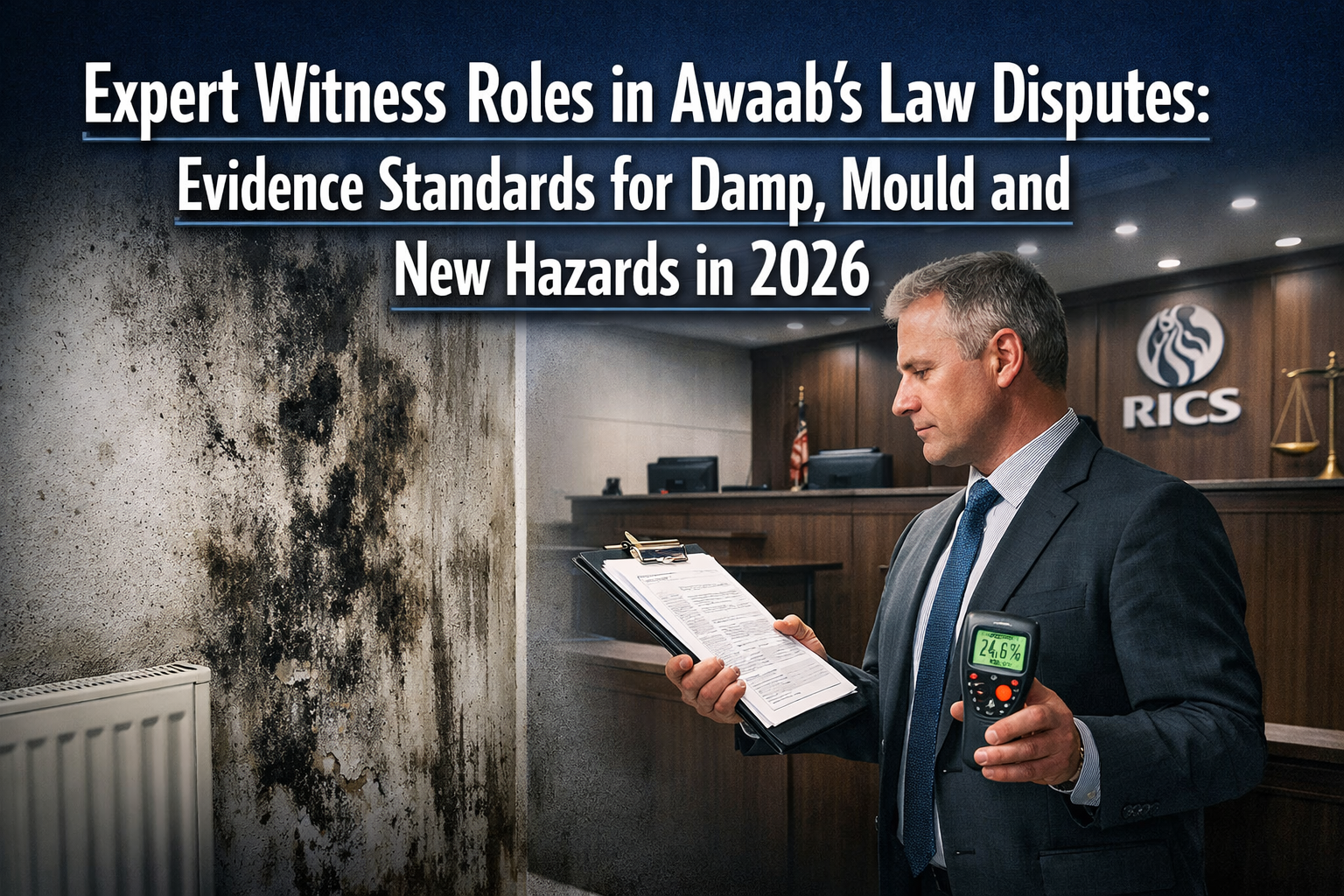
Following the tragic death of two-year-old Awaab Ishak from prolonged mould exposure in 2020, the subsequent legislation bearing his name has fundamentally transformed how social housing landlords must respond to hazardous living conditions. Since October 2025, when Awaab's Law became effective, expert witnesses have faced unprecedented scrutiny in housing disputes as landlords defend themselves against ombudsman investigations and tribunal claims.[2] The legislation's strict timelines and expanded hazard definitions have created a complex evidentiary landscape where Expert Witness Roles in Awaab's Law Disputes: Evidence Standards for Damp, Mould and New Hazards in 2026 have become critical to case outcomes.
Key Takeaways
- Awaab's Law mandates fixed repair deadlines for health hazards including damp and mould, with landlords facing regulatory action for non-compliance since October 2025
- Expert witnesses must hold RICS accreditation and demonstrate specialized knowledge in building pathology, moisture investigation, and health impact assessment under CPR Part 35 standards
- Evidence reports require comprehensive documentation including property condition assessments, hazard identification, health risk analysis, and remedial specifications following Pre-Action Protocol requirements
- New hazard categories beyond traditional damp now include emerging risks such as indoor air quality issues, ventilation deficiencies, and climate-related moisture problems
- Tribunal and ombudsman cases demand rigorous defence strategies with expert testimony that withstands cross-examination and regulatory scrutiny
Understanding Awaab's Law and Its Impact on Housing Disputes
The Social Housing (Regulation) Bill, commonly known as Awaab's Law, represents the most significant shift in landlord obligations regarding property hazards in decades.[1] Unlike previous reactive approaches, this legislation imposes strict statutory duties on social housing providers to investigate and remedy hazards within prescribed timeframes.
Legislative Framework and Timeline Requirements
Awaab's Law establishes clear deadlines that landlords must meet:
- Emergency hazards: 24 hours for initial response
- Serious hazards (including extensive damp and mould): 7 days for assessment, 14 days for remediation commencement
- Non-urgent hazards: 14 days for assessment, 28 days for repair completion
These timelines have created numerous dispute scenarios where landlords contest hazard classifications, challenge tenant claims about notification dates, or dispute whether conditions genuinely constitute health risks. Expert witnesses have become essential in these construction disputes to provide objective evidence about property conditions and appropriate remedial actions.
Expansion Beyond Traditional Damp and Mould
While damp and mould cases initially drove the legislation, 2026 has seen significant expansion into new hazard categories:
🏠 Ventilation inadequacy leading to condensation issues
🌡️ Thermal bridging creating cold spots and moisture accumulation
💨 Indoor air quality concerns from volatile organic compounds
🔧 Mechanical ventilation failures in modern airtight properties
🌧️ Climate-related moisture ingress from increased rainfall intensity
This broader scope means expert witnesses must possess multidisciplinary knowledge extending beyond traditional building surveying into environmental health, mechanical systems, and emerging building science.[3]
Expert Witness Qualifications for Awaab's Law Cases
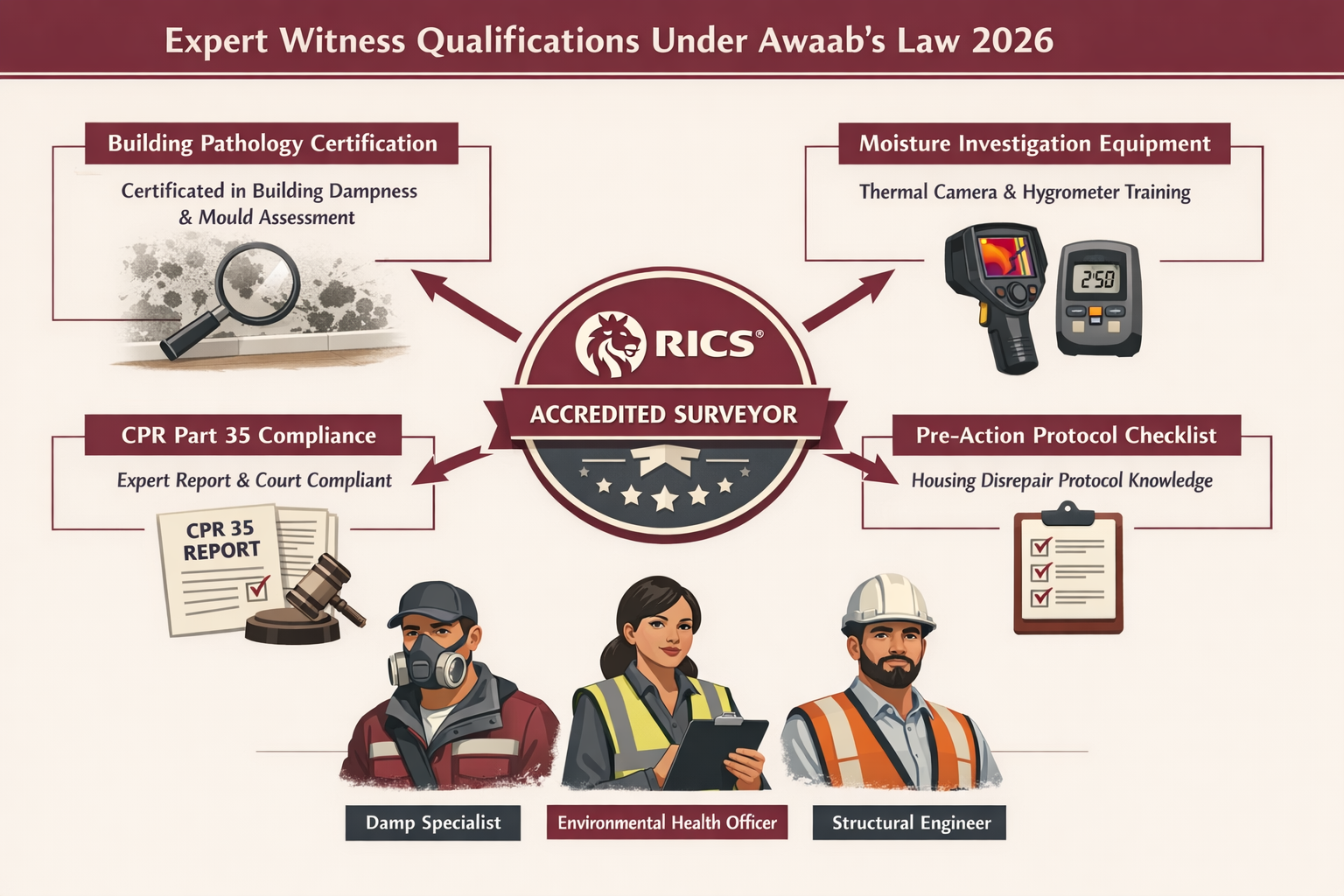
The complexity of Expert Witness Roles in Awaab's Law Disputes: Evidence Standards for Damp, Mould and New Hazards in 2026 demands rigorous professional qualifications. Courts and tribunals increasingly scrutinize expert credentials, with unqualified or inadequately experienced witnesses facing challenges to their testimony admissibility.
RICS Accreditation and Specialist Knowledge
Royal Institution of Chartered Surveyors (RICS) membership forms the foundation for expert witness credibility in housing disrepair cases. However, general surveying qualifications alone prove insufficient.[2] Effective expert witnesses must demonstrate:
| Qualification Area | Required Evidence | Relevance to Awaab's Law |
|---|---|---|
| Building Pathology | RICS Building Surveying pathway with damp investigation specialization | Essential for identifying moisture sources and deterioration mechanisms |
| Moisture Investigation | Certified training in thermal imaging, moisture meters, and hygroscopy testing | Critical for objective hazard measurement and documentation |
| Health Impact Assessment | Understanding of respiratory conditions, allergen exposure, and vulnerable populations | Required for establishing causation between conditions and health effects |
| Remedial Specification | Experience designing and costing repair solutions | Necessary for tribunal compensation calculations |
| CPR Part 35 Compliance | Expert witness training and court experience | Mandatory for admissibility in legal proceedings |
Residential structural engineers with additional building pathology credentials often serve as expert witnesses when structural defects contribute to moisture problems, such as failed damp-proof courses or inadequate drainage systems.
Multidisciplinary Expertise Requirements
Housing disrepair expert witnesses increasingly collaborate across disciplines.[1] A comprehensive Awaab's Law case might require:
- Building surveyors to assess property condition and defects
- Environmental health officers to evaluate health hazards and statutory nuisance
- Medical professionals to establish health impacts and causation
- Mechanical engineers to assess ventilation system adequacy
- Social workers to document vulnerable tenant circumstances
This collaborative approach ensures that Expert Witness Roles in Awaab's Law Disputes: Evidence Standards for Damp, Mould and New Hazards in 2026 address both technical property issues and human impact dimensions that tribunals consider when determining landlord liability.
Continuing Professional Development in Evolving Standards
The regulatory landscape continues evolving, with RICS members required to maintain awareness of legislative changes.[2] Expert witnesses must demonstrate current knowledge through:
✅ Annual CPD hours focused on housing legislation updates
✅ Participation in RICS housing disrepair working groups
✅ Familiarity with Housing Ombudsman Service determinations
✅ Understanding of local authority enforcement approaches
✅ Knowledge of emerging building science research on moisture and mould
Witnesses who cannot demonstrate recent, relevant CPD face credibility challenges during cross-examination, particularly when opposing counsel questions whether their knowledge reflects current 2026 standards rather than outdated practices.
Evidence Standards and Report Requirements Under CPR Part 35
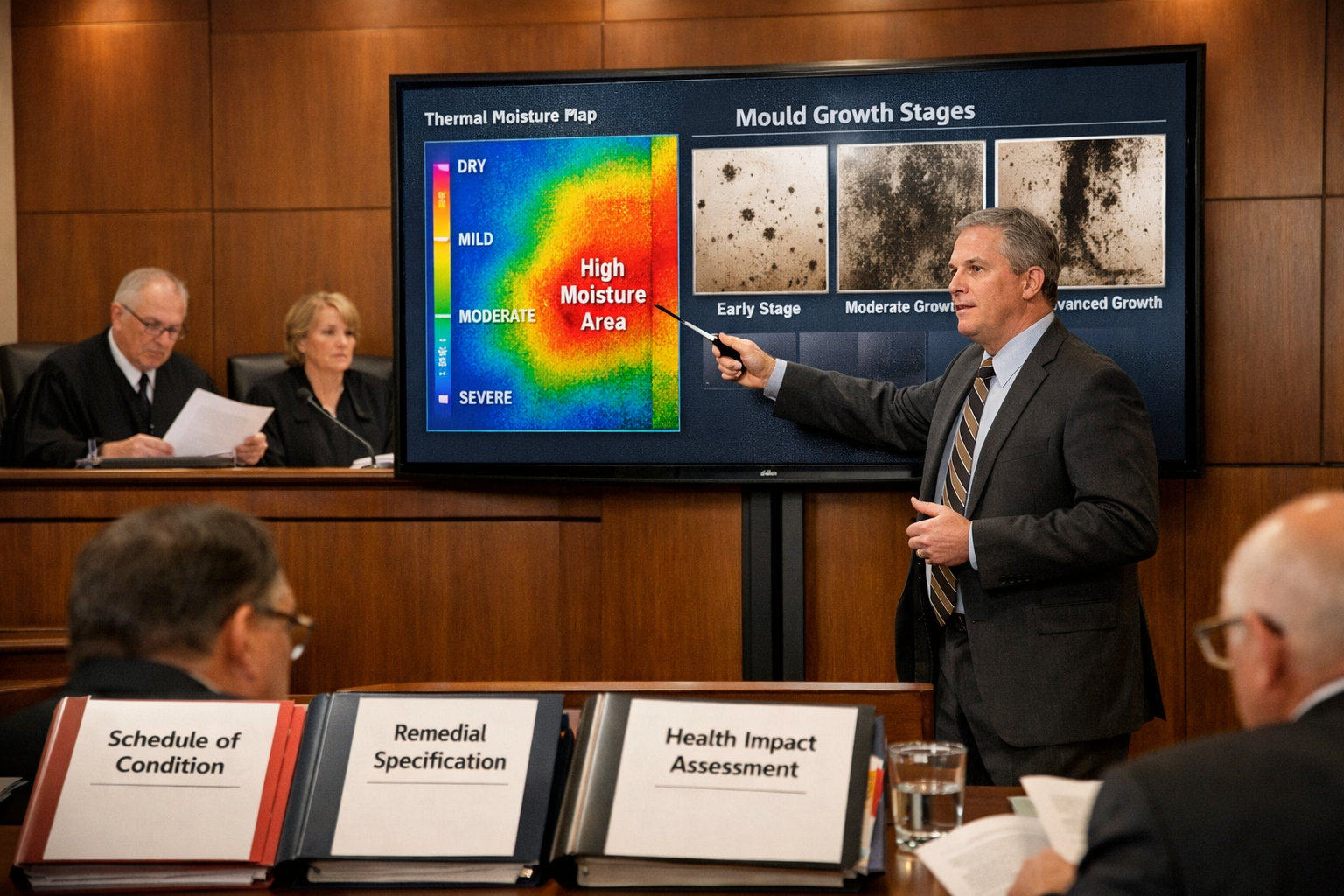
The Civil Procedure Rules Part 35 establishes strict requirements for expert evidence admissibility in civil proceedings. Combined with the Pre-Action Protocol for Housing Conditions Claims, these standards define how Expert Witness Roles in Awaab's Law Disputes: Evidence Standards for Damp, Mould and New Hazards in 2026 must be documented and presented.
Mandatory Report Components
A compliant expert witness report for Awaab's Law disputes must include:[1]
1. Property Condition Assessment
- Comprehensive description of the property type, age, construction, and current state
- Photographic evidence with date stamps and location references
- Floor plans annotating affected areas
- Historical context from previous inspection reports or tenant communications
2. Hazard Identification and Measurement
- Objective measurements using calibrated equipment (moisture meters, thermal imaging, air quality monitors)
- Classification of hazards according to Housing Health and Safety Rating System (HHSRS)
- Comparison against statutory standards and building regulations
- Identification of primary causes versus secondary effects
3. Health Impact Analysis
- Assessment of potential health risks to occupants
- Consideration of vulnerable populations (children, elderly, immunocompromised individuals)
- Reference to medical evidence or epidemiological research
- Causation analysis linking property conditions to reported health issues
4. Remedial Specification and Costings
- Detailed description of necessary repairs to eliminate hazards
- Prioritization of works according to urgency and effectiveness
- Cost estimates from current market rates
- Timeline projections for completion
- Alternative approaches where multiple solutions exist
5. Landlord Compliance Assessment
- Analysis of whether landlord met Awaab's Law timeline requirements
- Evaluation of landlord's investigation and response adequacy
- Opinion on whether repairs proposed by landlord would effectively resolve hazards
- Assessment of temporary measures implemented pending permanent repairs
Similar to how party wall disputes require detailed schedules of condition, housing disrepair cases demand meticulous documentation of pre-existing conditions versus new defects attributable to landlord failures.
Objectivity and Independence Requirements
CPR Part 35 emphasizes that expert witnesses owe their primary duty to the tribunal or court, not to the party instructing them. This independence principle requires:
🔍 Transparent methodology – All testing procedures, equipment specifications, and analytical approaches must be disclosed
⚖️ Balanced conclusions – Reports must acknowledge limitations, uncertainties, and alternative interpretations
📋 Complete disclosure – Any facts or evidence contradicting the expert's opinion must be included
🤝 Professional courtesy – Experts must engage constructively with opposing experts and identify areas of agreement
Expert witnesses who appear to advocate for their instructing party rather than provide objective analysis face devastating credibility damage during cross-examination. Tribunals in 2026 increasingly appoint single joint experts in straightforward cases to eliminate partisan bias concerns.
Pre-Action Protocol Compliance
Before proceedings commence, the Pre-Action Protocol for Housing Conditions Claims requires specific steps:[1]
- Letter of claim from tenant detailing alleged disrepair and health impacts
- Landlord inspection within 20 working days
- Landlord response within 20 working days of inspection, proposing remedial works
- Expert report exchange if parties cannot resolve the dispute
- Alternative dispute resolution attempts before litigation
Expert witnesses often become involved at stage 3 or 4, providing reports that either support settlement negotiations or form the foundation for tribunal claims. Understanding this procedural context helps experts frame their findings appropriately for the dispute stage.
Hazard-Specific Evidence Standards in 2026
Different hazard types require distinct investigative approaches and evidence standards. Expert Witness Roles in Awaab's Law Disputes: Evidence Standards for Damp, Mould and New Hazards in 2026 must adapt methodology to the specific defect being assessed.
Damp and Mould: The Core Awaab's Law Concern
Damp and mould cases remain the most common Awaab's Law disputes. Expert evidence must establish:
Moisture Source Identification
- Rising damp from failed damp-proof course (DPC)
- Penetrating damp from external defects (roof leaks, failed pointing, inadequate drainage)
- Condensation from inadequate ventilation or heating
- Plumbing leaks from internal pipework failures
Each source requires different investigative techniques. Moisture meter readings alone prove insufficient—experts must use thermal imaging to identify temperature differentials indicating moisture pathways, hygrometers to measure relative humidity levels, and calcium carbide testing for precise moisture content quantification in building materials.
Mould Species and Health Risk Assessment
Not all mould presents equal health risks. Expert witnesses should ideally arrange mycological analysis to identify specific species present, particularly distinguishing between:
- Aspergillus species (potentially producing mycotoxins)
- Stachybotrys chartarum (the notorious "black mould" associated with severe health effects)
- Penicillium species (common but generally less hazardous)
- Cladosporium species (typically indicating condensation issues)
This scientific approach strengthens causation arguments when tenants claim specific health impacts from mould exposure, similar to how specific defect reports provide targeted analysis of particular building problems.
Structural Hazards Contributing to Moisture Problems
Many Awaab's Law cases involve structural defects that create or exacerbate moisture issues:
Foundation and Drainage Defects
- Inadequate subfloor ventilation in suspended timber floors
- Failed land drainage causing ground moisture accumulation
- Bridged cavity walls allowing moisture penetration
- Inadequate external ground levels relative to DPC
Roof and Envelope Failures
- Deteriorated roof coverings allowing water ingress
- Failed flashing at junctions and penetrations
- Inadequate guttering and downpipe capacity
- Thermal bridging at poorly insulated junctions
Expert witnesses must distinguish between design defects (original construction inadequacies), maintenance failures (landlord neglect of routine repairs), and tenant lifestyle factors (inadequate ventilation or heating use). This distinction proves critical for liability determination, as landlords may argue that tenant behavior contributed to condensation mould even when structural defects exist.
Emerging Hazards: Indoor Air Quality and Ventilation
The 2026 expansion of Awaab's Law interpretation includes hazards beyond visible damp and mould:
Mechanical Ventilation System Failures
Modern airtight properties rely on mechanical ventilation with heat recovery (MVHR) systems. Expert evidence must assess:
- System commissioning and balancing adequacy
- Filter maintenance and replacement schedules
- Ductwork integrity and cleanliness
- Control settings and occupant understanding
When MVHR systems fail or operate incorrectly, indoor air quality deteriorates rapidly, creating conditions for mould growth and accumulation of volatile organic compounds (VOCs) from building materials and furnishings.
Climate Adaptation Deficiencies
Climate change has increased rainfall intensity and frequency in the UK, exposing previously adequate building envelopes to moisture stress. Expert witnesses must consider:
🌧️ Whether existing drainage systems can handle current rainfall patterns
🌡️ Whether thermal performance creates condensation risk during temperature extremes
💨 Whether wind-driven rain penetrates facades designed for lower exposure
🏗️ Whether retrofit insulation has created unintended condensation risks
These emerging issues require experts to reference current meteorological data and building physics modeling rather than relying solely on historical performance standards, much like how chartered surveyors must adapt their assessment criteria to evolving building standards and environmental conditions.
Defending Landlords in Ombudsman and Tribunal Proceedings
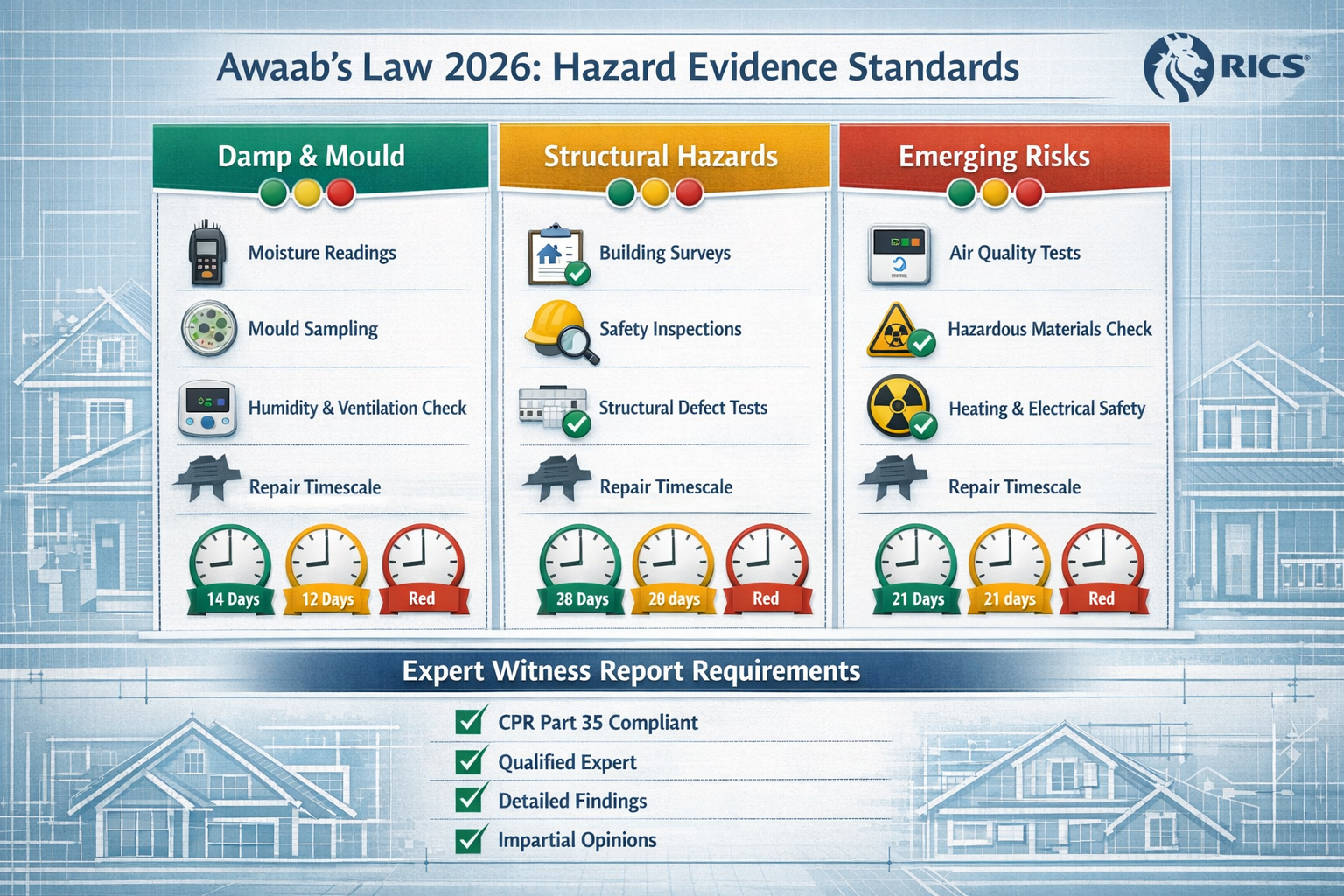
While much attention focuses on tenant protection, Expert Witness Roles in Awaab's Law Disputes: Evidence Standards for Damp, Mould and New Hazards in 2026 frequently involve defending landlords against unfounded or exaggerated claims. Effective expert testimony can mean the difference between substantial compensation awards and case dismissal.
Common Defence Strategies Requiring Expert Support
Timeline Compliance Verification
Landlords often face allegations of Awaab's Law violations when they actually met statutory deadlines. Expert witnesses can establish:
- Date of first notification by tenant (distinguishing between informal mentions and formal reporting)
- Adequacy of landlord's initial assessment within required timeframe
- Whether interim measures were appropriate pending permanent repairs
- Whether delays resulted from tenant access refusal or external factors beyond landlord control
Detailed chronological analysis with supporting documentation (emails, repair logs, appointment records) provides objective evidence countering tenant claims of landlord neglect.
Hazard Classification Disputes
Not every damp patch or minor mould growth constitutes an Awaab's Law hazard requiring emergency response. Expert evidence can demonstrate:
- Hazard severity according to HHSRS scoring methodology
- Whether conditions genuinely pose health risks or represent cosmetic issues
- Proportionality of proposed remedial works to actual hazard level
- Whether tenant expectations exceed statutory landlord obligations
This nuanced assessment prevents landlords from facing disproportionate liability for minor issues while ensuring genuine hazards receive appropriate attention, similar to how boundary dispute resolution requires careful assessment of actual versus perceived encroachments.
Causation Analysis: Landlord Defect vs. Tenant Lifestyle
Condensation mould frequently results from inadequate heating and ventilation by occupants rather than structural defects. Expert witnesses can identify:
- Evidence of inadequate heating use (thermostat settings, energy consumption data)
- Ventilation obstruction by occupants (blocked vents, sealed windows)
- Moisture generation from lifestyle factors (drying laundry indoors, inadequate bathroom ventilation use)
- Property occupancy levels exceeding design capacity
While this defence requires sensitivity to avoid victim-blaming, objective evidence about occupant behavior legitimately factors into liability determination when structural conditions prove adequate for normal residential use.
Cross-Examination Preparation and Testimony Delivery
Expert witnesses must withstand rigorous cross-examination from opposing counsel seeking to undermine their credibility and conclusions. Effective preparation includes:
Anticipating Challenge Areas
Common cross-examination tactics include:
❓ Questioning qualifications and experience in specific hazard types
❓ Highlighting omissions or inconsistencies in inspection methodology
❓ Presenting alternative expert opinions contradicting findings
❓ Challenging assumptions underlying remedial cost estimates
❓ Exploring financial relationships with instructing parties
Witnesses who provide comprehensive initial reports addressing potential weaknesses preemptively reduce cross-examination effectiveness.
Maintaining Professional Demeanor
Tribunal and court testimony requires:
✅ Clear, jargon-free explanations accessible to non-technical tribunal members
✅ Confident but not arrogant presentation of opinions
✅ Willingness to acknowledge limitations in knowledge or evidence
✅ Consistency between written reports and oral testimony
✅ Respectful engagement with opposing experts and counsel
Expert witnesses who appear defensive, evasive, or partisan damage both their testimony's persuasiveness and their professional reputation for future cases.
Regulatory Compliance and Professional Indemnity
Expert witnesses face potential professional liability for negligent reports or testimony. RICS members must maintain:
- Professional indemnity insurance with adequate coverage for expert witness work (typically higher limits than standard surveying practice)
- Detailed file records documenting all instructions, site visits, communications, and analytical processes
- Compliance with RICS expert witness guidance and CPR requirements
- Awareness of disciplinary consequences for breaching professional standards
The increased stakes in Awaab's Law cases—where landlords may face substantial compensation awards, regulatory sanctions, or reputational damage—make rigorous professional standards essential for expert witnesses operating in this space.
Future Developments and Emerging Challenges
The landscape of Expert Witness Roles in Awaab's Law Disputes: Evidence Standards for Damp, Mould and New Hazards in 2026 continues evolving as case law develops and regulatory interpretation matures.
Anticipated Legislative Expansions
Government consultations suggest potential extensions of Awaab's Law principles to:
🏘️ Private rented sector properties, currently exempt from statutory timelines
🏗️ New-build defects where design or construction failures create hazards
♿ Accessibility hazards affecting disabled occupants
🔥 Fire safety concerns following building safety legislation
These expansions would significantly increase expert witness demand across broader property sectors, requiring even more specialized knowledge and interdisciplinary collaboration.
Technology Integration in Evidence Gathering
Emerging technologies are transforming hazard assessment methodologies:
Remote Monitoring Systems
Internet-connected sensors can provide continuous data on:
- Temperature and humidity levels in multiple rooms
- Air quality indicators (CO₂, VOCs, particulates)
- Moisture content in building fabric
- Ventilation system performance metrics
This objective, timestamped data proves far more persuasive than one-time inspection snapshots, potentially revolutionizing evidence standards in 2026 and beyond.
Advanced Diagnostic Imaging
Beyond standard thermal cameras, expert witnesses increasingly employ:
- Hyperspectral imaging detecting moisture invisible to conventional methods
- 3D laser scanning documenting property conditions with millimeter precision
- Drone surveys accessing roof areas safely and comprehensively
- Endoscopic investigation examining concealed spaces without destructive opening-up
These technologies enhance evidence quality but require significant investment in equipment and training, similar to how drone roof surveys have transformed roof inspection capabilities.
Professional Development Priorities for 2026 and Beyond
Expert witnesses seeking to maintain competitiveness in Awaab's Law disputes should prioritize:
- Building science fundamentals – Understanding moisture physics, thermal dynamics, and ventilation principles at an advanced level
- Health impact knowledge – Familiarity with respiratory conditions, allergen exposure, and vulnerable population risks
- Legal procedure mastery – Deep understanding of CPR Part 35, Pre-Action Protocol, and tribunal processes
- Technology proficiency – Competence with advanced diagnostic equipment and data analysis tools
- Communication skills – Ability to explain complex technical concepts to non-specialist audiences
The most successful expert witnesses combine technical excellence with exceptional communication abilities, ensuring their evidence influences tribunal outcomes effectively regardless of case complexity.
Conclusion
Expert Witness Roles in Awaab's Law Disputes: Evidence Standards for Damp, Mould and New Hazards in 2026 have become increasingly sophisticated and demanding since the legislation's October 2025 implementation. The tragic circumstances that prompted Awaab's Law have created a regulatory environment where landlords face significant liability for failing to address property hazards promptly, making expert testimony critical to case outcomes.
Effective expert witnesses in this field must possess RICS accreditation combined with specialized knowledge in building pathology, moisture investigation, health impact assessment, and remedial specification. They must produce comprehensive reports complying with CPR Part 35 and Pre-Action Protocol requirements, demonstrating objectivity, transparency, and professional rigor throughout the evidence gathering and testimony process.
As the legislation continues evolving to encompass emerging hazards beyond traditional damp and mould—including ventilation inadequacy, indoor air quality concerns, and climate-related moisture issues—expert witnesses must commit to continuous professional development and technology adoption to maintain their effectiveness.
Actionable Next Steps
For landlords and social housing providers:
- Engage RICS-accredited expert witnesses early when disputes arise, ideally before formal claims are filed
- Ensure internal documentation systems capture timeline compliance evidence
- Invest in preventive maintenance and monitoring systems that generate objective hazard data
- Consider party wall and boundary dispute resolution expertise when structural issues cross property boundaries
For expert witnesses and surveyors:
- Pursue specialized CPD in building pathology, moisture investigation, and health impact assessment
- Obtain CPR Part 35 expert witness training and maintain awareness of procedural updates
- Invest in advanced diagnostic equipment including thermal imaging and moisture monitoring technology
- Develop collaborative relationships with environmental health officers, medical professionals, and other specialists
- Build a portfolio of case experience demonstrating competence across diverse hazard types
For tenants and their representatives:
- Seek expert witnesses with demonstrable experience in Awaab's Law cases and hazard-specific knowledge
- Ensure experts understand both technical property issues and health impact dimensions
- Request comprehensive reports addressing all Pre-Action Protocol requirements
- Consider whether joint expert appointments might expedite resolution in straightforward cases
The intersection of housing law, building science, and health protection creates a challenging but essential field for expert witnesses in 2026. Those who master the technical, procedural, and communication requirements will play a vital role in ensuring Awaab's Law achieves its intended purpose: preventing future tragedies by holding landlords accountable for maintaining safe, healthy homes while also protecting them from unfounded claims through rigorous, objective evidence standards.
References
[1] Awaabs Law Housing Disrepair Claims – https://www.expertcourtreports.co.uk/blog/awaabs-law-housing-disrepair-claims/
[2] Expert Witness Roles In 2026 Homebuying Reform Disputes Defending Survey Evidence Under New Upfront Standards – https://nottinghillsurveyors.com/blog/expert-witness-roles-in-2026-homebuying-reform-disputes-defending-survey-evidence-under-new-upfront-standards
[3] Expert Witness Testimonies In 2026 Rental Regulation Disputes Preparing For Awaabs Law And Tenant Demand Surges – https://nottinghillsurveyors.com/blog/expert-witness-testimonies-in-2026-rental-regulation-disputes-preparing-for-awaabs-law-and-tenant-demand-surges