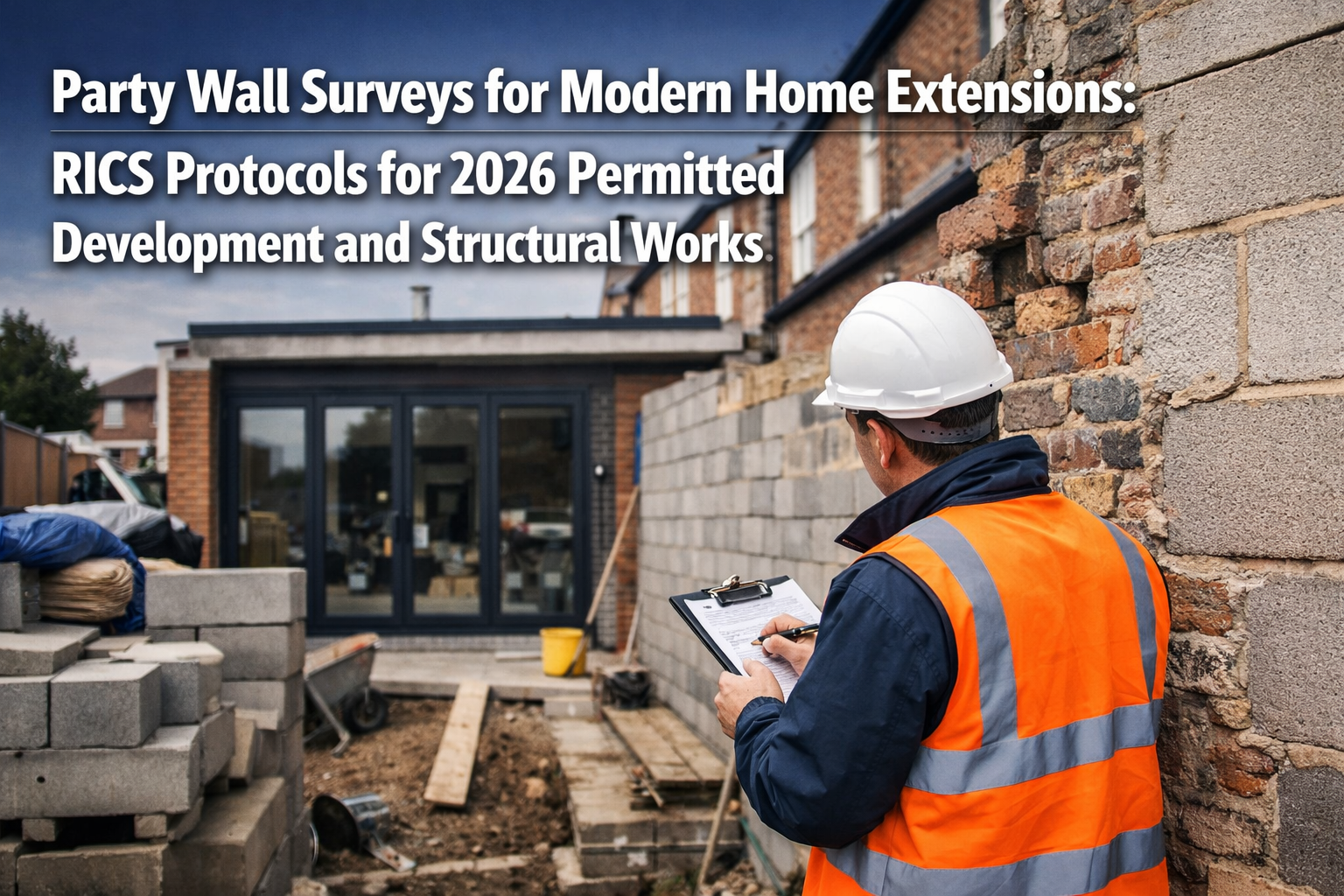

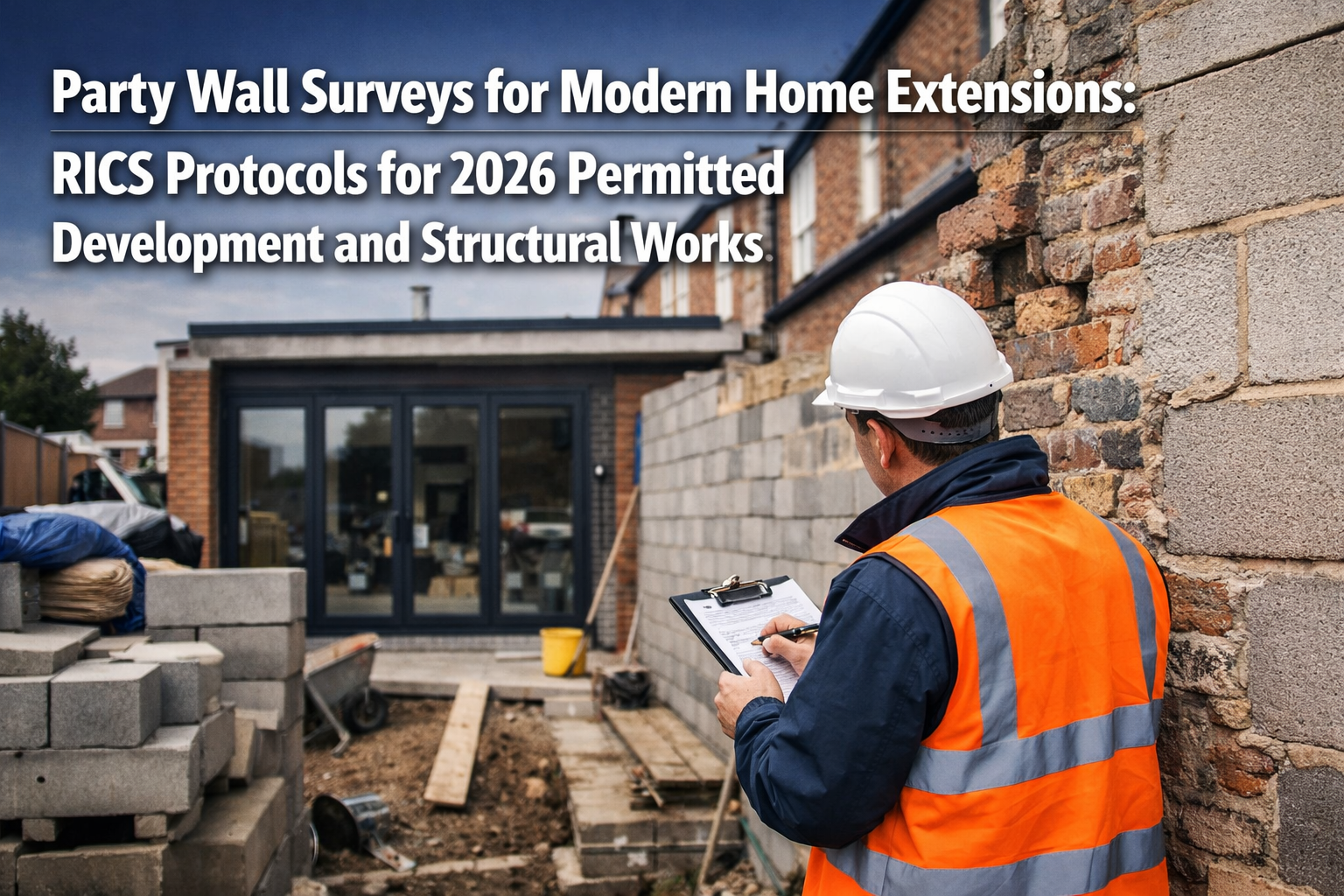
Over 40% of UK homeowners planning extensions in 2026 will require party wall agreements, yet most remain unaware of their legal obligations until disputes arise. As housing demand intensifies and permitted development rights expand, understanding Party Wall Surveys for Modern Home Extensions: RICS Protocols for 2026 Permitted Development and Structural Works has become essential for property owners, surveyors, and construction professionals navigating complex boundary legislation.
The Party Wall etc. Act 1996 continues to govern building works affecting shared walls and boundaries across England and Wales, with the RICS Party Wall Legislation and Procedure standard (reissued May 2023) providing authoritative guidance for chartered surveyors.[1] Modern home extensions—from rear additions to loft conversions—trigger specific legal requirements that demand professional surveyor involvement, proper documentation, and neighbor consultation protocols.
Key Takeaways
- Two-month notice periods are mandatory for building works affecting party walls, including extensions and loft conversions, while excavation works require one-month notice[2]
- RICS protocols establish professional standards for surveyors conducting party wall surveys, preparing schedules of condition, and producing Party Wall Awards in 2026[1]
- Schedule of condition documentation with photographic evidence must be completed before construction begins to prevent disputes and establish baseline property conditions[2]
- Agreed surveyor appointments allow both parties to share a single impartial professional, reducing costs while maintaining compliance with the Party Wall Act[2]
- Retrospective agreements can address damage complaints after works commence, though proper advance procedures remain legally required[2]
Understanding the Party Wall Act 1996 Framework for Modern Extensions 🏗️
The Party Wall etc. Act 1996 remains the cornerstone legislation governing building works that affect shared boundaries between properties in England and Wales. This framework applies specifically to modern home improvement projects that have surged in popularity as homeowners seek to maximize existing property value rather than relocate in 2026's competitive housing market.
What Constitutes a Party Wall?
A party wall represents any wall or structure shared by two or more properties. This includes:
- Type A Party Walls: Walls standing astride the boundary line between two properties, with each owner owning the portion on their side
- Type B Party Walls: Walls standing entirely on one owner's land but used by two or more owners (garden walls, boundary structures)
- Party Fence Walls: Walls separating buildings or yards but not forming part of a building structure
- Party Structures: Floors, ceilings, and other structural elements separating different properties vertically
Modern Extension Projects Requiring Party Wall Surveys
The Act specifically covers building works that have become standard in contemporary home extensions, including:
✅ Loft conversions involving structural alterations to party walls
✅ Rear and side extensions requiring new foundations within three meters of neighboring structures
✅ Basement excavations extending below adjoining property foundations
✅ Insertion of damp proof courses through party walls
✅ Removal of chimney breasts from party walls
✅ Steel beam installations cutting into shared structural walls
However, certain minor works remain exempt from formal party wall procedures. Plastering, electrical installations, and attachment of kitchen units or shelving to party walls do not trigger the Act's requirements.[2]
For homeowners uncertain about their specific project requirements, consulting party wall matters specialists provides clarity before commencing construction.
Party Wall Surveys for Modern Home Extensions: RICS Protocols and Notice Requirements ⏰
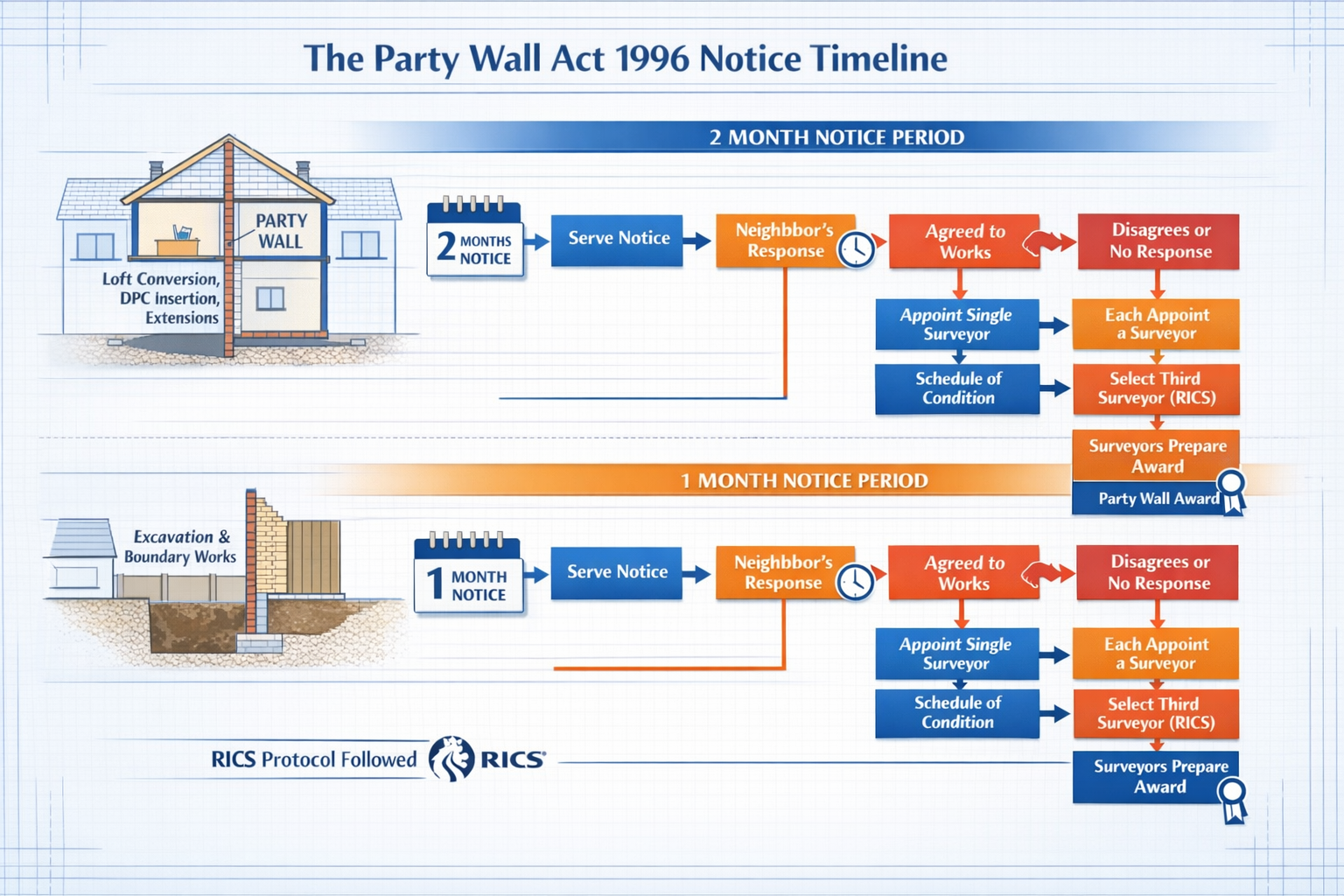
The Party Wall Surveys for Modern Home Extensions: RICS Protocols for 2026 Permitted Development and Structural Works establish clear timelines and procedural requirements that building owners must follow. Understanding these protocols prevents costly delays and legal complications.
Mandatory Notice Periods for Different Work Types
The Party Wall Act prescribes specific notice periods based on work classification:
| Work Type | Notice Period | Examples |
|---|---|---|
| Building works on party walls | 2 months | Extensions, loft conversions, DPC insertion, structural alterations |
| Excavation and boundary works | 1 month | New foundations, basement excavations within 3-6 meters of boundary |
| New boundary walls | 1 month | Garden walls, fence walls at property line |
These notice periods allow adjoining owners sufficient time to review proposed works, seek professional advice, and respond formally to the building owner's intentions.[2]
The Party Wall Notice Process: Step-by-Step
Step 1: Serve Formal Notice
Building owners must serve written notice to all adjoining owners describing the proposed works in detail. The notice should include architectural drawings, structural engineer specifications, and anticipated construction timelines.
Step 2: Await Neighbor Response (14 Days)
Adjoining owners have 14 days to respond with either:
- Consent: Written agreement to proceed without formal party wall procedures
- Dissent: Disagreement triggering the surveyor appointment process
- No response: Treated as dissent after 14 days, requiring surveyor involvement
Step 3: Surveyor Appointment
Upon dissent or non-response, both parties must appoint surveyors. Options include:
- Separate surveyors: Each party appoints their own surveyor (who then select a third surveyor if needed)
- Agreed surveyor: Both parties jointly appoint a single impartial surveyor to act for both sides
The agreed surveyor model typically reduces costs while maintaining professional independence and RICS compliance.
Step 4: Schedule of Condition Preparation
Before works commence, appointed surveyors must prepare comprehensive schedules of condition documenting the adjoining property's existing state through detailed photographs, measurements, and written descriptions.[2]
Step 5: Party Wall Award Production
Surveyors produce a Party Wall Award—a legally binding document that:
- Authorizes specific works to proceed
- Establishes working hours and access arrangements
- Details protective measures required during construction
- Specifies dispute resolution procedures
- Allocates costs between parties
RICS Professional Standards for 2026
The RICS Party Wall Legislation and Procedure standard (May 2023 edition) provides authoritative guidance for chartered surveyors handling party wall instructions in 2026.[1] Key protocol requirements include:
🔹 Professional indemnity insurance covering party wall surveying activities
🔹 Impartial conduct when acting as agreed surveyor for both parties
🔹 Comprehensive documentation of all site visits, communications, and decisions
🔹 Timely award production within reasonable periods following appointment
🔹 Clear cost allocation explaining fee structures and disbursement responsibilities
Homeowners planning extensions should verify their surveyor's RICS accreditation and familiarity with current protocols before appointment. Understanding party wall surveyor costs helps budget appropriately for professional services.
Common Notice Mistakes to Avoid
❌ Starting works before notice periods expire
❌ Inadequate work descriptions lacking technical specifications
❌ Failing to identify all adjoining owners (including tenants with sufficient lease terms)
❌ Assuming neighbor consent without written confirmation
❌ Neglecting excavation notices for foundation works near boundaries
For guidance on proper notice procedures, reviewing party wall excavation notice requirements ensures compliance with current legislation.
Schedule of Condition Documentation and Structural Assessment Protocols 📋
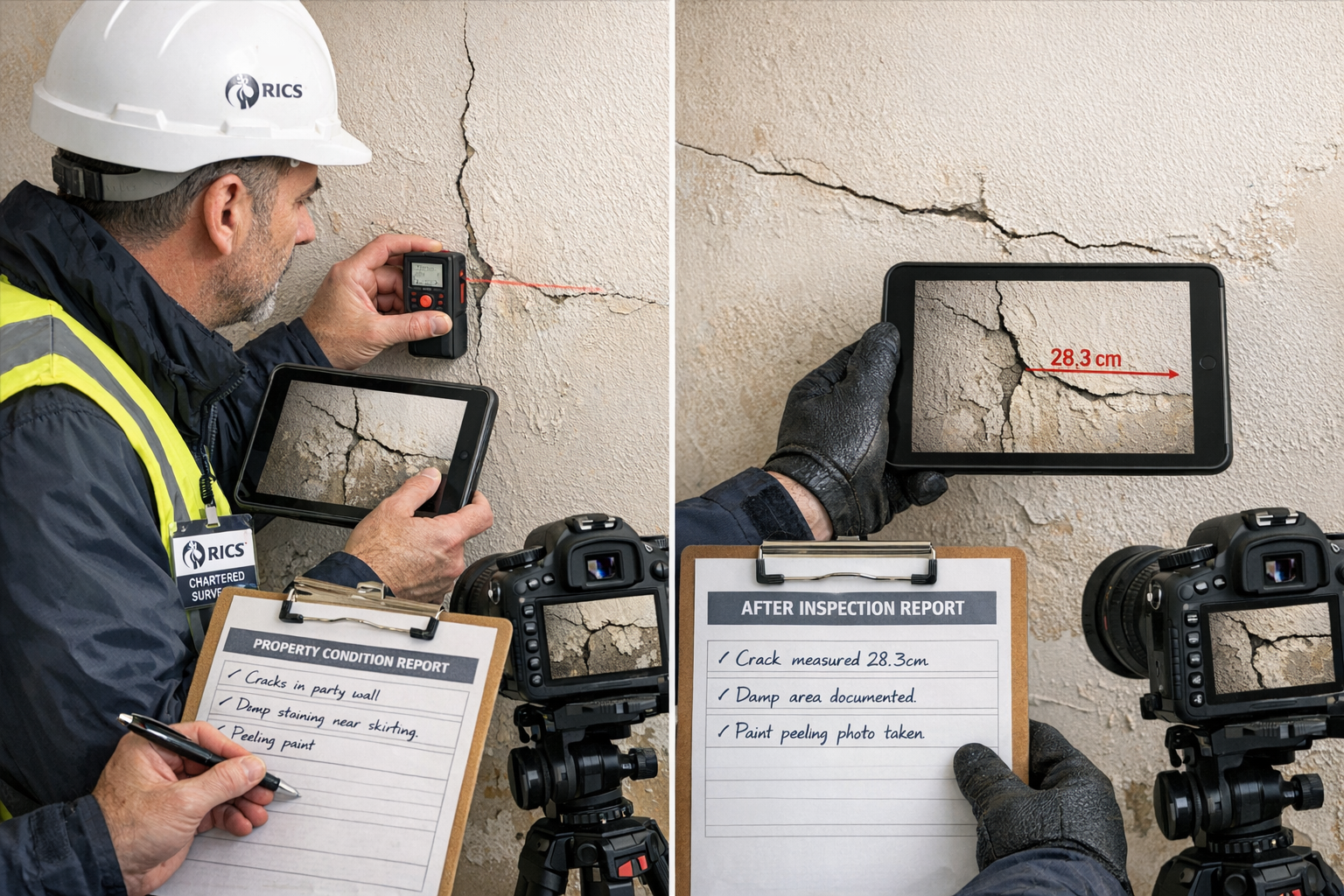
The schedule of condition represents the most critical protective document in party wall procedures, serving as irrefutable evidence of pre-construction property conditions. For modern home extensions involving significant structural works, comprehensive documentation prevents disputes and establishes clear liability frameworks.
Components of a Professional Schedule of Condition
RICS protocols require schedules of condition to include:
1. Photographic Evidence
- High-resolution images of all rooms, walls, ceilings, and external elevations
- Close-up photographs of existing cracks, defects, and settlement signs
- Dated and location-tagged imagery with scale references
- Multiple angles capturing spatial relationships and structural elements
2. Written Descriptions
- Room-by-room narrative documenting existing conditions
- Precise crack width measurements using calibrated gauges
- Material specifications and construction details
- Existing defect classifications (cosmetic vs. structural)
3. Structural Assessment
- Foundation condition evaluation where accessible
- Load-bearing wall identification and condition rating
- Existing movement patterns or settlement indicators
- Recommendations for monitoring during construction
4. External Boundary Documentation
- Boundary wall conditions and ownership clarification
- Drainage system locations and functionality
- External ground levels and landscaping features
- Access routes and potential construction impact zones
Professional structural survey specialists often collaborate with party wall surveyors to provide detailed structural assessments for complex extension projects.
Structural Works Considerations for Modern Extensions
Modern home extensions frequently involve structural interventions requiring enhanced survey protocols:
Foundation Underpinning
When extension foundations must extend below neighboring property levels, surveyors must:
- Calculate safe excavation distances from boundary structures
- Specify temporary support measures during excavation
- Establish vibration monitoring thresholds
- Document existing foundation depths where accessible
Steel Beam Installations
Cutting into party walls to install structural steel beams demands:
- Precise load transfer calculations by structural engineers
- Temporary propping specifications during beam installation
- Party wall integrity assessments post-installation
- Crack monitoring protocols during and after works
Loft Conversion Structural Alterations
Roof extensions affecting party walls require surveyors to document:
- Existing roof structure and party wall connections
- Chimney breast conditions and removal implications
- Floor joist conditions and load-bearing capacities
- Party wall height extensions and weatherproofing details
For properties with shared chimneys, additional considerations apply when loft conversions involve chimney breast removal or alteration.
Digital Documentation Technologies in 2026
Progressive surveyors now employ advanced documentation technologies:
- 3D laser scanning creating precise point clouds of existing conditions
- Drone surveys capturing roof and elevation conditions inaccessible by traditional methods
- Digital crack monitoring systems providing real-time movement alerts during construction
- Cloud-based documentation platforms ensuring all parties access current schedules
These technologies enhance evidence quality while streamlining the documentation process. Drone roof survey services complement traditional party wall surveys for complex extension projects.
Protecting Against Construction Damage Claims
The schedule of condition serves as the primary defense against unfounded damage claims. Best practices include:
✓ Pre-construction meetings reviewing the schedule with adjoining owners
✓ Mid-construction inspections documenting work progress and any emerging concerns
✓ Post-construction final inspections comparing completed works against baseline conditions
✓ Photographic evidence chains maintaining chronological records throughout the project
When disputes arise despite proper documentation, understanding what constitutes property damage in party wall matters helps resolve claims efficiently.
Navigating Party Wall Disputes and Consent Procedures in 2026 🤝
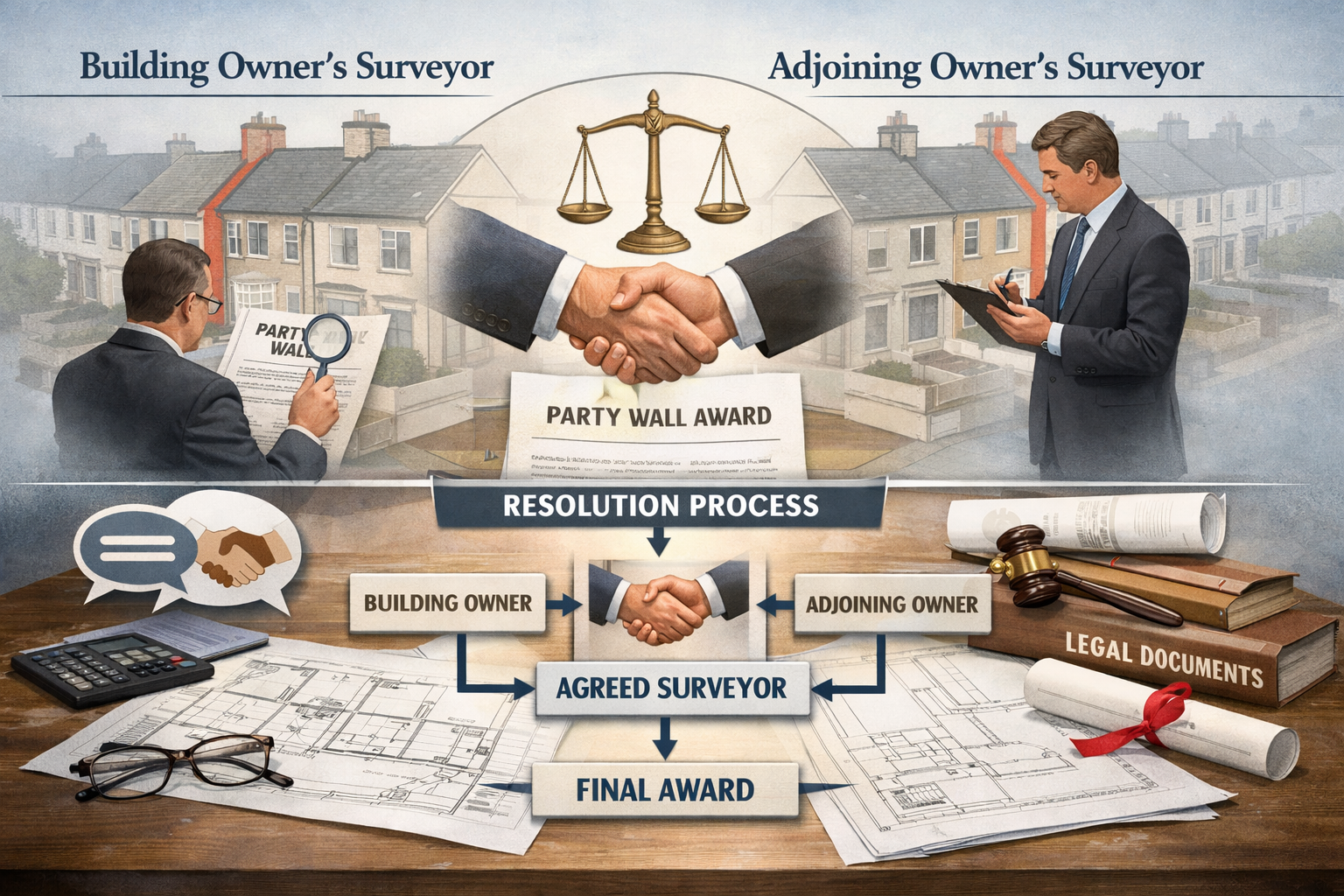
Despite best intentions and proper procedures, party wall disputes remain common in 2026's construction environment. Understanding dispute resolution mechanisms and consent procedures ensures projects progress while maintaining neighbor relationships.
Common Dispute Triggers in Modern Extensions
Noise and Disruption Concerns
Neighbors frequently object to:
- Extended working hours beyond reasonable limits (typically 8 AM to 6 PM weekdays)
- Weekend and holiday construction activities
- Excessive vibration from excavation or demolition work
- Dust and debris affecting adjoining properties
Party Wall Awards typically specify acceptable working hours and protective measures, but enforcement requires clear communication and professional oversight.
Structural Safety Worries
Adjoining owners often express concerns about:
- Deep excavations destabilizing their foundations
- Heavy construction equipment damaging boundary structures
- Inadequate temporary support during structural alterations
- Long-term settlement risks from foundation works
Professional residential structural engineers provide independent assessments addressing these concerns with technical evidence.
Access and Boundary Disputes
Construction access disputes arise when:
- Scaffolding requires placement on adjoining property
- Construction vehicles need to cross neighbor's land
- Temporary material storage encroaches on boundaries
- Existing boundary features require removal or relocation
Clear access provisions within Party Wall Awards prevent these conflicts, but flexibility and communication remain essential.
The Surveyor's Role in Dispute Resolution
Party wall surveyors act as impartial professionals resolving disputes through:
Technical Mediation
Surveyors explain technical aspects of proposed works, translating construction terminology into accessible language for property owners. This educational role often resolves concerns stemming from misunderstanding rather than genuine objections.
Award Modifications
When legitimate concerns arise, surveyors can modify Party Wall Awards to include:
- Enhanced protective measures during construction
- Additional monitoring provisions
- Modified working hours or construction sequencing
- Increased insurance coverage requirements
Third Surveyor Appointments
When the building owner's surveyor and adjoining owner's surveyor cannot reach agreement, they appoint a third surveyor whose decision becomes binding. This mechanism ensures disputes don't indefinitely delay construction projects.
For guidance on handling specific dispute scenarios, reviewing party wall dispute resolution procedures provides practical frameworks.
Obtaining Party Wall Consent: Best Practices
Securing neighbor consent efficiently requires strategic approaches:
Early Engagement
Informal discussions with neighbors before serving formal notices often:
- Identify concerns early when design modifications remain feasible
- Build goodwill and collaborative relationships
- Reduce formal objection likelihood
- Expedite the consent process
Clear Communication
Providing neighbors with:
- Accessible project summaries avoiding technical jargon
- Visual representations (drawings, 3D renderings) showing proposed works
- Construction timeline estimates and disruption expectations
- Direct contact information for questions and concerns
Professional Presentation
Engaging chartered surveyors early demonstrates:
- Commitment to proper procedures and neighbor protection
- Professional project management and oversight
- Financial capability to address any legitimate damage claims
- Serious intent to comply with all legal requirements
Understanding party wall consent requirements helps building owners navigate the approval process effectively.
Retrospective Party Wall Agreements
When building owners commence works without proper party wall procedures—whether through ignorance or oversight—retrospective agreements provide remedial pathways. These agreements:
- Can be drawn up after partial or full work completion
- Require appointed surveyors with both owners' knowledge
- Address damage complaints or clarify work scope
- May involve compensation for procedural non-compliance[2]
However, retrospective agreements should never be viewed as acceptable alternatives to proper advance procedures. Courts can issue injunctions halting works commenced without required notices, causing costly project delays.
When Neighbors Refuse to Engage
Adjoining owners who refuse to respond to party wall notices or appoint surveyors don't prevent projects from proceeding. After 14 days without response, building owners can appoint a surveyor on the neighbor's behalf, ensuring the process continues while protecting the non-responsive neighbor's interests.
For situations where neighbors are carrying out party wall work without proper procedures, understanding your rights as an adjoining owner becomes essential.
Permitted Development Rights and Party Wall Interactions in 2026 🏘️
The intersection between permitted development rights and party wall requirements creates complexity for homeowners pursuing extensions without planning permission in 2026. While permitted development rights may eliminate planning application requirements, they never override party wall obligations.
Permitted Development Extensions Still Require Party Wall Compliance
Common misconceptions suggest that permitted development projects bypass party wall procedures. This remains categorically false. The Party Wall Act 1996 operates independently from planning legislation, meaning:
- Single-storey rear extensions up to 6 meters (terraced/semi-detached) or 8 meters (detached) under permitted development still require party wall notices if affecting shared boundaries
- Loft conversions within permitted development parameters must comply with party wall procedures when altering party walls
- Two-storey side extensions meeting permitted development criteria still trigger party wall requirements for boundary works
The Act continues to apply fully to office-to-residential conversions and other permitted development projects throughout 2026.[3]
Coordinating Party Wall and Planning Timelines
For projects requiring both planning permission and party wall procedures, strategic timeline coordination prevents delays:
Parallel Processing Approach
- Serve party wall notices while planning applications remain under consideration
- Engage surveyors early to prepare schedules of condition during planning review
- Coordinate construction start dates accounting for both planning approval and Party Wall Award completion
Sequential Processing Risks
- Waiting for planning approval before initiating party wall procedures adds 2-3 months to project timelines
- Neighbors may raise party wall objections after planning approval, creating false timeline expectations
- Construction contractors may require rescheduling if party wall delays emerge after planning approval
Party Wall Considerations for Specific Extension Types
Rear Extensions
Modern rear extensions typically require:
- Building works notices (2 months) for new walls connecting to party structures
- Excavation notices (1 month) for foundations within 3 meters of boundary structures at lower levels
- Access provisions for construction equipment and materials
Side Extensions
Side return extensions affecting boundary walls demand:
- Careful measurement ensuring works remain within property boundaries
- Documentation of existing boundary wall ownership and conditions
- Agreements on new wall construction at or near boundary lines
Basement Extensions
Increasingly popular basement excavations require:
- Detailed structural assessments of neighboring foundations
- Excavation notices specifying depths and proximity to boundaries
- Enhanced monitoring provisions during excavation phases
- Underpinning specifications where neighboring foundations may be affected
For comprehensive guidance on different survey types supporting extension projects, reviewing what survey you need clarifies the relationship between party wall surveys and broader property assessments.
Cost Allocation and Financial Responsibilities Under RICS Protocols 💰
Understanding cost allocation for Party Wall Surveys for Modern Home Extensions: RICS Protocols for 2026 Permitted Development and Structural Works prevents financial surprises and disputes between neighbors.
Who Pays for Party Wall Surveys?
The Party Wall Act establishes clear cost responsibility principles:
Building Owner's Responsibilities
The building owner (party initiating works) typically bears all reasonable costs including:
- Their own surveyor's fees
- The adjoining owner's surveyor's fees
- Third surveyor's fees (if appointed)
- Schedule of condition preparation costs
- Party Wall Award production and service costs
This cost allocation reflects the principle that those benefiting from building works should bear associated procedural expenses.
Agreed Surveyor Cost Sharing
When both parties appoint a single agreed surveyor, costs are typically:
- Shared equally between building owner and adjoining owner, OR
- Borne entirely by the building owner by agreement
The agreed surveyor model often reduces total costs compared to separate surveyor appointments, making it attractive for straightforward extension projects.
Typical Party Wall Survey Costs in 2026
Professional party wall surveyor fees vary based on project complexity:
| Project Type | Typical Fee Range | Factors Affecting Cost |
|---|---|---|
| Simple rear extension | £700-£1,200 per surveyor | Single party wall, straightforward works |
| Loft conversion | £900-£1,500 per surveyor | Multiple party walls, structural alterations |
| Basement excavation | £1,500-£3,000 per surveyor | Complex structural assessment, monitoring requirements |
| Major renovation | £2,500-£5,000+ per surveyor | Multiple adjoining owners, extensive works |
Detailed breakdowns of party wall surveyor costs help homeowners budget accurately for professional services.
Additional Costs to Consider
Beyond surveyor fees, building owners should budget for:
Damage Repair Costs
If construction works cause damage to adjoining properties:
- Building owners remain liable for repairs regardless of contractor negligence
- Party Wall Awards typically require building owners to make good any damage
- Schedules of condition provide evidence distinguishing new damage from pre-existing conditions
Enhanced Insurance Coverage
Party Wall Awards may require:
- Increased contractor public liability insurance (typically £5-10 million minimum)
- Specific party wall works endorsements on policies
- Professional indemnity insurance for structural engineers and surveyors
Monitoring and Inspection Costs
Complex projects may require:
- Periodic surveyor inspections during construction (£200-400 per visit)
- Crack monitoring equipment installation and analysis
- Structural engineer site visits for critical construction phases
Disputes Over Unreasonable Costs
Adjoining owners cannot use surveyor appointments to generate excessive fees or obstruct projects. RICS protocols require:
✓ Reasonable and proportionate fees reflecting actual work undertaken
✓ Transparent fee structures disclosed before appointment
✓ Itemized invoices detailing time spent and activities performed
✓ Third surveyor review of disputed fee claims
Building owners can challenge unreasonable surveyor fees through third surveyor determination or, ultimately, through county court proceedings.
Practical Checklist: Party Wall Survey Compliance for Your Extension Project ✅
Before Starting Your Extension Project
- Identify all party walls and boundaries affected by proposed works
- Review architectural plans with a party wall surveyor to confirm notice requirements
- Prepare detailed work descriptions including structural specifications and timelines
- Identify all adjoining owners (including tenants with leases exceeding one year)
- Serve formal party wall notices respecting required 1-month or 2-month periods
- Engage RICS-accredited surveyors with current professional indemnity insurance
- Budget for surveyor fees and potential additional monitoring costs
During the Notice Period
- Maintain open communication with neighbors regarding project details
- Respond promptly to neighbor questions or concerns
- Coordinate surveyor appointments if neighbors dissent or fail to respond
- Review draft Party Wall Awards carefully before finalization
- Arrange schedule of condition inspections before construction commences
- Obtain adequate insurance coverage meeting Party Wall Award requirements
- Brief contractors on party wall obligations and working restrictions
During Construction
- Comply with working hours specified in the Party Wall Award
- Implement protective measures required by surveyors
- Facilitate surveyor inspections at agreed intervals
- Document any incidents affecting adjoining properties immediately
- Maintain communication channels with neighbors throughout construction
- Address emerging concerns promptly through surveyor consultation
- Monitor for structural movement using specified methods
After Construction Completion
- Arrange final surveyor inspections comparing completed works to schedules of condition
- Address any identified damage to adjoining properties promptly
- Obtain final sign-off from appointed surveyors
- Retain all documentation (notices, awards, schedules, correspondence) permanently
- Settle outstanding surveyor fees according to Party Wall Award provisions
Conclusion: Navigating Party Wall Requirements Successfully in 2026
Party Wall Surveys for Modern Home Extensions: RICS Protocols for 2026 Permitted Development and Structural Works represent essential components of responsible property development in England and Wales. As housing demand continues driving extension projects throughout 2026, understanding and complying with party wall requirements protects both building owners and their neighbors while ensuring construction projects proceed smoothly.
The Party Wall etc. Act 1996 framework, guided by RICS professional standards updated in May 2023, provides clear procedures for managing building works affecting shared boundaries.[1] From serving proper notices with adequate lead times to preparing comprehensive schedules of condition and producing legally binding Party Wall Awards, each procedural step serves important protective functions.
Key Success Factors
Professional Surveyor Engagement: Appointing RICS-accredited party wall surveyors early in project planning prevents procedural errors and provides expert guidance through complex requirements. Whether selecting separate surveyors or utilizing the agreed surveyor model, professional involvement ensures compliance while managing neighbor relationships effectively.
Comprehensive Documentation: Detailed schedules of condition with photographic evidence establish irrefutable baselines for property conditions, protecting against unfounded damage claims while providing clear evidence when legitimate damage occurs. Modern documentation technologies including 3D scanning and digital monitoring enhance evidence quality.
Proactive Communication: Early, transparent engagement with neighbors before serving formal notices builds collaborative relationships and identifies concerns when design modifications remain feasible. Clear communication throughout construction maintains goodwill and prevents minor issues escalating into formal disputes.
Timeline Coordination: Understanding that permitted development rights never override party wall requirements allows realistic project scheduling accounting for both planning considerations and party wall procedures. Parallel processing of planning applications and party wall notices optimizes timelines.
Taking Action on Your Extension Project
For homeowners planning extensions in 2026:
- Consult specialists early: Engage chartered surveyors during initial design phases to identify party wall implications
- Budget appropriately: Include surveyor fees, monitoring costs, and potential damage remediation in project budgets
- Respect legal timelines: Never commence works before notice periods expire and Party Wall Awards are in place
- Document everything: Maintain comprehensive records of all notices, correspondence, and agreements
- Prioritize relationships: Remember that neighbors remain after construction completes—professional procedures protect long-term community relationships
The complexity of party wall legislation need not prevent successful extension projects. With proper professional guidance, adequate planning, and respect for established procedures, homeowners can navigate party wall requirements efficiently while protecting their interests and those of their neighbors. As modern home extensions continue transforming properties throughout England and Wales in 2026, understanding and complying with party wall protocols ensures these improvements enhance rather than complicate property ownership.
For comprehensive support with party wall matters, exploring specialized party wall services provides access to experienced professionals familiar with current RICS protocols and 2026 permitted development considerations.
References
[1] Party Wall Legislation And Procedure – https://www.rics.org/profession-standards/rics-standards-and-guidance/sector-standards/building-surveying-standards/party-wall-legislation-and-procedure
[2] Party Wall Agreement – https://hoa.org.uk/advice/guides-for-homeowners/i-am-improving/party-wall-agreement/
[3] Party Wall Protocols For Office To Residential Conversions Navigating Pdr Expansions And Neighbour Risks In 2026 – https://nottinghillsurveyors.com/blog/party-wall-protocols-for-office-to-residential-conversions-navigating-pdr-expansions-and-neighbour-risks-in-2026