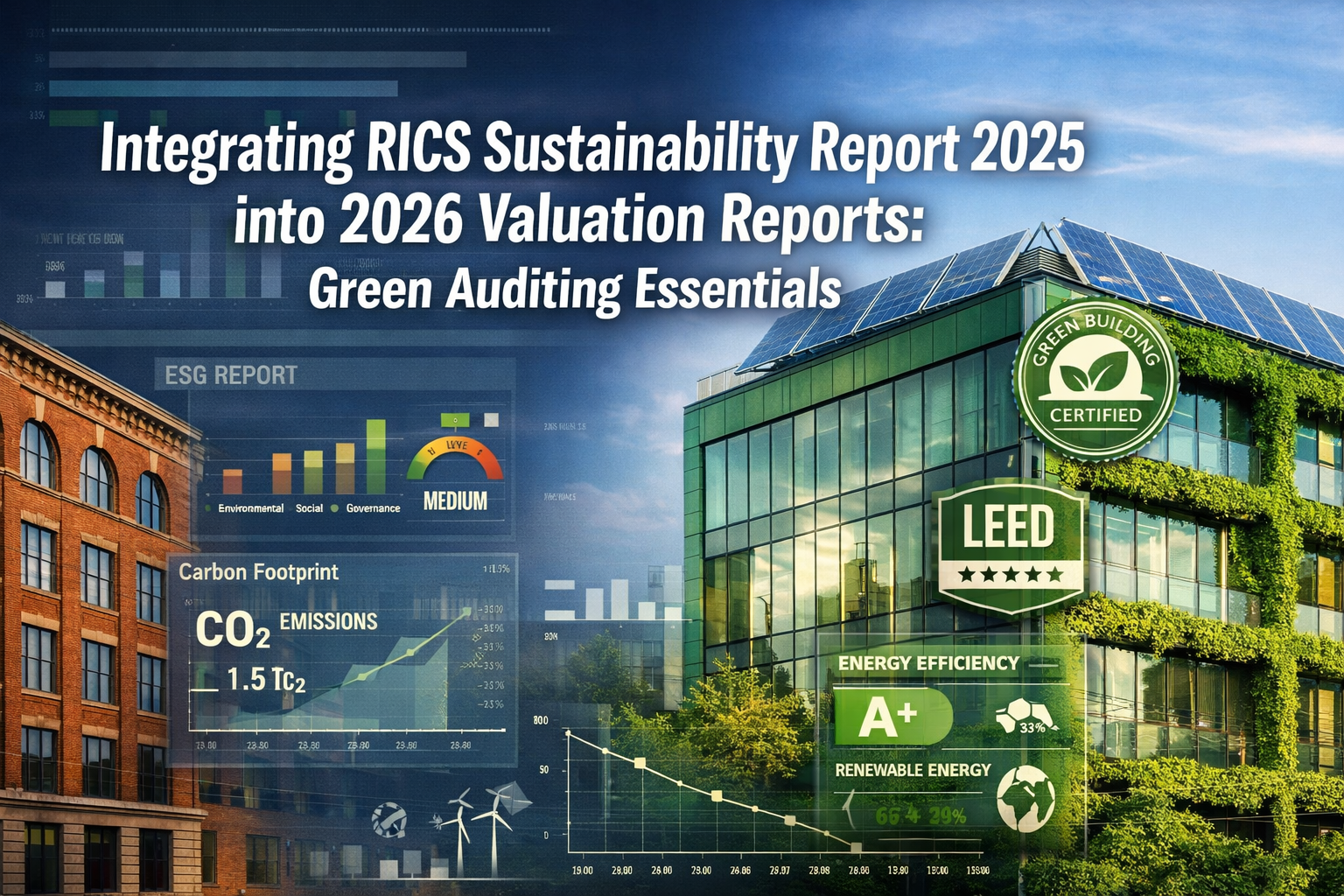

Over 60% of property professionals currently omit carbon calculations and climate resilience assessments from their valuation work—a compliance gap that will become critical when the RICS 4th edition ESG standard takes mandatory effect on April 30, 2026.[1][3] This staggering statistic reveals the urgent need for valuers to transform their methodologies and embrace comprehensive green auditing protocols. Integrating RICS Sustainability Report 2025 into 2026 Valuation Reports: Green Auditing Essentials represents not just a regulatory requirement, but a fundamental shift in how property value is determined in an era where environmental performance directly impacts market worth.
The 2025 RICS Sustainability Report, drawing insights from over 3,500 global professionals, paints a sobering picture: despite positive sentiment toward sustainable building practices, market momentum has stalled, and the sector remains largely stagnant in adopting meaningful environmental standards.[3] For valuers preparing valuation reports in London and beyond, this creates both a challenge and an opportunity to lead industry transformation through rigorous green auditing practices.
Key Takeaways
- Mandatory compliance deadline: The RICS 4th edition ESG standard becomes compulsory for all MRICS/FRICS valuers on April 30, 2026, requiring immediate integration of sustainability metrics into valuation methodologies
- Critical assessment gaps: 60% of professionals currently fail to include carbon calculations and climate resilience assessments, creating significant audit and compliance risks
- Green auditing protocols: Successful integration requires structured frameworks for carbon assessment, biodiversity impact evaluation, waste reduction tracking, and climate adaptation measures
- Skills development urgency: Professional training gaps represent the primary barrier to compliance, necessitating immediate upskilling initiatives
- Regional performance variation: The Middle East and Africa region leads in sustainability demand growth, while other markets show concerning stagnation
Understanding the RICS Sustainability Report 2025 Framework
The RICS Sustainability Report 2025 represents a watershed moment for the built environment sector. Unlike previous guidance documents that offered ambiguous recommendations, this comprehensive framework provides clear, structured methodologies for incorporating environmental, social, and governance (ESG) factors into property valuations.[3]
Key Findings from the 2025 Report
The report's findings reveal critical insights that directly impact valuation practice:
Market Momentum Indicators 📊
- Demand growth for green buildings has stalled across most regions
- Sector-wide adoption of sustainable practices remains stagnant
- Positive sentiment exists but hasn't translated into meaningful action
- Investment decisions still prioritize traditional metrics over ESG factors
Assessment Practice Gaps ⚠️
The most concerning finding centers on carbon assessment practices:
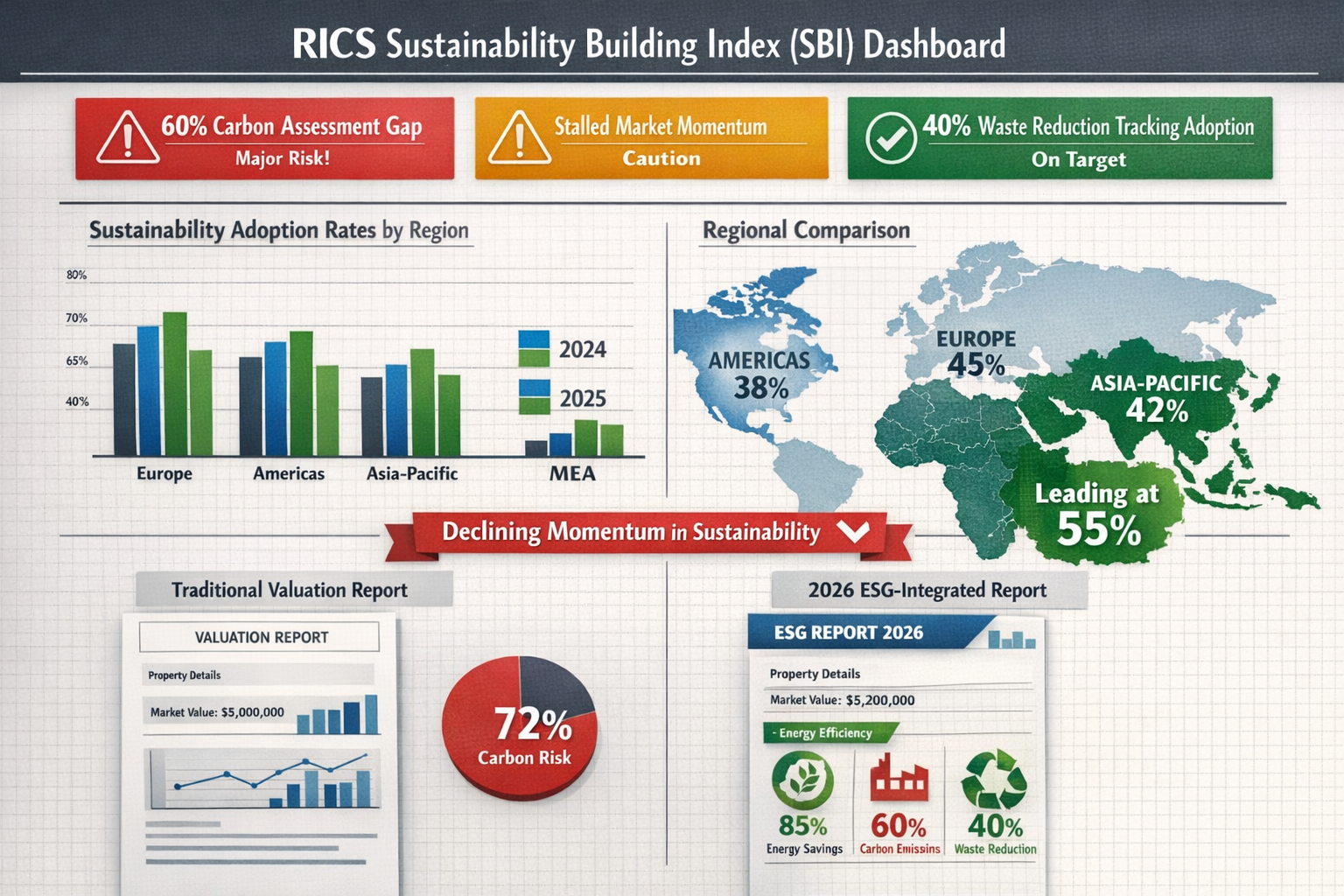
- 60%+ of projects report carbon calculations in less than half their work
- Climate resilience assessments are frequently omitted entirely
- This represents a critical compliance risk for 2026 mandatory standards
- Gap creates potential liability exposure for valuers and their clients
Emerging Best Practices ✅
Despite challenges, some positive trends emerge:
- 40% of professionals now regularly track waste reduction metrics
- Data-sharing practices are becoming standardized
- These areas show potential for rapid integration into valuation protocols
Regional Performance Variations
The 2025 report identifies significant geographic disparities in sustainability adoption:[3]
| Region | Demand Growth | Priority Focus | Key Challenges |
|---|---|---|---|
| MEA (Middle East & Africa) | Strongest performer | Climate resilience, water scarcity | Limited ROI evidence |
| APAC (Asia-Pacific) | Moderate growth | Adaptation measures | Skills gap, policy framework |
| Europe | Stagnant | Regulatory compliance | Client demand limitations |
| Americas | Mixed performance | Carbon reduction | Investor awareness gaps |
The MEA region's leadership stems from heightened exposure to drought, heatwaves, and water scarcity, making climate adaptation an immediate business necessity rather than a future consideration.[3]
Critical Components of Green Auditing for 2026 Valuation Reports
Integrating RICS Sustainability Report 2025 into 2026 Valuation Reports: Green Auditing Essentials requires valuers to adopt comprehensive auditing protocols that address multiple environmental dimensions. Professional RICS registered valuers in London must now incorporate these essential components into their standard practice.
Carbon Assessment Protocols
Operational Carbon Calculations 🏢
Valuers must now quantify:
- Energy consumption patterns across property lifecycle
- Emissions intensity per square meter
- Carbon reduction trajectories aligned with net-zero targets
- Comparative benchmarking against similar properties
The methodology requires:
- Collection of utility data for minimum 12-month period
- Application of appropriate carbon conversion factors
- Adjustment for occupancy patterns and usage intensity
- Projection of future carbon performance under various scenarios
Embodied Carbon Assessment 🔨
This often-overlooked component examines:
- Carbon emissions from construction materials
- Manufacturing and transportation impacts
- End-of-life disposal considerations
- Refurbishment versus new build carbon trade-offs
Climate Resilience and Adaptation Measures
The 2025 report emphasizes that adaptation and resilience are considered critical by stakeholders globally.[3] Valuers must audit:
Physical Climate Risks 🌡️
- Flood risk exposure and mitigation measures
- Heat stress vulnerability and cooling capacity
- Extreme weather resilience features
- Water scarcity adaptation strategies
Adaptation Infrastructure 💧
- Green infrastructure integration (living walls, green roofs)
- Sustainable drainage systems (SuDS)
- Natural ventilation and passive cooling design
- Water harvesting and recycling systems
This assessment directly impacts property values, particularly in regions experiencing increased climate volatility. Commercial building surveys in London must now incorporate these resilience factors as standard practice.
Biodiversity Net Gain Evaluation
Recent UK regulatory changes require developments to deliver 10% biodiversity net gain. Green auditing protocols must assess:
Baseline Biodiversity Assessment 🌱
- Current habitat value using standardized metrics
- Protected species presence and habitat requirements
- Ecological connectivity and corridor preservation
- Soil quality and natural drainage features
Enhancement Opportunities 🦋
- Native planting schemes and habitat creation
- Pollinator-friendly landscaping
- Bird and bat box integration
- Green corridor connectivity
Waste Reduction and Circular Economy Metrics
With 40% of professionals now tracking waste reduction,[3] this has become a standardized valuation consideration:
Construction Phase Tracking ♻️
- Material waste quantification and diversion rates
- Recycled content percentage in building materials
- Construction waste management plans
- Demolition waste recovery strategies
Operational Phase Monitoring 📦
- Tenant waste separation facilities
- Composting and organic waste management
- Circular economy design principles
- Material reuse and repurposing potential
Implementing Green Auditing Essentials: Practical Protocols for 2026
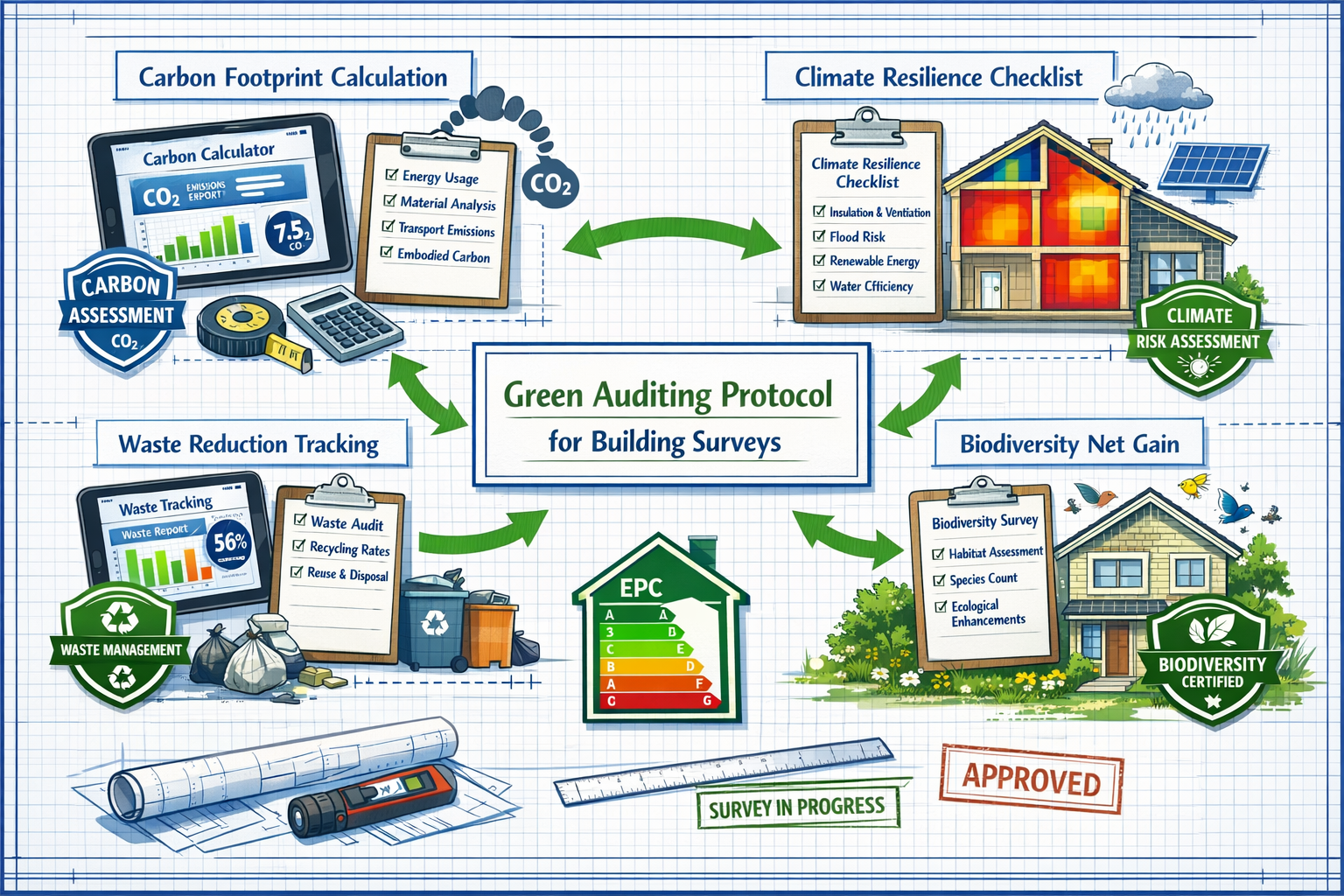
Successfully integrating RICS Sustainability Report 2025 into 2026 Valuation Reports: Green Auditing Essentials requires structured implementation protocols that address both technical methodology and professional development needs.
Step-by-Step Integration Framework
Phase 1: Baseline Assessment (Q1 2026) 📋
Before the April 30 mandatory deadline, valuers must:
- Audit current valuation templates against new ESG requirements
- Identify data collection gaps in existing survey protocols
- Review professional indemnity coverage for ESG-related claims
- Establish baseline metrics for carbon, biodiversity, and waste tracking
- Map client communication strategies for new reporting requirements
Phase 2: Protocol Development (Q1-Q2 2026) 🔧
Create standardized procedures for:
- Carbon assessment checklists integrated into site inspection protocols
- Climate resilience evaluation frameworks specific to property types
- Biodiversity audit procedures with photographic documentation requirements
- Waste tracking methodologies for both construction and operational phases
- Data verification processes to ensure accuracy and defensibility
Phase 3: Technology Integration (Q2 2026) 💻
Leverage digital tools to streamline green auditing:
- Energy modeling software for operational carbon projections
- Climate risk mapping platforms for location-specific hazard assessment
- Biodiversity metric calculators aligned with statutory requirements
- Digital reporting templates that automatically populate ESG metrics
- Data management systems for longitudinal tracking and trend analysis
Phase 4: Quality Assurance (Q2-Q3 2026) ✓
Establish verification procedures:
- Peer review protocols for ESG-integrated valuation reports
- Third-party verification of carbon calculations
- Audit trails documenting data sources and methodologies
- Continuous improvement processes based on feedback and outcomes
- Compliance monitoring against RICS standards
Addressing the Professional Skills Gap
The 2025 report identifies professional skills and knowledge development as essential for meaningful progress.[3] This represents perhaps the most significant barrier to successful implementation.
Training Priorities 🎓
Valuers must develop competencies in:
- Carbon accounting fundamentals and lifecycle assessment
- Climate science basics and risk modeling
- Biodiversity assessment methodologies and habitat valuation
- Circular economy principles and material lifecycle analysis
- ESG reporting frameworks and disclosure standards
Recommended Development Pathways 📚
- RICS CPD courses specifically addressing the 4th edition ESG standard
- Cross-disciplinary collaboration with environmental consultants and ecologists
- Industry working groups sharing best practices and case studies
- Academic partnerships for research-informed methodologies
- Technology training for ESG assessment tools and platforms
Overcoming Implementation Barriers
The 2025 report identifies several persistent obstacles that valuers must address:[3]
Lack of ROI Evidence 💰
Challenge: Limited clear evidence linking sustainable features to financial returns
Solutions:
- Build proprietary databases tracking green premium in local markets
- Collaborate with investors to document performance differentials
- Quantify risk mitigation value of climate resilience features
- Track operational cost savings from energy-efficient design
- Monitor rental velocity and tenant retention for green buildings
Limited Client Demand 👥
Challenge: Insufficient investor awareness and client requests for ESG integration
Solutions:
- Proactive education of clients on mandatory compliance requirements
- Risk communication highlighting liability exposure from ESG omissions
- Value demonstration through case studies and market evidence
- Regulatory updates emphasizing upcoming disclosure requirements
- Competitive positioning as early adopters of best practices
Regulatory Policy Gaps 📜
Challenge: Inconsistent government support and policy frameworks
Solutions:
- Active engagement with policy development consultations
- Industry advocacy for clearer regulatory guidance
- Standardized methodologies that anticipate future requirements
- Collaborative partnerships with regulatory bodies
- International alignment with emerging global standards
Integration with Existing Valuation Frameworks
Green auditing essentials must complement, not replace, established valuation methodologies. For Red Book valuations in London, this means:
Enhanced Data Collection 📊
- ESG metrics integrated into standard inspection checklists
- Photographic documentation of sustainability features
- Energy Performance Certificate (EPC) analysis and implications
- Building management system data review
- Occupant satisfaction and wellbeing metrics
Adjusted Valuation Approaches 💷
- Income approach: Adjust rental projections for green premium/brown discount
- Cost approach: Factor in embodied carbon and circular economy value
- Comparable approach: Select comparables with similar ESG profiles
- Residual approach: Include biodiversity net gain and carbon offset costs
Risk Assessment Integration ⚠️
- Physical climate risks affecting long-term value
- Transition risks from policy changes and market shifts
- Stranding risk for non-compliant or inefficient properties
- Reputational risks for investors holding brown assets
This comprehensive approach applies equally to specialized valuations, including probate valuations and matrimonial valuations, where ESG factors increasingly influence market value.
Case Study Applications and Sector-Specific Considerations
Commercial Property Valuations
For commercial property valuations, green auditing essentials must address:
Office Buildings 🏢
- Smart building technology and energy management systems
- Indoor environmental quality and occupant wellbeing metrics
- Commuting carbon footprint and transport connectivity
- Flexible workspace design for adaptive reuse potential
Retail Properties 🛍️
- Customer-facing sustainability credentials and brand alignment
- Operational energy intensity per transaction
- Waste management infrastructure for circular retail models
- Climate resilience for high-footfall locations
Industrial and Logistics 📦
- Solar panel installation potential and renewable energy capacity
- Electric vehicle charging infrastructure
- Embodied carbon in large-format construction
- Biodiversity offsetting for brownfield developments
Residential Property Considerations
While the 4th edition ESG standard primarily targets commercial property, residential valuers should anticipate similar requirements. Integration with building surveys should include:
Energy Efficiency Assessment 🏠
- Current EPC rating and improvement potential
- Retrofit opportunities and cost-benefit analysis
- Renewable energy integration feasibility
- Thermal performance and heating system efficiency
Climate Adaptation Features 🌧️
- Flood risk mitigation measures
- Overheating risk and cooling strategies
- Water efficiency fixtures and rainwater harvesting
- Green infrastructure and natural drainage
Specialized Valuation Scenarios
Reinstatement Cost Assessments 🔥
For reinstatement cost valuations, green auditing must consider:
- Carbon cost of reconstruction materials
- Biodiversity net gain requirements for rebuilding
- Enhanced climate resilience in replacement specifications
- Circular economy approaches to material sourcing
Dilapidations and End-of-Lease 📋
Schedule of dilapidations assessments now require:
- Carbon impact of remedial works versus retention
- Circular economy opportunities in material reuse
- Biodiversity preservation during reinstatement
- Waste reduction strategies for refurbishment
Future-Proofing Valuation Practice Beyond 2026
Emerging Trends and Anticipated Developments
Enhanced Disclosure Requirements 📢
Expect evolution toward:
- Mandatory climate risk disclosure for all property transactions
- Standardized ESG reporting formats aligned with financial disclosures
- Digital sustainability passports for buildings
- Real-time performance monitoring and verification
- Supply chain carbon accounting for construction materials
Technology-Driven Transformation 🤖
Emerging tools will enable:
- AI-powered carbon assessment from building data and imagery
- Satellite and drone monitoring of biodiversity and green infrastructure
- Predictive modeling of climate impacts on property values
- Blockchain verification of sustainability credentials
- Integrated data platforms connecting valuation, energy, and environmental metrics
Market Evolution 📈
Anticipate shifts in:
- Green premium expansion across property types and locations
- Brown discount acceleration for non-compliant assets
- Investor mandates requiring ESG-integrated valuations
- Lending criteria incorporating climate risk and energy performance
- Insurance pricing reflecting climate resilience and adaptation measures
Building Organizational Capacity
Firms must invest in:
Knowledge Management Systems 📚
- Centralized databases of ESG best practices and case studies
- Template libraries for green auditing protocols
- Lessons learned documentation from early implementations
- Market intelligence on green premiums and sustainability trends
Cross-Functional Teams 🤝
- Environmental specialists integrated into valuation teams
- Partnerships with climate scientists and ecologists
- Collaborative relationships with green building consultants
- Knowledge-sharing networks across the profession
Continuous Improvement Culture 🔄
- Regular review and updating of green auditing protocols
- Feedback mechanisms from clients and stakeholders
- Benchmarking against industry leaders
- Innovation initiatives testing new methodologies
Conclusion: Embracing the Green Auditing Imperative
The integration of RICS Sustainability Report 2025 into 2026 valuation reports represents a fundamental transformation in professional practice. With the mandatory April 30, 2026 deadline rapidly approaching, valuers face an urgent imperative to adopt comprehensive green auditing protocols that address carbon assessment, climate resilience, biodiversity impact, and circular economy principles.
The sobering reality that 60% of professionals currently omit critical sustainability assessments[3] underscores both the scale of change required and the competitive advantage available to early adopters. Those who successfully integrate these green auditing essentials will not only ensure compliance but position themselves as industry leaders in an increasingly ESG-conscious market.
Actionable Next Steps
Immediate Actions (Before April 30, 2026) ⚡
- Audit current valuation templates against the RICS 4th edition ESG standard requirements
- Enroll in RICS CPD courses addressing sustainability and carbon assessment
- Establish partnerships with environmental consultants and specialists
- Update professional indemnity insurance to cover ESG-related advice
- Communicate with clients about new reporting requirements and timelines
Short-Term Priorities (Q2-Q3 2026) 📅
- Implement standardized green auditing checklists for all valuation types
- Invest in technology platforms for carbon calculation and climate risk assessment
- Build proprietary databases tracking green premiums in local markets
- Develop case studies demonstrating ESG integration methodologies
- Establish quality assurance protocols for peer review and verification
Long-Term Strategic Initiatives (2026-2027) 🎯
- Contribute to industry working groups developing best practices
- Publish thought leadership on green auditing methodologies
- Mentor junior professionals in sustainability assessment techniques
- Advocate for policy improvements addressing identified barriers
- Innovate new approaches to biodiversity valuation and circular economy assessment
The path forward requires professional courage, technical competence, and collaborative spirit. By embracing green auditing essentials as core valuation competencies rather than compliance burdens, the profession can lead the built environment sector toward genuine sustainability while maintaining the rigorous standards that define professional practice.
For valuers committed to excellence, the question is not whether to integrate these practices, but how quickly and comprehensively they can be implemented. The market, regulators, and climate reality itself demand nothing less than complete transformation—and the tools, frameworks, and knowledge to achieve it are now available through the RICS Sustainability Report 2025 and emerging best practices across the profession.
References
[1] Watch – https://www.youtube.com/watch?v=wZ_XlcVSTRM
[2] Esg Beyond Net Zero – https://ww3.rics.org/uk/en/journals/construction-journal/esg-beyond-net-zero.html
[3] Sustainability Report 2025 – https://www.rics.org/news-insights/current-topics-campaigns/sustainability/sustainability-report-2025
[4] Building Survey Standards Evolution How Rics Quality Strengthening Initiatives Impact Surveyor Practice In 2026 – https://nottinghillsurveyors.com/blog/building-survey-standards-evolution-how-rics-quality-strengthening-initiatives-impact-surveyor-practice-in-2026
[5] Sustainability Report 2025 – https://www.rics.org/content/dam/ricsglobal/documents/reports/Sustainability-report-2025.pdf