

Only 41% of homes in England are now stamp duty-free for first-time buyers — a sharp fall from the temporary relief that expired in April 2025. If you are buying property in Surrey in 2026, the stamp duty landscape has fundamentally changed, and a brand-new annual levy on high-value homes is on its way. Understanding the stamp duty 2026 first-time buyer Surrey mansion tax picture is not optional; it could save — or cost — you tens of thousands of pounds.
At Kingston Surveyors, our RICS-accredited team works daily with buyers across Kingston upon Thames and the wider Surrey area. We see first-hand how tax changes reshape purchasing decisions. This guide cuts through the complexity so you can plan with confidence.
Key Takeaways 📌
- The nil-rate threshold for first-time buyers dropped to £300,000 from April 2025 — a significant reduction from the previous £425,000 relief threshold.
- Standard buyers now pay SDLT from £125,000, down from £250,000.
- A 5% surcharge applies to all additional property and second-home purchases.
- The Spring Statement 2026 brought zero stamp duty reform — the current bands are here to stay for the foreseeable future.
- A new 'mansion tax' surcharge on homes valued over £2 million will be added to council tax bills from April 2028, costing £2,500–£7,500 per year — and Surrey is one of the most exposed regions in England.
The 2026 SDLT Bands: What Has Changed and Why It Matters
The April 2025 Reset: Back to Stricter Thresholds
The temporary stamp duty relief introduced in 2022 expired on 31 March 2025. From 1 April 2025, the rules reverted — and in some cases tightened. Here is exactly where things stand for buyers in 2026.
Standard residential buyers (main residence):
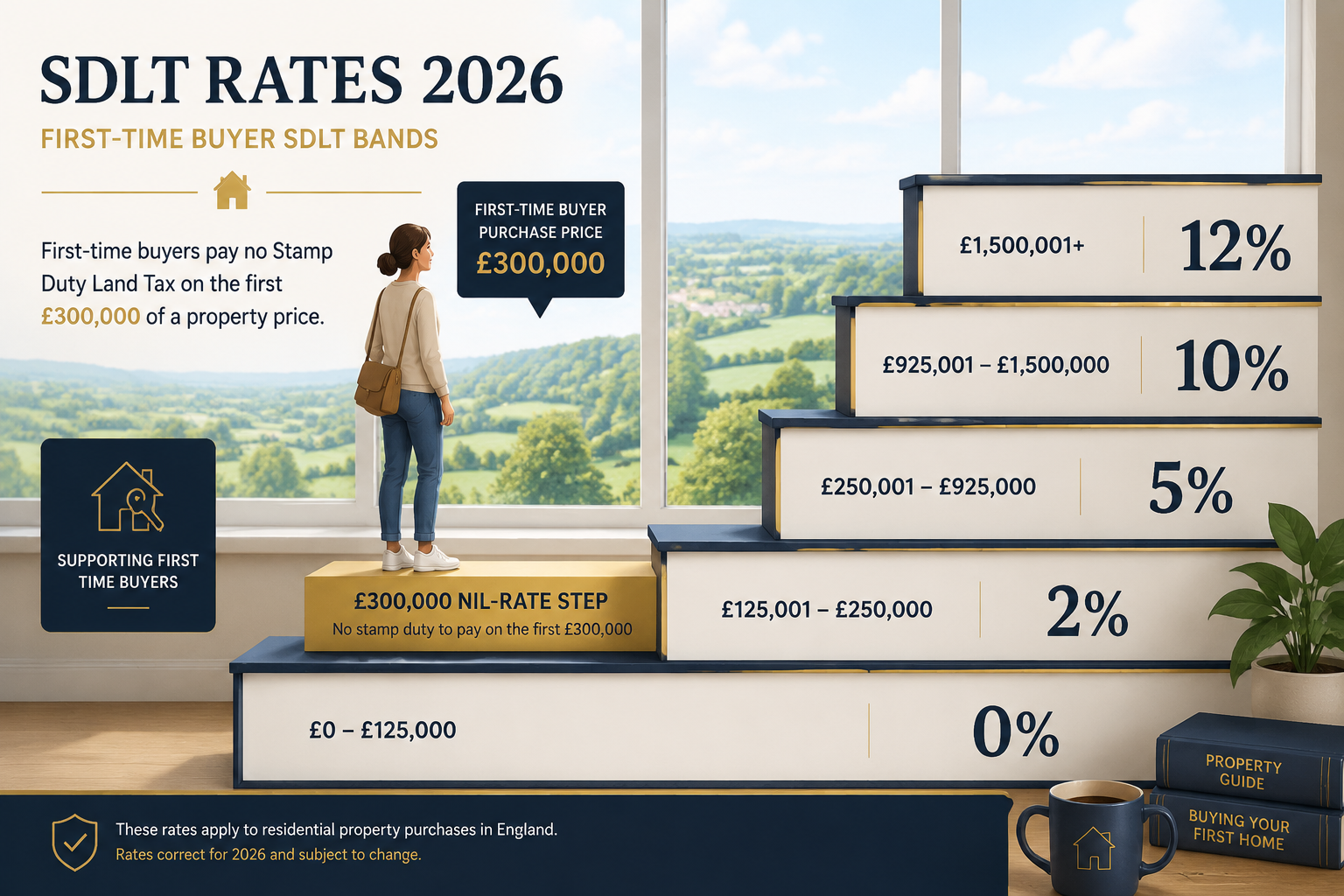
| Purchase Price Band | SDLT Rate |
|---|---|
| Up to £125,000 | 0% |
| £125,001 – £250,000 | 2% |
| £250,001 – £925,000 | 5% |
| £925,001 – £1,500,000 | 10% |
| Above £1,500,000 | 12% |
To put this in practical terms: a non-first-time buyer purchasing a £300,000 property now pays £5,000 in SDLT — nothing on the first £125,000, 2% on the next £125,000, and 5% on the final £50,000.
First-Time Buyer Relief in 2026
First-time buyers do receive relief, but the thresholds are tighter than many buyers expect:
- 0% on the first £300,000 of the purchase price
- 5% on the portion between £300,001 and £500,000
- No relief at all if the property costs more than £500,000 — standard rates apply to the full purchase price
A first-time buyer purchasing at £400,000 pays just £5,000 in SDLT (5% on the £100,000 above the nil-rate threshold). That is still meaningful savings versus the standard rate, but the old £425,000 nil-rate threshold is gone.
💬 "With only 41% of English homes now stamp duty-free for first-time buyers, the relief that once felt generous has become a much narrower window — particularly in Surrey, where average prices routinely exceed £400,000."
The 5% Additional Property Surcharge
Buyers purchasing a second home, buy-to-let, or any additional residential property pay a flat 5% surcharge on top of every SDLT band — including the zero-rated band. This applies from the first pound of the purchase price. For a £400,000 investment property in Surrey, that surcharge alone adds £20,000 to your tax bill.
If you are a landlord expanding a portfolio or a homeowner buying a holiday cottage in the Surrey Hills, this surcharge is unavoidable and substantial.
Surrey-Specific Context: Why These Bands Hit Harder Here
Surrey is one of the most expensive counties in England. Average house prices in boroughs such as Elmbridge, Guildford, and Waverley consistently exceed £600,000. That means:
- Most first-time buyers in Surrey will pay some SDLT, even with relief applied.
- Many standard buyers move straight into the 5% band from their first purchase.
- A significant number of Surrey homeowners sit close to — or above — the £2 million threshold relevant to the incoming mansion tax.
Our chartered surveyors covering Surrey regularly advise clients who are surprised by their SDLT liability simply because they underestimated the local price level. Understanding the key factors that influence property valuation is therefore essential before you make an offer.
The Mansion Tax, the Spring Statement, and What Comes Next for Surrey Buyers
The Spring Statement 2026: No Relief in Sight
Many buyers and property professionals had hoped that the Spring Statement 2026 would bring some adjustment to the post-April 2025 SDLT bands — perhaps a modest increase to the nil-rate thresholds to reflect house price inflation. It did not. Chancellor Rachel Reeves made no stamp duty changes in the Spring Statement. The current bands are locked in, and buyers in Surrey must plan around them.
Rachel Reeves' November 2025 Budget: The 'Mansion Tax' Arrives
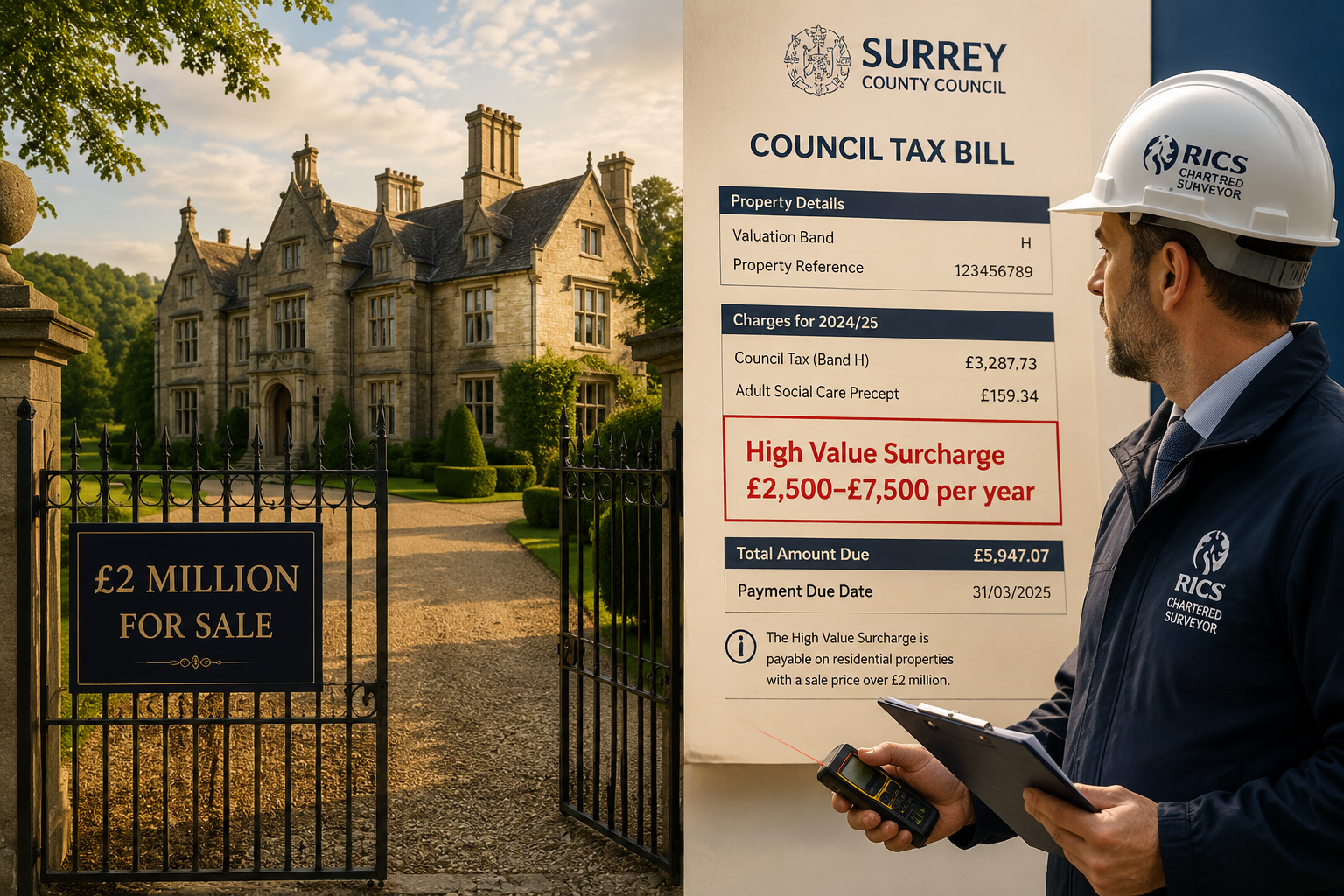
The more significant long-term development for Surrey homeowners came not from stamp duty reform but from the November 2025 Budget. Rachel Reeves announced a new High Value Council Tax Surcharge — widely referred to as the 'mansion tax' — which will apply to residential properties in England valued at over £2 million.
The surcharge takes effect from April 2028 and will be added annually to council tax bills. The four bands are:
| Property Value | Annual Surcharge |
|---|---|
| £2,000,001 – £2,500,000 | £2,500 |
| £2,500,001 – £3,000,000 | £3,750 |
| £3,000,001 – £5,000,000 | £5,000 |
| £5,000,001 and above | £7,500 |
The Office for Budget Responsibility estimates approximately 165,000 properties across England will be caught by this surcharge. Crucially, around 50% of all properties valued over £2 million in England are in London, and 85% are concentrated in the South East — making Surrey one of the most heavily affected regions in the country.
Why Surrey Homeowners Are Particularly Exposed 🏡
Surrey's premium locations — Weybridge, Esher, Cobham, Virginia Water, and parts of Kingston upon Thames — have a significant concentration of homes priced between £1.8 million and £3 million. Many of these properties sit close to the £2 million threshold, meaning that:
- A modest increase in value could push a home into the surcharge bracket before April 2028.
- An inaccurate valuation — whether too high or too low — could result in either an unexpected tax liability or a missed opportunity to challenge the assessment.
- Sellers may face downward price pressure on homes just above £2 million as buyers factor in the future annual cost.
For homeowners in areas such as Esher or Weybridge, where £2 million properties are relatively common, this is not an abstract concern — it is an immediate planning issue.
The Critical Role of an Independent RICS Valuation
The mansion tax surcharge will be assessed against the current market value of the property, not the council tax band. This makes an accurate, independent valuation essential.
If your home is currently valued at, say, £2.1 million, you will pay £2,500 per year from 2028. But if a professional RICS valuation demonstrates that the property is correctly valued at £1.95 million, you may have grounds to avoid the surcharge entirely. Conversely, if you are purchasing a property and the seller's asking price sits just below £2 million, you need confidence that the valuation is robust — not optimistically low.
Our property valuation services in London and Surrey are carried out by RICS-accredited surveyors who understand the local market in granular detail. For those purchasing high-value properties, commissioning a full building survey alongside a formal valuation is the most thorough way to protect your position.
It is also worth noting that if you own a high-value property through a company structure, you may already be familiar with the Annual Tax on Enveloped Dwellings (ATED). Our ATED valuation service provides the RICS-compliant assessments required for that regime — and similar principles will apply when challenging or confirming mansion tax liability.
Practical Steps for Surrey Buyers in 2026
Whether you are a first-time buyer stretching to get onto the Surrey property ladder or an existing homeowner with a high-value home, here are the actions that matter most right now:
✅ Calculate your SDLT liability before making an offer. Use the current 2026 bands — do not rely on outdated calculators that reflect pre-April 2025 thresholds.
✅ First-time buyers: check the £500,000 ceiling. If your target property exceeds this, you lose all first-time buyer relief and pay standard rates on the full purchase price.
✅ Additional property buyers: budget for the 5% surcharge from day one. It applies to every pound of the purchase price.
✅ High-value homeowners: commission an independent RICS valuation now. With the mansion tax arriving in April 2028, knowing where your property sits relative to the £2 million threshold gives you time to plan — or to challenge an inflated assessment.
✅ Do not assume the Spring Statement or future Budgets will bring relief. The 2026 Spring Statement delivered nothing. Plan around the rules as they stand.
Conclusion: Knowledge Is Your Best Tax Strategy
The stamp duty 2026 first-time buyer Surrey mansion tax environment is genuinely complex. The April 2025 reset has made buying in Surrey more expensive for almost every buyer category. The Spring Statement 2026 offered no respite. And from April 2028, thousands of Surrey homeowners will face a new annual surcharge simply for owning a valuable home.
The most effective response to this landscape is accurate information and professional advice. If you are buying in Surrey — whether a first home in Kingston, an investment property in Guildford, or a family house in Esher — understanding your exact tax position before you commit is not a luxury; it is a necessity.
Ready to get clarity on your position? Contact the team at Kingston Surveyors for an independent RICS valuation or a professional survey tailored to your property and your circumstances. Our surveyors cover Kingston upon Thames and the whole of Surrey, and we are here to help you make informed decisions in a fast-changing tax environment.