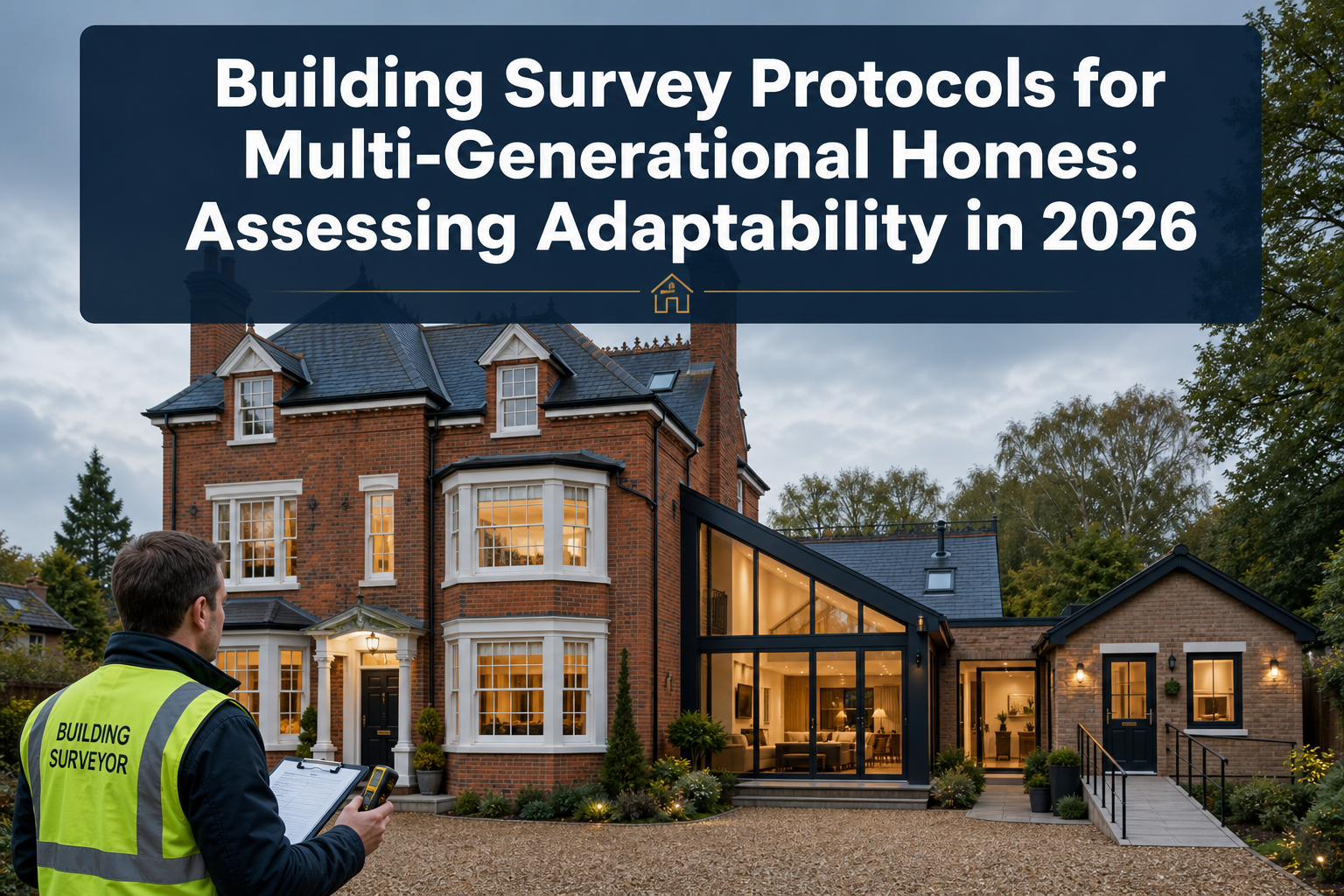

Fourteen percent of all homebuyers in 2025 purchased a property specifically for multigenerational use, with Generation X leading the charge at 19% [5]. That figure is not a niche statistic — it signals a structural shift in how British and international households approach property, and it is reshaping what surveyors must assess when instructed on a building survey in 2026.
The Building Survey Protocols for Multi-Generational Homes: Assessing Adaptability in 2026 Lettings Surge is no longer a specialist concern reserved for care-sector developers. As constrained rental supply collides with rising demand for flexible, family-inclusive living arrangements, chartered surveyors are being asked to evaluate properties through an entirely new lens — one that balances structural integrity, accessibility compliance, planning viability, and long-term adaptability in a single instruction.
This article sets out the key protocols, assessment criteria, and practical considerations that surveyors, landlords, and prospective buyers need to understand in 2026.
Key Takeaways
- Multigenerational living is a mainstream housing strategy driven by affordability pressures, caregiving needs, and constrained rental supply.
- Building surveys for multi-gen homes must go beyond standard structural assessment to evaluate accessibility, extension potential, and planning compliance.
- RICS Level 3 Building Surveys are the appropriate benchmark for most multigenerational property assessments.
- Surveyors must assess fire separation, utility independence, and structural capacity for conversion or extension.
- Early survey instruction — before exchange — can prevent costly remediation and planning refusals.
Why Multigenerational Living Is Driving 2026 Survey Demand
Economic pressure is the primary engine. Rising housing costs, elevated childcare expenses, and the need for informal elder care are pushing families toward shared ownership and tenancy arrangements that would have been considered unusual a decade ago [10]. In the United States, nearly 4 million owner-occupied households were multigenerational by 2024, up from 4.3% to 4.5% of all owner-occupied stock [1]. The trajectory in the UK mirrors this pattern, particularly in high-cost urban and suburban markets.
The single-family rental sector recorded 1.7% growth in 2025, reaching 14.6 million households globally, with build-to-rent supply and affordability pressures in the for-sale market cited as primary drivers [6]. Landlords and institutional investors are responding by acquiring and adapting existing stock to serve multigenerational tenants — creating a direct demand for specialist survey instruction.
What does a multigenerational property actually look like?
| Feature | Standard Home | Multi-Gen Home |
|---|---|---|
| Separate entrance | Uncommon | Essential |
| Second kitchen or kitchenette | Rare | Standard |
| Ground-floor bedroom/wet room | Occasional | Frequently required |
| Independent utility metering | Absent | Increasingly expected |
| Structural extension potential | Variable | High priority |
Homes marketed with these features listed for a median price of $709,000 in 2025 — approximately 65% above standard listings — and attracted 13.5% more page views despite the premium [2]. That demand signal is translating directly into survey instructions, as buyers and landlords seek professional confirmation that a property can genuinely deliver what it promises.
Core Building Survey Protocols for Multi-Generational Homes: Assessing Adaptability in 2026 Lettings Surge
Selecting the Right Survey Level
The starting point for any multigenerational property assessment is choosing the correct survey type. A standard RICS Level 2 HomeBuyer Report will not provide the depth of structural analysis needed when a property is being evaluated for conversion, extension, or accessibility adaptation. A full Level 3 Building Survey is the appropriate instruction in almost all cases involving multigenerational use.
The Level 3 survey enables the surveyor to:
- Inspect roof voids, subfloor spaces, and concealed structural elements
- Comment on the suitability of the property for proposed alterations
- Identify defects that would compromise conversion viability
- Assess the condition of drainage, utilities, and thermal performance
For landlords converting existing rental stock, a schedule of condition report taken before any adaptation works begins provides a critical baseline, protecting both landlord and tenant from future dilapidation disputes.
Structural Assessment for Extension and Conversion
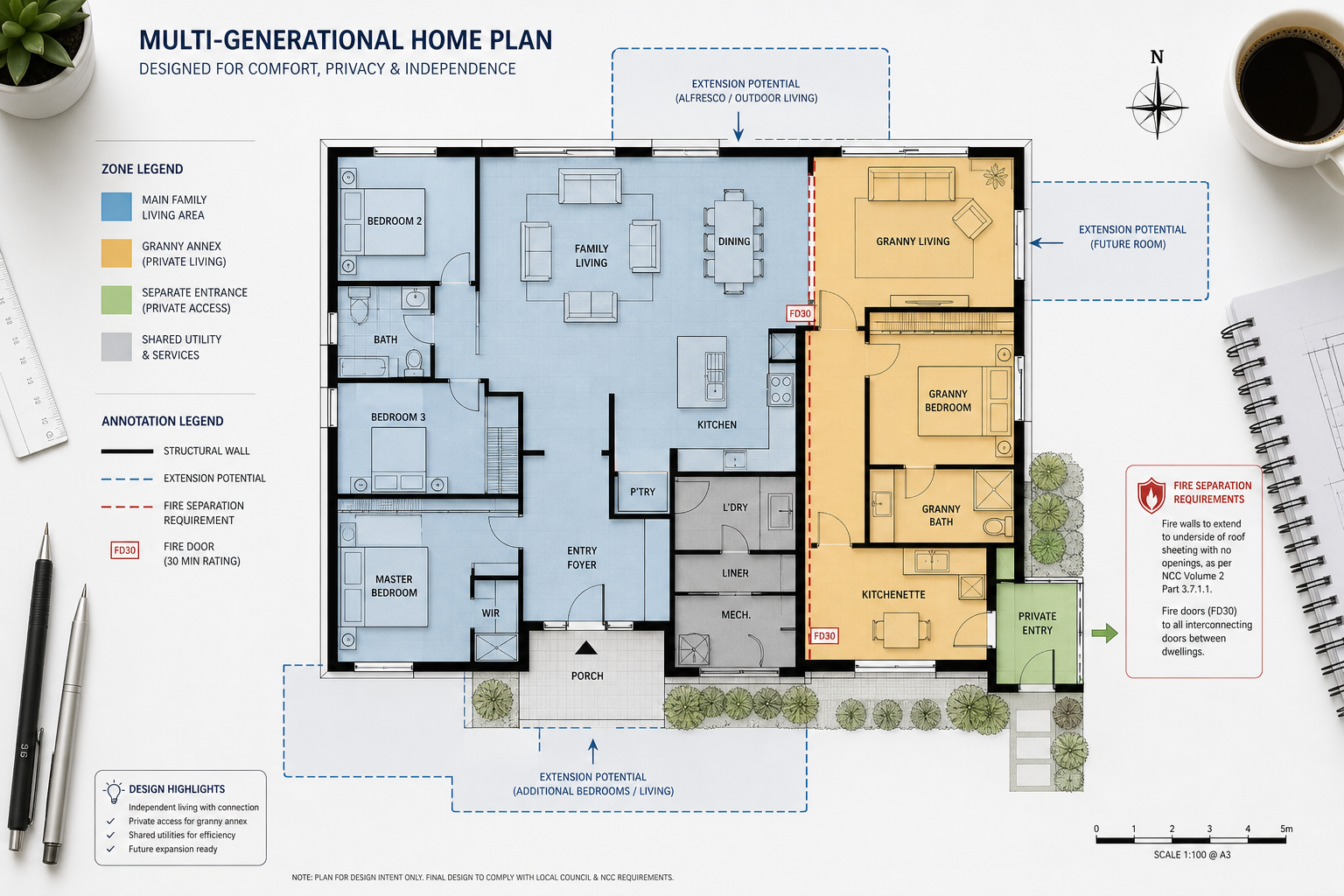
The most common adaptation in multigenerational properties is the creation of a self-contained annex — either through internal conversion of an existing space (garage, loft, basement) or through a new-build extension. Builders are increasingly incorporating semi-detached units with separate entrances and additional square footage into new developments to meet this demand [3].
For existing properties, surveyors must assess:
Foundation capacity. Any proposed extension must be supported by adequate foundations. The surveyor should identify the existing foundation type, depth, and condition, and flag where additional structural engineering input is required before planning is pursued.
Load-bearing wall identification. Internal reconfigurations to create independent living units frequently involve removing or modifying load-bearing walls. The survey must clearly distinguish between structural and non-structural elements and recommend engineer sign-off where alterations are proposed.
Roof structure condition. Loft conversions remain one of the most cost-effective ways to create additional accommodation. A specialist roof survey should be recommended where the roof structure shows signs of spread, sagging, or inadequate truss capacity for habitable conversion.
Subsidence and ground movement. Properties in areas with shrinkable clay soils — common across South East England and parts of Surrey — carry elevated subsidence risk when extensions are proposed. Subsidence surveys should be recommended proactively where trees are present near the proposed footprint or where existing crack patterns suggest historic movement.
Accessibility and Adaptability Assessment
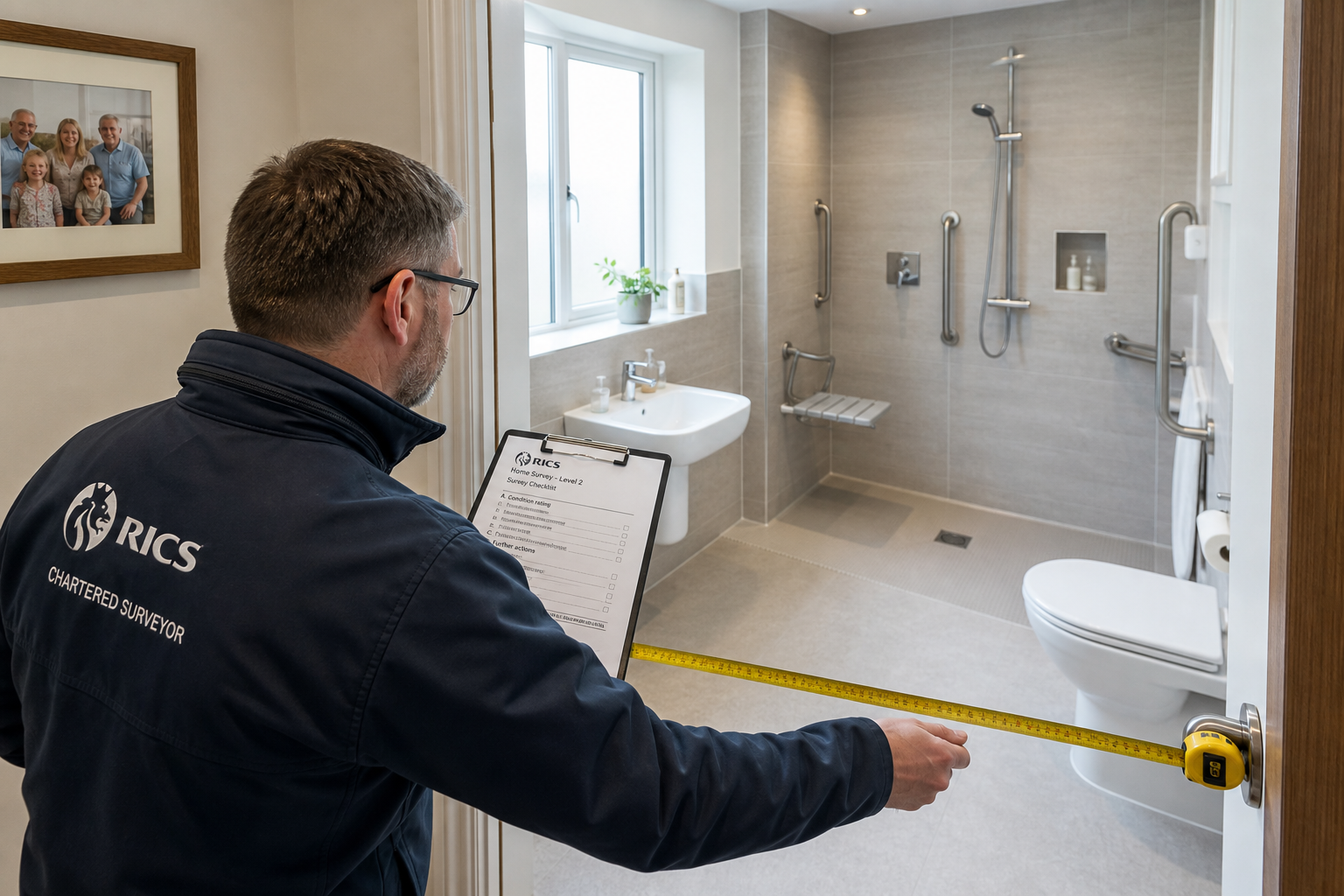
A multigenerational home must function for residents across a wide age and mobility spectrum. The survey protocol should include a dedicated accessibility audit covering:
- Doorway widths: Minimum 775mm clear opening is required for wheelchair access; 850mm is recommended for comfortable use.
- Level-access thresholds: Steps at entrances and between internal zones are a primary barrier for elderly or mobility-impaired residents.
- Bathroom and WC provision: Ground-floor accessible WC and wet room capability should be assessed, including floor loading for grab rail fixings and drainage gradient.
- Stair configuration: Where the annex occupies upper floors, stair pitch, handrail continuity, and the feasibility of future stairlift installation must be noted.
- Circulation space: Turning circles for wheelchair users (minimum 1500mm diameter) in key rooms and corridors.
"The most overlooked element in multigenerational survey instructions is the gap between what a property currently offers and what it could offer with targeted adaptation — surveyors who quantify that gap add genuine value."
Fire Safety and Compartmentation
Creating independent living units within a single structure introduces fire safety obligations that do not apply to standard single-household properties. The survey must assess:
- Existing fire compartmentation between the main dwelling and the proposed annex
- The condition and rating of internal doors at key fire boundaries
- Smoke and heat detection provision across both units
- Means of escape from upper-floor accommodation, particularly where a separate staircase does not exist
Where the property is being let, the surveyor should flag that Houses in Multiple Occupation (HMO) licensing thresholds may apply depending on the number of unrelated occupants, triggering additional fire safety requirements under the Housing Act 2004.
Planning, Party Wall, and Legal Compliance in Multi-Gen Adaptations
Understanding Permitted Development Limits
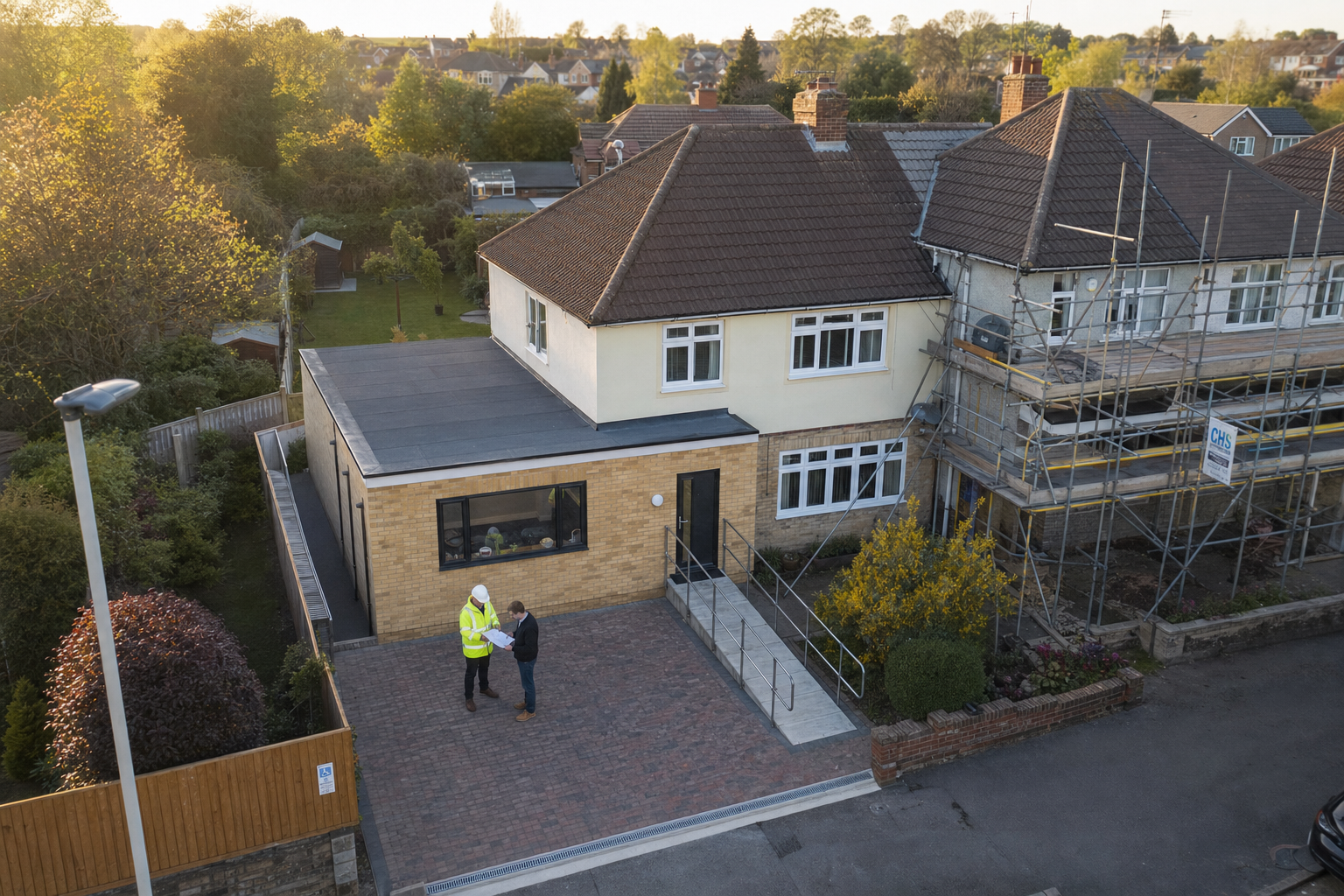
Not all multigenerational adaptations require full planning permission. Single-storey rear extensions up to 4 metres (detached) or 3 metres (semi-detached or terraced) may fall within Permitted Development rights, subject to conditions. However, the creation of a self-contained annex with independent cooking facilities can trigger a change of use assessment, particularly if the unit is to be separately let.
Surveyors should clearly advise clients to seek pre-application planning advice before committing to a purchase where significant adaptation is intended. The survey report should document the property's planning history, any existing Article 4 Directions that remove PD rights, and the likely classification of any proposed works.
For properties in Surrey, Sussex, or South East London — areas with high concentrations of multigenerational demand — local planning authority attitudes to annex creation vary significantly and should be investigated at survey stage.
Party Wall Considerations
Extensions to multigenerational homes frequently involve works to or near party walls. The rise in multigenerational living has led to a measurable increase in home extensions and the associated need for Party Wall Awards to ensure legal compliance [7]. Surveyors should:
- Identify all party walls, party fence walls, and party structures within the scope of proposed works
- Advise on notification obligations under the Party Wall etc. Act 1996
- Recommend instruction of a party wall agreed surveyor where works fall within the Act's scope
Failure to serve correct notices before commencing works can expose owners to injunctions and liability for neighbour losses — a risk that is materially higher in densely built suburban areas where multigenerational demand is concentrated.
Licensing to Alter in Leasehold Properties
Where the multigenerational property is held on a long lease — common in converted flats and purpose-built apartment blocks — any structural alteration will require landlord consent in the form of a licence to alter. The survey should identify whether the property is leasehold, review any alteration restrictions in the lease, and advise on the consent process before the client commits to an adaptation strategy.
Regional Demand Patterns and Survey Priorities in 2026
Where Multigenerational Demand Is Concentrated
Demand for multigenerational properties is not evenly distributed. In the United States, markets such as Urban Honolulu (12.1% multigenerational household share) and Riverside (10.9%) lead nationally [1]. In the UK context, pressure is concentrated in high-cost commuter belts and urban centres where housing affordability is most acute.
States and regions with the greatest structural preparedness — measured by bedroom count and basement provision — are best placed to absorb demand without requiring major adaptation [9]. In the UK, Victorian and Edwardian semi-detached stock in outer London and the Home Counties offers significant conversion potential, but typically requires targeted structural and accessibility investment.
Survey priority by property type:
| Property Type | Key Survey Focus Areas |
|---|---|
| Victorian semi-detached | Foundation capacity, load-bearing walls, roof structure |
| 1960s-1980s detached | Cavity wall insulation, flat roof condition, drainage |
| Purpose-built bungalow | Accessibility baseline, extension footprint, planning history |
| Converted flat (leasehold) | Licence to alter, fire compartmentation, lease restrictions |
| New-build with annex | Snagging, utility separation, planning condition compliance |
For new-build properties marketed with integrated multigenerational suites, a snagging report is essential before legal completion to ensure that the annex specification matches what was sold and that all building regulation sign-offs are in place.
Smart Technology and Sustainable Design
Home design predictions for 2026 point strongly toward smart-tech integration, flexible layouts, and sustainability as the defining features of multigenerational homes [8]. Surveyors should be equipped to comment on:
- The condition and capacity of electrical consumer units to support smart home systems and EV charging
- The feasibility of solar PV installation given roof orientation, pitch, and structural loading
- The thermal performance of the building envelope, particularly where elderly residents with higher heating needs will occupy the annex
- Broadband infrastructure capacity to support multiple independent households
These elements are increasingly referenced in lettings particulars and buyer expectations, and their absence or inadequacy represents a material factor in adaptability assessment.
Applying Building Survey Protocols for Multi-Generational Homes: Assessing Adaptability in 2026 Lettings Surge Across Surveyor Networks
Chartered surveyors operating across London, North West London, and the wider South East are encountering multigenerational survey instructions with increasing frequency in 2026. The protocols described in this article are not aspirational — they reflect the practical reality of what clients need when they are making high-stakes decisions about properties that must serve two or three generations simultaneously.
Surveyors should consider developing a dedicated multigenerational assessment checklist as a supplement to their standard Level 3 report template, covering:
- Accessibility audit (doorways, thresholds, bathroom provision, circulation)
- Structural capacity for proposed adaptation works
- Fire compartmentation and means of escape
- Utility independence (metering, consumer units, drainage)
- Planning history and PD rights assessment
- Party wall obligations
- Leasehold consent requirements
- Smart technology and sustainability readiness
This structured approach ensures that no material factor is overlooked and that the report genuinely serves the client's multigenerational use case rather than simply recording the property's current condition.
Conclusion
The convergence of affordability pressure, demographic change, and constrained housing supply has made multigenerational living one of the defining property trends of 2026. For surveyors, this is both a professional challenge and a significant opportunity. Clients instructing building surveys on properties intended for multigenerational use need more than a structural condition report — they need a rigorous adaptability assessment that addresses accessibility, extension viability, planning compliance, fire safety, and utility independence in a single, coherent document.
Actionable next steps for surveyors and clients:
- Always instruct a RICS Level 3 Building Survey for multigenerational properties — a Level 2 report will not provide adequate depth.
- Commission a schedule of condition before any adaptation works begin to protect all parties from future dilapidation claims.
- Seek pre-application planning advice before committing to a purchase where annex creation or extension is intended.
- Engage a party wall surveyor early where works are likely to affect shared structures.
- Use the multigenerational checklist framework to ensure accessibility, fire safety, and utility independence are all assessed and reported.
- For leasehold properties, review alteration covenants before exchange and budget for licence to alter costs.
The properties that will command the strongest lettings premiums and the most durable tenant demand in 2026 are those that can genuinely accommodate multiple generations in comfort, safety, and legal compliance. A thorough building survey — conducted by a chartered surveyor who understands the specific protocols for multigenerational assessment — is the foundation on which that confidence is built.
References
[1] Multigeneration 2026 – https://www.realtor.com/research/multigeneration-2026/?utm_source=openai
[2] Nearly 4 Million American Homes Now House Multiple Generations New Realtorcomr Report – https://www.nasdaq.com/press-release/nearly-4-million-american-homes-now-house-multiple-generations-new-realtorcomr-report?utm_source=openai
[3] 136686 Multi Gen Floor Plans And More How Builders Are Responding Multigenerational – https://www.planetizen.com/news/2026/01/136686-multi-gen-floor-plans-and-more-how-builders-are-responding-multigenerational?utm_source=openai
[4] Multigenerational Living California Boom Adus Report May 2026 – https://www.realtor.com/news/trends/multigenerational-living-california-boom-adus-report-may-2026/?utm_source=openai
[5] Multigenerational Homebuying Affordability – https://www.housingwire.com/articles/multigenerational-homebuying-affordability/?utm_source=openai
[6] Single Family Rentals Surge As Btr Drives Sector Recovery – https://www.globest.com/2026/02/05/single-family-rentals-surge-as-btr-drives-sector-recovery/?utm_source=openai
[7] Party Wall Awards For Multi Generational Home Adaptations 2026 Survey Protocols For Family Extensions – https://www.canterburysurveyors.com/blog/party-wall-awards-for-multi-generational-home-adaptations-2026-survey-protocols-for-family-extensions/?utm_source=openai
[8] Thumbtack And Redfin Reveal The Top Home Trend Predictions Shaping 2026 – https://www.businesswire.com/news/home/20251202390725/en/Thumbtack-and-Redfin-Reveal-the-Top-Home-Trend-Predictions-Shaping-2026?utm_source=openai
[9] Best States Multigenerational Living 2026 – https://www.housecanary.com/blog/best-states-multigenerational-living-2026?utm_source=openai
[10] Multigenerational Homes Rising Costs B2980590 – https://www.the-independent.com/us/money/multigenerational-homes-rising-costs-b2980590.html?utm_source=openai