
The UK property market in 2026 presents a fascinating tale of two regions. While Northern England experiences unprecedented growth and investor optimism, London and the South East face stabilization challenges that demand sophisticated valuation techniques. For property professionals navigating Adapting Valuations to RICS 2026 Optimism: Techniques for Stabilizing Southern Markets vs Northern Surge, understanding these regional disparities has never been more critical. The Royal Institution of Chartered Surveyors (RICS) has responded with updated standards that provide essential frameworks for accurate property assessments across these divergent markets.
Key Takeaways
- 🏢 Regional Divergence: Northern markets show strong growth momentum while Southern markets require stabilization-focused valuation approaches in 2026
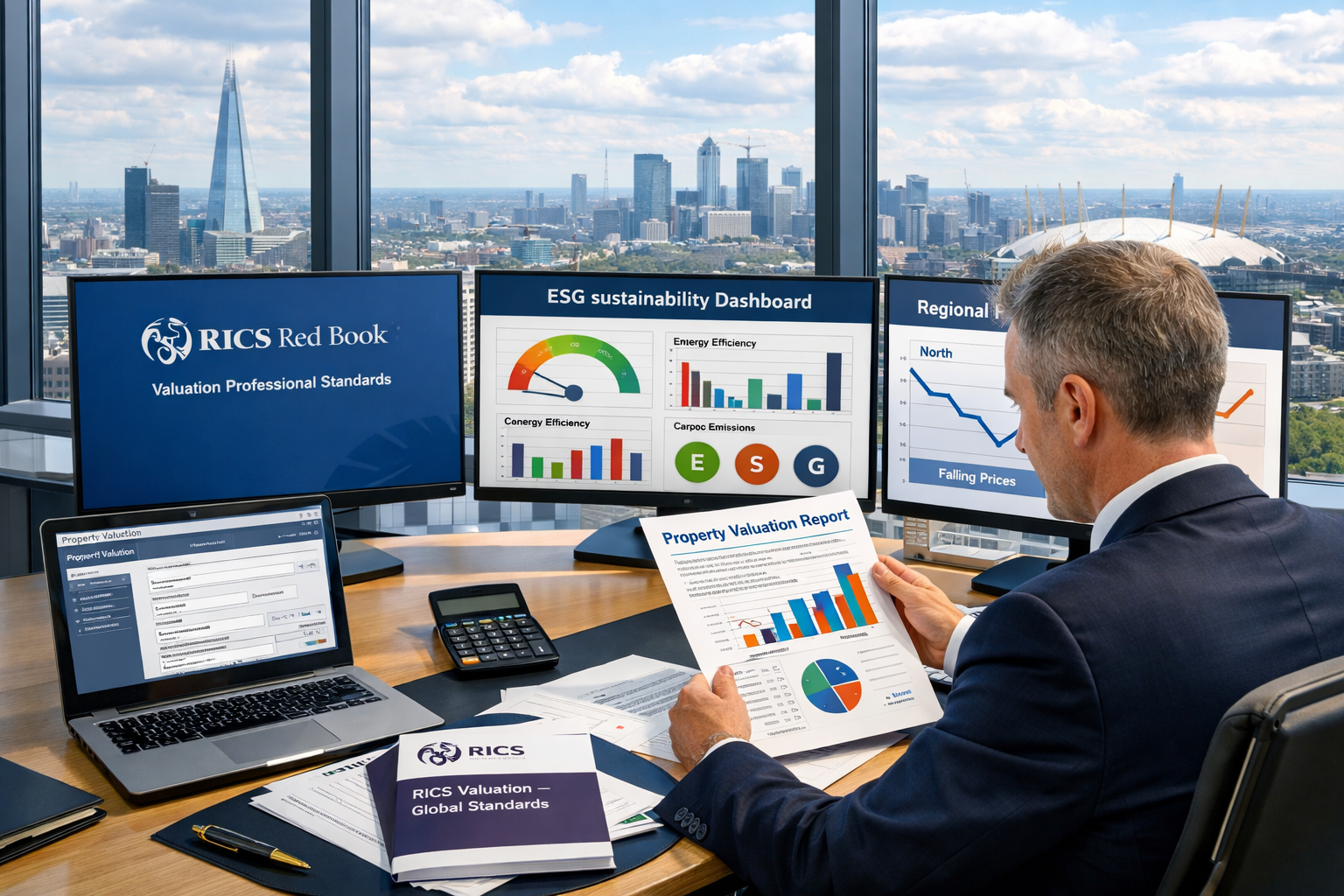
- 📊 RICS Updates: The fourth edition of RICS ESG/Sustainability standards, effective April 30, 2026, introduces jurisdiction-specific guidance crucial for accurate valuations[1]
- 💡 Technique Adaptation: Valuers must employ different methodologies for high-growth Northern properties versus established Southern markets
- 🌱 ESG Integration: New clarity on capital and operational expenditure linked to sustainability factors directly impacts valuation accuracy[1]
- 📈 12-Month Forecasting: Latest RICS price expectation data reveals contrasting trajectories requiring tailored valuation strategies
Understanding the 2026 Market Divide: North vs South
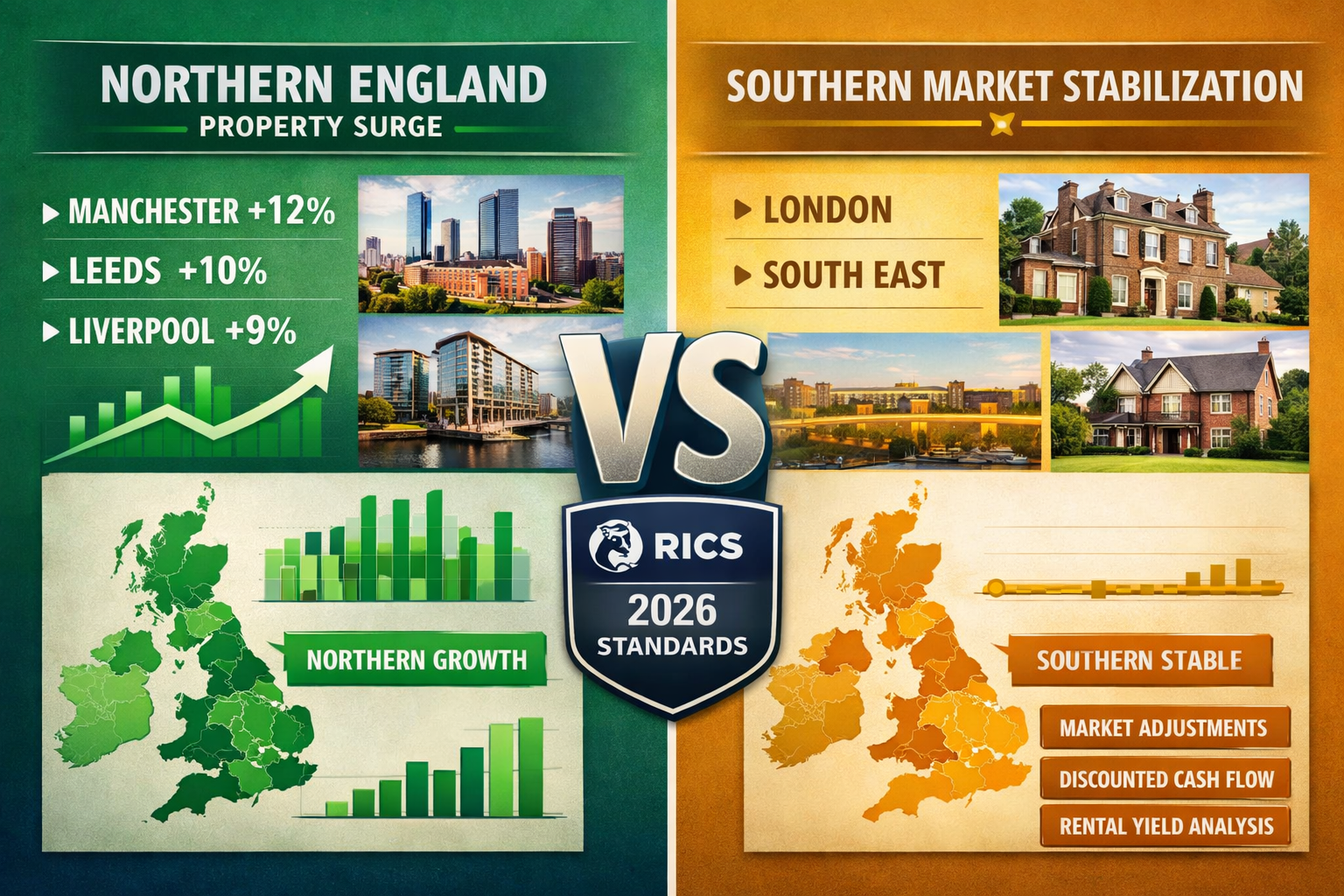
The UK property landscape has undergone a remarkable transformation. Northern cities including Manchester, Leeds, Liverpool, and Newcastle have emerged as powerhouse markets, attracting significant investment and demonstrating robust price appreciation. Meanwhile, London and the South East—traditionally the nation's property strongholds—have entered a period of market maturation and stabilization.
What's Driving the Northern Surge?
Several factors contribute to the Northern property boom:
Economic Regeneration 🏗️
Major infrastructure projects, including High Speed 2 (HS2) extensions and local transport improvements, have enhanced connectivity and attracted businesses relocating from expensive Southern locations.
Affordability Appeal
With average property prices significantly lower than London equivalents, Northern markets offer better value propositions for both residential buyers and commercial investors.
Employment Growth
Technology hubs, financial services expansion, and creative industries have established strong footholds across Northern cities, creating employment opportunities that support property demand.
Government Investment
Levelling Up initiatives continue channeling resources toward Northern development, improving infrastructure and public services that enhance property values.
Southern Market Stabilization Challenges
The South East faces different dynamics:
- Price Ceiling Effects: Years of sustained growth have pushed values to levels where further appreciation faces resistance
- Affordability Crisis: High entry costs limit buyer pools and transaction volumes
- Economic Uncertainty: Brexit adjustments and global economic factors disproportionately impact London's international investor base
- Hybrid Working Impact: Reduced office demand and residential migration patterns affect traditional valuation assumptions
For professionals working with RICS registered valuers in London, these factors necessitate careful recalibration of valuation methodologies.
RICS 2026 Standards: New Framework for Regional Adaptation
The Royal Institution of Chartered Surveyors released the fourth edition of its global professional standard on ESG and sustainability in commercial property valuation on January 28, 2026, with the standards becoming effective April 30, 2026[1]. This update provides critical guidance for Adapting Valuations to RICS 2026 Optimism: Techniques for Stabilizing Southern Markets vs Northern Surge.
Key Updates in the Fourth Edition
| Standard Component | Impact on Valuations | Regional Relevance |
|---|---|---|
| Jurisdiction-Specific Sections | Tailored guidance for UK, EU, and Australia markets[1] | Enables precise application across different regulatory environments |
| ESG Cost Assumptions | Clarity on capital and operational expenditure reflection[1] | Critical for both retrofit-heavy Southern stock and new Northern developments |
| Sustainability Metrics | Enhanced framework for green building premiums | Particularly relevant for Northern new-builds meeting higher standards |
| Disclosure Requirements | Expanded transparency obligations | Affects both regions but implementation differs by market maturity |
"The updated standard includes new jurisdiction-specific sections for the UK, EU and Australia, reflecting established regulatory and disclosure frameworks in those markets."[1]
Practical Guidance on Cost Assumptions
The 2026 RICS standards provide much-needed clarity on when and how capital and operational expenditure linked to ESG factors may be reflected in valuation, and importantly, the limits of a valuer's role[1]. This guidance proves essential when assessing:
- Retrofit Requirements: Older Southern properties often require substantial ESG upgrades
- New Development Premiums: Northern properties built to current sustainability standards
- Operational Efficiency: Ongoing cost differentials affecting investment yields
- Regulatory Compliance: Future-proofing against evolving environmental legislation
Understanding RICS valuation cost structures helps clients budget appropriately for these comprehensive assessments.
Techniques for Adapting Valuations to RICS 2026 Optimism in Northern Markets
The Northern property surge requires valuation techniques that capture growth momentum while maintaining professional skepticism. Adapting Valuations to RICS 2026 Optimism: Techniques for Stabilizing Southern Markets vs Northern Surge means applying different methodologies to high-growth versus stable markets.
Growth Adjustment Methodologies
1. Comparable Evidence Weighting 📊
When valuing Northern properties, recent comparables carry greater significance due to rapid market movement. Valuers should:
- Prioritize transactions from the last 3-6 months over older data
- Apply time adjustments more aggressively to account for appreciation rates
- Consider multiple comparable sources to validate rapid growth patterns
- Document market momentum indicators supporting adjustments
2. Development Pipeline Analysis
Northern markets benefit from substantial development activity. Effective valuations incorporate:
- Planned infrastructure projects and completion timelines
- Commercial development schedules affecting supply dynamics
- Residential pipeline impact on neighborhood evolution
- Regeneration scheme progress and public investment commitments
3. Yield Compression Recognition
As Northern markets mature, investment yields compress. Valuers must:
- Track yield movements across comparable Northern cities
- Benchmark against similar growth markets nationally and internationally
- Justify yield assumptions with investor sentiment data
- Apply appropriate caps to prevent over-optimistic projections
4. ESG Premium Quantification
New Northern developments often incorporate superior sustainability features. The 2026 RICS guidance helps valuers:
- Quantify energy efficiency benefits in operational cost savings
- Assess market premiums for green certifications (BREEAM, LEED)
- Evaluate future-proofing advantages against regulatory changes
- Document ESG factors transparently per RICS requirements[1]
Risk Mitigation in High-Growth Markets
While optimism drives Northern markets, professional valuers must balance enthusiasm with prudence:
- Sensitivity Analysis: Model various growth scenarios including market corrections
- Historical Context: Reference previous boom-bust cycles in comparable markets
- Economic Dependencies: Assess vulnerability to specific industries or employers
- Liquidity Considerations: Evaluate transaction volumes supporting price levels
For those working with chartered surveyors in North London, these techniques apply equally to London's northern boroughs experiencing localized growth.
Stabilization Techniques for Southern Market Valuations
Southern markets, particularly London and the South East, require different approaches. Adapting Valuations to RICS 2026 Optimism: Techniques for Stabilizing Southern Markets vs Northern Surge means recognizing maturity and applying stabilization-focused methodologies.
Mature Market Valuation Approaches
1. Historical Performance Analysis 📉
Southern markets benefit from extensive transaction histories. Effective valuations leverage:
- Long-term price trend analysis identifying cyclical patterns
- Multiple market cycle data revealing support and resistance levels
- Correlation studies with economic indicators (employment, GDP, interest rates)
- Comparative analysis against international gateway cities
2. Micro-Market Segmentation
London and the South East contain numerous distinct submarkets requiring granular analysis:
- Prime Central London: International investor-driven with unique dynamics
- Suburban Commuter Zones: Hybrid working impact assessment
- Regeneration Areas: Localized growth within broader stabilization
- Heritage Locations: Premium positioning despite market headwinds
Professionals working with chartered surveyors in South East London understand these micro-market nuances intimately.
3. Rental Value Emphasis
In stabilizing capital value environments, rental income becomes paramount:
- Detailed rental growth forecasting based on employment and demographics
- Tenant covenant strength assessment affecting income security
- Lease structure analysis (length, breaks, reviews) impacting value
- Void period assumptions reflecting current letting market conditions
4. Refurbishment and Retrofit Valuation
Southern markets contain substantial older stock requiring ESG upgrades. The 2026 RICS guidance on capital expenditure assumptions[1] helps valuers:
- Assess retrofit costs against value enhancement
- Evaluate regulatory compliance timelines (EPC requirements, net zero targets)
- Quantify obsolescence risks for non-compliant properties
- Model refurbishment scenarios with cost-benefit analysis
Addressing Affordability Constraints
Southern market valuations must acknowledge affordability ceilings:
- Buyer Profile Analysis: Understanding realistic purchaser demographics
- Mortgage Availability: Loan-to-value and income multiple constraints
- Alternative Tenure Models: Build-to-rent, shared ownership impacts
- Price Resistance Levels: Psychological barriers at key price points
Those seeking guidance on London property valuation will find these considerations essential for accurate assessments.
Implementing RICS 2026 ESG Standards Across Regional Markets
Both Northern and Southern markets must integrate the enhanced ESG framework introduced in the 2026 RICS standards, though implementation differs significantly.
Northern Market ESG Integration
New Development Advantages 🌱
Northern properties often incorporate modern sustainability features from inception:
- Energy-efficient building systems reducing operational costs
- Green certifications (BREEAM Excellent/Outstanding) commanding premiums
- Future-proof specifications exceeding current regulatory minimums
- Smart building technologies enhancing tenant appeal
Valuers should quantify these advantages through:
- Comparable analysis of certified versus non-certified properties
- Operational cost modeling demonstrating savings
- Tenant demand assessment for sustainable space
- Premium justification within RICS framework[1]
Infrastructure Sustainability
Northern regeneration often emphasizes sustainable transport and green infrastructure:
- Proximity to electric vehicle charging networks
- Access to cycling infrastructure and pedestrian zones
- Connection to renewable energy grids
- Green space provision and biodiversity enhancement
Southern Market ESG Challenges
Retrofit Complexity
Older Southern stock faces substantial ESG upgrade requirements:
- Listed building constraints limiting intervention options
- Retrofit cost-effectiveness in high-value but inefficient properties
- Phased improvement strategies balancing cost and compliance
- Obsolescence risk for properties unable to meet standards
The 2026 RICS guidance on capital expenditure assumptions[1] provides crucial clarity for valuing properties requiring significant ESG investment.
Regulatory Pressure
Southern markets face stricter enforcement timelines:
- Minimum EPC requirements for rental properties
- Commercial property disclosure obligations
- Net zero pathway compliance for institutional portfolios
- Green finance availability favoring compliant assets
For commercial property valuations in London, ESG compliance increasingly determines marketability and value.

12-Month Forecasting: Regional Price Expectations
Accurate Adapting Valuations to RICS 2026 Optimism: Techniques for Stabilizing Southern Markets vs Northern Surge requires robust forecasting methodologies incorporating latest RICS price expectation data.
Northern Market Projections
Optimistic Indicators 📈
- Sustained transaction volume growth
- Rental yield compression indicating investor confidence
- Development pipeline supporting continued demand
- Employment growth exceeding national averages
- Infrastructure investment maintaining momentum
Forecasting Techniques:
- Momentum Modeling: Applying growth rates with appropriate dampening factors
- Comparative City Analysis: Benchmarking against similar UK and international markets
- Economic Correlation: Linking projections to employment and GDP forecasts
- Supply-Demand Balancing: Assessing development pipeline against demand indicators
Southern Market Projections
Stabilization Indicators 📊
- Transaction volumes stabilizing at lower levels
- Price adjustments in previously overheated segments
- Rental growth outpacing capital appreciation
- Selective strength in prime and regeneration zones
- International investment returning selectively
Forecasting Techniques:
- Base-Case Stability: Assuming minimal capital growth with rental increases
- Segmentation Analysis: Identifying outperforming and underperforming submarkets
- Affordability Modeling: Incorporating income growth and mortgage availability
- Sentiment Tracking: Monitoring investor and occupier confidence indicators
Professionals offering Red Book valuations in London must clearly document forecasting assumptions and sensitivities.
Practical Application: Case Study Comparisons
Northern Case Study: Manchester Commercial Development
Property: New Grade A office building, city center location
Valuation Challenges:
- Limited directly comparable evidence due to new supply
- Rapid yield compression requiring justification
- ESG premium quantification for BREEAM Excellent certification
- Growth projection in fast-moving market
RICS 2026 Application:
- Jurisdiction-specific UK guidance applied[1]
- ESG operational savings quantified per new standards[1]
- Multiple comparable cities referenced (Leeds, Birmingham)
- Sensitivity analysis modeling 5-15% growth scenarios
- Clear documentation of assumptions and limitations
Southern Case Study: South West London Residential Portfolio
Property: Victorian conversion portfolio requiring retrofit
Valuation Challenges:
- Stabilizing capital values with affordability constraints
- Substantial ESG upgrade costs affecting net value
- Micro-market analysis in diverse borough
- Rental growth supporting investment case
RICS 2026 Application:
- Capital expenditure assumptions for ESG compliance[1]
- Phased improvement strategy valuation impact
- Rental value emphasis over capital appreciation
- Obsolescence risk quantification for non-compliant units
- Detailed cost-benefit analysis of retrofit options
Those working with chartered surveyors in South West London frequently encounter these retrofit valuation challenges.
Technology and Data in Regional Valuation Adaptation
Modern valuation techniques increasingly leverage technology for regional market analysis:
Data Analytics Tools
Market Intelligence Platforms 💻
- Real-time transaction data aggregation
- Automated comparable selection and adjustment
- Yield tracking across regional markets
- Sentiment analysis from multiple sources
Geographic Information Systems (GIS)
- Spatial analysis of price patterns
- Infrastructure impact modeling
- Demographic overlay for demand forecasting
- Environmental risk assessment
ESG Data Integration
- Energy performance certificate databases
- Green certification registries
- Carbon emission modeling tools
- Regulatory compliance tracking systems
Artificial Intelligence Applications
While AI supports valuation processes, RICS standards emphasize professional judgment:
- Automated Valuation Models (AVMs): Useful for initial estimates, requiring professional validation
- Predictive Analytics: Supporting forecasting but not replacing market knowledge
- Natural Language Processing: Analyzing market reports and sentiment
- Risk Modeling: Scenario testing and sensitivity analysis
Professional Development and RICS Compliance
Successfully Adapting Valuations to RICS 2026 Optimism: Techniques for Stabilizing Southern Markets vs Northern Surge requires ongoing professional development.
Essential Training Areas
- RICS 2026 Standards Mastery: Thorough understanding of fourth edition ESG guidance[1]
- Regional Market Expertise: Deep knowledge of specific Northern or Southern submarkets
- ESG Valuation Techniques: Quantifying sustainability factors per new standards
- Data Analytics Competency: Leveraging technology while maintaining professional judgment
- Forecasting Methodologies: Robust projection techniques for divergent markets
Quality Assurance Practices
- Peer Review: Independent validation of complex valuations
- Documentation Standards: Comprehensive assumption and methodology recording
- Sensitivity Testing: Multiple scenario modeling for key assumptions
- Client Communication: Clear explanation of regional dynamics and limitations
- Continuing Education: Regular updates on market conditions and regulatory changes
Regional Considerations Beyond North-South Divide
While the North-South contrast dominates discussions, other regional factors merit attention:
Midlands Markets
Cities like Birmingham and Nottingham demonstrate hybrid characteristics:
- Growth momentum approaching Northern levels
- More established markets than emerging Northern cities
- HS2 impact creating localized surges
- Balanced approach combining growth and stability techniques
Coastal and Rural Markets
Different dynamics require specialized approaches:
- Tourism dependency affecting seasonal valuations
- Second home markets with unique demand drivers
- Agricultural land conversion opportunities
- Environmental risks (flooding, coastal erosion)
Scotland and Wales
Distinct regulatory environments require adaptation:
- Different planning and building regulations
- Separate ESG compliance frameworks
- Unique market drivers and investor profiles
- Currency and economic policy considerations
Professionals working across regions, such as chartered surveyors in Surrey, must adapt techniques to local conditions.
Conclusion
Adapting Valuations to RICS 2026 Optimism: Techniques for Stabilizing Southern Markets vs Northern Surge represents one of the most significant challenges facing UK property professionals in 2026. The divergence between high-growth Northern markets and stabilizing Southern regions demands sophisticated, regionally-tailored valuation approaches grounded in the latest RICS standards.
The fourth edition of RICS ESG and sustainability guidance, effective April 30, 2026, provides essential frameworks for integrating environmental factors across both market types[1]. Jurisdiction-specific UK guidance and clarity on capital expenditure assumptions enable valuers to address retrofit challenges in Southern markets and quantify sustainability premiums in Northern developments[1].
Key Action Steps for Professionals
✅ Master the 2026 RICS Standards: Thoroughly understand jurisdiction-specific guidance and ESG integration requirements
✅ Develop Regional Expertise: Build deep knowledge of specific Northern or Southern submarkets
✅ Implement Appropriate Techniques: Apply growth-focused methodologies in the North, stabilization approaches in the South
✅ Leverage Technology Wisely: Use data analytics and AI tools while maintaining professional judgment
✅ Document Comprehensively: Record assumptions, methodologies, and limitations transparently
✅ Communicate Clearly: Explain regional dynamics and valuation rationale to clients
✅ Maintain Professional Development: Stay current with market conditions and regulatory changes
The UK property market's regional divergence will likely persist throughout 2026 and beyond. Professionals who successfully adapt their valuation techniques to these contrasting dynamics—embracing Northern optimism while applying appropriate caution, and recognizing Southern stabilization while identifying pockets of opportunity—will deliver the most accurate, defensible, and valuable assessments for their clients.
Whether conducting matrimonial valuations, commercial property assessments, or residential appraisals, the principles of regional adaptation and RICS compliance remain paramount. The property professionals who thrive in 2026 will be those who combine technical excellence with market insight, regulatory compliance with practical application, and professional skepticism with recognition of genuine market opportunities.
References
[1] Esg And Sustainability In Commercial Property Valuation – https://www.rics.org/profession-standards/rics-standards-and-guidance/sector-standards/valuation-standards/esg-and-sustainability-in-commercial-property-valuation
[2] Rics Publishes New Guidance – https://propertyindustryeye.com/rics-publishes-new-guidance/