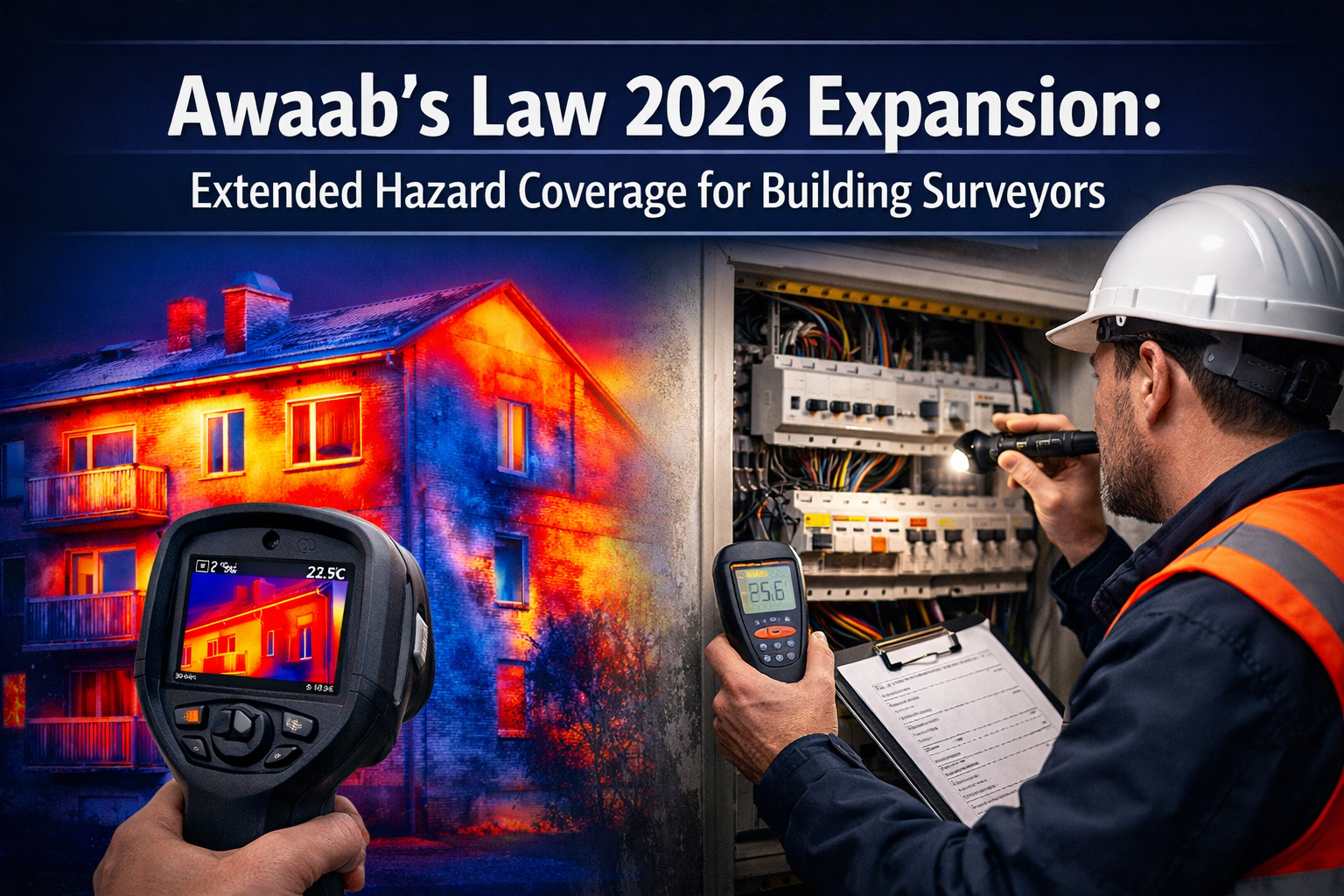

Building surveyors face a seismic shift in regulatory obligations as the 2026 expansion of Awaab's Law extends far beyond its original damp and mould focus. With over 40% of housing complaints relating to moisture issues alone, the legislation now encompasses electrical hazards, fire risks, excess temperatures, structural collapse, and fall hazards—fundamentally transforming how surveyors assess rental properties and advise landlords on compliance.[1] The Awaab's Law 2026 Expansion: What Building Surveyors Need to Know About Extended Hazard Coverage represents one of the most significant changes to housing safety regulation in recent years, demanding immediate attention from surveying professionals across the sector.
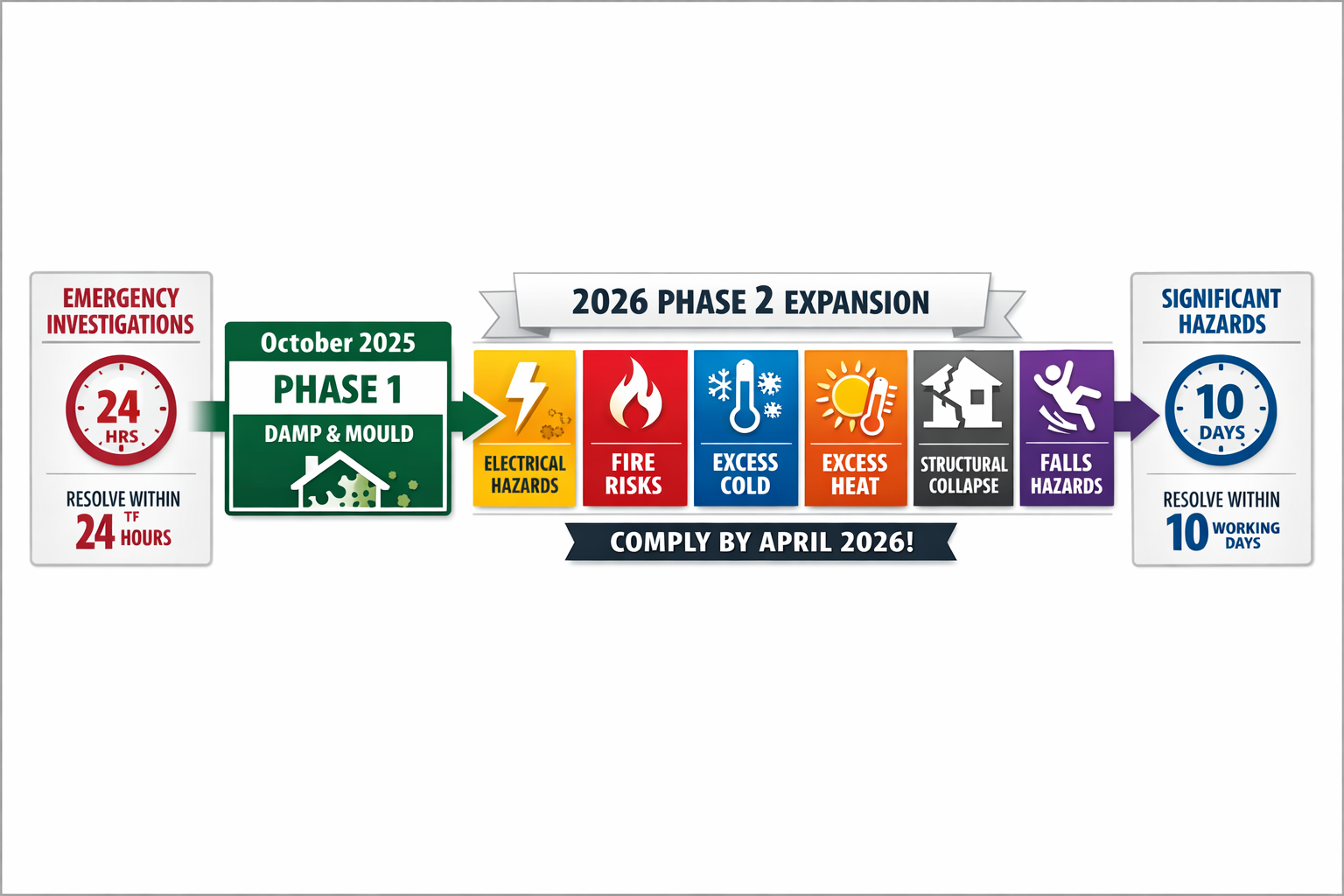
Following Phase 1's implementation in October 2025, which established strict timeframes for damp and mould remediation, the upcoming Phase 2 expansion creates a comprehensive hazard assessment framework that building surveyors must master. Named after two-year-old Awaab Ishak, who died in 2020 from respiratory conditions caused by prolonged black mould exposure that landlords repeatedly ignored, this legislation carries both moral weight and severe financial penalties for non-compliance.[2]
Key Takeaways
- Phase 2 expands coverage to electrical, fire, temperature, structural, and fall hazards beyond the original damp and mould focus, requiring surveyors to conduct comprehensive multi-hazard assessments
- Emergency hazards require 24-hour investigation and remediation, while significant hazards must be investigated within 10 working days with written findings delivered within 3 days
- Safety remedial works must commence within 5 working days of investigation completion, with complex works starting no later than 12 weeks afterward
- Non-compliance results in enforcement orders, unlimited fines, compensation payments, and potential rent loss if properties become uninhabitable
- Building surveyors must update assessment protocols, training, and reporting systems to identify and document all Phase 2 hazards with the same urgency as damp and mould
Understanding the Awaab's Law 2026 Expansion: What Building Surveyors Need to Know About Extended Hazard Coverage
The legislative framework behind Awaab's Law represents a fundamental shift from reactive maintenance to proactive hazard prevention. While Phase 1 concentrated exclusively on damp and mould hazards—conditions that already account for a substantial portion of tenant complaints—the 2026 expansion recognizes that housing safety extends far beyond moisture control.[1]
The Evolution from Phase 1 to Phase 2
Phase 1 came into force on 27 October 2025, establishing the foundational compliance structure that building surveyors must now apply to an expanded range of hazards. The initial phase covered:
- All damp and mould hazards presenting significant risk of harm
- Emergency hazards requiring immediate response
- Strict investigation and remediation timeframes that set the template for Phase 2
The transition to Phase 2 maintains these rigorous standards while extending them to categories previously addressed through general housing health and safety regulations. For building surveyor services, this means developing expertise across multiple technical domains rather than specializing in moisture-related defects alone.
Why the Expansion Matters for Surveyors
The Awaab's Law 2026 Expansion: What Building Surveyors Need to Know About Extended Hazard Coverage fundamentally alters the surveyor's role from building condition assessor to comprehensive safety evaluator. This shift carries several critical implications:
Expanded liability exposure: Surveyors who fail to identify Phase 2 hazards during property assessments may face professional negligence claims, particularly if tenants subsequently suffer harm from conditions that should have been documented.
Enhanced technical requirements: Identifying electrical hazards requires different expertise than assessing structural dampness. Surveyors must either develop multi-disciplinary capabilities or establish reliable referral networks with electrical engineers, fire safety specialists, and structural engineers.
Increased inspection time and costs: Comprehensive hazard assessments take longer than traditional building surveys, affecting both scheduling and pricing structures for surveying practices.
Documentation intensity: The legislation requires written findings within 3 working days of investigation completion, demanding efficient reporting systems and clear communication protocols.[2]
Phase 2 Hazard Categories: Extended Coverage Requirements
The 2026 expansion introduces several new hazard categories that building surveyors must now assess with the same urgency and thoroughness previously reserved for damp and mould. Understanding these categories and their specific assessment requirements is essential for compliance.
Electrical Hazards: New Priority Assessment Area
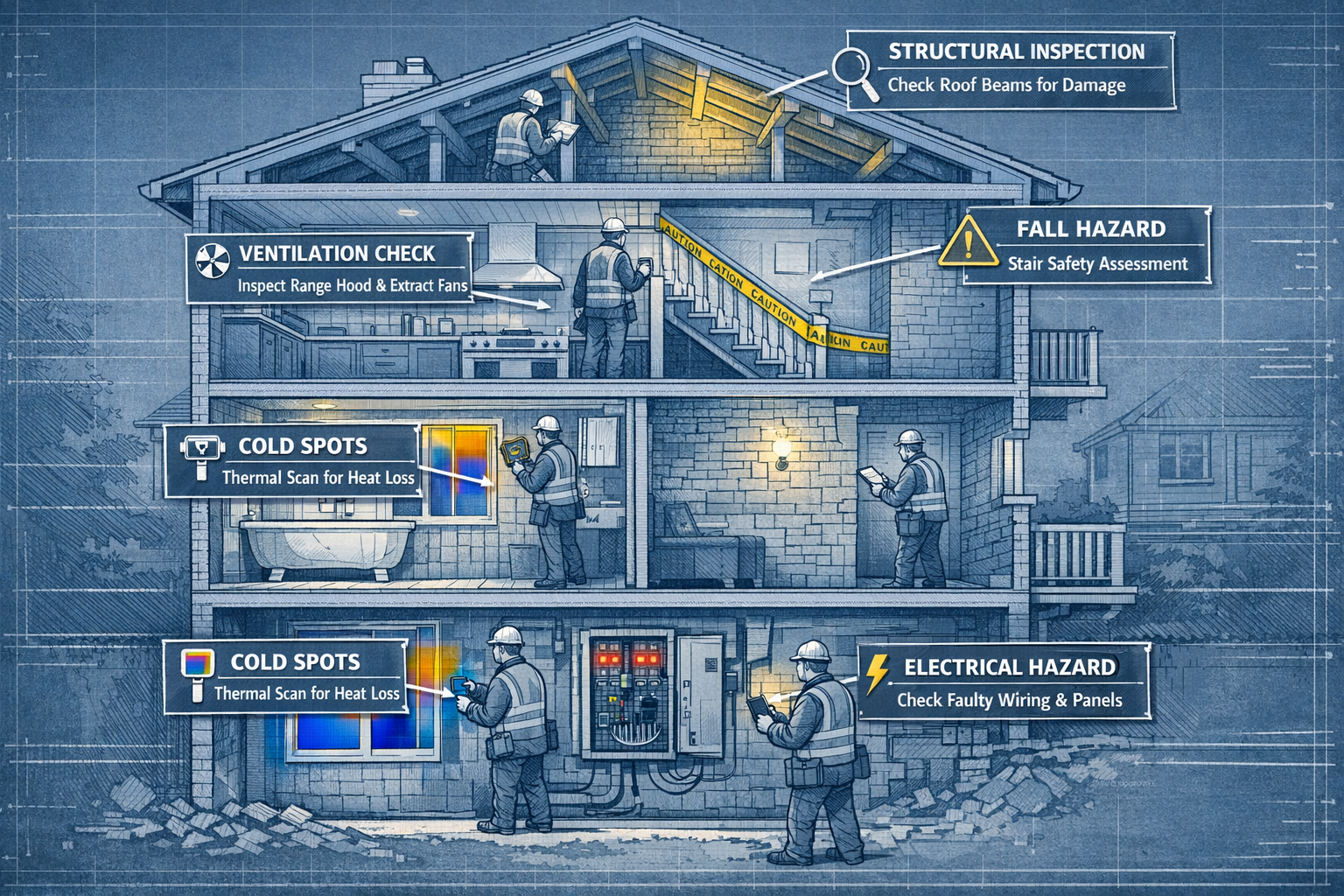
Electrical hazards represent one of the most significant additions to the Phase 2 framework. Building surveyors must now identify and report:
- Faulty wiring and distribution systems that pose fire or electrocution risks
- Inadequate earthing and bonding in wet areas like bathrooms and kitchens
- Overloaded circuits and insufficient electrical capacity for modern usage
- Damaged or missing electrical safety devices including RCDs and circuit breakers
- Exposed wiring and improperly terminated connections
For surveyors conducting structural surveys, electrical assessment now becomes a mandatory component rather than an optional add-on. While surveyors need not possess electrician qualifications, they must recognize obvious defects and know when to recommend specialist electrical testing.[3]
Assessment protocol: Visual inspection of accessible electrical installations, identification of non-compliant installations, verification of recent electrical safety certificates, and documentation of any visible hazards requiring immediate attention.
Fire Safety and Prevention
Fire hazards under Phase 2 encompass both active fire risks and inadequate fire prevention measures:
- Blocked or inadequate fire escape routes in multi-occupancy buildings
- Missing or non-functional smoke and carbon monoxide detectors
- Combustible materials stored near heat sources
- Inadequate fire separation between units in converted properties
- Defective heating appliances posing ignition risks
Building surveyors must assess fire safety holistically, considering both the physical building fabric and the operational aspects of fire prevention. This requires familiarity with current fire safety regulations and the ability to identify deficiencies that landlords must address within statutory timeframes.[4]
Excess Cold and Excess Heat: Temperature Regulation
Temperature-related hazards represent a significant expansion beyond traditional building pathology. The Phase 2 framework recognizes that both excessive cold and heat can cause serious health impacts, particularly for vulnerable tenants.
Excess cold hazards include:
- Inadequate heating systems unable to maintain minimum temperatures
- Poor insulation causing heat loss and condensation
- Draughty windows and doors compromising thermal comfort
- Broken or inefficient boilers and heating controls
- Fuel poverty risks from inefficient heating systems
Excess heat hazards include:
- Inadequate ventilation in summer months
- Overheating in top-floor flats due to poor roof insulation
- Lack of window shading or ventilation options
- Heat-retaining building materials without adequate cooling strategies
Surveyors should utilize thermal imaging equipment during assessments to identify temperature anomalies and heat loss patterns. This technology provides objective evidence of thermal performance issues that support compliance documentation.[1]
Structural Hazards: Collapse and Falls
The inclusion of structural hazards in Phase 2 extends beyond traditional structural survey concerns to encompass specific risk categories:
Structural collapse risks:
- Deteriorated load-bearing elements including beams, joists, and walls
- Foundation movement causing structural instability
- Compromised roof structures at risk of failure
- Corroded steel reinforcement in concrete structures
Falls hazards:
- Unsafe staircases with inadequate handrails or excessive pitch
- Slippery or uneven floor surfaces creating trip hazards
- Inadequate bathroom safety features for elderly or disabled tenants
- Unsafe balconies and elevated areas with insufficient guarding
- Level changes without adequate warning or protection[4]
For surveyors offering homebuyer reports versus building surveys, the falls hazard requirements mean that even basic assessments must now include specific safety evaluations that were previously optional.
Domestic Hygiene and Food Safety
This category represents the broadest expansion of surveyor responsibilities, encompassing:
- Inadequate sanitation facilities or non-functional toilets and washing facilities
- Pest infestations indicating hygiene failures
- Inadequate food preparation areas with contamination risks
- Insufficient waste disposal facilities
- Water supply contamination risks
While surveyors need not become public health inspectors, they must recognize obvious hygiene deficiencies and understand their reporting obligations under the expanded framework.[5]
Compliance Timelines and Investigation Requirements for Building Surveyors
Understanding and adhering to the statutory timeframes established by Awaab's Law is critical for building surveyors. Non-compliance exposes both landlords and their professional advisors to significant penalties and reputational damage.
Emergency Hazards: 24-Hour Response Protocol
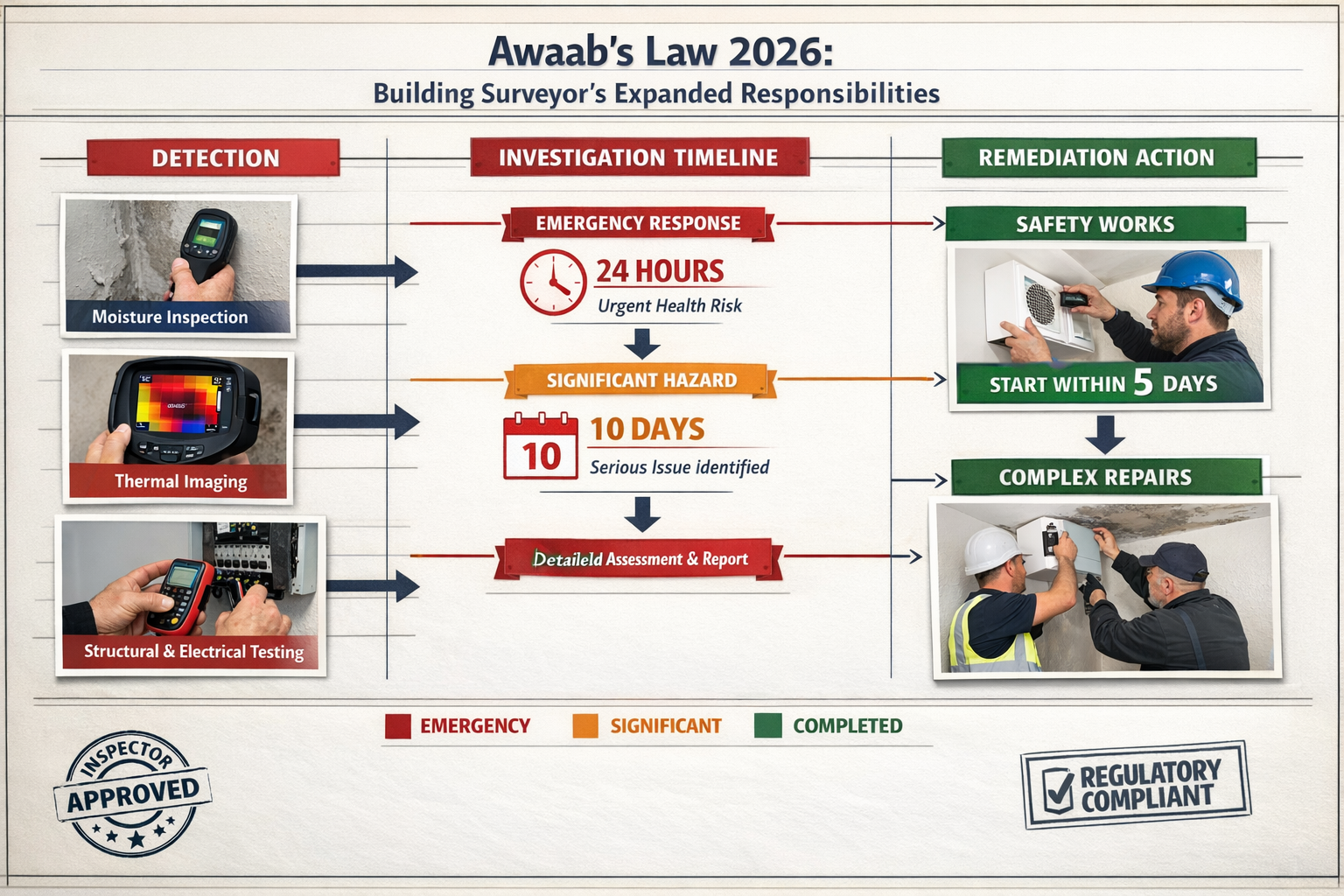
Emergency hazards—those presenting immediate risk of serious harm or death—require the most urgent response under the Awaab's Law 2026 Expansion: What Building Surveyors Need to Know About Extended Hazard Coverage framework.
24-hour investigation requirement: From the moment a landlord becomes aware of an emergency hazard (whether through tenant report, surveyor identification, or other means), they have just 24 hours to complete an investigation and begin remediation.[4]
Emergency hazard examples:
- ⚡ Exposed live electrical wiring
- 🔥 Active fire hazards with immediate ignition risk
- 🏚️ Imminent structural collapse
- 💧 Severe water ingress causing electrical hazards
- 🧊 Complete heating failure in winter months
Surveyor obligations: When identifying emergency hazards during routine inspections, surveyors must immediately communicate findings to landlords through the fastest available means—typically phone followed by written confirmation. Waiting for standard report delivery timelines is insufficient and may expose the surveyor to negligence claims if harm occurs during the delay.
Significant Hazards: 10-Day Investigation Window
Significant hazards—those presenting substantial risk but not immediate danger—follow a more structured timeline:
Investigation timeline:
- Day 0: Landlord becomes aware of hazard
- Day 10 (maximum): Investigation must be completed
- Day 13 (maximum): Written findings delivered to tenant (within 3 working days of investigation completion)[2]
Investigation requirements: The investigation must be thorough enough to:
- Confirm the nature and extent of the hazard
- Determine the cause and contributing factors
- Identify necessary remediation measures
- Establish a realistic remediation timeline
- Assess any interim safety measures needed
For building surveyors, this means developing standardized investigation protocols for each Phase 2 hazard category. Many surveying practices now create specialized checklists and reporting templates that ensure all statutory requirements are addressed within the tight timeframes.
Remediation Commencement Deadlines
Once investigation is complete, remediation must begin promptly:
Safety remedial works: Must commence within 5 working days of investigation conclusion. These are works necessary to eliminate immediate risks or reduce hazards to acceptable levels.[2]
Supplementary or complex works: Must commence no later than 12 weeks after investigation completion. These include more extensive repairs that require planning, specialist contractors, or building control approval.[2]
Surveyor's role: Building surveyors often serve as the professional advisor helping landlords distinguish between safety works (5-day deadline) and complex works (12-week deadline). This classification significantly impacts landlord compliance, making accurate professional judgment essential.
Written Communication Requirements
The legislation mandates specific communication protocols that surveyors must understand and facilitate:
📄 Investigation findings: Must be provided to tenants in writing within 3 working days of investigation completion
📋 Remediation plans: Should clearly outline proposed works, timelines, and any interim safety measures
📊 Progress updates: While not statutorily required, best practice involves regular communication with tenants about remediation progress
For surveyors providing expert surveyor advice, helping landlords develop compliant communication systems represents an important value-added service that reduces compliance risks.
Practical Implementation: Assessment Protocols for Extended Hazards
Translating the Awaab's Law 2026 Expansion: What Building Surveyors Need to Know About Extended Hazard Coverage into practical assessment procedures requires systematic approaches and updated methodologies.
Multi-Hazard Assessment Checklist
Building surveyors should develop comprehensive inspection protocols that address all Phase 2 hazard categories:
| Hazard Category | Key Assessment Points | Equipment Required | Specialist Referral Triggers |
|---|---|---|---|
| Electrical | Visual inspection of consumer unit, socket conditions, exposed wiring, electrical certificates | Voltage tester, socket tester | Any signs of burning, frequent tripping, absence of RCD protection |
| Fire Safety | Smoke detector functionality, escape route clarity, fire door integrity, combustible storage | Smoke detector tester, measuring tape | Missing fire separation in HMOs, compromised fire doors |
| Excess Cold | Heating system operation, insulation adequacy, draught sources, thermal bridging | Thermal imaging camera, thermometer, moisture meter | Non-functional heating, single-glazed windows in vulnerable occupancy |
| Excess Heat | Ventilation adequacy, overheating risk factors, cooling options | Thermal imaging camera, thermometer | Top-floor flats with inadequate ventilation, vulnerable occupants |
| Structural Collapse | Load-bearing element condition, foundation movement, roof structure integrity | Spirit level, crack width gauge, moisture meter | Significant cracking, visible deflection, foundation movement |
| Falls Hazards | Stair condition, handrail security, floor level changes, bathroom safety | Measuring tape, spirit level | Steep stairs without handrails, significant level changes, elderly occupants |
| Hygiene | Sanitation functionality, pest evidence, food preparation adequacy, waste disposal | Visual inspection, moisture meter | Pest infestation, non-functional sanitation, contamination risks |
Technology and Equipment Updates
The expanded hazard coverage necessitates investment in assessment technology:
Essential equipment:
- 📷 Thermal imaging camera: Critical for identifying excess cold/heat, moisture ingress, and insulation deficiencies
- 🔌 Electrical testing equipment: Basic voltage and socket testers for preliminary electrical assessment
- 📏 Laser measuring tools: For accurate assessment of stair pitch, handrail heights, and other safety measurements
- 💧 Moisture meters: Essential for damp assessment and water ingress identification
- 📱 Digital reporting platforms: Enable rapid documentation and communication within statutory timeframes
Many surveyors operating across chartered surveyor locations in London and surrounding areas now utilize tablet-based inspection software that allows real-time documentation, photo annotation, and immediate report generation—critical capabilities for meeting the 3-day written findings deadline.
Specialist Collaboration Networks
No single surveyor possesses expertise across all Phase 2 hazard categories. Successful compliance requires established relationships with specialists:
🔌 Qualified electricians: For detailed electrical installation condition reports when surveyors identify potential electrical hazards
🔥 Fire safety engineers: For complex fire risk assessments in HMOs and multi-occupancy buildings
🏗️ Structural engineers: For detailed structural analysis when collapse risks are identified
🌡️ Building services engineers: For heating system assessments and ventilation design evaluation
Building these networks before urgent referrals become necessary ensures landlords can meet statutory timeframes. Surveyors should maintain a vetted list of specialists who understand Awaab's Law requirements and can respond within the compliance windows.
Consequences of Non-Compliance: Risks for Surveyors and Landlords
The enforcement regime behind Awaab's Law carries substantial penalties that affect both landlords and their professional advisors.
Regulatory Enforcement Actions
Local housing authorities possess significant enforcement powers when landlords fail to comply:
⚖️ Enforcement orders: Compelling specific remediation actions within defined timeframes
💰 Unlimited fines: Courts can impose financial penalties without upper limits for serious or persistent non-compliance
🏠 Prohibition orders: Preventing property occupation until hazards are remediated
📋 Improvement notices: Requiring specific works with statutory deadlines
🚫 Rent repayment orders: Requiring landlords to repay rent to tenants for periods of non-compliance[4]
Financial Impact on Landlords
Beyond direct penalties, non-compliance creates cascading financial consequences:
Compensation payments: Tenants may claim compensation for harm, distress, or inconvenience caused by unaddressed hazards
Loss of rental income: Properties may become legally uninhabitable, eliminating rental income while mortgage and maintenance costs continue
Insurance implications: Insurers may refuse claims or increase premiums following enforcement actions
Property devaluation: Enforcement histories can affect property values and marketability
Legal costs: Defending against enforcement actions and tenant claims generates substantial legal expenses
Professional Liability for Surveyors
Building surveyors face their own compliance risks under the expanded framework:
Professional negligence claims: Surveyors who fail to identify Phase 2 hazards during property assessments may face claims from landlords who subsequently face enforcement action, or from tenants who suffer harm from unidentified hazards
Professional indemnity insurance: Insurers increasingly scrutinize surveyors' Awaab's Law compliance procedures, with inadequate protocols potentially affecting coverage
Regulatory investigations: Professional bodies may investigate surveyors whose assessment failures contribute to tenant harm
Reputational damage: Non-compliance incidents can severely impact a surveying practice's reputation and client relationships
For these reasons, many surveyors now include specific Awaab's Law compliance clauses in their terms of engagement, clearly defining the scope of hazard assessment and the limitations of their expertise in specialist areas like electrical installation testing.
Training and Professional Development Requirements
The Awaab's Law 2026 Expansion: What Building Surveyors Need to Know About Extended Hazard Coverage demands significant professional development investment from surveying practices.
Essential Training Areas
Building surveyors should pursue training in:
🎓 Electrical hazard recognition: Understanding common electrical defects and when specialist testing is required
🎓 Fire safety fundamentals: Basic fire risk assessment principles and regulatory requirements
🎓 Thermal performance assessment: Using thermal imaging equipment effectively and interpreting results
🎓 Structural safety evaluation: Identifying collapse risks and understanding when structural engineering referral is necessary
🎓 Falls hazard assessment: Understanding building regulations for stairs, guarding, and level changes
🎓 Legal compliance frameworks: Detailed understanding of Awaab's Law timelines, investigation requirements, and enforcement provisions
Continuing Professional Development
Professional bodies including RICS (Royal Institution of Chartered Surveyors) increasingly incorporate Awaab's Law compliance into their CPD requirements. Surveyors should:
- Attend specialized seminars and workshops on Phase 2 hazard assessment
- Participate in case study discussions examining real-world compliance scenarios
- Engage with legal updates as enforcement case law develops
- Review published enforcement decisions to understand regulatory expectations
- Collaborate with peers to share assessment protocols and best practices
Practice Management Systems
Beyond individual competence, surveying practices must update their operational systems:
📋 Standardized assessment templates: Ensuring all Phase 2 hazards are systematically evaluated
⏱️ Timeline management systems: Tracking investigation and reporting deadlines to ensure compliance
📞 Emergency communication protocols: Enabling immediate landlord notification when emergency hazards are identified
💾 Digital documentation systems: Facilitating rapid report generation within statutory timeframes
🔄 Quality assurance processes: Peer review mechanisms to verify comprehensive hazard assessment
Many practices now designate an Awaab's Law compliance lead who maintains expertise in the legislation, updates assessment protocols as guidance evolves, and provides internal training to other surveyors.
Regional Considerations and Implementation Variations
While Awaab's Law establishes national standards, implementation varies across regions based on local housing stock characteristics and enforcement priorities.
London and Urban Areas
Building surveyors operating in central London and other urban centers face particular challenges:
HMO prevalence: Houses in Multiple Occupation present complex fire safety, electrical, and hygiene assessment requirements
Older building stock: Victorian and Edwardian properties common in areas like Islington and Chelsea often have outdated electrical systems and inadequate insulation
Converted flats: Properties subdivided into multiple units require careful assessment of fire separation and structural adequacy
High-rise buildings: Tower blocks present unique fire safety and escape route challenges
Suburban and County Areas
Surveyors working in locations like Surrey, Hertfordshire, and Buckinghamshire encounter different hazard profiles:
Modern estate properties: Generally better thermal performance but may have defective electrical installations or inadequate ventilation
Rural conversions: Barn conversions and agricultural building adaptations often present structural and fire safety challenges
Detached properties: Generally fewer fire safety concerns but potentially greater excess cold risks due to larger building envelopes
Off-grid heating: Oil and LPG heating systems require different assessment approaches than mains gas installations
Local Authority Enforcement Variations
While the legislation is national, enforcement priorities vary by local authority:
- Some authorities conduct proactive inspection programs targeting rental properties
- Others rely primarily on tenant complaints to trigger investigations
- Enforcement approaches range from supportive guidance to aggressive prosecution
- Response times and communication styles vary significantly
Surveyors should develop familiarity with local authority approaches in their operating areas, establishing relationships with environmental health officers who enforce housing standards. This local knowledge helps advise landlord clients on realistic enforcement risks and appropriate compliance strategies.
Future Developments and Ongoing Legislative Evolution
The Awaab's Law framework continues to evolve, with further developments anticipated beyond the 2026 Phase 2 expansion.
Potential Phase 3 Extensions
While not yet confirmed, housing policy discussions suggest possible future expansions:
🔮 Private rented sector extension: Current legislation focuses on social housing, but proposals exist to extend similar requirements to private landlords
🔮 Proactive inspection requirements: Mandatory periodic hazard assessments rather than reactive tenant-complaint-driven investigations
🔮 Additional hazard categories: Potential inclusion of noise, light pollution, and other environmental health factors
🔮 Stricter timeframes: Possible reduction in investigation and remediation windows as compliance systems mature
Integration with Other Housing Legislation
Awaab's Law intersects with multiple other regulatory frameworks:
Building Safety Act: Creates additional requirements for higher-risk buildings
Homes (Fitness for Human Habitation) Act: Establishes parallel fitness standards with overlapping hazard categories
Energy Performance Certificate requirements: Minimum energy efficiency standards relate to excess cold hazard prevention
Electrical Safety Standards regulations: Mandatory five-yearly electrical testing in rental properties complements Awaab's Law electrical hazard provisions
Building surveyors must understand these interconnections to provide comprehensive compliance advice rather than treating Awaab's Law in isolation.
Technology-Driven Assessment Evolution
Emerging technologies promise to transform hazard assessment practices:
🤖 AI-powered image analysis: Automated identification of electrical hazards, structural defects, and other conditions from survey photographs
📡 IoT sensor networks: Continuous monitoring of temperature, humidity, and air quality providing objective hazard data
🚁 Drone inspections: Enhanced roof and external elevation assessment without access equipment
📱 Augmented reality reporting: Interactive reports allowing landlords and tenants to visualize hazards and proposed remediation
Surveyors who adopt these technologies early gain competitive advantages in efficiency, accuracy, and compliance documentation quality.
Conclusion: Preparing for the Extended Hazard Framework
The Awaab's Law 2026 Expansion: What Building Surveyors Need to Know About Extended Hazard Coverage represents a fundamental transformation in housing safety regulation that building surveyors must embrace comprehensively. The extension from damp and mould to electrical, fire, temperature, structural, and hygiene hazards creates both challenges and opportunities for surveying professionals.
Immediate Action Steps for Building Surveyors
Surveyors should take the following steps to ensure compliance readiness:
✅ Update assessment protocols to systematically address all Phase 2 hazard categories during every rental property inspection
✅ Invest in necessary equipment including thermal imaging cameras and basic electrical testing tools
✅ Establish specialist referral networks with electricians, fire safety engineers, and structural engineers who understand Awaab's Law timeframes
✅ Implement timeline management systems to track investigation and reporting deadlines for all identified hazards
✅ Develop emergency communication procedures enabling immediate landlord notification when emergency hazards are discovered
✅ Pursue targeted professional development in hazard recognition across all Phase 2 categories
✅ Review professional indemnity insurance to ensure adequate coverage for expanded assessment responsibilities
✅ Update client engagement terms to clearly define the scope of hazard assessment and specialist referral triggers
Strategic Positioning for Surveying Practices
Forward-thinking surveying practices can differentiate themselves through Awaab's Law expertise:
- Specialized compliance services: Offering dedicated Awaab's Law assessment packages for landlord clients
- Landlord education programs: Hosting seminars and producing guidance materials on compliance requirements
- Technology leadership: Adopting advanced assessment technologies that improve accuracy and efficiency
- Local authority relationships: Building collaborative relationships with enforcement officers
- Tenant communication support: Helping landlords develop compliant communication protocols
The legislation's moral foundation—preventing tragedies like Awaab Ishak's death—provides powerful motivation beyond mere regulatory compliance. Building surveyors who embrace this expanded responsibility contribute meaningfully to tenant safety while building sustainable, compliant practices positioned for long-term success in an increasingly regulated housing sector.
For surveyors seeking additional guidance on property assessment best practices, exploring resources on building survey methodologies and schedule of condition reporting provides valuable complementary knowledge that supports comprehensive hazard assessment under the expanded Awaab's Law framework.
References
[1] Awaab's Law Compliance Guide 2026 – https://www.ecosafegroup.co.uk/post/awaabs-law
[2] Awaab's Law Is Here: The Surveyor's Guide For Compliance – https://www.surventrix.com/blog/awaabs-law-is-here-the-surveyors-guide-for-compliance
[3] Building Surveys And Awaab's Law 2026 Extensions: Identifying Electrical, Fire And Temperature Hazards In PRS Properties – https://nottinghillsurveyors.com/blog/building-surveys-and-awaabs-law-2026-extensions-identifying-electrical-fire-and-temperature-hazards-in-prs-properties
[4] Awaab's Law Comes Into Force: What Does It Mean For Construction – https://www.trowers.com/insights/2025/november/awaabs-law-comes-into-force-what-does-it-mean-for-construction
[5] Awaab's Law Guidance For Social Landlords: Timeframes For Repairs In The Social Rented Sector – https://www.gov.uk/government/publications/awaabs-law-guidance-for-social-landlords/awaabs-law-guidance-for-social-landlords-timeframes-for-repairs-in-the-social-rented-sector
[6] Awaab's Law: What Property Managers And Surveyors Must Know – https://www.howdengroup.com/uk-en/awaabs-law-what-property-managers-and-surveyors-must-know