
The UK property market is experiencing a seismic shift. Institutional landlords are pouring billions into buy-to-let investments, transforming the rental landscape with unprecedented capital deployment. As 2026 unfolds, Building Survey Checklists for Institutional Buy-to-Let Surge: Risk Assessments in 2026's Professional Landlord Boom have become essential tools for managing portfolio risks and ensuring regulatory compliance. With investment forecast to exceed £5.7 billion this year [1], professional landlords need robust assessment frameworks that align with RICS standards to protect their substantial investments.
This surge represents more than just market recovery—it signals a fundamental restructuring of the rental sector. Nearly £40 billion has been deployed into UK build-to-rent over the past decade, with 75% targeting professionally managed multifamily housing [2]. For institutional investors managing multiple properties, comprehensive building surveys are no longer optional; they're the foundation of risk management strategy.
Key Takeaways
- 📊 Investment Growth: UK build-to-rent investment is projected to exceed £5.7 billion in 2026, representing 7.7% growth from 2025
- 🏢 Institutional Dominance: £30 billion of the £40 billion total investment has targeted professionally managed multifamily housing
- ✅ Survey Essentials: Comprehensive building survey checklists must cover structural integrity, compliance, financial risks, and tenant safety
- 📈 Market Confidence: Buy-to-let lending reached £6.6 billion in Q3 with 7% quarterly growth, signaling renewed investor confidence [3]
- 🎯 Risk Management: RICS-aligned assessment frameworks are critical for institutional landlords managing portfolio-wide risks
Understanding the 2026 Institutional Buy-to-Let Landscape
The professional landlord boom of 2026 represents a watershed moment for the UK rental market. Unlike individual buy-to-let investors, institutional landlords operate with sophisticated risk management frameworks and substantial capital reserves. This shift has created demand for comprehensive building survey protocols that can scale across entire portfolios.
The Scale of Institutional Investment
The numbers tell a compelling story. With buy-to-let lending growing at 7% quarterly and £6.6 billion advanced in Q3 alone [3], institutional investors are demonstrating remarkable confidence in the rental sector. This capital deployment isn't speculative—it's strategic, calculated, and backed by rigorous due diligence processes.
Professional landlords are targeting properties that offer:
- Long-term rental yield stability 💰
- Strong tenant demand in urban centers
- Manageable maintenance obligations
- Compliance with evolving regulations
- Portfolio diversification opportunities
Why Building Surveys Matter for Institutional Investors
For institutional landlords managing dozens or hundreds of properties, a single overlooked structural defect can cascade into significant financial losses. Building surveys serve as the first line of defense against:
- Hidden structural problems
- Non-compliance with safety regulations
- Unexpected maintenance costs
- Tenant safety liabilities
- Insurance claim complications
Professional investors understand that thorough building surveys provide the detailed intelligence needed to make informed acquisition decisions. Unlike homebuyer reports, comprehensive building surveys examine every accessible part of a property, identifying defects that could impact investment returns.
Essential Components of Building Survey Checklists for Institutional Buy-to-Let Surge
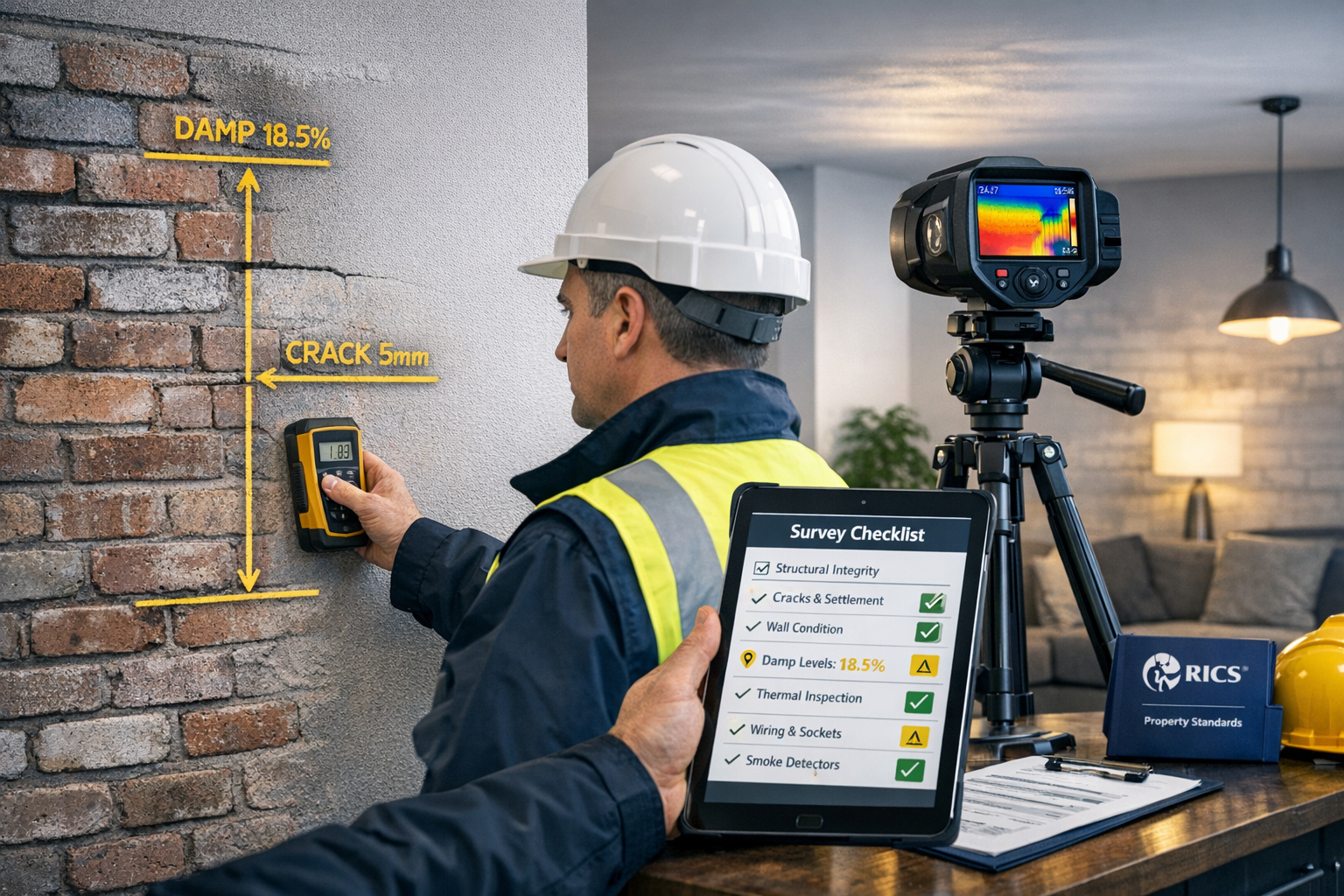
Creating effective Building Survey Checklists for Institutional Buy-to-Let Surge: Risk Assessments in 2026's Professional Landlord Boom requires a systematic approach that addresses multiple risk categories. Institutional investors need checklists that are comprehensive yet practical, detailed yet scalable across portfolios.
Structural Integrity Assessment
The foundation of any building survey checklist begins with structural elements. For buy-to-let properties, structural issues represent the highest financial risk category.
Core Structural Elements to Inspect:
| Component | Key Assessment Points | Risk Level |
|---|---|---|
| Foundations | Settlement cracks, subsidence signs, drainage issues | High |
| Walls | Load-bearing capacity, damp penetration, cavity wall condition | High |
| Roof Structure | Timber condition, load distribution, water ingress points | High |
| Floors | Joist condition, level variations, structural movement | Medium |
| Windows/Doors | Frame integrity, seal condition, security features | Medium |
Professional surveyors working with institutional clients must document every structural concern with photographic evidence and detailed descriptions. For properties in areas like Surrey or Essex, regional building characteristics require specialized knowledge.
Compliance and Regulatory Requirements
The regulatory landscape for rental properties has become increasingly complex. Institutional landlords face severe penalties for non-compliance, making this checklist category absolutely critical.
Essential Compliance Checks:
✅ Electrical Safety: EICR (Electrical Installation Condition Report) valid within 5 years
✅ Gas Safety: Annual gas safety certificates for all appliances
✅ Fire Safety: Smoke alarms, carbon monoxide detectors, fire doors in HMOs
✅ Energy Performance: Valid EPC with minimum rating requirements
✅ Legionella Risk: Water system assessments for Legionella bacteria
✅ Asbestos: Survey and management plan for pre-2000 properties
✅ HMO Licensing: Additional requirements for houses in multiple occupation
For institutional portfolios spanning multiple regions—from Central London to Berkshire—compliance requirements may vary by local authority. Chartered surveyors must stay current with regional regulations.
Building Services and Systems
Modern tenants expect reliable building services. System failures not only create maintenance costs but also impact tenant satisfaction and retention rates.
Critical Building Systems Checklist:
🔧 Heating Systems
- Boiler age and efficiency rating
- Central heating distribution
- Radiator condition and functionality
- Thermostat controls and zoning
💧 Plumbing and Drainage
- Water pressure testing
- Pipe material and condition
- Drainage flow testing
- Water tank inspection
- Leak detection
⚡ Electrical Systems
- Consumer unit condition
- Circuit capacity
- Socket and switch condition
- Lighting adequacy
- Emergency lighting (if required)
🌡️ Ventilation
- Natural ventilation adequacy
- Mechanical ventilation systems
- Condensation risk areas
- Bathroom and kitchen extraction
Environmental and External Factors
External factors can significantly impact property performance and tenant appeal. Institutional investors need to assess these elements as part of comprehensive risk management.
External Assessment Points:
- Drainage Systems: Surface water management, gutter condition, downpipe functionality
- Boundary Features: Fence condition, retaining walls, shared boundaries
- External Structures: Garages, sheds, bin stores, bike storage
- Landscaping: Garden maintenance requirements, tree proximity to buildings
- Access and Parking: Vehicle access, parking provision, pedestrian safety
For properties requiring party wall considerations, additional assessments may be necessary to document existing conditions before any works commence.
Risk Assessment Frameworks for Professional Landlords in 2026
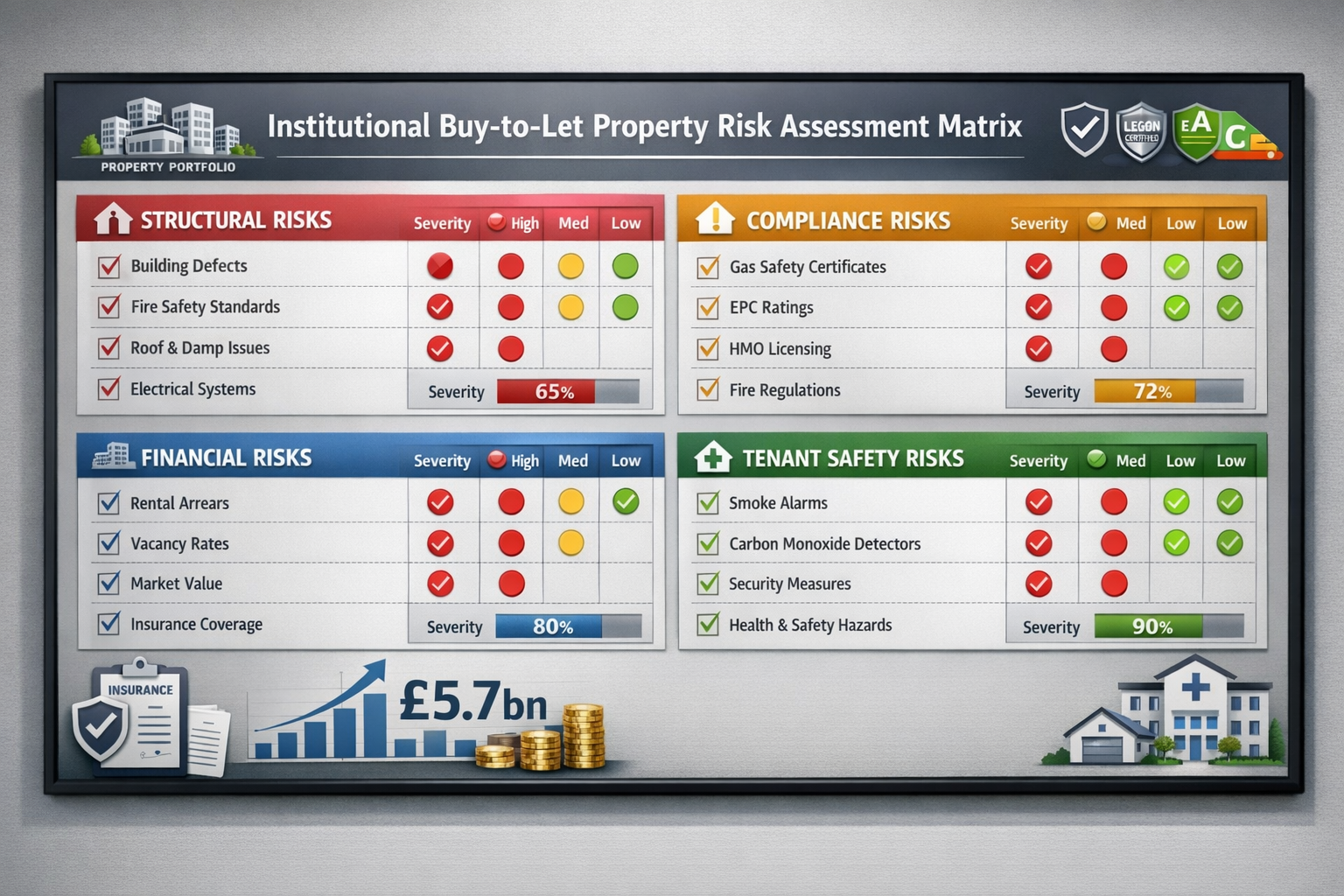
Effective Building Survey Checklists for Institutional Buy-to-Let Surge: Risk Assessments in 2026's Professional Landlord Boom must integrate risk assessment frameworks that quantify potential exposures. Professional landlords need more than just defect lists—they need actionable intelligence that informs investment decisions.
Categorizing Risk Levels
A sophisticated risk assessment framework categorizes identified issues by severity and urgency. This allows institutional investors to prioritize remediation spending and negotiate purchase prices effectively.
Risk Classification System:
🔴 Critical Risks (Immediate Action Required)
- Structural instability or movement
- Major water ingress or flooding
- Electrical hazards
- Gas safety failures
- Regulatory non-compliance with legal deadlines
🟠 High Risks (Action Within 12 Months)
- Roof repairs needed
- Damp problems requiring treatment
- Heating system replacement
- Major plumbing issues
- Fire safety upgrades
🟡 Medium Risks (Action Within 2-3 Years)
- Window replacements
- External decoration
- Minor structural repairs
- Efficiency improvements
- Cosmetic updates
🟢 Low Risks (Monitor and Plan)
- Minor cosmetic issues
- Future maintenance planning
- Enhancement opportunities
- Energy efficiency optimization
Financial Impact Assessment
For institutional investors, every identified risk must translate into financial implications. Professional building survey checklists should include cost estimates for remediation work.
Cost Assessment Framework:
| Risk Category | Estimated Cost Range | Impact on Investment Return |
|---|---|---|
| Critical Structural | £20,000 – £100,000+ | Severe – May affect viability |
| Major Systems | £5,000 – £25,000 | Significant – Negotiation leverage |
| Compliance Work | £2,000 – £10,000 | Moderate – Factor into budget |
| Preventive Maintenance | £1,000 – £5,000 | Minor – Ongoing operational cost |
These estimates help institutional landlords model investment returns accurately and build appropriate contingency reserves. For properties across diverse locations—from North London to Sussex—regional cost variations must be factored into assessments.
Portfolio-Wide Risk Management
Unlike individual landlords, institutional investors must consider portfolio-wide risk exposure. A building survey checklist for professional landlords should facilitate aggregated risk analysis across multiple properties.
Portfolio Risk Metrics:
📊 Aggregate Exposure: Total estimated remediation costs across portfolio
📊 Risk Concentration: Properties with similar defects indicating systemic issues
📊 Compliance Status: Percentage of portfolio meeting all regulatory requirements
📊 Maintenance Backlog: Deferred maintenance obligations across holdings
📊 Insurance Implications: Risk factors affecting portfolio insurance premiums
Leveraging Technology for Risk Assessment
Leading institutional landlords in 2026 are leveraging technology to enhance building survey processes and risk management capabilities.
Digital Tools and Innovations:
- Thermal Imaging: Identifies insulation defects and moisture ingress
- Drone Surveys: Safe roof and chimney inspection without scaffolding
- Digital Reporting: Cloud-based survey reports with photographic evidence
- Risk Dashboards: Portfolio-wide risk visualization and tracking
- Predictive Analytics: AI-powered maintenance forecasting
Professional chartered surveyors in London and surrounding regions increasingly incorporate these technologies into comprehensive building assessments.
RICS Standards and Professional Survey Protocols
Adherence to Royal Institution of Chartered Surveyors (RICS) standards is non-negotiable for institutional buy-to-let investments. RICS-compliant surveys provide the credibility and thoroughness that professional investors require.
RICS Building Survey Level 3
The RICS Level 3 Building Survey (formerly Full Structural Survey) represents the gold standard for institutional property assessments. This comprehensive inspection covers:
- All accessible areas of the property
- Detailed defect analysis with causes and implications
- Maintenance advice and repair prioritization
- Technical information about construction and materials
- Risk assessments for identified issues
For institutional landlords acquiring properties in prime locations like Chelsea or Richmond, Level 3 surveys provide the detailed intelligence needed for high-value investments.
Additional Specialist Surveys
Comprehensive risk assessment often requires specialist surveys beyond standard building inspections:
Specialist Survey Types:
🔬 Subsidence Surveys: For properties showing structural movement
🏗️ Schedule of Condition: Documents property condition at specific point in time
📋 Dilapidations Surveys: Assesses repair obligations under lease terms
🔍 Damp and Timber Surveys: Specialized assessment of moisture and decay issues
⚡ Electrical Condition Reports: Comprehensive electrical system testing
Quality Assurance and Professional Indemnity
Institutional investors should only engage surveyors with:
- Full RICS membership (MRICS or FRICS)
- Appropriate professional indemnity insurance
- Proven experience with investment properties
- Local market knowledge
- Portfolio assessment capabilities
Professional surveyors across regions—from Hammersmith to Guildford—should demonstrate expertise in institutional landlord requirements.
Implementing Building Survey Checklists Across Property Portfolios
For institutional landlords managing multiple properties, consistent implementation of building survey protocols is essential for effective risk management.
Standardized Assessment Procedures
Creating standardized procedures ensures consistent quality across all property assessments, regardless of location or surveyor.
Standardization Best Practices:
- Template Checklists: Uniform assessment forms for all properties
- Photographic Standards: Consistent documentation requirements
- Risk Rating Systems: Standardized severity classifications
- Reporting Formats: Uniform report structures for easy comparison
- Quality Control: Regular review of survey quality and completeness
Due Diligence Integration
Building surveys should integrate seamlessly into broader due diligence processes for property acquisitions.
Due Diligence Timeline:
Week 1-2: Initial property identification and preliminary assessment
Week 2-3: Comprehensive building survey conducted
Week 3-4: Specialist surveys if required (subsidence, damp, etc.)
Week 4-5: Risk assessment and financial modeling
Week 5-6: Negotiation based on survey findings
Week 6-8: Final legal due diligence and completion
Regional Considerations
The UK's diverse property market requires regional expertise. Building survey checklists must account for local building characteristics, climate conditions, and regulatory variations.
Regional Focus Areas:
- London Properties: Victorian/Edwardian construction, conservation areas, leasehold considerations
- Coastal Areas: Salt damage, flood risk, wind exposure
- Rural Properties: Septic tanks, private water supplies, agricultural buildings
- Urban Centers: Shared structures, parking challenges, noise considerations
Professional surveyors serving areas like Battersea, Islington, or Oxfordshire bring valuable local knowledge to institutional assessments.
Future-Proofing Investments Through Comprehensive Surveys
As the institutional buy-to-let sector continues expanding in 2026 and beyond, forward-thinking landlords are using building surveys not just for risk assessment but for strategic planning.
Sustainability and Energy Efficiency
With increasing regulatory focus on energy efficiency and carbon reduction, building surveys should assess:
- Current EPC ratings and improvement potential
- Insulation adequacy in walls, roofs, and floors
- Heating system efficiency and renewable energy options
- Window performance and glazing upgrades
- Solar panel viability and installation considerations
Properties that can achieve higher energy ratings command premium rents and attract quality tenants, making sustainability assessments valuable for long-term investment planning.
Maintenance Planning and Lifecycle Costing
Comprehensive building surveys enable institutional landlords to develop sophisticated maintenance plans and lifecycle cost models.
Lifecycle Planning Components:
- Immediate repairs: Critical issues requiring urgent attention
- Short-term maintenance (1-3 years): Planned replacements and upgrades
- Medium-term planning (3-7 years): Major component renewals
- Long-term strategy (7-15 years): Structural improvements and modernization
This approach transforms building surveys from one-time assessments into strategic planning tools that optimize investment returns over extended holding periods.
Technology Integration and Smart Building Features
Modern tenants increasingly expect smart building features. Forward-looking building surveys should assess:
- Smart heating controls and energy management systems
- Security systems including video doorbells and access control
- High-speed internet infrastructure and connectivity
- EV charging provision or installation potential
- Smart home integration capabilities
Conclusion
The institutional buy-to-let surge of 2026 represents a transformative moment for the UK rental market. With investment exceeding £5.7 billion and buy-to-let lending growing at 7% quarterly [1][3], professional landlords are reshaping the sector with unprecedented capital deployment. Building Survey Checklists for Institutional Buy-to-Let Surge: Risk Assessments in 2026's Professional Landlord Boom have emerged as essential tools for managing the complex risks inherent in large-scale property portfolios.
Successful institutional investors recognize that comprehensive building surveys provide far more than defect lists—they deliver strategic intelligence that informs acquisition decisions, pricing negotiations, and long-term asset management strategies. By implementing RICS-aligned assessment frameworks that cover structural integrity, regulatory compliance, building systems, and environmental factors, professional landlords can protect their substantial investments while optimizing returns.
Actionable Next Steps
For institutional landlords looking to capitalize on the 2026 buy-to-let boom:
- Engage RICS-qualified surveyors with proven institutional experience for all property acquisitions
- Implement standardized survey protocols across your entire portfolio for consistent risk assessment
- Integrate building surveys into comprehensive due diligence processes with clear timelines
- Develop risk classification systems that translate survey findings into financial impact assessments
- Leverage technology including thermal imaging, drones, and digital reporting platforms
- Consider regional expertise when acquiring properties across diverse UK locations
- Plan for lifecycle costs using survey data to model long-term maintenance obligations
- Monitor regulatory changes affecting rental property compliance requirements
The professional landlord boom shows no signs of slowing, with £30 billion already deployed into multifamily housing over the past decade [2]. Those who invest in comprehensive building survey processes today will be best positioned to capitalize on this sustained growth while managing portfolio risks effectively.
Whether acquiring properties in West London, South East London, or beyond, institutional landlords must prioritize thorough risk assessments. The cost of comprehensive building surveys pales in comparison to the potential losses from overlooked defects or compliance failures.
As the rental market continues evolving, building survey checklists will remain the cornerstone of sound investment strategy for professional landlords committed to long-term success in the UK's dynamic property sector.
References
[1] Uk Build To Rent Investment Forecast 2026 – https://propertyportfolioinvestor.co.uk/news/uk-build-to-rent-investment-forecast-2026/
[2] Uk Multifamily Investment Hits 30bn As Sector Enters New Trading Cycle – https://landlordknowledge.co.uk/uk-multifamily-investment-hits-30bn-as-sector-enters-new-trading-cycle/
[3] Uk Buy To Let Lending Growth Signals A Stronger More Confident Uk Property Market 2026 – https://blog.magnateassets.com/uk-buy-to-let-lending-growth-signals-a-stronger-more-confident-uk-property-market-2026