
The South West of England faces a unique housing crisis in 2026. While property prices remain stubbornly high, economic indicators suggest the region is lagging behind national recovery trends. For surveyors, this creates an urgent need for specialized approaches. Building Survey Checklists for South West Affordability Challenges: Capturing Stabilisation Signals in Lagging Regions has become essential as professionals adapt their inspection methodologies to address both affordability pressures and emerging signs of market stabilization.
Recent RICS data reveals that the South West continues to struggle with housing affordability despite modest recovery signals. Properties require more thorough inspection protocols that account for deferred maintenance, budget-constrained renovations, and the specific structural challenges common to the region's diverse housing stock. Surveyors must now balance traditional defect identification with an understanding of how affordability constraints impact property conditions.

Key Takeaways
- 📋 Specialized checklists help surveyors identify defects specific to South West properties affected by affordability pressures and deferred maintenance
- 📊 Stabilisation signals require surveyors to adapt inspection protocols to capture emerging market recovery indicators while maintaining rigorous standards
- 🏘️ Regional variations across Cornwall, Devon, Somerset, and Dorset demand location-specific survey approaches that address local building types and common defects
- 💰 Affordability challenges directly impact property conditions, requiring surveyors to document budget-constrained repairs and prioritize safety-critical issues
- 🔍 Enhanced documentation standards help buyers make informed decisions in a market where every pound counts toward purchase and renovation budgets
Understanding the South West Affordability Crisis and Survey Implications
The South West housing market presents a complex picture in 2026. While the region boasts stunning coastlines and rural charm, it also faces severe affordability challenges that directly impact property conditions. Median house prices remain approximately 12 times average local earnings in many areas, forcing buyers to compromise on property condition or location.
This affordability squeeze has created a distinct pattern of property deterioration. Homeowners facing financial constraints often defer essential maintenance, leading to accumulated defects that surveyors must identify and assess. The challenge intensifies in lagging regions where economic recovery remains slower than national averages.
Regional Economic Context
The South West economy shows mixed signals in 2026. Tourism-dependent areas experience seasonal fluctuations that affect property maintenance cycles. Rural communities face limited employment opportunities, constraining household budgets for property upkeep. Meanwhile, coastal erosion and flooding risks add complexity to survey requirements.
Key economic factors affecting survey practices:
- Employment volatility in seasonal tourism sectors
- Rural depopulation leading to property abandonment in some areas
- Infrastructure limitations affecting property values and maintenance costs
- Climate risks requiring enhanced environmental assessments
Surveyors working across the region must understand these economic pressures when developing their building surveyor services approach. A property in a lagging region may present different risk profiles compared to similar properties in more economically stable areas.
How Affordability Shapes Property Conditions
When buyers stretch budgets to afford South West properties, they often purchase homes requiring significant work. This creates a critical role for comprehensive surveys that identify all defects, prioritize repairs, and provide realistic cost estimates.
Common patterns observed in affordability-constrained properties include:
- Deferred roof maintenance leading to water ingress
- Outdated electrical systems posing safety risks
- Inadequate insulation increasing running costs
- Damp and timber decay from neglected drainage
- Structural movement from foundation issues left unaddressed
A thorough homebuyer report vs building survey comparison helps buyers understand which inspection level suits their circumstances, particularly when purchasing in challenging markets.
Developing Comprehensive Building Survey Checklists for South West Affordability Challenges
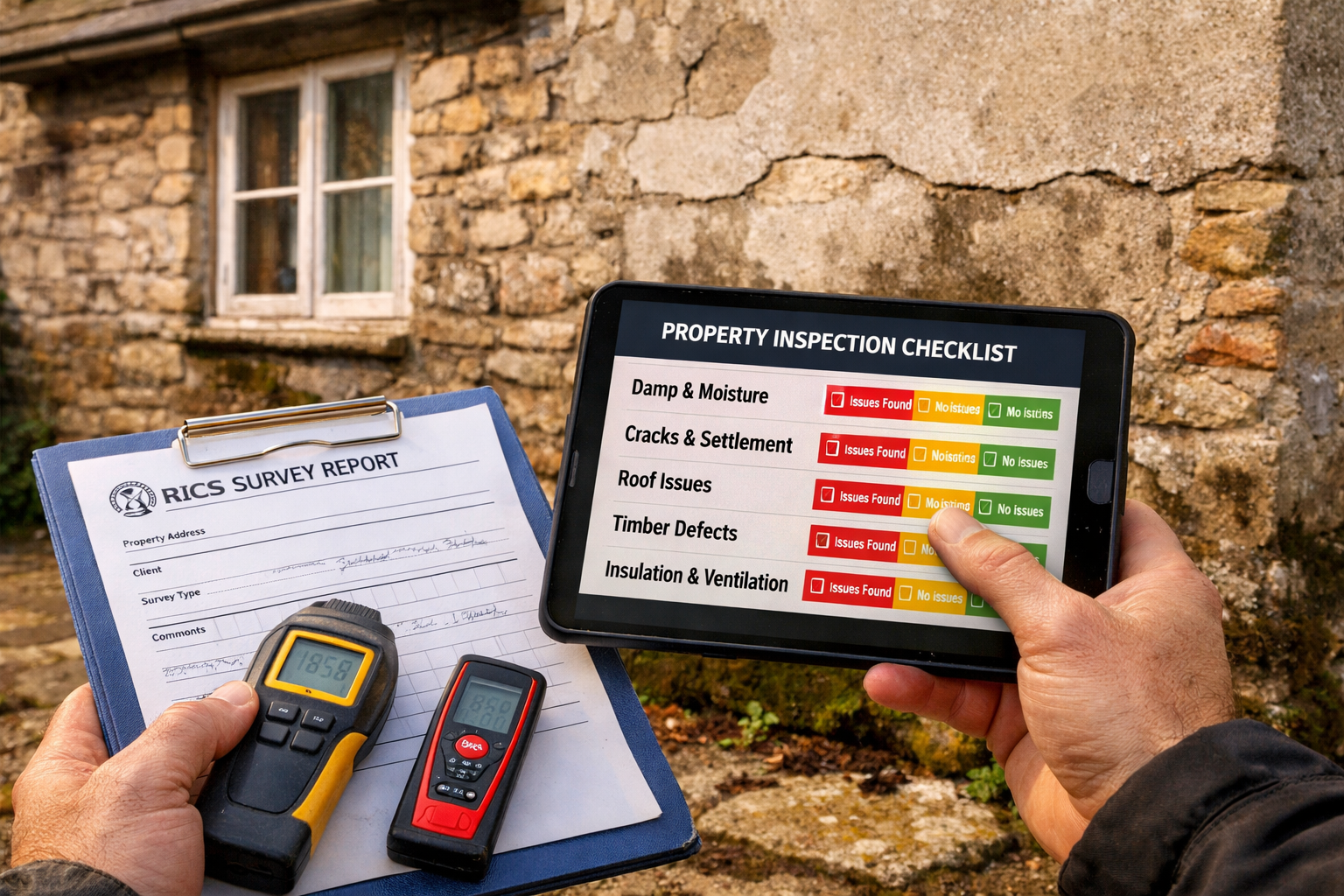
Creating effective Building Survey Checklists for South West Affordability Challenges: Capturing Stabilisation Signals in Lagging Regions requires a systematic approach that addresses regional specifics while maintaining professional standards. The Royal Institution of Chartered Surveyors (RICS) provides foundational guidance [4], but local adaptation is essential.
Core Checklist Components
A comprehensive survey checklist for South West properties must cover standard structural elements while incorporating region-specific considerations. The following framework provides a robust starting point:
External Inspection Elements
| Component | Standard Checks | South West Specific Considerations |
|---|---|---|
| Roof Structure | Tiles, flashing, gutters | Storm damage from coastal weather, slate condition in period properties |
| Walls | Cracks, render, pointing | Stone wall construction common in region, lime mortar requirements |
| Foundations | Settlement signs, cracks | Clay soil movement, coastal erosion risks, mining subsidence areas |
| Drainage | Gutters, downpipes, drains | Heavy rainfall impact, septic tank systems in rural areas |
| Windows/Doors | Condition, operation, seals | Salt air corrosion in coastal properties, period features preservation |
Internal Inspection Priorities
The internal survey must identify defects that affect habitability and safety, particularly in properties where maintenance has been deferred due to affordability constraints [2]:
- Structural integrity: Load-bearing walls, floor joists, ceiling condition
- Damp and moisture: Rising damp, penetrating damp, condensation issues
- Electrical systems: Age, safety, capacity for modern demands
- Plumbing and heating: Boiler condition, pipe materials, water pressure
- Insulation and energy efficiency: Cavity walls, loft insulation, glazing
- Fire safety: Escape routes, smoke detectors, fire doors
Capturing Stabilisation Signals Through Enhanced Documentation
As the South West market shows tentative recovery signs, surveyors must document factors indicating property and neighborhood stabilization. This enhanced approach helps buyers understand not just current condition but future trajectory.
Stabilisation indicators to document:
✅ Recent renovation work suggesting owner investment confidence
✅ Neighborhood improvement projects indicating area regeneration
✅ New development activity signaling market demand
✅ Infrastructure upgrades enhancing property accessibility
✅ Environmental improvements addressing flood or erosion risks
Professional chartered surveyors London and regional specialists increasingly incorporate these forward-looking assessments into their reports, providing buyers with comprehensive market context.
Technology-Enhanced Checklists
Modern survey practice in 2026 leverages digital tools to improve accuracy and efficiency. Digital checklists offer several advantages:
- Consistent coverage ensuring no elements are overlooked
- Photo integration linking images directly to specific defects
- Real-time reporting allowing preliminary findings during inspection
- Data analysis identifying patterns across multiple properties
- Client accessibility providing transparent inspection progress
The shift toward digital documentation aligns with new homebuying rules emphasizing earlier inspections and enhanced risk mitigation [5]. Surveyors must adapt their checklist methodologies to meet evolving regulatory and client expectations.
Regional Variations: Tailoring Checklists Across South West Sub-Regions
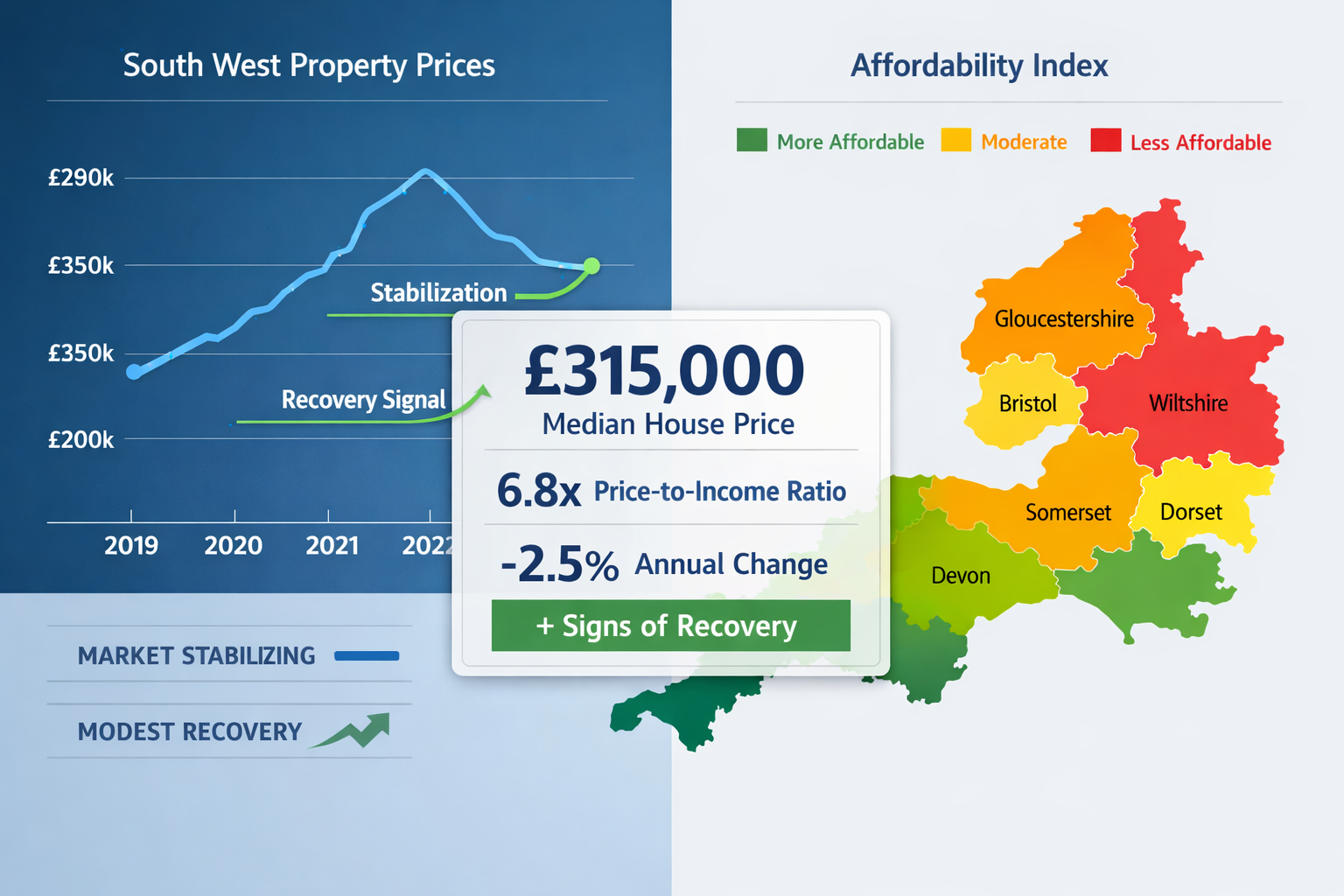
Building Survey Checklists for South West Affordability Challenges: Capturing Stabilisation Signals in Lagging Regions must account for significant variations across the region's counties and communities. Each area presents distinct building types, common defects, and economic conditions.
Cornwall: Coastal Challenges and Rural Isolation
Cornwall faces unique survey challenges combining coastal exposure with rural property characteristics. The county's lagging economic indicators mean many properties suffer from deferred maintenance.
Cornwall-specific checklist additions:
- 🌊 Salt air corrosion: Metal components, window frames, roof fixings
- 🏚️ Holiday home deterioration: Properties vacant for extended periods
- 💧 Water supply issues: Private water sources, treatment systems
- 📡 Connectivity infrastructure: Broadband capability affecting property values
- ⛏️ Mining legacy: Historic mine workings affecting foundations
Properties in Cornwall often require more extensive investigation of environmental factors. Surveyors should consider engaging residential structural engineers London specialists for complex structural concerns related to mining subsidence or coastal erosion.
Devon: Mixed Urban-Rural Property Stock
Devon's diverse property market spans coastal resorts, market towns, and rural farmland. Survey checklists must adapt to this variety while addressing affordability pressures affecting all segments.
Devon survey priorities:
- Traditional cob construction requiring specialist assessment
- Thatched roof properties with unique maintenance requirements
- Flood risk areas requiring enhanced drainage evaluation
- Agricultural buildings converted to residential use
- Period properties in market towns with complex histories
The county's modest stabilization signals appear strongest in larger towns like Exeter, where employment diversity supports property maintenance. Rural areas continue to lag, requiring surveyors to provide realistic assessments of ongoing costs.
Somerset and Dorset: Flood Risks and Heritage Properties
Somerset and Dorset present significant flood risk challenges alongside substantial heritage property stocks. Survey checklists must thoroughly address water-related defects while respecting conservation requirements.
Critical assessment areas:
- Flood defenses and drainage: Property-level protection, natural drainage patterns
- Historic fabric: Listed building constraints, appropriate repair materials
- Ground conditions: Clay soils, water table levels, land stability
- Septic systems: Rural properties without mains drainage
- Agricultural ties: Occupancy restrictions affecting value and marketability
Surveyors working in these counties benefit from understanding local planning policies and conservation requirements. A structural survey London approach adapted for regional heritage properties ensures appropriate assessment methodologies.
Urban Centers: Bristol and Bath Dynamics
While technically outside the South West region, Bristol's influence extends into North Somerset, while Bath affects surrounding areas. These urban centers show stronger stabilization signals but face different affordability challenges.
Urban survey considerations:
- Conversion quality: Flats created from period houses
- Shared facilities: Communal areas, shared services
- Leasehold complications: Service charges, lease terms
- Parking and access: Premium value factors in urban settings
- Noise and environmental factors: Urban living impacts
Properties in these areas may require specific defect report investigations focusing on conversion quality and shared infrastructure issues.
Implementing Effective Survey Protocols in Lagging Markets
Successfully deploying Building Survey Checklists for South West Affordability Challenges: Capturing Stabilisation Signals in Lagging Regions requires systematic implementation that balances thoroughness with practical constraints.
Pre-Inspection Preparation
Effective surveys begin before arriving at the property. Thorough preparation improves efficiency and ensures comprehensive coverage [3]:
Essential pre-inspection steps:
- Review property particulars and marketing materials
- Research local area characteristics and common defects
- Check planning history and building control records
- Identify environmental risks (flooding, contamination, subsidence)
- Prepare appropriate equipment for anticipated conditions
- Brief clients on inspection scope and limitations
Understanding the property's context within a lagging region helps surveyors anticipate likely defects and prepare appropriate investigation tools.
On-Site Inspection Methodology
A systematic inspection approach ensures consistent coverage across all property elements. Professional surveyors typically follow a structured sequence:
- External envelope: Roof to foundations, systematic progression
- Outbuildings and grounds: Garages, sheds, boundaries, drainage
- Internal spaces: Room-by-room progression, services assessment
- Roof space: Accessible areas, structural timbers, insulation
- Below-ground: Cellars, basements, underfloor spaces where accessible
Throughout the inspection, surveyors should document not only defects but also positive features and stabilization indicators. This balanced approach provides clients with comprehensive understanding of their potential investment.
Prioritizing Defects in Affordability-Constrained Scenarios
When buyers face tight budgets, surveyors must clearly prioritize identified defects [1]. A traffic-light system helps communicate urgency:
🔴 Critical (Immediate Action Required):
- Structural safety concerns
- Electrical hazards
- Severe water ingress
- Health risks (asbestos, mold)
🟡 Significant (Address Within 12 Months):
- Progressive structural movement
- Heating system failures
- Drainage problems
- Roof repairs
🟢 Minor (Monitor and Budget):
- Cosmetic issues
- Minor repairs
- Maintenance items
- Upgrade opportunities
This prioritization helps buyers in lagging regions make informed decisions about which properties they can realistically afford to purchase and maintain.
Reporting Standards for Regional Markets
Survey reports for South West properties should provide clear, accessible information that addresses affordability concerns directly. Effective reports include:
- Executive summary: Key findings and priority actions
- Cost estimates: Realistic repair budgets for identified defects
- Photographic evidence: Clear images of significant issues
- Technical explanations: Accessible language for non-specialist readers
- Recommendations: Specialist investigations where needed
- Market context: Stabilization signals and area trends
Professional expert surveyor advice emphasizes the importance of clear communication, particularly when buyers face difficult decisions about property condition versus affordability.
Integrating Market Stabilisation Analysis Into Survey Practice
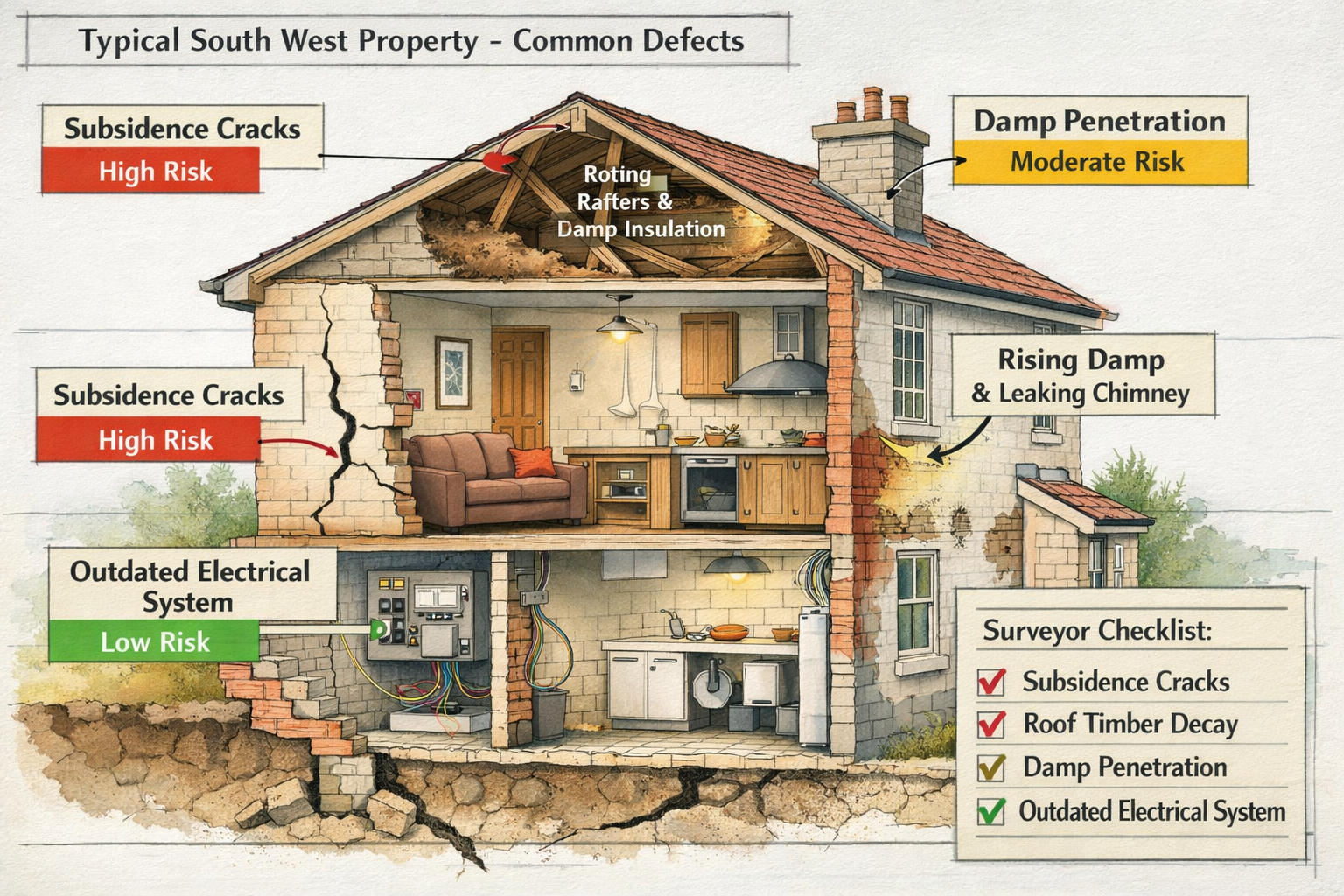
As the South West shows tentative recovery signs, forward-thinking surveyors incorporate market analysis into their inspection protocols. This enhanced approach provides buyers with valuable context for their purchasing decisions.
Identifying Neighborhood Stabilisation Indicators
Beyond individual property condition, surveyors can document broader stabilization signals that suggest improving market conditions:
Positive stabilisation indicators:
- 📈 New development activity indicating developer confidence
- 🏗️ Infrastructure investment improving area connectivity
- 🏪 Commercial investment suggesting economic strengthening
- 🏘️ Renovation activity showing owner confidence
- 🚌 Transport improvements enhancing accessibility
Concerning indicators:
- 📉 Increasing vacancy rates suggesting declining demand
- 🏚️ Widespread property deterioration indicating disinvestment
- 🚫 Business closures reflecting economic weakness
- ⚠️ Environmental risks without mitigation measures
- 📊 Declining property values over extended periods
Connecting Property Condition to Market Dynamics
Properties in lagging regions often reflect broader economic challenges. Surveyors should help clients understand these connections:
A well-maintained property in a struggling area may represent good value but face limited appreciation potential. Conversely, a property requiring work in an improving neighborhood might offer strong investment returns despite initial costs.
This nuanced analysis requires surveyors to extend their expertise beyond technical inspection into market interpretation. While not providing formal valuations, surveyors can contextualize their findings within observable market trends.
Documenting Recovery Signals
When stabilization signals appear, thorough documentation helps buyers recognize emerging opportunities. Surveyors should note:
- Recent comparable sales indicating price stabilization
- Reduced time-on-market suggesting improving demand
- Quality of recent renovations showing investment confidence
- Local authority regeneration initiatives
- Employment growth in the area
This forward-looking approach distinguishes exceptional survey practice from basic compliance with minimum standards [4].
Best Practices for Surveyors Operating in Challenging Markets
Successfully navigating Building Survey Checklists for South West Affordability Challenges: Capturing Stabilisation Signals in Lagging Regions requires professional expertise combined with regional knowledge and market awareness.
Continuing Professional Development
Surveyors working in the South West should pursue ongoing education in:
- Regional building construction methods and materials
- Climate change impacts on coastal and rural properties
- Heritage property assessment and conservation principles
- Affordability-driven market dynamics
- Technology tools enhancing survey accuracy
RICS provides comprehensive guidance on building surveying standards [4] that forms the foundation for specialized regional practice.
Building Local Knowledge Networks
Effective surveyors develop relationships with:
- Local builders and contractors for realistic cost estimates
- Conservation officers for heritage property guidance
- Environmental specialists for flood and contamination risks
- Estate agents for market context and trends
- Other surveyors for peer consultation on complex cases
These networks enhance survey quality by providing access to specialized knowledge and local market intelligence.
Ethical Considerations in Affordability-Constrained Markets
Surveyors face ethical challenges when buyers struggle with affordability. Professional obligations require:
✅ Complete disclosure of all significant defects regardless of buyer concerns
✅ Realistic cost estimates helping buyers budget appropriately
✅ Clear prioritization of safety-critical versus cosmetic issues
✅ Professional independence from transaction pressures
✅ Accessible communication ensuring buyers understand findings
Maintaining these standards protects both buyers and the surveying profession's reputation, particularly in challenging markets where pressure to minimize defect reporting may arise.
Leveraging Technology for Enhanced Accuracy
Modern survey practice in 2026 embraces technology that improves inspection quality:
- Thermal imaging cameras: Detecting insulation gaps and moisture issues
- Moisture meters: Quantifying damp levels objectively
- Drone surveys: Accessing difficult roof areas safely
- Digital measurement tools: Ensuring accurate dimensions
- Cloud-based reporting: Enabling real-time client updates
These tools complement traditional survey skills, providing objective data that supports professional judgment.
Client Education and Expectation Management
Surveyors play a crucial educational role, particularly for first-time buyers navigating the South West's challenging market. Clear communication about survey scope, limitations, and findings helps clients make informed decisions.
Explaining Survey Types and Appropriate Selection
Many buyers don't understand the differences between survey levels. Surveyors should clearly explain options:
RICS Home Survey Level 1 (Condition Report):
- Basic condition assessment
- Suitable for newer, conventional properties
- Limited scope, no cost estimates
RICS Home Survey Level 2 (HomeBuyer Report):
- More detailed inspection
- Suitable for conventional properties in reasonable condition
- Includes condition ratings and advice
RICS Home Survey Level 3 (Building Survey):
- Comprehensive inspection
- Suitable for older, altered, or complex properties
- Detailed defect analysis and repair guidance
Understanding what survey do you need helps buyers select appropriate inspection levels for their circumstances and property type.
Managing Expectations About Defects and Costs
Buyers in affordability-constrained markets often hope surveys will reveal perfect properties. Surveyors must manage expectations realistically:
- No property is perfect: All buildings have defects
- Age matters: Older properties require more maintenance
- Deferred maintenance accumulates: Neglected properties need significant investment
- Specialist investigations cost money: Some issues require further assessment
- Repairs take time: Budget constraints may mean phased work
Honest communication about these realities helps buyers avoid disappointment and make sound purchasing decisions.
Post-Survey Support and Guidance
Professional surveyors provide ongoing support after report delivery:
- Answering client questions about findings
- Clarifying technical terminology
- Discussing repair priorities and sequencing
- Recommending specialist contractors when needed
- Advising on negotiation strategies based on findings
This support helps buyers navigate the challenging period between survey and completion, particularly in markets where affordability pressures create difficult decisions.
Future Trends: Survey Practice Evolution in Regional Markets
The surveying profession continues evolving in response to market conditions, regulatory changes, and technological advances. Understanding emerging trends helps surveyors prepare for future practice demands.
Regulatory Developments Affecting Survey Practice
New homebuying rules in 2026 emphasize earlier inspections and enhanced risk mitigation [5]. These changes affect survey timing, scope, and reporting requirements. Surveyors must stay current with evolving standards while maintaining professional judgment about appropriate investigation depth.
Climate Change Impacts on South West Properties
Climate change creates new survey challenges across the South West:
- Increased flood risks: More frequent extreme weather events
- Coastal erosion acceleration: Properties previously considered safe now at risk
- Temperature extremes: Impact on traditional construction materials
- Moisture patterns: Changing damp and condensation risks
Surveyors must incorporate climate resilience assessment into their inspection protocols, helping buyers understand long-term risks alongside current conditions.
Data-Driven Market Analysis Integration
Future survey practice will increasingly integrate property data with broader market analytics:
- Automated valuation models providing market context
- Neighborhood trend analysis identifying stabilization signals
- Defect pattern recognition across property types
- Cost estimation databases improving repair budget accuracy
- Environmental risk mapping enhancing location assessment
These tools will complement rather than replace professional surveyor expertise, providing enhanced analytical capabilities while maintaining the importance of on-site inspection and professional judgment.
Affordability Crisis Long-Term Implications
The South West affordability challenge shows no signs of quick resolution. Surveyors must adapt to a market where:
- Buyers increasingly purchase properties needing work
- Self-build and renovation projects become more common
- Shared ownership and alternative tenure models expand
- Older properties remain in use longer than historically typical
- Deferred maintenance becomes more prevalent
These trends require surveyors to develop expertise in renovation guidance, phased repair planning, and cost-effective maintenance strategies.
Conclusion
Building Survey Checklists for South West Affordability Challenges: Capturing Stabilisation Signals in Lagging Regions represents a critical evolution in professional surveying practice. As the South West navigates persistent affordability pressures alongside tentative recovery signals, surveyors must provide comprehensive, contextual assessments that help buyers make informed decisions in challenging markets.
Effective survey practice in 2026 combines traditional inspection rigor with enhanced market awareness, regional specialization, and forward-looking analysis. Surveyors who develop comprehensive checklists addressing South West-specific challenges while documenting stabilization indicators provide exceptional value to clients navigating difficult purchasing decisions.
The key to success lies in balancing thoroughness with practical affordability constraints, maintaining professional standards while acknowledging market realities, and communicating findings clearly to buyers who may be stretching budgets to enter the property market.
Actionable Next Steps
For Property Buyers:
- 🔍 Commission appropriate survey levels based on property age, type, and condition
- 💰 Budget realistically for repairs identified in survey reports
- 📋 Prioritize safety-critical defects over cosmetic improvements
- 🤝 Engage qualified professionals for specialist investigations when recommended
- 📊 Consider stabilization signals alongside current property condition
For Surveyors:
- 📚 Develop specialized knowledge of South West building types and common defects
- 🔧 Invest in technology tools enhancing inspection accuracy and efficiency
- 🌍 Build local knowledge networks providing market context and specialist expertise
- 📝 Refine reporting approaches to address affordability-constrained buyer needs
- 🎓 Pursue continuing professional development in regional market dynamics
For Industry Stakeholders:
- 📖 Support surveyor education about regional challenges and best practices
- 🏛️ Develop policy initiatives addressing affordability impacts on property condition
- 💡 Invest in infrastructure improvements supporting market stabilization
- 🤝 Foster collaboration between surveyors, planners, and housing professionals
- 📈 Monitor stabilization signals to identify emerging opportunities and risks
The South West housing market's challenges demand excellence in survey practice. By implementing comprehensive, regionally-adapted checklists that capture both current defects and future stabilization signals, surveyors provide essential guidance helping buyers navigate one of England's most challenging property markets. Professional expertise, local knowledge, and market awareness combine to deliver surveys that protect buyers while supporting informed decision-making in lagging regions showing tentative signs of recovery.
References
[1] Need Snagging List New Build Home – https://hoa.org.uk/advice/guides-for-homeowners/i-am-buying/need-snagging-list-new-build-home/
[2] House Survey Checklist Rics – https://hardingsurveyors.co.uk/house-survey-checklist-rics
[3] House Survey Checklist – https://www.comparemymove.com/guides/surveying/house-survey-checklist
[4] Building Surveying Standards – https://www.rics.org/profession-standards/rics-standards-and-guidance/sector-standards/building-surveying-standards
[5] Building Surveys Under New Homebuying Rules Earlier Inspections And Risk Mitigation In 2026 – https://nottinghillsurveyors.com/blog/building-surveys-under-new-homebuying-rules-earlier-inspections-and-risk-mitigation-in-2026