

{"cover":"Professional landscape format (1536×1024) hero image with bold text overlay 'Building Survey Defect Prioritization When Market Confidence Returns: Helping Buyers Navigate Renewed Demand in 2026' in extra large 72pt white sans-serif font with dark shadow and semi-transparent navy overlay box, positioned in upper third center. Background shows modern UK residential property exterior with scaffolding, surveyor with clipboard and tablet examining building facade, visible structural elements like brickwork and windows, split-screen effect showing defect annotations and priority rankings overlaid on one side. Color scheme: deep navy blue, white, amber accents. High contrast, magazine cover quality, editorial style with professional surveying aesthetic, sharp focus on property inspection theme, bright natural daylight, contemporary British housing market visual","content":["Detailed landscape format (1536×1024) image showing professional surveyor conducting detailed building inspection inside residential property, close-up of moisture meter being used on wall with visible damp patches, clipboard with defect categorization matrix showing Critical/Major/Minor classifications in red/amber/green color coding, tablet displaying digital survey report with priority rankings, background shows period property features like Victorian cornicing and sash windows, natural lighting through windows, professional inspection equipment visible including thermal imaging camera, split composition showing both inspection process and documentation, clean editorial style, sharp focus on prioritization methodology","Detailed landscape format (1536×1024) infographic-style image showing decision-making framework for defect remediation, central flowchart with diamond decision nodes and rectangular process boxes, three distinct pathways labeled 'Immediate Action', 'Negotiate Reduction', and 'Monitor & Review', visual icons representing different defect types (structural cracks, damp issues, roof problems, electrical faults), cost estimate boxes with pound sterling symbols, timeline indicators showing pre-exchange and post-completion phases, color-coded priority levels in traffic light system, clean professional design with white background, navy and amber accent colors, modern business infographic aesthetic, property transaction context clearly visible","Detailed landscape format (1536×1024) image showing modern property market recovery scene, estate agent 'Sold Subject to Contract' board outside attractive UK residential property, multiple prospective buyers viewing property with surveyor consulting tablet and pointing at building features, background shows row of well-maintained suburban homes with 'For Sale' signs, overlay showing upward trending market confidence graph with 2026 timeline, visual elements including mortgage rate indicators, buyer traffic metrics, spring/summer bright daylight suggesting renewed market activity, professional photography style, optimistic market recovery atmosphere, diverse group of buyers, modern British housing market aesthetic, sharp architectural details visible"]"}
As the UK property market shows early signs of recovery in 2026, buyers are facing a critical challenge: how to make informed decisions quickly when pent-up demand creates faster transaction timelines. Building Survey Defect Prioritization When Market Confidence Returns: Helping Buyers Navigate Renewed Demand in 2026 has become essential knowledge for anyone entering the market. With buyer enquiries improving and properties receiving multiple offers, understanding which defects require immediate attention versus those that can be negotiated or monitored has never been more important. The ability to distinguish between deal-breakers and manageable issues can mean the difference between securing your ideal property and losing out to more decisive competitors.

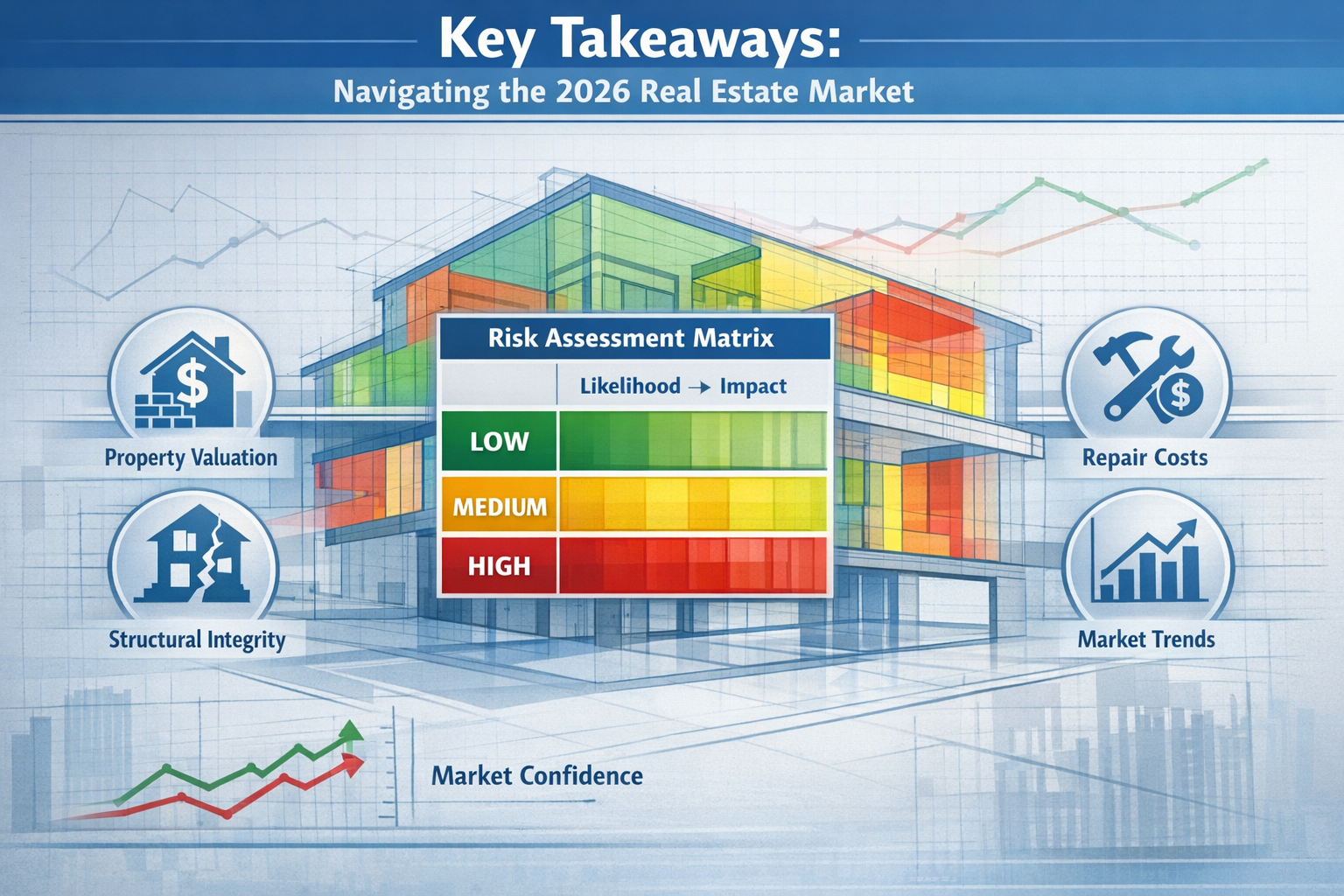
Key Takeaways
- Critical defects (structural issues, major damp, safety hazards) require immediate action or significant price negotiation before proceeding with purchase
- Prioritization frameworks help buyers make faster, more confident decisions in competitive markets by categorizing defects into actionable tiers
- Market timing matters – understanding when to walk away versus when to negotiate gives buyers strategic advantage as confidence returns
- Professional survey analysis combined with cost estimates enables realistic budgeting for post-purchase remediation work
- Speed and accuracy in defect assessment are crucial when multiple buyers compete for the same property in recovering markets
Understanding the 2026 Market Context for Building Survey Defect Prioritization
The housing market landscape in early 2026 presents unique challenges that directly impact how buyers should approach building survey defects. While UK-specific data shows nuanced regional variations, broader market indicators reveal important trends affecting buyer behavior and decision-making timelines.
Current Market Conditions Affecting Buyer Decisions
Recent market analysis indicates persistent affordability challenges continue to influence buyer confidence. Mortgage rates, though stabilizing, remain elevated compared to historical lows, with average rates around 6% in early 2026.[1] This financial pressure means buyers must be particularly strategic about additional costs arising from property defects.
Buyer traffic metrics have shown concerning trends, with prospective buyer engagement remaining at historically low levels in comparable markets.[2] This creates an interesting paradox: while overall traffic is suppressed, properties that are well-priced and properly presented receive concentrated interest from serious buyers who have done their research.
The percentage of sellers offering incentives has remained elevated, with data showing 65% of sellers in comparable markets deploying buyer incentives throughout early 2026.[2] This suggests opportunities for negotiation exist, particularly when building surveys reveal significant defects.
Why Defect Prioritization Matters More in Recovery Markets
When market confidence begins to return, several factors make defect prioritization absolutely critical:
🏠 Faster transaction timelines – Properties move more quickly when demand increases, reducing time available for detailed defect analysis
💰 Multiple offer scenarios – Competing buyers mean decisions must be made swiftly and confidently
📊 Rising property values – As prices stabilize or increase, the relative cost of remediation work changes
⏰ Reduced negotiation windows – Sellers become less willing to negotiate when they have backup offers
Understanding how to quickly categorize and respond to survey findings becomes a competitive advantage. Buyers who can rapidly assess whether defects are manageable, negotiable, or deal-breaking position themselves to act decisively while others hesitate.
The Building Survey Defect Prioritization Framework for 2026 Buyers
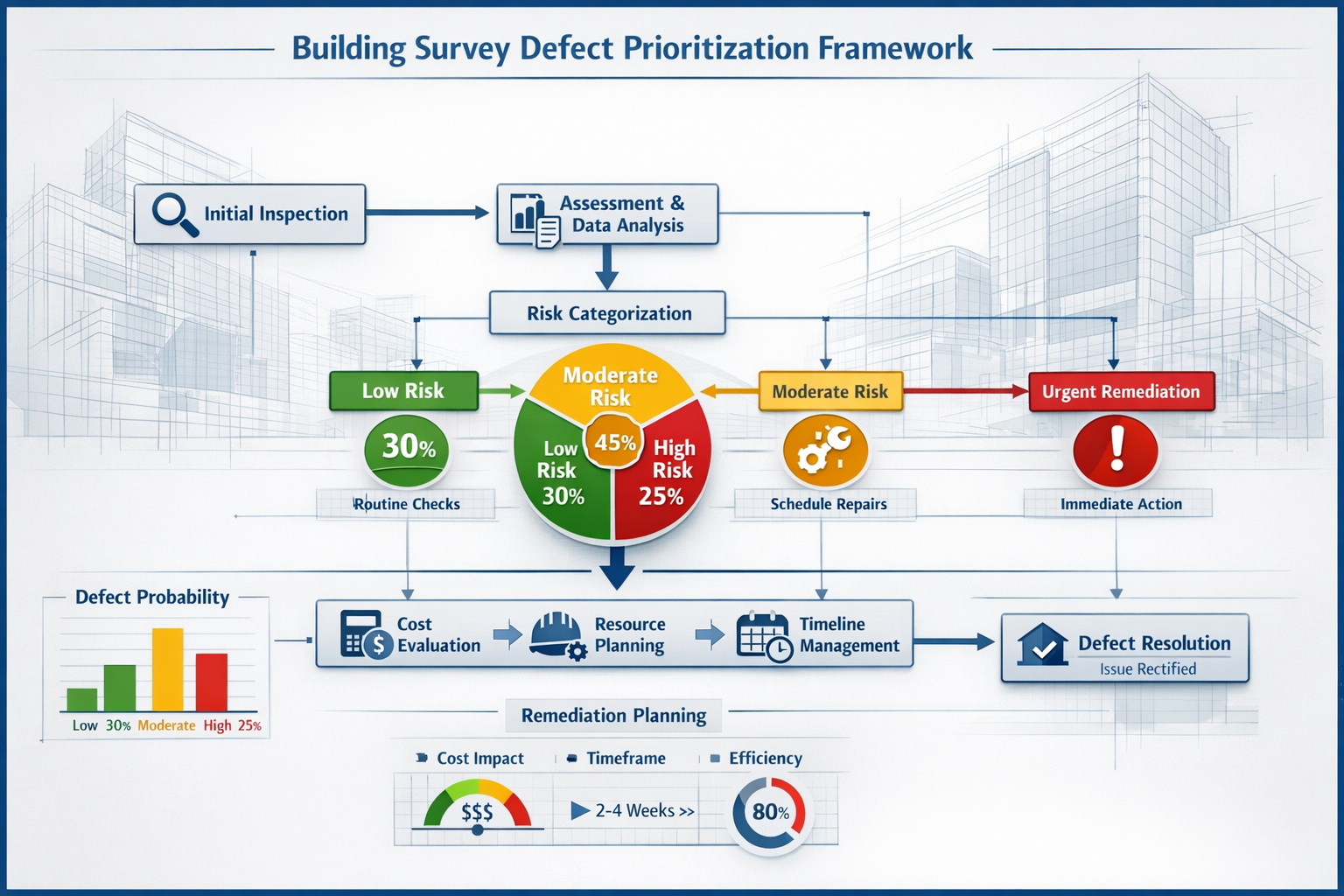
Effective defect prioritization requires a systematic approach that balances risk, cost, and urgency. The framework below helps buyers navigate survey findings when market conditions demand quick but informed decisions.
Critical Priority Defects: Immediate Action Required
These defects pose structural integrity risks, safety hazards, or legal compliance issues that should trigger immediate action:
| Defect Type | Why It's Critical | Typical Action |
|---|---|---|
| Active structural movement | Foundation or wall failure progressing | Walk away or demand full structural engineer assessment |
| Major roof failure | Water ingress causing ongoing damage | Require immediate repair quote and significant price reduction |
| Serious damp/water penetration | Health risks and progressive deterioration | Demand specialist investigation and remediation plan |
| Electrical safety hazards | Fire risk and regulatory non-compliance | Require certified electrician inspection and rewiring quote |
| Asbestos in poor condition | Health hazard requiring specialist removal | Obtain licensed contractor quote before proceeding |
| Significant subsidence | Progressive structural damage | Require structural engineer report and insurance assessment |
For properties with critical defects, buyers should consider obtaining a specific defect report from specialists to fully understand remediation costs and feasibility. In many cases, these defects justify walking away unless sellers agree to substantial price reductions that exceed remediation costs.
High Priority Defects: Negotiate Before Exchange
High priority issues require attention but may be manageable with proper negotiation and planning:
Structural concerns requiring monitoring:
- Minor cracking patterns that need specialist assessment
- Roof repairs needed within 1-2 years
- Damp issues requiring treatment but not causing immediate structural damage
- Drainage problems affecting property foundations
Building services requiring upgrade:
- Aging boiler or heating system near end of life
- Outdated electrical installation requiring partial rewiring
- Plumbing systems with evidence of previous leaks
When dealing with high priority defects, buyers should obtain detailed quotations from qualified contractors before negotiating. A homebuyer report vs building survey comparison can help determine which survey level provides the detail needed for accurate cost assessment.
"The key to successful negotiation in a recovering market is presenting sellers with concrete evidence and realistic cost estimates. Vague concerns rarely result in meaningful price reductions." – Building Survey Best Practice
Medium Priority Defects: Plan for Post-Purchase Resolution
Medium priority items should be factored into long-term maintenance planning but typically don't justify delaying purchase:
- Cosmetic issues – Dated kitchens, bathrooms, or decorative finishes
- Minor repairs – Broken roof tiles, cracked paving, minor timber decay
- Maintenance items – Gutter cleaning, external painting, garden works
- Efficiency upgrades – Insulation improvements, window upgrades
These defects should be documented and costed to ensure buyers budget appropriately for the first 1-3 years of ownership. In competitive situations, accepting medium priority defects without negotiation may be necessary to secure the property.
Low Priority Defects: Monitor and Address Opportunistically
Low priority observations from building surveys include:
✓ General wear and tear appropriate to property age
✓ Minor cosmetic imperfections
✓ Routine maintenance recommendations
✓ Enhancement suggestions rather than necessary repairs
These items typically shouldn't influence purchase decisions but provide useful information for future planning.
Strategic Decision-Making: Building Survey Defect Prioritization When Market Confidence Returns
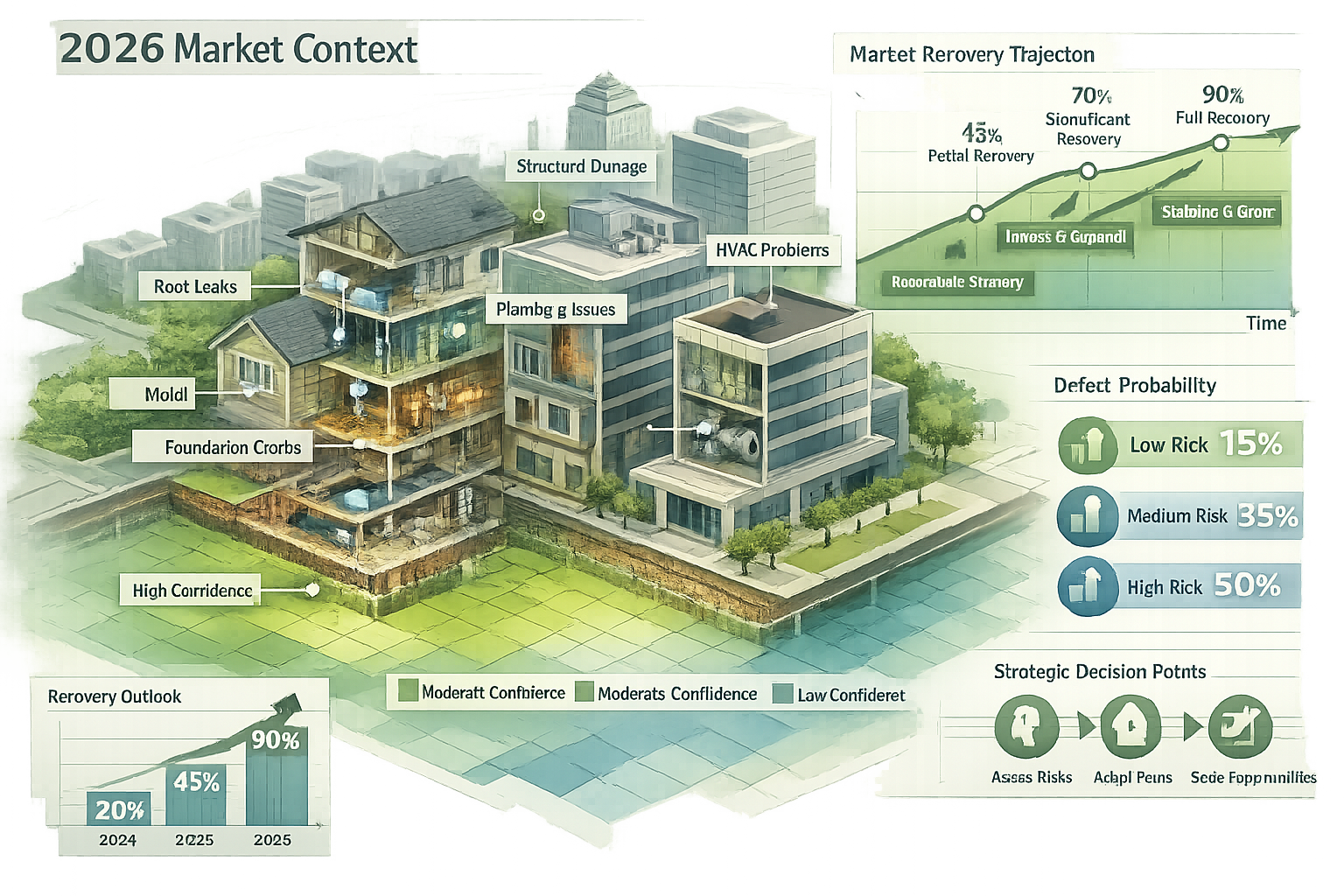
When market conditions improve and buyer competition intensifies, having a clear decision-making strategy becomes essential. The approach varies significantly based on defect severity, market dynamics, and individual buyer circumstances.
The Three-Path Decision Model
Path 1: Immediate Withdrawal
Withdraw from the purchase when:
- Critical structural defects exceed 15-20% of property value to remediate
- Legal compliance issues (building regulations, planning violations) create unacceptable risk
- Specialist reports reveal progressive deterioration requiring extensive reconstruction
- Remediation work would require vacating the property for extended periods
- Multiple critical defects combine to create unmanageable risk
This path protects buyers from properties that represent poor value regardless of price reductions. For properties requiring extensive structural work, consulting building surveyor services can provide clarity on whether remediation is realistic.
Path 2: Renegotiation Strategy
Pursue price reduction or seller remediation when:
- High priority defects have clear, quantifiable remediation costs
- Defects weren't reasonably visible during initial viewings
- Combined defect costs exceed £10,000-£15,000
- Market conditions suggest seller motivation (extended marketing period, price reductions)
- Survey evidence is compelling and professionally documented
Effective renegotiation tactics include:
- Present detailed evidence – Share relevant survey excerpts with clear photographs
- Provide contractor quotes – Obtain at least two written estimates for major works
- Propose specific solutions – Request defined price reduction or completion of specific repairs
- Set reasonable deadlines – Give sellers 5-7 days to respond to maintain transaction momentum
- Remain professional – Frame requests as reasonable adjustments based on new information
For properties with subsidence concerns, specialist reports strengthen negotiating positions significantly.
Path 3: Proceed with Informed Planning
Continue to purchase when:
- All critical defects have been satisfactorily addressed or negotiated
- High priority items are costed and budgeted within financial capacity
- Medium/low priority defects are documented for future planning
- Overall property value justifies accepting remaining defects
- Competitive market conditions make the property worth securing despite imperfections
Cost-Benefit Analysis Framework
Buyers should apply this simple calculation when evaluating defect impact:
Total Acquisition Cost = Purchase Price + Immediate Remediation + (High Priority Defects × 0.5)
This formula accounts for immediate costs plus a weighted estimate of near-term repairs. Compare this total against:
- Comparable property prices in similar condition
- Your maximum affordable investment
- Post-remediation property value
If the total acquisition cost exceeds comparable properties by more than 5-10%, reconsider the purchase or negotiate more aggressively.
Regional Considerations Across the UK
Different regions show varying market dynamics that affect defect prioritization strategies:
London and South East – Competitive markets where properties with minor defects still attract multiple offers. Focus on critical defects only; accept medium priority issues to remain competitive. Services from chartered surveyors in South West London can provide local market context.
Home Counties – Areas like Surrey, Hertfordshire, and Buckinghamshire show balanced markets where reasonable negotiation on high priority defects remains possible.
Regional Markets – Areas with more measured recovery may offer greater negotiation flexibility across all defect categories.
Timeline Management in Competitive Markets
When multiple buyers compete for properties, timeline becomes critical:
Week 1-2 Post-Offer Acceptance:
- Commission comprehensive building survey immediately
- Request any specialist reports (structural, damp, electrical) concurrently
- Begin researching contractor costs for anticipated issues
Week 3:
- Review survey findings with surveyor to understand priorities
- Obtain preliminary quotes for critical/high priority defects
- Make go/no-go decision or prepare renegotiation proposal
Week 4:
- Present renegotiation requests with supporting evidence
- Set clear deadline for seller response
- Prepare to proceed or withdraw based on outcome
This compressed timeline reflects market realities when confidence returns. Buyers who delay survey commissioning or spend weeks deliberating risk losing properties to more decisive competitors.
Practical Implementation: Navigating Renewed Demand in 2026
Successfully applying defect prioritization principles requires practical knowledge of current market conditions and professional resources available to buyers in 2026.
Selecting the Right Survey Level for Your Needs
Different property types and buyer circumstances require different survey approaches:
Level 2 Survey (Homebuyer Report) – Suitable for:
- Conventional properties built post-1900 in reasonable condition
- Buyers seeking overview of condition without exhaustive detail
- Properties where no major defects are anticipated
- Budget-conscious buyers in competitive markets
Level 3 Survey (Building Survey) – Essential for:
- Properties built pre-1900 or of non-standard construction
- Buildings showing visible defects or previous alterations
- Buyers planning significant renovation work
- Properties where comprehensive defect understanding justifies higher cost
For detailed comparison, review guidance on what survey you need based on specific circumstances.
Working Effectively with Surveyors
Maximize survey value by:
Before the survey:
- Share any concerns noted during viewings
- Provide access to all areas including lofts, cellars, outbuildings
- Request surveyor contact details for follow-up questions
- Clarify whether specialist investigations might be needed
After receiving the report:
- Schedule a follow-up discussion to clarify priorities
- Ask surveyors to distinguish between critical and minor issues
- Request rough cost estimates where surveyors can provide them
- Understand limitations (many defects require specialist investigation)
For specific concerns like roof condition, consider commissioning a targeted roof survey alongside the main building survey.
Building Your Professional Team
Effective defect prioritization often requires coordinating multiple specialists:
Core team members:
- Chartered surveyor – Primary building assessment and defect identification
- Structural engineer – Detailed analysis of foundation, wall, or roof structural concerns
- Damp specialist – Investigation of moisture penetration, condensation, or rising damp
- Electrical contractor – Assessment of wiring safety and compliance
- Heating engineer – Evaluation of boiler, heating systems, and efficiency
Specialist advisors when needed:
- Arboricultural consultant – Tree-related subsidence risk assessment
- Asbestos surveyor – Identification and removal planning for hazardous materials
- Planning consultant – Assessment of unauthorized alterations or extensions
- Party wall surveyor – For properties requiring boundary work or shared structure repairs
Coordinating these professionals efficiently reduces timeline pressure. Many surveyors maintain networks of trusted specialists and can facilitate introductions.
Budgeting for Post-Purchase Remediation
Creating realistic budgets prevents financial stress after completion:
Immediate costs (Year 1):
- Critical safety defects requiring immediate attention
- Essential weatherproofing to prevent deterioration
- Regulatory compliance work (electrical certification, gas safety)
- Budget: Typically £5,000-£25,000 depending on property condition
Near-term costs (Years 1-3):
- High priority defects that can be scheduled strategically
- Building services replacement (boiler, consumer unit)
- Preventative treatments (damp proofing, timber treatment)
- Budget: Additional £10,000-£40,000 for properties with multiple issues
Medium-term planning (Years 3-5):
- Medium priority maintenance and improvements
- Efficiency upgrades and modernization
- Cosmetic improvements and decoration
- Budget: Variable based on property size and ambition
Leveraging Market Conditions for Optimal Outcomes
As market confidence returns in 2026, understanding seller psychology becomes important:
Indicators of seller motivation:
- Property marketed for 8+ weeks without price reduction
- Previous sale fall-throughs
- Vacant properties incurring dual costs
- Sellers in onward chains requiring completion certainty
- Estate agent language suggesting "realistic offers considered"
Negotiation leverage factors:
- Survey evidence of defects not visible during viewings
- Specialist reports confirming significant remediation costs
- Multiple high priority defects requiring coordinated resolution
- Timing pressure on sellers approaching completion deadlines
When to accept defects without negotiation:
- Property priced below market value accounting for condition
- Multiple competing offers creating bidding environment
- Defects are cosmetic or low priority only
- Strategic location or unique features justify premium
Documentation and Record-Keeping
Maintain comprehensive records throughout the process:
📋 Essential documents to retain:
- Complete building survey report with all appendices
- Specialist investigation reports (structural, damp, electrical)
- Contractor quotes obtained during negotiation
- Correspondence with sellers regarding defect resolution
- Photographs of defects taken during survey or viewings
- Warranty documents for any seller-completed remediation
These records prove invaluable for:
- Future resale disclosure requirements
- Insurance claims related to pre-existing conditions
- Planning renovation work with contractors
- Warranty claims if defects worsen
- Disputes with sellers if undisclosed issues emerge
Regional Market Intelligence
Understanding local market dynamics helps calibrate expectations:
Different areas across the UK show varying recovery patterns. Buyers in areas like Bromley, Chiswick, or Watford may experience different competitive pressures compared to those in Guildford or St Albans.
Local chartered surveyors provide valuable market intelligence about:
- Typical defect patterns in local building stock
- Realistic remediation costs for regional contractors
- Market tolerance for properties with various defect types
- Negotiation norms and seller expectations
Conclusion
Building Survey Defect Prioritization When Market Confidence Returns: Helping Buyers Navigate Renewed Demand in 2026 represents an essential skill set for anyone entering the property market this year. As buyer enquiries improve and pent-up demand creates competitive conditions, the ability to rapidly assess, categorize, and respond to building survey findings provides significant strategic advantage.
The key principles to remember:
Prioritize systematically – Use the critical/high/medium/low framework to categorize defects based on risk, cost, and urgency rather than emotional reaction.
Act decisively – Market recovery reduces decision-making windows. Buyers who can quickly evaluate survey findings and determine their path forward (withdraw, negotiate, or proceed) position themselves to succeed.
Invest in professional expertise – Comprehensive surveys and specialist reports provide the foundation for confident decision-making. The cost of thorough investigation is minimal compared to the financial risk of undiscovered defects.
Negotiate strategically – Present evidence-based requests supported by contractor quotes and specialist reports. Understand when market conditions support negotiation versus when acceptance is necessary to secure desirable properties.
Budget realistically – Account for immediate remediation costs, near-term repairs, and medium-term maintenance when evaluating total acquisition cost against comparable properties.
Next Steps for Buyers
- Commission appropriate surveys early – Don't wait until after offer acceptance; understand survey timelines and book immediately upon offer acceptance
- Build your professional team – Identify chartered surveyors, specialists, and contractors before you need them urgently
- Develop cost estimation skills – Research typical remediation costs for common defects in your target area
- Create decision criteria – Define your personal thresholds for critical defects, acceptable remediation costs, and walk-away scenarios before emotional investment
- Stay informed about market conditions – Monitor local market trends to calibrate negotiation strategies appropriately
The 2026 property market presents both challenges and opportunities. Buyers who approach building survey defects with systematic prioritization, professional support, and strategic decision-making will navigate renewed demand successfully, securing properties that represent genuine value despite imperfections.
For expert guidance on building surveys and defect assessment, consult with experienced building surveyor services who understand both structural issues and current market dynamics.