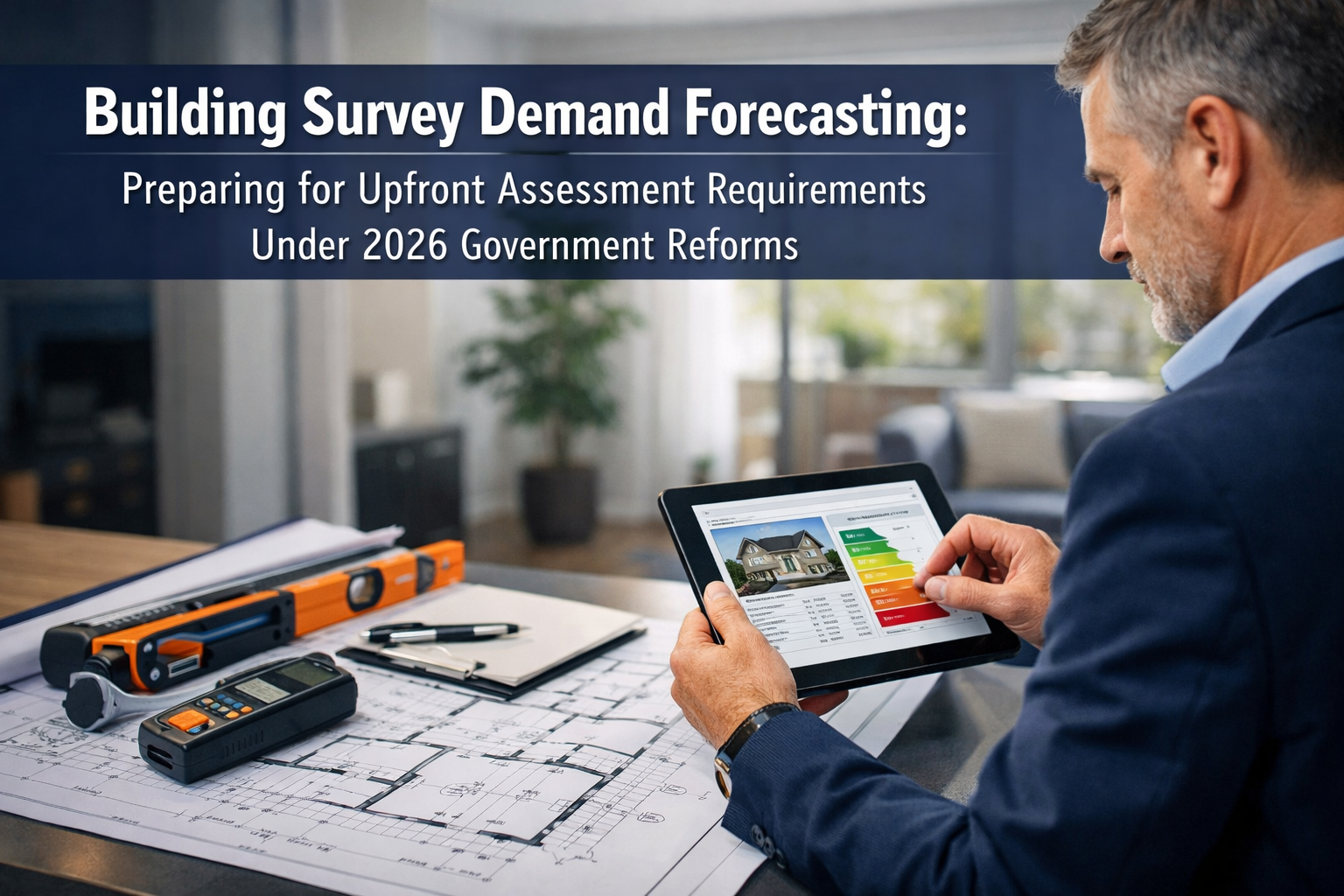

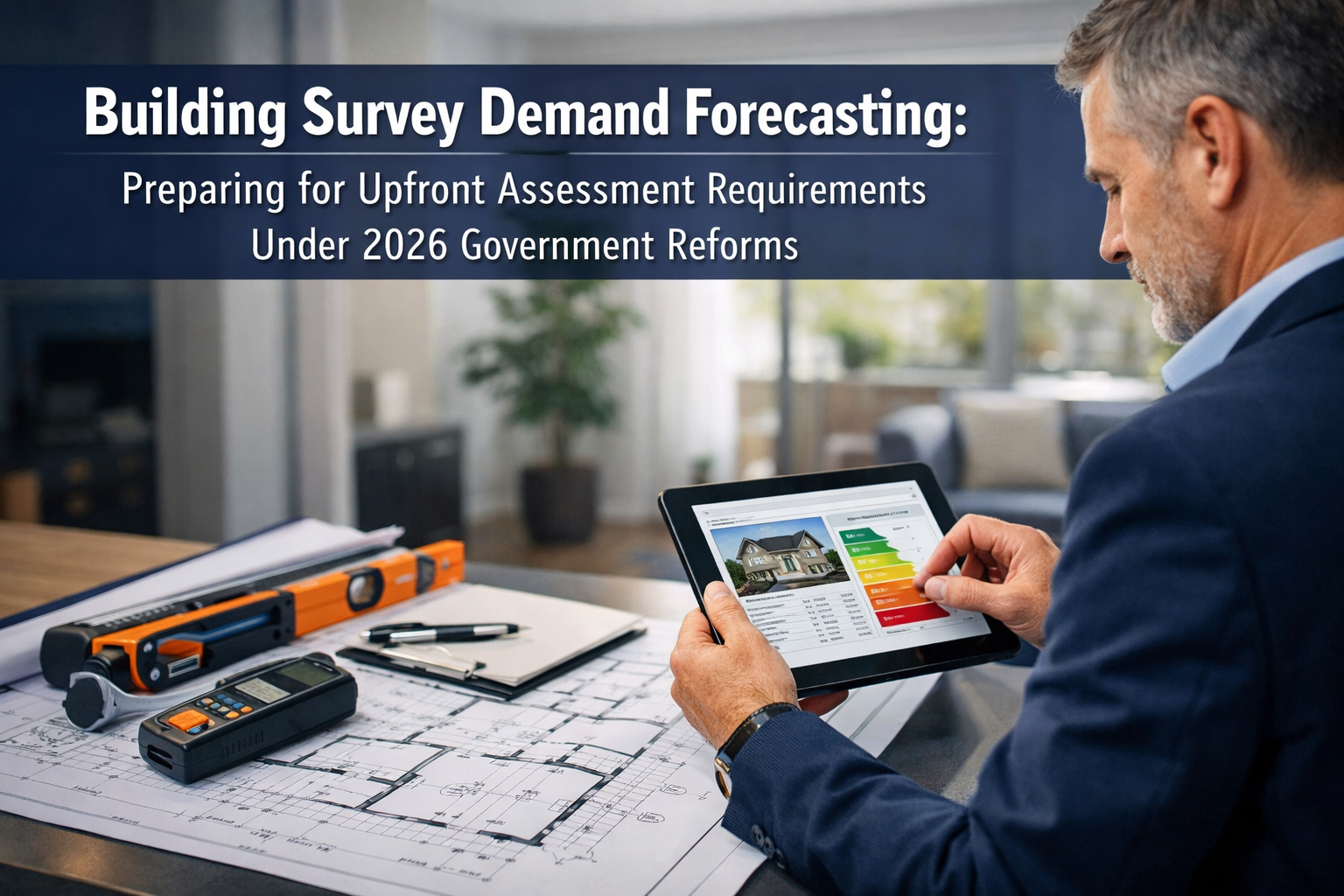
The UK property market stands at a pivotal moment. Government consultations exploring mandatory upfront property condition assessments could fundamentally reshape how building surveyors operate—potentially overnight. For surveying practices across England and Wales, the question is no longer if reforms will arrive, but when and how prepared the industry will be to meet the surge in demand. Building Survey Demand Forecasting: Preparing for Upfront Assessment Requirements Under 2026 Government Reforms has become the critical strategic priority for forward-thinking surveying businesses in 2026.
The proposed reforms would require property condition assessments as a standard upfront requirement early in the buying process, fundamentally changing when and how surveyors engage with transactions [1]. This shift from optional to mandatory assessments represents the most significant structural change to the residential property market in decades, with profound implications for capacity planning, workforce development, pricing strategies, and operational workflows.
Key Takeaways
- 🏗️ Government consultation on mandatory upfront property assessments could create unprecedented demand surge for building survey services across England and Wales
- 📊 Capacity forecasting and workforce planning are critical priorities as the sector faces potential 40-60% volume increases if reforms proceed
- 💼 Operational transformation will require investment in digital tools, streamlined workflows, and enhanced client communication systems
- 👥 Talent pipeline development through apprenticeships, graduate pathways, and retraining programs is essential to meet increased demand
- 💰 Strategic pricing models must balance accessibility for consumers with sustainable business operations under new regulatory frameworks
Understanding the 2026 Reform Landscape and Its Impact on Building Survey Demand Forecasting
The Royal Institution of Chartered Surveyors (RICS) formally responded to the UK Government's home buying and selling reform consultation in January 2026, emphasizing the importance of improving upfront information and enhancing the role of qualified professionals [2]. This response signals the profession's recognition that significant change is coming, even as details remain under consultation.
What the Proposed Reforms Mean for Surveyors
The government consultation explores whether property condition assessments should become mandatory early in the buying process rather than optional investigations commissioned after offers are accepted [1]. This represents a fundamental shift in the transaction timeline:
Current Model:
- Property listed for sale
- Buyer makes offer
- Offer accepted
- Buyer commissions survey (optional)
- Survey reveals issues
- Renegotiation or withdrawal
Proposed Reformed Model:
- Property listed for sale
- Seller commissions upfront assessment
- Assessment available to all potential buyers
- Buyer makes informed offer
- Reduced renegotiation and fewer fall-throughs
This transformation would shift survey commissioning from buyers to sellers, making assessments a prerequisite for marketing rather than a post-offer investigation. For surveying practices, this means fundamentally different demand patterns, client relationships, and operational requirements.
Market Recovery and Growth Projections
The overall sector outlook for 2026 is positive recovery and growth, with expected uplift in volumes across both lending and surveys [1]. Many lenders are forecasting increased volumes and a strong start to the year, creating favorable conditions for the surveying profession even before potential reform impacts are considered.
The construction industry growth forecast of 2.3% for 2026 is supported by major government funding packages for apprenticeships, affordable housing investment, and infrastructure development [3]. This broader construction activity sustains demand for surveying services across multiple sectors, from residential to commercial and infrastructure projects.
Professional and institutional buy-to-let landlords remain bullish on property investment, continuing to invest and working with property professionals who understand the value of proper surveys [1]. This segment creates consistent demand regardless of reform outcomes, providing a stable baseline for capacity planning.
Building Survey Demand Forecasting Models for Upfront Assessment Requirements Under 2026 Government Reforms
Effective demand forecasting requires surveyors to model multiple scenarios based on different reform implementation pathways. The uncertainty surrounding exact reform details makes scenario planning essential for strategic preparation.

Scenario-Based Forecasting Framework
Scenario 1: Full Mandatory Implementation (High Impact)
- All residential property sales require upfront condition assessment
- Estimated volume increase: 50-70% above current baseline
- Implementation timeline: 12-18 months from legislation
- Requires significant capacity expansion and workforce development
Scenario 2: Phased Implementation (Moderate Impact)
- Mandatory assessments for properties above certain value threshold
- Gradual rollout by region or property type
- Estimated volume increase: 30-45% above current baseline
- Allows time for capacity building and process refinement
Scenario 3: Voluntary Framework with Incentives (Lower Impact)
- Upfront assessments encouraged but not mandatory
- Financial incentives or process advantages for compliance
- Estimated volume increase: 15-25% above current baseline
- Slower adoption curve with gradual demand growth
Scenario 4: Status Quo with Minor Reforms (Baseline)
- Current optional survey model continues
- Enhanced information requirements without mandatory assessments
- Estimated volume increase: 5-10% above current baseline
- Natural market growth without structural reform
Key Demand Variables to Monitor
Building accurate forecasts requires tracking multiple indicators that signal reform progress and market conditions:
| Variable | Impact on Demand | Monitoring Frequency |
|---|---|---|
| Government consultation outcomes | High | Monthly |
| RICS policy positions | High | Quarterly |
| Lender mortgage volumes | Medium | Monthly |
| Property transaction volumes | High | Monthly |
| Regional market variations | Medium | Quarterly |
| Professional body guidance | Medium | Quarterly |
| Technology adoption rates | Low-Medium | Annually |
Understanding which type of survey will be required is crucial for capacity planning. While the reforms may specify basic condition assessments, many buyers will still seek more comprehensive building surveys for older or more complex properties.
Geographic Demand Distribution
Demand forecasting must account for significant regional variations in property markets. Chartered surveyors across South West London may experience different demand patterns compared to practices in other regions based on:
- Local property transaction volumes and market activity levels
- Property age and condition profiles requiring different assessment intensities
- Average property values affecting assessment scope and pricing
- Local economic conditions influencing market velocity
- Regional implementation timelines if reforms are phased geographically
Operational Transformation: Preparing Surveying Practices for Upfront Assessment Requirements
Successfully meeting increased demand requires more than simply hiring additional surveyors. Operational transformation across multiple business dimensions is essential for sustainable capacity expansion.

Workflow Optimization and Process Efficiency
RICS supports measures creating greater certainty earlier in transactions but has cautioned against piecemeal change that risks adding cost or complexity to the homebuying process [2]. This balanced approach should guide operational planning, ensuring efficiency gains rather than bureaucratic burden.
Key Process Improvements:
✅ Standardized Assessment Protocols
- Develop consistent inspection checklists and reporting templates
- Implement quality assurance frameworks for report consistency
- Create tiered assessment levels matching different property types
- Establish clear turnaround time commitments
✅ Digital Workflow Integration
- Deploy mobile inspection apps for on-site data capture
- Implement cloud-based report generation and distribution systems
- Integrate scheduling and client communication platforms
- Utilize digital photography and annotation tools
✅ Client Communication Enhancement
- Create clear explanatory materials about assessment scope and limitations
- Develop online booking and scheduling systems
- Implement automated status updates and progress tracking
- Establish transparent pricing and service level expectations
Technology Investment Priorities
Market conditions are improving with technology enabling smarter work, and potential reforms could provide the sector with the structural framework it needs to operate more efficiently [1]. Strategic technology investments should focus on:
High Priority Investments:
- Mobile inspection technology – Tablets with specialized survey apps for efficient on-site data collection
- Report automation systems – Template-based report generation reducing administrative time
- Client portal platforms – Self-service booking, document access, and communication tools
- Scheduling optimization software – Route planning and capacity management tools
- Digital photography and annotation – High-quality image capture with markup capabilities
Medium Priority Investments:
- Thermal imaging equipment – Enhanced diagnostic capabilities for property condition assessment
- Drone technology – Roof and elevation inspection without access equipment
- CRM and business intelligence – Client relationship management and performance analytics
- Cloud storage and backup – Secure document management and disaster recovery
- Video conferencing tools – Remote consultations and client meetings
Understanding what survey different clients need becomes even more important when assessments become mandatory, as clear communication about service levels prevents confusion and dissatisfaction.
Pricing Strategy Development
Building Survey Demand Forecasting: Preparing for Upfront Assessment Requirements Under 2026 Government Reforms includes developing sustainable pricing models that balance multiple objectives:
Pricing Considerations:
💷 Cost Recovery and Profitability
- Ensure pricing covers direct costs (surveyor time, travel, insurance)
- Include overhead allocation (office, technology, administration)
- Maintain sustainable profit margins for business viability
- Account for professional indemnity insurance increases
💷 Market Accessibility
- Balance affordability for sellers commissioning upfront assessments
- Consider tiered pricing for different property values and complexities
- Develop transparent pricing structures avoiding hidden fees
- Offer package pricing for multiple services
💷 Competitive Positioning
- Research competitor pricing in local markets
- Differentiate based on service quality and turnaround times
- Consider volume discounts for estate agents and developers
- Maintain pricing flexibility for different client segments
💷 Regulatory Compliance
- Ensure pricing supports delivery of compliant, thorough assessments
- Avoid race-to-the-bottom pricing compromising quality
- Build in costs for continuing professional development
- Account for potential regulatory oversight and quality assurance
For specialized assessments like subsidence surveys or structural surveys, pricing must reflect the additional expertise and investigation required beyond basic condition assessments.
Workforce Development and Capacity Building for Increased Survey Demand
Talent pipeline development is a critical sector priority, with RICS working on clearer pathways for graduates to gain qualifications and enhanced CPD platforms with improved digital tools [1]. The industry must ensure surveyors are retrained and ready to meet new demands while attracting talent to facilitate increased activity [1].

Recruitment and Talent Acquisition Strategies
Immediate Capacity Solutions:
🎯 Experienced Surveyor Recruitment
- Competitive compensation packages attracting qualified professionals
- Flexible working arrangements improving work-life balance
- Clear career progression pathways and professional development support
- Recruitment from related disciplines (building control, architecture, engineering)
🎯 Associate and Contract Surveyor Networks
- Develop relationships with self-employed surveyors for overflow capacity
- Create preferred contractor panels with quality assurance protocols
- Establish clear engagement terms and service level agreements
- Build flexible capacity that scales with demand fluctuations
Long-Term Talent Pipeline Development:
🎯 Graduate and Apprentice Programs
- Partner with universities offering surveying and construction degrees
- Develop structured graduate training programs with mentorship
- Create apprenticeship pathways combining work and study
- Offer sponsorship and financial support for qualification pursuit
🎯 School and College Engagement
- Promote surveying careers at career fairs and educational events
- Offer work experience placements introducing the profession
- Develop relationships with construction and built environment courses
- Create awareness of diverse career opportunities in surveying
Surveyor roles are among growing skilled positions in the increasingly data-driven construction sector, alongside BIM managers, digital planners, and off-site manufacturing specialists [3]. This broader skills ecosystem creates opportunities for cross-sector recruitment and career transitions.
Training and Professional Development
Upskilling Current Workforce:
📚 Technical Competency Enhancement
- Refresher training on building pathology and defect diagnosis
- Updates on building regulations and construction standards
- Training on new assessment methodologies and protocols
- Specialized courses for specific property types or issues
📚 Technology and Digital Skills
- Training on mobile inspection apps and digital tools
- Report writing efficiency and template customization
- Photography and digital documentation techniques
- Client communication and online platform usage
📚 Business and Client Service Skills
- Customer service excellence and client communication
- Time management and productivity optimization
- Risk management and professional indemnity awareness
- Business development and client relationship building
RICS has enhanced CPD platforms with improved digital tools and a new RICS member app to support continuous professional development [1]. Practices should leverage these resources to maintain workforce competency and regulatory compliance.
For surveyors expanding into commercial work, understanding commercial building surveys and commercial property surveying provides diversification opportunities beyond residential assessments.
Quality Assurance and Professional Standards
Maintaining high professional standards becomes even more critical as volumes increase and time pressures intensify. Quality assurance frameworks should include:
Quality Control Measures:
✓ Peer Review Systems – Regular review of reports by senior surveyors
✓ Standardized Checklists – Consistent inspection protocols across all surveyors
✓ Client Feedback Mechanisms – Systematic collection and analysis of satisfaction data
✓ Continuing Education Requirements – Mandatory annual training and development
✓ Professional Indemnity Compliance – Robust risk management and insurance coverage
✓ Regulatory Alignment – Adherence to RICS standards and government requirements
Understanding specialized assessment types like schedule of condition reports and dilapidation surveys ensures surveyors can offer comprehensive services beyond basic condition assessments.
Strategic Positioning and Business Development in the Reformed Market
Building Survey Demand Forecasting: Preparing for Upfront Assessment Requirements Under 2026 Government Reforms extends beyond operational readiness to strategic market positioning and business development.
Partnership Development with Key Stakeholders
Estate Agent Partnerships:
- Develop preferred supplier relationships with local estate agencies
- Create streamlined referral processes and commission structures
- Offer fast-track services for agency clients
- Provide co-branded marketing materials and client resources
Lender and Conveyancer Relationships:
- Build connections with mortgage lenders requiring assessments
- Establish relationships with conveyancing firms in transaction chains
- Offer integrated services supporting smooth transactions
- Develop data-sharing protocols respecting client confidentiality
Developer and Builder Connections:
- Partner with developers for new-build assessments and warranties
- Offer bulk assessment services for property portfolios
- Provide construction monitoring and quality assurance services
- Develop relationships with professional landlords and investors
Marketing and Client Education
Effective communication about the value and limitations of upfront assessments is essential for managing client expectations and building trust:
Key Messaging Themes:
📢 Value Proposition Communication
- Explain how upfront assessments reduce transaction uncertainty
- Highlight cost savings from reduced fall-throughs and renegotiations
- Demonstrate time savings and faster transaction completion
- Emphasize peace of mind and informed decision-making
📢 Service Differentiation
- Showcase surveyor qualifications and professional credentials
- Highlight technology and tools enhancing assessment quality
- Demonstrate track record and client testimonials
- Explain quality assurance and professional standards compliance
📢 Educational Content Development
- Create guides explaining different assessment types and scopes
- Develop FAQs addressing common concerns and questions
- Produce video content demonstrating inspection processes
- Share case studies illustrating assessment value
Understanding the difference between a homebuyer report vs building survey helps clients select appropriate assessment levels for their needs and circumstances.
Risk Management and Professional Protection
Increased volumes and potential regulatory changes create new risk exposure requiring proactive management:
Risk Mitigation Strategies:
⚠️ Professional Indemnity Insurance
- Review coverage levels matching increased exposure
- Ensure policy terms cover new assessment requirements
- Maintain adequate run-off cover for retired or departed surveyors
- Document all limitations and disclaimers clearly
⚠️ Terms of Engagement Clarity
- Develop clear, comprehensive terms and conditions
- Specify assessment scope and limitations explicitly
- Obtain signed client acknowledgment of terms
- Document any client-requested scope variations
⚠️ Documentation and Record-Keeping
- Maintain comprehensive inspection notes and photographs
- Retain all correspondence and client communications
- Implement secure, long-term document storage systems
- Establish clear retention policies meeting regulatory requirements
⚠️ Complaints Handling Procedures
- Develop clear complaint investigation and resolution processes
- Maintain professional indemnity insurer notification protocols
- Document all complaints and resolutions systematically
- Implement lessons learned to prevent recurrence
Infrastructure Investment and Sector Support Mechanisms
Government's 10-Year Infrastructure Strategy will inject at least £725 billion into economic and social infrastructure over the next decade, creating sustained pipelines of work across transport, energy, and public services that require professional surveying services [3].
This massive infrastructure investment creates parallel demand for surveying expertise beyond residential property assessments:
Infrastructure-Related Survey Opportunities:
🏗️ Pre-Acquisition Assessments – Due diligence surveys for land and property acquisitions
🏗️ Construction Monitoring – Progress inspections and quality assurance during building
🏗️ Defect Analysis – Investigation of construction defects and building failures
🏗️ Reinstatement Cost Assessments – Insurance valuations for infrastructure assets
🏗️ Dilapidation Surveys – Commercial lease-end condition assessments
The Building Safety Act transitions to "everyday reality" in 2026, requiring clear dutyholder accountability and competent Principal Designer/Principal Contractor roles with verifiable documentation [3]. This regulatory framework creates increased demand for qualified surveyors and building professionals across all construction sectors.
Understanding snagging report requirements for new-build properties becomes increasingly important as housing delivery accelerates under government affordable housing programs.
Conclusion: Strategic Readiness for the Reformed Survey Market
Building Survey Demand Forecasting: Preparing for Upfront Assessment Requirements Under 2026 Government Reforms represents the defining strategic challenge for surveying practices in 2026 and beyond. The potential transformation from optional to mandatory upfront property condition assessments would fundamentally reshape the residential property market, creating unprecedented demand for professional surveying services while requiring significant operational adaptation.
Key Strategic Imperatives:
✅ Develop robust scenario-based demand forecasts accounting for different reform implementation pathways and timelines
✅ Invest strategically in technology and digital workflows that enhance efficiency and service quality
✅ Build workforce capacity through recruitment, training, and professional development programs
✅ Establish sustainable pricing models balancing accessibility, competitiveness, and profitability
✅ Create strategic partnerships with estate agents, lenders, and other transaction stakeholders
✅ Implement quality assurance frameworks maintaining professional standards under volume pressure
✅ Manage risks proactively through appropriate insurance, clear terms, and robust documentation
The sector outlook for 2026 remains positive, with market recovery and growth creating favorable conditions even before potential reform impacts [1]. Surveying practices that prepare proactively for structural change will be best positioned to capitalize on increased demand while maintaining service quality and professional standards.
Actionable Next Steps
Immediate Actions (Next 30 Days):
- Assess current capacity and identify bottlenecks in existing workflows
- Research technology solutions for inspection and reporting efficiency
- Review professional indemnity insurance coverage and terms
- Initiate conversations with key stakeholders about potential reforms
Short-Term Actions (Next 90 Days):
- Develop scenario-based demand forecasts for different reform outcomes
- Create recruitment and training plans for capacity expansion
- Implement pilot digital workflow improvements and measure results
- Establish partnerships with estate agents and transaction professionals
Medium-Term Actions (Next 6-12 Months):
- Build flexible capacity through associate networks and contractor panels
- Invest in priority technology platforms and training programs
- Develop comprehensive marketing and client education materials
- Establish quality assurance frameworks and monitoring systems
The surveying profession stands at a pivotal moment. Practices that embrace strategic planning, invest in capacity building, and position themselves as trusted partners in the reformed transaction process will thrive in the years ahead. Those that wait for certainty before acting may find themselves overwhelmed when reforms arrive and demand surges overnight.
Working with experienced chartered surveyors who understand both current best practices and emerging regulatory requirements will be essential for property buyers, sellers, and industry professionals navigating the reformed market landscape.
References
[1] Surveying In 2026 Reform Recovery And Renewed Demand – https://www.lrg.co.uk/news-and-insights/surveying-in-2026-reform-recovery-and-renewed-demand/
[2] Uk Influence And Advocacy Update January 2026 – https://www.rics.org/news-insights/uk-influence-and-advocacy-update-january-2026
[3] The Outlook And Trends For The Uk Construction Industry In 2026 – https://infobric.com/uk/en/blogs/the-outlook-and-trends-for-the-uk-construction-industry-in-2026/