

The property market in 2026 presents an unprecedented opportunity—and challenge—for building surveyors across the UK. With RICS forecasting increased lending volumes and heightened survey demand throughout the year, surveying practices face a critical question: how can they scale operations to meet surging buyer enquiries while maintaining the professional standards that define their reputation? The Building Survey Demand Surge in 2026: How Surveyors Can Scale Operations Without Compromising Quality requires strategic planning, technological investment, and a reimagined approach to workforce management.
The construction and property sectors are experiencing mixed but concentrated growth, with data centers showing 57% net positive demand expectations while traditional sectors like office and retail construction face declines[7]. This shifting landscape means surveyors must be agile, efficient, and technologically sophisticated to capture opportunities in high-growth segments while maintaining service excellence across all property types.

Key Takeaways
- Workforce challenges are critical: The construction sector needs approximately 500,000 new workers in 2026, creating intense competition for qualified surveying talent[5]
- Technology adoption is non-negotiable: AI integration, BIM capabilities, and automated workflows are essential for scaling operations efficiently[6]
- Demand is concentrated, not universal: Data center and power infrastructure projects show 57% growth expectations, while office construction faces -14% net reading[7]
- Quality assurance systems must scale: Standardized protocols, peer review processes, and digital quality management tools prevent quality erosion during expansion
- Strategic staffing models win: Flexible workforce arrangements, accelerated training programs, and technology-enabled productivity gains allow practices to meet demand without proportional headcount increases
Understanding the Building Survey Demand Surge in 2026
The Market Dynamics Driving Increased Demand
The property and construction landscape in 2026 presents a complex picture of opportunity. While overall construction sentiment shows mixed trends—with only 12 of 17 segments expecting positive demand compared to 15 segments last year—specific sectors are experiencing explosive growth[7].
Data centers and power infrastructure lead the surge with the highest optimism ratings in construction, driven by AI adoption and digital transformation initiatives. These specialized properties require comprehensive building surveyor services that assess structural integrity, mechanical systems, and long-term maintenance requirements.
Meanwhile, residential property transactions continue to generate steady demand for surveys. Homebuyers increasingly recognize the value of professional property assessments, particularly when choosing between a homebuyer report vs building survey for older or more complex properties.
Sector-Specific Demand Patterns
| Construction Sector | 2026 Net Reading | Change from 2025 | Surveying Implications |
|---|---|---|---|
| Data Centers | +57% | Strong growth | High-value specialized surveys |
| Power Infrastructure | +43% | Growing | Technical complexity requiring expertise |
| Manufacturing | +28% | Stable | Commercial survey demand |
| Healthcare | +24% | Moderate growth | Regulatory compliance surveys |
| Multifamily Residential | +4% | Sharp decline (-20 points) | Reduced volume but steady baseline |
| Office | -14% | Declining (-11 points) | Dilapidations and refurbishment focus |
| Retail | -18% | Declining (-13 points) | Repurposing and conversion surveys |
Data compiled from industry outlook reports[7]
This concentrated demand pattern means surveyors must develop specialized expertise in high-growth sectors while maintaining capabilities across traditional property types. Practices serving diverse geographic markets—from chartered surveyors in Chelsea to chartered surveyors in Surrey—need flexible staffing models that can redirect resources toward emerging opportunities.
The Capacity Challenge
The fundamental challenge facing surveying practices in 2026 is capacity constraint. Demand is increasing in specific sectors, but the talent pool isn't expanding proportionally. The construction industry's need for 500,000 new workers creates fierce competition for qualified professionals[5].
Traditional scaling approaches—simply hiring more surveyors—face multiple obstacles:
- 📉 Limited qualified candidates in the talent market
- 💰 Rising salary expectations driven by workforce shortages
- ⏱️ Long training timelines for newly qualified surveyors to reach full productivity
- 🏢 Infrastructure costs of expanding physical office space
- 📋 Quality control complexity as team sizes increase
The solution lies not in proportional expansion but in strategic scaling—leveraging technology, optimizing workflows, and implementing quality systems that allow existing teams to handle increased volume without compromising standards.
Strategic Staffing Solutions for the Building Survey Demand Surge in 2026
Flexible Workforce Models
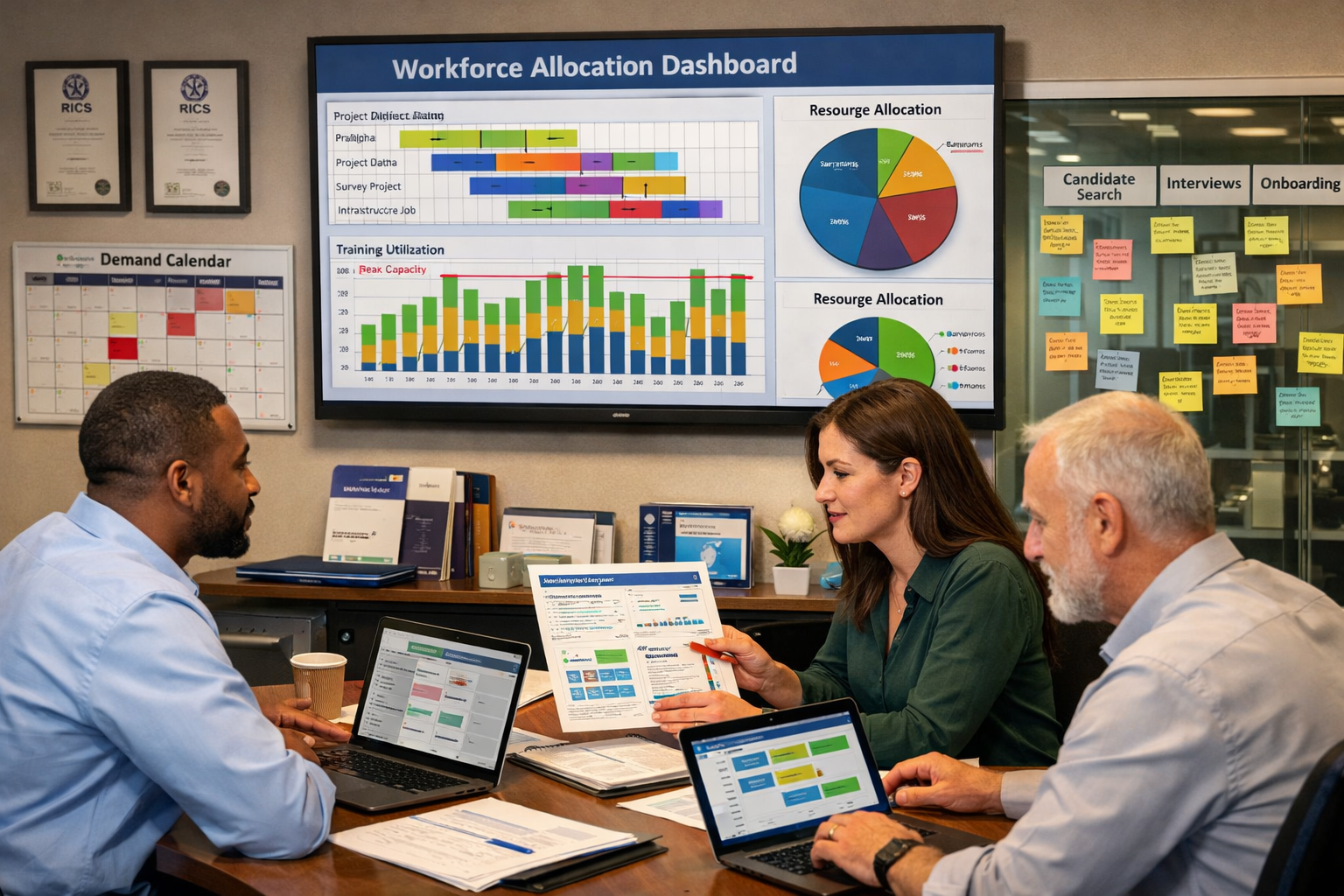
The traditional full-time employment model cannot adequately address the Building Survey Demand Surge in 2026: How Surveyors Can Scale Operations Without Compromising Quality challenge. Progressive surveying practices are adopting hybrid workforce strategies that provide flexibility while maintaining quality standards.
Associate Surveyor Networks 🤝
Building a network of qualified associate surveyors who work on a project basis allows practices to scale capacity during peak periods without permanent overhead increases. This model works particularly well for:
- Geographic expansion into areas like North London or Guildford without establishing physical offices
- Specialized survey types such as roof surveys or subsidence investigations
- Seasonal demand fluctuations in the property market
Key success factors for associate networks include:
- Rigorous vetting and qualification verification
- Standardized reporting templates and quality protocols
- Regular training and professional development opportunities
- Clear communication channels and project management systems
- Fair compensation that attracts top-tier professionals
Accelerated Training and Development Programs
Rather than waiting for the market to produce qualified surveyors, leading practices are developing talent internally through structured training programs that compress traditional development timelines.
Graduate Fast-Track Programs 📚
Recruiting promising graduates and providing intensive mentorship can produce competent surveyors faster than conventional career progression. Effective programs include:
- Structured site visit rotations with senior surveyors (3-6 months)
- Specialized technical training in building pathology, construction technology, and report writing
- Supervised report preparation with detailed feedback and revision cycles
- RICS APC preparation support to accelerate professional qualification
- Technology proficiency training in BIM, laser scanning, and survey software
Technology-Enabled Productivity Gains
The most significant scaling opportunity comes from technology adoption that multiplies individual surveyor productivity. Industry leaders identify AI adoption and advanced positioning technologies as top priorities for 2026[5].
Productivity-Enhancing Technologies:
- Digital survey tools that capture data more efficiently during site visits
- Automated measurement systems using laser scanning and photogrammetry
- AI-powered defect identification that assists surveyors in spotting issues
- Template-based reporting with intelligent auto-population of standard sections
- Cloud-based collaboration platforms enabling seamless team coordination
- Automated scheduling systems that optimize surveyor routes and appointments
When chartered surveyors in London implement comprehensive technology suites, individual surveyor capacity can increase by 30-40% without quality reduction—equivalent to hiring additional staff without the associated costs.
Geographic Service Optimization
Strategic geographic planning allows practices to maximize existing resources while appearing to expand coverage. Rather than establishing physical offices in every service area, successful practices use:
Hub-and-Spoke Models 🗺️
Maintaining central offices in key locations like South West London or Central London while deploying surveyors efficiently across broader regions including Buckinghamshire, Hampshire, and surrounding areas.
Route optimization software ensures surveyors can conduct multiple inspections in geographic clusters, reducing travel time and increasing billable hours. This approach allows practices to serve diverse markets from Watford to Bromley without proportional increases in staff.
Technology Integration and Workflow Automation

Building Information Modeling (BIM) Integration
Land surveyors and building surveyors increasingly integrate Building Information Modeling with geospatial data, creating comprehensive digital representations of properties[6]. This integration represents a fundamental shift in how surveys are conducted, documented, and delivered.
BIM integration enables surveyors to:
- Create 3D digital models during initial surveys that clients can interact with
- Layer defect information onto spatial models for clearer communication
- Generate multiple report formats from a single data collection effort
- Collaborate seamlessly with architects, engineers, and contractors
- Maintain living documents that update as properties evolve
The investment in BIM capabilities pays dividends through increased efficiency, reduced site revisits, and enhanced client value perception. For commercial building surveys, BIM integration is becoming a competitive requirement rather than a differentiator.
Automated Quality Assurance Systems
As surveying practices scale operations, maintaining consistent quality becomes exponentially more challenging. Manual review processes that worked for small teams become bottlenecks at larger scales.
Digital Quality Management Solutions ✅
Modern quality assurance platforms provide:
- Automated completeness checks ensuring all required report sections are populated
- Consistency validation comparing terminology and recommendations across reports
- Photo documentation verification confirming adequate visual evidence
- Regulatory compliance scanning checking adherence to RICS standards
- Peer review workflow management with tracked comments and revisions
- Client feedback integration capturing satisfaction data for continuous improvement
These systems don't replace professional judgment—they augment human expertise by handling routine verification tasks, allowing senior surveyors to focus on complex technical assessments and client relationships.
Workflow Automation Opportunities
Significant time savings emerge from automating non-technical administrative tasks that consume surveyor time without adding professional value.
High-Impact Automation Areas:
| Process | Manual Time | Automated Time | Time Savings |
|---|---|---|---|
| Appointment scheduling | 15 min/survey | 2 min/survey | 87% |
| Client communication | 20 min/survey | 5 min/survey | 75% |
| Report template setup | 25 min/survey | 3 min/survey | 88% |
| Photo organization | 30 min/survey | 5 min/survey | 83% |
| Invoice generation | 10 min/survey | 1 min/survey | 90% |
| Document filing | 15 min/survey | Automatic | 100% |
Estimated time savings from workflow automation implementation
For a surveyor conducting 200 surveys annually, these automation gains recover approximately 400 hours—equivalent to 10 additional working weeks of capacity without additional hiring.
Cloud-Based Collaboration Platforms
The shift to cloud-based operations enables distributed teams to function as cohesively as co-located staff. Modern surveying practices operate across multiple locations—from East London to Leatherhead—requiring robust digital infrastructure.
Essential cloud platform capabilities include:
- Real-time document collaboration allowing multiple surveyors to contribute to reports
- Centralized knowledge bases providing instant access to technical guidance
- Mobile field applications enabling data capture directly into central systems
- Secure client portals for seamless report delivery and communication
- Integrated project management tracking surveys from enquiry through completion
When properly implemented, cloud platforms eliminate geographic constraints, allowing practices to deploy expertise wherever needed without physical presence requirements.
Quality Assurance Protocols That Scale

Standardization Without Rigidity
The challenge of scaling surveying operations while maintaining quality requires standardized processes that preserve professional judgment. Over-standardization creates robotic reports that miss property-specific nuances; under-standardization produces inconsistent quality that damages reputation.
The Balanced Approach ⚖️
Successful practices develop:
- Standardized inspection checklists ensuring comprehensive property coverage
- Flexible reporting frameworks that accommodate property-specific findings
- Consistent terminology libraries improving report clarity and professionalism
- Graduated recommendation protocols matching advice severity to defect significance
- Quality benchmarks defining minimum standards while encouraging excellence
This approach ensures that whether a client receives a survey from a senior partner or a recently qualified surveyor, the fundamental quality standards remain consistent while preserving the professional insight that distinguishes expert surveyors.
Peer Review Systems
As practices grow, systematic peer review becomes essential for maintaining quality standards. Unlike small practices where principals naturally review all work, scaled operations require formal review protocols.
Effective Peer Review Models:
-
Tiered Review Structure 📋
- Junior surveyors: 100% report review by senior staff
- Intermediate surveyors: 50% random sampling plus all complex properties
- Senior surveyors: 25% random sampling for quality assurance
- Specialized surveys: Technical expert review regardless of surveyor seniority
-
Blind Review Processes
- Removing surveyor names during review to eliminate bias
- Focusing reviewers on content quality rather than personnel relationships
- Providing constructive feedback that develops skills
-
Client Feedback Integration
- Systematically collecting client satisfaction data
- Correlating feedback with specific surveyors and report types
- Using insights to refine training and quality protocols
Continuous Professional Development
The Building Survey Demand Surge in 2026: How Surveyors Can Scale Operations Without Compromising Quality requires ongoing investment in surveyor knowledge and skills. Technology evolves, building techniques advance, and regulatory requirements change—static expertise becomes obsolete.
Structured CPD Programs 🎓
Leading practices implement:
- Monthly technical training sessions covering emerging building pathologies
- Technology workshops ensuring proficiency with new tools and platforms
- Case study reviews analyzing complex surveys and lessons learned
- External expert presentations on specialized topics like boundary disputes or party wall matters
- RICS compliance updates maintaining awareness of professional standards
- Client service excellence training improving communication and relationship management
When CPD becomes embedded in practice culture rather than a compliance checkbox, it directly contributes to quality maintenance during scaling operations.
Quality Metrics and Performance Monitoring
What gets measured gets managed. Scaled surveying operations require quantifiable quality indicators that provide early warning of declining standards.
Key Quality Metrics:
- Report revision rate: Percentage requiring significant corrections post-submission
- Client satisfaction scores: Systematic feedback collection and analysis
- Complaint frequency: Tracking and categorizing client concerns
- Peer review findings: Documenting common issues and improvement trends
- Turnaround time consistency: Monitoring whether speed compromises thoroughness
- Technical accuracy audits: Periodic expert review of survey conclusions
- Professional indemnity claims: Ultimate quality indicator requiring investigation
Practices that monitor these metrics monthly can identify quality erosion early and implement corrective measures before reputation damage occurs.
Addressing Workforce Challenges in 2026
The Talent Acquisition Reality
The construction sector's need for approximately 500,000 new workers in 2026 creates intense competition for qualified surveying professionals[5]. Traditional recruitment approaches—posting positions and waiting for applications—prove insufficient in this constrained market.
Proactive Talent Strategies 💼
- University partnerships: Establishing relationships with surveying programs to create talent pipelines
- Apprenticeship programs: Developing talent from earlier career stages
- Industry visibility: Speaking at conferences, publishing thought leadership, and building employer brand
- Competitive compensation: Matching or exceeding market rates for top talent
- Career development emphasis: Highlighting growth opportunities and professional development support
- Flexible working arrangements: Offering hybrid models that attract diverse candidates
Retention as a Scaling Strategy
In a constrained talent market, retaining existing staff becomes as important as recruiting new talent. The cost of replacing an experienced surveyor—including recruitment, training, and productivity loss—can exceed £50,000.
Retention-Focused Initiatives:
- Clear career progression pathways showing advancement opportunities
- Competitive compensation reviews ensuring market alignment
- Professional development investment demonstrating commitment to growth
- Work-life balance protection preventing burnout during high-demand periods
- Recognition programs celebrating excellence and contributions
- Equity or profit-sharing opportunities aligning long-term interests
- Mentorship programs connecting junior and senior professionals
Practices that reduce annual turnover from 20% to 10% effectively gain capacity equivalent to hiring additional staff—without recruitment costs or integration challenges.
Immigration and Workforce Policy Impacts
Contractors report increased business challenges from enhanced immigration enforcement, which directly affects workforce availability[2]. Surveying practices that previously relied on international talent must adapt strategies.
Mitigation Approaches:
- Developing domestic talent pipelines through training programs
- Ensuring visa compliance for international staff
- Building diverse recruitment channels to access broader talent pools
- Investing in technology solutions that reduce absolute headcount requirements
Client Communication and Expectation Management
Transparent Capacity Communication
During demand surges, managing client expectations becomes critical for maintaining satisfaction. Clients prefer honest communication about timelines over optimistic promises followed by delays.
Effective Communication Strategies:
- Realistic scheduling: Providing accurate turnaround estimates based on current capacity
- Priority options: Offering expedited service at premium pricing for urgent requirements
- Progress updates: Proactively communicating survey status rather than waiting for client inquiries
- Capacity transparency: Explaining demand patterns and how they affect scheduling
Practices that communicate transparently maintain client relationships even when immediate capacity is limited, often converting delays into future business rather than losing clients to competitors.
Service Tiering and Pricing Strategy
Not all surveys require the same level of effort or expertise. Strategic service tiering allows practices to match resources to requirements, maximizing capacity utilization.
Service Tier Framework:
- Standard Surveys: Routine residential properties using standardized processes
- Enhanced Surveys: Complex or high-value properties requiring additional investigation
- Specialist Surveys: Unique properties or specific issues like specific defect reports or dilapidation surveys
This tiering allows practices to deploy junior surveyors on standard work while reserving senior expertise for complex assignments—effectively multiplying capacity while maintaining appropriate quality levels for each property type.
Digital Client Experience
Modern clients expect digital-first interactions throughout the survey process. Practices that digitize client touchpoints improve efficiency while enhancing satisfaction.
Digital Experience Components:
- Online booking systems allowing clients to schedule surveys 24/7
- Automated confirmation and reminder communications
- Digital report delivery with interactive features and multimedia content
- Client portals providing survey status visibility and document access
- Electronic payment processing streamlining financial transactions
- Automated satisfaction surveys capturing feedback systematically
These digital enhancements reduce administrative burden on surveyors while meeting client expectations for modern service delivery.
Financial Considerations for Scaling Operations
Investment Prioritization
Scaling operations requires strategic capital allocation across multiple competing priorities. Practices must balance technology investment, workforce expansion, training programs, and quality systems.
Investment Priority Framework:
- Technology infrastructure (highest ROI): Automation and productivity tools
- Quality assurance systems: Protecting reputation during growth
- Training and development: Accelerating capability building
- Workforce expansion: Adding capacity where technology cannot substitute
- Marketing and business development: Capturing demand surge opportunities
Practices that prioritize technology and quality systems before aggressive hiring typically achieve more sustainable scaling with better financial outcomes.
Pricing Strategy During Demand Surges
Increased demand creates pricing power that practices can leverage to improve margins and fund growth investments. However, pricing must balance profitability with long-term client relationships.
Strategic Pricing Approaches:
- Value-based pricing: Charging based on property value and complexity rather than time
- Surge pricing: Premium rates for expedited service during peak periods
- Volume discounts: Incentivizing repeat clients and large portfolios
- Service bundling: Combining surveys with related services like snagging reports or structural engineering consultations
Measuring Scaling Success
Successful scaling produces measurable improvements across operational and financial metrics. Practices should track:
| Metric | Pre-Scaling Baseline | Target After Scaling |
|---|---|---|
| Surveys per surveyor/month | 15-20 | 25-30 |
| Average turnaround time | 10 days | 7 days |
| Client satisfaction score | 8.2/10 | 8.5/10 |
| Revenue per surveyor | £120,000 | £180,000 |
| Operating margin | 22% | 28% |
| Staff retention rate | 80% | 90% |
These metrics provide objective assessment of whether scaling initiatives achieve intended outcomes without compromising quality or employee satisfaction.
Conclusion
The Building Survey Demand Surge in 2026: How Surveyors Can Scale Operations Without Compromising Quality presents both significant opportunity and substantial challenge for surveying practices across the UK. With concentrated demand growth in sectors like data centers and power infrastructure, alongside steady residential transaction volumes, surveyors who successfully scale operations will capture disproportionate market share and profitability.
The solution lies not in simply hiring more surveyors—an approach constrained by workforce shortages affecting the entire construction industry—but in strategic scaling that combines technology adoption, workflow optimization, flexible staffing models, and robust quality assurance systems.
Key Success Factors for 2026
✅ Technology investment: BIM integration, automated workflows, and AI-powered tools multiply individual surveyor productivity
✅ Flexible workforce models: Associate networks and project-based staffing provide capacity without permanent overhead
✅ Quality systems that scale: Standardized processes, peer review protocols, and digital quality management prevent erosion of professional standards
✅ Strategic talent management: Accelerated training programs and retention initiatives maximize existing workforce capability
✅ Client experience optimization: Digital touchpoints and transparent communication maintain satisfaction during high-demand periods
Actionable Next Steps
Surveying practices should immediately:
- Audit current technology stack and identify automation opportunities that could increase capacity by 30-40%
- Develop associate surveyor networks to provide flexible capacity for geographic or specialized survey requirements
- Implement digital quality management systems before scaling operations to ensure quality standards remain consistent
- Create structured training programs that accelerate junior surveyor development and reduce time-to-productivity
- Establish capacity monitoring dashboards tracking key metrics like surveys per surveyor, turnaround times, and client satisfaction
- Review pricing strategy to ensure it reflects current demand dynamics and funds growth investments
- Build university and industry partnerships creating talent pipelines for future workforce needs
The practices that approach the 2026 demand surge strategically—investing in technology, developing talent, and systematically protecting quality—will emerge stronger, more profitable, and better positioned for long-term success. Those that simply attempt to hire their way through the surge will face workforce shortages, quality challenges, and margin pressure.
The opportunity is substantial, but success requires deliberate planning and disciplined execution. The time to prepare is now. 🚀
References
[1] Survey Reveals Demand Uncertainty Is Changing 2026 Homebuilding Strategy – https://www.housingwire.com/articles/survey-reveals-demand-uncertainty-is-changing-2026-homebuilding-strategy/
[2] 2026 Construction Industry Outlook – https://news.agc.org/economics/2026-construction-industry-outlook/
[5] Future Construction Technology Trends Contractor Survey – https://www.trimble.com/blog/trimble/en-US/article/future-construction-technology-trends-contractor-survey
[6] Future Land Surveying 2026 – https://haller-blanchard.com/future-land-surveying-2026/
[7] 2026 Construction Outlook Mixed Trends – https://dailyreporter.com/2026/01/14/2026-construction-outlook-mixed-trends/