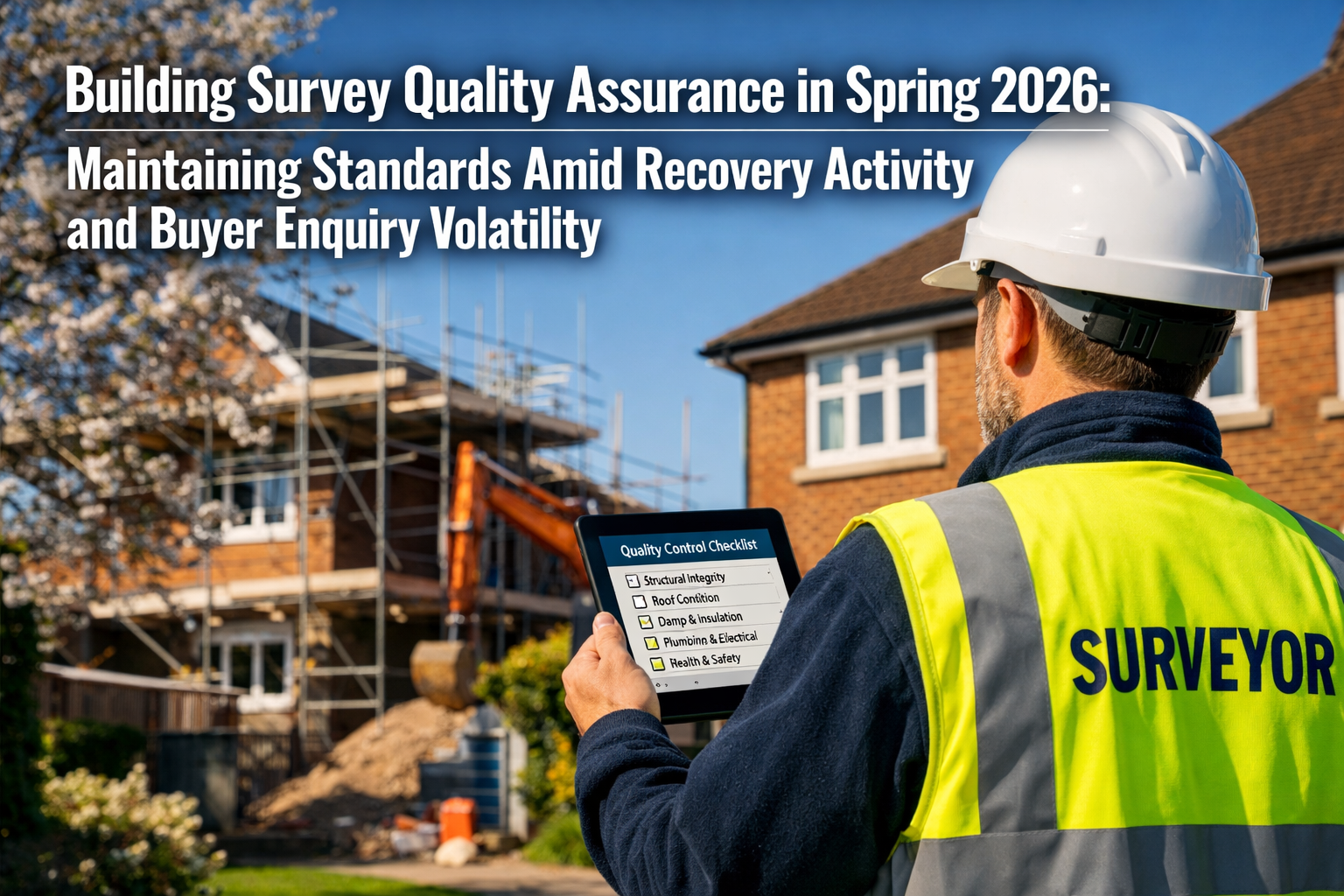

Market forecasts suggest lending activity will increase through spring 2026, yet contractor demand expectations remain subdued with only 43% anticipating higher activity levels compared to previous years [5]. This paradox creates a unique challenge for building surveyors: preparing for potential volume surges while navigating unpredictable buyer enquiry patterns. Building Survey Quality Assurance in Spring 2026: Maintaining Standards Amid Recovery Activity and Buyer Enquiry Volatility requires strategic planning, robust protocols, and unwavering commitment to professional standards during this transitional period.
The construction industry faces dampened expectations amid economic uncertainty [4], yet property transactions continue, and buyers still require comprehensive building surveys before committing to purchases. Surveyors must balance efficiency demands with the non-negotiable requirement for thorough, accurate assessments that protect clients' interests.
Key Takeaways
- Volume volatility demands flexible capacity planning while maintaining consistent quality standards across all survey instructions
- Technology integration and standardized protocols enable surveyors to scale operations without compromising due diligence or accuracy
- Continuous professional development and peer review systems ensure standards remain high during periods of fluctuating workload
- Clear communication frameworks help manage client expectations during uncertain market conditions
- Robust quality assurance checkpoints throughout the survey process protect professional reputation and client interests
Understanding the Spring 2026 Market Context for Building Surveys
The construction landscape entering spring 2026 presents mixed signals that directly impact building survey demand. While residential construction shows signs of cautious optimism, commercial sectors face continued uncertainty [7]. Homebuilders are adjusting strategies in response to demand volatility [6], creating ripple effects throughout the property transaction ecosystem.
Current Market Dynamics Affecting Survey Demand
Several interconnected factors influence building survey requirements in spring 2026:
Economic Uncertainty: Contractors report dampened expectations with concerns about interest rates, labor costs, and material availability [4]. This uncertainty translates to buyer hesitancy, creating unpredictable enquiry patterns for building surveyor services.
Lending Forecast Uplift: Despite broader uncertainty, mortgage lenders anticipate increased activity through spring and summer 2026. This forecast suggests potential survey volume increases, though timing and magnitude remain unclear.
Labor Shortage Challenges: The construction industry continues grappling with workforce shortages [2][3], affecting not only building projects but also the availability of qualified surveyors to meet demand spikes.
Technology Adoption Acceleration: Construction technology integration is advancing rapidly [1], with similar innovations transforming surveying practices through digital tools, drone roof surveys, and automated reporting systems.
Why Quality Assurance Becomes Critical During Volatility
Fluctuating demand creates specific quality risks that surveyors must actively manage:
- Rushed inspections when volume suddenly increases
- Inconsistent methodology when different surveyors handle overflow work
- Reduced peer review due to time pressures
- Inadequate documentation when administrative systems become overwhelmed
- Client communication gaps during busy periods
Professional surveyors working across chartered surveyors London and surrounding regions must anticipate these challenges and implement preventive measures.
Core Components of Building Survey Quality Assurance in Spring 2026
Maintaining standards amid recovery activity requires systematic approaches that embed quality controls throughout the survey process. Building Survey Quality Assurance in Spring 2026: Maintaining Standards Amid Recovery Activity and Buyer Enquiry Volatility depends on several foundational elements.
Standardized Inspection Protocols
Consistency begins with clearly defined inspection methodologies that all surveyors follow regardless of workload pressures:
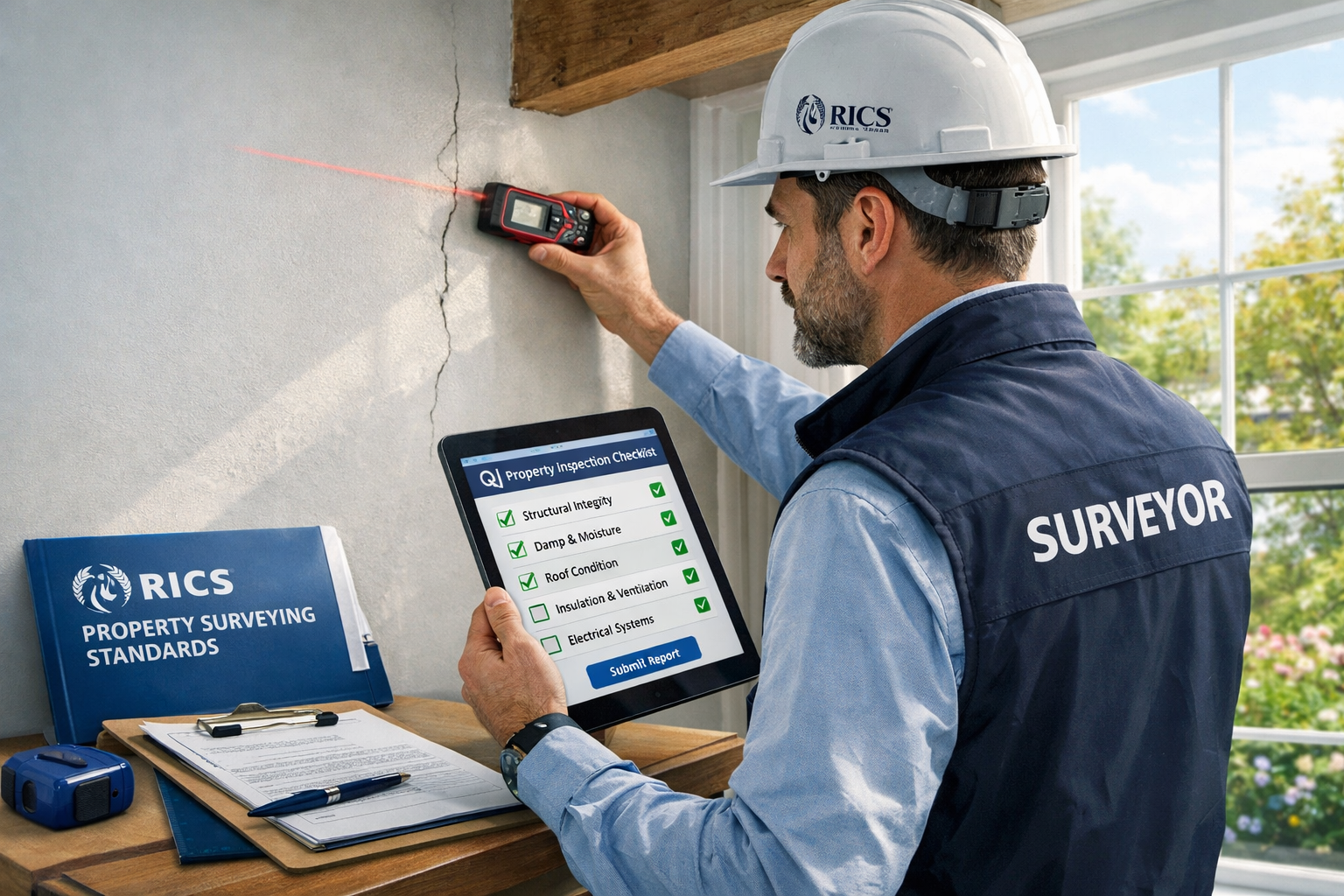
📋 Comprehensive Checklists: Detailed inspection checklists ensure no elements are overlooked, covering:
- Structural components (foundations, walls, roofs, floors)
- Building services (electrical, plumbing, heating, drainage)
- External elements (boundary walls, outbuildings, drainage)
- Specific defect identification and severity assessment
- Environmental considerations (damp, ventilation, insulation)
🔍 Standardized Assessment Criteria: Uniform criteria for evaluating defect severity prevent subjective variations between surveyors. Clear definitions distinguish between:
- Category 1: No urgent action required
- Category 2: Repairs or replacement requiring future attention
- Category 3: Urgent defects requiring immediate attention
📸 Documentation Requirements: Minimum photographic evidence standards ensure adequate visual records support written findings. This includes mandatory images of key structural elements, identified defects, and contextual property views.
Technology Integration for Consistency
Modern surveying technology enhances quality assurance when properly implemented:
Digital Survey Tools: Tablet-based inspection software standardizes data collection, ensures completeness, and reduces transcription errors. These tools can include:
- Pre-populated property-specific checklists
- Integrated photography with automatic geotagging
- Real-time defect categorization
- Automated preliminary report generation
Measurement Technology: Laser measuring devices and drone roof survey capabilities improve accuracy while enhancing surveyor safety, particularly for difficult-to-access areas.
Quality Control Software: Automated systems flag incomplete sections, inconsistent assessments, or missing mandatory elements before reports reach clients.
Peer Review and Technical Validation
No single surveyor should operate in isolation. Effective quality assurance includes:
Structured Peer Review: Senior surveyors review completed reports before release, checking for:
- Technical accuracy and completeness
- Appropriate defect categorization
- Clear, understandable language
- Adequate photographic evidence
- Logical recommendations
Technical Consultation: Complex findings benefit from multi-surveyor review, particularly for:
- Structural concerns requiring specialist assessment
- Specific defect reports with significant implications
- Properties with unusual construction methods
- Heritage or listed buildings
Continuous Calibration: Regular team meetings discuss challenging cases, ensuring consistent interpretation of standards across all surveyors.
Managing Capacity and Quality During Demand Fluctuations
Building Survey Quality Assurance in Spring 2026: Maintaining Standards Amid Recovery Activity and Buyer Enquiry Volatility requires flexible capacity strategies that never compromise thoroughness.
Workforce Planning Strategies
Anticipating volume changes enables proactive resource management:
Flexible Capacity Models:
- Core team + associate network: Maintain permanent staff for baseline demand while cultivating relationships with qualified associate surveyors for peak periods
- Cross-regional collaboration: Partnerships with chartered surveyors in West London, North West London, and Central London enable workload distribution
- Specialist allocation: Match surveyor expertise to property types (residential, commercial building surveys, period properties)
Training and Development: Continuous professional development ensures all surveyors remain current with:
- Latest RICS guidance and standards
- Emerging building technologies and construction methods
- New defect identification techniques
- Regulatory changes affecting property assessments
Client Communication and Expectation Management
Transparent communication prevents quality pressures from client demands:
Realistic Timeframes: Clearly communicate inspection and reporting timelines that allow thorough assessment. During high-demand periods:
- Provide honest lead times rather than overpromising
- Explain quality assurance processes that protect client interests
- Offer priority services only when capacity genuinely permits
Educational Approach: Help clients understand survey value beyond transaction facilitation:
- Explain inspection methodology and standards
- Clarify limitations and scope of different survey types
- Emphasize how quality assurance protects their investment
Progress Updates: Regular communication during the survey process reduces client anxiety and demonstrates professionalism, particularly for complex properties requiring extended assessment periods.
Quality Assurance Challenges Specific to Spring 2026

The current market environment presents unique quality assurance challenges requiring targeted responses.
Challenge 1: Technology Integration Gaps
While 71% of contractors plan to increase technology investment [1], implementation gaps create risks:
⚠️ Risk: Surveyors adopt new tools without adequate training, leading to incomplete data capture or misuse of technology.
✅ Solution: Structured technology onboarding with:
- Comprehensive training before field deployment
- Parallel systems during transition periods
- Regular competency assessments
- Technical support availability during inspections
Challenge 2: Labor Shortage Pressures
Construction industry labor shortages [2][3] extend to qualified surveyors, creating temptations to compromise standards:
⚠️ Risk: Pressure to use less-qualified personnel or reduce inspection thoroughness to meet demand.
✅ Solution:
- Maintain strict qualification requirements for all survey work
- Invest in mentoring programs to develop junior surveyors
- Refuse instructions beyond genuine capacity
- Build associate networks with verified credentials
Challenge 3: Volatile Enquiry Patterns
Unpredictable buyer activity creates operational challenges:
⚠️ Risk: Sudden volume spikes lead to rushed inspections or inadequate quality control.
✅ Solution:
- Implement booking systems that enforce minimum lead times
- Maintain quality assurance checkpoints regardless of volume
- Scale capacity through pre-qualified associate networks
- Communicate capacity constraints transparently to clients and agents
Challenge 4: Cost Pressures and Fee Competition
Economic uncertainty increases price sensitivity among buyers:
⚠️ Risk: Fee pressure tempts surveyors to reduce inspection time or eliminate quality assurance steps.
✅ Solution:
- Clearly articulate value proposition emphasizing quality and thoroughness
- Educate clients on risks of inadequate surveys
- Maintain fee structures that support proper methodology
- Differentiate services based on expertise and standards rather than competing solely on price
Best Practices for Building Survey Quality Assurance in Spring 2026
Implementing comprehensive quality assurance requires systematic approaches across all operational aspects.
Pre-Inspection Quality Controls
Quality assurance begins before surveyors arrive on-site:
Instruction Verification: Confirm complete information including:
- Property address and access arrangements
- Client contact details and communication preferences
- Specific concerns or areas requiring particular attention
- Property type, age, and construction method
- Previous survey reports or known issues
Surveyor Allocation: Match surveyor expertise to property characteristics:
- Period properties to surveyors with heritage experience
- Commercial properties to commercially-qualified surveyors
- Properties with known structural concerns to senior surveyors
- Standard residential properties to appropriately qualified staff
Pre-Inspection Research: Review available information:
- Planning history and building control records
- Local authority searches for area-specific issues
- Historical mapping for previous site uses
- Flood risk and environmental data
On-Site Quality Measures
Thorough inspection methodology ensures nothing is missed:
Systematic Approach: Follow consistent inspection sequences:
- External envelope inspection (roof, walls, windows, doors)
- Internal structural elements (floors, walls, ceilings)
- Building services (heating, electrical, plumbing)
- Roof space and subfloor areas where accessible
- External grounds, boundaries, and outbuildings
Adequate Time Allocation: Never rush inspections regardless of schedule pressures. Typical inspection durations:
- Small flat: 2-3 hours minimum
- Standard house: 3-4 hours minimum
- Large or complex property: 4-6+ hours
- Additional time for roof surveys or specialist assessments
Comprehensive Documentation: Capture sufficient evidence:
- Minimum 50-100 photographs for standard properties
- Detailed notes on all significant observations
- Measurements of key elements and defects
- Sketches or diagrams where helpful for clarity
Post-Inspection Quality Assurance
Report preparation includes multiple quality checkpoints:
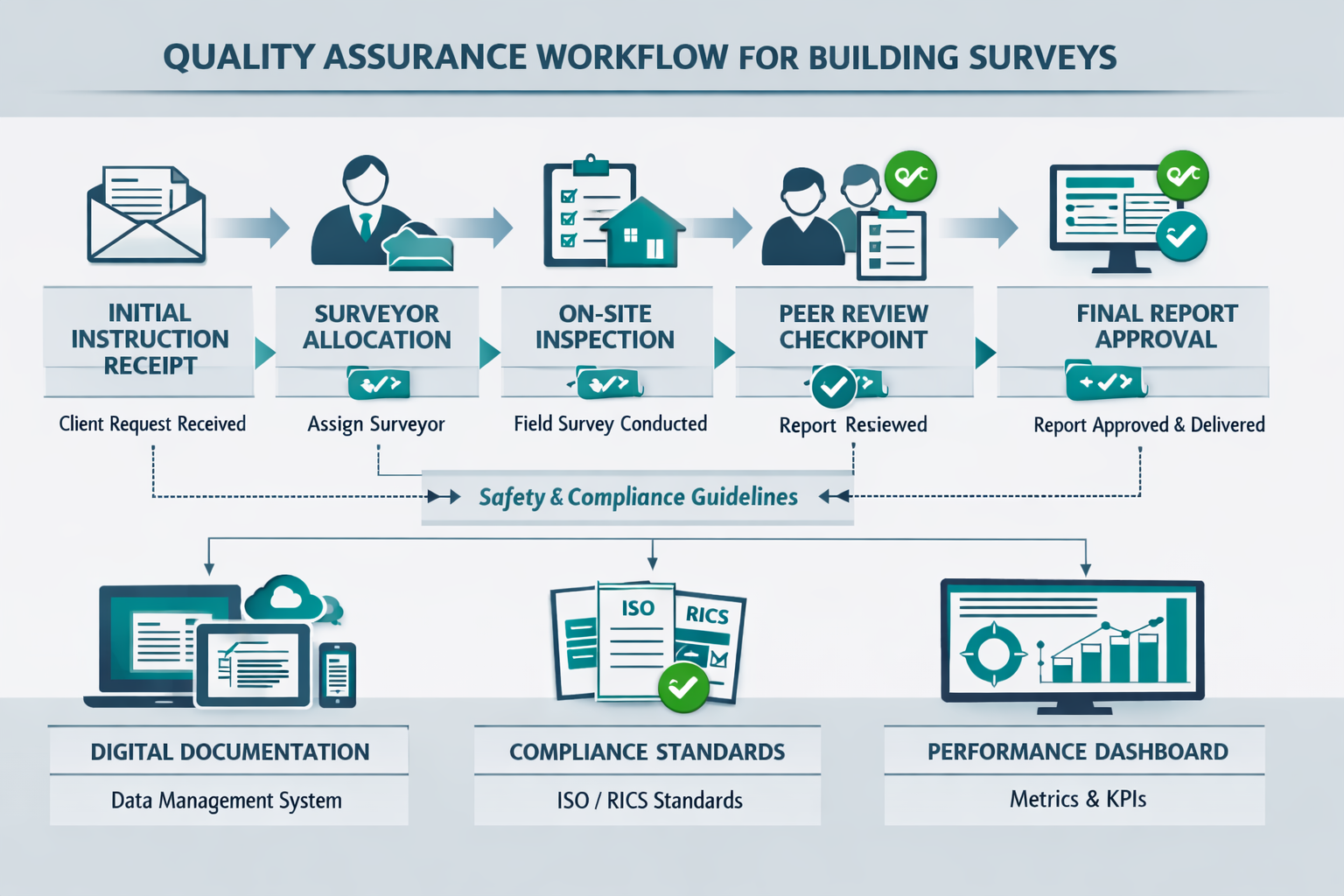
Structured Report Review: Multi-stage validation process:
- Surveyor self-review: Check completeness and accuracy
- Technical review: Senior surveyor validates findings and recommendations
- Editorial review: Check clarity, grammar, and presentation
- Final verification: Confirm all mandatory elements included
Consistency Checks: Ensure internal report consistency:
- Defect descriptions match photographic evidence
- Severity categorizations align with descriptions
- Recommendations logically follow from findings
- Executive summary accurately reflects detailed findings
Client-Focused Presentation: Reports must be accessible and actionable:
- Clear, jargon-free language
- Logical structure following property elements
- Prioritized recommendations with cost implications
- Adequate explanation of technical issues
Professional Standards and Regulatory Compliance
Building Survey Quality Assurance in Spring 2026: Maintaining Standards Amid Recovery Activity and Buyer Enquiry Volatility must align with professional body requirements and industry standards.
RICS Standards and Guidance
Royal Institution of Chartered Surveyors (RICS) standards provide the framework for professional practice:
RICS Home Survey Standard: Defines minimum requirements for:
- RICS Level 2 (HomeBuyer Report)
- RICS Level 3 (Building Survey)
- Surveyor qualifications and competence
- Report content and presentation
- Professional indemnity insurance
Continuing Professional Development (CPD): RICS members must complete annual CPD requirements, ensuring current knowledge of:
- Building pathology and defect identification
- Construction technology developments
- Regulatory changes
- Professional standards updates
Quality Assurance Documentation
Maintaining evidence of quality processes protects professional reputation:
Quality Management Systems: Document procedures for:
- Instruction acceptance and verification
- Surveyor allocation criteria
- Inspection methodology
- Report review processes
- Client communication protocols
- Complaint handling procedures
Performance Monitoring: Track quality metrics:
- Report completion timeframes
- Client satisfaction scores
- Complaint frequency and resolution
- Peer review outcomes
- Continuing professional development completion
Practical Implementation Checklist
Organizations implementing or enhancing quality assurance systems should address these key areas:
✅ Operational Systems
- Standardized inspection checklists for all property types
- Digital survey tools with quality control features
- Structured peer review processes with documented outcomes
- Clear surveyor allocation criteria based on expertise
- Realistic capacity planning with buffer for quality assurance
- Client communication protocols for all project stages
✅ Technical Standards
- Documented inspection methodology aligned with RICS standards
- Defect categorization criteria with examples
- Minimum photographic evidence requirements
- Report structure templates ensuring consistency
- Technical reference library for surveyor consultation
- Specialist referral protocols for complex issues
✅ Personnel Development
- Comprehensive onboarding program for new surveyors
- Regular technical training and case study reviews
- Mentoring relationships for junior surveyors
- Annual CPD planning and tracking
- Technology competency assessments
- Peer learning opportunities and knowledge sharing
✅ Quality Monitoring
- Multi-stage report review before client release
- Regular quality audits of completed surveys
- Client feedback collection and analysis
- Complaint tracking and root cause analysis
- Performance metrics monitoring and reporting
- Continuous improvement process based on findings
Adapting to Future Market Conditions
While spring 2026 presents specific challenges, quality assurance systems must remain adaptable to evolving conditions.
Building Resilient Quality Systems
Future-proof quality assurance incorporates:
Scalable Processes: Systems that maintain standards whether handling 10 or 100 surveys monthly, through:
- Technology automation of routine quality checks
- Associate networks with pre-qualified surveyors
- Flexible capacity without permanent overhead increases
- Documented procedures enabling consistent delivery
Continuous Improvement: Regular system reviews incorporating:
- Client feedback analysis
- Peer review findings
- Industry best practice developments
- Regulatory changes
- Technology advancements
Professional Network Engagement: Active participation in:
- Local RICS branch activities
- Industry conferences and seminars
- Peer discussion groups
- Technical working parties
- Knowledge-sharing initiatives
Emerging Considerations for 2026 and Beyond
Several trends will influence quality assurance requirements:
Sustainability Assessments: Increasing focus on energy efficiency, retrofit potential, and environmental performance requires:
- Enhanced surveyor knowledge of building physics
- Integration of sustainability considerations in standard surveys
- Clear communication of energy improvement opportunities
Technology Evolution: Continued advancement in survey technology demands:
- Regular technology reviews and updates
- Ongoing training in new tools and methodologies
- Balance between technology benefits and human expertise
- Data security and client confidentiality protocols
Market Volatility Management: Uncertain economic conditions require:
- Flexible business models accommodating demand fluctuations
- Strong client relationships built on trust and quality
- Diversified service offerings beyond standard surveys
- Financial resilience to weather quiet periods without quality compromise
Conclusion
Building Survey Quality Assurance in Spring 2026: Maintaining Standards Amid Recovery Activity and Buyer Enquiry Volatility represents both a challenge and an opportunity for professional surveyors. While market conditions remain uncertain and demand patterns unpredictable, the fundamental requirement for thorough, accurate building surveys never changes. Buyers making significant property investments deserve comprehensive assessments that identify defects, inform decisions, and protect their interests.
Quality assurance is not an optional extra during busy periods or a luxury when demand is high—it is the foundation of professional practice that protects clients, maintains industry standards, and sustains surveyor reputation. The strategies outlined in this article provide a framework for maintaining excellence regardless of market conditions:
- Standardized protocols ensure consistency across all surveys
- Technology integration enhances accuracy without replacing professional judgment
- Peer review systems catch errors before they reach clients
- Flexible capacity planning enables scaling without quality compromise
- Continuous professional development keeps surveyors current with evolving standards
Actionable Next Steps
For surveying practices seeking to strengthen quality assurance:
- Audit current processes against the implementation checklist provided, identifying gaps and improvement opportunities
- Document standardized procedures for all aspects of survey delivery, ensuring consistency across all personnel
- Invest in appropriate technology that supports rather than replaces professional expertise
- Build associate networks with pre-qualified surveyors to manage demand fluctuations
- Establish peer review systems with documented outcomes and continuous improvement processes
- Communicate value to clients, emphasizing quality and thoroughness over speed and price
- Monitor quality metrics regularly, addressing issues promptly and systematically
The surveyors who thrive through spring 2026 and beyond will be those who refuse to compromise standards despite external pressures. By implementing robust quality assurance systems, maintaining professional development, and clearly articulating value to clients, building surveyors can navigate market volatility while protecting both client interests and professional reputation.
Whether conducting residential surveys across London, commercial building assessments, or specialized inspections, quality assurance remains the non-negotiable foundation of professional surveying practice. The investment in systematic quality controls pays dividends through client satisfaction, reduced professional indemnity claims, and sustained business reputation in competitive markets.
References
[1] Future Construction Technology Trends Contractor Survey – https://www.trimble.com/blog/trimble/en-US/article/future-construction-technology-trends-contractor-survey
[2] Construction Industry Outlook 2026 – https://thebirmgroup.com/construction-industry-outlook-2026/
[3] Whats In The Mix For Us Construction In 2026 And Beyond – https://internationalbanker.com/finance/whats-in-the-mix-for-us-construction-in-2026-and-beyond/
[4] 8233883d Industry Survey Identifies Top Concerns For 2026 Amid Dampened Expectations – https://www.midwestcontractor.news/CN/article/8233883D-industry-survey-identifies-top-concerns-for-2026-amid-dampened-expectations
[5] Contractors Have Subdued Expectations For 2026 – https://www.naiop.org/research-and-publications/magazine/2026/spring-2026/business-trends/contractors-have-subdued-expectations-for-2026/
[6] Survey Reveals Demand Uncertainty Is Changing 2026 Homebuilding Strategy – https://www.housingwire.com/articles/survey-reveals-demand-uncertainty-is-changing-2026-homebuilding-strategy/
[7] Construction Industry Outlook 2026 Navigating Resilience And Uncertainty – https://abccarolinas.org/construction-industry-outlook-2026-navigating-resilience-and-uncertainty/