The UK property market in 2026 presents a unique challenge for buyers and surveyors alike. With mortgage rate cuts slower than anticipated and transaction timelines stretching beyond historical norms, Building Surveys for Chain-Free Properties: Identifying Completion Risk Factors as Transaction Lengths Extend in 2026 has become a critical competency for chartered surveyors. While chain-free properties traditionally offer smoother transactions, extended completion periods introduce new vulnerabilities that require careful assessment and proactive risk management. 🏠
As the market gradually recovers from recent turbulence, understanding how to identify and mitigate completion risks during building surveys has never been more important. Chain-free properties—whether vacant, newly built, or owned outright—may appear to offer simpler transactions, but extended timelines can expose hidden defects, financing complications, and market fluctuations that threaten successful completion.
Key Takeaways
- Extended transaction lengths in 2026 increase exposure to market volatility, property deterioration, and financing complications even in chain-free sales
- Comprehensive building surveys must now include completion risk assessments that evaluate time-sensitive defects, seasonal impacts, and financial stability indicators
- Chain-free properties require specialized survey approaches focusing on vacancy-related deterioration, mortgage valuation alignment, and legal complexity identification
- Proactive risk mitigation strategies during the survey phase can prevent costly delays and transaction failures as completion periods extend
- Professional surveyor expertise becomes essential for identifying red flags that could derail transactions over extended timelines
Understanding Chain-Free Properties and Extended Transaction Timelines in 2026
Chain-free properties represent a significant segment of the UK housing market, encompassing newly constructed homes, investment properties, inherited estates, and properties owned outright without mortgage encumbrances. Traditionally, these transactions promised faster completions due to the absence of interdependent sales. However, the landscape has shifted dramatically in 2026.
The Current Market Context
Transaction lengths have extended considerably across all property types, with several contributing factors:
- Slower mortgage processing as lenders implement more rigorous affordability assessments
- Enhanced legal due diligence requirements following regulatory updates
- Market uncertainty causing buyers to conduct more thorough investigations
- Surveyor capacity constraints leading to longer booking times for comprehensive inspections
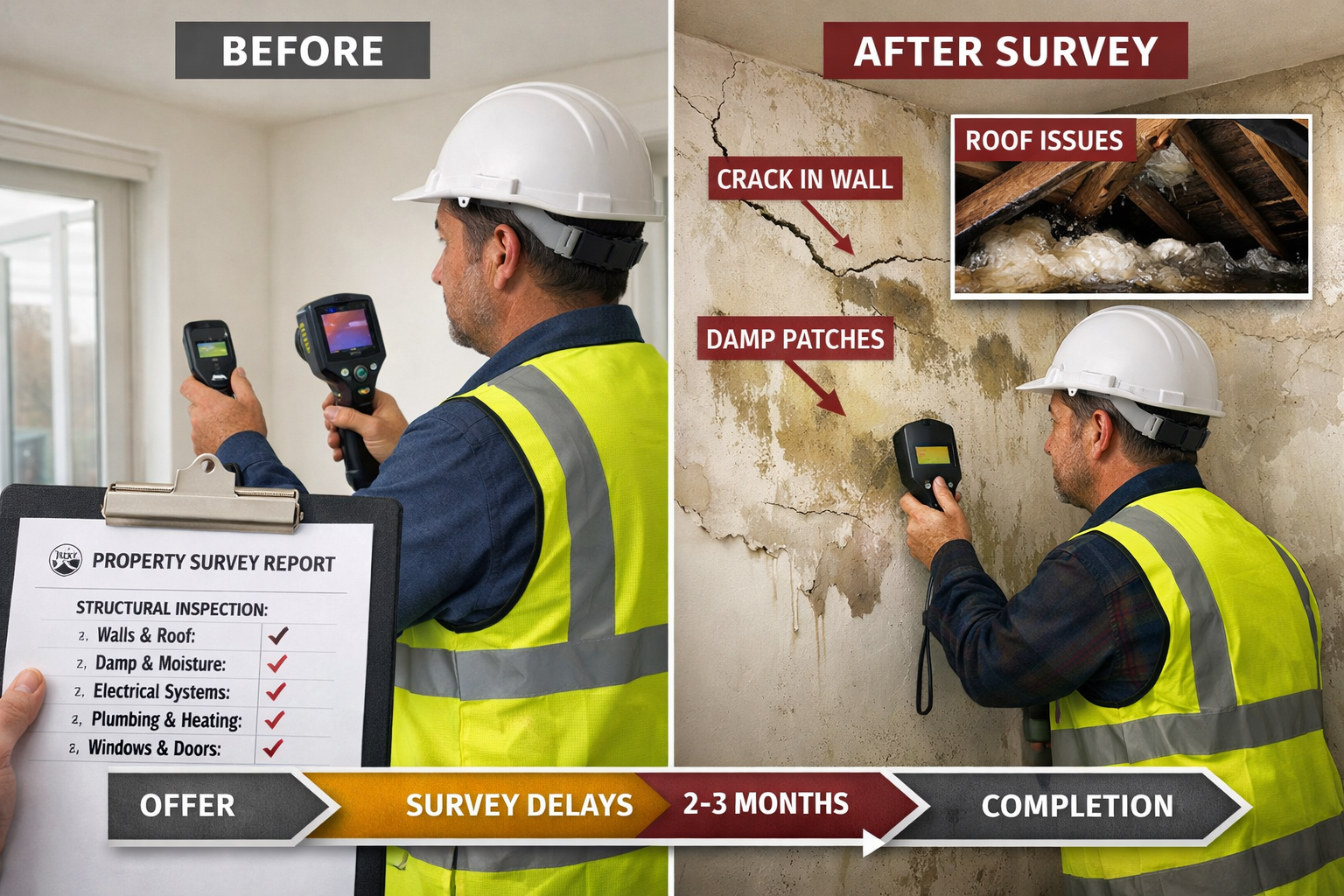
Even without a chain, properties now regularly take 12-16 weeks from offer acceptance to completion, compared to the traditional 8-10 week timeframe. This extension creates new risk exposure that building surveys must address.
Why Chain-Free Doesn't Mean Risk-Free
The assumption that chain-free properties offer straightforward transactions can be misleading. Extended timelines introduce several completion risk factors:
Property Condition Deterioration 📉
- Vacant properties may develop new defects during extended transaction periods
- Seasonal weather changes can reveal previously hidden issues
- Lack of heating or maintenance accelerates deterioration
Financial Risk Factors
- Mortgage offers typically valid for 3-6 months may expire before completion
- Property valuations can become outdated in volatile markets
- Interest rate fluctuations affect buyer affordability
Legal and Regulatory Complications
- Title issues may emerge during extended searches
- Planning permission queries require resolution
- Building regulation compliance verification takes longer
Understanding these risks requires surveyors to adopt a more comprehensive approach when conducting building surveys on chain-free properties.
Building Surveys for Chain-Free Properties: Critical Risk Assessment Components
When conducting Building Surveys for Chain-Free Properties: Identifying Completion Risk Factors as Transaction Lengths Extend in 2026, chartered surveyors must expand their assessment scope beyond traditional structural and condition reporting. The survey must serve as both a property condition document and a completion risk analysis tool.
Essential Survey Elements for Chain-Free Properties
1. Vacancy Status and Duration Assessment 🏚️
For vacant chain-free properties, surveyors should document:
- Duration of vacancy and evidence of ongoing maintenance
- Heating system operation and frost protection measures
- Security provisions and signs of unauthorized access
- Pest infestation indicators
- Moisture accumulation in unventilated spaces
Extended vacancy increases risks of:
- Condensation and mould growth
- Frozen pipe damage during winter months
- Pest infestation establishment
- Vandalism or unauthorized occupation
- Deterioration of seals and weatherproofing
2. Time-Sensitive Defect Identification
Certain defects worsen rapidly and require urgent attention:
| Defect Type | Risk Level | Completion Impact |
|---|---|---|
| Active water ingress | High | May require immediate repair before mortgage approval |
| Structural movement | High | Could invalidate mortgage offer if progressive |
| Electrical safety issues | Medium-High | Must be certified before occupation |
| Heating system failure | Medium | Seasonal urgency; critical in winter months |
| Drainage problems | Medium | Can worsen with seasonal rainfall |
| Cosmetic issues | Low | Unlikely to affect completion |
Surveyors must clearly categorize defects by urgency and potential impact on transaction timelines. A structural survey provides the comprehensive analysis needed for proper risk assessment.
3. Mortgage Valuation Alignment
One critical completion risk involves discrepancies between the building survey findings and the mortgage lender's valuation. Surveyors should:
- Identify defects likely to trigger mortgage valuation downgrades
- Assess whether repair costs could affect loan-to-value ratios
- Flag issues that might cause lenders to impose retention clauses
- Evaluate whether property condition meets lender criteria
Understanding valuation factors helps surveyors anticipate potential financing complications.
4. Seasonal and Environmental Risk Factors
Extended transaction periods mean properties may experience different seasonal conditions between survey and completion:
Winter Considerations:
- Frost damage potential to unheated properties
- Roof and gutter performance during heavy rainfall
- Condensation and ventilation adequacy
- Heating system reliability
Summer Considerations:
- Drainage capacity during storm events
- Subsidence risk in clay soil areas during dry periods
- Roof covering performance in high temperatures
- Timber decay in warm, humid conditions
For properties in high-risk areas, specialized assessments like subsidence surveys or roof surveys may be warranted.
5. Legal and Compliance Red Flags
Building surveys should identify issues that could complicate legal completion:
- Unauthorized alterations requiring retrospective building regulation approval
- Planning permission discrepancies between actual construction and approved plans
- Boundary disputes or unclear property demarcation
- Restrictive covenants affecting property use
- Rights of way or access issues
- Asbestos presence requiring management plans
These issues can significantly extend transaction timelines as solicitors work to resolve them. Early identification allows buyers to factor resolution time into completion planning.
Identifying Completion Risk Factors in Extended Transaction Scenarios
As Building Surveys for Chain-Free Properties: Identifying Completion Risk Factors as Transaction Lengths Extend in 2026 becomes standard practice, surveyors must develop systematic approaches to risk identification and communication.
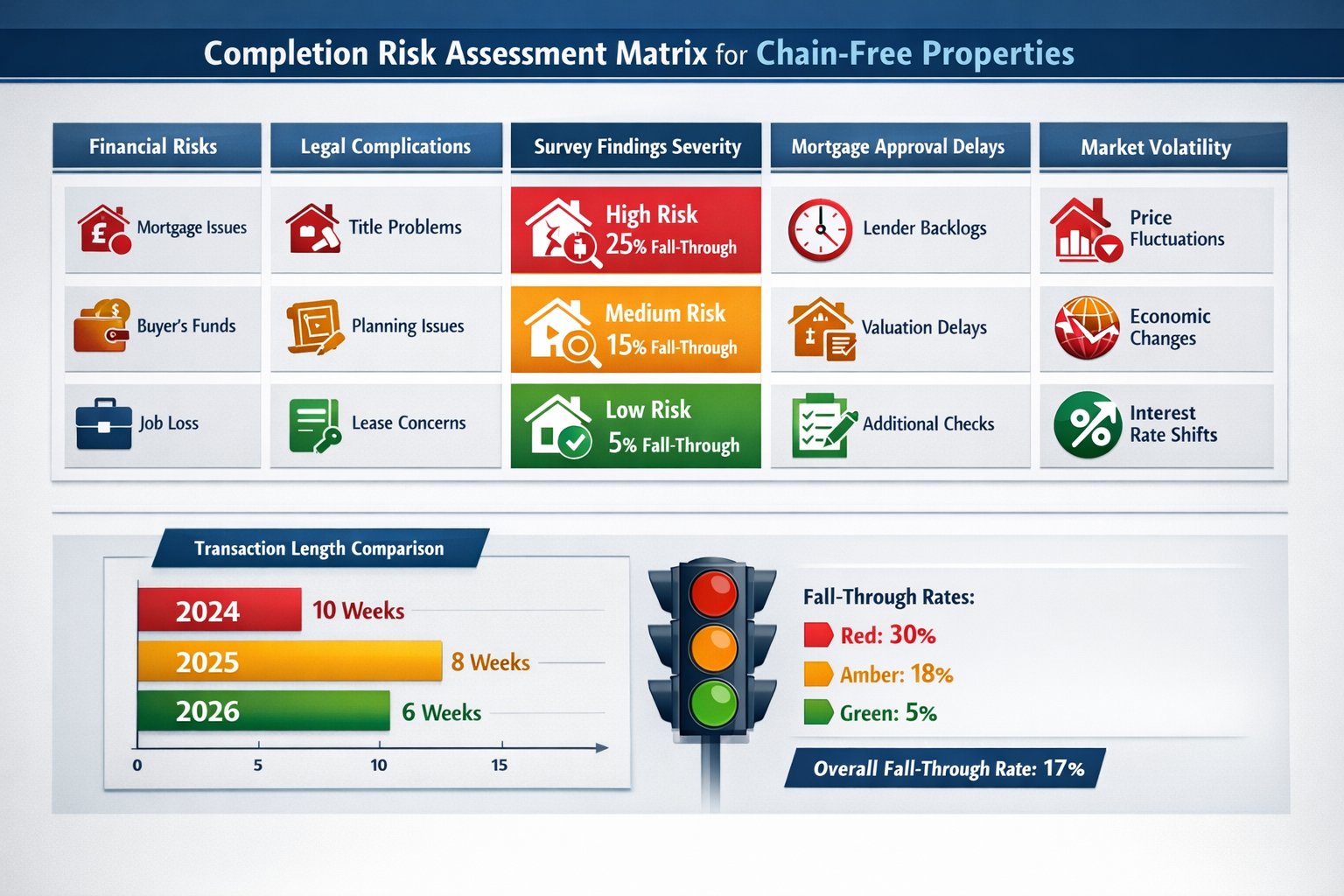
The Completion Risk Assessment Framework
Stage 1: Initial Risk Profiling
Before conducting the physical survey, gather intelligence about:
- Property vacancy duration and circumstances
- Reason for sale (estate sale, investment disposal, new build)
- Local market conditions and transaction timeline trends
- Buyer financing arrangements and timeline constraints
- Seasonal timing of survey relative to anticipated completion
Stage 2: On-Site Risk Identification
During the survey inspection, systematically assess:
Immediate Deal-Breakers ⚠️
- Structural instability requiring emergency intervention
- Active fire safety violations
- Dangerous electrical installations
- Severe damp or water damage affecting habitability
- Hazardous materials requiring specialist removal
Timeline-Extending Issues
- Defects requiring specialist investigation (structural engineer, drainage specialist)
- Problems necessitating local authority involvement
- Issues requiring listed building consent or conservation area approval
- Repairs needing specific seasonal conditions for execution
Financial Risk Indicators
- Repair costs exceeding typical buyer contingency budgets
- Defects likely to trigger mortgage retention clauses
- Issues affecting property valuation significantly
- Problems requiring immediate resolution before occupation
Stage 3: Documentation and Communication
Effective risk communication requires:
Clear Categorization:
- Category 1: Defects requiring urgent attention (completion blockers)
- Category 2: Significant defects requiring repair/replacement (timeline extenders)
- Category 3: Minor defects requiring monitoring (minimal completion impact)
Timeline Impact Assessment:
Each significant defect should include:
- Estimated time required for further investigation
- Typical repair duration and seasonal constraints
- Impact on mortgage approval process
- Recommendations for specialist reports
Cost Implications:
Provide realistic cost ranges for:
- Further specialist investigations
- Repair and remediation works
- Professional fees for additional reports
- Potential mortgage retention amounts
Common Completion Risk Scenarios in 2026
Scenario 1: The Vacant Estate Sale
A property inherited and vacant for 6 months requires comprehensive assessment of:
- Deterioration during vacancy period
- Probate-related legal complications
- Outdated building systems requiring upgrade
- Garden and external maintenance neglect
Risk factors: Extended legal processes, mortgage lender concerns about property condition, seasonal deterioration between survey and completion.
Scenario 2: The New Build Purchase
Chain-free new construction presents unique risks:
- Snagging issues requiring developer rectification
- Building regulation certification delays
- NHBC warranty documentation gaps
- Landscaping and external works completion
A snagging report becomes essential for identifying defects before practical completion.
Scenario 3: The Investment Property Disposal
Buy-to-let properties sold with vacant possession require assessment of:
- Tenant-inflicted damage or alterations
- Deferred maintenance during rental period
- Compliance with current rental property standards
- Potential hidden defects masked by tenant occupation
Scenario 4: The Cash Buyer Delay
Even cash purchases without mortgage dependencies face completion risks:
- Buyer due diligence extending timelines
- Legal complexity resolution
- Property deterioration during extended negotiation
- Market value fluctuations affecting buyer commitment

Mitigating Completion Risks Through Survey Recommendations
Effective building surveys don't just identify problems—they provide actionable solutions:
Immediate Actions:
- Emergency repairs to prevent further deterioration
- Security measures for vacant properties
- Winterization procedures for unheated properties
- Temporary weatherproofing for urgent defects
Pre-Completion Requirements:
- Essential repairs for mortgage approval
- Safety certifications needed before occupation
- Legal documentation to be secured
- Specialist investigations to be commissioned
Post-Completion Priorities:
- Non-urgent repairs with timeline recommendations
- Maintenance programs to prevent deterioration
- Monitoring requirements for progressive defects
- Upgrade opportunities for building systems
Contingency Planning:
- Alternative completion scenarios if issues arise
- Budget provisions for unexpected complications
- Timeline buffers for seasonal constraints
- Renegotiation strategies if significant defects emerge
Professional Standards and Best Practices for 2026
The evolving market demands enhanced professional standards for Building Surveys for Chain-Free Properties: Identifying Completion Risk Factors as Transaction Lengths Extend in 2026.
RICS Standards and Guidance
Chartered surveyors must adhere to:
- RICS Home Survey Standard for residential property inspections
- RICS Valuation – Global Standards when valuation elements are included
- Professional Statement on Survey Practice regarding scope and limitations
- Ethical standards for conflict of interest and independence
Enhanced Reporting Requirements
Modern building survey reports should include:
Executive Summary Section:
- Overall completion risk rating (Low/Medium/High)
- Critical timeline-affecting issues highlighted
- Estimated additional investigation costs
- Recommended specialist reports
Detailed Risk Analysis:
- Defect-by-defect completion impact assessment
- Seasonal timing considerations
- Mortgage approval risk factors
- Legal complication indicators
Visual Documentation:
- Comprehensive photographic evidence
- Annotated diagrams showing defect locations
- Thermal imaging for moisture and insulation issues
- Drone imagery for roof and chimney inspection
Actionable Recommendations:
- Prioritized repair schedules
- Specialist referral contacts
- Cost estimation ranges
- Timeline impact projections
When to Recommend Additional Specialist Reports
Building surveyors should know when to recommend specialized investigations:
- Structural engineers for significant cracking, movement, or structural alterations
- Drainage specialists for persistent drainage issues or septic system concerns
- Electrical contractors for comprehensive electrical safety certification
- Timber specialists for extensive rot or beetle infestation
- Environmental consultants for contamination or asbestos concerns
For specific defects requiring detailed analysis, a specific defect report provides focused investigation.
Technology Integration in Modern Surveys
2026 surveying practice increasingly incorporates:
Digital Tools: 📱
- Thermal imaging cameras for moisture and insulation assessment
- Moisture meters with data logging capabilities
- Laser measuring devices for accuracy
- Drone technology for inaccessible areas
- Digital reporting platforms for faster turnaround
Data Analytics:
- Historical property data integration
- Local market condition analysis
- Comparative defect prevalence data
- Seasonal risk modeling
Client Communication:
- Interactive digital reports with embedded video
- Real-time query response systems
- Progress tracking for recommended actions
- Post-survey support and guidance
Strategic Considerations for Buyers and Sellers
Understanding completion risk factors benefits all transaction parties.
For Buyers of Chain-Free Properties
Pre-Survey Planning:
- Commission surveys early in the transaction timeline
- Allow sufficient time for specialist follow-up investigations
- Build contingency into completion timeline expectations
- Maintain open communication with mortgage lenders
Post-Survey Actions:
- Prioritize addressing completion-critical defects
- Obtain repair cost quotations promptly
- Renegotiate purchase price if significant issues emerge
- Consider extended mortgage offer validity periods
Risk Mitigation Strategies:
- Insurance products covering survey-identified risks
- Retention clauses in purchase contracts
- Conditional offer structures allowing withdrawal
- Professional indemnity considerations
For Sellers of Chain-Free Properties
Pre-Marketing Preparation:
- Commission pre-sale surveys to identify issues early
- Address obvious defects before marketing
- Maintain vacant properties properly
- Gather documentation for building works and compliance
Transaction Management:
- Respond promptly to survey findings
- Provide access for specialist investigations
- Consider contributing to essential repairs
- Maintain property condition during extended sales
Transparency Benefits:
- Reduced renegotiation likelihood
- Faster transaction progression
- Enhanced buyer confidence
- Reduced fall-through risk
Conclusion
Building Surveys for Chain-Free Properties: Identifying Completion Risk Factors as Transaction Lengths Extend in 2026 represents an evolution in surveying practice responding to market realities. As transaction timelines continue to extend due to mortgage processing delays, enhanced due diligence, and market caution, the role of building surveys expands beyond simple condition reporting to comprehensive completion risk assessment.
Chain-free properties, while avoiding the complexities of interdependent transactions, face unique vulnerabilities during extended completion periods. Vacancy-related deterioration, seasonal impacts, mortgage valuation alignment, and time-sensitive defects all require careful evaluation by qualified chartered surveyors.
Key Actions for Successful Transactions
For Property Buyers:
✅ Commission comprehensive building surveys early in the transaction process
✅ Allow adequate time for specialist follow-up investigations
✅ Maintain realistic completion timeline expectations
✅ Build financial contingency for survey-identified repairs
✅ Work with experienced professionals who understand completion risk factors
For Property Sellers:
✅ Consider pre-sale surveys to identify and address issues proactively
✅ Maintain vacant properties properly during marketing and sale periods
✅ Respond promptly to buyer survey findings and investigation requests
✅ Provide comprehensive documentation for building works and compliance
✅ Price properties realistically considering condition and market context
For Surveyors:
✅ Adopt comprehensive completion risk assessment frameworks
✅ Enhance reporting to include timeline and financial impact analysis
✅ Maintain current knowledge of mortgage lending criteria and legal requirements
✅ Invest in technology and tools for thorough property assessment
✅ Provide clear, actionable recommendations prioritized by completion impact
Moving Forward in 2026
The property market continues to adapt to new economic realities, regulatory requirements, and buyer expectations. Professional building surveys remain the cornerstone of informed property transactions, providing essential intelligence for decision-making and risk management.
As transaction lengths remain extended throughout 2026, the surveying profession must continue evolving its methodologies, reporting standards, and risk assessment frameworks. Chain-free properties offer genuine advantages in transaction simplicity, but only when supported by thorough professional surveys that identify and address completion risk factors before they derail transactions.
Whether you're purchasing a vacant estate property, a new build development, or an investment disposal, engaging qualified chartered surveyors who understand the unique challenges of extended transaction timelines in 2026 provides essential protection and peace of mind. The investment in comprehensive building surveyor services pays dividends through smoother transactions, realistic expectations, and successful completions.
The market may present challenges, but with proper professional guidance and thorough completion risk assessment, chain-free property transactions can still deliver the efficient, straightforward purchases they promise—even in an environment of extended timelines and heightened scrutiny.