
Northern England's property market is experiencing a remarkable transformation in 2026. While Southern regions face stagnation, cities like Manchester, Leeds, and Liverpool are witnessing unprecedented growth in co-living developments. This surge reflects changing tenant preferences, affordability advantages, and a recovering market that demands rigorous professional assessment. Building Surveys for Co-Living Hubs in Northern England: Capturing 2026 Tenant Demand with RICS Condition Assessments have become essential tools for developers, investors, and property managers navigating this dynamic landscape.
The co-living sector presents unique challenges that traditional residential surveys often overlook. Shared kitchens, communal lounges, multiple fire compartments, and high-density occupancy create complex maintenance and safety requirements. As tenant demand edges higher and supply remains constrained across the lettings market[1], ensuring these properties meet modern standards becomes critical for long-term viability and investment returns.
Key Takeaways
- 🏘️ Northern England is experiencing 6-7% property price surges in key locations during 2026, making co-living developments increasingly attractive investment opportunities[5]
- 📋 RICS condition assessments provide standardized frameworks for evaluating shared spaces, fire safety compliance, and structural integrity specific to multi-tenant environments
- 🔥 Fire safety and compartmentation represent the most critical inspection areas in co-living hubs, requiring specialized surveyor expertise beyond standard residential assessments
- 📈 Tenant demand in the lettings market improved in early 2026, with supply constraints driving need for quality co-living accommodation[1]
- ⚖️ Professional building surveys protect stakeholders by identifying defects, compliance gaps, and maintenance liabilities before transactions or lease agreements
Understanding the Northern England Co-Living Market in 2026
Regional Market Dynamics
Northern England has emerged as a property market success story in 2026. While Southern regions experience price stagnation, the North West and North of England report prices on an upward trajectory[1][3]. This regional divergence creates compelling opportunities for co-living developments that address affordability challenges faced by young professionals and students.
The remarkable transformation includes price surges reaching 6-7% in key locations during 2026[5]. Cities like Manchester, Leeds, Sheffield, and Liverpool have become hotspots for co-living investment, driven by:
- Strong employment growth in technology and creative sectors
- University populations seeking flexible accommodation
- Professionals priced out of homeownership seeking community-focused rentals
- Infrastructure improvements enhancing regional connectivity
- Government initiatives supporting Northern economic development
Tenant Demand Trends
The lettings market shows encouraging signs of recovery. Tenant demand edged higher in the three months to January 2026, though supply remains constrained[1]. This supply-demand imbalance particularly benefits co-living operators who can efficiently house multiple tenants within single properties.
Modern tenants prioritize:
| Priority Factor | Importance Rating | Co-Living Advantage |
|---|---|---|
| Affordability | ⭐⭐⭐⭐⭐ | Shared costs reduce individual burden |
| Flexibility | ⭐⭐⭐⭐⭐ | Short-term leases common |
| Community | ⭐⭐⭐⭐ | Built-in social networks |
| Amenities | ⭐⭐⭐⭐ | Shared spaces provide premium features |
| Location | ⭐⭐⭐⭐⭐ | Urban centers with transport links |
New buyer enquiries improved to -15% in January 2026 (up from -21% in December), indicating cautious optimism returning to the market[1]. This recovery context makes thorough building assessments even more critical, as investors seek confidence in property condition before committing capital.
RICS Condition Assessments: The Professional Standard for Building Surveys
What Are RICS Condition Assessments?
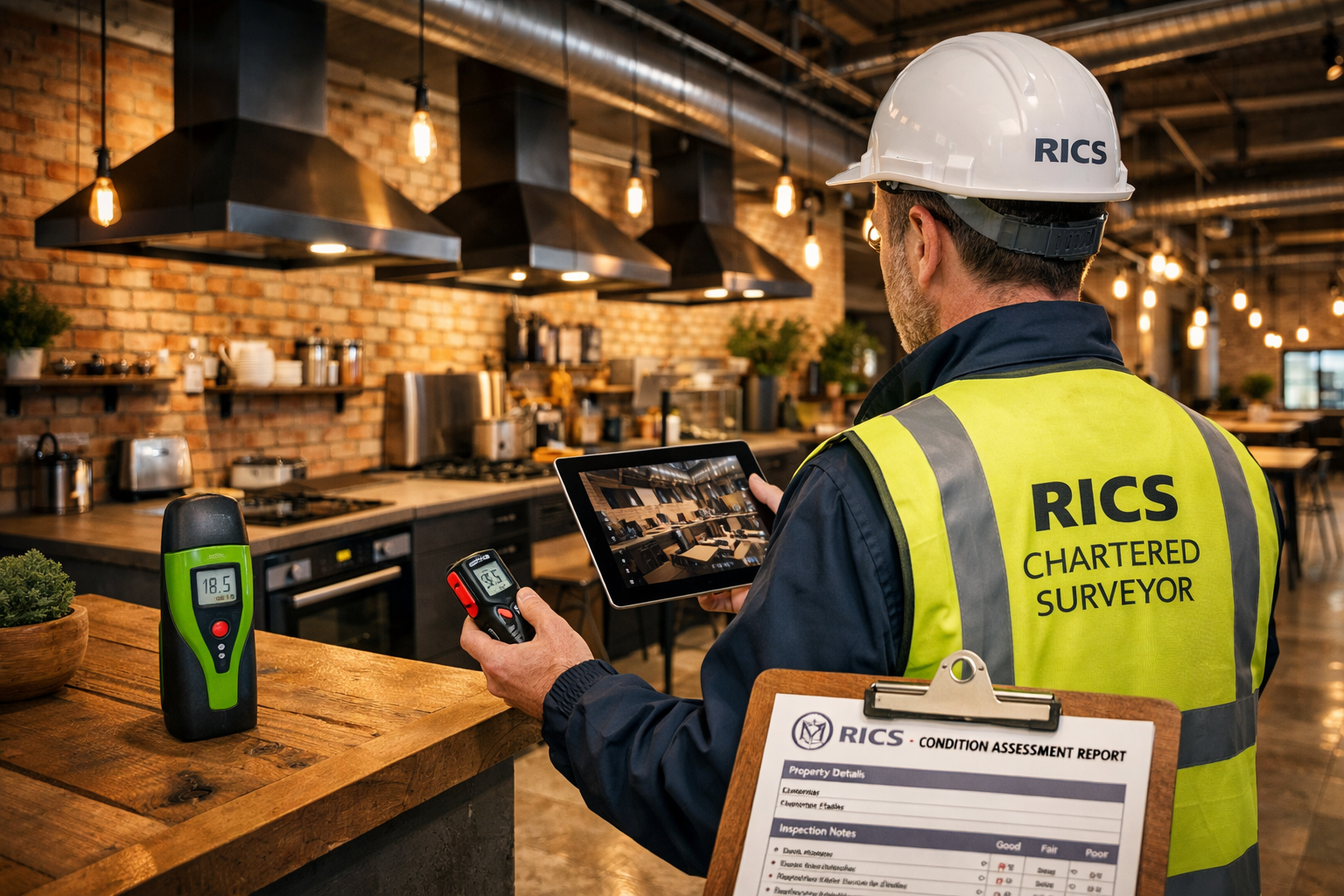
The Royal Institution of Chartered Surveyors (RICS) provides internationally recognized standards for property surveys. RICS condition assessments offer structured methodologies for evaluating building condition, identifying defects, and estimating repair costs. For co-living hubs, these assessments extend beyond traditional residential surveys to address unique multi-occupancy challenges.
RICS survey levels include:
- RICS Level 1 (Condition Report) – Basic overview of property condition
- RICS Level 2 (HomeBuyer Report) – Standard survey for conventional properties
- RICS Level 3 (Building Survey) – Comprehensive assessment for complex or older buildings
Co-living developments typically require Level 3 Building Surveys due to their complexity, multiple systems, and regulatory requirements. These detailed inspections examine structural integrity, building services, fire safety compliance, and shared space functionality.
Why RICS Standards Matter for Co-Living Developments
Co-living properties face heightened scrutiny from multiple stakeholders:
- Local authorities enforce stricter licensing for Houses in Multiple Occupation (HMOs)
- Fire services require comprehensive fire safety documentation
- Insurance providers demand detailed condition reports for multi-tenant coverage
- Investors need professional assessments to validate acquisition decisions
- Tenants expect safe, well-maintained communal environments
Chartered surveyors applying RICS standards provide independent, professional opinions that satisfy these diverse requirements. Their assessments follow consistent methodologies, ensuring comparable results across different properties and regions.
Key Components of Building Surveys for Co-Living Hubs
A comprehensive building survey for co-living spaces must address:
Structural Elements
- Foundation stability and settlement indicators
- Load-bearing wall integrity in converted buildings
- Roof structure and weatherproofing
- Damp penetration and moisture management
- External envelope condition
Building Services
- Electrical systems capacity for multiple occupants
- Plumbing infrastructure and hot water provision
- Heating systems and energy efficiency
- Ventilation adequacy in shared spaces
- Waste management facilities
Fire Safety Compliance
- Fire door specifications and intumescent seals
- Compartmentation between residential units
- Emergency escape routes and signage
- Smoke detection and alarm systems
- Fire suppression equipment placement
Shared Space Assessment
- Kitchen equipment condition and capacity
- Communal lounge wear and maintenance
- Bathroom facilities adequacy
- Storage provision for residents
- Accessibility compliance
Professional surveyors document findings using standardized condition ratings, photographic evidence, and detailed repair recommendations. This documentation becomes invaluable for maintenance planning, compliance verification, and dispute resolution.
Building Surveys for Co-Living Hubs in Northern England: Addressing Regional Challenges
Northern England-Specific Considerations
While RICS standards apply nationally, Northern England co-living developments face unique regional factors:
Building Stock Characteristics:
- Many co-living conversions utilize Victorian and Edwardian terraced houses
- Industrial heritage buildings repurposed for residential use
- Solid wall construction common (lacking cavity insulation)
- Traditional sash windows requiring maintenance
- Slate roofing with potential deterioration
Climate and Environmental Factors:
- Higher rainfall requiring robust weatherproofing
- Exposure to prevailing westerly winds
- Potential for dampness in older properties
- Thermal efficiency challenges in heritage buildings
- Flood risk in certain urban areas
Regulatory Environment:
- Varying HMO licensing requirements across Northern councils
- Conservation area restrictions in historic city centers
- Building regulations enforcement differences by authority
- Fire safety guidance implementation timelines
- Energy Performance Certificate (EPC) minimum standards
Capturing 2026 Tenant Demand Through Survey Insights
Understanding what tenants value in 2026 helps surveyors focus assessments on critical areas. Modern co-living residents expect:
Technology Integration:
- High-speed broadband infrastructure
- Smart home features (thermostats, security)
- Adequate electrical outlets for devices
- Communal workspace facilities
- Package delivery and storage solutions
Sustainability Features:
- Energy-efficient appliances and lighting
- Renewable energy installations (solar panels)
- Recycling facilities and waste reduction
- Water conservation measures
- Green spaces and outdoor areas
Health and Wellbeing:
- Natural light in communal areas
- Adequate ventilation and air quality
- Soundproofing between units
- Secure bicycle storage
- Fitness or wellness facilities
Surveyors assessing co-living properties should evaluate how existing buildings accommodate these expectations and identify upgrade opportunities. A structural survey approach ensures fundamental building integrity while considering modern tenant requirements.
Fire Safety and Regulatory Compliance in Co-Living Buildings
The Critical Importance of Fire Safety
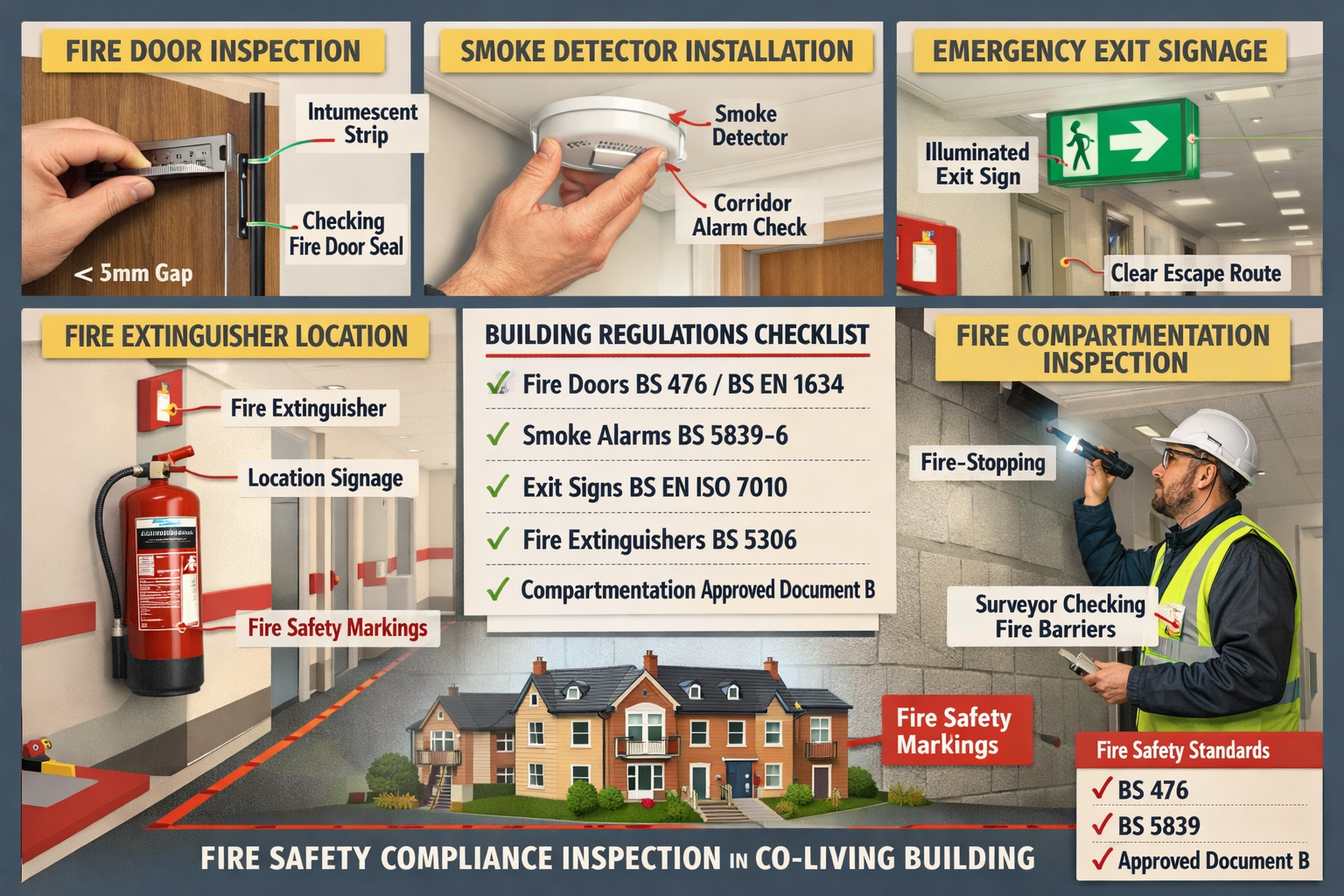
Fire safety represents the most critical aspect of co-living building surveys. Multiple occupants, shared cooking facilities, and complex escape routes create elevated fire risks compared to single-family homes. Recent regulatory changes following high-profile incidents have intensified scrutiny on multi-occupancy residential buildings.
Essential fire safety elements include:
🔥 Fire Doors and Compartmentation
- FD30 or FD60 rated doors between units and corridors
- Self-closing mechanisms properly adjusted
- Intumescent strips and smoke seals intact
- Vision panels where required by regulations
- No wedges or obstructions preventing closure
🔥 Detection and Alarm Systems
- Interlinked smoke detectors in all habitable rooms
- Heat detectors in kitchens
- Manual call points at exit routes
- Audible alarms throughout building
- Regular testing and maintenance records
🔥 Escape Routes and Emergency Lighting
- Clear, unobstructed escape paths
- Emergency lighting along exit routes
- Illuminated exit signage
- Alternative escape routes where possible
- Travel distances within regulatory limits
🔥 Fire Fighting Equipment
- Appropriately rated fire extinguishers
- Accessible placement near high-risk areas
- Fire blankets in communal kitchens
- Regular inspection and servicing
- Clear usage instructions displayed
HMO Licensing and Building Regulations
Co-living properties typically fall under Houses in Multiple Occupation (HMO) regulations, requiring specific licensing and compliance standards. Northern England councils enforce varying requirements, but common elements include:
Mandatory HMO License Requirements:
- Minimum room sizes (often 6.51m² for single occupancy)
- Adequate bathroom and kitchen facilities ratios
- Satisfactory fire safety measures
- Proper management arrangements
- Gas and electrical safety certificates
Building Regulations Compliance:
- Part B (Fire Safety) – compartmentation and escape
- Part E (Sound Insulation) – noise reduction between units
- Part F (Ventilation) – adequate air circulation
- Part L (Energy Efficiency) – thermal performance
- Part M (Access) – disability provisions where applicable
Professional surveyors conducting dilapidation surveys document compliance status and identify remedial works required to meet regulatory standards. This documentation proves essential for licensing applications and ongoing compliance verification.
Survey Methodologies for Fire Safety Assessment
Specialized fire safety surveys complement general building condition assessments:
- Fire Risk Assessment – Systematic evaluation of fire hazards, people at risk, and existing control measures
- Fire Door Inspection – Detailed examination of all fire-rated doors, frames, and hardware
- Compartmentation Survey – Assessment of fire-stopping measures and structural fire resistance
- Means of Escape Appraisal – Evaluation of escape routes, travel distances, and emergency provisions
These assessments require specialized knowledge beyond general surveying expertise. Many RICS surveyors collaborate with fire safety consultants to provide comprehensive reports addressing both building condition and fire safety compliance.
Practical Implementation: Conducting Effective Co-Living Surveys
Pre-Survey Preparation
Effective building surveys begin before the site visit:
Document Review:
- Previous survey reports and maintenance records
- Planning permissions and building regulation approvals
- HMO license documentation
- Fire risk assessments and safety certificates
- Lease agreements and tenant information
Stakeholder Consultation:
- Property owner or developer briefing
- Current management company insights
- Tenant feedback on maintenance issues
- Local authority compliance requirements
- Insurance provider specifications
Equipment and Tools:
- Moisture meters and thermal imaging cameras
- Laser measuring devices and levels
- Inspection mirrors and endoscopes
- Electrical testing equipment
- Comprehensive photography equipment
On-Site Survey Process
A systematic approach ensures thorough assessment:
External Inspection:
- Roof condition from ground level and access points
- Chimney stacks and flashing details
- Rainwater goods (gutters and downpipes)
- External walls and pointing condition
- Window and door frames
- Boundary walls and external spaces
Internal Common Areas:
- Entrance halls and circulation spaces
- Communal kitchens and equipment
- Shared bathrooms and facilities
- Lounges and recreational areas
- Utility rooms and storage
- Staircases and landings
Individual Residential Units:
- Room dimensions and layout
- Window operation and condition
- Heating and ventilation
- Electrical outlets and lighting
- Plumbing fixtures
- Floor and ceiling condition
Building Services:
- Boiler and heating system operation
- Electrical distribution and consumer units
- Water supply and drainage
- Ventilation systems
- Communal broadband infrastructure
Professional surveyors document findings with detailed notes, measurements, and photographs. They assign condition ratings using standardized scales and provide cost estimates for identified repairs.
Report Preparation and Recommendations
The survey report represents the deliverable that guides decision-making:
Report Structure:
- Executive summary with key findings
- Property description and context
- Detailed condition assessment by element
- Fire safety and compliance evaluation
- Defects prioritization (urgent, medium, long-term)
- Repair cost estimates
- Maintenance recommendations
- Appendices with photographs and technical data
Actionable Recommendations:
For developers and investors, survey reports inform:
- Acquisition decisions and price negotiations
- Refurbishment budgeting and planning
- Risk assessment and mitigation strategies
- Insurance requirements and coverage
- Exit strategy timing and property positioning
For property managers, surveys guide:
- Preventive maintenance scheduling
- Compliance improvement programs
- Tenant safety communications
- Budget allocation priorities
- Contractor procurement specifications
For lenders and insurers, assessments provide:
- Security valuation support
- Risk evaluation for underwriting
- Remediation requirements for coverage
- Ongoing monitoring recommendations
- Professional liability protection
Understanding RICS valuation costs helps stakeholders budget appropriately for professional survey services alongside property assessments.
Emerging Trends and Future Considerations
Technology Integration in Building Surveys
The surveying profession continues evolving with technological advancement:
Digital Survey Tools:
- Tablet-based reporting systems for real-time documentation
- Cloud storage enabling immediate stakeholder access
- Digital floor plans and measurement software
- Building Information Modeling (BIM) integration
- Defect tracking and maintenance management platforms
Advanced Inspection Technologies:
- Drone roof surveys for safe, comprehensive aerial assessment
- Thermal imaging identifying hidden dampness and insulation defects
- Electrical testing equipment detecting wiring issues
- Moisture mapping creating visual dampness profiles
- 3D scanning producing detailed building models
These technologies enhance survey accuracy, efficiency, and client communication while maintaining RICS professional standards.
Sustainability and Energy Performance
Environmental considerations increasingly influence co-living development viability:
Energy Performance Requirements:
- Minimum EPC ratings for rental properties (currently E, moving toward C)
- Retrofit opportunities in older building stock
- Renewable energy integration potential
- Insulation improvements and thermal bridging elimination
- Heating system upgrades to low-carbon alternatives
Sustainable Development Assessment:
- Water efficiency measures and consumption monitoring
- Sustainable materials in refurbishment projects
- Waste reduction and recycling infrastructure
- Biodiversity enhancement in external spaces
- Transport connectivity and cycling facilities
Surveyors evaluating co-living properties should assess sustainability performance and identify improvement opportunities that enhance marketability to environmentally conscious tenants.
Post-Pandemic Living Preferences
The COVID-19 pandemic permanently altered housing preferences, influencing co-living design:
Space and Ventilation:
- Enhanced ventilation systems with air quality monitoring
- Outdoor space access (balconies, terraces, gardens)
- Flexible spaces accommodating remote work
- Private amenities reducing shared facility dependence
Health and Hygiene:
- Touchless entry systems and fixtures
- Enhanced cleaning protocols and facilities
- Private bathroom preferences increasing
- Communal space layouts enabling distancing
Surveys should evaluate how existing co-living properties accommodate these evolved preferences and identify adaptation opportunities.
Case Study: Manchester Co-Living Conversion Assessment
To illustrate practical application, consider a hypothetical survey of a Victorian terraced property conversion in Manchester:
Property Details:
- Three-story terraced house converted to six-bedroom co-living unit
- Communal kitchen and lounge on ground floor
- Shared bathrooms on first and second floors
- Located in regeneration area experiencing 6-7% price growth[5]
- Target market: young professionals and postgraduate students
Key Survey Findings:
✅ Positive Aspects:
- Solid structural condition with no significant settlement
- Recent roof replacement with 15-year warranty
- Updated electrical system with adequate capacity
- Good natural light in communal areas
- Desirable location near transport links
⚠️ Areas Requiring Attention:
- Fire doors lacking proper certification and intumescent seals
- Inadequate compartmentation between ground floor and upper levels
- Single escape route requiring secondary means of escape
- Dampness in rear extension requiring investigation
- Kitchen extraction system insufficient for multi-user cooking
Recommended Actions:
- Urgent (0-6 months): Install certified fire doors, improve compartmentation, upgrade fire detection system
- Medium-term (6-18 months): Address dampness issues, enhance kitchen ventilation, improve soundproofing
- Long-term (18+ months): Consider loft conversion for additional accommodation, upgrade windows for energy efficiency
Investment Implications:
- Remedial works estimated at £35,000-£45,000
- Post-improvement rental income projected at £2,800-£3,200 monthly
- Strong tenant demand supporting 95%+ occupancy rates
- Compliance improvements reducing insurance premiums and liability risks
This case demonstrates how comprehensive building surveys inform investment decisions and guide property improvement strategies in Northern England's growing co-living market.
Selecting the Right Surveyor for Co-Living Assessments
Essential Qualifications and Experience
Not all surveyors possess the specialized knowledge required for co-living property assessment. When selecting professionals, prioritize:
Professional Credentials:
- RICS membership (MRICS or FRICS designation)
- Building surveying specialism
- Professional indemnity insurance coverage
- Continuing professional development in fire safety and HMO regulations
Relevant Experience:
- Track record assessing multi-occupancy residential properties
- Understanding of HMO licensing requirements
- Fire safety assessment expertise
- Knowledge of Northern England building stock characteristics
- Familiarity with local authority requirements
Service Scope:
- Comprehensive Level 3 Building Survey capability
- Fire risk assessment provision or collaboration
- Specialist investigations (dampness, structural, services)
- Expert witness services if disputes arise
- Ongoing advisory support post-survey
Questions to Ask Potential Surveyors
Before engaging a surveyor, clarify their approach:
- How many co-living or HMO properties have you surveyed in Northern England?
- Do you provide fire safety assessment or work with fire safety consultants?
- What survey level do you recommend for this property type?
- How long will the survey take, and when will I receive the report?
- What format will the report take, and can you explain findings in person?
- Do you provide cost estimates for identified repairs?
- Can you assist with contractor procurement or project management?
- What ongoing support do you offer after report delivery?
Survey Costs and Value Considerations
Professional building surveys represent significant investments, but the value far exceeds the cost:
Typical Survey Costs (Northern England, 2026):
- RICS Level 2 (HomeBuyer Report): £400-£600 for standard properties
- RICS Level 3 (Building Survey): £800-£1,500 for co-living conversions
- Specialist investigations: £300-£800 per discipline (structural, electrical, dampness)
- Fire risk assessment: £500-£1,200 depending on property size
Return on Investment:
- Identifying £20,000+ in hidden defects before purchase
- Negotiating price reductions based on survey findings
- Avoiding compliance penalties and enforcement actions
- Reducing insurance premiums through risk mitigation
- Preventing tenant disputes and liability claims
- Planning maintenance budgets accurately
The relatively modest survey cost provides substantial protection against far larger financial risks. For co-living properties with multiple stakeholders and complex regulatory requirements, professional assessment becomes indispensable.
Engaging expert witness services may also prove valuable if disputes arise regarding property condition or compliance matters.
Conclusion: Positioning for Success in Northern England's Co-Living Market
Building Surveys for Co-Living Hubs in Northern England: Capturing 2026 Tenant Demand with RICS Condition Assessments represent essential tools for navigating the region's dynamic property market. As Northern England experiences remarkable price growth reaching 6-7% in key locations[5], and tenant demand continues improving despite supply constraints[1], co-living developments offer compelling investment opportunities for those who approach them professionally.
The unique characteristics of co-living properties—shared spaces, multiple occupants, complex fire safety requirements, and stringent regulatory oversight—demand specialized surveying expertise beyond traditional residential assessments. RICS-qualified surveyors applying comprehensive building survey methodologies provide the independent, professional evaluation that protects all stakeholders while supporting informed decision-making.
Actionable Next Steps
For property developers and investors considering Northern England co-living opportunities:
- Engage RICS-qualified surveyors with demonstrated co-living and HMO experience before committing to acquisitions
- Budget adequately for comprehensive Level 3 Building Surveys and specialist investigations
- Prioritize fire safety compliance as the foundation of viable co-living operations
- Monitor regional market trends to identify emerging hotspots within the Northern England growth story
- Develop relationships with local authorities, fire services, and licensing teams to understand evolving requirements
For property managers operating existing co-living hubs:
- Commission periodic condition surveys (every 3-5 years) to identify emerging maintenance needs
- Maintain comprehensive documentation of all compliance certificates, safety testing, and remedial works
- Implement preventive maintenance programs guided by professional survey recommendations
- Stay current with changing fire safety regulations and building standards
- Invest in tenant-demanded features identified through market research and survey assessments
For tenants considering co-living accommodation:
- Request evidence of current HMO licensing and fire safety certification
- Inspect fire safety features during property viewings (doors, alarms, escape routes)
- Understand management responsibilities for maintenance and repairs
- Review recent inspection reports if available
- Report maintenance concerns promptly to ensure safe, comfortable living conditions
The convergence of Northern England's property market recovery, evolving tenant preferences, and growing co-living sector creates unprecedented opportunities for those equipped with professional knowledge and thorough due diligence. RICS condition assessments provide the foundation for confident investment, compliant operations, and sustainable returns in this dynamic market segment.
As 2026 unfolds with cautious optimism returning to UK property markets[1], Northern England's co-living sector stands positioned to capture growing demand while delivering the flexible, community-focused accommodation that modern tenants increasingly seek. Professional building surveys ensure these developments meet the high standards required for long-term success, protecting investments while supporting the region's continued growth and regeneration.
References
[1] Uk Resi Survey Jan 2026 Report Shows Early Signs Market Recovery Despite Caution – https://www.rics.org/news-insights/uk-resi-survey-jan-2026-report-shows-early-signs-market-recovery-despite-caution
[3] Uk Residential Survey February 2026 – https://www.rics.org/news-insights/uk-residential-survey-february-2026
[5] Valuation Techniques For Northern England Property Boom 2026 Rics Methods Amid 6 7 Price Surges – https://nottinghillsurveyors.com/blog/valuation-techniques-for-northern-england-property-boom-2026-rics-methods-amid-6-7-price-surges