
{"cover":"Professional landscape format (1536×1024) hero image featuring bold text overlay 'Building Surveys for High-Value Properties Under New Council Tax Surcharges: RICS Valuation Tactics for 2026 Tax Band Challenges' in extra large 70pt white sans-serif font with dark shadow and semi-transparent navy overlay box, positioned in upper third. Background shows elegant Georgian mansion facade with professional surveyor in high-visibility vest holding clipboard and tablet in foreground, luxury property details visible including ornate columns and large windows. Color scheme: deep navy blue, white, gold accents. High contrast, editorial quality, professional property magazine aesthetic with subtle tax document graphics in corner","content":["Landscape format (1536×1024) detailed infographic showing council tax band structure for high-value properties, featuring ascending bar chart with properties from £1 million to £5 million, each bar color-coded by tax band (A through H) with percentage surcharge overlays in red, calculator and property icons integrated throughout, clean financial aesthetic with navy and burgundy color scheme, annotations showing 2026 surcharge rates, professional typography with clear data visualization","Landscape format (1536×1024) professional scene showing RICS chartered surveyor conducting detailed building inspection inside luxury property, measuring structural elements with laser equipment and thermal imaging camera, split-screen composition showing surveyor on left and detailed survey report document on right with valuation figures and property condition ratings, technical drawings and floor plans visible on tablet, natural lighting through large windows, modern professional aesthetic with RICS branding elements","Landscape format (1536×1024) strategic planning visualization showing property valuation mitigation tactics, featuring desk layout from above with multiple documents spread out including RICS Red Book guidelines, building survey reports, tax band challenge forms, property blueprints, calculator displaying large figures, laptop screen showing property valuation software with comparative market analysis graphs, professional hands pointing to key sections, organized workspace aesthetic with burgundy and gold accents, legal and financial documentation visible"]"}

With homes valued over £2 million now facing significantly steeper council tax fees in 2026, property owners and surveyors must navigate an increasingly complex landscape. Building Surveys for High-Value Properties Under New Council Tax Surcharges: RICS Valuation Tactics for 2026 Tax Band Challenges has become a critical concern for homeowners, investors, and professionals alike. The introduction of enhanced surcharges targeting luxury properties means that accurate building surveys and strategic valuation approaches are no longer optional—they're essential for managing substantial financial obligations and protecting property investments.
The financial implications are staggering. Properties in the highest council tax bands now face surcharges that can add thousands of pounds annually to ownership costs. This shift demands a fundamental reassessment of how building surveys are conducted, how valuations are prepared, and how property owners can legitimately challenge inappropriate tax band assessments. 💼
Key Takeaways
- New council tax surcharges in 2026 significantly increase annual costs for properties valued above £2 million, making accurate building surveys critical for tax planning
- RICS valuation standards provide the framework for challenging inappropriate tax band assessments through properly documented structural and market value evidence
- Strategic building surveys can identify factors that legitimately reduce property valuations, including structural defects, maintenance issues, and environmental concerns
- Professional RICS-certified surveyors offer essential expertise in preparing defensible valuation reports that withstand scrutiny from local authorities
- Proactive assessment before surcharges take effect allows property owners to implement mitigation strategies and challenge assessments with comprehensive evidence
Understanding the 2026 Council Tax Surcharge Landscape for High-Value Properties
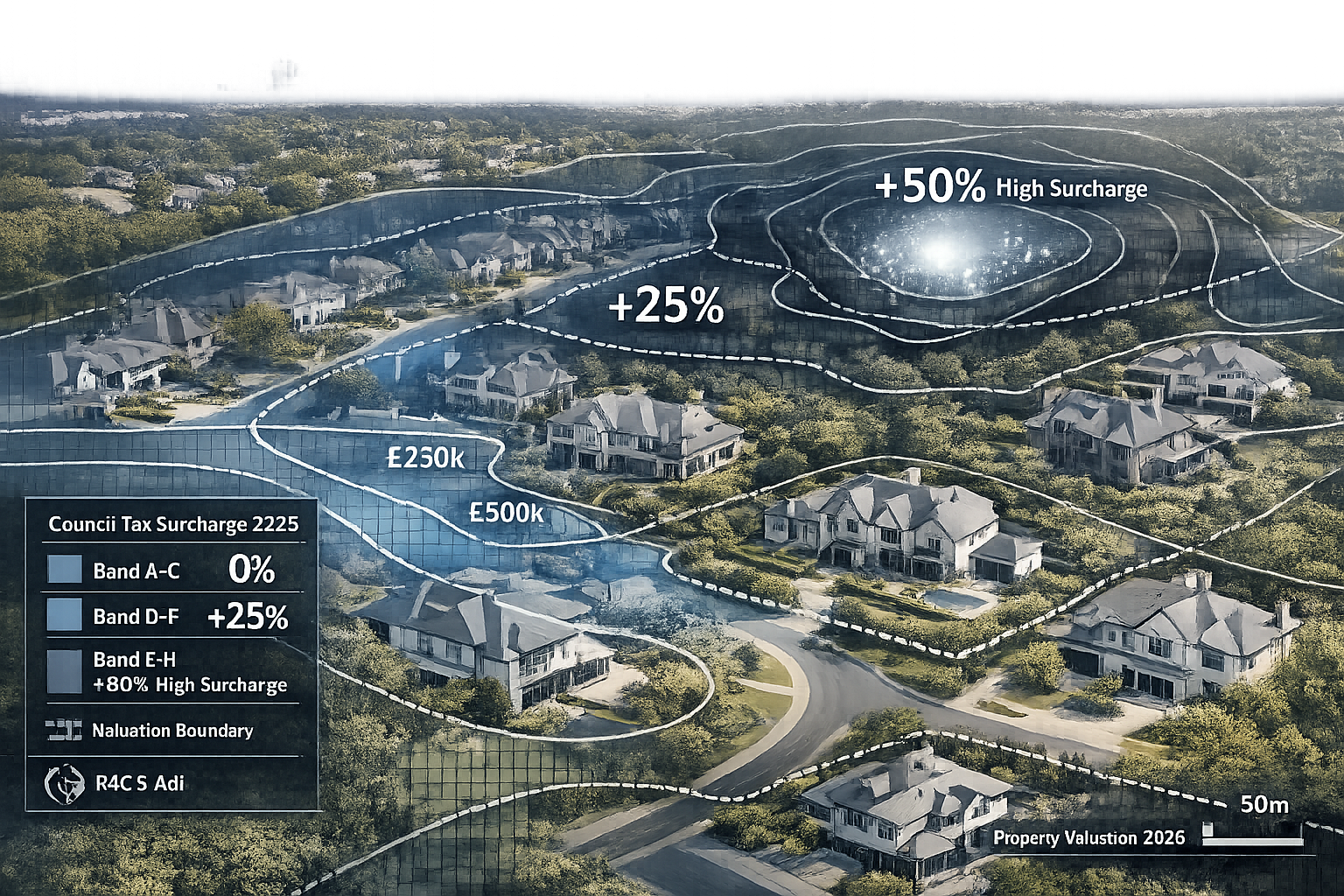
The 2026 council tax framework represents a significant departure from previous residential taxation approaches. Local authorities have implemented progressive surcharges specifically targeting properties in the highest valuation bands, with homes exceeding £2 million facing the most substantial increases. These surcharges typically range from 3% to 5% of property value annually, creating substantial ongoing costs that can exceed £100,000 per year for ultra-high-value estates.
The Financial Impact on Property Owners
The new surcharge structure creates several immediate challenges:
- Annual cost increases of £60,000-£150,000 for properties valued between £2-5 million
- Compounding effects on property investment returns and rental yields
- Market value implications as buyers factor ongoing tax obligations into purchase decisions
- Portfolio reassessment requirements for investors holding multiple high-value properties
Property owners who fail to accurately assess their tax band exposure risk significant budget shocks. The surcharges apply automatically based on Valuation Office Agency (VOA) assessments, which may not reflect actual property conditions, structural issues, or market realities.
Why Building Surveys Matter More Than Ever
In this environment, comprehensive building surveys serve multiple critical functions. They provide documented evidence of property condition, structural integrity, and factors affecting market value—all essential components when challenging tax band assessments or planning financial strategies.
RICS registered valuers follow standardized methodologies that ensure valuation reports meet the rigorous requirements needed for official challenges. The latest edition of RICS Valuation – Global Standards (Red Book), which became effective 31 January 2025, provides frameworks for market value, fair value, and investment value assessments that are particularly relevant to tax band disputes[6].
Building Surveys for High-Value Properties: Essential Components Under New Council Tax Surcharges
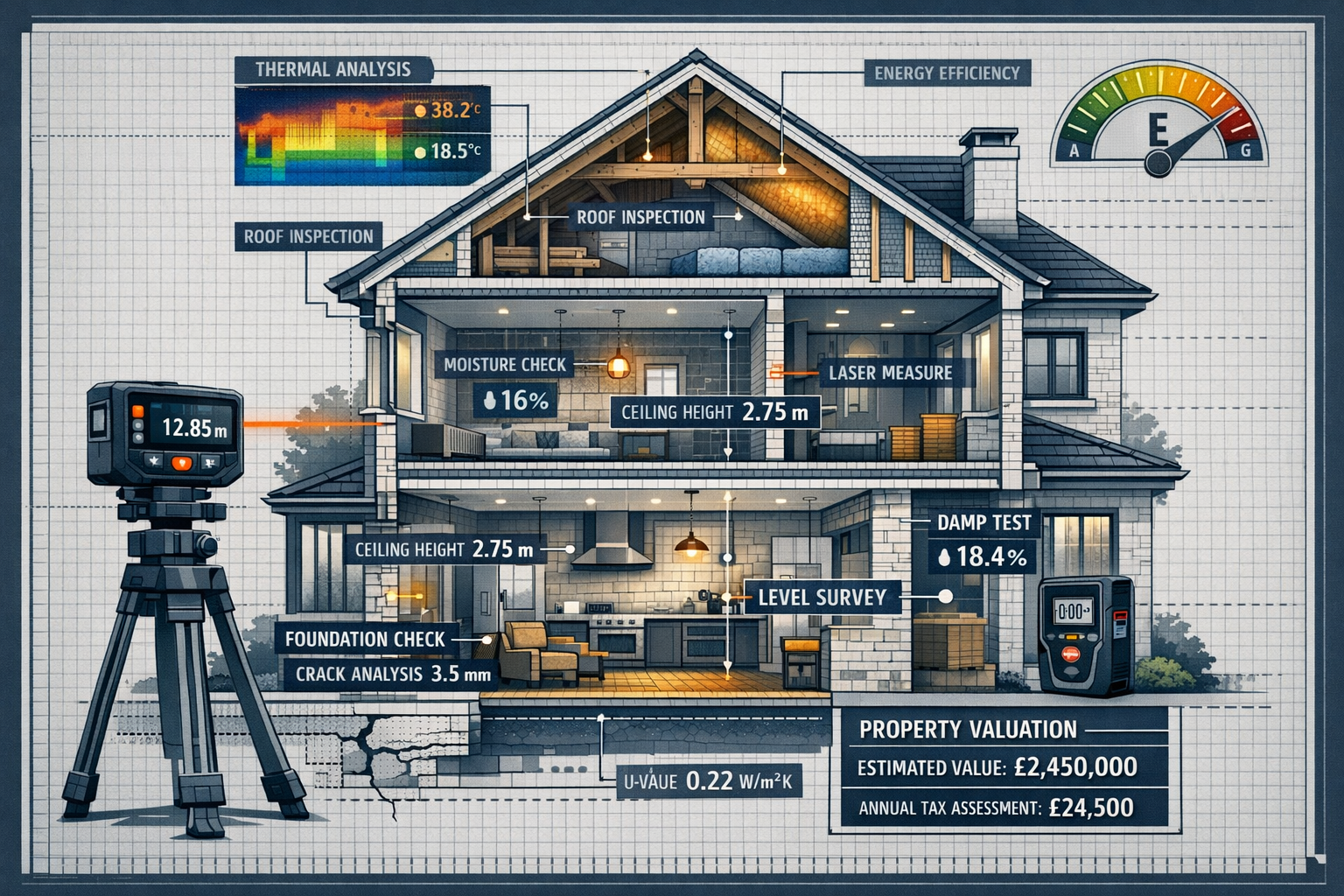
A properly conducted building survey for high-value properties facing council tax surcharges must go beyond standard residential inspections. The survey needs to document every factor that could legitimately impact property valuation while maintaining compliance with RICS professional standards.
Comprehensive Structural Assessment
The structural evaluation forms the foundation of any defensible valuation challenge. Key elements include:
Foundation and Structural Integrity
- Evidence of subsidence, settlement, or structural movement
- Documentation of historic repairs and ongoing monitoring requirements
- Assessment of load-bearing walls, beams, and structural supports
- Evaluation of basement and below-ground structural conditions
Properties with documented structural issues can legitimately command lower valuations, directly impacting appropriate tax band placement. Structural surveys provide the detailed technical analysis necessary to support valuation adjustments.
Building Fabric and Condition
- Roof condition, including slate or tile deterioration and weather-tightness
- External wall condition, rendering, and weatherproofing effectiveness
- Window and door condition, including heritage features requiring specialized maintenance
- Damp penetration, condensation issues, and moisture management systems
Property-Specific Factors Affecting Valuation
Beyond structural considerations, several property-specific factors can significantly impact market value and tax band appropriateness:
| Factor | Impact on Valuation | Documentation Required |
|---|---|---|
| Listed building status | Restrictions reduce market appeal | Heritage designation certificates |
| Conservation area constraints | Limited alteration rights | Local authority planning records |
| Flood risk | Insurance costs and marketability | Environment Agency flood maps |
| Access limitations | Reduced buyer pool | Site plans and access reports |
| Maintenance backlogs | Deferred capital expenditure | Detailed condition schedules |
| Environmental concerns | Remediation costs | Environmental surveys |
Compliance with RICS Valuation Standards
RICS maintains various sector-specific standards for residential properties that govern how valuations must be prepared and presented[3]. For high-value properties facing tax challenges, adherence to these standards is non-negotiable.
The Red Book valuation framework ensures that all valuations follow consistent methodologies, providing credibility when challenging local authority assessments. Professional valuers must consider:
- Market value definition: The estimated amount for which an asset should exchange on the valuation date between a willing buyer and willing seller
- Assumptions and special assumptions: Clearly stated conditions under which the valuation is prepared
- Valuation approach: Whether using comparable sales, income capitalization, or depreciated replacement cost
- Limitations and restrictions: Any factors that constrain the valuation process or conclusions
RICS Valuation Tactics for 2026 Tax Band Challenges: Strategic Approaches
Successfully challenging inappropriate tax band assessments requires strategic application of RICS valuation principles combined with comprehensive building survey evidence. The approach must be methodical, well-documented, and grounded in professional standards that withstand official scrutiny.
Establishing Baseline Market Value
The first tactical step involves establishing a defensible baseline market value that reflects actual property conditions rather than theoretical assessments. This requires:
Comparative Market Analysis
Professional valuers analyze recent sales of comparable properties, adjusting for differences in:
- Location and micro-market conditions
- Property size, layout, and configuration
- Condition and specification standards
- Special features or limitations
The analysis must account for the specific characteristics that differentiate the subject property from apparent comparables. A £3 million property with significant deferred maintenance should not be valued identically to a fully refurbished property of similar size.
Adjustment for Property-Specific Factors
Building survey findings directly inform valuation adjustments. Documented issues provide legitimate grounds for reducing assessed values:
- Structural defects: £50,000-£500,000+ depending on severity
- Roof replacement requirements: £75,000-£200,000 for large properties
- Damp remediation needs: £20,000-£100,000
- Heritage maintenance obligations: Ongoing annual costs affecting net value
- Access or parking limitations: 5-15% value reduction
Leveraging RICS Professional Standards for Tax Appeals
The RICS framework provides multiple tactical advantages when challenging tax band assessments. Professional chartered surveyors understand how to present evidence in formats that local authorities must take seriously.
Documentation Standards
Appeals supported by RICS-compliant valuation reports carry significantly more weight than informal challenges. Required documentation includes:
- Formal valuation report prepared in accordance with Red Book standards
- Comprehensive building survey documenting all condition issues
- Photographic evidence of defects and property characteristics
- Comparable sales analysis with detailed adjustment schedules
- Expert opinion on appropriate valuation methodology
Timing Strategies
The 2026 surcharge implementation creates specific timing opportunities:
- Pre-assessment challenges: Submitting evidence before formal surcharge notices
- Initial appeal window: Typically 60 days from assessment notification
- Reassessment requests: Based on new evidence of property condition changes
- Periodic review cycles: Aligning challenges with scheduled revaluation periods
Specialized Valuation Approaches for Complex Properties
High-value properties often present unique valuation challenges that require specialized approaches beyond standard residential methodologies.
Heritage and Listed Properties
Properties with heritage designations face unique constraints that affect market value but may not be reflected in standard tax band assessments. Valuation reports for these properties must account for:
- Restricted alteration and improvement rights
- Specialized maintenance requirements and costs
- Limited buyer pool due to heritage obligations
- Grant dependency for major works
Properties with Commercial Elements
Mixed-use properties require careful analysis to separate residential and commercial components. The valuation approach must consider:
- Appropriate allocation of space between uses
- Different valuation methodologies for each component
- Impact of commercial use on residential amenity
- Planning constraints affecting future use
Properties Requiring Significant Investment
Buildings requiring substantial capital investment present particular opportunities for tax band challenges. The survey must document:
- Detailed schedules of required works with cost estimates
- Impact of deferred maintenance on market value
- Comparison with fully modernized comparable properties
- Timeline and disruption factors affecting value
Building a Comprehensive Challenge Strategy
Successful tax band challenges rarely succeed based on single factors. The most effective strategies combine multiple elements into a comprehensive case:
Evidence Hierarchy
- Primary evidence: RICS-compliant building survey and valuation report
- Supporting evidence: Comparable sales data, specialist reports, cost estimates
- Contextual evidence: Market conditions, location factors, planning constraints
- Expert testimony: Professional surveyor opinions on valuation conclusions
Common Pitfalls to Avoid
- ❌ Relying solely on online valuation tools without professional verification
- ❌ Submitting incomplete or poorly documented challenges
- ❌ Missing critical appeal deadlines
- ❌ Failing to address counterarguments from local authorities
- ❌ Using non-RICS qualified surveyors whose reports lack credibility
Practical Implementation: From Survey to Successful Tax Band Challenge
Implementing an effective strategy for Building Surveys for High-Value Properties Under New Council Tax Surcharges: RICS Valuation Tactics for 2026 Tax Band Challenges requires careful planning and professional execution. The process typically unfolds across several distinct phases.
Phase 1: Initial Assessment and Surveyor Selection
The foundation of any successful challenge begins with selecting appropriate professional support. Property owners should:
Identify Qualified Professionals
Look for surveyors with specific credentials:
- RICS chartered status (MRICS or FRICS)
- Demonstrated experience with high-value residential properties
- Track record in tax band challenge cases
- Understanding of local market conditions
Commercial building surveys expertise can be valuable for mixed-use properties, while residential specialists better serve purely residential estates.
Define Scope and Objectives
Clearly establish what the survey needs to achieve:
- Comprehensive condition assessment for valuation purposes
- Identification of all factors affecting market value
- Documentation suitable for formal tax band challenges
- Timeline aligned with appeal deadlines
Phase 2: Comprehensive Building Survey Execution
The survey itself must be thorough and methodical, covering all aspects that could legitimately impact property valuation.
Survey Components Checklist
✅ External Inspection
- Roof coverings and drainage systems
- Chimneys and external walls
- Windows, doors, and external joinery
- Drainage and external grounds
✅ Internal Inspection
- Room-by-room condition assessment
- Services (heating, electrical, plumbing)
- Internal finishes and fixtures
- Evidence of damp, condensation, or structural movement
✅ Specialist Investigations
- Subsidence surveys where ground movement is suspected
- Drone roof surveys for large or complex roof structures
- Specific defect reports for particular concerns
Phase 3: Valuation Report Preparation
The valuation report transforms survey findings into a defensible market value assessment that supports the tax band challenge.
Essential Report Elements
Executive Summary
- Clear statement of valuation conclusion
- Summary of key factors affecting value
- Comparison with current tax band assessment
Property Description
- Detailed description of property characteristics
- Location and local market context
- Planning constraints and designations
Valuation Methodology
- Explanation of approach used (typically market comparison)
- Comparable sales analysis with adjustments
- Treatment of special factors or assumptions
Supporting Evidence
- Building survey findings and implications
- Photographic documentation
- Cost estimates for required works
- Market data and transaction evidence
Phase 4: Formal Challenge Submission
With comprehensive documentation prepared, the formal challenge can be submitted to the appropriate authority.
Submission Requirements
- Completed challenge forms with all required information
- Professional valuation report and building survey
- Supporting documentation and evidence
- Clear statement of grounds for challenge
- Proposed appropriate tax band
Timeline Management
Most jurisdictions provide specific windows for challenges:
- Initial period: 60-90 days from assessment notice
- Response time: 30-60 days for authority review
- Appeal period: If initial challenge denied
- Tribunal process: For unresolved disputes
Phase 5: Ongoing Management and Monitoring
Tax band challenges may require sustained engagement over several months or even years.
Active Case Management
- Respond promptly to requests for additional information
- Maintain communication with appointed surveyor
- Track all correspondence and deadlines
- Prepare for potential hearings or tribunals
Post-Decision Actions
Whether successful or not, the outcome informs future strategy:
- If successful: Ensure corrected assessment is properly implemented and backdated where appropriate
- If unsuccessful: Evaluate grounds for further appeal or tribunal proceedings
- Documentation: Maintain records for future revaluation cycles
Advanced Tactics: Maximizing Success in Complex Cases
Some high-value properties present particularly complex challenges requiring advanced tactical approaches.
Multi-Property Portfolio Strategies
Investors holding multiple high-value properties can benefit from coordinated strategies:
Portfolio-Wide Assessment
- Systematic review of all properties for challenge opportunities
- Prioritization based on potential savings and success probability
- Coordinated timing to manage professional fees and resources
Comparative Analysis
- Use portfolio properties as comparables for each other
- Demonstrate inconsistencies in assessment approaches
- Leverage successful challenges to support others
Anticipatory Strategies for Future Revaluations
Smart property owners don't wait for unfavorable assessments—they prepare in advance.
Proactive Documentation
- Commission building surveys before revaluation cycles
- Maintain detailed records of all property issues and repairs
- Document market conditions and comparable sales
- Establish relationships with qualified RICS professionals
Strategic Property Management
- Address major defects that could increase valuations
- Carefully consider improvement projects that might trigger reassessment
- Maintain properties in good condition without over-specification
Specialist Property Types Requiring Unique Approaches
Certain property categories demand specialized valuation tactics:
Period and Heritage Properties
These properties often face the highest surcharges but also present the strongest challenge opportunities due to:
- Extensive maintenance obligations
- Planning restrictions limiting improvements
- Specialized materials and conservation requirements
- Limited comparable sales data
Properties with Land or Grounds
Large estates with extensive grounds require careful analysis:
- Separate valuation of land versus buildings
- Agricultural land designations affecting tax treatment
- Maintenance costs for grounds and outbuildings
- Access and utility limitations
Properties with Structural Concerns
Buildings with known structural issues provide clear grounds for valuation adjustments, but require expert documentation through structural surveys and engineering assessments.
Cost-Benefit Analysis: When Professional Surveys Justify Their Investment
Professional RICS building surveys and valuations represent significant investments, typically ranging from £2,000 to £10,000+ for comprehensive high-value property assessments. Understanding when this investment makes financial sense is crucial.
Calculating Potential Savings
The financial case for professional surveys becomes compelling when potential savings are quantified:
Example Scenario: £3 Million Property
- Current assessment: Band H with 4% annual surcharge = £120,000/year
- Challenged assessment: Band G with 2% surcharge = £60,000/year
- Annual saving: £60,000
- Five-year saving: £300,000
- Survey and valuation cost: £5,000
- Net benefit: £295,000 over five years
When to Invest in Professional Surveys
Professional surveys make clear financial sense when:
- Property value exceeds £2 million and faces new surcharges
- Known structural or condition issues exist that aren't reflected in assessments
- Recent comparable sales suggest lower market values than assessed
- Heritage or planning constraints significantly limit property use
- Annual tax burden exceeds £50,000, making even modest reductions valuable
Alternative Approaches for Borderline Cases
For properties where full professional surveys may not be cost-justified:
- Desktop valuations: Lower-cost initial assessments to evaluate challenge prospects
- Targeted inspections: Focus on specific issues rather than comprehensive surveys
- Phased approach: Initial assessment followed by detailed survey only if prospects are good
Future-Proofing: Preparing for Ongoing Tax Band Evolution
The 2026 surcharges likely represent the beginning of an evolving tax landscape rather than a static endpoint. Property owners should prepare for ongoing changes.
Monitoring Regulatory Developments
Stay informed about:
- Proposed changes to council tax structures
- Revaluation cycles and methodologies
- New surcharge proposals or adjustments
- Legal precedents from successful challenges
Building Long-Term Professional Relationships
Establishing ongoing relationships with qualified RICS professionals provides:
- Continuity and institutional knowledge of your properties
- Priority access during busy revaluation periods
- Cost efficiencies through repeated engagement
- Proactive advice on emerging issues
Documentation and Record-Keeping Best Practices
Maintain comprehensive records including:
- All building surveys and valuation reports
- Correspondence with tax authorities
- Records of property improvements and repairs
- Market data and comparable sales information
- Professional advice and recommendations
Conclusion
Building Surveys for High-Value Properties Under New Council Tax Surcharges: RICS Valuation Tactics for 2026 Tax Band Challenges represents a critical competency for property owners, investors, and professionals navigating the evolving tax landscape. The introduction of substantial surcharges targeting properties above £2 million has fundamentally changed the financial calculus of high-value property ownership, making accurate valuations and strategic tax band management essential rather than optional.
The evidence is clear: comprehensive building surveys conducted by qualified RICS professionals provide the foundation for successful tax band challenges. These surveys document the structural realities, condition issues, and market factors that legitimately impact property values—evidence that local authorities must consider when assessing appropriate tax bands.
Key Success Factors
✅ Professional expertise: Engage RICS-chartered surveyors with demonstrated experience in high-value residential properties and tax band challenges
✅ Comprehensive documentation: Ensure building surveys cover all aspects affecting valuation, from structural integrity to heritage constraints
✅ Strategic timing: Submit challenges within appropriate windows and prepare proactively for revaluation cycles
✅ Evidence-based approach: Build cases on solid RICS valuation standards, comparable sales data, and documented property conditions
✅ Cost-benefit analysis: Focus resources on properties where potential savings significantly exceed professional fees
Actionable Next Steps
For property owners facing new council tax surcharges in 2026:
- Obtain your current tax band assessment and calculate your projected annual surcharge
- Commission a professional building survey from qualified RICS registered valuers
- Review comparable sales data for similar properties in your area
- Identify all factors that could legitimately reduce your property's assessed value
- Prepare a comprehensive challenge if evidence supports a lower tax band
- Submit within deadlines and maintain active case management throughout the process
The financial stakes are substantial—often tens of thousands of pounds annually for decades to come. Property owners who approach tax band challenges strategically, armed with professional RICS surveys and valuations, position themselves to achieve significant long-term savings while ensuring their properties are assessed fairly based on actual market conditions and structural realities.
The 2026 surcharge environment demands proactive engagement. Those who invest in professional building surveys and strategic valuation tactics today will reap financial benefits for years to come, while those who ignore these challenges face unnecessarily inflated tax obligations that erode property investment returns and ownership economics.
References
[1] Breaking Down The Rics Valuation What Every Valuer Should Know – https://globalvaluation.com/breaking-down-the-rics-valuation-what-every-valuer-should-know/
[2] Rics Publishes New Guidance – https://propertyindustryeye.com/rics-publishes-new-guidance/
[3] Valuation Standards – https://www.rics.org/profession-standards/rics-standards-and-guidance/sector-standards/valuation-standards
[4] Rics Publishes Updated Global Standard Esg Sustainability Commercial Property Valuation – https://www.rics.org/news-insights/rics-publishes-updated-global-standard-esg-sustainability-commercial-property-valuation
[5] Valuing First Time Buyer Properties In 2026 Rics Tactics Amid Improving Affordability And Supply – https://nottinghillsurveyors.com/blog/valuing-first-time-buyer-properties-in-2026-rics-tactics-amid-improving-affordability-and-supply
[6] Red Book Global – https://www.rics.org/profession-standards/rics-standards-and-guidance/sector-standards/valuation-standards/red-book/red-book-global