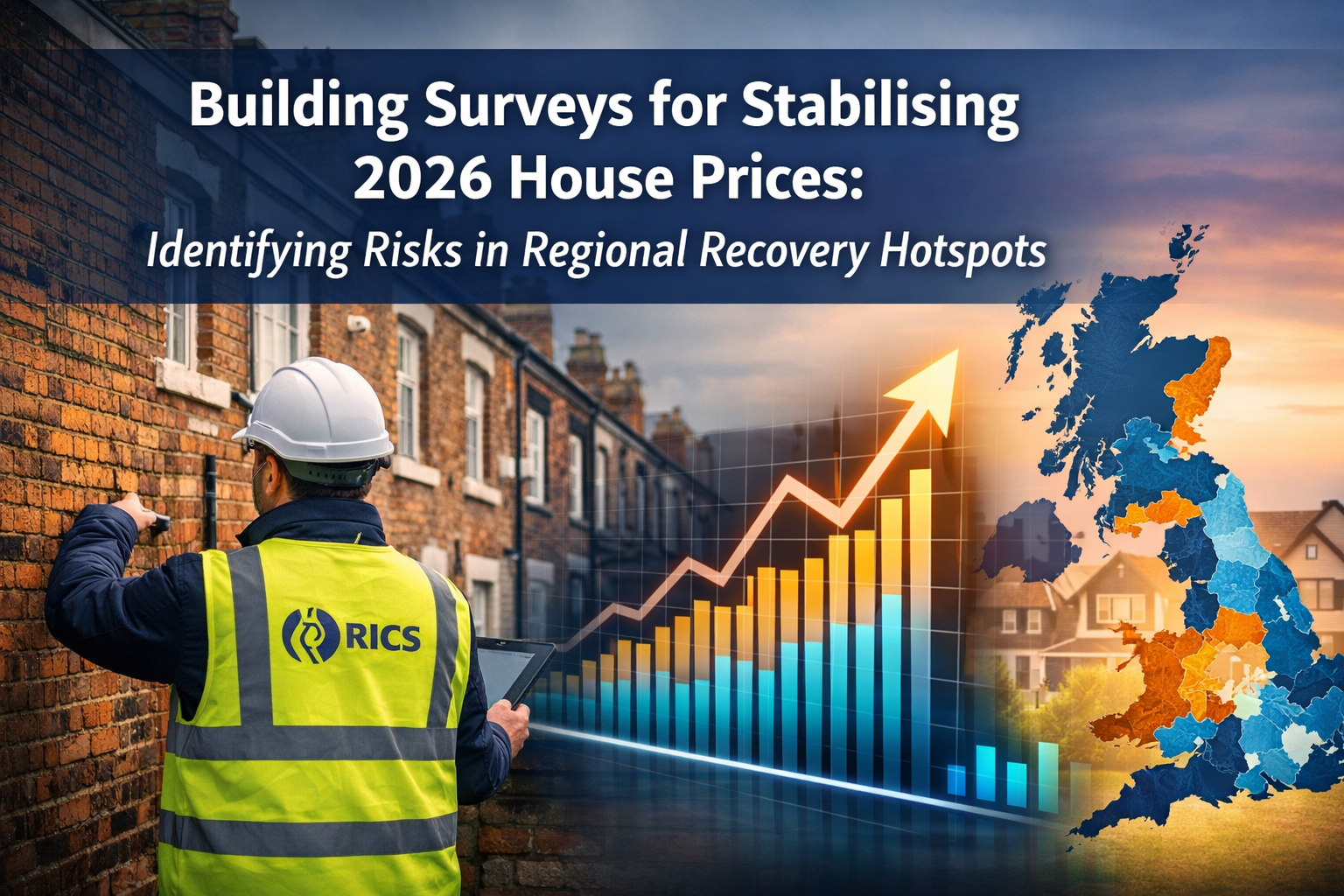
The UK housing market has entered 2026 with cautious optimism, but beneath the surface of stabilising prices lies a complex landscape of regional variation and hidden property risks. As Building Surveys for Stabilising 2026 House Prices: Identifying Risks in Regional Recovery Hotspots becomes increasingly critical, buyers and investors must navigate a market where Northern England and Scotland surge ahead while southern regions remain constrained. January 2026 marked the strongest start to a year since 2020 for asking prices [1], yet this momentum has already begun to cool, revealing the importance of thorough property assessments in identifying structural vulnerabilities that could undermine investment value in these emerging recovery zones.
Key Takeaways
- Regional divergence defines 2026: Northern England and Scotland outperform southern markets, creating distinct risk profiles requiring tailored building survey approaches
- Price stabilisation masks underlying defects: National house prices hover around £300,000 with modest growth forecasts of 2-4%, but property condition varies dramatically across recovery hotspots
- RICS data signals cautious recovery: Buyer enquiries improved to -15% net balance in January 2026, while agreed sales reached their least negative reading since June 2025 at -9% [2]
- Building surveys provide essential protection: Comprehensive structural assessments identify hidden risks in older housing stock prevalent in Northern recovery markets
- Mortgage accessibility improves: Five-year fixed rates dipping below 4% increase transaction volumes, making thorough pre-purchase surveys more critical than ever
Understanding the 2026 Housing Market Stabilisation
The UK property landscape has undergone significant transformation as it enters 2026. After years of volatility, house price stabilisation at the national level shows a net balance of -10% over the past three months [2], representing a marked improvement from the -19% recorded in October 2025. This gradual recovery creates both opportunities and challenges for property buyers, particularly those targeting regional recovery hotspots where growth potential must be balanced against structural risk.
National Price Trends and Regional Variation
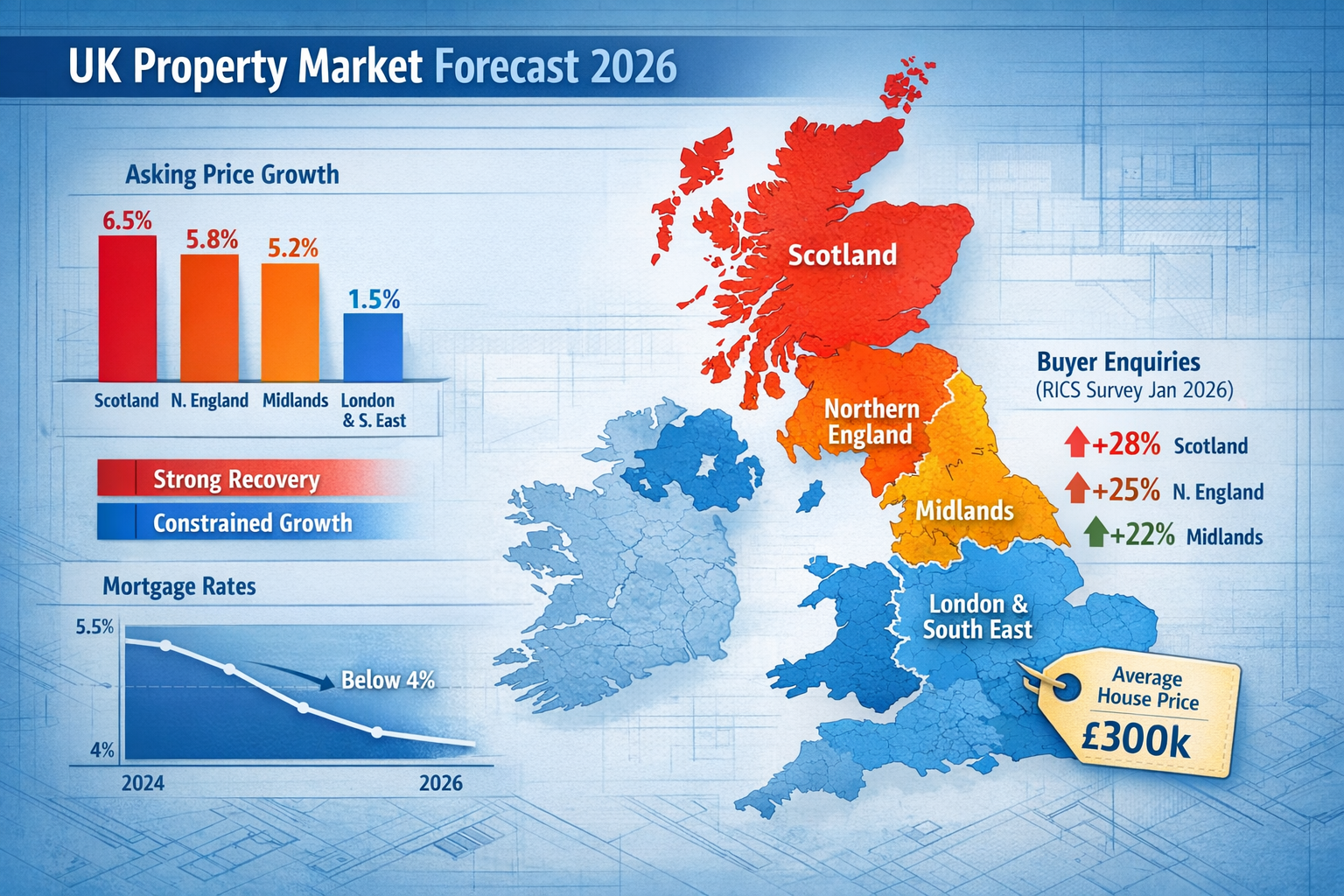
Average UK house prices now hover around the £300,000 mark, with annual growth remaining modest in the low single digits [1]. However, this national average conceals dramatic regional differences that directly impact building survey requirements:
| Region | Price Performance | Key Characteristics | Survey Priority Areas |
|---|---|---|---|
| Northern England | Strong growth | Affordable entry points, Victorian/Edwardian stock | Damp, subsidence, original features |
| Scotland | Outperforming | Steady local demand, mixed property ages | Structural integrity, insulation |
| London | Constrained | Stretched affordability, premium pricing | Leasehold issues, building regulations |
| South East | Subdued | Higher price points, mature market | Period property concerns, extensions |
This regional divergence makes Building Surveys for Stabilising 2026 House Prices: Identifying Risks in Regional Recovery Hotspots an essential strategy for informed property decisions. Chartered surveyors across London and regional markets report increased demand for comprehensive assessments as buyers seek to capitalize on recovery opportunities while protecting against hidden defects.
Market Momentum Indicators
Several key metrics demonstrate the stabilising yet cautious nature of the 2026 market:
📈 Buyer Enquiries: New buyer enquiries improved to a net balance of -15% in January 2026, up from -21% in December and -29% in November [2]. This easing of downward pressure suggests growing confidence, though demand remains below pre-pandemic levels.
🏠 Agreed Sales: Transaction volumes reached their least negative reading since June 2025 at -9% net balance [2], indicating that properties are moving through the sales process more effectively than in recent months.
📊 Price Expectations: Perhaps most tellingly, twelve-month price expectations surged to +43% of respondents anticipating higher prices [2]—the most positive outlook since February 2025. This optimism significantly exceeds near-term three-month expectations of just +4%, suggesting market participants believe current stabilisation will evolve into sustained growth.
💰 Mortgage Accessibility: Average five-year fixed rates have dipped below 4% for the first time in several years [5], while lenders offer greater borrowing flexibility. This improved affordability drives transaction volumes but also increases the urgency for thorough building surveys as more buyers enter the market.
Supply and Demand Dynamics
Approximately 6% more homes are on the market compared to a year ago [5], helping to keep values in check and creating a more sustainable environment for both buyers and sellers. This increased supply provides buyers with greater choice but also necessitates careful due diligence, particularly in recovery hotspots where older housing stock may present maintenance challenges.
Wage growth is expected to continue outpacing house price growth [4], easing pressure on buyers who have recalibrated affordability expectations over the past two years. This improved affordability ratio makes property investment more accessible but doesn't eliminate the need for comprehensive structural assessments.
Building Surveys for Stabilising 2026 House Prices: Critical Role in Regional Recovery Markets
As regional recovery hotspots emerge across Northern England and Scotland, building surveys have evolved from optional due diligence to essential risk management tools. The unique characteristics of these recovering markets—often featuring older housing stock, varied construction methods, and deferred maintenance—create specific vulnerabilities that only thorough professional assessments can identify.
Why Building Surveys Matter More in Recovery Hotspots
Recovery markets present a paradox: they offer attractive entry prices and growth potential but often feature properties that have experienced periods of neglect or minimal investment. Several factors make building surveys particularly critical in these areas:
🏚️ Older Housing Stock: Northern England recovery hotspots feature significant proportions of Victorian and Edwardian terraced housing, which may present:
- Original slate roofing requiring replacement
- Single-skin brick walls with damp penetration
- Outdated electrical and plumbing systems
- Foundation settlement and subsidence risks
- Period features requiring specialist restoration
💧 Climate-Related Risks: Northern regions experience higher rainfall and different weather patterns than southern England, creating specific vulnerabilities:
- Increased damp and moisture ingress
- Roof and gutter deterioration
- Timber rot in structural elements
- Condensation and mould issues
- Drainage system failures
🔨 DIY and Non-Compliant Alterations: Properties in more affordable markets may have undergone unprofessional modifications:
- Structural walls removed without proper support
- Electrical work not meeting current regulations
- Plumbing installations prone to failure
- Loft conversions lacking building control approval
- Extensions with inadequate foundations
Types of Building Surveys for Different Property Scenarios
Selecting the appropriate survey level depends on property age, condition, and buyer circumstances. Professional building surveyor services offer several assessment tiers:
Level 1 – Condition Report: Suitable for newer properties (post-1990) in good condition, providing basic traffic-light condition ratings. Rarely appropriate for recovery hotspot properties.
Level 2 – HomeBuyer Report: The most common choice for conventional properties built post-1950 in reasonable condition. Includes:
- Visual inspection of accessible areas
- Condition ratings for major elements
- Identification of urgent defects
- Market valuation (if required)
- Advice on repairs and ongoing maintenance
Level 3 – Building Survey (Full Structural Survey): Essential for older properties, those in poor condition, or buildings of unusual construction. This comprehensive assessment provides:
- Detailed examination of all accessible areas
- In-depth analysis of structural integrity
- Identification of hidden defects
- Detailed repair cost estimates
- Advice on maintenance priorities
- Assessment of alteration feasibility
For properties in Northern recovery hotspots, a structural survey in London or regional equivalent typically represents the most appropriate choice, given the prevalence of older housing stock.
Specialist Survey Techniques for Hidden Defects
Modern building surveys incorporate advanced diagnostic tools that reveal problems invisible to conventional inspection:
🚁 Drone Roof Surveys: Drone roof survey technology enables detailed inspection of inaccessible roof areas without scaffolding costs, identifying:
- Missing or damaged tiles
- Chimney stack deterioration
- Valley gutter failures
- Flashing defects
- Structural movement in roof timbers
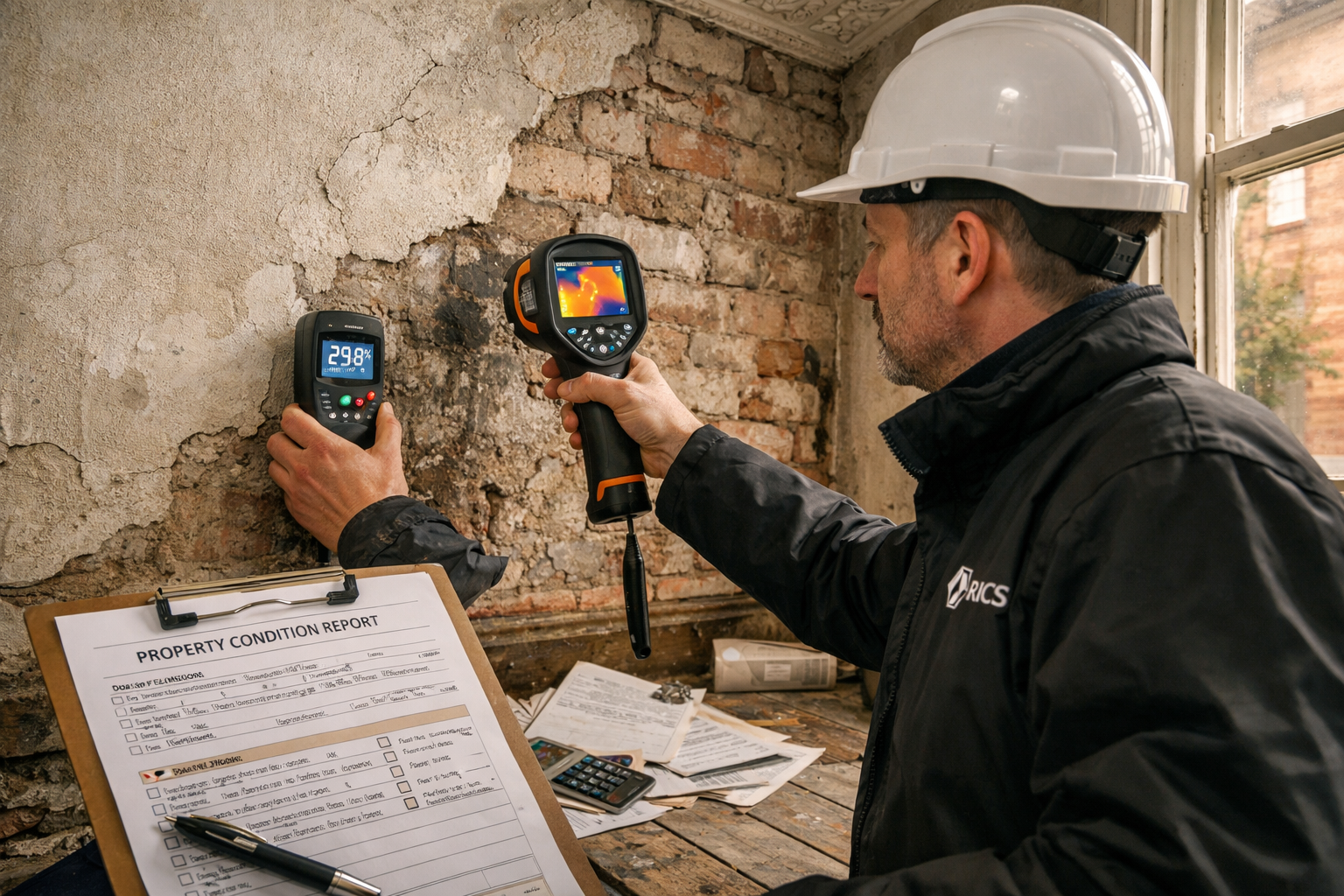
🌡️ Thermal Imaging: Infrared cameras detect temperature variations indicating:
- Hidden moisture ingress
- Insulation deficiencies
- Air leakage points
- Heating system inefficiencies
- Structural thermal bridging
💧 Moisture Meters: Electronic and invasive testing identifies:
- Rising damp extent
- Penetrating moisture sources
- Condensation problem areas
- Timber moisture content
- Effectiveness of damp-proof courses
📏 Structural Movement Monitoring: Crack monitoring and level surveys assess:
- Active vs. historic settlement
- Subsidence progression
- Foundation adequacy
- Structural load distribution
- Movement patterns over time
Common Defects in Regional Recovery Properties
Building surveys in Northern England and Scottish recovery markets frequently identify these recurring issues:
Foundation and Structural Problems:
- Subsidence from clay soil shrinkage or mining activity
- Settlement cracks in older properties
- Inadequate foundations for extensions
- Structural alterations without proper support
- Wall tie failure in cavity walls
Damp and Water Ingress:
- Failed or bridged damp-proof courses
- Penetrating damp through solid walls
- Condensation from poor ventilation
- Roof leaks and gutter failures
- Rising groundwater in basements
Timber Defects:
- Dry rot in floor joists and timbers
- Wet rot from persistent moisture
- Woodworm infestation (active or historic)
- Structural timber decay
- Failed lintels and beams
Roof and External Issues:
- Slate or tile deterioration
- Chimney stack instability
- Render and pointing failure
- Window and door decay
- Drainage system inadequacy
Identifying Risks in Regional Recovery Hotspots: Survey Strategies for 2026
The geographic variation in UK house price performance demands location-specific survey approaches. Building Surveys for Stabilising 2026 House Prices: Identifying Risks in Regional Recovery Hotspots requires understanding how regional characteristics influence property risks and appropriate assessment protocols.

Northern England Recovery Markets: Survey Priorities
Northern England's outperformance in 2026 stems from affordable entry points and steady local demand [1], but this region's housing stock presents specific challenges requiring targeted survey attention.
Key Survey Focus Areas:
Victorian and Edwardian Terraces: These properties dominate many Northern towns and cities, requiring assessment of:
- Party wall condition and shared structural elements
- Original slate roofing (often 100+ years old)
- Single-skin solid wall construction and damp risks
- Cellar condition and tanking requirements
- Original sash windows and their condition
Former Industrial Housing: Properties built for mill and factory workers often feature:
- Basic construction with minimal foundations
- Shared rear yards and boundary issues
- Proximity to former industrial sites (contamination risks)
- Minimal insulation and energy efficiency
- Outdated services requiring complete replacement
Mining and Subsidence Risks: Areas with coal mining history require:
- Coal Authority search for mining records
- Specific subsidence assessment protocols
- Foundation depth and adequacy evaluation
- Crack pattern analysis for active movement
- Insurance implications and availability
For properties in areas like chartered surveyors in Oxfordshire serve, similar Victorian housing stock considerations apply, though mining risks may be reduced.
Scottish Market Considerations
Scotland's steady performance in 2026 reflects different housing characteristics and legal frameworks:
Traditional Scottish Construction:
- Stone-built properties with solid walls
- Different building regulations and standards
- Tenement flats with shared maintenance obligations
- Unique roof construction methods
- Climate-specific weatherproofing requirements
Legal and Survey Differences:
- Scottish Home Report system (mandatory seller's survey)
- Single survey approach reduces duplication
- Different conveyancing timeline and processes
- Specific attention to common repairs obligations
- Unique property law considerations
Southern Markets: Constrained but Stable
While London and the South East show more subdued growth due to stretched affordability [1], these markets present different survey challenges:
Premium Property Concerns:
- Complex leasehold arrangements requiring specialist assessment
- Listed building restrictions and conservation area rules
- High-value period features requiring expert evaluation
- Basement conversions and structural alterations
- Building regulation compliance for recent works
Areas served by chartered surveyors in Sussex or chartered surveyors in Hampshire often feature period properties requiring specialist heritage expertise.
Regional Survey Cost-Benefit Analysis
Survey costs vary by region, property value, and assessment level, but the investment consistently provides substantial protection:
Typical Survey Costs (2026):
- Level 2 HomeBuyer Report: £400-£800
- Level 3 Building Survey: £600-£1,500
- Specialist testing (damp, structural): £200-£500 per test
- Drone roof survey: £200-£400
Potential Savings from Survey Findings:
- Price renegotiation: £5,000-£50,000+ based on defects identified
- Avoided purchase of unsuitable property: Entire purchase price
- Planned maintenance budgeting: Prevents financial surprises
- Insurance implications: Ensures adequate coverage
- Renovation planning: Accurate cost forecasting
"A comprehensive building survey in a Northern recovery market typically costs £800-£1,200 but can identify defects requiring £20,000-£50,000 in repairs. The return on investment is substantial, particularly in older housing stock where hidden problems are common." — RICS Building Surveyor
Pre-Purchase Survey Checklist for Recovery Hotspots
Buyers targeting regional recovery markets should ensure their building survey addresses these critical elements:
✅ Essential Survey Components:
- Complete external envelope inspection (walls, roof, windows, doors)
- Internal structural assessment (walls, floors, ceilings)
- Foundation and ground condition evaluation
- Damp and moisture testing (all suspect areas)
- Roof space inspection (structure, insulation, services)
- Drainage system assessment
- Electrical installation age and condition
- Plumbing and heating system evaluation
- Timber condition and pest inspection
- Boundary and external works assessment
✅ Documentation Requirements:
- Detailed written report with photographs
- Condition ratings for all major elements
- Repair cost estimates (order of magnitude)
- Maintenance recommendations and priorities
- Identification of urgent safety issues
- Advice on further specialist investigations
- Assessment of alteration feasibility (if planned)
✅ Follow-Up Actions:
- Specialist reports for identified concerns (structural engineer, damp specialist, electrician)
- Building control history check for alterations
- Planning permission verification for extensions
- Schedule of condition report for negotiation purposes
- Insurance quotation based on survey findings
Leveraging Survey Findings in Price Negotiations
Building survey results provide powerful negotiation leverage in stabilising markets where sellers may have tested prices optimistically at the start of 2026 [1]:
Negotiation Strategies:
Minor Defects (£1,000-£5,000 repairs): Request seller addresses issues before completion or seek modest price reduction.
Moderate Issues (£5,000-£20,000 repairs): Negotiate price reduction equivalent to repair costs plus 10-20% contingency, or request seller completes major works.
Major Defects (£20,000+ repairs): Significant price renegotiation justified, potentially 5-10% of purchase price depending on severity. Consider withdrawal if structural integrity compromised.
Deal-Breakers: Some findings justify walking away:
- Active subsidence requiring underpinning (£15,000-£50,000+)
- Extensive dry rot throughout property (£20,000-£100,000+)
- Structural alterations requiring retrospective building control and remediation
- Contaminated land issues
- Uninsurable risks
Building Survey Integration with Broader Property Due Diligence
Comprehensive property assessment extends beyond the building survey itself, integrating multiple specialist evaluations to build a complete risk picture for properties in regional recovery hotspots.
Complementary Specialist Assessments
Structural Engineering Reports: When building surveys identify concerning movement, cracks, or alterations, structural engineers provide:
- Detailed structural calculations
- Assessment of load-bearing adequacy
- Remediation design and specifications
- Building regulation compliance advice
- Cost estimates for structural repairs
Electrical Installation Condition Reports (EICR): Properties with older wiring require:
- Testing of all circuits and safety devices
- Identification of non-compliant installations
- Safety certification for insurance purposes
- Upgrade recommendations and costs
- Verification of recent electrical work
Drainage Surveys: CCTV drainage inspection identifies:
- Pipe condition and defects
- Root ingress and blockages
- Collapsed or damaged sections
- Connection to mains sewers
- Shared drainage arrangements
Asbestos Surveys: Pre-1999 properties may contain asbestos requiring:
- Material identification and sampling
- Risk assessment and management plans
- Removal cost estimates
- Legal compliance verification
- Health and safety considerations
Boundary and Legal Considerations
Building surveys focus on physical condition, but legal aspects significantly impact property value and usability:
Boundary Surveys: Essential when:
- Fence lines don't match title plans
- Disputes exist with neighbours
- Extensions approach boundaries
- Access rights are unclear
- Land registry plans lack detail
Party Wall Matters: Terraced and semi-detached properties in Northern recovery markets frequently involve party wall considerations:
- Shared structural elements and maintenance responsibility
- Rights and obligations for alterations
- Dispute resolution mechanisms
- Cost-sharing arrangements
- Condition documentation before works
Leasehold Complications: Flats and some houses require additional assessment:
- Lease term remaining and extension costs
- Service charge history and reasonableness
- Building insurance arrangements
- Planned major works and reserve funds
- Management company effectiveness
Renovation Planning and Building Surveys
Many buyers target recovery hotspot properties specifically for renovation potential. Building surveys inform realistic project planning:
Pre-Purchase Renovation Assessment:
- Structural feasibility of planned alterations
- Building regulation requirements
- Planning permission needs
- Listed building or conservation area restrictions
- Realistic cost estimates including contingencies
Snagging Reports for new-build properties in recovery areas ensure:
- Developer rectifies defects before completion
- Quality standards meet building regulations
- Warranties remain valid
- Documentation of issues for future reference
Insurance Implications of Survey Findings
Building survey results directly impact insurance availability and cost:
Standard Buildings Insurance: Available for properties in good condition with no significant defects. Typical coverage includes:
- Structural damage from insured perils
- Storm and flood damage
- Subsidence (subject to excess)
- Escape of water
- Fire and impact damage
Non-Standard Insurance: Required when surveys identify:
- Previous subsidence (higher premiums, increased excess)
- Non-traditional construction (limited insurers)
- Flood risk areas (specialist policies)
- Commercial use or mixed-use properties
- Unoccupied or renovation projects
Uninsurable Risks: Some survey findings make properties effectively uninsurable:
- Active, progressive subsidence
- Properties in extreme flood risk zones
- Certain non-traditional constructions
- Major structural defects without remediation
Mortgage lenders require buildings insurance as a lending condition, so insurability directly affects property purchasability.
Future-Proofing Property Investments in 2026 Recovery Markets
As consensus forecasts predict 2-4% house price growth for 2026 [3][4], strategic buyers use building surveys not just to identify current defects but to assess long-term value retention and enhancement potential.
Energy Efficiency and EPC Considerations
Building surveys increasingly incorporate energy efficiency assessment, particularly relevant as:
- Minimum EPC standards tighten for rental properties
- Energy costs remain elevated
- Buyer preferences shift toward efficient homes
- Future regulations may mandate improvements
Survey-Informed Energy Upgrades:
- Insulation opportunities (loft, cavity wall, solid wall)
- Heating system modernisation
- Window and door replacement priorities
- Renewable energy installation feasibility
- Ventilation improvements to prevent condensation
Properties in Northern recovery markets often feature solid wall construction requiring expensive external or internal insulation (£8,000-£15,000), making this a key survey consideration.
Climate Resilience Assessment
Building surveys should evaluate climate change resilience:
Flood Risk: Properties in flood-prone areas require:
- Flood risk assessment and mapping
- Resilience measures (flood barriers, raised electrics)
- Resistance measures (waterproof materials)
- Insurance availability and cost
- Resale implications
Overheating Risk: Increasing summer temperatures affect:
- Properties with poor ventilation
- South-facing flats without shading
- Loft conversions with inadequate insulation
- Homes with large glazed areas
- Adaptation options and costs
Weather Extremes: More frequent severe weather impacts:
- Roof and gutter adequacy
- Drainage capacity
- External material durability
- Tree proximity and root damage risks
- Maintenance frequency requirements
Long-Term Maintenance Planning
Building surveys provide the foundation for realistic maintenance budgeting:
Immediate Priorities (Year 1):
- Urgent safety issues (electrical, structural)
- Weather-proofing defects (roof leaks, damp)
- Essential repairs (heating, plumbing failures)
Short-Term Planning (Years 2-5):
- External decoration and maintenance
- Window and door repairs/replacement
- Drainage improvements
- Minor structural repairs
Long-Term Investment (Years 5-10+):
- Roof replacement (£8,000-£15,000)
- Heating system replacement (£3,000-£6,000)
- Rewiring (£3,000-£8,000)
- External wall repairs/repointing
- Major structural works if required
Regional Market Outlook and Survey Strategy
Different regional trajectories influence survey priorities:
Northern England Hotspots (Strong Growth Expected):
- Focus on value-add renovation potential
- Assess structural capacity for extensions/conversions
- Evaluate neighbourhood improvement trajectory
- Consider rental yield potential if investment property
- Verify property can support mortgage refinancing
Scottish Markets (Steady Performance):
- Emphasis on common repair obligations and costs
- Assessment of shared building element condition
- Evaluation of factor (management) effectiveness
- Climate-specific weatherproofing adequacy
- Local market rental demand if applicable
Southern Constrained Markets (Modest Growth):
- Detailed assessment of premium features and heritage elements
- Leasehold terms and extension costs
- Planning and listed building restriction implications
- Comparison with similar properties in area
- Long-term capital appreciation potential
Selecting the Right Building Survey Professional
The quality of building survey insights depends entirely on surveyor expertise and qualifications. In 2026's recovering market, professional selection represents a critical decision.
Essential Qualifications and Accreditations
RICS Membership: Always instruct a Royal Institution of Chartered Surveyors (RICS) qualified professional:
- MRICS: Member status (minimum requirement)
- FRICS: Fellow status (senior, experienced practitioners)
- RICS regulation and professional standards
- Complaints and dispute resolution procedures
- Professional indemnity insurance requirements
Specialist Expertise: Different surveyors offer varying specialisms:
- Period property specialists (pre-1900 buildings)
- Non-traditional construction experts
- Conservation and listed building specialists
- Structural engineering qualifications
- Regional market knowledge
Questions to Ask Prospective Surveyors
Before instructing a building survey, verify:
Experience and Expertise:
- How many similar properties have you surveyed?
- Do you have specific experience with [property age/type]?
- Are you familiar with [regional] construction methods?
- What additional qualifications do you hold?
- Can you provide references or sample reports?
Survey Scope and Methodology:
- What areas will you inspect?
- What testing equipment do you use?
- How long will the inspection take?
- Will you inspect the roof space and underfloor areas?
- Are there any areas you cannot access?
Reporting and Follow-Up:
- When will I receive the report?
- What format will the report take?
- Will it include photographs?
- Can I contact you with questions after receiving the report?
- Do you provide further specialist referrals if needed?
Costs and Terms:
- What is your fee structure?
- Are there any additional costs?
- What professional indemnity insurance do you carry?
- What are your terms and conditions?
- Do you offer any guarantees or warranties?
Regional Surveyor Selection
Location-specific expertise matters significantly in recovery hotspots:
Northern England: Seek surveyors experienced with:
- Victorian and Edwardian terraced housing
- Mining subsidence assessment
- Solid wall construction and damp issues
- Local construction methods and materials
- Regional property market conditions
Scotland: Require knowledge of:
- Scottish building standards and regulations
- Tenement construction and common repairs
- Scottish Home Report system
- Stone-built traditional properties
- Scottish property law differences
Southern Markets: Look for expertise in:
- Period property assessment
- Listed building and conservation area requirements
- Leasehold property complexities
- Premium property features and finishes
- Local planning and building control practices
Services like chartered surveyors in Watford, chartered surveyors in St Albans, or chartered surveyors in Guildford offer regional expertise valuable for local market assessment.
Red Flags When Selecting Surveyors
Avoid professionals who:
- Lack RICS qualification or professional indemnity insurance
- Offer unusually low fees (suggesting rushed inspections)
- Cannot provide references or sample reports
- Refuse to answer questions about methodology
- Lack experience with your property type
- Have poor online reviews or complaints history
- Pressure you to instruct immediately
- Offer to recommend specific contractors (conflict of interest)
Conclusion: Building Survey Strategy for 2026 Market Success
The UK housing market's 2026 stabilisation presents genuine opportunities for buyers willing to conduct thorough due diligence. As Building Surveys for Stabilising 2026 House Prices: Identifying Risks in Regional Recovery Hotspots demonstrates, professional property assessment provides essential protection against hidden defects while enabling informed negotiation and realistic renovation planning.
Key Strategic Recommendations
For Buyers in Northern Recovery Hotspots:
- Commission Level 3 Building Surveys for Victorian and Edwardian properties, given the prevalence of older housing stock requiring comprehensive assessment
- Investigate mining and subsidence history through Coal Authority searches and specialist surveyor evaluation
- Budget 10-15% of purchase price for immediate repairs and improvements identified in survey reports
- Verify insurance availability before exchange of contracts, particularly for properties with previous subsidence or non-traditional construction
- Assess renovation potential through survey findings to maximize value appreciation in growing markets
For Scottish Market Participants:
- Understand the Home Report system but consider commissioning additional specialist surveys for older or unusual properties
- Evaluate common repair obligations carefully, as shared maintenance costs significantly impact ownership economics
- Engage surveyors with Scottish qualification and local market expertise
- Factor climate-specific weatherproofing into maintenance budgets
For Southern Market Buyers:
- Focus on period property specialists for heritage buildings requiring expert assessment
- Thoroughly investigate leasehold terms and service charge history for flats and leasehold houses
- Assess planning and listed building restrictions before purchasing properties requiring alteration
- Consider long-term capital appreciation rather than short-term growth in constrained markets
Immediate Action Steps
Buyers targeting properties in 2026 recovery markets should:
✅ Step 1: Research regional market conditions and identify target areas using RICS survey data and local market intelligence
✅ Step 2: Shortlist RICS-qualified surveyors with relevant regional and property-type expertise, requesting sample reports and references
✅ Step 3: Budget appropriately for surveys (£600-£1,500 for Level 3 Building Survey plus £200-£500 for specialist testing)
✅ Step 4: Review survey reports thoroughly with surveyor, asking questions about all identified defects and recommended further investigations
✅ Step 5: Commission specialist reports for significant concerns (structural engineer, electrician, damp specialist) before proceeding
✅ Step 6: Use survey findings to negotiate price reductions or seller-completed repairs, ensuring contracts reflect agreed terms
✅ Step 7: Plan immediate repairs, short-term maintenance, and long-term improvement projects based on survey recommendations
✅ Step 8: Verify buildings insurance availability and cost before legal commitment, particularly for properties with identified defects
The Value Proposition of Professional Building Surveys
With twelve-month price expectations at +43% [2] and mortgage rates below 4% [5], 2026 presents favorable conditions for property purchase in recovery hotspots. However, these opportunities come with risks that only professional building surveys can adequately identify and quantify.
The modest investment in comprehensive property assessment—typically £800-£1,500 for a thorough Level 3 Building Survey—provides:
- Financial protection through identification of defects requiring £20,000-£100,000+ in repairs
- Negotiation leverage enabling price reductions or seller-completed works
- Informed decision-making with realistic understanding of property condition
- Maintenance planning with prioritized repair schedules and cost estimates
- Insurance certainty confirming coverage availability before legal commitment
- Peace of mind knowing exactly what you're purchasing
As regional recovery markets evolve throughout 2026, those who invest in professional building surveys will be best positioned to capitalize on growth opportunities while avoiding the hidden pitfalls that can transform apparent bargains into financial burdens. The stabilising market rewards diligence, and comprehensive property assessment remains the cornerstone of successful property investment in recovery hotspots across Northern England, Scotland, and beyond.