

The UK property market is experiencing a notable shift in 2026. After years of uncertainty, buyer confidence is returning, enquiries are stabilizing, and sales activity shows promising signs of growth. For building surveyors, this market recovery presents a golden opportunity to expand services and capture increased demand. Understanding how to position survey offerings in this evolving landscape will determine which practices thrive and which merely survive.
Building Surveys in the 2026 Market Recovery: Capitalizing on Renewed Buyer Confidence requires strategic thinking, market awareness, and the ability to adapt services to meet changing buyer needs across different UK regions.
Key Takeaways
- Market sentiment has shifted: Buyer enquiries are stabilizing after years of decline, creating renewed demand for comprehensive building surveys across residential and commercial sectors
- Regional variations matter: Different UK markets are recovering at different rates, requiring surveyors to tailor their approach based on local conditions and buyer demographics
- Service diversification is essential: Successful practices are expanding beyond traditional surveys to offer specialized inspections, digital reporting, and value-added services that meet modern buyer expectations
- Professional positioning drives growth: Building surveyor practices that emphasize expertise, technology adoption, and client education are capturing the largest share of recovering market demand
- Economic headwinds persist: While confidence improves, labor shortages, material costs, and broader economic concerns require surveyors to provide realistic, detailed assessments that protect buyers
Understanding the 2026 Market Recovery Landscape
The Current State of UK Property Markets
The 2026 property market presents a complex picture. While buyer confidence shows signs of recovery, the landscape remains far more nuanced than the boom years. Recent construction industry data reveals mixed expectations across different sectors, with some segments showing robust growth while others continue to struggle[1].
Key market indicators include:
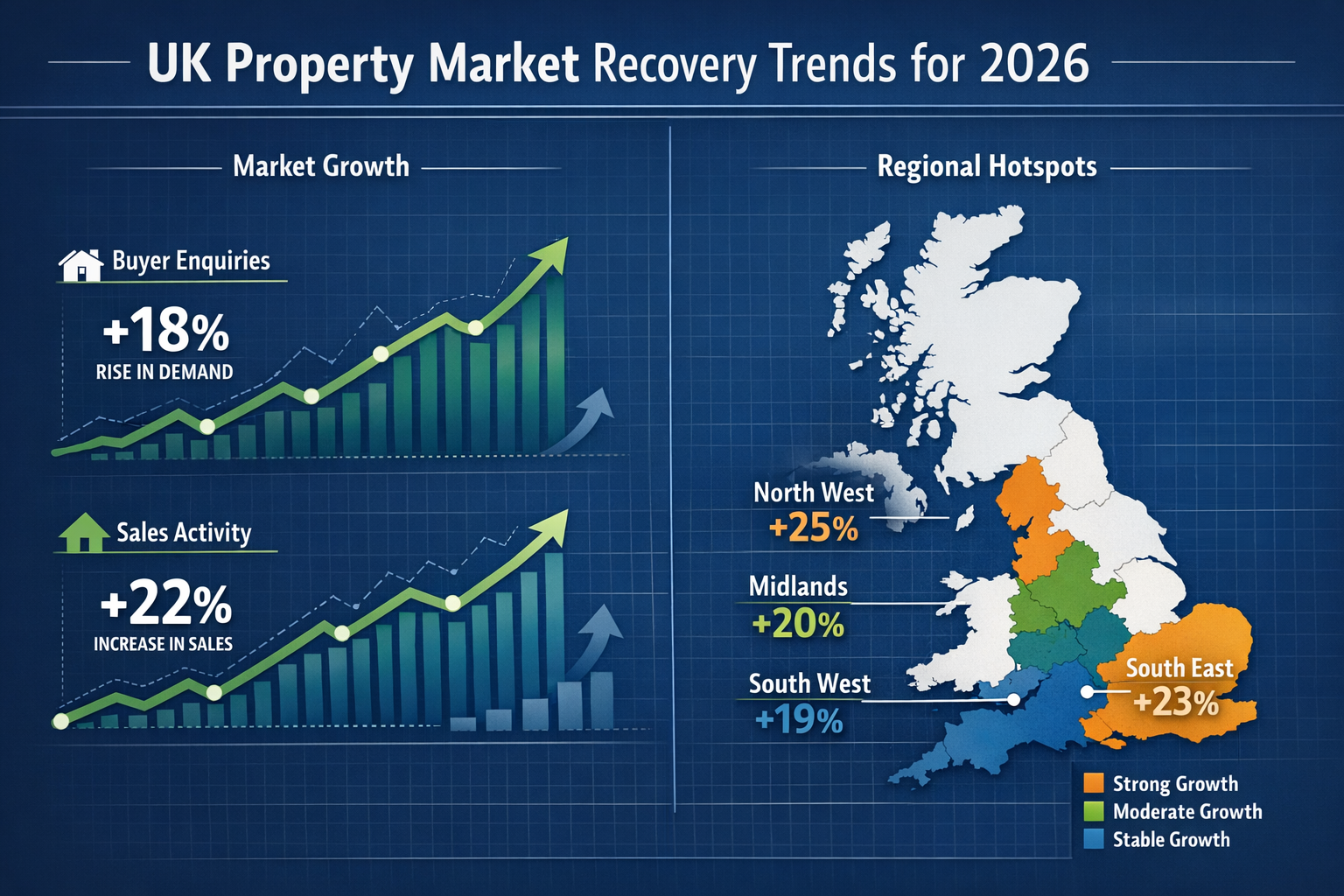
- 📈 Stabilizing buyer enquiries after 18 months of decline
- 🏘️ Increased sales activity in specific regional markets
- 💰 Mortgage availability improving with competitive rates
- 🔍 Heightened buyer scrutiny requiring detailed surveys
- ⚠️ Persistent concerns about property condition and value
For building surveyors, this environment creates both opportunity and responsibility. Buyers entering the market after a period of caution are more diligent than ever, seeking comprehensive assessments that justify their investment decisions. This shift favors thorough structural surveys over basic valuations.
Regional Variations in Market Recovery
The recovery isn't uniform across the UK. London and the Southeast show different patterns compared to Northern regions, while Scotland and Wales present their own unique dynamics. Understanding these regional variations helps surveyors position their services effectively.
Regional recovery patterns:
| Region | Recovery Strength | Key Drivers | Survey Demand |
|---|---|---|---|
| London | Moderate | Return to office, international buyers | High-end comprehensive surveys |
| Southeast | Strong | Commuter appeal, lifestyle migration | Full building surveys, period properties |
| Midlands | Growing | Manufacturing growth, affordability | Standard surveys, new builds |
| North | Emerging | First-time buyers, regeneration | Cost-effective homebuyer reports |
| Scotland | Steady | Stable employment, local demand | Mixed survey types |
This regional diversity means surveyors must adapt their marketing and service offerings to local conditions. A chartered surveyor operating in multiple regions needs different messaging for each market.
Economic Factors Influencing Buyer Behavior
Despite improving confidence, economic headwinds continue to shape buyer decisions in 2026. Construction industry surveys show that 57% of contractors report insufficient worker supply, while tariff impacts have affected 70% of firms[1]. These pressures translate into higher construction costs and longer project timelines.
For property buyers, these economic realities mean:
- Greater emphasis on property condition: Buyers want to avoid unexpected repair costs
- Increased negotiation leverage: Detailed survey findings provide bargaining power
- Long-term value focus: Buyers prioritize properties with minimal defects
- Risk mitigation priority: Comprehensive surveys reduce post-purchase surprises
Building surveyors who understand these buyer motivations can position their services as essential risk management tools rather than optional extras. Explaining how a thorough building survey versus a homebuyer report protects investment helps justify comprehensive assessments.
Building Surveys in the 2026 Market Recovery: Service Positioning Strategies
Expanding Survey Service Offerings
The recovering market demands more than traditional survey formats. Successful practices in 2026 are diversifying their offerings to meet evolving buyer needs and capture additional revenue streams.

High-demand survey services include:
- Comprehensive Building Surveys: Full structural assessments for older properties and significant purchases
- Specialized Defect Reports: Targeted inspections for specific issues like subsidence or damp
- Technology-Enhanced Surveys: Drone roof inspections and thermal imaging assessments
- New Build Snagging: Quality checks for recently completed properties
- Pre-Purchase Consultations: Advisory services helping buyers determine which survey they need
"Buyers in 2026 want certainty and transparency. They're willing to invest in comprehensive surveys that give them confidence in their purchase decision and negotiating position." – Industry Survey Feedback
The construction outlook shows particular strength in data centers (57% net positive reading) and power facilities (34% net positive), while commercial real estate faces challenges with retail dropping to -18% and private offices at -14%[1]. These sector-specific trends create opportunities for surveyors to specialize in emerging property types or focus on residential markets less affected by commercial weakness.
Leveraging Technology for Competitive Advantage
Technology adoption separates leading survey practices from those struggling to compete. Modern buyers expect digital delivery, visual documentation, and interactive reporting that traditional paper surveys cannot provide.
Technology investments delivering ROI:
- 🚁 Drone technology: Safe, cost-effective roof and chimney inspections
- 📱 Mobile survey apps: Real-time data capture and photo documentation
- 🌡️ Thermal imaging: Identifying insulation issues and moisture problems
- 💻 Digital reporting platforms: Interactive reports with clickable photos and videos
- 📊 Client portals: Secure access to survey documents and follow-up support
These technological enhancements don't just improve efficiency—they create marketing differentiators. Buyers researching survey options increasingly favor practices demonstrating modern capabilities and professional presentation.
Pricing Strategies for Market Recovery
Pricing building surveys in a recovering market requires balancing competitive positioning with value recognition. While some buyers remain price-sensitive, most understand that comprehensive surveys protect much larger investments.
Effective pricing approaches:
- Tiered service packages: Basic, standard, and comprehensive options meeting different budgets
- Value-based pricing: Emphasizing cost savings from identifying defects before purchase
- Transparent fee structures: Clear explanations of what's included and why
- Bundle offerings: Combined surveys and specialist reports at package rates
- Flexible payment terms: Deposit and balance arrangements for larger surveys
The key is communicating value rather than competing solely on price. A £800 survey that identifies £15,000 in necessary repairs provides exceptional return on investment—a message that resonates with recovering market buyers.
Building Surveys in the 2026 Market Recovery: Capturing Growth Opportunities
Targeting the Right Buyer Demographics
Different buyer segments have distinct survey needs and decision-making processes. Understanding these demographics helps surveyors tailor marketing messages and service offerings.

Primary buyer segments in 2026:
First-Time Buyers 💑
- Price-conscious but willing to invest in protection
- Often purchasing older properties needing assessment
- Respond to educational content explaining survey importance
- Value clear communication and jargon-free reporting
Upsizers and Families 👨👩👧👦
- Purchasing larger, often older properties
- Concerned about maintenance costs and safety
- Willing to invest in comprehensive surveys
- Appreciate detailed condition assessments
Downsizers and Retirees 👴
- Seeking low-maintenance properties
- Experienced buyers understanding survey value
- Prefer established, reputable survey practices
- Value thoroughness and professional credentials
Investors and Landlords 💼
- Focus on structural integrity and rental viability
- Require detailed defect identification for budgeting
- Often need specialized reports for specific issues
- Appreciate quick turnaround and digital delivery
Each demographic requires different marketing approaches, communication styles, and service emphasis. First-time buyers might need more education about what survey they need, while investors prioritize efficiency and actionable findings.
Marketing and Client Acquisition Strategies
Building Surveys in the 2026 Market Recovery: Capitalizing on Renewed Buyer Confidence demands proactive marketing that reaches buyers at critical decision points.
High-impact marketing channels:
- Digital presence optimization: SEO-focused website content answering buyer questions
- Estate agent partnerships: Referral relationships with local property professionals
- Mortgage broker connections: Recommendations during purchase process
- Online review management: Building reputation through satisfied client testimonials
- Educational content marketing: Blog posts, guides, and videos demonstrating expertise
- Local community engagement: Presence in community groups and property forums
The construction industry faces ongoing challenges, with multifamily construction at pandemic lows (4% net reading) and education segments showing weakness[1]. These sector-specific trends suggest residential survey demand may outpace commercial opportunities, guiding marketing focus accordingly.
Building Strategic Partnerships
Successful survey practices don't operate in isolation. Strategic partnerships create referral networks that generate consistent business flow throughout market cycles.
Valuable partnership opportunities:
- Estate agents: Primary source of buyer referrals
- Mortgage advisors: Trusted recommendations during financing
- Solicitors: Legal professionals advising on survey requirements
- Structural engineers: Collaboration on complex defect assessment
- Specialist contractors: Referrals for repair cost estimates
These relationships require nurturing through regular communication, reliable service delivery, and reciprocal referrals where appropriate. A surveyor who consistently provides thorough, timely reports becomes the preferred recommendation for partners serving the same buyer pool.
Addressing Market Challenges and Client Concerns
Managing Client Expectations in Uncertain Times
While market confidence improves, buyers remain cautious about economic uncertainty, interest rate movements, and property value stability. Building surveyors must acknowledge these concerns while positioning surveys as risk mitigation tools.
Effective client communication strategies:
- ✅ Realistic condition assessments: Avoiding both alarmism and minimization
- ✅ Clear cost implications: Helping buyers understand repair budgets
- ✅ Prioritized recommendations: Distinguishing urgent issues from minor defects
- ✅ Market context: Explaining how findings compare to typical properties
- ✅ Follow-up support: Answering questions after report delivery
The construction outlook shows that at least 63% of firms expect to increase headcount in 2026, but labor availability remains constrained[1]. This reality means buyers face potential delays and higher costs for identified repairs—information surveyors should communicate to help clients plan appropriately.
Navigating Complex Property Issues
The 2026 market includes many properties with deferred maintenance from previous years when owners postponed improvements. Surveyors increasingly encounter complex issues requiring specialist knowledge or additional investigation.
Common complex issues requiring expertise:
- Subsidence and structural movement: Requiring specialized subsidence surveys
- Historic building concerns: Period properties with unique construction methods
- Conversion quality: Properties converted from commercial to residential use
- Environmental hazards: Asbestos, Japanese knotweed, and contamination
- Building regulation compliance: Undocumented alterations and extensions
When encountering issues beyond general survey scope, professional surveyors should recommend specific defect reports or specialist consultations rather than providing uncertain assessments. This approach protects both client and surveyor while demonstrating professional integrity.
Maintaining Professional Standards During Growth
As demand increases, the temptation to rush surveys or overextend capacity can compromise quality. Maintaining professional standards during market recovery protects reputation and ensures long-term success.
Quality maintenance strategies:
- 📋 Consistent survey protocols: Standardized checklists ensuring thoroughness
- ⏰ Realistic scheduling: Adequate time allocation for each property type
- 👥 Capacity management: Strategic hiring or partnership rather than overcommitment
- 📚 Continuing professional development: Staying current with construction methods and regulations
- 🔍 Peer review processes: Quality checks on reports before client delivery
The construction industry faces widespread tariff impacts, with 40% of firms raising bid prices and 35% passing costs to project owners[1]. These market pressures create opportunities for surveyors to provide value by helping buyers understand true property costs and negotiate accordingly.
Future-Proofing Your Survey Practice
Adapting to Evolving Market Conditions
The 2026 recovery remains fragile, with economic concerns persisting despite improving buyer confidence. Survey practices must remain adaptable to changing conditions while building sustainable business models.
Resilience-building strategies:
- Diversified service offerings: Multiple revenue streams beyond basic surveys
- Geographic expansion: Operating across multiple regional markets
- Client relationship development: Repeat business and referrals from satisfied clients
- Financial reserves: Buffer for market fluctuations and investment in growth
- Continuous market monitoring: Tracking trends and adjusting strategy accordingly
While data centers show the strongest confidence with a 57% net positive reading—the highest since measurements began—and power facilities achieve 34% positive sentiment[1], residential property markets remain the core opportunity for most building surveyors. Balancing specialization with diversification creates stability.
Investing in Professional Development
The construction industry evolves continuously, with new materials, methods, and regulations requiring ongoing surveyor education. Practices that prioritize professional development position themselves as trusted experts rather than commodity service providers.
High-value development areas:
- Modern construction methods and materials
- Energy efficiency and sustainability assessment
- Digital survey technologies and reporting platforms
- Client communication and presentation skills
- Business development and marketing capabilities
Professional accreditation and membership in recognized bodies (RICS, RPSA) provide credibility that justifies premium pricing and attracts quality-conscious buyers.
Building a Sustainable Client Base
Long-term success requires moving beyond transactional relationships to building a client base that provides repeat business, referrals, and positive reviews.
Client retention approaches:
- Exceptional service delivery: Exceeding expectations on every survey
- Post-survey support: Answering follow-up questions and providing guidance
- Educational content: Sharing property maintenance advice and market insights
- Periodic check-ins: Staying connected with past clients
- Referral incentives: Rewarding clients who recommend services
A satisfied client who purchases another property in five years or refers three friends provides far more value than a single transaction. Building these relationships creates sustainable growth independent of market fluctuations.
Conclusion
Building Surveys in the 2026 Market Recovery: Capitalizing on Renewed Buyer Confidence represents a significant opportunity for surveying practices willing to adapt, invest, and position themselves strategically. While the recovery shows promising signs—with stabilizing enquiries and increasing sales activity—success requires more than simply waiting for demand to arrive.
The most successful practices in this recovering market will:
- Understand regional variations and tailor services to local buyer demographics
- Leverage technology to deliver modern, comprehensive survey products
- Build strategic partnerships that create consistent referral streams
- Maintain professional standards even as demand increases
- Communicate value effectively to buyers focused on risk mitigation
- Diversify service offerings to capture multiple revenue opportunities
The construction industry data shows mixed sentiment across sectors, with some areas experiencing robust growth while others face continued challenges[1][2]. For building surveyors, this complexity creates opportunities to provide essential guidance helping buyers navigate uncertain markets and make informed decisions.
Next Steps for Survey Practices
Immediate actions to capture recovery opportunities:
- Audit current service offerings: Identify gaps in your survey portfolio
- Invest in technology: Implement at least one new capability (drone, thermal, digital reporting)
- Strengthen partnerships: Schedule meetings with estate agents and mortgage brokers
- Optimize digital presence: Ensure your website answers common buyer questions
- Review pricing strategy: Confirm your fees reflect value and market positioning
- Develop client education materials: Create guides helping buyers understand survey importance
The 2026 market recovery won't wait for unprepared practices. Those who act now to position themselves strategically, deliver exceptional value, and build sustainable client relationships will thrive as buyer confidence continues to strengthen. The opportunity exists—success depends on execution.
For expert guidance on structural surveys, specialized inspections, or determining which survey best meets your needs, professional chartered surveyors provide the expertise and thoroughness essential in today's recovering property market.
References
[1] 2026 Construction Outlook Mixed Trends – https://dailyreporter.com/2026/01/14/2026-construction-outlook-mixed-trends/
[2] 2026 Construction Outlook – https://sips.premierbuildingsystems.com/blog/2026-construction-outlook