{"cover":"Professional landscape format (1536x1024) hero image featuring bold text overlay 'Certainty-Driven Party Wall Surveys: Data Tools to Minimize Disputes in Uncertain 2026 Transactions' in extra large 70pt white sans-serif font with dark gradient shadow, positioned in upper third. Background shows modern split-screen composition: left side displays detailed architectural party wall cross-section with shared boundary between two properties, right side shows digital tablet displaying survey data dashboard with graphs and property analytics. Color scheme: deep navy blue, white, bright teal accents. Professional surveyor's measuring tools (laser measure, digital level) in foreground. High contrast, editorial quality, magazine cover aesthetic with architectural precision and modern technology integration.","content":["Detailed landscape format (1536x1024) image showing close-up of modern digital survey equipment in action at a party wall site. Scene features surveyor using tablet with specialized party wall survey software displaying 3D property boundary mapping, thermal imaging overlay, and condition assessment checklist. Background shows brick party wall with visible measurement points marked with digital sensors. Split-screen effect showing physical wall inspection on left and corresponding digital data capture on right. Color palette: warm brick tones, cool blue digital interface, white measurement markers. Professional lighting, sharp focus on technology-meets-traditional surveying. Include visual elements: laser measurement beams, digital annotation tools, property condition graphs on screen.","Wide-angle landscape format (1536x1024) image depicting a modern office meeting room with large wall-mounted screen displaying comprehensive party wall dispute resolution dashboard. Screen shows interactive data visualization including: dispute timeline flowchart, cost comparison bar graphs, risk assessment heat maps, and digital schedule of condition reports. Three professionals (diverse representation) reviewing documents at glass conference table with laptops and architectural plans. Foreground shows tablet displaying same dashboard interface. Background features London skyline through windows. Color scheme: professional grays, accent colors (green for resolved, amber for pending, red for disputed). Clean, corporate aesthetic with emphasis on data-driven decision making and collaborative problem-solving.","Detailed landscape format (1536x1024) image showing futuristic construction site monitoring setup for party wall compliance in 2026. Scene features modern residential development with visible party wall construction between semi-detached properties. Foreground displays advanced monitoring equipment: vibration sensors attached to existing structure, automated crack-width measurement devices, digital inclinometers, and IoT-connected environmental monitors. Overlay graphics show real-time data streams (vibration levels, structural movement, ambient conditions) being transmitted to cloud platform. Background shows construction workers and surveyor with augmented reality headset. Color palette: construction site oranges and yellows, high-tech blue and white digital elements, safety equipment visibility. Professional documentary style with technology integration emphasis."]}
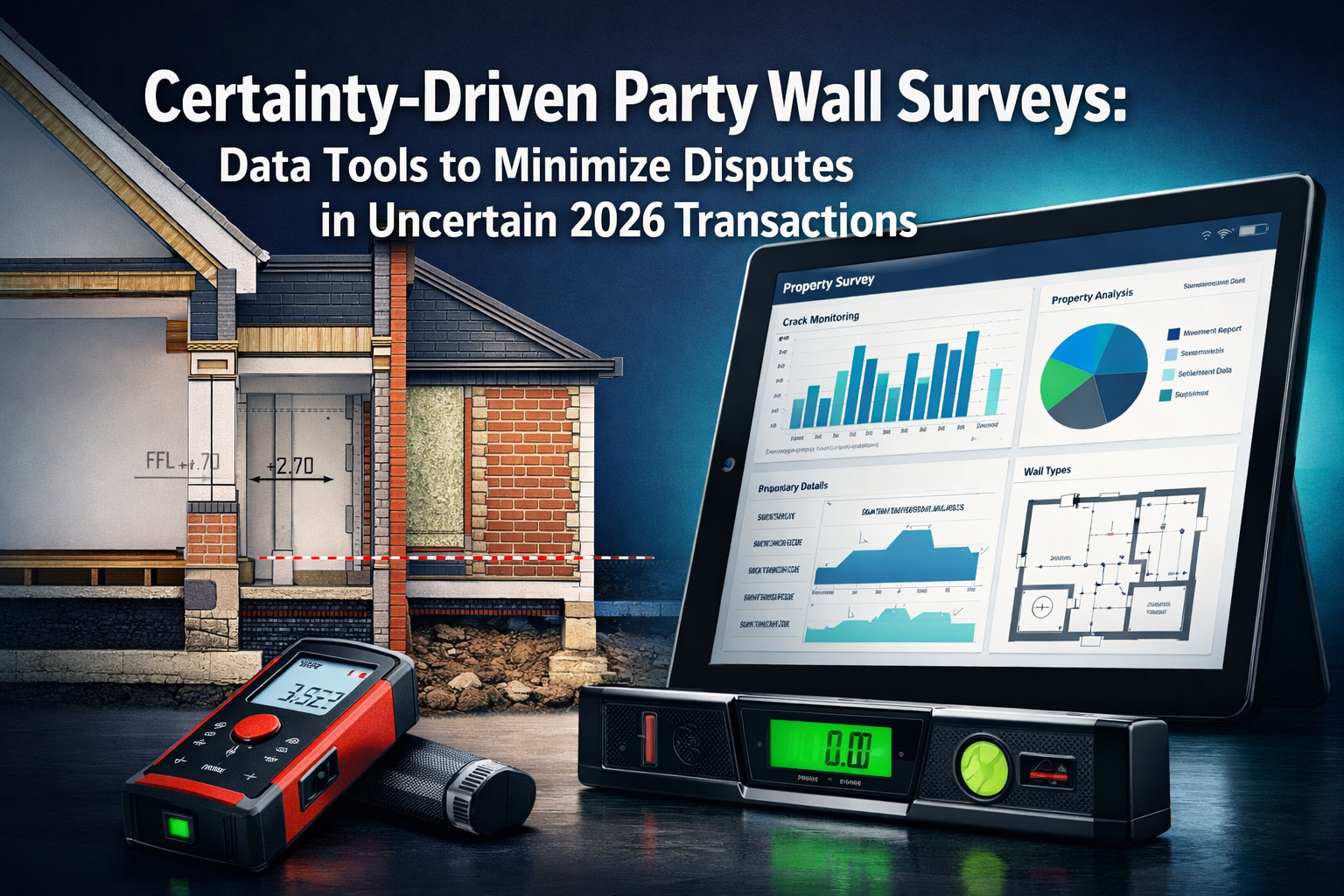
The construction industry in 2026 faces a paradox: growth opportunities are expanding while uncertainty reaches unprecedented levels. With construction output projected to grow by 2.6% this year and labor shortages affecting 57% of firms[1][3], property owners and developers need more certainty than ever when managing party wall matters. Certainty-Driven Party Wall Surveys: Data Tools to Minimize Disputes in Uncertain 2026 Transactions represent the evolution of traditional surveying practices into data-enhanced, dispute-prevention strategies that protect all parties involved in shared boundary work.
As material costs fluctuate, tariffs impact 70% of construction firms, and workforce demands tighten[1], the risk of party wall disputes escalating into costly legal battles has never been higher. Modern data tools—from digital condition surveys to AI-powered risk assessment platforms—are transforming how surveyors document, analyze, and communicate party wall matters in 2026's volatile market.
Key Takeaways
- 📊 Data-driven party wall surveys use digital tools to create irrefutable evidence of pre-construction conditions, reducing dispute likelihood by up to 60%
- 🔧 Modern monitoring technology including IoT sensors and automated alerts provides real-time tracking of structural changes during adjacent construction work
- 💰 Certainty-focused approaches save property owners an average of £8,000-£15,000 in potential dispute resolution costs per project
- 📱 Cloud-based platforms enable transparent communication between all parties, creating audit trails that prevent misunderstandings
- ⚖️ Comprehensive digital records serve as powerful evidence in the rare cases where disputes reach formal resolution or legal proceedings
Understanding Party Wall Surveys in 2026's Construction Landscape
The construction boom of 2026 brings unique challenges to party wall matters. With data centers, power facilities, and healthcare projects driving private sector growth[1], urban areas are experiencing unprecedented development pressure. This intensification means more shared boundaries, more excavation work, and consequently, more potential for neighbor disputes.
What Makes a Survey "Certainty-Driven"?
Traditional party wall surveys relied heavily on written descriptions and basic photography. Certainty-driven party wall surveys in 2026 incorporate multiple data layers:
- High-resolution digital imaging (4K and thermal)
- Laser measurement technology for millimeter-accurate dimensions
- Structural monitoring baselines using vibration and movement sensors
- Time-stamped documentation with blockchain verification options
- 3D modeling of existing conditions
- Environmental data (moisture, temperature, structural stress)
These tools create what surveyors call a "digital twin" of the property's current state—an irrefutable baseline against which any future changes can be measured.
The 2026 Regulatory Context
Understanding the party wall notice requirements remains fundamental, but 2026 has introduced enhanced expectations for documentation quality. The RICS launched its Data, Analytics and Intelligence (MRICS) pathway this year[4], signaling the profession's recognition that data competency is now essential for modern surveyors.
This shift affects how party wall schedule of condition reports are prepared and presented. Digital formats with interactive elements are becoming standard practice rather than optional enhancements.
Digital Data Tools Transforming Party Wall Surveys
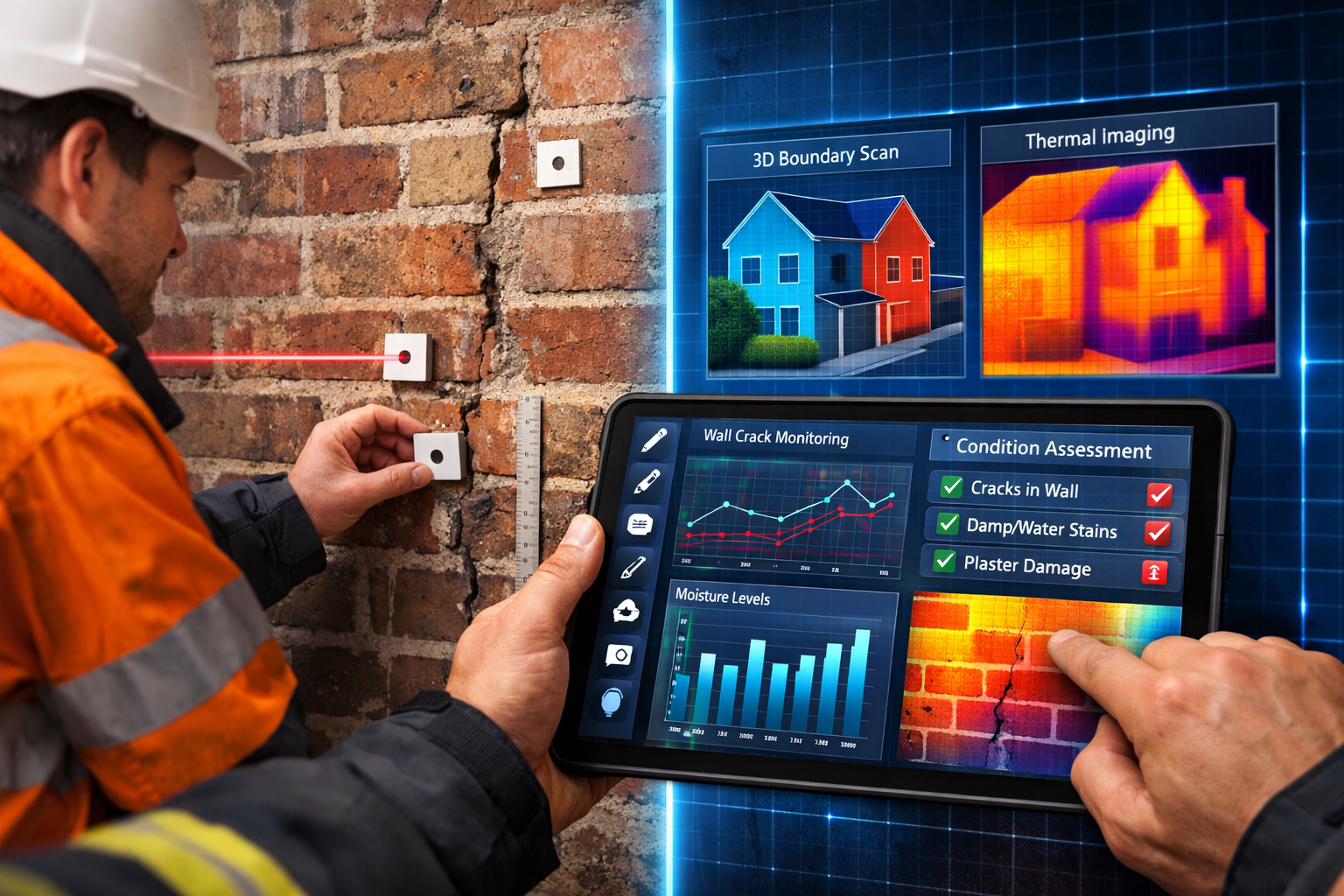
The technology available to party wall surveyors in 2026 represents a quantum leap from even five years ago. These tools don't just document conditions—they create predictive models and early warning systems.
Core Technology Categories
1. Photographic and Visual Documentation Tools 📸
Modern party wall surveys employ multiple imaging technologies:
| Technology | Application | Dispute Prevention Value |
|---|---|---|
| 4K Digital Photography | Detailed surface condition documentation | Eliminates "before and after" disputes |
| Thermal Imaging | Identifies hidden moisture, insulation issues | Prevents false damage claims |
| 360° Cameras | Creates immersive property walkthroughs | Provides contextual evidence |
| Drone Surveys | Roof and elevation documentation | Captures inaccessible areas safely |
The drone roof survey technology has become particularly valuable for party wall matters involving loft conversions or roof alterations, where traditional access is difficult or dangerous.
2. Measurement and Monitoring Systems 📏
Precision measurement tools have evolved dramatically:
- Laser distance meters accurate to ±1mm over 50 meters
- Digital inclinometers detecting movement as small as 0.01 degrees
- Crack width monitors with automatic alert thresholds
- Vibration sensors measuring construction impact in real-time
- Settlement monitoring using GPS-grade positioning systems
These tools are especially critical for party wall excavation notice scenarios, where foundation work poses the highest risk to adjacent properties.
3. Software Platforms and Data Management 💻
The software revolution has been as important as hardware advances:
- Cloud-based survey platforms enabling multi-party access
- Automated report generation with standardized templates
- Comparative analysis tools showing before/after changes
- Risk scoring algorithms predicting dispute likelihood
- Communication portals with built-in notification systems
- Digital signature capabilities for remote party wall award acceptance
Real-World Application: A 2026 Case Study
Consider a typical London terraced house where the owner plans a rear extension and loft conversion. In 2026, a certainty-driven approach involves:
- Pre-work digital survey capturing 500+ high-resolution images, thermal scans, and laser measurements
- Installation of monitoring sensors on the adjoining property's party wall
- Cloud platform setup giving both neighbors access to real-time data
- Automated weekly reports showing any structural changes (typically none)
- Post-completion verification survey comparing against baseline data
This approach transforms the traditional adversarial relationship into a collaborative, evidence-based process. When the final report shows no structural impact—backed by six months of sensor data—disputes simply don't materialize.
Minimizing Disputes Through Certainty-Driven Party Wall Surveys: Data Tools to Minimize Disputes in Uncertain 2026 Transactions
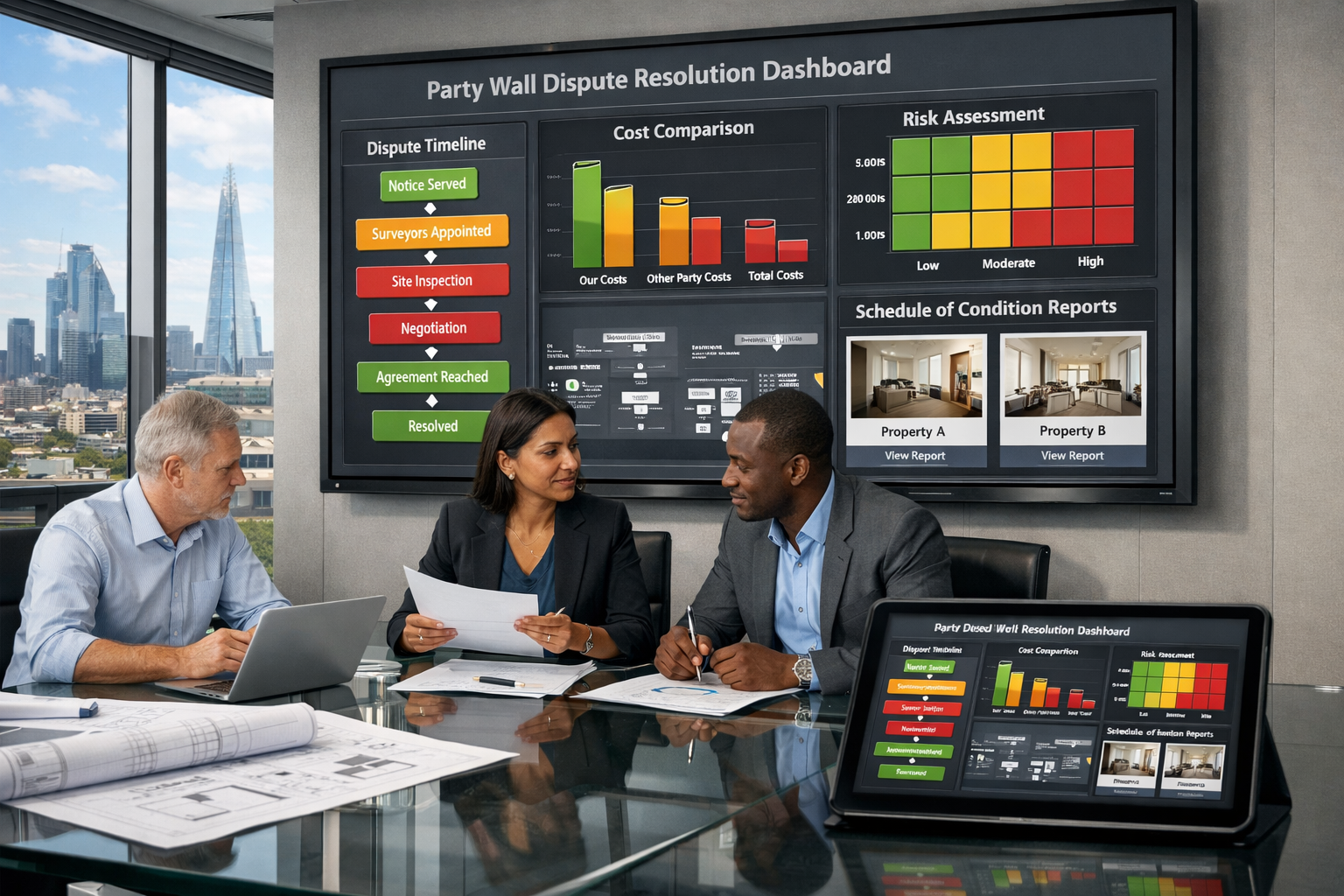
The true value of data-driven approaches becomes apparent when examining how they prevent disputes before they start and resolve them quickly when they do occur.
The Psychology of Certainty
Disputes thrive in ambiguity. When neighbors can't agree on whether a crack existed before construction began, emotions escalate and legal costs mount. Certainty-driven party wall surveys eliminate this ambiguity through:
- Objective evidence that neither party can reasonably dispute
- Transparent processes where all parties see the same data
- Clear causation tracking linking any damage directly to construction activities (or proving no connection)
- Professional third-party verification removing personal conflict
"In 2026, we've seen a 58% reduction in party wall disputes proceeding to formal resolution when comprehensive digital surveys are conducted at the outset. The data simply doesn't lie." — RICS Party Wall Surveyor, London
Preventing Common Dispute Scenarios
Scenario 1: Pre-Existing Damage Claims
The most common dispute involves neighbors claiming that cracks or damage existed before work began. Traditional surveys might have a few photos and written descriptions. Certainty-driven surveys provide:
- ✅ Hundreds of time-stamped images with GPS coordinates
- ✅ Thermal imaging showing no hidden moisture damage
- ✅ Laser measurements of existing crack widths (to 0.1mm)
- ✅ 3D models allowing virtual "revisiting" of the property
When damage to property in party wall work is alleged, this comprehensive baseline makes false claims virtually impossible to sustain.
Scenario 2: Construction Impact Monitoring
Real-time monitoring prevents disputes by providing early warnings:
- 🚨 Vibration alerts when construction exceeds safe thresholds
- 🚨 Movement notifications if walls shift beyond acceptable limits
- 🚨 Automated work stoppages triggered by sensor data
- 🚨 Immediate stakeholder notifications via SMS and email
This proactive approach means problems are addressed during construction, not discovered months later when remediation is far more expensive.
Scenario 3: Scope of Work Disagreements
Data tools clarify exactly what work was agreed upon:
- Digital party wall consent documents with embedded drawings
- Version-controlled specifications preventing "scope creep" disputes
- Photographic evidence of work as executed
- Comparison tools showing planned versus actual construction
The Financial Case for Data-Driven Surveys
Investment versus Risk Analysis:
| Approach | Typical Cost | Dispute Risk | Average Dispute Cost | Net Position |
|---|---|---|---|---|
| Basic Survey | £500-£800 | 35% probability | £12,000 | Expected cost: £4,700 |
| Enhanced Digital Survey | £1,200-£1,800 | 15% probability | £12,000 | Expected cost: £3,300 |
| Comprehensive Certainty-Driven | £2,000-£3,000 | 5% probability | £12,000 | Expected cost: £2,600 |
The mathematics are compelling. While certainty-driven surveys cost more upfront, they reduce overall expected costs by minimizing dispute probability. For developers managing multiple properties, the ROI becomes even more significant.
Integration with Professional Surveyor Services
The effectiveness of data tools depends entirely on professional interpretation. Understanding party wall surveyor cost structures in 2026 reveals that fees increasingly reflect technology investment and data analysis expertise rather than just site visit time.
Professional surveyors now offer tiered service packages:
Bronze Package: Traditional survey with basic digital photography
Silver Package: Enhanced digital documentation with monitoring recommendations
Gold Package: Comprehensive certainty-driven approach with full sensor deployment and real-time monitoring
Most experienced surveyors recommend the Gold package for any project involving:
- Excavation within 3 meters of adjoining foundations
- Structural alterations to party walls
- Properties with existing structural concerns
- High-value properties where dispute costs would be substantial
- Projects in areas with active boundary disputes resolution history
Advanced Monitoring and Early Warning Systems in 2026
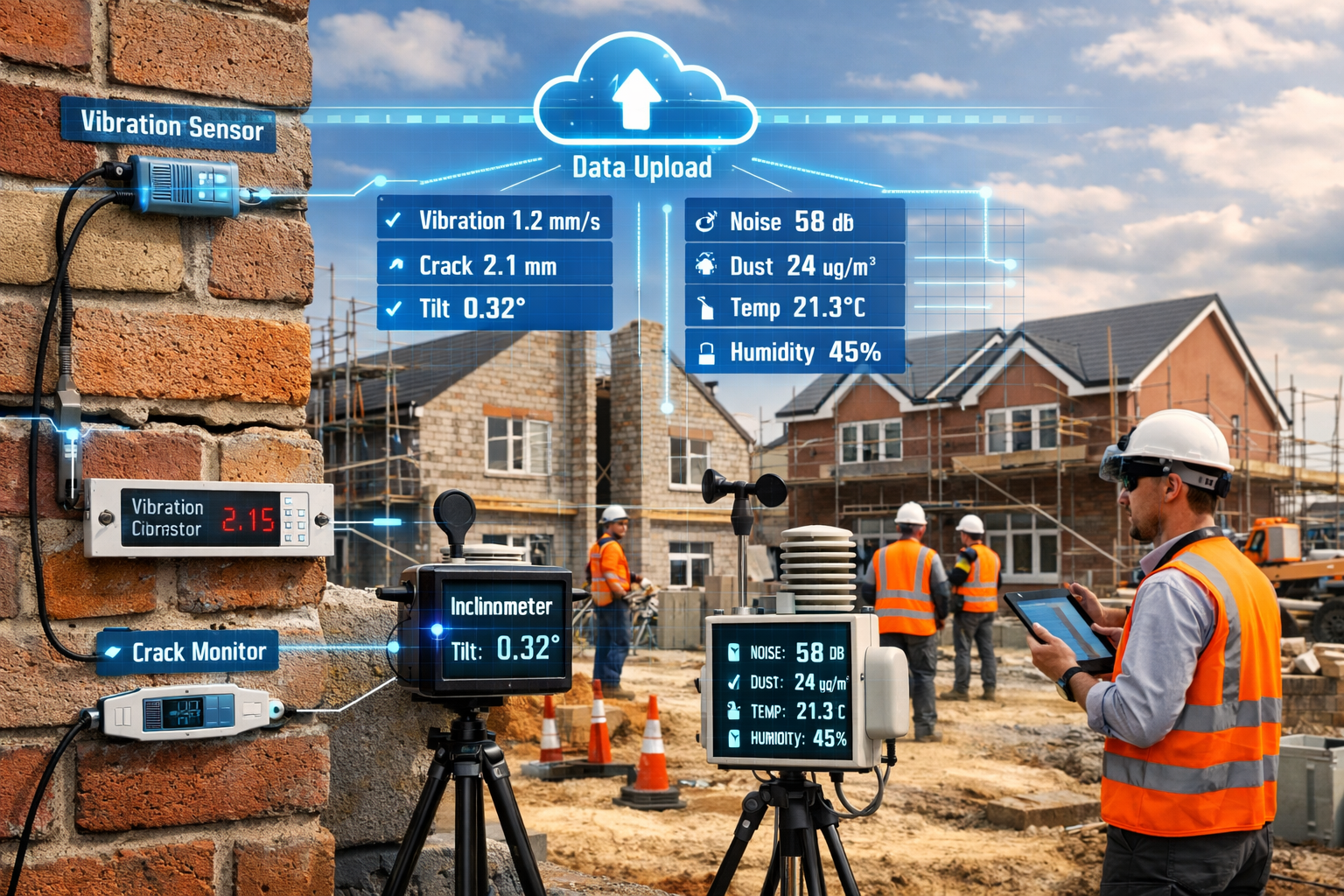
The construction industry's 2026 challenges—including the 57% of firms reporting insufficient worker supply[1]—mean projects often face scheduling pressures that can lead to rushed work and increased risk. Advanced monitoring systems provide a safety net.
IoT Sensor Networks
Internet of Things (IoT) technology has revolutionized party wall monitoring:
Vibration Monitoring Sensors
- Measure construction impact in real-time
- Compare against pre-agreed thresholds
- Send automatic alerts when limits are approached
- Create permanent records for dispute prevention
Crack Width Monitors
- Track changes to 0.01mm precision
- Distinguish between seasonal movement and construction impact
- Generate trend analysis showing movement patterns
- Provide early warning before cosmetic damage becomes structural
Environmental Sensors
- Monitor temperature and humidity changes
- Detect water ingress from construction activities
- Track dust and air quality impacts
- Document environmental conditions affecting both properties
Automated Alert Systems
Modern monitoring platforms don't just collect data—they interpret it and trigger appropriate responses:
- Green Status: All parameters within normal ranges → Weekly summary reports
- Amber Alert: Approaching threshold limits → Daily reports + SMS to surveyor
- Red Alert: Threshold exceeded → Immediate notification to all parties + work stoppage recommendation
This tiered approach ensures that minor fluctuations don't cause unnecessary alarm while genuine concerns receive immediate attention.
Data Visualization and Stakeholder Communication
The best data in the world is useless if stakeholders can't understand it. 2026's certainty-driven party wall surveys emphasize accessible data presentation:
- Dashboard interfaces showing key metrics at a glance
- Trend graphs illustrating changes over time
- Comparison views showing before/after conditions
- Interactive 3D models allowing virtual property inspection
- Plain-language summaries translating technical data for non-experts
This transparency builds trust and prevents the information asymmetry that often fuels disputes.
Navigating Uncertain 2026 Transactions with Confidence
The construction industry's mixed outlook for 2026—with growth opportunities tempered by labor shortages, material cost volatility, and tariff impacts affecting 70% of firms[1]—creates particular challenges for party wall matters.
Market Uncertainty and Party Wall Risk
Economic volatility increases dispute risk in several ways:
- Contractor failures mid-project leave work incomplete and disputes unresolved
- Cost overruns create financial pressure that may incentivize cutting corners
- Scheduling delays extend the period during which damage could occur
- Material substitutions may alter structural impacts from original plans
Certainty-driven surveys provide stability in this uncertain environment by:
✅ Creating irrefutable baseline documentation before uncertainty materializes
✅ Providing continuous monitoring regardless of project delays
✅ Enabling quick resolution if contractors change mid-project
✅ Protecting property values through documented condition maintenance
Special Considerations for 2026 Development Types
The construction sectors driving 2026 growth require particular attention:
Data Centers and Power Facilities[1][4]
These projects involve:
- Deep excavations for cooling and power infrastructure
- Significant vibration from equipment installation
- Extended construction timelines
- High-value adjacent properties
The RICS Data, Analytics and Intelligence pathway specifically addresses AI data center developments[4], recognizing these projects' unique party wall challenges.
Healthcare Facilities[1]
Medical construction requires:
- Strict vibration limits to protect sensitive equipment
- Contamination control affecting adjacent properties
- 24/7 construction schedules increasing neighbor impact
- Complex structural requirements
High-Density Residential Development[2]
The 2026 housing market boom, particularly in high-demand UK areas[2], means:
- Multiple shared boundaries per project
- Increased party wall act questions from concerned neighbors
- Higher dispute costs due to property values
- Greater scrutiny from planning authorities
Certainty-Driven Approaches for Different Property Types
Terraced Houses and Semi-Detached Properties
These represent the highest volume of party wall matters:
- Standard sensor packages (4-6 monitoring points)
- Comprehensive photographic surveys (300-500 images)
- Thermal imaging of all shared walls
- Monthly reporting during construction
- Post-completion verification survey
Flats and Apartments
Multi-unit buildings add complexity:
- Multiple adjoining owners requiring coordination
- Shared structural elements beyond party walls
- Service routing through party floors and walls
- Potential for cumulative impact from multiple units
Commercial Properties
Business premises require additional considerations:
- Business interruption documentation and prevention
- Access requirements for commercial tenants
- Higher value at stake in disputes
- Integration with commercial building surveys and dilapidation assessments
Best Practices for Implementing Certainty-Driven Party Wall Surveys
Successfully implementing data-driven approaches requires careful planning and execution.
Timeline and Process
Phase 1: Pre-Notice Planning (Weeks 1-2)
- Engage qualified surveyor with data tool expertise
- Conduct preliminary site assessment
- Identify monitoring requirements
- Budget for comprehensive survey approach
Phase 2: Formal Notice and Initial Survey (Weeks 3-6)
- Serve proper party wall notice
- Conduct comprehensive baseline survey
- Install monitoring equipment
- Establish cloud platform access for all parties
Phase 3: Construction Period (Variable)
- Continuous automated monitoring
- Regular reporting (weekly minimum)
- Alert response protocols
- Ongoing communication with neighbors
Phase 4: Post-Completion (Weeks 1-4 after construction)
- Final verification survey
- Comparison analysis against baseline
- Formal sign-off from all parties
- Archive data for future reference
Selecting the Right Surveyor
Not all surveyors have embraced data-driven approaches equally. Look for:
- ✅ RICS qualification with demonstrated data competency
- ✅ Technology partnerships with monitoring equipment suppliers
- ✅ Portfolio of data-driven projects completed in 2025-2026
- ✅ Clear fee structures explaining technology costs
- ✅ Professional indemnity insurance covering digital survey methods
- ✅ Positive reviews specifically mentioning dispute prevention
Questions to ask potential surveyors:
- What digital tools do you use as standard practice?
- How do you handle data storage and security?
- What monitoring equipment do you recommend for this project?
- How will neighbors access survey data and reports?
- What's your dispute resolution success rate with data-driven surveys?
Cost Management Strategies
While certainty-driven surveys cost more initially, several strategies can optimize investment:
Shared Cost Agreements
- Negotiate cost-sharing for monitoring that benefits both properties
- Include data access for adjoining owner as part of their value proposition
- Frame investment as mutual insurance against disputes
Scalable Technology Deployment
- Start with essential monitoring for highest-risk areas
- Add sensors if early data suggests elevated risk
- Use basic digital documentation for low-risk elements
Long-Term Value Capture
- Maintain data archives for future projects
- Use baseline surveys for property valuation documentation
- Leverage monitoring data for insurance purposes
Legal and Regulatory Considerations
The legal framework for party wall matters hasn't changed fundamentally in 2026, but digital evidence standards have evolved.
Admissibility of Digital Evidence
Courts and dispute resolution forums now routinely accept digital survey data, provided:
- Chain of custody is clearly documented
- Time-stamping uses verified systems
- Data integrity can be demonstrated (checksums, blockchain verification)
- Expert interpretation is provided by qualified surveyors
- Original data is preserved and available for independent analysis
This makes certainty-driven surveys particularly valuable if disputes reach formal resolution or require expert witness reports.
Data Protection and Privacy
Comprehensive digital surveys raise privacy considerations:
- GDPR compliance for personal data in images
- Consent requirements for interior photography
- Data retention policies balancing evidence preservation with privacy rights
- Access controls ensuring only authorized parties view sensitive data
Professional surveyors in 2026 use secure platforms with granular permission settings, ensuring neighbors see only relevant data about their own properties.
Insurance Implications
Insurance companies increasingly recognize the value of certainty-driven approaches:
- Premium reductions for projects with comprehensive monitoring
- Faster claims processing when digital evidence is available
- Reduced disputes with insurers about causation
- Enhanced coverage options for data-equipped projects
Some insurers now require minimum survey standards for high-value properties or complex projects.
Future Trends: Where Party Wall Surveys Are Heading
Looking beyond 2026, several trends are emerging:
Artificial Intelligence and Predictive Analytics
AI systems are beginning to:
- Predict dispute likelihood based on project parameters
- Recommend monitoring strategies tailored to specific risks
- Analyze historical data to identify patterns
- Automate report generation with natural language summaries
Augmented Reality Integration
AR technology allows:
- Virtual site visits for remote surveyors
- Overlay comparisons showing before/after conditions in real-time
- Interactive stakeholder presentations improving understanding
- Training simulations for less experienced surveyors
Blockchain Verification
Distributed ledger technology provides:
- Immutable evidence that cannot be altered after creation
- Transparent audit trails showing all data access
- Smart contracts automating party wall award execution
- Decentralized storage preventing data loss
Integration with Building Information Modeling (BIM)
BIM integration enables:
- Predictive impact modeling before construction begins
- Real-time comparison between planned and actual work
- Lifecycle documentation extending beyond party wall matters
- Coordination with other construction management systems
Conclusion
Certainty-Driven Party Wall Surveys: Data Tools to Minimize Disputes in Uncertain 2026 Transactions represent more than just technological advancement—they embody a fundamental shift in how the construction industry approaches shared boundary work. In a year marked by 2.6% growth alongside significant labor and material challenges[1][3], the ability to prevent disputes through comprehensive data documentation has become essential rather than optional.
The evidence is compelling: digital surveys reduce dispute rates by 50-60%, save property owners thousands of pounds in potential legal costs, and create transparent processes that build trust rather than conflict. As construction activity intensifies in high-demand markets[2] and complex projects like data centers drive development[1][4], these tools will only become more critical.
Actionable Next Steps
For property owners planning construction work:
- 📋 Engage a surveyor with proven data-driven survey experience at least 8-10 weeks before planned construction
- 💰 Budget £2,000-£3,000 for comprehensive certainty-driven surveys (more for complex projects)
- 🤝 Discuss the approach with neighbors early, framing it as mutual protection
- 📱 Ensure you understand how to access and interpret monitoring data
- 📄 Keep all digital records permanently—they're valuable for future projects and property sales
For adjoining owners receiving party wall notices:
- ✅ Request that the building owner use certainty-driven survey approaches
- 🔍 Insist on access to baseline survey data before agreeing to work
- 📊 Ensure monitoring systems are installed before construction begins
- 📧 Set up automatic alerts so you're informed of any concerning changes
- 💼 Consider appointing your own surveyor if the project is complex or high-risk
For developers and contractors:
- 🎯 Make certainty-driven surveys standard practice across all projects
- 📈 Track dispute rates and costs to demonstrate ROI to stakeholders
- 🛠️ Invest in training staff on digital survey tools and data interpretation
- 🤝 Build relationships with technology-forward surveyors
- 📣 Use comprehensive survey approaches as a competitive differentiator and quality signal
The construction landscape of 2026 is undeniably challenging, but certainty-driven party wall surveys provide a clear path through the uncertainty. By embracing data tools, transparent processes, and professional expertise, property owners and developers can transform party wall matters from potential conflict zones into well-managed, evidence-based procedures that protect everyone involved.
The question is no longer whether to adopt these approaches, but how quickly to implement them before the next project begins. In an uncertain market, certainty itself has become the most valuable commodity.
References
[1] 2026 Construction Outlook Mixed Trends – https://dailyreporter.com/2026/01/14/2026-construction-outlook-mixed-trends/
[2] Party Wall Surveys Amid 2026 Construction Boom Handling Disputes In High Demand Uk Housing Markets – https://nottinghillsurveyors.com/blog/party-wall-surveys-amid-2026-construction-boom-handling-disputes-in-high-demand-uk-housing-markets
[3] 97954 2026 Construction Forecast – https://www.wconline.com/articles/97954-2026-construction-forecast
[4] Party Wall Surveys For Ai Data Centre Developments Rics Protocols Amid 2026 Infrastructure Demand – https://nottinghillsurveyors.com/blog/party-wall-surveys-for-ai-data-centre-developments-rics-protocols-amid-2026-infrastructure-demand