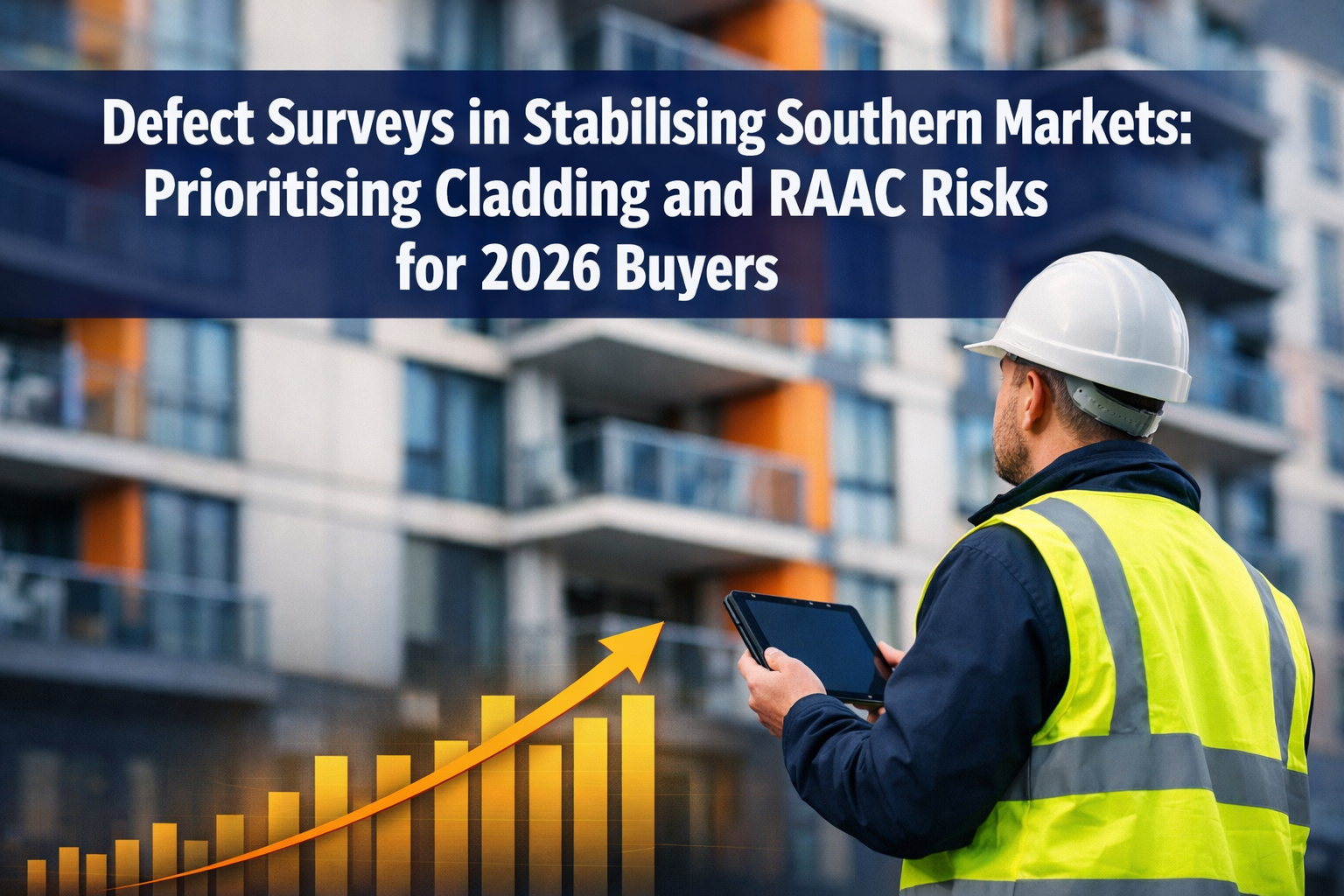
The Southern England property market is showing signs of recovery in 2026, with prices stabilising after years of uncertainty. Yet beneath this improving landscape lurks a critical challenge that every buyer must address: hidden structural defects that could turn a dream purchase into a financial nightmare. For buyers navigating Defect Surveys in Stabilising Southern Markets: Prioritising Cladding and RAAC Risks for 2026 Buyers, understanding these persistent threats has never been more important.
As London, the South East, and South West regions experience modest price growth, the flatter market conditions of recent years have created opportunities—but also exposed properties with serious defects that sellers may be eager to offload. Two particular risks dominate the landscape: dangerous cladding systems and crumbling RAAC (Reinforced Autoclaved Aerated Concrete). Both pose significant safety and financial implications that standard surveys might miss.
Key Takeaways
- 🏗️ RAAC removal is accelerating: 62 schools have been cleared of RAAC as of September 2025, with government targets to eliminate it from all schools by 2029 and NHS facilities by 2035[1]
- 🔥 Cladding remains a critical risk: Thousands of residential buildings across Southern England still contain combustible cladding materials requiring remediation
- 📊 Southern markets are recovering: Property prices in London and surrounding regions are stabilising and showing upward movement, creating both opportunities and risks for buyers
- 🔍 Specialist defect surveys are essential: Standard homebuyer reports may not identify RAAC or cladding issues—targeted inspections are crucial for properties built between 1960-1990s
- ⏰ Time-barred liability means buyer responsibility: Most RAAC defects fall outside liability periods, meaning remediation costs typically fall on current owners rather than original builders[1]
Understanding Critical Defects: RAAC and Cladding Risks in 2026
What is RAAC and Why Does It Matter?
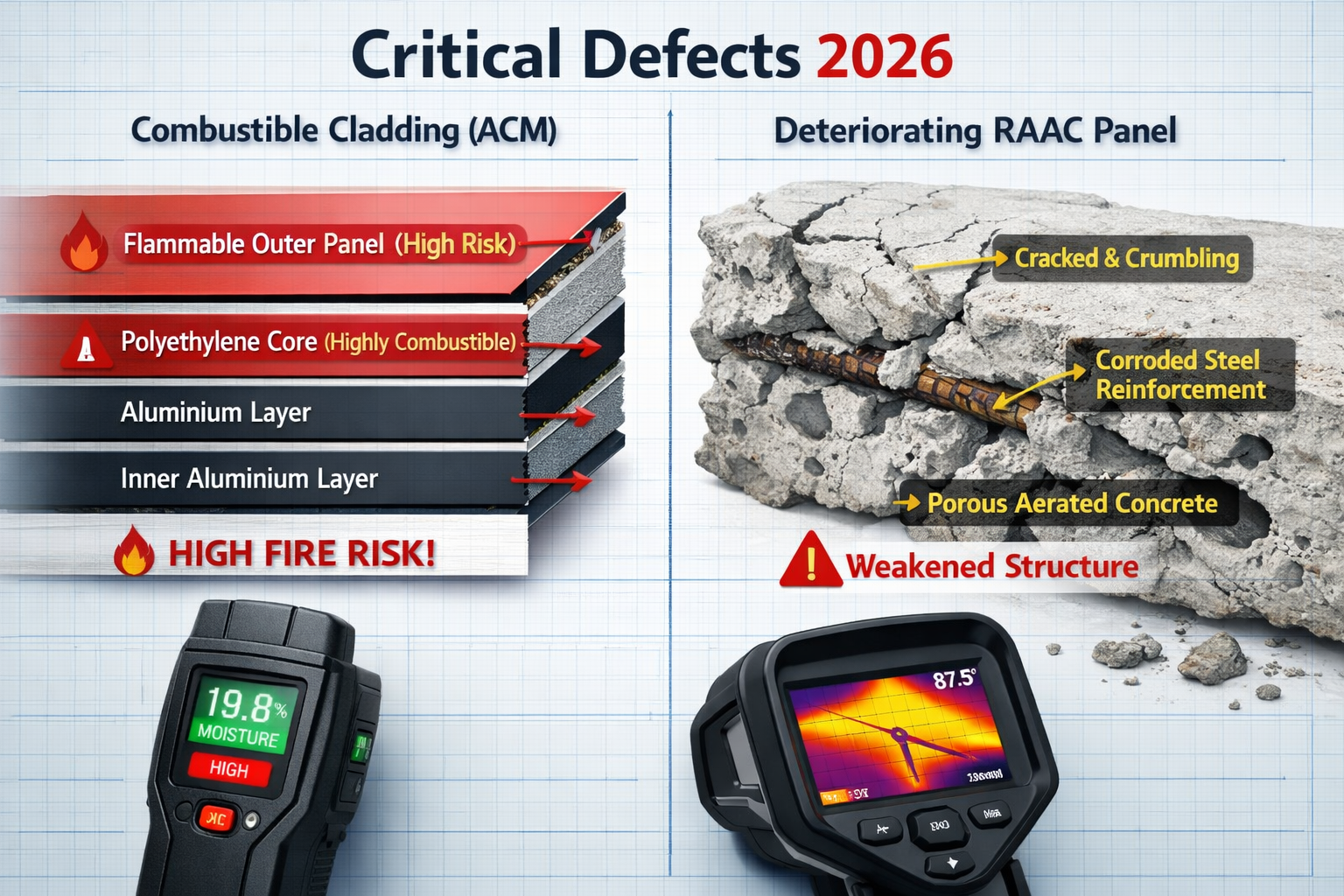
Reinforced Autoclaved Aerated Concrete (RAAC) represents one of the most significant structural risks facing property buyers in 2026. This lightweight concrete material was widely used in construction between the 1960s and mid-1990s, particularly for roof planks, floor panels, and wall panels in residential blocks, schools, hospitals, and commercial buildings.
The problem? RAAC has a limited lifespan of approximately 30 years, and much of the material installed decades ago is now reaching critical failure points. Unlike traditional concrete, RAAC is porous and prone to moisture ingress, which accelerates deterioration and can lead to sudden, catastrophic collapse.
According to recent government data, RAAC has been permanently removed from 62 schools as of September 2025, with over 42,000 pupils now learning in RAAC-free classrooms[1]. Seven additional NHS hospitals have also eradicated RAAC, supported by up to £440 million in funding, with 12 more hospitals on track to complete removals by March 2026[1].
For residential buyers, the challenge is clear: properties built during the RAAC era require specialist inspection to identify this hidden threat. The RICS (Royal Institution of Chartered Surveyors) has issued specific guidance for surveyors on identifying RAAC, emphasizing the need for visual inspection of roof spaces and structural elements[2].
The Ongoing Cladding Crisis
While RAAC poses structural collapse risks, dangerous cladding presents fire safety concerns that have dominated headlines since the Grenfell Tower tragedy. Thousands of residential buildings across Southern England—particularly in London, Brighton, and other urban centers—still contain combustible cladding materials such as:
- Aluminium Composite Material (ACM) panels with polyethylene cores
- High-Pressure Laminate (HPL) cladding systems
- Expanded polystyrene insulation
- Timber-based rainscreen systems
The financial implications are severe. Buildings with dangerous cladding often face:
- Plummeting property values (sometimes 50% or more)
- Unmortgageable status until remediation is complete
- Waking watch costs (24-hour fire patrols) averaging £10,000-£40,000 annually per building
- Service charge increases to fund interim safety measures
- Remediation bills ranging from £20,000 to £100,000+ per flat
For buyers considering flats in buildings over 11 metres tall, a specific defect report focusing on external wall systems is absolutely essential before proceeding with purchase.
Why These Defects Are Critical in Stabilising Markets
As Southern property markets recover from recent stagnation, sellers with defect-laden properties may be more motivated to sell—sometimes without full disclosure. The improving market conditions create a false sense of security, where buyers may assume that rising prices indicate quality stock.
The reality is different. Properties with RAAC or cladding issues often appear on the market at seemingly attractive prices, representing "value" in an appreciating market. However, these apparent bargains can become financial traps, with remediation costs far exceeding any initial savings.
Defect Surveys in Stabilising Southern Markets: Market Context for 2026
Southern England Property Market Recovery
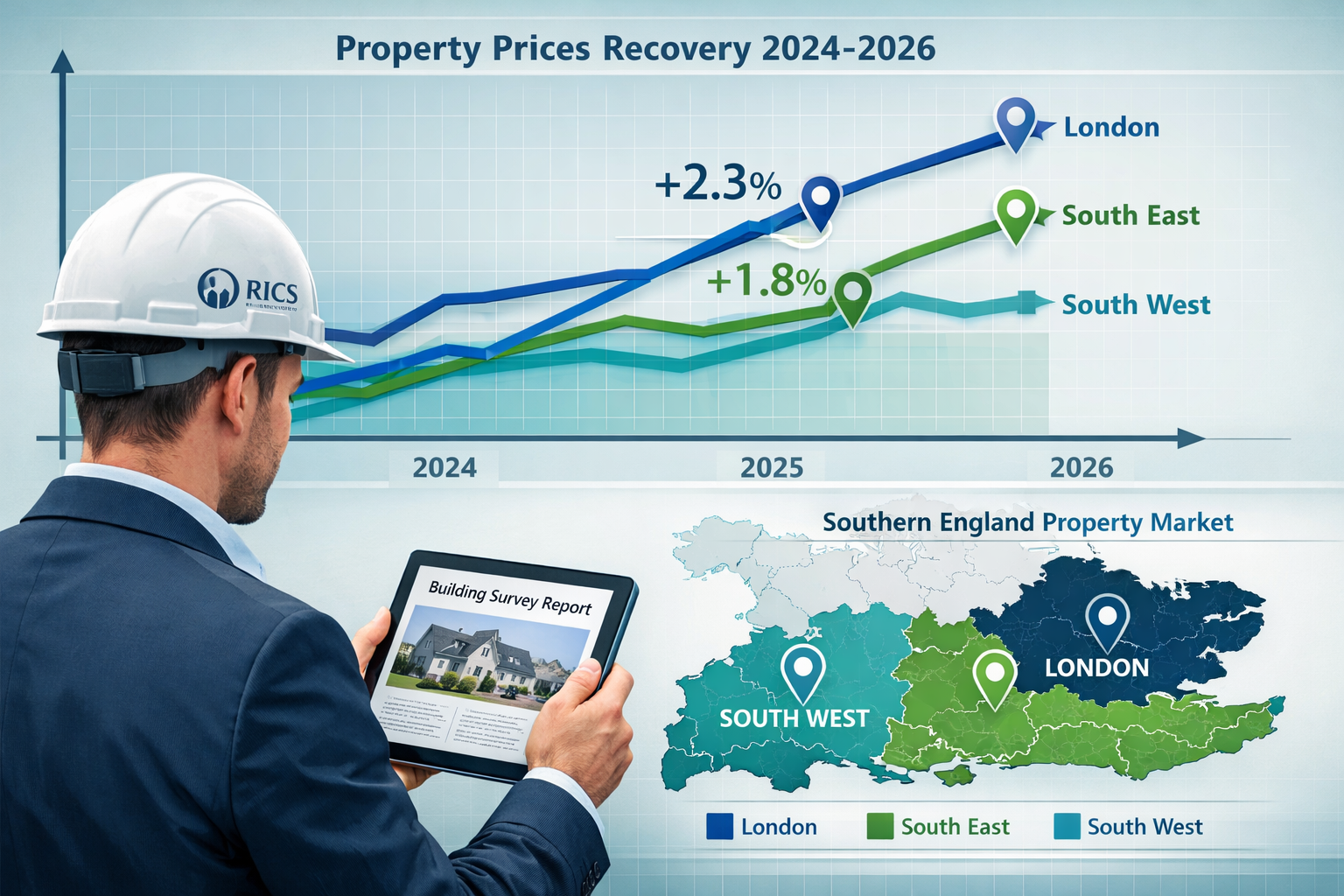
The property markets across London, the South East, and South West are experiencing a cautious recovery in 2026 after several years of price corrections and market uncertainty. Several factors are driving this stabilisation:
Economic Factors:
- Interest rates showing signs of stabilization after peak levels
- Inflation moderating to more manageable levels
- Employment remaining relatively robust in Southern regions
- Pent-up demand from buyers who delayed purchases during uncertain periods
Regional Performance:
- London: Prices stabilising with modest growth in outer boroughs; prime central London showing resilience
- South East: Commuter belt areas benefiting from hybrid working patterns; towns with good rail links outperforming
- South West: Continued demand for lifestyle relocations supporting prices in coastal and rural areas
This recovery creates a double-edged sword for buyers. On one hand, purchasing in a stabilising market offers better long-term prospects than buying at peak prices. On the other hand, the improving sentiment may lead to rushed decisions and inadequate due diligence—precisely when defect surveys become most critical.
Why Defect Surveys Matter More in Recovering Markets
In a flatter or declining market, properties with serious defects often languish unsold, making them easier to identify and avoid. However, in recovering markets, several dynamics increase risk:
- Faster transaction speeds: Buyers fear missing out as prices rise, leading to compressed timelines and rushed surveys
- Increased competition: Multiple offers may pressure buyers to waive conditions or accept limited inspection periods
- Seller leverage: Improving markets give sellers more negotiating power to resist price reductions for defects
- Hidden problem properties: Owners who couldn't sell defect-laden properties during downturns re-enter the market as conditions improve
For buyers navigating Defect Surveys in Stabilising Southern Markets: Prioritising Cladding and RAAC Risks for 2026 Buyers, the message is clear: due diligence becomes more important, not less, as markets recover.
Properties at Highest Risk
Certain property types and construction periods carry elevated RAAC and cladding risks:
High-Risk Property Profiles:
| Property Type | Risk Factors | Recommended Survey Type |
|---|---|---|
| Flats in blocks over 11m | Cladding, fire safety, shared remediation costs | Full building survey + cladding inspection |
| 1960s-1990s construction | RAAC in roofs, floors, walls | Structural survey with RAAC assessment |
| Ex-local authority blocks | Both RAAC and cladding common | Comprehensive defect survey |
| Purpose-built student accommodation | Often contains RAAC; cladding risks | Specialist structural inspection |
| 1970s-1980s schools converted to residential | High RAAC probability | Detailed structural survey |
Buyers considering properties in these categories should engage chartered surveyors in London or surrounding regions with specific expertise in identifying these defects.
Implementing Effective Defect Survey Protocols for 2026 Purchases
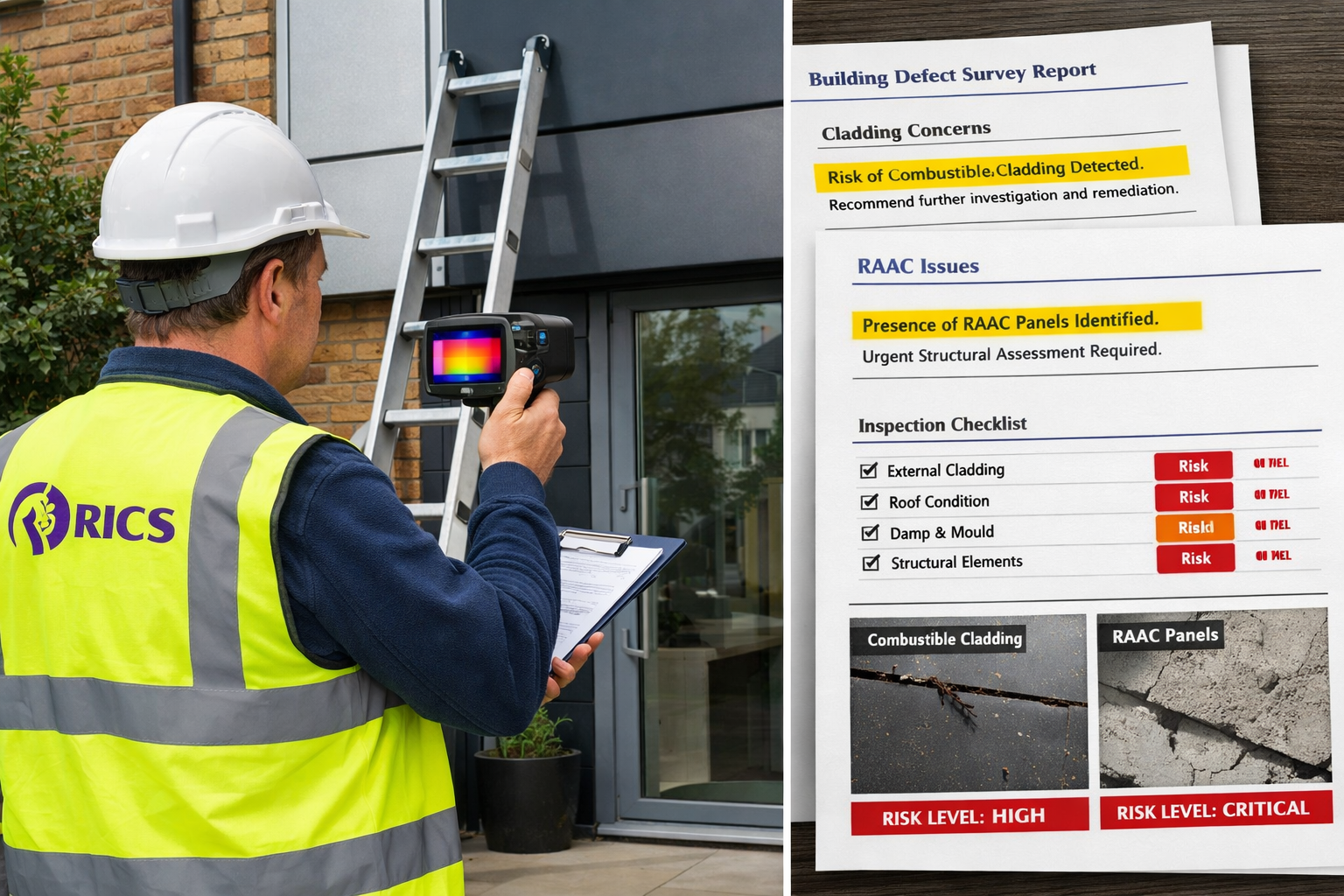
Choosing the Right Survey Type
Not all property surveys are created equal when it comes to identifying RAAC and cladding risks. Understanding the differences is crucial:
Standard Survey Options:
- Basic Valuation: Conducted for mortgage purposes only; does NOT identify defects—avoid relying on this alone
- Homebuyer Report (Level 2): Provides overview of property condition but may miss specialist defects like RAAC
- Building Survey (Level 3): Most comprehensive standard survey; includes detailed structural assessment
For properties at risk of RAAC or cladding issues, buyers should consider the homebuyer report vs building survey options carefully, typically opting for the more thorough Level 3 survey.
Specialist Defect Surveys:
For targeted investigation of specific concerns, specialist surveys offer focused expertise:
- Specific Defect Report: Targeted investigation of suspected RAAC, cladding, or other particular defects
- Structural Survey: Detailed analysis of building structure, ideal for RAAC detection
- Cladding and External Wall Assessment: Specialist inspection of external wall systems, fire safety compliance
- Drone Roof Survey: For inaccessible roof areas where RAAC planks may be present
Key Questions to Ask Your Surveyor
When engaging a surveyor for a property in Southern markets, buyers should specifically request:
✅ RAAC-Specific Questions:
- "Does this property fall within the RAAC construction period (1960s-1990s)?"
- "Can you access roof spaces and ceiling voids to inspect for RAAC planks?"
- "Are you familiar with RICS guidance on RAAC identification?"
- "Will your report specifically address RAAC presence or absence?"
✅ Cladding-Specific Questions:
- "What external wall system does this building use?"
- "Does the cladding contain combustible materials?"
- "Is an EWS1 (External Wall System) form available for this building?"
- "What fire safety measures are currently in place?"
✅ General Defect Questions:
- "What is your experience with properties of this construction type and age?"
- "Will you provide a detailed photographic record of concerns?"
- "Can you recommend specialist consultants if further investigation is needed?"
Understanding Survey Limitations
Even the most comprehensive survey has limitations that buyers must understand:
Access Restrictions: Surveyors cannot remove fixed structures, lift carpets, or move furniture—hidden defects may remain undetected
Non-Invasive Nature: Standard surveys are visual inspections; they don't include destructive testing or laboratory analysis
Scope Boundaries: Unless specifically instructed, surveyors may not inspect neighboring properties, common areas in detail, or external grounds
Professional Judgment: Survey conclusions represent professional opinion based on visible evidence, not guarantees
For properties where RAAC or cladding is suspected but not confirmed, buyers should consider making the purchase conditional on satisfactory specialist testing, or negotiate a retention of funds to cover potential remediation.
The Importance of Location-Specific Expertise
Southern England encompasses diverse property types and construction methods. Engaging surveyors with local knowledge provides significant advantages:
- South West London surveyors understand the prevalence of 1960s-1970s estate developments where RAAC is common
- South East specialists recognize coastal property challenges and specific construction methods used in commuter developments
- London-focused practices have extensive experience with high-rise cladding issues and ex-local authority conversions
When selecting a surveyor, prioritize those with demonstrable experience in the specific location and property type you're considering.
Remediation Timelines and Government Support
Understanding the remediation landscape helps buyers assess whether to proceed with a defective property:
Government Remediation Targets:
- Schools: All RAAC removed by 2029[1]
- NHS facilities: Complete RAAC elimination by 2035[1]
- Residential cladding: Building Safety Fund and Developer Remediation Contract supporting remediation, though timelines vary significantly
Liability and Funding Challenges:
Most RAAC-related defects are time-barred from original liability claims. Construction liability periods typically run for 6-15 years, meaning RAAC installed between the 1960s and 1990s falls well outside these windows[1]. This creates a critical issue: remediation costs typically fall on current owners rather than original builders or developers.
For residential cladding, government funding schemes exist but have strict eligibility criteria:
- Building Safety Fund: Covers buildings 11-18 metres with qualifying leaseholders
- Developer Remediation Contract: Commits major developers to fix buildings they constructed
- Leaseholder protections: Caps on remediation costs for qualifying leaseholders
Buyers must thoroughly investigate whether a property qualifies for any remediation support before committing to purchase.
Negotiating with Defect Knowledge
Armed with a comprehensive defect survey, buyers have several negotiation options:
Price Reduction: Request a reduction equivalent to estimated remediation costs plus a risk premium
Retention: Agree purchase price but retain funds in escrow until defects are remediated
Seller Remediation: Require the seller to complete remediation before completion (rare in seller's markets)
Walk Away: Sometimes the best decision is to decline the purchase and seek a defect-free property
In the context of Defect Surveys in Stabilising Southern Markets: Prioritising Cladding and RAAC Risks for 2026 Buyers, buyers should remember that improving market conditions don't eliminate defect risks—they may actually increase the importance of thorough due diligence and firm negotiating positions.
Additional Considerations for 2026 Buyers
Insurance and Mortgage Implications
Properties with known RAAC or cladding defects face significant challenges:
Mortgage Availability: Many lenders refuse to provide mortgages on properties with:
- Confirmed RAAC presence without remediation plan
- Combustible cladding without EWS1 certification
- Buildings without adequate fire safety measures
Insurance Costs: Buildings insurance premiums can increase dramatically or become unavailable for defective properties
Future Saleability: Even if you can purchase with cash, future buyers will face the same mortgage restrictions, severely limiting your exit options
Service Charge and Leasehold Considerations
For leasehold properties, defects create additional complications:
- Service charge increases: Remediation costs are typically passed to leaseholders through service charges
- Section 20 consultations: Major works require formal consultation, but costs may still be substantial
- Freeholder cooperation: Remediation requires freeholder action; uncooperative freeholders can delay or prevent necessary works
- Collective action: Leaseholders may need to organize collectively to force remediation
Before purchasing a leasehold property, buyers should:
- Review the last three years of service charge accounts
- Request details of any planned major works
- Obtain building safety documentation
- Check for ongoing disputes or litigation related to defects
Future Regulatory Changes
The building safety landscape continues to evolve in 2026:
- Building Safety Act implementation: Ongoing regulatory changes affecting high-rise residential buildings
- Stricter EWS requirements: Potential expansion of external wall assessment requirements
- Enhanced leaseholder protections: Continuing development of caps and protections for qualifying leaseholders
- RAAC identification requirements: Possible mandatory RAAC surveys for certain property types
Buyers should stay informed about regulatory developments and consider how future changes might affect their property's value and obligations.
Professional Support Network
Navigating complex defect issues requires a team of professionals:
Essential Team Members:
- Chartered surveyor: For comprehensive property assessment
- Specialist structural engineer: For detailed RAAC or structural investigations
- Fire safety consultant: For cladding and fire safety evaluation
- Conveyancing solicitor: Experienced in defect-related transactions
- Independent financial advisor: To assess affordability including potential remediation costs
For buyers uncertain about what survey they need, consulting with experienced professionals early in the property search process can save significant time and money.
Conclusion
Defect Surveys in Stabilising Southern Markets: Prioritising Cladding and RAAC Risks for 2026 Buyers represents more than just a prudent precaution—it's an essential component of responsible property purchasing in the current landscape. As London, the South East, and South West property markets show signs of recovery, the temptation to rush into purchases or compromise on due diligence grows stronger. Yet this is precisely when comprehensive defect surveys become most critical.
The twin threats of RAAC and dangerous cladding continue to affect thousands of properties across Southern England. With government remediation programs progressing but far from complete—62 schools cleared but thousands of residential buildings still affected—buyers face a complex risk landscape. The time-barred nature of most RAAC liability claims means remediation costs will fall squarely on property owners, making pre-purchase identification absolutely essential[1].
Actionable Next Steps for 2026 Buyers
-
Identify Risk Profile: Determine whether your target property falls into high-risk categories (1960s-1990s construction, high-rise blocks, ex-local authority)
-
Engage Specialist Surveyors: Don't rely on basic valuations; commission a comprehensive structural survey or specific defect report from experienced professionals
-
Request Building Documentation: Ask sellers for EWS1 forms, building safety certificates, service charge histories, and any correspondence about RAAC or cladding
-
Investigate Remediation Status: If defects are present, determine eligibility for government funding, developer remediation programs, or leaseholder protections
-
Model Financial Scenarios: Calculate total ownership costs including potential remediation, increased service charges, insurance, and impact on future saleability
-
Negotiate Appropriately: Use survey findings to negotiate price reductions, retentions, or seller remediation—or walk away if risks are unacceptable
-
Secure Specialist Legal Advice: Ensure your conveyancing solicitor has experience with defect-related transactions and can properly protect your interests
The stabilising Southern property markets of 2026 offer genuine opportunities for buyers who approach purchases with eyes wide open. Comprehensive defect surveys aren't obstacles to successful transactions—they're the foundation for informed decisions that protect your financial future. By prioritising RAAC and cladding risk assessment, buyers can navigate these recovering markets with confidence, avoiding the hidden pitfalls that could turn a dream home into a financial nightmare.
References
[1] Reinforced Autoclaved Aerated Concrete Raac – https://www.brownejacobson.com/insights/2026-horizon-scanning-in-construction/reinforced-autoclaved-aerated-concrete-raac
[2] Raac Advice And Faqs – https://www.rics.org/news-insights/current-topics-campaigns/raac-advice-and-faqs