

The courtroom falls silent as the expert witness presents their valuation evidence. But unlike previous years, this testimony isn't built solely on printed comparables and static reports. In 2026, Digital Tools in Expert Witness Valuations: Leveraging RICS Apps for 2026 Market Recovery Evidence represents a fundamental shift in how property professionals prepare and present their cases. As transaction volumes recover and disputes multiply, surveyors equipped with real-time data platforms are transforming the credibility and persuasiveness of expert testimony.
The property market's stabilization in 2026 has brought renewed activity—and with it, increased litigation over valuations, mortgage disputes, and property disagreements. Expert witnesses now face heightened scrutiny from legal teams armed with their own data analytics. The Royal Institution of Chartered Surveyors (RICS) recognizes that "Data and AI will dramatically change how we access information, how valuers compile their reports…and how members of the public / lenders will instruct valuers" [2]. This technological revolution demands that expert witness professionals adapt their methodologies to maintain authority and relevance in increasingly data-driven proceedings.

Key Takeaways
- Real-time data integration through RICS-aligned digital platforms enhances the credibility and defensibility of expert witness valuations in 2026 court proceedings
- Mobile applications enable surveyors to access comparable evidence, market recovery indicators, and regulatory compliance tools instantly during case preparation
- Standardized digital workflows reduce preparation time while improving the consistency and transparency of valuation methodologies for legal scrutiny
- AI-assisted analysis tools help expert witnesses identify relevant market trends and transaction patterns that support their testimony in dispute resolution
- Cloud-based collaboration platforms facilitate seamless communication between legal teams and valuation experts throughout case development
Understanding Digital Tools in Expert Witness Valuations for 2026
The Evolution of Expert Witness Technology
The landscape of property valuation testimony has transformed dramatically. Traditional expert witness work relied heavily on manual research, printed comparable evidence, and static reports prepared weeks before court appearances. This approach often left witnesses vulnerable to cross-examination when opposing counsel presented more current market data.
In 2026, digital tools in expert witness valuations provide unprecedented access to real-time market intelligence. These platforms integrate multiple data sources—Land Registry transactions, mortgage lending statistics, rental market indicators, and economic forecasts—into cohesive analytical frameworks. The result is testimony grounded in current market conditions rather than historical snapshots.
Key advantages of digital platforms include:
- ⚡ Instant data updates reflecting market recovery trends as they emerge
- 📊 Automated comparable analysis with filtering for relevant property characteristics
- 🔒 Audit trails documenting every data source and methodology step
- 📱 Mobile accessibility enabling on-site verification and court preparation
- 🤝 Collaborative features connecting valuers with legal teams in real-time
RICS Standards and Digital Compliance
The RICS Register of Accredited Expert Witnesses maintains rigorous standards for professional conduct and competence [1]. While these standards don't mandate specific technologies, they emphasize the importance of using appropriate methods and maintaining current market knowledge. Digital tools help expert witnesses meet these obligations more effectively.
RICS registered valuers must demonstrate that their methodologies align with the Red Book valuation standards [3]. Modern digital platforms embed these standards into their workflows, providing prompts and checklists that ensure compliance. This integration reduces the risk of procedural errors that could undermine testimony credibility.
Compliance features in modern valuation apps:
| Feature | Benefit | RICS Alignment |
|---|---|---|
| Standards checklist | Ensures all required steps completed | Red Book compliance |
| Data source verification | Documents evidence provenance | Professional transparency |
| Methodology templates | Standardizes approach across cases | Consistency requirements |
| Assumption logging | Records all valuation assumptions | Disclosure obligations |
| Report generation | Automates compliant formatting | Presentation standards |
Market Recovery Context for 2026 Valuations
The 2026 property market presents unique challenges for expert witnesses. Following years of volatility driven by interest rate fluctuations and economic uncertainty, transaction volumes are recovering but remain sensitive to external shocks. This environment demands that valuers demonstrate sophisticated understanding of market dynamics.
Digital tools excel at capturing these nuances. Rather than relying on crude averages or outdated comparables, modern platforms analyze transaction patterns across multiple timeframes. They identify whether price movements reflect genuine market sentiment or temporary distortions. This granular analysis proves invaluable when disputes hinge on whether a particular valuation date captured a representative market snapshot.
Leveraging RICS Apps for 2026 Market Recovery Evidence
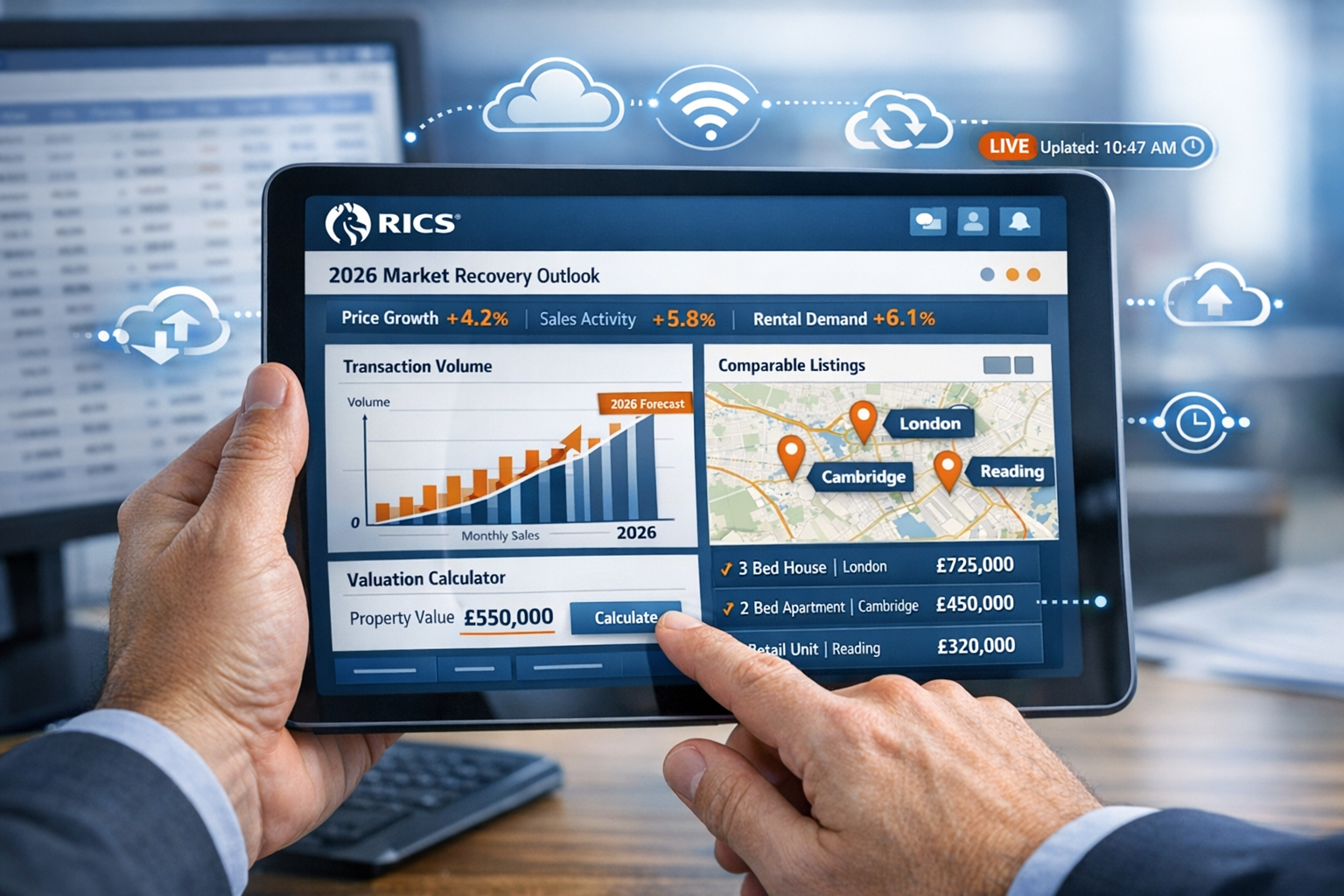
Real-Time Data Integration Platforms
The cornerstone of Digital Tools in Expert Witness Valuations: Leveraging RICS Apps for 2026 Market Recovery Evidence lies in platforms that aggregate and analyze market data continuously. These systems monitor Land Registry filings, mortgage approvals, rental listings, and economic indicators, updating their databases as new information becomes available.
For expert witnesses, this capability transforms case preparation. When instructed on a retrospective valuation matter, surveyors can instantly access transaction data from the relevant valuation date and compare it with subsequent market movements. This temporal analysis helps establish whether the disputed valuation reflected market conditions accurately or contained errors.
Practical applications include:
- Comparable selection: Filtering thousands of transactions to identify genuinely comparable properties based on location, size, condition, and timing
- Market trend analysis: Visualizing price movements across different property segments to contextualize individual valuations
- Volatility assessment: Quantifying market uncertainty during specific periods to explain valuation ranges
- Recovery tracking: Demonstrating how market conditions have evolved since the valuation date, supporting or challenging original conclusions
Mobile Applications for Field Verification
Expert witness work increasingly requires on-site inspections and verification visits. Mobile applications extend digital capabilities beyond the office, enabling surveyors to capture evidence, access data, and document findings while physically present at disputed properties.
Modern RICS-aligned apps provide comprehensive field functionality. Surveyors can photograph properties with automatic geolocation tagging, record voice notes describing conditions, and instantly compare the subject property with nearby comparables using map-based interfaces. This immediate access to context strengthens the connection between physical observations and valuation conclusions.
The property valuation process benefits particularly from mobile integration during dispute resolution. When opposing parties question specific property characteristics or comparable selections, expert witnesses can reference their field documentation, complete with timestamps and location verification, to substantiate their testimony.
AI-Assisted Analysis and Pattern Recognition
Artificial intelligence tools are revolutionizing how expert witnesses identify relevant market evidence. Machine learning algorithms can analyze thousands of transactions to detect patterns that human reviewers might miss. These systems excel at recognizing subtle correlations between property characteristics and market values.
For 2026 market recovery evidence, AI tools prove particularly valuable in distinguishing genuine recovery signals from temporary fluctuations. By analyzing transaction volumes, price distributions, time-on-market statistics, and buyer demographics simultaneously, these platforms provide multidimensional market assessments that strengthen expert testimony.
AI capabilities supporting expert witness work:
- 🎯 Anomaly detection: Identifying unusual transactions that might skew comparable analysis
- 📈 Predictive modeling: Forecasting market trajectories based on current recovery indicators
- 🔍 Characteristic weighting: Determining which property features most significantly impact value in specific market segments
- 🧮 Adjustment calculation: Suggesting appropriate adjustments between comparable properties and subjects
"Data and AI will dramatically change how we access information, how valuers compile their reports…and how members of the public / lenders will instruct valuers." — RICS Valuation Professional Group [2]
Cloud-Based Collaboration Tools
Expert witness engagements involve extensive coordination with solicitors, barristers, and other professionals. Cloud-based platforms facilitate this collaboration by creating shared workspaces where all parties can access valuation data, review draft reports, and exchange comments without endless email chains.
These platforms maintain version control and access logs, creating transparent audit trails that document the evolution of expert opinions. When legal teams request revisions or additional analysis, the cloud environment preserves the original work while clearly marking subsequent changes. This transparency proves crucial during cross-examination when opposing counsel attempts to suggest that expert opinions have shifted opportunistically.
For cases involving divorce valuations or other sensitive matters, cloud platforms offer secure sharing with granular permission controls. Expert witnesses can provide access to specific data sets or report sections without exposing confidential information unnecessarily.
Building Court-Ready Cases with Digital Evidence in 2026
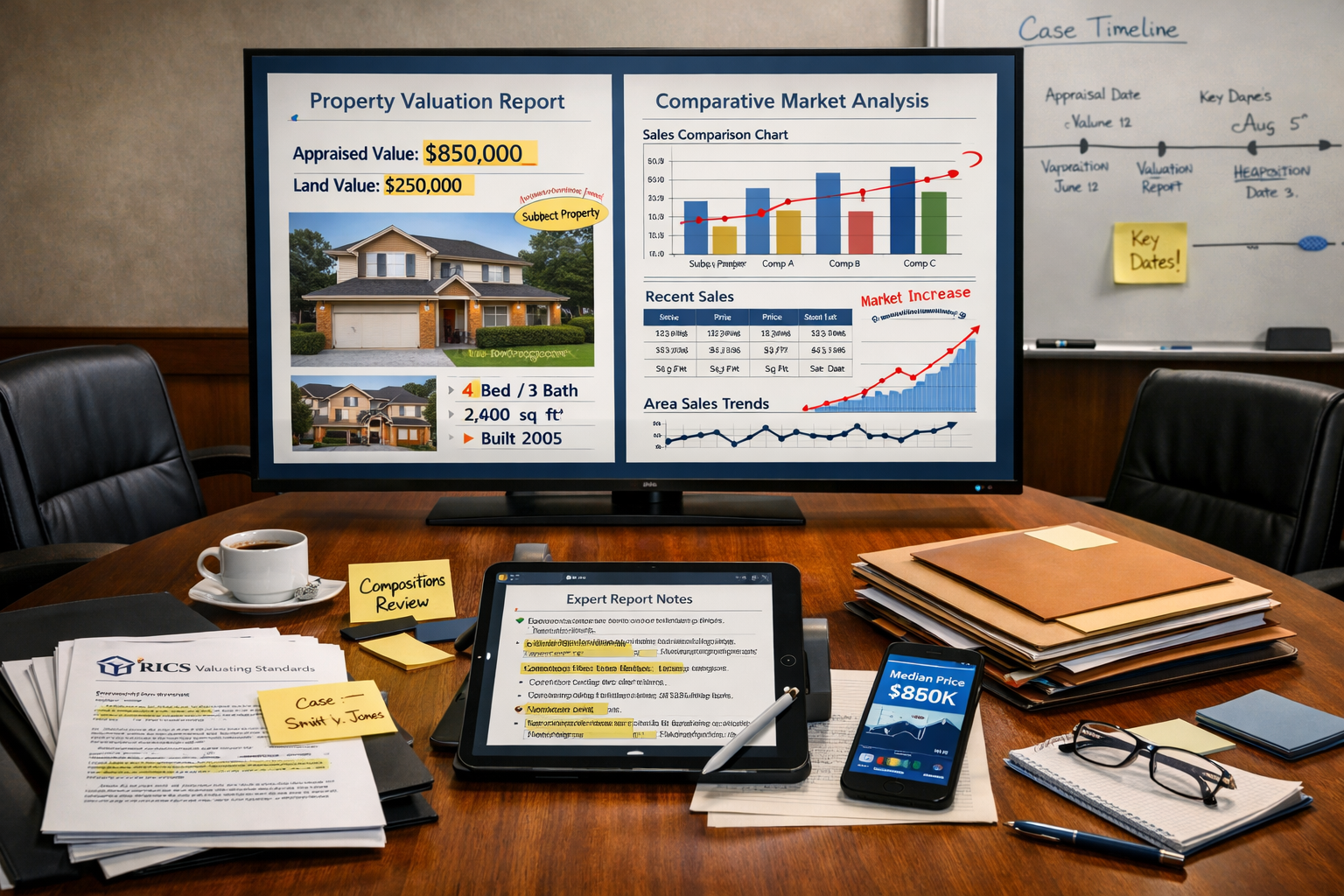
Structuring Digital Evidence for Legal Proceedings
Presenting digital evidence effectively requires understanding both technological capabilities and legal requirements. Courts expect expert witnesses to explain their methodologies clearly, justify their data sources, and demonstrate that their conclusions follow logically from the evidence. Digital tools must support rather than obscure this narrative.
The most effective approach involves layering digital evidence progressively. Start with high-level market context—transaction volumes, price indices, economic indicators—establishing the broader environment. Then narrow to specific comparable evidence, showing how individual transactions inform the disputed valuation. Finally, present the detailed analysis that connects comparables to conclusions.
Effective digital evidence structure:
- Market context layer: Regional and sector-wide trends establishing recovery trajectory
- Comparable evidence layer: Specific transactions with detailed characteristic comparisons
- Adjustment methodology layer: Transparent calculations showing how differences affect value
- Conclusion synthesis layer: Clear statement of opinion supported by preceding evidence
- Sensitivity analysis layer: Alternative scenarios demonstrating opinion robustness
Addressing Cross-Examination Challenges
Opposing counsel increasingly challenge expert witnesses on their technological methodologies. Questions focus on algorithm transparency, data source reliability, and whether digital tools introduce bias. Surveyors must prepare to defend their digital workflows as rigorously as their valuation conclusions.
Successful responses emphasize that digital tools enhance rather than replace professional judgment. The surveyor remains responsible for selecting appropriate comparables, determining adjustments, and forming opinions. Technology simply enables more comprehensive analysis and better documentation of the decision-making process.
When working on shared ownership valuations or other complex matters, expert witnesses should prepare supplementary documentation explaining their digital methodologies. This proactive transparency demonstrates confidence and reduces the risk of technology-focused cross-examination undermining credibility.
Maintaining Professional Independence
Digital tools must never compromise the fundamental requirement for expert witness independence. Platforms that suggest valuations automatically or that appear to guide users toward predetermined conclusions create significant risks. RICS standards emphasize that expert witnesses owe their primary duty to the court, not to the instructing party [1].
The best digital platforms support independence by providing transparent data access without prescriptive analysis. They present evidence and facilitate calculations but leave professional judgment to the surveyor. This approach ensures that opinions remain genuinely independent while benefiting from technological efficiency.
Expert witnesses should document their technology selection process, demonstrating that they chose platforms based on functionality and reliability rather than potential to support particular outcomes. This documentation becomes part of the evidence trail supporting testimony credibility.
Training and Competency Development
Effective use of Digital Tools in Expert Witness Valuations: Leveraging RICS Apps for 2026 Market Recovery Evidence requires ongoing professional development. Surveyors must understand not only how to operate specific applications but also how to evaluate data quality, recognize algorithmic limitations, and explain technological processes to non-technical audiences.
RICS encourages members to pursue continuing professional development (CPD) in emerging technologies [2]. This training should cover both practical application skills and theoretical understanding of data science principles. Expert witnesses who can articulate the statistical foundations of their digital analyses present more credible testimony than those who merely operate software without deeper comprehension.
Essential competencies for digital expert witness work:
- 📚 Data literacy: Understanding statistical concepts, sampling theory, and confidence intervals
- 🔧 Platform proficiency: Mastering specific applications used in valuation practice
- 💬 Communication skills: Translating technical concepts into accessible language for legal audiences
- 🛡️ Cybersecurity awareness: Protecting confidential case information in digital environments
- ⚖️ Ethical judgment: Recognizing when technology supports versus undermines independence
Integration with Traditional Valuation Methods
Digital tools work best when integrated thoughtfully with traditional valuation approaches. Physical property inspections remain essential—no algorithm can replace the insights gained from examining construction quality, observing neighborhood character, or assessing maintenance conditions firsthand. Technology enhances rather than eliminates these fundamental practices.
The optimal workflow combines digital efficiency with professional judgment. Use applications to identify potential comparables and gather market data efficiently. Then apply traditional surveying expertise to evaluate whether those comparables truly reflect similar properties and market conditions. This hybrid approach leverages technology's strengths while preserving the professional judgment that gives expert testimony its authority.
For specialized work like freehold valuations or Right to Buy assessments, digital tools help manage the complex calculations and regulatory requirements while the surveyor focuses on the unique aspects requiring professional interpretation.
Future Developments in Digital Expert Witness Tools
Emerging Technologies on the Horizon
The trajectory of digital innovation suggests several developments that will further transform expert witness valuations beyond 2026. Blockchain technology promises immutable transaction records that could eliminate disputes over comparable data authenticity. Virtual reality platforms may enable remote property inspections with unprecedented detail, reducing the need for physical site visits while maintaining evidentiary quality.
Predictive analytics will become increasingly sophisticated, potentially forecasting market movements with greater accuracy. However, expert witnesses must remember that predictions remain inherently uncertain—technology can inform but never guarantee future outcomes. The professional responsibility lies in communicating these limitations clearly while leveraging predictive tools appropriately.
Regulatory Evolution and Standards Development
RICS and other professional bodies continue developing guidance on digital tool usage in valuation practice [3]. Future standards will likely address algorithm transparency requirements, data quality benchmarks, and cybersecurity obligations more explicitly. Expert witnesses should monitor these developments closely, ensuring their practices remain compliant as standards evolve.
The regulatory environment may also address concerns about algorithmic bias and data representativeness. As automated valuation models become more prevalent, ensuring they don't perpetuate historical discrimination or overlook market segments becomes increasingly important. Expert witnesses using digital tools must demonstrate awareness of these issues and take steps to mitigate potential biases.
Building Sustainable Digital Practices
Long-term success with Digital Tools in Expert Witness Valuations: Leveraging RICS Apps for 2026 Market Recovery Evidence requires sustainable practices that balance innovation with stability. Surveyors should avoid over-reliance on any single platform or vendor, maintaining skills across multiple systems to ensure business continuity if technologies change.
Data management practices deserve particular attention. Expert witnesses accumulate vast amounts of market data and case documentation over time. Implementing robust backup systems, archival procedures, and data retention policies protects both professional interests and client confidentiality. These foundational practices enable confident technology adoption without creating new vulnerabilities.
Conclusion
The integration of Digital Tools in Expert Witness Valuations: Leveraging RICS Apps for 2026 Market Recovery Evidence represents more than technological advancement—it reflects the profession's commitment to maintaining relevance and credibility in an increasingly data-driven legal environment. As transaction volumes recover and property disputes multiply in 2026, expert witnesses equipped with sophisticated digital platforms can provide more comprehensive, defensible, and persuasive testimony than ever before.
Success requires balancing technological capability with professional judgment. The most effective expert witnesses use digital tools to enhance their analysis, streamline their workflows, and strengthen their evidence presentation while maintaining the independence, transparency, and ethical standards that define professional practice. RICS standards provide the framework for this integration, ensuring that innovation serves rather than undermines valuation quality [1][2][3].
Actionable Next Steps
For surveyors seeking to leverage digital tools in expert witness work:
- Assess current capabilities: Evaluate existing technology infrastructure and identify gaps limiting effectiveness in expert witness engagements
- Pursue targeted training: Invest in CPD focused on digital valuation tools, data analytics, and technology communication skills
- Select appropriate platforms: Research and trial RICS-aligned applications that support your specific expert witness practice areas
- Develop digital workflows: Create standardized procedures integrating technology with traditional valuation methods
- Build evidence documentation: Establish systems for maintaining transparent audit trails of digital analysis supporting testimony
- Engage with professional networks: Connect with other expert witnesses to share experiences and best practices regarding digital tool adoption
- Monitor regulatory developments: Stay informed about evolving RICS standards and guidance affecting digital valuation practice
The property market's recovery creates opportunities for surveyors who can demonstrate mastery of both traditional valuation principles and modern digital capabilities. By embracing these tools thoughtfully and maintaining rigorous professional standards, expert witnesses position themselves as indispensable resources for resolving complex property disputes in 2026 and beyond.
Whether preparing testimony for expert witness reports, conducting specialized valuations, or supporting legal teams through complex litigation, digital tools provide the foundation for more efficient, credible, and persuasive expert witness practice. The future belongs to professionals who can harness these capabilities while preserving the judgment, independence, and integrity that define expert witness work at its best.
References
[1] RICS Register of Accredited Expert Witnesses March 2026 – https://www.rics.org/content/dam/ricsglobal/documents/surveying/RICS-Register-of-Accredited-Expert-Witnesses_March-2026.pdf
[2] Valuation – https://www.rics.org/about-rics/corporate-governance/professional-group-panels/valuation
[3] Valuation Standards – https://www.rics.org/profession-standards/rics-standards-and-guidance/sector-standards/valuation-standards