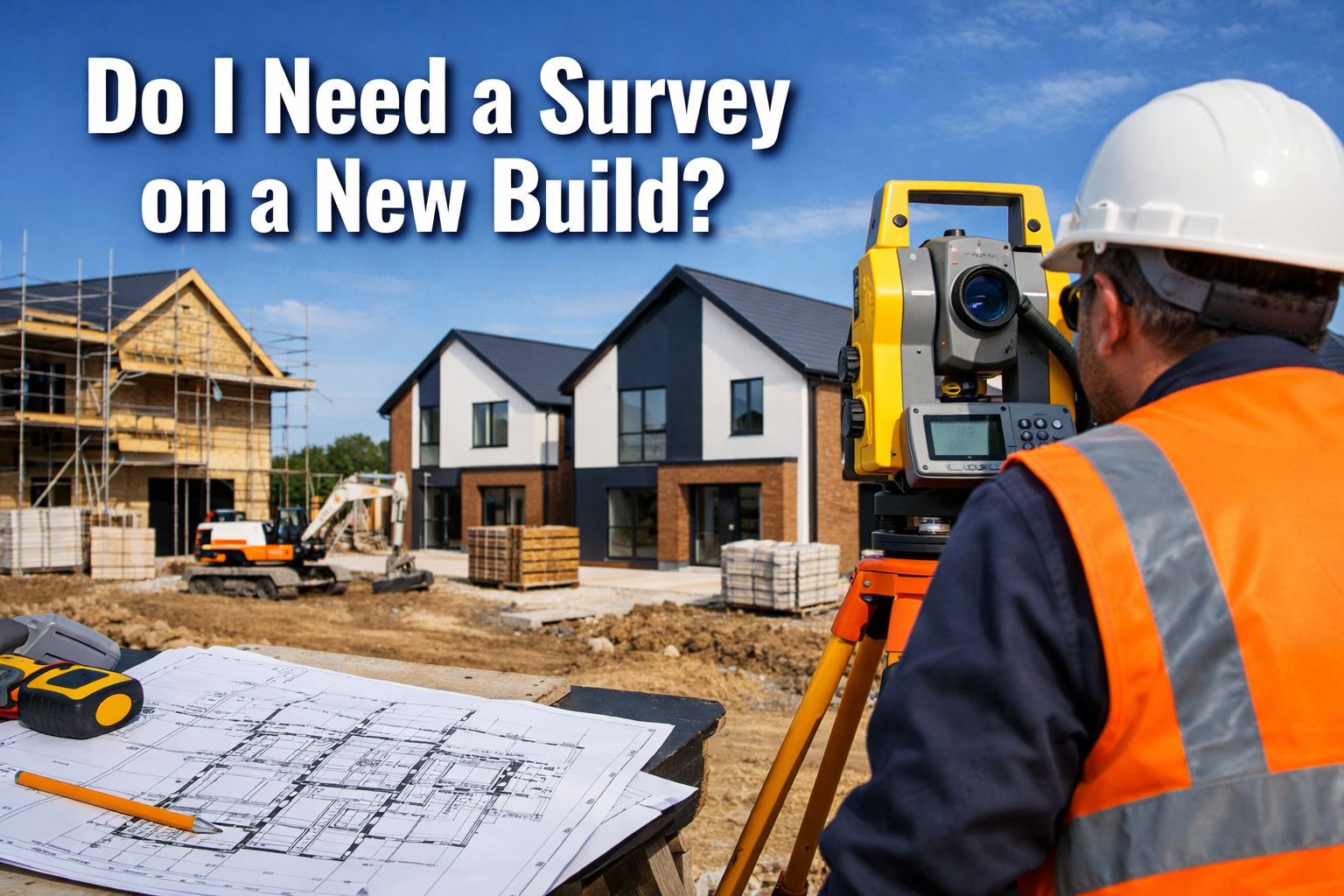

Do I Need a Survey on a New Build? Your Complete 2026 Guide

Purchasing a brand-new home should be a stress-free experience, right? After all, everything is fresh, untouched, and covered by warranties. Yet thousands of homebuyers discover costly defects in their new builds each year—issues that could have been identified before completion. The question “do I need a survey on a new build” is one that every prospective buyer should carefully consider before signing on the dotted line.
While new construction properties come with certain assurances that older homes lack, they’re not immune to problems. From foundation issues to drainage complications, new builds can harbor defects that won’t become apparent until after you’ve moved in. Understanding whether you need a survey on your new build property could save you tens of thousands of pounds and years of frustration.
Key Takeaways
- New build warranties don’t cover everything – NHBC and similar warranties have significant exclusions and require you to identify defects within specific timeframes
- Snagging surveys are essential – Professional inspections can identify 100+ defects in new builds that developers should rectify before completion
- Mortgage lenders may require surveys – Some lenders mandate professional surveys even for new construction properties
- Boundary and plot surveys protect your investment – Ensuring your property boundaries match legal documents prevents future disputes[1][2]
- Early detection saves money – Identifying structural or design issues before completion gives you leverage to negotiate fixes or compensation
Understanding New Build Surveys in 2026

What Is a New Build Survey?
A new build survey is a professional inspection conducted by a qualified surveyor to assess the quality, construction standards, and compliance of a newly constructed property. Unlike surveys for older properties that focus on deterioration and historical issues, new build surveys concentrate on construction quality, adherence to building regulations, and identification of defects before they become major problems.
In 2026, the surveying industry has implemented enhanced standards for transparency and precision. The updated ALTA/NSPS Land Title Survey Standards now require more detailed documentation and clearer explanations from surveyors regarding measurement discrepancies and legal descriptions[1]. These improvements benefit homebuyers by ensuring more accurate property assessments.
Types of Surveys for New Build Properties
Several survey types are available for new construction:
| Survey Type | Purpose | Best For |
|---|---|---|
| Snagging Survey | Identifies cosmetic and minor defects | All new builds before completion |
| Full Building Survey | Comprehensive structural assessment | High-value properties or complex builds |
| Boundary Survey | Confirms property boundaries and plot dimensions | Properties with shared boundaries or unclear demarcation |
| New Build Inspection | Pre-completion quality check | First-time buyers seeking peace of mind |
| Specialist Structural Survey | Detailed structural analysis | Properties showing concerning signs |
Understanding what survey do you need depends on your specific circumstances, property type, and risk tolerance.
Do I Need a Survey on a New Build? The Reality Check
The Myth of “Perfect” New Builds
Many buyers assume that new construction means flawless construction. This dangerous misconception leads thousands of homeowners to skip professional surveys, only to discover problems later. The reality is quite different:
- Construction defects are common – Industry reports suggest that the average new build contains 100+ snagging issues
- Time pressures affect quality – Developers working to tight deadlines may overlook quality control
- Subcontractor variability – Different trades working on your property may have varying skill levels
- Material defects – Even new materials can be faulty or incorrectly installed
“A professional survey on a new build isn’t questioning the builder’s integrity—it’s protecting your investment. We regularly find issues that would cost homeowners thousands to rectify after completion.” – Senior Building Surveyor
Warranty Coverage Limitations
New builds typically come with a 10-year NHBC (National House Building Council) warranty or similar protection. However, these warranties have significant limitations:
What warranties DON’T cover:
- ❌ Cosmetic defects (paintwork, minor cracks)
- ❌ Issues not reported within the initial 2-year period
- ❌ Normal wear and tear
- ❌ Defects you should have noticed before completion
- ❌ Landscaping and external works (often limited coverage)
- ❌ Boundary disputes or encroachments
What warranties DO cover:
- ✅ Major structural defects (years 3-10)
- ✅ Certain building regulation failures
- ✅ Specific water ingress issues
- ✅ Foundation problems (subject to terms)
The 2026 updates to land survey standards have strengthened requirements for handling easements, utilities, access, and encroachments[1]—all critical factors that warranties may not adequately address.
When You Absolutely Need a Survey on a New Build
Mortgage Lender Requirements
Your mortgage lender may make the decision for you. Many lenders now require professional surveys even for new builds, particularly for:
- Properties valued over £500,000
- Non-standard construction methods
- Self-build projects
- Properties on challenging terrain
- Developments by smaller or unknown builders
Lenders want assurance that their investment is secure. A professional survey provides this confidence and may even help you secure better mortgage terms.
High-Risk New Build Scenarios
Certain situations dramatically increase the importance of getting a survey on a new build:
🏗️ Developer reputation concerns – Research the builder’s track record; newer or budget developers may have quality control issues
📍 Plot position – Corner plots, properties near boundaries, or those on sloping land face additional challenges
🌊 Flood risk areas – Even new drainage systems can fail; professional assessment is crucial
🏘️ Complex developments – Large estates with shared facilities, drainage, or access require thorough boundary surveys
⚠️ Non-standard construction – Timber frame, modular, or innovative building methods need specialist assessment
For properties showing any concerning signs, consider a structural survey conducted by experienced professionals.
Investment and Resale Considerations
If you’re purchasing a new build as an investment or plan to sell within 5-10 years, a professional survey becomes even more critical. Future buyers and their surveyors will identify any defects, potentially affecting your resale value or causing sale delays.
Protection for your investment includes:
- Documentation of the property’s condition at completion
- Evidence for warranty claims if issues develop
- Negotiating power with the developer before final payment
- Peace of mind for future transactions
What a New Build Survey Covers
Snagging Surveys Explained
A snagging survey is the most common type of inspection for new builds. This detailed examination identifies defects and incomplete work that the developer should rectify before you complete the purchase.
Typical snagging issues include:
- Poorly finished paintwork or plasterwork
- Incorrectly fitted doors and windows
- Plumbing leaks or inadequate drainage
- Electrical installation issues
- Heating system problems
- Flooring defects
- Kitchen and bathroom fitting issues
- External brickwork or rendering problems
Professional snagging surveys typically cost £300-£800 depending on property size, but can identify issues worth thousands in repairs. Learn more about snagging report services and what they include.
Comprehensive Building Surveys for New Builds
For buyers seeking maximum protection, a full building survey goes beyond snagging to assess:
- Structural integrity – Foundation quality, wall construction, roof structure
- Building regulation compliance – Whether construction meets current standards
- Drainage and utilities – Proper installation and functionality
- Damp and ventilation – Adequate moisture protection and airflow
- Energy efficiency – Insulation quality and thermal performance
- Future maintenance – Anticipated repair costs and timescales
The difference between various survey levels is significant. Understanding the homebuyer report vs building survey options helps you make an informed choice.
Boundary and Plot Surveys
The 2026 ALTA/NSPS standards have introduced a refined definition of Relative Positional Precision (RPP) to clarify measurement accuracy requirements[2]. This enhanced precision is particularly important for new builds where:
- Plot boundaries may not be clearly marked
- Shared driveways or access routes need definition
- Garden boundaries differ from legal descriptions
- Easements or rights of way affect the property
A professional boundary survey ensures your property matches the legal documentation and prevents future disputes with neighbors. The strengthened 2026 standards for handling easements and encroachments[1] provide additional protection for new build purchasers.
The Survey Process for New Builds
Timing Your Survey
Optimal timing for new build surveys:
- Pre-exchange – Ideally before exchanging contracts (gives maximum negotiating power)
- Pre-completion – At least 2-4 weeks before completion date
- Post-completion – Within the first few weeks to document any issues for warranty claims
Many developers resist pre-completion surveys, but this is precisely when they’re most valuable. You have leverage to demand fixes before final payment.
What to Expect During the Inspection
A professional new build survey typically takes 2-4 hours depending on property size. The surveyor will:
- Examine all accessible areas internally and externally
- Test electrical sockets, switches, and consumer units
- Check plumbing, heating, and water pressure
- Assess window and door operation
- Inspect roof spaces and foundations (where accessible)
- Photograph defects and issues
- Take measurements for boundary verification (if applicable)
- Review building regulation compliance certificates
Within 5-7 days, you’ll receive a detailed report with photographs, descriptions of defects, and recommendations for remediation.
Understanding Your Survey Report
Professional survey reports categorize issues by severity:
Category 1 (Green) – No action required; cosmetic issues only
Category 2 (Amber) – Defects requiring attention; should be fixed by developer
Category 3 (Red) – Serious defects requiring immediate attention or specialist assessment
The report should clearly explain each issue, its implications, and recommended actions. Don’t hesitate to request clarification from your surveyor—their expertise is part of the service.
Costs vs. Benefits: Is a New Build Survey Worth It?
Survey Costs in 2026
Typical costs for new build surveys:
- Snagging survey: £300-£800
- Homebuyer Report: £400-£900
- Full Building Survey: £600-£1,500
- Boundary Survey: £500-£1,200
- Combined surveys: £800-£2,000
These costs vary based on property value, size, location, and complexity. Properties in areas like Central London or West London may command higher fees due to market conditions.
Potential Savings and Protection
Consider what a survey might prevent:
- Structural repairs: £5,000-£50,000+
- Drainage issues: £2,000-£15,000
- Damp problems: £1,500-£10,000
- Electrical rewiring: £3,000-£8,000
- Boundary disputes: £5,000-£25,000 in legal fees
A £600 survey that identifies a £10,000 drainage problem before completion represents exceptional value. The developer must fix the issue at no cost to you—but only if you identify it before finalizing the purchase.
Real-World Examples
Case Study 1: A buyer in Surrey invested £750 in a snagging survey for their £450,000 new build. The survey identified 127 defects, including a serious drainage issue that would have cost £8,500 to repair. The developer rectified all issues before completion.
Case Study 2: A London purchaser skipped the survey on their £650,000 apartment. Six months later, they discovered the balcony wasn’t properly waterproofed, causing internal water damage. The warranty didn’t cover the issue as it “should have been apparent before completion.” Repair cost: £12,000.
Alternatives and Additional Protections
DIY Inspections: Pros and Cons
Some buyers attempt their own inspections to save money. While this can supplement professional surveys, it shouldn’t replace them.
DIY inspection advantages:
- No cost
- Familiarizes you with the property
- Can identify obvious cosmetic issues
DIY inspection limitations:
- ❌ Cannot assess structural integrity
- ❌ May miss hidden defects
- ❌ No professional liability protection
- ❌ Less weight with developers
- ❌ Cannot verify building regulation compliance
Professional Snagging Companies vs. Chartered Surveyors
You have two main options for new build inspections:
Snagging companies:
- Specialize in cosmetic and finishing defects
- Generally lower cost
- Quick turnaround
- Limited structural assessment
Chartered surveyors:
- Comprehensive structural and technical assessment
- Professional indemnity insurance
- Recognized qualifications (RICS, CIOB)
- Higher cost but greater protection
- Can provide expert witness services if disputes arise
For maximum protection, choose chartered surveyors with specific new build experience and appropriate professional indemnity insurance.
Using Technology: Drone Surveys and Thermal Imaging
Modern survey technology enhances new build assessments:
Drone surveys – Provide detailed roof inspections without scaffolding, identifying issues with tiles, flashing, or chimneys. Drone roof surveys are particularly valuable for multi-story new builds.
Thermal imaging – Detects insulation gaps, air leakage, and moisture problems invisible to the naked eye
Moisture meters – Identify damp issues in walls, floors, and ceilings
Electrical testing equipment – Verifies proper installation and safety compliance
These technologies complement traditional survey methods, providing comprehensive property assessment.
Making Your Decision: Key Factors to Consider

Risk Assessment Framework
Use this framework to determine if you need a survey on your new build:
HIGH PRIORITY (Survey strongly recommended):
- Property value over £400,000
- Unknown or budget developer
- Complex construction or non-standard methods
- Plot with boundary concerns
- Flood risk or challenging terrain
- Mortgage lender requirement
- Investment property or planning to sell within 10 years
MEDIUM PRIORITY (Survey advisable):
- Established developer with good reputation
- Standard construction methods
- Property value £250,000-£400,000
- First-time buyer with limited construction knowledge
- Property in competitive market (need negotiating leverage)
LOWER PRIORITY (Consider snagging survey minimum):
- Reputable developer with excellent track record
- Simple construction
- Property value under £250,000
- Extensive construction knowledge
- Multiple properties in development with good feedback
Even in “lower priority” scenarios, a basic snagging survey provides valuable protection for minimal cost.
Questions to Ask Before Deciding
About the developer:
- How long have they been building?
- What is their reputation (check online reviews, speak to previous buyers)?
- What warranty provider do they use?
- Will they allow a pre-completion survey?
About the property:
- What construction methods were used?
- Are all building regulation certificates available?
- Has the property been independently inspected during construction?
- What is the plot history (previous use, ground conditions)?
About your situation:
- What is your construction knowledge level?
- How much risk can you tolerate?
- What are your long-term plans for the property?
- Does your mortgage lender require a survey?
For expert surveyor advice tailored to your specific circumstances, consult with qualified professionals before making your final decision.
Working with Developers After Survey Results
Negotiating Repairs and Remediation
Once you receive your survey report, you’ll need to work with the developer to address identified issues. Follow this process:
- Prioritize issues – Focus on structural and safety concerns first
- Submit formal snagging list – Provide the developer with a complete, professional report
- Set reasonable deadlines – Allow time for repairs but maintain pressure
- Request re-inspection – Ensure all work is completed to standard
- Document everything – Keep records of all communications and agreements
Most reputable developers will address legitimate concerns professionally. Your survey report provides objective evidence that’s difficult to dispute.
When to Walk Away
Sometimes survey results reveal issues serious enough to reconsider the purchase:
🚩 Red flags that might justify withdrawal:
- Major structural defects the developer refuses to address
- Evidence of serious building regulation violations
- Significant boundary or legal issues
- Multiple serious defects suggesting poor overall quality
- Developer unwilling to allow proper remediation time
Walking away may seem drastic, but it’s better than purchasing a property with fundamental problems. Your survey protects you by providing this information before you’re legally committed.
Legal Protections and Recourse
If disputes arise with developers:
- Pre-completion: You have maximum leverage; can delay completion or withdraw
- Post-completion: Rely on warranty provisions and contract terms
- Serious issues: May require legal action or alternative dispute resolution
Professional survey reports serve as crucial evidence in any dispute. The surveyor may also provide expert witness services if legal proceedings become necessary.
Regional Considerations and Local Requirements
Survey Requirements by Location
Different areas may have specific considerations for new build surveys:
London and Southeast: High property values make surveys particularly cost-effective; complex developments common; strict planning requirements. Areas like South West London see significant new build activity requiring professional assessment.
Urban developments: Boundary issues more common; shared facilities require careful documentation; noise and overlooking considerations.
Rural locations: Drainage and septic systems critical; access rights important; ground conditions variable.
Flood risk areas: Drainage assessment essential; foundation specifications critical; insurance implications.
Finding Local Surveying Expertise
Choose surveyors with local knowledge and new build experience. Benefits include:
- Understanding of local ground conditions
- Familiarity with regional developers
- Knowledge of local building regulation enforcement
- Established relationships with local authorities
Whether you’re purchasing in Kingston, Hertfordshire, or elsewhere, selecting surveyors with area-specific expertise enhances the quality of your assessment.
The Future of New Build Surveys
2026 Standards and Enhanced Protections
The surveying industry continues evolving to provide better consumer protection. The 2026 ALTA/NSPS Land Title Survey Standards represent significant improvements[3]:
- Enhanced transparency in measurement and documentation[1]
- Clearer precision requirements for boundary determination[2]
- Strengthened standards for easements and encroachments[1]
- More detailed explanations required from surveyors[1]
These improvements benefit new build purchasers by ensuring more accurate, comprehensive property assessments.
Technology Integration
Emerging technologies are transforming new build surveys:
- 3D laser scanning – Creates precise digital models of properties
- AI-assisted defect detection – Identifies patterns and anomalies
- Blockchain documentation – Immutable records of property condition
- Virtual reality inspections – Remote assessment capabilities
- Predictive analytics – Forecasts potential future issues
While technology enhances surveys, professional expertise remains irreplaceable for interpreting findings and providing actionable advice.
Consumer Rights and Industry Regulation
Increasing consumer awareness is driving industry improvements:
- Stricter developer accountability
- Enhanced warranty provisions
- Better building regulation enforcement
- Greater transparency in construction quality
- Improved dispute resolution mechanisms
These trends make professional surveys even more valuable as documentation standards and consumer expectations rise.
Conclusion: Protecting Your New Build Investment
The question “do I need a survey on a new build” has a clear answer for most buyers: yes. While new construction offers many advantages, it’s not immune to defects, construction issues, or legal complications. A professional survey provides:
✅ Peace of mind – Confidence in your purchase decision
✅ Financial protection – Early identification of costly defects
✅ Negotiating leverage – Evidence to demand developer remediation
✅ Documentation – Records for warranty claims and future sales
✅ Expert assessment – Professional evaluation of construction quality
The relatively modest cost of a survey (£300-£1,500) represents exceptional value compared to potential repair costs (£5,000-£50,000+) and the stress of discovering problems after completion.
Your Next Steps
- Assess your risk level – Use the framework provided to evaluate your specific situation
- Research surveyors – Choose qualified professionals with new build experience
- Book early – Schedule surveys well before completion dates
- Review results carefully – Understand all findings and recommendations
- Negotiate professionally – Work with developers to address identified issues
- Document everything – Maintain records for future reference
Don’t let the excitement of a new home cloud your judgment. Professional surveys are an investment in your property’s future value and your family’s wellbeing. Whether you choose a basic snagging survey or comprehensive building survey, professional assessment provides protection that warranties alone cannot match.
For personalized guidance on your new build purchase, consult with building surveyor services professionals who can assess your specific circumstances and recommend the most appropriate survey level for your needs.
Remember: a survey isn’t questioning the builder’s integrity—it’s protecting your investment and ensuring you get exactly what you’re paying for. In 2026’s competitive property market, that protection is more valuable than ever.
References
[1] Understanding The 2026 Alta Nsps Land Survey Standards Whats New And Why It Matters – https://millmanland.com/company-news/understanding-the-2026-alta-nsps-land-survey-standards-whats-new-and-why-it-matters/
[2] New 2026 Minimum Standard Detail 3684174 – https://www.jdsupra.com/legalnews/new-2026-minimum-standard-detail-3684174/
[3] 20251125 Key Updates To The 2026 Altansps Land Title Survey Standards – https://www.alta.org/news-and-publications/news/20251125-Key-Updates-to-the-2026-ALTANSPS-Land-Title-Survey-Standards
[4] A Home Property Survey Should Be Your First Move – https://www.realmapinfo.com/a-home-property-survey-should-be-your-first-move
[5] 2026 Alta Nsps Land Title Survey Standards – https://www.partneresi.com/resources/references/standards-regulations/2026-alta-nsps-land-title-survey-standards/
[6] Alta Standards Updated – https://cretelligent.com/alta-standards-updated/
[7] Altanspsstandards – https://nsps.us.com/page/ALTANSPSStandards
[8] Built Survey Helps Reveal Hidden Details Homes – https://willsservicegroup.com/built-survey-helps-reveal-hidden-details-homes/
SEO Meta Title and Description
Meta Title: Do I Need a Survey on a New Build? 2026 Expert Guide
Meta Description: Discover whether you need a survey on a new build property. Expert advice on costs, benefits, and protection for your 2026 new home purchase.
{“@context”:”https://schema.org”,”@type”:”Article”,”headline”:”do i need a survey on a new build”,”description”:”Discover whether you need a survey on a new build property. Expert advice on costs, benefits, and protection for your 2026 new home purchase.”,”image”:”https://zsxkvszxbhpwnvzxdydv.supabase.co/storage/v1/object/public/generated-images/kie/235b37df-0b81-4a22-b063-bd6fa2deca94/slot-0-1769817627270.png”,”datePublished”:”2026-01-30T23:56:55.947412+00:00″,”dateModified”:”2026-01-31T00:00:58.671Z”,”author”:{“@type”:”Organization”,”name”:”Kingston Surveyors”},”publisher”:{“@type”:”Organization”,”name”:”Kingston Surveyors”}}