
The property market recovery of 2026 has brought unexpected challenges for expert witnesses. As prices stabilise and transaction volumes increase across London and the South East, valuation disputes are surging at unprecedented rates. Expert witnesses now face heightened scrutiny from courts applying stricter admissibility standards while navigating complex regional price variations that make every case unique.
For chartered surveyors and RICS-registered valuers, this landscape demands more than technical expertise. The combination of improving market sentiment, persistent regional price gaps, and enhanced judicial oversight creates a perfect storm where court-ready evidence and flawless methodology separate successful testimony from excluded opinions.
Key Takeaways
- Valuation date accuracy is critical—courts increasingly exclude expert testimony based on date misalignment or inappropriate use of subsequent event data
- Stricter admissibility standards following 2023 amendments to Federal Rules of Evidence Rule 702 require preponderance-of-evidence demonstrations of methodology reliability
- Regional price variations in 2026's recovering market create more valuation disputes requiring sophisticated comparable property analysis
- RICS-compliant documentation and data integrity verification are essential for building credible, court-ready cases
- Narrative credibility now matters as much as technical accuracy—experts must tell compelling stories backed by verifiable evidence
Understanding Expert Witness Challenges in 2026 Market Recovery Conditions
The 2026 property market presents unique challenges for expert witnesses handling valuation disputes. Unlike previous recovery periods, the current stabilisation shows significant regional variation that complicates traditional valuation approaches.
The Market Recovery Context
Property markets across London and surrounding areas are experiencing divergent recovery patterns. While prime central London locations show strong price stabilisation, outer boroughs and commuter belt areas display varying degrees of recovery. This creates fertile ground for disputes when parties rely on different comparable properties or market data sets.
Rising transaction volumes compound these challenges. As more properties change hands, more opportunities arise for valuation disagreements—particularly in:
- 📊 Matrimonial proceedings requiring matrimonial valuation
- 💰 Probate matters needing accurate probate valuation
- 🏢 Commercial lease renewals and rent review disputes
- 💔 Divorce settlements requiring precise divorce valuation
Heightened Judicial Scrutiny
Courts in 2026 apply significantly stricter standards when evaluating expert testimony. The amendments to Federal Rules of Evidence Rule 702, effective since December 2023, fundamentally changed the admissibility landscape. [2]
These amendments require proponents to demonstrate by a preponderance of evidence that expert testimony meets all admissibility requirements. Courts no longer treat methodology questions as mere matters of weight for juries to consider—they now serve as gatekeepers applying rigorous scrutiny. [2]
"District courts are increasingly expected to require preponderance-of-evidence demonstrations that expert testimony reflects reliable application of principles and methods to case facts, raising the bar for admissibility." [2]
This shift means expert witnesses must prepare their cases with exceptional attention to methodology, documentation, and the reliability of their analytical approaches.
Common Pitfalls Leading to Expert Exclusion in Valuation Disputes
Understanding what causes expert testimony exclusion is essential for building court-ready cases. Recent case law reveals recurring patterns that undermine expert credibility and lead to testimony being struck.
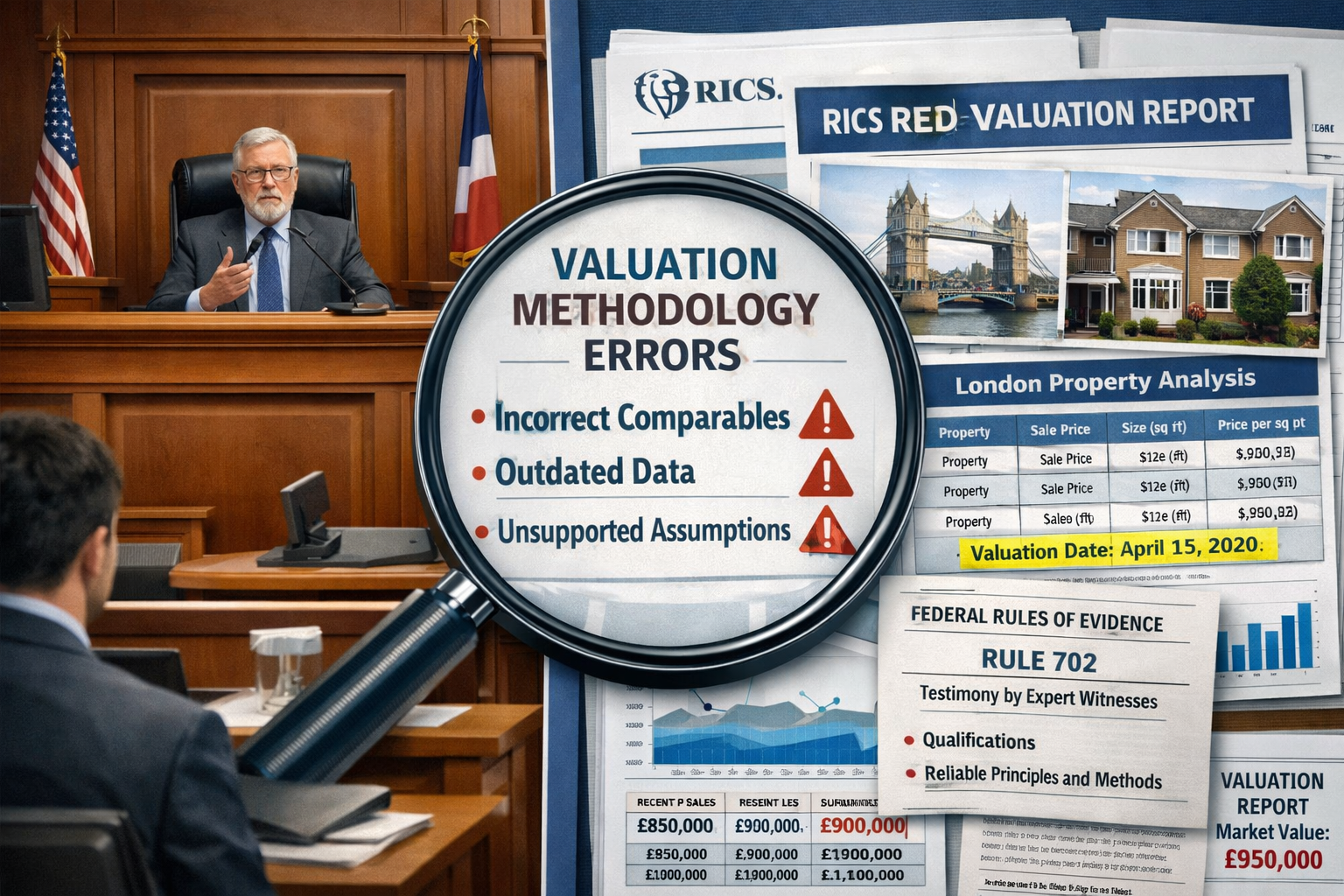
Valuation Date Misalignment
Valuation date errors remain the single most critical exclusion risk for property valuation experts. Courts have consistently excluded testimony when experts:
- Value properties on dates different from those relevant to the litigation
- Use financial or market data from periods misaligned with the required valuation date
- Incorporate subsequent events that occurred after the valuation date [1]
For example, an expert valuing a company on a date when bankruptcy proceedings had already commenced, or using financial data from years different than the valuation date, creates grounds for exclusion. [1]
In property disputes, this translates to ensuring Red Book valuation reports clearly identify and maintain consistency with the legally relevant valuation date—whether for divorce proceedings, probate, or commercial disputes.
Inappropriate Standard or Premise of Value
Courts exclude experts who apply the wrong valuation standard for the dispute at hand. Common errors include:
- Applying synergistic value when fair value was required
- Valuing properties as going concerns when liquidation value was more appropriate
- Using market value standards when special value should apply [1]
RICS-registered valuers must carefully identify which valuation basis applies to each dispute. Understanding valuation factors and selecting the appropriate methodology prevents this exclusion risk.
Double-Counting Damages
In valuation disputes, certain damages can be duplicative—creating grounds for expert testimony exclusion. For instance, claiming both lost profits and lost business value for the same period represents double-counting. [1]
Property experts must be particularly careful when valuation disputes involve:
- Loss of rental income and diminution in capital value
- Repair costs and reduction in market value
- Multiple heads of claim in commercial dilapidation cases
Data Comparability Errors
Using inappropriate comparable data undermines expert credibility and creates vulnerability to exclusion. Common mistakes include:
- Employing data from public companies when evaluating private properties
- Using outdated market information without adjustment
- Failing to account for current market events affecting values
- Selecting comparables from different market segments or locations [1]
In 2026's recovering market with significant regional variation, comparable selection requires exceptional care. Experts must demonstrate why chosen comparables reflect similar market conditions, property characteristics, and timing.
Undisclosed Materials and Privilege Issues
Experts relying on privileged materials not available to opposing parties risk having testimony excluded. This creates a dilemma: parties must choose between expert testimony and maintaining attorney-client privilege. [1]
Best practice requires transparent disclosure of all materials relied upon, with careful consideration of privilege implications before materials are shared with experts.
Building Court-Ready Cases: Evidence Gathering and RICS-Compliant Reporting
Successfully navigating Expert Witness Challenges in 2026 Market Recovery requires systematic approaches to evidence gathering and documentation that meet both RICS standards and judicial expectations.
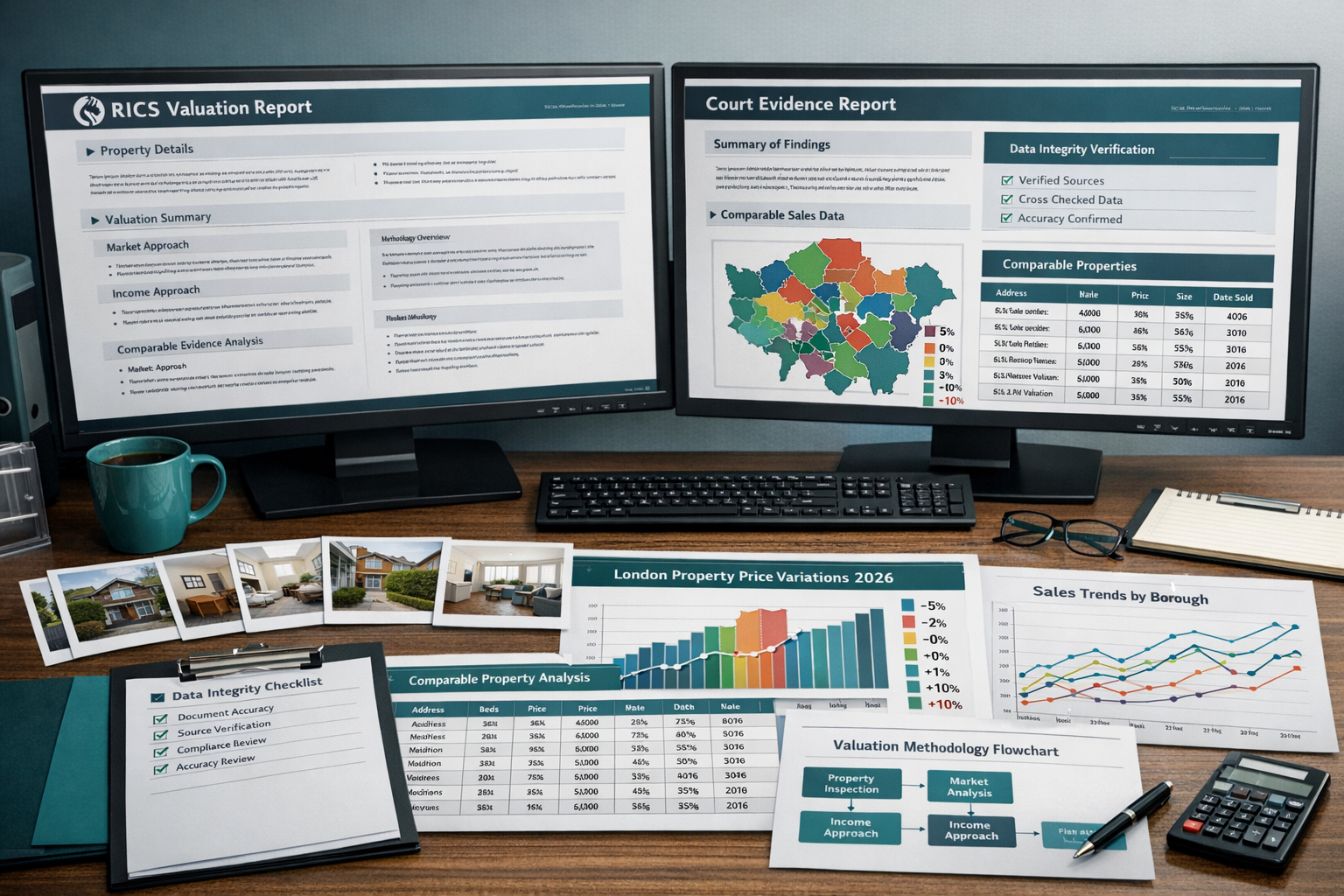
Comprehensive Evidence Gathering Protocols
Data integrity has become paramount in 2026 dispute resolution. Experts must demonstrate not just accurate analysis but verifiable data sources and transparent methodology. [3]
Essential Evidence Components
Successful valuation dispute cases require:
-
Market Data Documentation
- Transaction evidence with verified completion dates
- Asking prices distinguished from achieved prices
- Market conditions prevailing at the valuation date
- Regional price trend analysis showing local market context
-
Property-Specific Information
- Detailed inspection records with photographs
- Planning history and development potential
- Lease terms for investment properties
- Condition assessments documenting defects
-
Comparable Property Analysis
- Detailed justification for comparable selection
- Adjustment methodology for differences
- Market segment alignment verification
- Geographic proximity and market similarity
-
Professional Standards Compliance
- RICS Valuation – Global Standards (Red Book) adherence
- Assumptions and special assumptions clearly stated
- Limitations of investigation documented
- Independence and objectivity declarations
For complex cases requiring detailed investigation, experts should consider comprehensive approaches similar to those used in building surveys to ensure thorough documentation.
RICS-Compliant Reporting Standards
Red Book compliance is non-negotiable for court-ready valuation reports. The RICS Valuation – Global Standards provide the framework that courts expect and rely upon.
Critical Report Elements
Court-ready valuation reports must include:
Clear Identification Section
- Client and intended users
- Purpose of valuation
- Subject property description
- Interest being valued
- Valuation date (prominently stated)
Basis of Value Section
- Appropriate basis clearly identified (Market Value, Fair Value, etc.)
- Justification for basis selection
- Any departures from standard definitions
Assumptions and Special Assumptions
- All assumptions explicitly stated
- Special assumptions justified and highlighted
- Impact of assumptions on value discussed
Methodology and Approach
- Valuation methods employed
- Comparable evidence presented
- Adjustments explained and quantified
- Alternative approaches considered
Limitations and Caveats
- Scope of investigation
- Information relied upon
- Matters outside expertise
- Conditions affecting reliability
Addressing Regional Price Variations
The 2026 market recovery's uneven geographic pattern requires sophisticated analysis. Experts must demonstrate understanding of:
- Micro-market dynamics: Price trends in specific London boroughs or towns
- Transport infrastructure impacts: Crossrail, station upgrades, new routes
- Planning policy changes: Local plan adoptions affecting development potential
- Demographic shifts: Migration patterns affecting demand
This granular approach to valuation in London and surrounding areas strengthens expert credibility by showing market-specific knowledge rather than generic regional assumptions.
Technology and Data Verification
Modern expert witnesses leverage technology for enhanced data integrity:
- Property price databases with verified transaction data
- GIS mapping for comparable property identification
- Statistical analysis tools for market trend verification
- Digital documentation systems maintaining audit trails
However, technology must support—not replace—professional judgment. Courts expect experts to explain why technology-derived conclusions are reliable and appropriate for the specific case.
Methodology Reliability and Narrative Credibility
Beyond technical accuracy, Expert Witness Challenges in 2026 Market Recovery demand that experts build compelling narratives supported by verifiable evidence. Recent case law emphasizes this dual requirement.
Demonstrating Methodology Reliability
Following the 2023 Rule 702 amendments, courts require clear demonstrations that expert methodology is reliably applied to the specific case facts. [2]
The Reliability Framework
Experts must show:
- Principle Validity: The valuation approach is generally accepted in the professional community
- Method Appropriateness: The specific method suits the property type and dispute context
- Application Reliability: The method was correctly applied to case-specific facts
- Sufficient Data: Adequate information supports the conclusions reached
This framework applies whether using comparable method, investment method, residual method, or other approaches. Each must be justified for the specific circumstances.
Building Narrative Credibility
Technical accuracy alone no longer suffices. Experts must tell coherent, credible stories about property values that judges and juries can understand and believe. [3]
Elements of Credible Narratives
Contextual Understanding
- Market conditions at valuation date
- Property's position within its market segment
- Factors affecting buyer and seller behavior
- Economic and local conditions influencing value
Logical Progression
- Clear explanation from evidence to conclusion
- Transparent reasoning at each analytical step
- Acknowledgment of uncertainties and limitations
- Consideration of alternative interpretations
Professional Presentation
- Clear, jargon-free language
- Visual aids supporting complex concepts
- Consistent terminology throughout
- Professional demeanor and objectivity
Recent Case Law Developments
The January 2026 Federal Circuit decision in Barry v. DePuy Synthes Co. provides important guidance. The court reversed expert exclusions, finding that credibility and probative value disputes should be left to juries rather than determined by courts at the admissibility stage. [2]
This suggests courts should focus on whether expert methodology is reliable, not whether conclusions are persuasive—but experts must still present compelling cases that withstand cross-examination.
Preparing for Cross-Examination
Court-ready cases anticipate challenges. Experts should:
- Document decision points: Why specific comparables were selected or rejected
- Quantify adjustments: Show calculation basis for all adjustments
- Test sensitivity: Demonstrate how different assumptions affect conclusions
- Acknowledge weaknesses: Identify and address limitations proactively
- Maintain consistency: Ensure report, testimony, and exhibits align perfectly
Working with experienced RICS registered valuers familiar with litigation processes helps ensure proper preparation for the rigors of cross-examination.
Practical Strategies for Surveyors in 2026 Dispute Resolution
Successfully navigating valuation disputes in the current market requires practical strategies that combine technical excellence with litigation awareness.
Pre-Instruction Considerations
Before accepting expert witness instructions, surveyors should:
Assess Competence and Capacity
- Confirm expertise in the specific property type and dispute context
- Verify availability for the case timeline
- Identify potential conflicts of interest
- Ensure adequate professional indemnity insurance
Clarify Scope and Expectations
- Understand the legal issues requiring expert input
- Identify the appropriate valuation basis
- Confirm the valuation date and its significance
- Establish reporting requirements and deadlines
During Investigation Phase
Systematic Evidence Collection
- Create comprehensive inspection records
- Photograph all relevant features and defects
- Document market conditions contemporaneous with valuation date
- Gather transaction evidence from reliable sources
- Verify all data through multiple sources where possible
Comparable Analysis Rigor
- Cast a wide net initially, then refine selection
- Document reasons for including and excluding comparables
- Quantify and justify all adjustments
- Consider multiple valuation approaches for cross-checking
For specialized valuations such as capital gains tax or reinstatement cost assessments, ensure methodology aligns with the specific legal and tax requirements.
Report Preparation Best Practices
Structure and Clarity
- Use clear headings and logical organization
- Include executive summary for complex reports
- Present evidence before conclusions
- Use tables, charts, and photographs effectively
Technical Precision
- Define all technical terms on first use
- Show calculations and workings
- Reference source materials specifically
- Maintain consistent units and formats
Professional Objectivity
- Avoid advocacy language
- Present alternative views fairly
- Acknowledge uncertainties
- Distinguish facts from opinions
Coordination with Legal Teams
Effective expert witnesses work collaboratively with solicitors while maintaining independence:
- Understand the legal framework and burden of proof
- Clarify technical concepts for legal teams
- Identify additional evidence that might strengthen the case
- Flag potential weaknesses early
- Maintain clear boundaries regarding independence
Continuing Professional Development
The evolving landscape of Expert Witness Challenges in 2026 Market Recovery requires ongoing learning:
- Attend expert witness training programs
- Study recent case law on expert admissibility
- Update knowledge of RICS standards and guidance
- Participate in professional forums discussing litigation trends
- Develop presentation and communication skills
Organizations offering expert surveyor advice can provide valuable insights into current best practices and emerging challenges.
Sector-Specific Considerations
Different types of valuation disputes present unique challenges in 2026's recovering market.
Residential Property Disputes
Residential valuation disputes often involve:
Matrimonial and Divorce Cases
- Emotional context requiring sensitivity
- Both parties often living in the property
- Timing pressures for settlement
- Need for clear, understandable reports
Expert witnesses in these cases should review guidance on matrimonial valuation to ensure appropriate approaches.
Probate and Estate Disputes
- Valuation date typically date of death
- Potential for significant market movement since death
- Multiple beneficiaries with competing interests
- Tax implications affecting appropriate basis
Commercial Property Disputes
Commercial valuations face additional complexity:
Lease Renewal and Rent Review
- Statutory frameworks affecting valuation approach
- Comparable evidence often limited
- Tenant improvements and disregards
- Market rent versus passing rent analysis
Experts handling these disputes should understand specific requirements for rent review valuations.
Dilapidations Claims
- Distinguishing repair from improvement
- Diminution valuations versus cost approach
- Section 18 Landlord and Tenant Act 1927 caps
- Supersession arguments in rising markets
Development and Construction Disputes
The 2026 recovery has increased development activity and associated disputes:
Development Viability Disputes
- Residual valuation methodology
- Sensitivity to input assumptions
- Market conditions at relevant dates
- Alternative use valuations
Construction Delay Claims
- Impact on property values
- Loss of rental income calculations
- Market movement during delay periods
- Causation and quantum separation
Experts should familiarize themselves with construction dispute resolution frameworks to provide effective testimony.
Specialized Valuation Contexts
Certain dispute types require specialized knowledge:
- Shared ownership valuations: Complex staircasing calculations
- Charities Act valuations: Statutory requirements and best value
- ATED valuations: Tax-specific valuation dates and bases
- Non-domicile tax valuations: International property considerations
Technology, Data, and Future Trends
The landscape of expert witness work continues evolving with technological advancement and changing market conditions.
Data Analytics and AI
Automated Valuation Models (AVMs) and artificial intelligence tools are increasingly common, creating both opportunities and challenges:
Opportunities
- Rapid analysis of large comparable datasets
- Statistical validation of manual valuations
- Identification of market trends and anomalies
- Enhanced visualization of complex data
Challenges
- Courts' understanding of AI methodology
- "Black box" algorithms lacking transparency
- Liability for AI-generated conclusions
- Need to explain technology to non-technical audiences
Expert witnesses must be prepared to explain and defend technology-assisted valuations while demonstrating that professional judgment remains central.
Market Transparency and Data Access
The 2026 market benefits from improved data availability:
- Enhanced Land Registry data access
- PropTech platforms providing transaction analytics
- Energy Performance Certificate databases
- Planning portal information
However, experts must verify data quality and understand limitations—not all data sources are equally reliable or appropriate for litigation purposes.
Regulatory and Standards Evolution
RICS standards continue evolving to address emerging challenges:
- Enhanced guidance on technology use in valuations
- Stricter independence and conflict requirements
- Improved transparency in valuation reporting
- Sustainability and ESG considerations in value
Staying current with these developments is essential for maintaining court-ready expertise.
Climate Change and Sustainability
Environmental factors increasingly affect property values and create new dispute areas:
- Flood risk and climate resilience
- Energy efficiency and retrofit costs
- Planning policies favoring sustainable development
- ESG considerations in investment valuations
Expert witnesses must develop competence in these emerging areas as they become more prevalent in litigation.
Conclusion
Expert Witness Challenges in 2026 Market Recovery: Building Court-Ready Cases for Valuation Disputes Amid Stabilising Prices demands excellence across multiple dimensions. The combination of stricter judicial scrutiny, complex regional market variations, and enhanced professional standards creates an environment where only the most rigorous, well-documented, and credibly presented expert testimony succeeds.
Key success factors for expert witnesses include:
✅ Methodological rigor: Applying RICS standards with precision and demonstrating reliability at every analytical step
✅ Valuation date accuracy: Ensuring perfect alignment between valuation dates, data sources, and legal requirements
✅ Data integrity: Verifying all evidence sources and maintaining transparent documentation of materials relied upon
✅ Narrative credibility: Building compelling, coherent stories that explain complex valuations in accessible terms
✅ Professional objectivity: Maintaining independence while working collaboratively with legal teams
✅ Continuous learning: Staying current with case law, professional standards, and market developments
Actionable Next Steps
For surveyors and expert witnesses preparing for valuation disputes in 2026's recovering market:
- Review and update expert witness protocols to reflect Rule 702 amendments and recent case law
- Invest in training on evidence gathering, report writing, and courtroom testimony skills
- Develop systems for data verification and documentation that create robust audit trails
- Build networks with legal professionals to understand evolving expectations and requirements
- Specialize strategically in property types and dispute contexts where deep expertise can be demonstrated
- Embrace technology while maintaining the professional judgment that courts expect and value
The 2026 market recovery presents both challenges and opportunities. Rising transaction volumes mean more valuation work—but also more disputes. Regional price variations create complexity—but also demand for sophisticated expert analysis. Stricter admissibility standards raise the bar—but also create competitive advantage for those who meet enhanced expectations.
By combining technical excellence with litigation awareness, RICS-compliant methodology with compelling communication, and professional objectivity with practical insight, expert witnesses can successfully navigate these challenges and provide the court-ready testimony that justice requires.
For surveyors seeking to develop or enhance their expert witness capabilities, partnering with established firms offering comprehensive valuation services in London provides valuable mentorship and case experience in this demanding but rewarding field.
References
[1] Litigation Leu Wilson Smith Dont Get Struck Financial Expert – https://quickreadbuzz.com/2026/02/04/litigation-leu-wilson-smith-dont-get-struck-financial-expert/
[2] Finding That Expert Testimony Aligns 2422154 – https://www.jdsupra.com/legalnews/finding-that-expert-testimony-aligns-2422154/
[3] Choosing The Right Construction Dispute Resolution Expert In 2026 – https://www.precisionschedulingconsultants.com/choosing-the-right-construction-dispute-resolution-expert-in-2026/