The rental property landscape in 2026 has become a legal minefield. With stricter rental regulations colliding with unprecedented tenant demand, landlords and tenants find themselves locked in increasingly complex disputes that require sophisticated expert witness testimony. Expert Witness Evidence for Rental Regulation Disputes: Preparing Valuations in 2026 Tenant Demand Uptick has emerged as a critical competency for property professionals navigating this challenging environment, where a single valuation error can cost thousands in legal proceedings.
Recent landmark cases have fundamentally reshaped how courts evaluate expert testimony in rental disputes. The 2025 Emmons v. Jesso decision established new precedents for expert witness credibility, while amendments to Federal Rule 702 have raised the bar for admissibility standards [1][2]. Property surveyors and valuation experts must now demonstrate not only technical competence but also rigorous methodological reliability that can withstand judicial scrutiny.
Key Takeaways
- Heightened admissibility standards: Federal Rule 702 amendments now require experts to prove their methodologies are "more likely than not" reliable before testimony reaches juries, significantly raising the bar for expert evidence [2]
- Landmark precedent established: The Emmons v. Jesso (2025) case validated specific methodologies for rental dispute valuations, including comparable market analysis and regulatory impact assessments [1]
- RICS compliance essential: Expert witnesses must demonstrate adherence to RICS valuation standards and industry best practices to maintain credibility in 2026's regulatory environment
- 2026 market complexity: Rising tenant demand combined with stricter rental regulations creates unique valuation challenges requiring specialized expertise in regulatory compliance analysis
- Documentation requirements expanded: Courts now demand comprehensive evidence trails showing how experts reached their conclusions, with particular emphasis on data sources and methodology application
Understanding the 2026 Rental Regulation Landscape
The rental property sector in 2026 operates under significantly tighter regulatory constraints than previous years. Local authorities across the UK have implemented enhanced tenant protection measures, including stricter rent control mechanisms, expanded habitability standards, and more rigorous enforcement of landlord obligations. These regulations intersect with market forces creating a perfect storm for disputes.
Tenant demand has surged due to several converging factors:
- 📈 Continued housing supply shortages in major urban centers
- 💼 Remote work flexibility enabling geographic mobility
- 🏠 Affordability challenges in the purchase market
- 👥 Demographic shifts with more households choosing rental accommodation
This demand uptick has created tension between market-driven rental values and regulatory caps or restrictions. Landlords argue that regulations prevent them from charging fair market rates, while tenants contend that landlords exploit demand to impose excessive increases. Expert witnesses must navigate these competing narratives with objective, evidence-based valuations.
Key Regulatory Challenges Affecting Valuations
Property valuation experts preparing evidence for rental disputes must account for multiple regulatory layers:
| Regulatory Area | Impact on Valuations | Expert Considerations |
|---|---|---|
| Rent Control Measures | Caps on annual increases | Must demonstrate market rate vs. regulated rate differential |
| Habitability Standards | Mandatory property improvements | Factor compliance costs into rental value assessments |
| Tenant Protection Acts | Restrictions on evictions | Assess impact on landlord flexibility and property value |
| Energy Efficiency Requirements | Minimum EPC ratings | Calculate improvement costs and rental premium potential |
| Licensing Schemes | Additional landlord obligations | Include compliance costs in financial analysis |
When preparing expert witness reports, professionals must demonstrate comprehensive understanding of how these regulations interact with market forces to produce accurate rental valuations.
The Evolving Standards for Expert Witness Evidence
The legal framework governing expert witness testimony underwent significant transformation with the December 2023 amendments to Federal Rule 702, which continue to shape proceedings in 2026. These changes fundamentally altered how courts evaluate expert evidence admissibility, creating higher hurdles for expert witnesses in all civil litigation, including rental regulation disputes [2].
Federal Rule 702 Amendments: What Changed
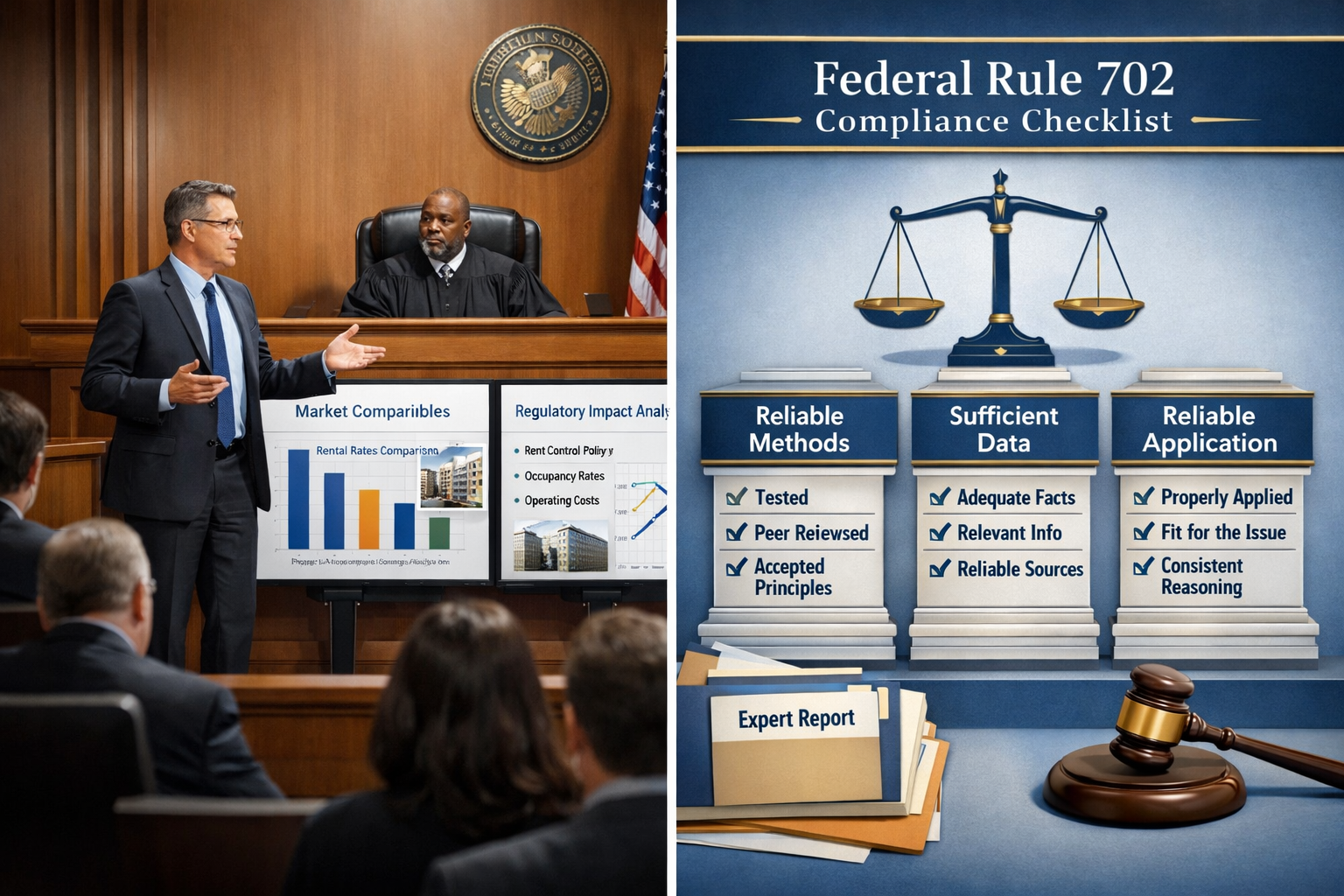
The revised Rule 702 clarified three critical requirements that experts must satisfy:
- Reliable methodology: The expert's methods must be scientifically or technically sound
- Sufficient facts and data: The expert must base opinions on adequate factual foundation
- Reliable application: The expert must reliably apply their methodology to the facts of the case
The game-changing element is the new standard of proof. Courts must now determine that each requirement is satisfied by a "preponderance of the evidence" (more likely than not) before allowing expert testimony [2]. Previously, courts often allowed questionable expert testimony to reach juries, treating methodological concerns as issues for cross-examination rather than admissibility.
"The proponent of expert testimony must prove by a preponderance of the evidence that the expert's methods are reliable, shifting from previous practice where courts allowed juries to determine weight through cross-examination." [2]
This shift places judges in a strengthened gatekeeper role, requiring more rigorous pre-trial scrutiny of expert qualifications and methodologies. For rental dispute valuations, this means experts must document their analytical processes with exceptional thoroughness.
The Emmons v. Jesso Precedent for Rental Disputes
The 2025 California Court of Appeal decision in Emmons v. Jesso established critical guidance specifically for expert witnesses in landlord-tenant disputes [1]. The case involved contested rental calculations and lease interpretation, with the expert witness's testimony proving decisive in the outcome.
Key holdings from Emmons v. Jesso include:
- ✅ Validated methodologies: The court explicitly approved use of comparable rental market data, lease document analysis, city agency records review, and regulatory impact assessment as foundational approaches
- ✅ Damages calculation framework: Expert analysis of fair market rent calculations and unpaid rent assessments directly influenced the jury's $14,700 award
- ✅ Standards of care analysis: The court found probative value in expert opinions assessing whether landlord conduct met industry standards regarding code violations
- ✅ Persuasive testimony characteristics: The appellate court specifically noted the expert's "persuasive and reliable nature" in affirming the verdict [1]
This precedent provides a roadmap for experts preparing valuations in 2026 rental disputes. The methodologies validated in Emmons align closely with RICS valuation standards and established surveying practices, reinforcing the importance of professional accreditation.
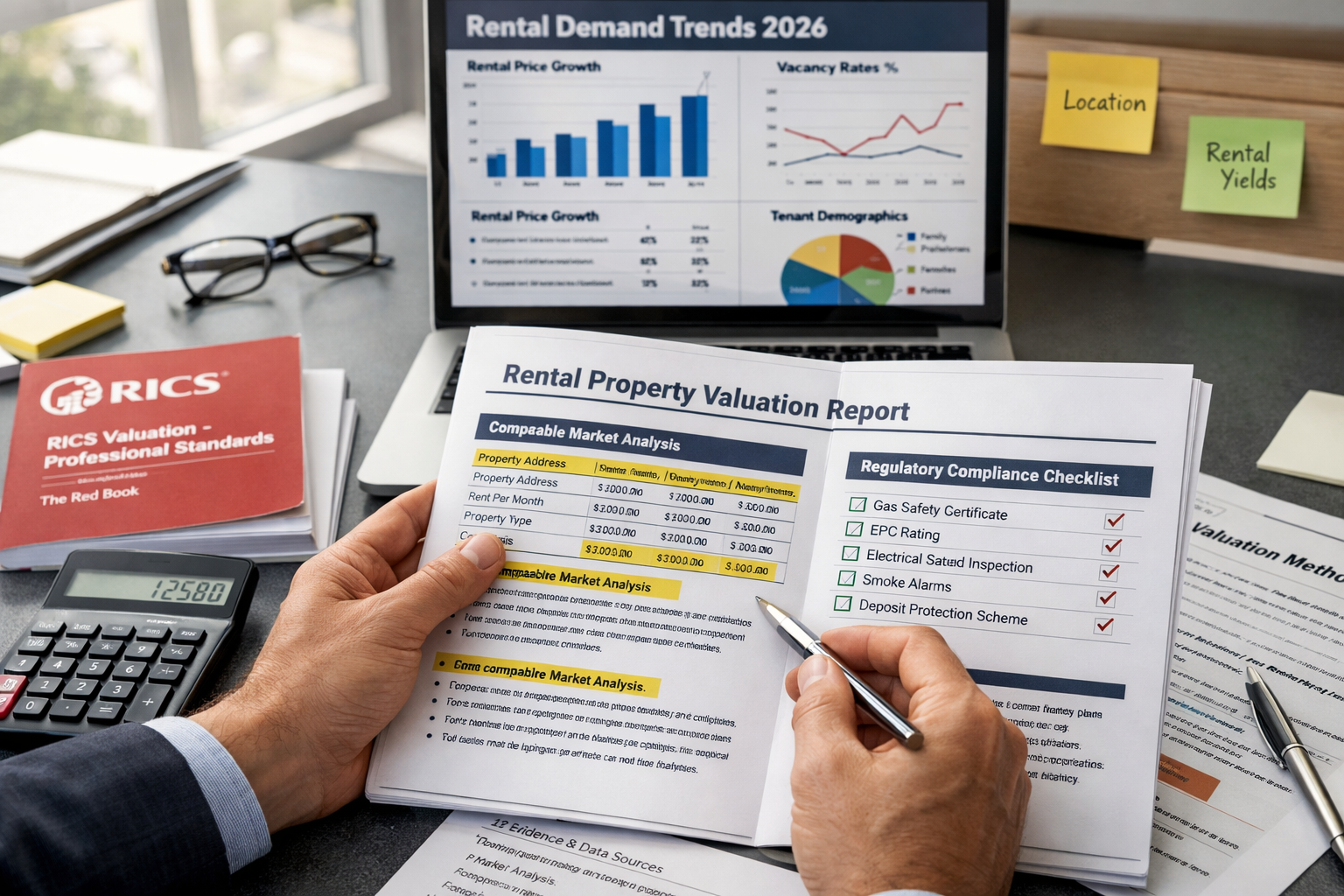
Preparing Expert Witness Evidence for Rental Regulation Disputes: Preparing Valuations in 2026 Tenant Demand Uptick
Creating defensible expert witness evidence for rental disputes requires meticulous preparation and adherence to established professional standards. In 2026's heightened regulatory environment, experts must demonstrate not only technical competence but also comprehensive understanding of market dynamics and regulatory impacts.
Step 1: Establishing Your Qualifications and Methodology
Before conducting any valuation analysis, experts must establish their credentials and analytical framework. Courts scrutinize expert qualifications more rigorously following the Rule 702 amendments, requiring clear demonstration of:
- Professional accreditation: RICS membership, relevant surveying qualifications, and specialized training in rental property valuation
- Relevant experience: Track record of similar valuations, familiarity with local rental markets, and previous expert witness testimony
- Methodological foundation: Clear articulation of valuation approaches grounded in accepted professional standards
Experts should prepare detailed CVs highlighting relevant experience and maintain documentation of continuing professional development. The methodology section of expert reports must explicitly reference industry standards, such as the RICS Red Book valuation guidelines, establishing the theoretical foundation for analytical approaches.
Step 2: Comprehensive Data Collection and Market Analysis
Robust expert witness evidence requires exhaustive data collection across multiple dimensions. For rental regulation disputes in 2026, this includes:
Primary Market Data:
- 🔍 Comparable rental properties (location, size, condition, amenities)
- 📊 Historical rental trends for the subject property and comparable properties
- 📈 Current market demand indicators (vacancy rates, time-to-let, application volumes)
- 💰 Recent letting transactions in the relevant geographic area
Regulatory Compliance Data:
- 📋 Applicable rent control ordinances and their specific provisions
- 🏛️ Local authority licensing requirements and compliance costs
- ⚡ Energy efficiency standards and improvement requirements
- 🔨 Habitability standards and any outstanding code violations
Property-Specific Information:
- 📐 Detailed property measurements and specifications
- 🏗️ Condition assessment and required repairs
- 📄 Lease terms and tenancy history
- 💡 Utility provisions and included services
The Emmons v. Jesso case demonstrated the importance of incorporating city agency records and regulatory documentation into expert analysis [1]. Experts should obtain official records from relevant authorities, including planning departments, building control, and licensing agencies.
Step 3: Valuation Analysis and Regulatory Impact Assessment
The core analytical work involves applying recognized valuation methodologies while accounting for regulatory constraints. For rent review purposes and dispute resolution, experts typically employ:
Comparative Method:
Analyzing recent lettings of comparable properties to establish market rental value. In 2026's complex regulatory environment, comparables must be adjusted for:
- Differences in property characteristics (size, condition, location)
- Timing differences (market movement between comparable transactions and valuation date)
- Regulatory differences (whether comparables are subject to same controls)
Investment Method:
Calculating rental value based on property investment value and expected returns. This approach requires consideration of:
- Current property values in the area
- Expected yields for similar rental investments
- Regulatory impacts on landlord costs and flexibility
Residual Method:
Particularly relevant when properties require improvements to meet habitability or energy efficiency standards. This involves:
- Calculating costs to achieve regulatory compliance
- Assessing rental value uplift from improvements
- Determining economically viable rental levels
Regulatory Impact Analysis forms a distinct component of 2026 rental dispute valuations. Experts must explicitly address:
- How rent control measures affect achievable rental income
- Compliance costs associated with current regulations
- Impact of tenant protection provisions on landlord flexibility
- Market distortions created by regulatory interventions
This analysis should distinguish between market rent (what a property would command in an unregulated market) and regulated rent (what can legally be charged under current restrictions). The differential between these figures often forms the crux of rental disputes.
Step 4: Interest Rate Volatility and Economic Factors
The 2026 rental market operates against a backdrop of continued interest rate uncertainty, creating additional valuation complexities. Recent analysis indicates that property disputes increasingly involve interest rate volatility considerations [6], requiring experts to address:
- Financing cost impacts: How changing interest rates affect landlord costs and required returns
- Investment yield expectations: Market yield requirements for rental property investments in current economic conditions
- Affordability constraints: How interest rate-driven mortgage costs influence rental demand and tenant affordability
- Market liquidity: The availability of rental properties and impact on pricing dynamics
Experts should incorporate economic forecasts and market intelligence into their analysis, while clearly distinguishing between current market conditions and speculative future projections. Courts value expert opinions grounded in observable data rather than conjecture.
Step 5: Documentation and Report Preparation
The final expert report represents the culmination of analytical work and must satisfy both professional standards and legal admissibility requirements. Key components include:
Executive Summary:
Concise overview of instructions, methodology, key findings, and conclusions. This section should clearly state the rental valuation figure and confidence level.
Expert Qualifications:
Detailed CV and statement of relevant experience, demonstrating expertise in rental property valuation and familiarity with applicable regulations.
Methodology Section:
Comprehensive explanation of analytical approaches, with explicit reference to professional standards (RICS Red Book) and validation of methods through academic or industry literature.
Data and Evidence:
Presentation of all data relied upon, including comparable evidence, regulatory documentation, property inspection findings, and market research. This section must be sufficiently detailed to allow independent verification.
Analysis and Findings:
Step-by-step explanation of how data was analyzed and conclusions reached. This should include:
- Comparable property adjustments with detailed reasoning
- Regulatory impact calculations with supporting evidence
- Market trend analysis with data sources
- Alternative scenarios or sensitivity analysis where appropriate
Conclusions:
Clear statement of rental valuation opinion with appropriate caveats and limitations. Experts should acknowledge uncertainties and explain confidence levels.
Appendices:
Supporting documentation including photographs, floor plans, comparable property details, regulatory documents, and calculation spreadsheets.
The report must demonstrate the "reliable application" of methodology to case facts, satisfying Rule 702 requirements [2]. Each analytical step should be transparent and replicable, allowing opposing experts or the court to follow the reasoning process.
Step 6: Preparing for Cross-Examination
Even the most thorough expert report will face scrutiny during testimony. Preparation for cross-examination involves:
- Anticipating challenges: Identifying potential weaknesses in methodology or data and preparing responses
- Understanding opposing positions: Reviewing contrary expert reports and developing rebuttals
- Maintaining objectivity: Ensuring testimony remains impartial and focused on professional opinion rather than advocacy
- Clarifying limitations: Being prepared to acknowledge uncertainties or data gaps honestly
Experts should work closely with instructing solicitors to understand the legal context and strategic considerations, while maintaining professional independence. The Emmons case demonstrated that expert credibility significantly influences case outcomes [1], making preparation and professional demeanor critical success factors.
Common Pitfalls in Rental Dispute Valuations
Even experienced experts can encounter challenges when preparing evidence for rental regulation disputes. Awareness of common pitfalls helps ensure robust, defensible valuations:
❌ Insufficient Comparable Evidence
The problem: Relying on too few comparables or using properties that aren't truly comparable in key characteristics.
The solution: Cast a wide net initially, then carefully filter comparables based on objective criteria. Document why certain properties were excluded from analysis. In markets with limited direct comparables, explain adjustments clearly and conservatively.
❌ Ignoring Regulatory Nuances
The problem: Failing to account for specific provisions of rent control ordinances or misunderstanding how regulations apply to the subject property.
The solution: Obtain and review complete regulatory texts, not just summaries. Consult with legal professionals when interpretation questions arise. Clearly state regulatory assumptions in reports.
❌ Inadequate Documentation
The problem: Failing to maintain comprehensive records of data sources, analytical decisions, and methodology applications.
The solution: Maintain detailed working files throughout the valuation process. Document every data source with dates and access methods. Create audit trails for all calculations and adjustments.
❌ Overstepping Expert Role
The problem: Offering opinions on legal questions or policy matters outside valuation expertise.
The solution: Clearly distinguish between factual valuation findings and legal or policy interpretations. Defer to legal professionals on questions of law while providing factual context for legal decision-making.
❌ Inadequate Market Research
The problem: Relying on outdated market data or failing to capture current demand conditions in 2026's dynamic rental market.
The solution: Use the most recent available data, clearly stating valuation dates. Supplement formal databases with direct market intelligence from letting agents and property managers. Document market research methodology thoroughly.
The Role of Professional Standards and RICS Compliance
Professional accreditation and adherence to recognized standards form the foundation of credible expert witness evidence. The RICS Red Book provides comprehensive guidance for property valuations, establishing methodological frameworks that courts recognize and respect.
Key RICS standards relevant to rental dispute valuations include:
- VPS 1 (Terms of Engagement): Establishing clear instructions and scope of work
- VPS 2 (Inspections, Investigations and Records): Documenting property investigations thoroughly
- VPS 3 (Valuation Reports): Ensuring reports meet professional communication standards
- VPS 4 (Bases of Value): Correctly identifying and applying appropriate valuation bases
- VPGA 4 (Valuation of Individual Trade Related Properties): Relevant for properties with commercial elements
Compliance with these standards demonstrates methodological reliability, directly addressing Rule 702 admissibility requirements [2]. Experts should explicitly reference applicable RICS standards in their reports and explain how their methodology aligns with professional guidance.
For commercial property valuations involving rental disputes, additional considerations apply regarding lease terms, tenant covenants, and investment market dynamics. Experts must demonstrate specialized knowledge appropriate to property type and dispute context.
Emerging Trends in 2026 Rental Dispute Evidence
The rental dispute landscape continues evolving, with several emerging trends shaping expert witness practice in 2026:
AI and Data Analytics in Valuation
Artificial intelligence and advanced data analytics are increasingly incorporated into rental valuations, offering enhanced market analysis capabilities. However, proposed federal rules regarding AI-generated evidence [5] suggest courts will scrutinize algorithmic outputs carefully. Experts must be prepared to explain:
- How AI tools were used in analysis
- Validation of AI-generated outputs against traditional methods
- Limitations and potential biases in algorithmic approaches
- Human oversight and professional judgment in final conclusions
Enhanced Geographic Market Analysis
2026's rental market exhibits significant geographic variation, with micro-market dynamics playing crucial roles in valuations. Experts increasingly employ sophisticated geographic information systems (GIS) to analyze location-specific factors including:
- Transport accessibility and commute times
- Local amenity provision and neighborhood characteristics
- School catchment areas and education quality
- Crime rates and safety perceptions
- Future development plans and area regeneration
This granular analysis helps distinguish properties that might appear comparable on basic metrics but command different rental values due to location nuances.
Sustainability and Energy Efficiency Premiums
With stricter energy efficiency requirements in 2026, the rental premium for sustainable properties has become more pronounced. Expert valuations must quantify:
- Rental uplift associated with higher EPC ratings
- Tenant willingness to pay for energy-efficient properties
- Compliance costs for properties below minimum standards
- Market differentiation between standard and sustainable properties
This analysis requires specialized knowledge of building performance and energy markets, representing an evolving area of expert competency.
Practical Considerations for Instructing Expert Witnesses
For legal professionals and parties instructing expert witnesses in rental regulation disputes, several practical considerations ensure effective expert engagement:
Selecting the Right Expert
Not all property valuers possess the specialized knowledge required for rental dispute evidence. Selection criteria should include:
- RICS accreditation with relevant specializations
- Local market knowledge specific to the subject property's area
- Expert witness experience with track record of admissible testimony
- Regulatory expertise understanding current rental regulations
- Communication skills ability to explain complex concepts clearly
The expert witness report services offered by qualified surveyors should include comprehensive methodology documentation and adherence to professional standards.
Providing Clear Instructions
Expert effectiveness depends on clear, comprehensive instructions that specify:
- Precise questions to be addressed
- Relevant documents and data to be reviewed
- Timeline and deadlines for report delivery
- Budget parameters and fee arrangements
- Anticipated testimony requirements
Early engagement of experts allows adequate time for thorough analysis and can identify evidentiary gaps requiring additional investigation.
Managing Expert Independence
While experts are instructed by one party, they owe duties to the court requiring impartiality. Instructing parties should:
- Avoid pressuring experts toward predetermined conclusions
- Provide complete information, including potentially adverse facts
- Respect expert professional judgment and methodology
- Facilitate expert access to necessary property inspections and data
This approach ensures expert evidence maintains credibility and satisfies admissibility standards.
Case Study: Applying Expert Witness Evidence in a 2026 Rental Dispute
Scenario: A landlord in Central London seeks to increase rent from £2,400 to £3,200 per month for a two-bedroom flat. The tenant contests the increase, arguing it exceeds market rates and violates local rent stabilization measures. Both parties engage expert witnesses to prepare rental valuations.
Expert Approach:
- Property inspection: Detailed assessment of the flat's condition, specifications, and amenities
- Comparable analysis: Identification of 12 comparable properties let within the past six months, with detailed adjustments for differences
- Regulatory review: Analysis of applicable rent increase limitations under local authority measures
- Market demand assessment: Evaluation of current tenant demand indicators in the specific neighborhood
- Economic context: Consideration of 2026 interest rate environment and affordability factors
Key Findings:
- Market rent for comparable properties: £2,850-£3,050 per month
- Regulatory maximum increase: 8% above current rent = £2,592 per month
- Property condition issues requiring attention before commanding premium rates
- Strong tenant demand in area supporting upper-market positioning
Expert Conclusion: The proposed £3,200 rent exceeds both market rates and regulatory limits. A justified market rent of £2,900 per month could be achieved following property improvements, but current regulatory constraints limit the lawful increase to £2,592.
Outcome: The expert evidence provided clear, defensible analysis that facilitated settlement negotiations, avoiding costly litigation. Both parties accepted a phased increase approach with property improvements, demonstrating how quality expert evidence can resolve disputes efficiently.
Integration with Broader Property Valuation Services
Expert witness evidence for rental disputes often connects with other property valuation services. Understanding these relationships helps parties obtain comprehensive professional support:
- Lease extension valuations: Rental value assessments form components of lease extension calculations
- Retrospective valuations: Historical rental values may be required for dispute resolution
- Right to buy valuations: Rental income potential affects property valuations in right-to-buy scenarios
- Capital gains tax valuations: Rental property valuations impact tax liability calculations
Engaging surveyors who offer comprehensive services ensures consistency across related valuation requirements and provides parties with integrated professional support.
Conclusion
Expert Witness Evidence for Rental Regulation Disputes: Preparing Valuations in 2026 Tenant Demand Uptick requires sophisticated analytical capabilities, comprehensive regulatory knowledge, and rigorous adherence to professional standards. The heightened admissibility requirements under amended Federal Rule 702, combined with precedents like Emmons v. Jesso, have raised the bar for expert witness testimony in rental disputes [1][2].
Property professionals preparing expert evidence must demonstrate:
✅ Methodological rigor grounded in RICS standards and accepted valuation practices
✅ Comprehensive data collection incorporating market evidence and regulatory documentation
✅ Transparent analysis showing clear connections between methodology and conclusions
✅ Professional independence maintaining objectivity despite party instruction
✅ Effective communication explaining complex concepts clearly for legal audiences
The 2026 rental market's unique characteristics—stricter regulations intersecting with heightened tenant demand—create valuation challenges requiring specialized expertise. Interest rate volatility, sustainability requirements, and evolving regulatory frameworks add layers of complexity to traditional rental valuations [6].
Actionable Next Steps
For property professionals seeking to develop expert witness capabilities:
- Pursue specialized RICS training in expert witness practice
- Build comprehensive knowledge of local rental regulations
- Develop robust methodological frameworks with clear documentation protocols
- Gain experience through mentorship with established expert witnesses
For parties facing rental disputes:
- Engage qualified experts early in dispute processes
- Provide comprehensive instructions and documentation
- Ensure experts have adequate time for thorough analysis
- Consider expert evidence as investment in dispute resolution efficiency
For legal professionals instructing experts:
- Understand Rule 702 admissibility requirements and prepare experts accordingly
- Facilitate expert independence while providing necessary case context
- Review draft reports for methodological clarity and completeness
- Prepare experts thoroughly for potential cross-examination
The rental regulation landscape will continue evolving, but the fundamental principles of rigorous methodology, comprehensive evidence, and professional integrity remain constant. By adhering to these principles and staying current with regulatory developments, expert witnesses can provide invaluable guidance in resolving complex rental disputes fairly and efficiently.
For professional expert witness report services and rental valuation support, engaging RICS-accredited surveyors with specialized rental market expertise ensures compliance with current standards and maximizes the credibility of expert evidence in 2026's challenging dispute environment.
References
[1] Leasing Expert Witness Testimony Shapes Outcome In Emmons V Jesso A Landmark Expert Witness Case – https://www.expertwitnessblog.com/leasing-expert-witness-testimony-shapes-outcome-in-emmons-v-jesso-a-landmark-expert-witness-case/
[2] Important Changes To Rule 702 And Expert Testimony – https://www.mcguirewoods.com/client-resources/alerts/2024/1/important-changes-to-rule-702-and-expert-testimony/
[3] Op Ed The Benefits Of Updating The Admissibility Of Expert Testimony – https://themissouritimes.com/op-ed-the-benefits-of-updating-the-admissibility-of-expert-testimony/
[5] Proposed New Federal Rule Regarding Ai Generated Evidence – https://www.meyersnave.com/proposed-new-federal-rule-regarding-ai-generated-evidence/
[6] Expert Witness Challenges In 2026 Interest Rate Volatility Disputes Rics Data Driven Preparation – https://nottinghillsurveyors.com/blog/expert-witness-challenges-in-2026-interest-rate-volatility-disputes-rics-data-driven-preparation
[7] Federal Rules Of Evidence – https://www.forensisgroup.com/resources/expert-legal-witness-blog/federal-rules-of-evidence