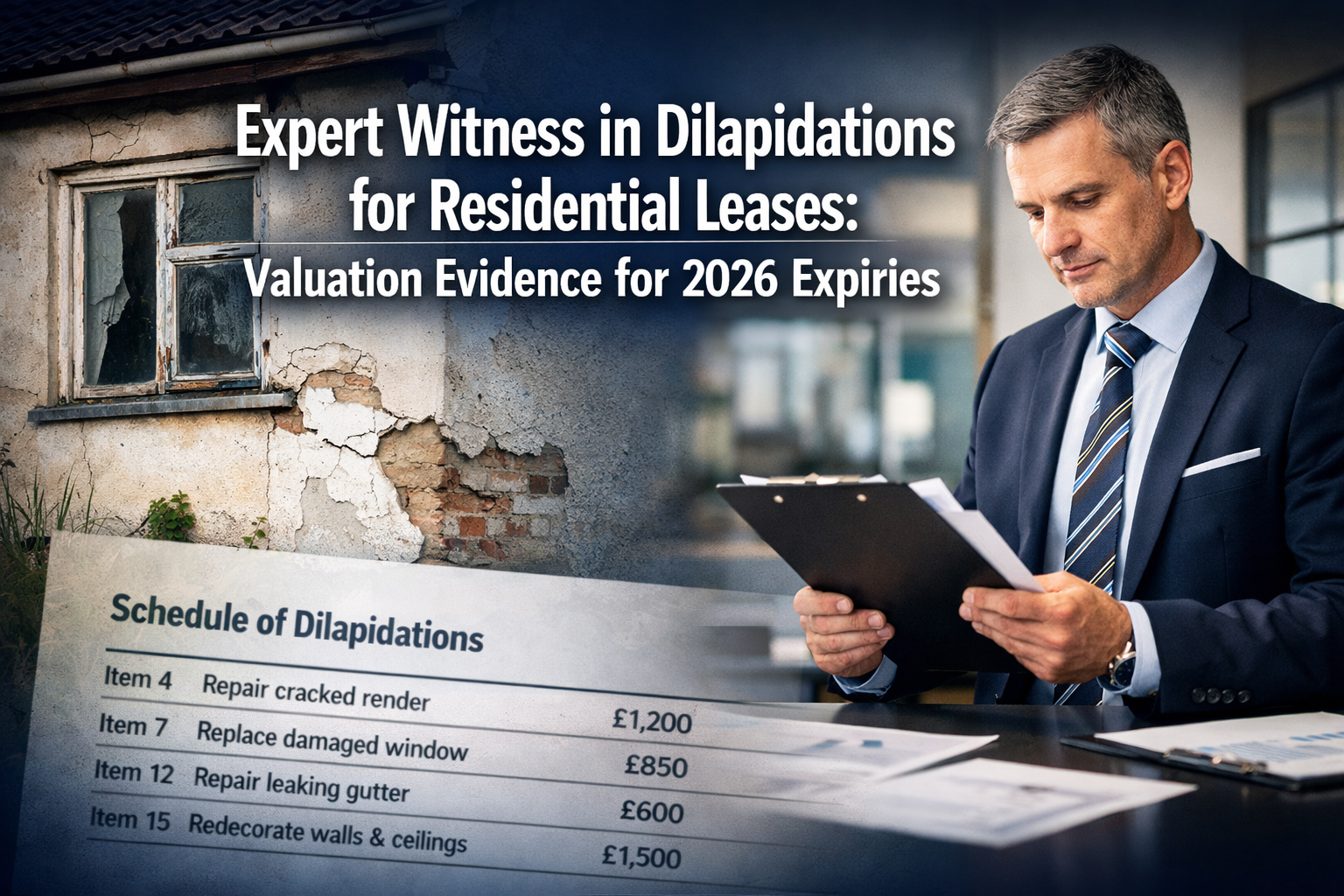

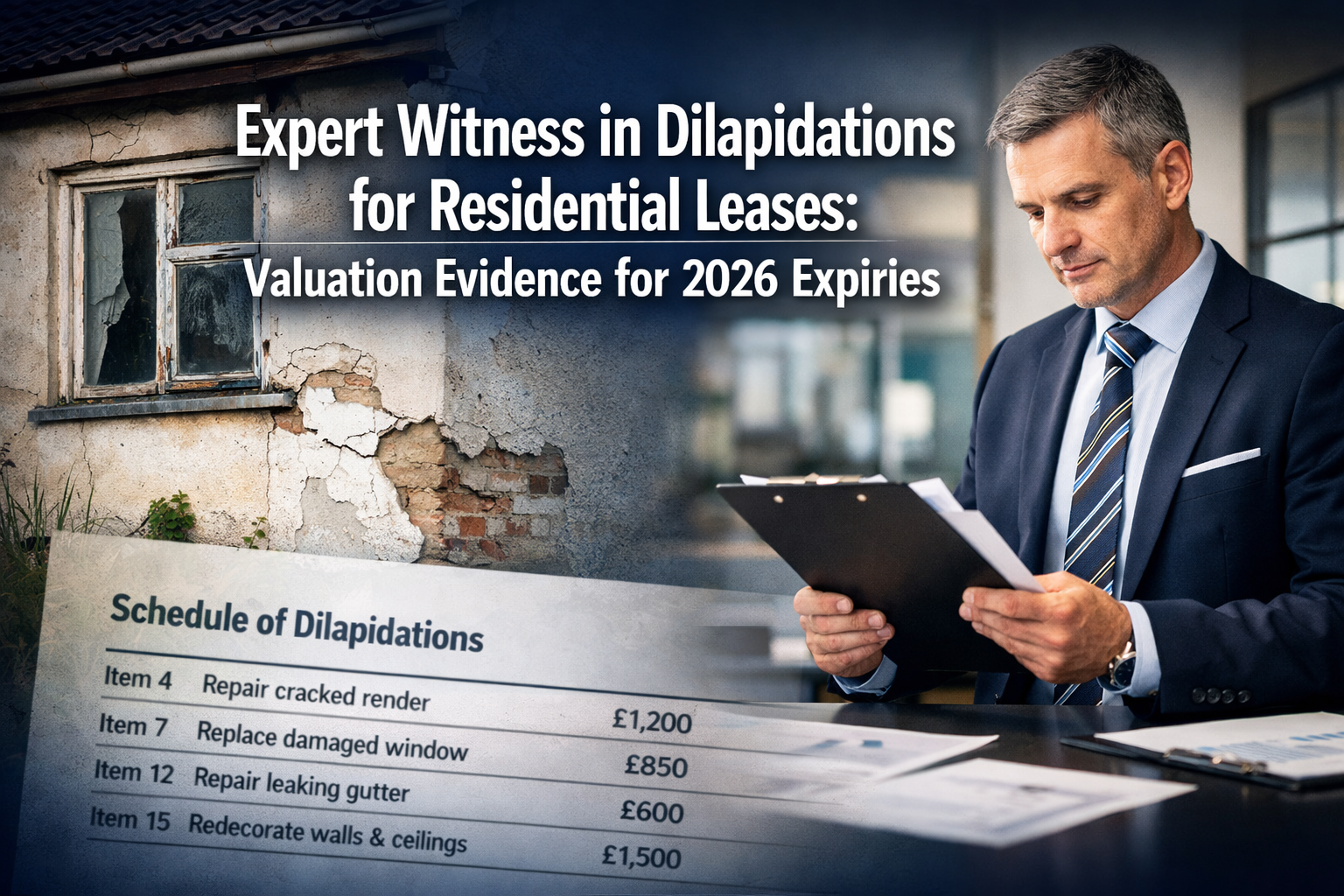
Residential lease disputes are escalating sharply as thousands of tenancies reach expiration in 2026, with landlords and tenants locked in contentious disagreements over property condition and repair costs. Unlike commercial dilapidations where business relationships often facilitate negotiation, residential cases involve personal homes and emotional stakes that frequently escalate to formal legal proceedings. The role of an Expert Witness in Dilapidations for Residential Leases: Valuation Evidence for 2026 Expiries has become critical as courts demand rigorous, defensible evidence to resolve disputes over who pays for what damage.
The complexity of these disputes extends beyond simple repair cost calculations. Expert witnesses must navigate lease interpretation, distinguish between fair wear and tear versus tenant neglect, apply proper valuation methodologies, and present findings that withstand cross-examination. With the UK's Renters' Rights Act 2026 taking effect on May 1st, 2026, the landscape is shifting dramatically, requiring expert witnesses to understand both traditional dilapidations principles and emerging regulatory frameworks that affect property valuations and tenant obligations.
Key Takeaways
✅ Formal schedules are mandatory: Terminal schedules must be served within 56 days of lease end under the Dilapidations Protocol, with tenants having 56 days to respond before litigation can commence.
✅ Three schedule types serve different purposes: Terminal, interim, and final schedules each have distinct timing, legal remedies, and strategic implications for both landlords and tenants.
✅ Expert witness methodology is comprehensive: Effective valuation evidence requires reviewing lease agreements, property inspections, market comparables, industry standards, and regulatory compliance documentation.
✅ 2026 regulatory changes impact valuations: The Renters' Rights Act 2026 triggers substantial recalibration of rental property valuations, affecting expert witness standards for properties with 2026 expiries.
✅ Court admissibility requires specialized knowledge: Expert witnesses must demonstrate demonstrable expertise, use recognized methodologies, and provide impartial evidence that assists the court rather than advocates for either party.
Understanding Residential Dilapidations and Expert Witness Requirements
What Constitutes Dilapidations in Residential Leases
Dilapidations represent the breaches of tenant obligations regarding property maintenance, repair, and reinstatement as specified in lease agreements. In residential contexts, these obligations typically include:
- Repairing obligations: Maintaining the property's structure, fixtures, and fittings in good condition
- Decorating obligations: Keeping interior and exterior surfaces properly painted and decorated
- Reinstatement obligations: Removing tenant alterations and restoring original configurations
- Statutory compliance: Ensuring gas, electrical, and fire safety standards are maintained
The distinction between fair wear and tear and actionable disrepair remains central to residential dilapidations disputes. Fair wear and tear refers to deterioration resulting from reasonable use over time, which tenants are not responsible for remedying. Determining this boundary requires expert judgment based on property age, lease duration, and usage patterns.
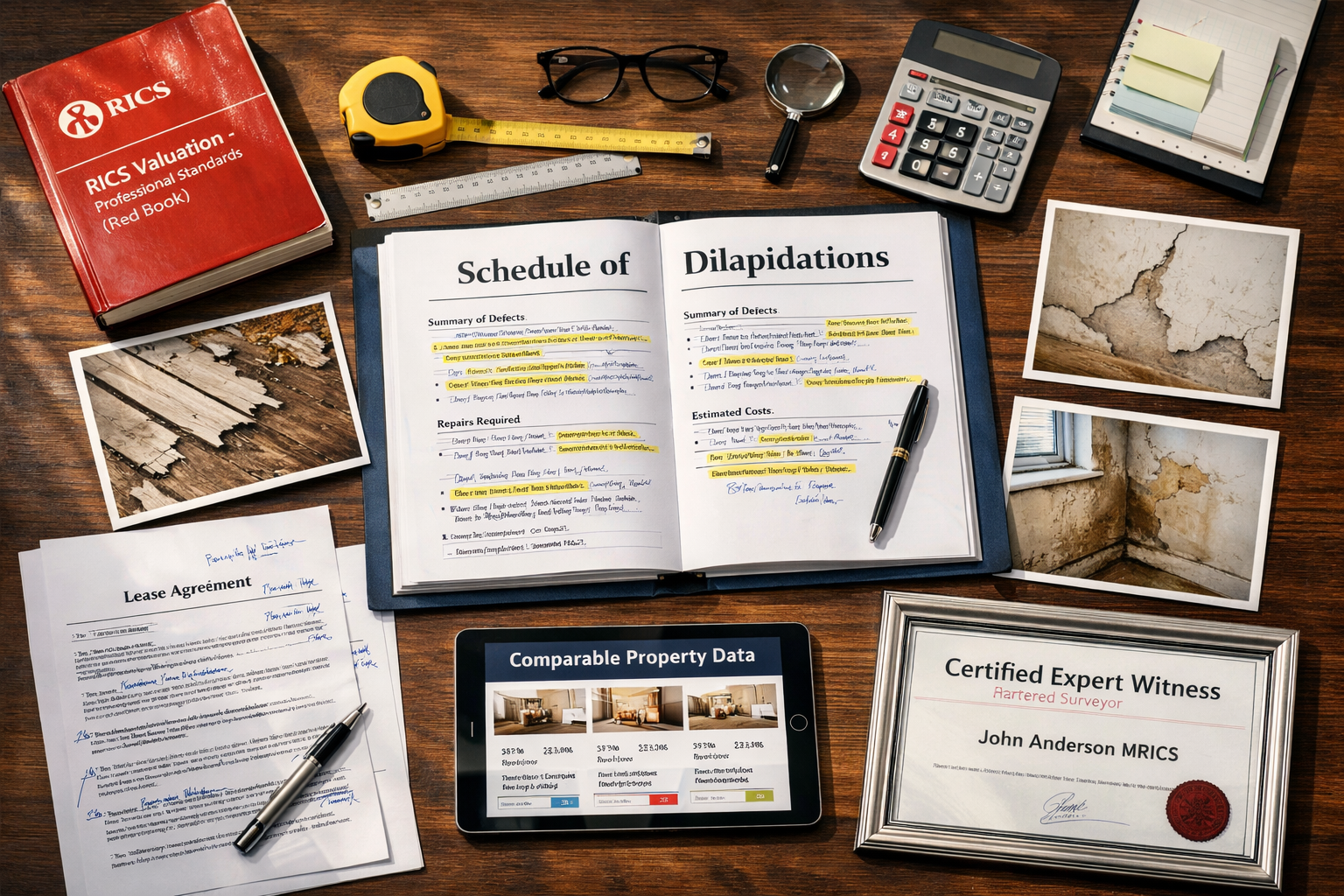
A schedule of dilapidations is a formal document listing every alleged breach of tenant lease obligations, required remedial works, and estimated costs, typically prepared by chartered building surveyors who inspect properties room-by-room and compare findings against specific lease obligations.[1]
The Role of Expert Witnesses in Residential Lease Disputes
Expert witnesses in residential dilapidations cases serve multiple critical functions:
🔍 Assessment and quantification: Conducting detailed property inspections to identify defects, determine causation, and calculate repair costs using recognized industry standards.
📊 Valuation evidence: Providing diminution valuations that quantify how dilapidations affect property market value, which may limit landlord recovery under Section 18 of the Landlord and Tenant Act 1927.
⚖️ Court testimony: Presenting findings clearly to judges and juries, explaining technical concepts in accessible language, and withstanding cross-examination from opposing counsel.
📋 Independent opinion: Offering impartial professional judgment that assists the court rather than advocating for the instructing party.
In the 2025 Emmons v. Jesso California case, leasing expert witness testimony proved decisive, with the jury crediting expert explanations of lease terms and industry standards, demonstrating the critical impact of expert evidence in landlord-tenant disputes.[2] This case underscores how expert witness credibility can determine case outcomes when technical property and valuation issues are central to disputes.
Qualifications and Credentials for Expert Witnesses
Effective expert witnesses in residential dilapidations typically possess:
- Professional qualifications: RICS (Royal Institution of Chartered Surveyors) membership, particularly MRICS or FRICS designations
- Specialist experience: Demonstrated expertise in building pathology, repair cost estimation, and residential property valuation
- Expert witness training: Formal instruction in Civil Procedure Rules, expert duties, and report writing standards
- Professional indemnity insurance: Adequate coverage for expert witness activities
- Independence: No conflicts of interest with parties to the dispute
The requirement for demonstrable specialized knowledge means courts scrutinize expert credentials carefully.[5] Surveyors providing expert witness reports in London must maintain current knowledge of building regulations, construction costs, and property market conditions.
Types of Dilapidations Schedules and Their Strategic Implications
Terminal Schedules: Pre-Expiry Strategic Documentation
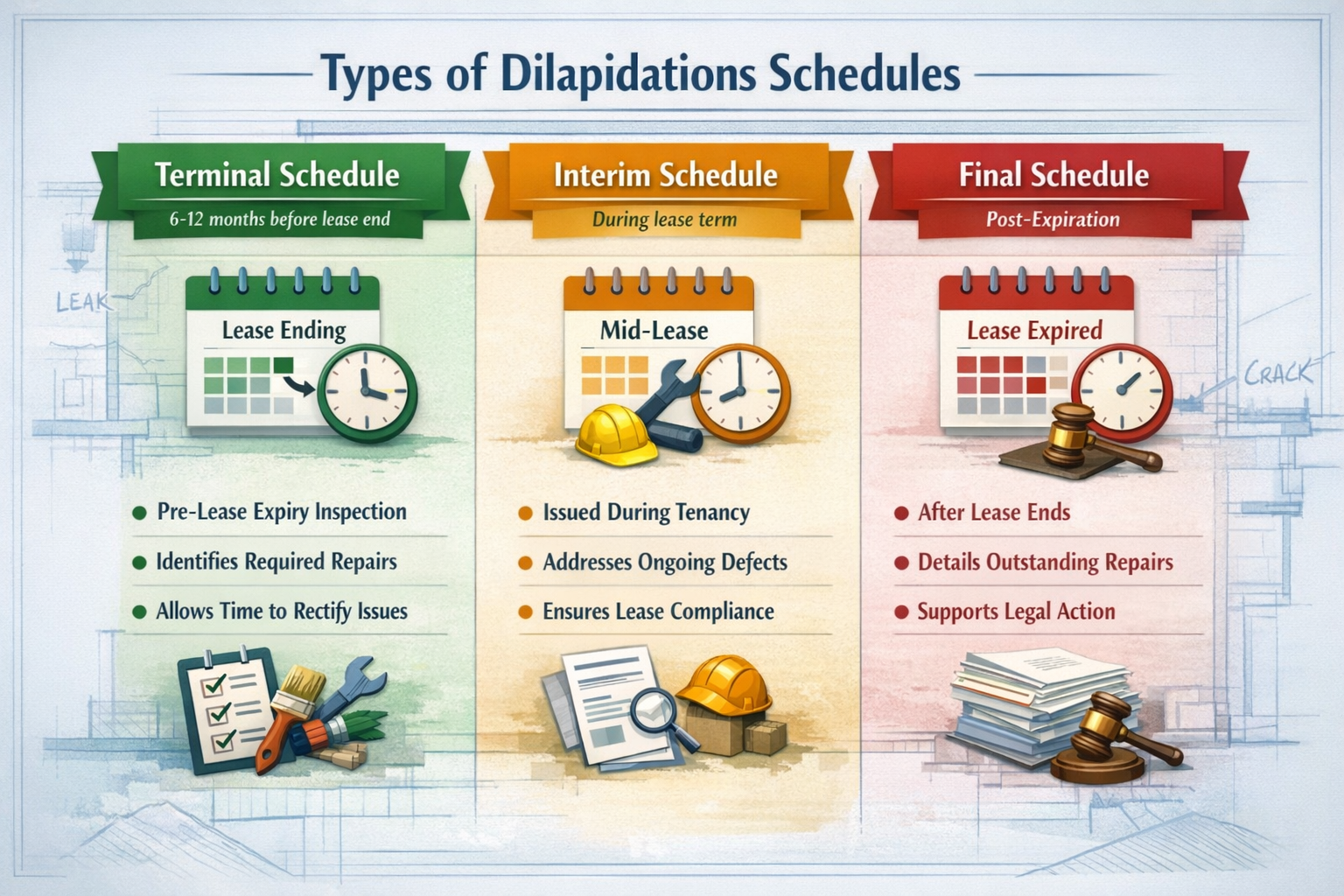
Terminal schedules are served in the final 6-12 months of a lease term and represent the most common form of dilapidations documentation.[1] These schedules serve strategic purposes for both parties:
For landlords:
- Provide formal notice of alleged breaches before lease expiration
- Allow negotiation while tenant remains in occupation
- Preserve evidence of property condition at a specific point in time
- Facilitate potential settlement before costly litigation
For tenants:
- Offer opportunity to undertake remedial works directly (often more cost-effective than paying damages)
- Enable negotiation of disputed items while lease obligations remain active
- Allow time to obtain competing repair cost estimates
- Provide clarity on landlord expectations before final liability crystallizes
The timing of terminal schedules is crucial. Serving too early (more than 12 months before expiry) may result in subsequent deterioration requiring schedule updates. Serving too late limits tenant opportunity to remedy breaches before lease end.
Interim Schedules: Addressing Urgent Maintenance Issues
Interim schedules are served during the lease term when urgent maintenance issues arise that could cause progressive damage if left unaddressed.[1] Common scenarios include:
- Water ingress causing structural deterioration
- Failed heating systems risking freeze damage
- Electrical hazards creating safety risks
- Pest infestations spreading throughout the property
Interim schedules are less common in residential leases than commercial contexts but become relevant when:
✓ Lease terms are lengthy (5+ years)
✓ Properties are high-value with significant reinstatement obligations
✓ Tenant neglect is causing accelerating damage
✓ Landlord wishes to preserve rights without waiting until lease end
The legal remedy for interim schedules is specific performance (court order compelling tenant to undertake works) rather than damages, making them procedurally complex and typically reserved for serious breaches.
Final Schedules: Post-Expiration Claims for Damages
Final schedules are prepared after lease expiration when the tenant has vacated and only damages remain available as remedy.[1] These schedules differ from terminal schedules in several important respects:
| Aspect | Terminal Schedule | Final Schedule |
|---|---|---|
| Timing | 6-12 months before lease end | After lease expiration |
| Tenant remedy | Can undertake works directly | Cannot access property; only damages payable |
| Evidence base | Property inspection with tenant present | Post-vacation inspection |
| Cost basis | Actual repair costs | Landlord's actual or intended expenditure |
| Section 18 cap | Not yet applicable | Diminution valuation may limit recovery |
Final schedules must comply with the Dilapidations Protocol under Civil Procedure Rules, which mandates landlords serve schedules within 56 days of lease end, with tenants responding within 56 days and mandatory alternative dispute resolution consideration before court proceedings.[1]
Expert witnesses preparing final schedules must carefully document property condition immediately post-vacation, as evidence deteriorates rapidly once properties become vacant and exposed to weather, vandalism, or subsequent landlord works.
Expert Witness Methodology for Valuation Evidence in 2026 Expiries
Comprehensive Evidence Gathering and Review
Real estate leasing expert witnesses gather and review multiple evidence categories to support testimony:[3]
📄 Lease documentation: Complete lease agreements, schedules of condition, inventory reports, and any lease variations or side agreements affecting repair obligations.
📸 Property condition evidence: Detailed photographic and video documentation of all defects, with measurements, locations, and contextual information showing extent and severity.
📊 Market analysis: Comparable rental and sales evidence for similar properties in similar condition, demonstrating market value implications of dilapidations.
📋 Industry standards: Reference to RICS guidance, building regulations, British Standards, and manufacturer specifications establishing appropriate repair standards.
🏛️ Regulatory compliance: Documentation of gas safety certificates, electrical inspection reports, EPC ratings, and other statutory compliance matters affecting property condition and value.
💰 Cost evidence: Contractor quotations, schedule of rates, and price books (such as BCIS or Spon's) supporting repair cost estimates.
This comprehensive approach ensures expert opinions rest on verifiable evidence rather than speculation. For properties with commercial dilapidations, similar methodologies apply but with additional complexity regarding business use implications.
Distinguishing Fair Wear and Tear from Actionable Disrepair
One of the most contentious aspects of residential dilapidations involves determining what constitutes fair wear and tear versus tenant-caused damage requiring remedy. Expert witnesses apply several analytical frameworks:
Age and condition assessment: Evaluating whether deterioration is consistent with the property's age, original construction quality, and expected lifespan of components. A 15-year-old carpet showing wear in high-traffic areas likely represents fair wear and tear, while burn marks or stains indicate tenant damage.
Lease duration correlation: Longer tenancies naturally result in greater wear. A five-year residential tenancy will show more legitimate wear than a six-month let, affecting expectations for decorative condition.
Usage intensity: Assessing whether property use was consistent with lease terms. A two-bedroom flat let to a couple will experience different wear patterns than the same property occupied by a family with young children and pets.
Maintenance history: Reviewing whether the tenant undertook reasonable ongoing maintenance. Failure to clean gutters leading to overflow damage may constitute neglect rather than fair wear and tear.
Expert witnesses must articulate these distinctions clearly in reports and testimony, as judges and juries often lack technical knowledge to make these determinations independently. The credibility of expert opinions on fair wear and tear frequently determines case outcomes.
Valuation Methodologies for Diminution Evidence
Section 18 of the Landlord and Tenant Act 1927 caps landlord recovery at the diminution in reversion value caused by dilapidations. This requires expert witnesses to provide comparative valuations:
Compliant condition valuation: The market value of the property assuming the tenant had fully complied with all lease obligations at lease end.
Actual condition valuation: The market value of the property in its actual condition at lease end, reflecting all dilapidations.
Diminution calculation: The difference between these valuations represents the maximum recoverable damages, regardless of actual repair costs.
For properties requiring professional valuation services in London, this analysis must reflect current market conditions, buyer expectations, and realistic refurbishment scenarios. The 2026 market context is particularly important, as property values and buyer attitudes toward condition vary significantly with economic conditions.
Expert witnesses must also consider whether landlords intend to actually undertake repairs or pursue alternative strategies such as redevelopment, as Section 18 prevents recovery for works the landlord will never perform. This requires careful investigation of landlord intentions and supporting evidence.
Impact of the Renters' Rights Act 2026 on Valuation Evidence
The UK's Renters' Rights Act 2026, effective May 1st, 2026, triggers substantial recalibration of rental property valuations.[4] Key implications for expert witnesses assessing properties with 2026 expiries include:
🏠 Regulatory compliance obligations: New standards for property condition, energy efficiency, and safety features affect both repair obligations and property valuations.
📉 Market value adjustments: Properties not meeting new standards may experience valuation discounts, affecting diminution calculations.
⚖️ Lease interpretation: Expert witnesses must consider whether lease obligations should be interpreted in light of new regulatory requirements, even for leases drafted before the Act's passage.
📅 Timing considerations: Properties with leases expiring before May 1st, 2026 versus after may face different valuation standards, creating complexity for expert evidence.
Expert witnesses providing valuation evidence for 2026 expiries must demonstrate current knowledge of these regulatory changes and their market implications. Failure to address the Renters' Rights Act 2026 in expert reports may undermine credibility and result in opinions being given reduced weight by courts.
Court Standards and Expert Witness Testimony Requirements
Civil Procedure Rules and Expert Duties
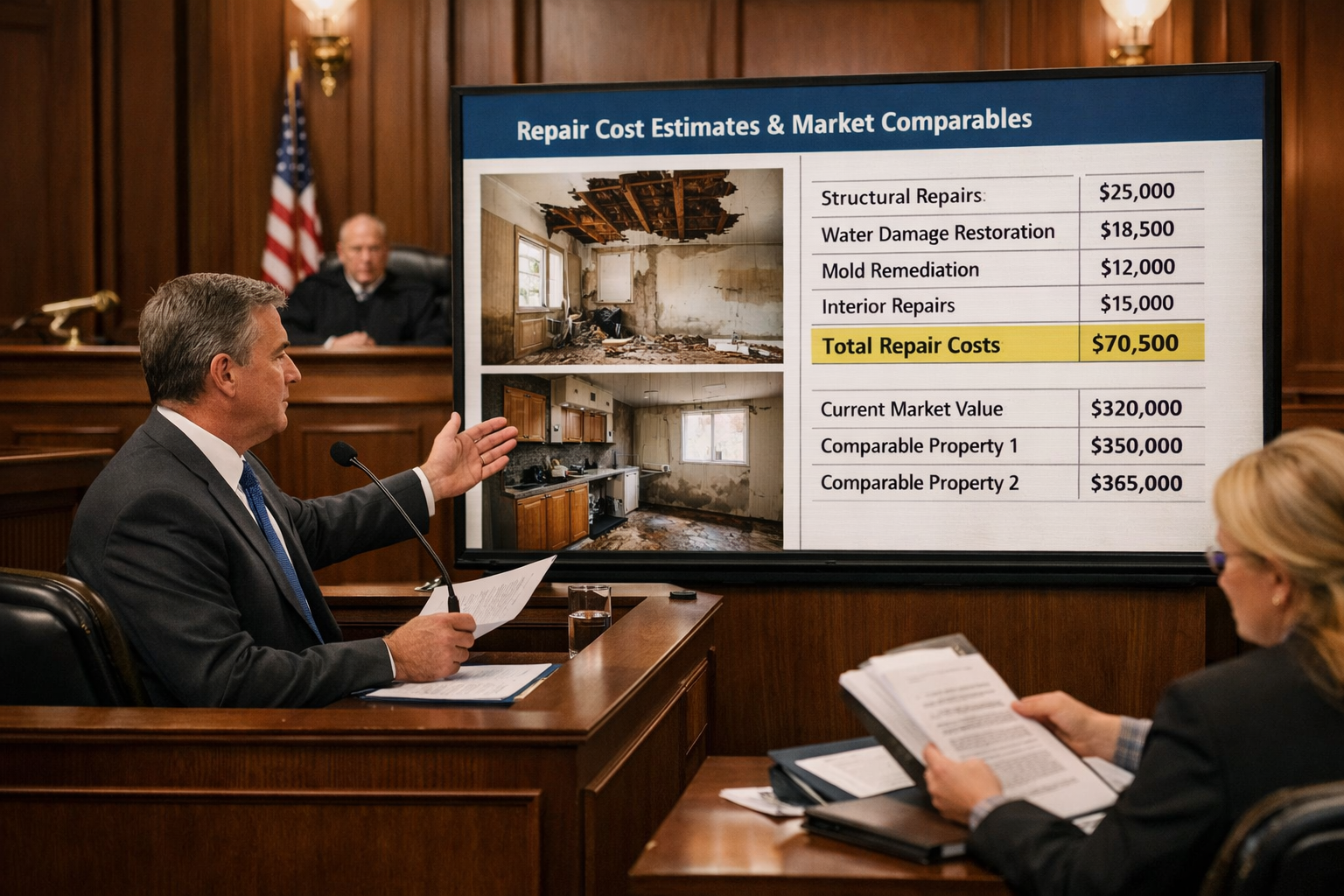
Expert witnesses in residential dilapidations disputes must comply with Civil Procedure Rule Part 35, which establishes fundamental duties:
✓ Overriding duty to the court: Expert witnesses' primary duty is to assist the court impartially, not to advocate for the instructing party.
✓ Matters within expertise: Experts must only provide opinions on matters within their demonstrated area of expertise and acknowledge limitations.
✓ Factual basis transparency: Expert reports must clearly distinguish between facts, assumptions, and opinions, identifying the evidence base for each conclusion.
✓ Range of opinion: Where legitimate professional disagreement exists, experts should acknowledge alternative viewpoints and explain their reasoning for the position taken.
✓ Material changes: Experts must promptly inform instructing parties and the court of any changes in opinion following report submission.
Failure to comply with these duties can result in expert evidence being excluded, costs sanctions against the instructing party, or professional disciplinary proceedings. The RICS registered valuers in London providing expert witness services must maintain awareness of both professional and legal obligations.
Report Structure and Content Requirements
Expert witness reports in residential dilapidations cases typically follow a structured format:
1. Introduction and instructions: Identifying the expert, their qualifications, the instructing party, and the specific questions or issues addressed.
2. Property description: Detailed description of the property, its construction, age, configuration, and any relevant physical characteristics.
3. Lease obligations review: Analysis of specific repair, decoration, and reinstatement obligations contained in the lease agreement.
4. Inspection findings: Room-by-room description of property condition, defects identified, and photographic evidence.
5. Fair wear and tear analysis: Assessment of which items represent legitimate wear versus tenant-caused damage requiring remedy.
6. Schedule of works and costs: Itemized list of required remedial works with specifications and cost estimates based on contractor quotations or recognized price books.
7. Valuation evidence: Diminution valuation comparing compliant condition value with actual condition value, if Section 18 cap is relevant.
8. Conclusions: Summary of key findings and opinions addressing the specific questions posed in instructions.
9. Statement of truth: Declaration that the expert understands their duty to the court and believes the facts stated are true and opinions expressed are correct.
The report must be comprehensible to non-technical readers while maintaining sufficient technical detail to withstand scrutiny from opposing experts. Achieving this balance requires significant skill and experience.
Preparing for Cross-Examination and Concurrent Evidence
Expert witnesses must prepare thoroughly for court testimony, anticipating challenges to their methodology, assumptions, and conclusions:
Common cross-examination themes include:
❓ Questioning qualifications and experience in the specific property type or defect category
❓ Challenging cost estimates as excessive or based on insufficient contractor evidence
❓ Disputing fair wear and tear assessments as too generous or restrictive
❓ Highlighting inconsistencies between report content and testimony
❓ Suggesting bias toward the instructing party or failure to consider alternative explanations
Concurrent evidence (also called "hot tubbing") is increasingly used in property disputes, where experts from both sides give evidence simultaneously, discussing areas of agreement and disagreement directly. This format requires experts to:
- Identify and articulate areas of professional consensus
- Explain technical disagreements in accessible language
- Respond to opposing expert arguments in real-time
- Maintain professional courtesy while defending their positions
Preparation for concurrent evidence includes reviewing opposing expert reports thoroughly, identifying weaknesses in their methodology or assumptions, and preparing clear explanations for differences in opinion.
Practical Considerations for Expert Witness Engagement in 2026
Selecting the Right Expert Witness for Residential Dilapidations
Parties instructing expert witnesses should consider multiple factors:
Specialist experience: Prioritize experts with demonstrated residential property experience rather than primarily commercial practitioners, as construction standards, cost levels, and market dynamics differ significantly.
Local market knowledge: Experts familiar with the specific geographic market provide more credible valuation evidence, particularly for properties in London where market conditions vary substantially by borough.
Expert witness track record: Review previous court appearances, published judgments mentioning the expert, and references from solicitors who have instructed them previously.
Communication skills: Assess the expert's ability to explain technical concepts clearly in writing and orally, as persuasive communication often determines how much weight courts give to expert evidence.
Availability: Confirm the expert can meet court timetables and hearing dates, as last-minute substitutions undermine case preparation.
Fee structure: Understand the expert's charging basis (hourly rates, fixed fees, or staged payments) and obtain clear cost estimates for report preparation and court attendance.
Cost-Benefit Analysis of Expert Witness Engagement
Expert witness fees represent significant litigation costs, typically ranging from £3,000-£10,000+ for report preparation and court attendance. Parties should conduct realistic cost-benefit analysis:
When expert evidence is essential:
- Disputed repair costs exceed £20,000
- Complex technical issues require specialist knowledge (structural defects, damp causation, etc.)
- Diminution valuation could significantly reduce landlord recovery
- Opposing party has already instructed an expert, creating evidence imbalance
When expert evidence may be unnecessary:
- Repair costs are modest and largely undisputed
- Defects are obvious and causation is clear
- Parties are willing to negotiate based on contractor quotations
- Court has indicated it will determine issues based on lay evidence and submissions
The proportionality principle in civil litigation requires costs to be reasonable relative to the sum in dispute. Courts may penalize parties in costs if expert evidence was disproportionate to the issues.
Alternative Dispute Resolution and Expert Involvement
The Dilapidations Protocol mandates parties consider alternative dispute resolution (ADR) before issuing court proceedings.[1] Experts play valuable roles in ADR processes:
Mediation: Experts can provide technical input during mediation sessions, helping parties understand realistic settlement ranges based on evidence rather than emotional positions.
Expert determination: Parties may agree to appoint a single expert whose determination of repair costs or valuation is binding, avoiding court proceedings entirely.
Without prejudice discussions: Experts from both sides may meet to narrow issues, identify areas of agreement, and focus disputes on genuinely contentious matters.
Early neutral evaluation: An independent expert provides a preliminary assessment of case strengths and weaknesses, helping parties make informed settlement decisions.
ADR involvement often resolves disputes more quickly and cost-effectively than full litigation, while still benefiting from expert technical input.
Documentation and Evidence Preservation Strategies
Both landlords and tenants should implement evidence preservation strategies from lease commencement:
📸 Photographic records: Document property condition at lease start, during tenancy (for significant changes), and at lease end with date-stamped, comprehensive photographs.
📋 Maintenance records: Retain receipts, invoices, and correspondence regarding all maintenance, repairs, and improvements undertaken during the tenancy.
📄 Inspection reports: Obtain professional building surveys at lease commencement establishing baseline condition.
✉️ Communication logs: Preserve all correspondence regarding property condition, repair requests, and landlord responses, as these may evidence whether parties complied with lease obligations.
🔧 Contractor documentation: Obtain detailed specifications, quotations, and invoices for any works undertaken, as these support cost evidence in subsequent disputes.
This documentation forms the evidence base expert witnesses rely upon when preparing opinions, and its absence significantly weakens case positions.
Conclusion: Navigating Expert Witness Requirements for 2026 Residential Lease Expiries
The role of an Expert Witness in Dilapidations for Residential Leases: Valuation Evidence for 2026 Expiries has never been more critical or complex. As thousands of residential tenancies reach expiration in 2026, the combination of traditional dilapidations principles, evolving regulatory frameworks under the Renters' Rights Act 2026, and heightened court standards for expert evidence creates a challenging landscape for all parties.
Successful navigation requires understanding that expert witnesses serve the court first and instructing parties second, maintaining independence and objectivity throughout the process. The methodology must be comprehensive, encompassing detailed property inspection, lease obligation analysis, fair wear and tear assessment, repair cost quantification, and diminution valuation where applicable.
The strategic implications of different schedule types—terminal, interim, and final—affect both timing and available remedies, with expert involvement ideally commencing early in the dilapidations process rather than as a last resort before litigation. The Dilapidations Protocol's mandatory ADR consideration provides opportunities for expert-assisted resolution without the costs and delays of full court proceedings.
Actionable Next Steps
For landlords anticipating 2026 lease expiries:
✅ Instruct qualified chartered surveyors to prepare terminal schedules 9-12 months before lease end
✅ Ensure experts have current knowledge of Renters' Rights Act 2026 implications
✅ Obtain diminution valuations early to understand realistic recovery prospects
✅ Consider ADR options before committing to litigation costs
For tenants facing dilapidations claims:
✅ Obtain independent expert advice immediately upon receiving a schedule
✅ Challenge items representing fair wear and tear with evidence-based arguments
✅ Obtain competing repair cost estimates from qualified contractors
✅ Explore opportunities to undertake works directly rather than paying inflated damages
For legal practitioners handling residential dilapidations disputes:
✅ Instruct experts with demonstrated residential property experience and expert witness credentials
✅ Provide comprehensive instructions identifying specific issues requiring expert opinion
✅ Ensure experts understand their duties under CPR Part 35 and maintain independence
✅ Facilitate expert discussions to narrow issues and reduce litigation costs
The complexity of residential dilapidations disputes in 2026 demands professional expertise at every stage. Whether you're a landlord seeking to protect your property investment, a tenant defending against excessive claims, or a legal practitioner representing either party, engaging qualified expert witnesses early in the process provides the technical foundation for successful outcomes—whether through negotiated settlement or court determination.
The intersection of property condition assessment, lease interpretation, valuation methodology, and regulatory compliance requires specialists who can navigate all these dimensions while presenting evidence that withstands rigorous scrutiny. As the 2026 expiry season unfolds, those who invest in quality expert witness engagement will be best positioned to achieve fair, evidence-based resolutions to residential dilapidations disputes.
References
[1] Dilapidations Survey – https://blackacresurveyors.com/2026/02/28/dilapidations-survey/
[2] Leasing Expert Witness Testimony Shapes Outcome In Emmons V Jesso A Landmark Expert Witness Case – https://www.expertwitnessblog.com/leasing-expert-witness-testimony-shapes-outcome-in-emmons-v-jesso-a-landmark-expert-witness-case/
[3] Real Estate Leasing S 524 – https://www.jurispro.com/category/real-estate-leasing-s-524
[4] Valuation Adjustments For Renters Rights Act 2026 How Building Surveyors Must Assess Landlord Tenant Compliance – https://nottinghillsurveyors.com/blog/valuation-adjustments-for-renters-rights-act-2026-how-building-surveyors-must-assess-landlord-tenant-compliance
[5] Expert Witness Roles In 2026 Building Safety Act Disputes Evidence Standards For Mid Rise Residential Blocks – https://nottinghillsurveyors.com/blog/expert-witness-roles-in-2026-building-safety-act-disputes-evidence-standards-for-mid-rise-residential-blocks