
As the UK property landscape undergoes its most significant transformation in decades, surveyors find themselves at the frontline of a new battleground. With the Commonhold and Leasehold Reform Bill accelerating through Parliament in 2026, expert witness preparation for commonhold transition disputes has become critical for RICS professionals. The stakes are high: undefined valuation methodologies, evolving regulatory frameworks, and thousands of potential conversion disputes mean that surveyors must master new evidence protocols or risk professional liability. This comprehensive guide equips property professionals with the essential knowledge to navigate RICS evidence protocols post-leasehold reforms and deliver authoritative testimony in this emerging dispute arena.
Key Takeaways
- Valuation uncertainty remains critical: RICS has officially flagged that the draft Bill references LAFRA 2024, which still awaits secondary legislation, creating significant challenges for expert witnesses establishing valuation standards[1]
- Professional competence gaps identified: RICS emphasizes the urgent need for enhanced professional standards and regulatory consistency across managing agents, directly impacting expert witness qualifications[1]
- Parliamentary evidence shaping practice: RICS experts provided oral testimony to Parliament in March 2026 on commonhold conversion challenges, establishing precedents for future expert witness approaches[3]
- Guidance frameworks urgently needed: Clear implementation timetables and accessible guidance for both leaseholders and practitioners are essential to minimize misinterpretation in dispute scenarios[1]
- CPD requirements evolving rapidly: Surveyors must update their continuing professional development to address commonhold-specific valuation, governance, and dispute resolution competencies
Understanding the Commonhold Transition Landscape in 2026
The property sector is experiencing seismic shifts as the government accelerates its commitment to making commonhold the default tenure for new flats and facilitating voluntary conversions from leasehold. This transformation creates unprecedented opportunities for disputes—and consequently, for expert witness involvement.
The Legislative Framework Post-LAFRA 2024
The Leasehold and Freehold Reform Act 2024 laid the groundwork, but significant implementation details remain unresolved. RICS has raised concerns that the draft Commonhold and Leasehold Reform Bill references LAFRA 2024, which "still awaits further consultation and secondary legislation"[1]. This creates a challenging environment for expert witnesses who must provide definitive opinions despite regulatory uncertainty.
Vanessa Griffiths MRICS stated: "There are a lot of outstanding and unanswered questions with the Commonhold and Leasehold Reform Bill in its current form, including the valuation methodology"[1]. This professional acknowledgment highlights the complexity facing surveyors preparing expert witness reports in 2026.
Common Dispute Scenarios Requiring Expert Testimony
Expert witnesses should prepare for several recurring dispute categories:
🏢 Conversion Valuation Disputes: Disagreements over the fair market value of units during leasehold-to-commonhold conversion, particularly where lease terms vary significantly
⚖️ Apportionment Conflicts: Disputes regarding the fair allocation of conversion costs, reserve funds, and ongoing maintenance obligations among unit holders
📋 Structural Defect Liability: Conflicts over pre-existing building defects discovered during conversion surveys and their impact on unit valuations
👥 Governance Disagreements: Disputes arising from commonhold association formation, particularly regarding decision-making thresholds and management responsibilities
💰 Compensation Claims: Claims by leaseholders or freeholders alleging financial loss due to conversion processes or valuation methodologies
Understanding these scenarios enables surveyors to develop specialized expertise in the most contentious areas, similar to how professionals approach party wall disputes or boundary disagreements.
Expert Witness Preparation for Commonhold Transition Disputes: RICS Evidence Protocols

Preparing as an expert witness for commonhold transition disputes requires mastery of both traditional RICS valuation standards and emerging commonhold-specific protocols. The professional standards that underpin credible expert testimony are evolving rapidly in 2026.
RICS Red Book Valuation Standards in Transition Contexts
The RICS Valuation – Global Standards (Red Book) remains the foundation for all property valuations, but commonhold transitions introduce unique considerations. Expert witnesses must demonstrate how they've applied Red Book valuation principles to unprecedented scenarios.
Key valuation challenges include:
- Basis of value determination: Establishing whether market value, investment value, or fair value applies in conversion contexts
- Assumptions and special assumptions: Clearly documenting assumptions about future commonhold governance and maintenance obligations
- Valuation uncertainty: Quantifying and communicating the increased uncertainty inherent in valuing properties undergoing tenure transformation
- Comparable evidence: Identifying appropriate comparables when commonhold transactions remain limited in the UK market
RICS-registered valuers must maintain rigorous documentation of their methodology, as courts will scrutinize the logical foundation of every valuation conclusion. Working with RICS registered valuers who understand these complexities is essential for credible expert evidence.
CPR Part 35 Compliance for Property Experts
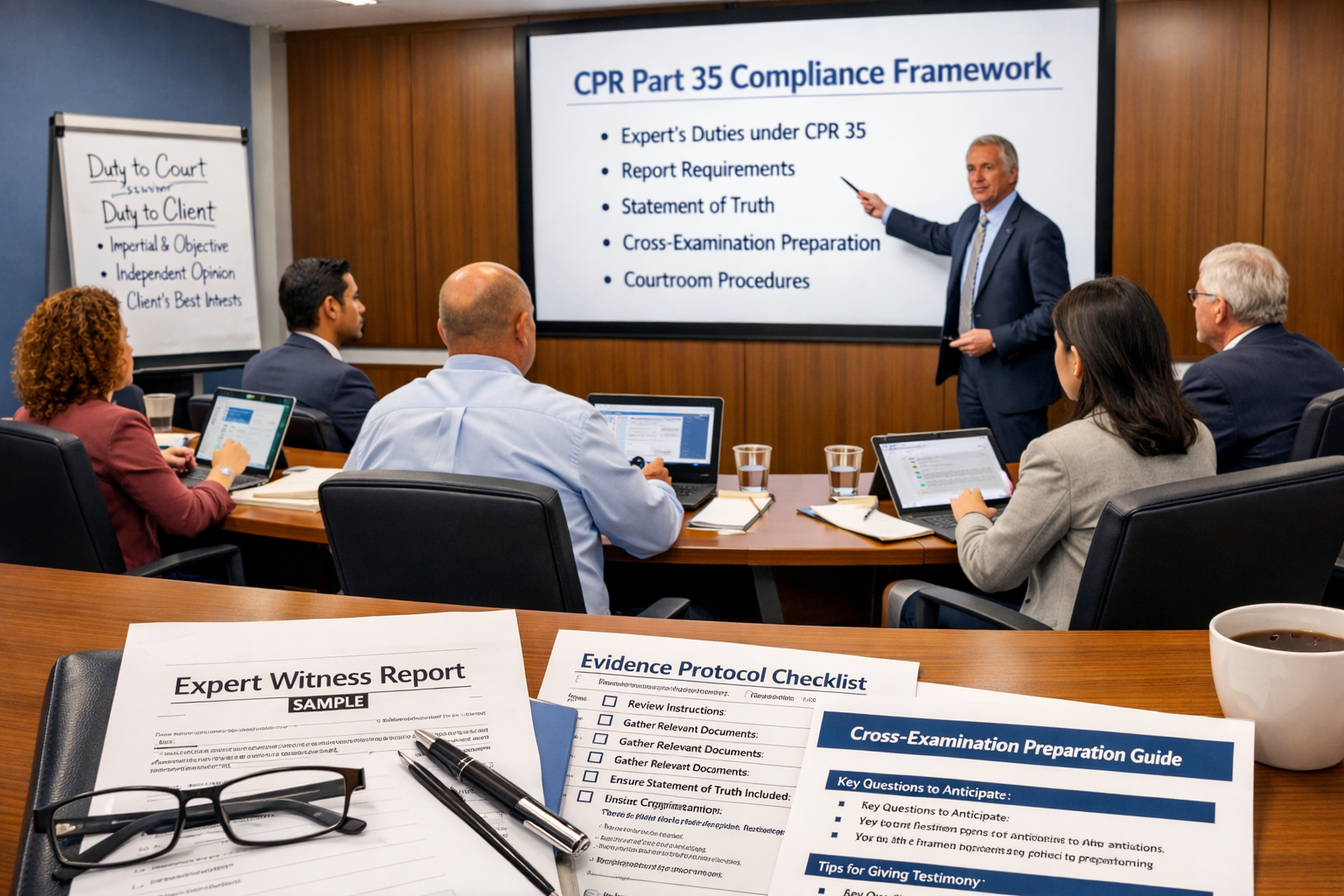
The Civil Procedure Rules Part 35 govern expert witness duties in England and Wales. Surveyors must understand that their overriding duty is to the court, not to the party instructing them—a principle that can create tension in adversarial proceedings.
Essential CPR Part 35 requirements:
| Requirement | Application to Commonhold Disputes |
|---|---|
| Independence | Must provide objective opinions despite pressure from instructing parties with conversion interests |
| Competence | Must demonstrate specific expertise in commonhold valuation and governance structures |
| Transparency | Must disclose methodology, assumptions, and limitations in valuation conclusions |
| Range of opinion | Must acknowledge where professional opinion varies on emerging commonhold valuation approaches |
| Material facts | Must not omit facts that could affect valuation conclusions, even if unhelpful to instructing party |
The requirement to state "the substance of all material instructions" has particular significance in commonhold disputes, where selective instruction can materially affect valuation outcomes.
Documentation Standards for Commonhold Valuations
Expert witnesses must maintain meticulous records that can withstand cross-examination. RICS emphasizes that "full and clear guidance is accessible, both for leaseholders and practitioners. Education, consistency and the minimisation for misinterpretation is key"[1].
Essential documentation includes:
✅ Instruction letter analysis: Detailed record of all instructions received, including any limitations or constraints
✅ Inspection records: Comprehensive notes from property inspections, including photographic evidence of condition and defects
✅ Comparable transaction analysis: Detailed breakdown of comparable properties, adjustments made, and rationale for selections
✅ Calculation worksheets: Step-by-step valuation calculations showing all assumptions and mathematical processes
✅ Research materials: Evidence of market research, legislative review, and professional guidance consulted
✅ Peer review records: Documentation of internal quality assurance processes and second opinions obtained
This documentation standard mirrors the rigor required for other specialized valuations, such as probate valuations or matrimonial valuations, but with added complexity due to the evolving regulatory landscape.
RICS Evidence Protocols: Professional Standards and Competency Requirements
RICS has identified significant professional standards gaps that must be addressed for expert witnesses to provide credible testimony in commonhold transition disputes. The organization's 2026 submissions to Parliament emphasize the critical need for enhanced professional competence and regulatory consistency[1].
Qualification and Competency Framework
Not all RICS members are equally qualified to provide expert witness testimony on commonhold transitions. The specialized nature of these disputes requires specific competencies beyond general valuation skills.
Required competency areas:
🎓 Commonhold legislation expertise: Deep understanding of the Commonhold and Leasehold Reform Act 2002, LAFRA 2024, and the emerging 2026 reforms
🎓 Tenure conversion mechanics: Knowledge of the legal and practical processes for converting leasehold to commonhold ownership
🎓 Collective ownership structures: Understanding of commonhold association governance, decision-making processes, and financial management
🎓 Dispute resolution procedures: Familiarity with tribunal processes, alternative dispute resolution, and litigation procedures specific to property tenure disputes
🎓 Cross-examination skills: Ability to defend valuation conclusions under hostile questioning while maintaining professional composure
RICS members should assess their competency honestly and seek additional training where gaps exist. The organization provided oral evidence to Parliament in March 2026, with experts including surveyors testifying on commonhold conversion challenges[3], establishing a precedent for the level of expertise expected.
Continuing Professional Development (CPD) for 2026
The rapid evolution of commonhold legislation demands that surveyors update their knowledge continuously. RICS members must ensure their CPD activities address commonhold-specific topics to maintain competence as expert witnesses.
Priority CPD topics for 2026:
- Legislative updates on the Commonhold and Leasehold Reform Bill
- Valuation methodologies for properties in tenure transition
- Commonhold association financial modeling and reserve fund calculations
- Case law analysis from early commonhold transition disputes
- Expert witness skills development, including report writing and courtroom testimony
- Ethics and professional conduct in contentious situations
Surveyors should document how their CPD activities directly enhance their competence in commonhold matters, as this may be scrutinized during expert witness qualification challenges.
Regulation of Property Agents (RoPA) Implementation
RICS has urged the implementation of Regulation of Property Agents (RoPA) recommendations to ensure "professional competence, qualifications, and regulatory consistency across managing agents, estate agents, and letting agents"[1]. This regulatory framework directly impacts expert witness standards by establishing baseline competency requirements.
The absence of comprehensive regulation has created inconsistency in professional standards, which expert witnesses must navigate when assessing the conduct of managing agents or other property professionals involved in commonhold transitions. Understanding the evolving regulatory landscape is essential for providing authoritative opinions on whether industry participants met applicable professional standards.
Navigating Valuation Methodology Challenges in Commonhold Disputes
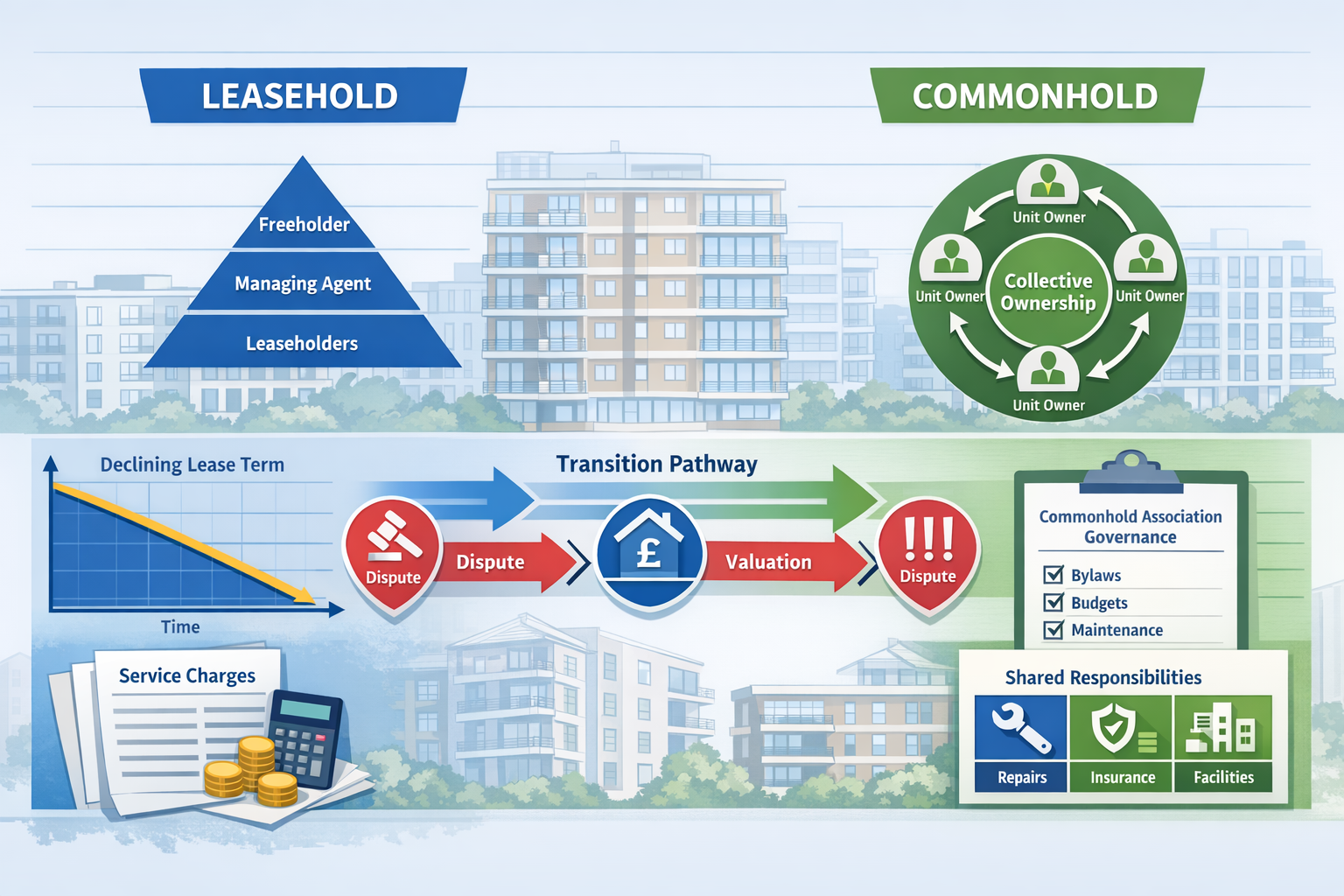
The most significant challenge facing expert witnesses in commonhold transition disputes is the undefined valuation methodology. RICS has explicitly flagged this issue, with Vanessa Griffiths MRICS noting "outstanding and unanswered questions" including "the valuation methodology"[1].
Addressing Valuation Uncertainty in Expert Reports
Expert witnesses must acknowledge and quantify uncertainty rather than presenting false precision. In the absence of definitive guidance, transparency becomes paramount.
Strategies for addressing uncertainty:
Scenario analysis: Present valuations under multiple reasonable scenarios (e.g., different assumptions about future service charge levels or reserve fund requirements)
Sensitivity analysis: Demonstrate how changes in key assumptions affect valuation conclusions, helping tribunals understand the range of reasonable outcomes
Explicit assumptions: Clearly state all assumptions made in the absence of definitive guidance, explaining the rationale for each
Professional judgment disclosure: Explain where professional judgment has been exercised and acknowledge alternative approaches that other experts might reasonably adopt
Limitation statements: Clearly communicate the limitations of valuation conclusions given regulatory uncertainty, without undermining the utility of the expert opinion
This approach aligns with RICS's emphasis on "the minimisation for misinterpretation"[1] and demonstrates professional integrity that enhances credibility under cross-examination.
Comparable Evidence in an Emerging Market
One of the most significant challenges for expert witnesses is the limited pool of comparable commonhold transactions in the UK market. Unlike established valuation contexts where extensive transaction data exists, commonhold conversions represent a nascent market with sparse evidence.
Approaches to the comparables challenge:
🔍 Leasehold equivalent analysis: Using comparable leasehold transactions and adjusting for tenure differences, with clear explanation of adjustment methodology
🔍 New-build commonhold evidence: Drawing on the limited pool of purpose-built commonhold developments, adjusting for age, condition, and location differences
🔍 International comparisons: Cautiously referencing condominium markets in other jurisdictions (with appropriate caveats about legal and market differences)
🔍 Synthetic comparables: Constructing hypothetical comparables based on market evidence and reasoned assumptions about commonhold value differentials
🔍 Residual valuation approaches: Using income or cost approaches where market evidence is insufficient, with transparent methodology disclosure
Expert witnesses must be prepared to defend their comparable selection rigorously, as opposing counsel will inevitably challenge the applicability of limited evidence.
Service Charge and Reserve Fund Implications
Commonhold transitions fundamentally alter the financial obligations of unit owners, creating significant valuation implications that expert witnesses must address. The shift from service charges to commonhold assessments, and from landlord-controlled reserve funds to commonhold association reserves, affects both value and marketability.
Key valuation considerations:
- Historical service charge analysis: Reviewing past expenditure patterns to project future commonhold assessment levels
- Reserve fund adequacy: Assessing whether proposed reserve funds are sufficient for anticipated major repairs and replacements
- Governance quality impact: Evaluating how the competence and structure of the proposed commonhold association affects value
- Marketability adjustments: Considering whether commonhold tenure affects buyer demand and financing availability in current market conditions
These considerations require expertise beyond traditional valuation skills, intersecting with property management, building surveying, and governance analysis. Collaborating with other specialists or obtaining specific defect reports may strengthen expert evidence in complex cases.
Practical Guidance for Surveyors: From Instruction to Testimony
Successfully serving as an expert witness in commonhold transition disputes requires careful management of the entire process, from initial instruction through final testimony.
Initial Instruction and Conflict Checking
Before accepting an expert witness instruction, surveyors must conduct thorough due diligence to ensure they can fulfill their duties to the court.
Pre-acceptance checklist:
✔️ Competence assessment: Honestly evaluate whether you possess the specific expertise required for the dispute
✔️ Conflict check: Verify no conflicts of interest exist with parties, properties, or related matters
✔️ Availability verification: Ensure you can meet deadlines and attend hearings without compromising quality
✔️ Fee agreement: Establish clear terms that don't create financial incentives affecting independence
✔️ Instruction clarity: Confirm the scope of work is clearly defined and appropriate for expert evidence
✔️ Professional indemnity insurance: Verify your PI insurance covers expert witness work and the specific dispute value
Declining inappropriate instructions protects both professional reputation and compliance with RICS standards. The RICS valuation cost structure should reflect the additional complexity and liability associated with expert witness work.
Report Writing Best Practices
The expert witness report is the foundation of your evidence. Courts expect clear, logical, and comprehensive reports that enable non-technical readers to understand complex valuation issues.
Report structure for commonhold disputes:
- Executive summary: Concise overview of key conclusions (1-2 pages maximum)
- Instructions and scope: Detailed account of what you were asked to do and any limitations
- Property description: Comprehensive description of the subject property and its characteristics
- Tenure analysis: Explanation of current leasehold structure and proposed commonhold arrangement
- Market context: Analysis of relevant market conditions and transaction evidence
- Valuation methodology: Transparent explanation of approach, assumptions, and calculations
- Valuation conclusion: Clear statement of opinion with appropriate caveats
- Alternative scenarios: Discussion of how different assumptions would affect conclusions
- Declaration: CPR Part 35 compliant statement of independence and duty to court
The report should be accessible to intelligent lay readers while maintaining technical rigor. Avoid jargon without explanation, and use visual aids (tables, charts, diagrams) to enhance clarity.
Preparing for Cross-Examination
Cross-examination can be intimidating, but thorough preparation enables surveyors to defend their opinions confidently while maintaining professional composure.
Cross-examination preparation strategies:
📚 Master your report: Review your report multiple times until you can discuss any section without reference to notes
📚 Anticipate challenges: Identify the weakest points in your analysis and prepare robust defenses
📚 Review opposing expert reports: Understand alternative opinions and prepare responses to likely criticisms
📚 Practice testimony: Conduct mock cross-examinations with colleagues to build confidence and refine responses
📚 Understand the case theory: Know how your evidence fits into the broader legal arguments being advanced
📚 Maintain composure protocols: Develop techniques for remaining calm and professional under hostile questioning
📚 Clarification techniques: Practice asking for question clarification when needed, avoiding rushed or unclear responses
Remember that your role is to assist the court, not to "win" for the instructing party. Acknowledging limitations or uncertainties when appropriate enhances rather than diminishes credibility.
Future-Proofing Your Expert Witness Practice
The commonhold transition landscape will continue evolving throughout 2026 and beyond. Surveyors who position themselves as leading experts in this emerging field will find significant professional opportunities.
Building Specialized Expertise
Developing a reputation as a commonhold expert requires strategic investment in knowledge development and professional visibility.
Expertise-building strategies:
🎯 Specialize early: Focus on commonhold matters before the market becomes saturated with experts
🎯 Publish thought leadership: Write articles, present at conferences, and contribute to professional discussions on commonhold issues
🎯 Engage with policy development: Participate in RICS consultations and industry working groups shaping commonhold guidance
🎯 Build case experience: Accept early commonhold instructions to develop practical experience and case law knowledge
🎯 Network strategically: Connect with solicitors, barristers, and tribunal members handling commonhold disputes
🎯 Develop training materials: Create CPD courses or guidance documents that establish you as a knowledge leader
This approach mirrors the specialization strategies successful in other niche areas like lease extensions or freehold valuations.
Monitoring Legislative and Case Law Developments
The regulatory landscape for commonhold remains fluid in 2026. Expert witnesses must maintain current awareness of legislative changes and emerging case law.
Information sources to monitor:
- RICS policy updates and consultation responses
- Parliamentary committee proceedings and government announcements
- First-tier Tribunal (Property Chamber) decisions on commonhold matters
- Upper Tribunal decisions establishing precedents
- Professional journals and legal publications
- Academic research on commonhold implementation challenges
Creating a systematic monitoring process ensures you can update your expert opinions as the legal framework evolves, maintaining the currency of your expertise.
Professional Network Development
No expert witness operates in isolation. Building relationships with complementary professionals enhances your ability to provide comprehensive evidence in complex disputes.
Key professional relationships:
- Property lawyers: Solicitors and barristers specializing in property and leasehold law
- Building surveyors: Professionals who can assess structural conditions and defects
- Managing agents: Experienced agents who understand commonhold association operations
- Accountants: Financial experts who can analyze reserve fund adequacy and financial projections
- Other expert witnesses: Peers who can provide second opinions or collaborative expertise
These relationships enable you to assemble comprehensive evidence packages and refer matters beyond your specific expertise appropriately, similar to how surveyors collaborate on complex matters like neighbour disputes.
Conclusion
Expert witness preparation for commonhold transition disputes represents one of the most significant professional challenges—and opportunities—facing RICS surveyors in 2026. As the UK property market undergoes its most substantial tenure reform in generations, the demand for authoritative, credible expert testimony will only intensify.
The current regulatory uncertainty, with RICS explicitly flagging undefined valuation methodologies and outstanding questions in the draft legislation[1], creates both challenges and opportunities for expert witnesses. Surveyors who invest in developing specialized commonhold expertise, maintain rigorous professional standards, and master RICS evidence protocols will position themselves as indispensable resources for resolving the inevitable disputes that accompany this historic transition.
Key action steps for surveyors:
- Assess your competency honestly against the specialized requirements for commonhold expert witness work
- Invest in targeted CPD focusing on legislative updates, valuation methodology, and expert witness skills
- Develop robust documentation systems that can withstand the scrutiny of cross-examination
- Build strategic professional networks with lawyers, other experts, and industry stakeholders
- Monitor regulatory developments continuously as guidance and case law emerge throughout 2026
- Prioritize professional independence and duty to the court over client advocacy
The surveyors who embrace these challenges and develop authoritative expertise in commonhold transitions will not only advance their professional careers but also contribute meaningfully to the successful implementation of this transformative reform. As RICS emphasized in its March 2026 parliamentary evidence[3], professional expertise and clear guidance are essential to minimizing disputes and ensuring fair outcomes for all stakeholders.
The time to prepare is now. With thousands of potential commonhold conversions on the horizon and valuation disputes inevitable, the expert witnesses who establish themselves as trusted authorities in 2026 will shape the future of this emerging practice area for years to come.
References
[1] Rics Responds To Latest Government Reforms On Leasehold And Commonhold – https://www.rics.org/news-insights/rics-responds-to-latest-government-reforms-on-leasehold-and-commonhold
[2] Government Sets Out Major Reforms To Leasehold And Commonhold Key Changes Explained – https://gowlingwlg.com/en/insights-resources/articles/2026/government-sets-out-major-reforms-to-leasehold-and-commonhold-key-changes-explained
[3] Update From Justin Young Rics Ceo March 2026 – https://www.rics.org/news-insights/update-from-justin-young-rics-ceo-march-2026