
{"cover":"Professional landscape format (1536×1024) hero image featuring bold text overlay 'Expert Witness Roles in Leasehold Valuation Disputes: Preparing Evidence Under 2026 Commonhold Reforms' in extra large 70pt white sans-serif font with dark shadow and semi-transparent navy overlay box, positioned center-upper third. Background shows modern courtroom setting with professional chartered surveyor reviewing property valuation documents, legal books, RICS standards visible, scales of justice symbol subtly integrated. Split composition showing traditional leasehold property documents on left transitioning to modern commonhold reform documentation on right. Color scheme: deep navy blue, gold accents, crisp white text. High contrast, magazine cover quality, editorial professional style with architectural blueprints and valuation reports visible in foreground.","content":["Detailed landscape format (1536×1024) image showing professional surveyor's desk workspace with multiple RICS valuation reports spread out, laptop displaying property valuation software with market data graphs, calculator, measuring tools, and legal documentation related to leasehold disputes. Close-up view highlighting expert witness report preparation with annotated property photographs, comparable sales data spreadsheets, and tribunal submission forms. Warm professional lighting, organized composition showing methodical evidence preparation process. Include visible RICS logo on documents, red wax seal on official reports, and sticky notes with valuation calculations. Modern office setting with property law books in background, professional business aesthetic with focus on documentation quality and attention to detail.","Landscape format (1536×1024) infographic-style image displaying visual comparison between traditional leasehold system and new 2026 commonhold reforms. Split-screen composition with left side showing traditional leasehold structure (declining lease terms, ground rent obligations, freeholder control) using downward arrows and red warning symbols, right side showing commonhold benefits (shared ownership, eliminated ground rent, collective management) with green checkmarks and upward growth indicators. Center features transition timeline with 2026 marked prominently. Include property building silhouettes, percentage statistics overlays, legal gavel icon, and market stabilization trend line graph at bottom. Clean professional design with blue and gold color scheme, data visualization elements, and clear hierarchical information flow.","Landscape format (1536×1024) image depicting modern tribunal hearing preparation scene with expert witness presenting valuation evidence. Wide-angle view of professional meeting room with large presentation screen displaying property valuation methodology, comparable market analysis charts, and digital evidence documentation. Professional surveyor in business attire gesturing toward detailed valuation breakdown with supporting photographs of subject property. Conference table with organized evidence folders, tablet devices showing digital reports, and RICS professional standards documentation. Formal professional setting with natural window lighting, architectural drawings visible on side walls, and legal representatives reviewing documents. Emphasis on technology integration with AI-assisted valuation tools visible on screens, digital evidence management systems, and professional courtroom-ready presentation materials."]
The landscape of property ownership in England and Wales is undergoing its most significant transformation in decades. As Expert Witness Roles in Leasehold Valuation Disputes: Preparing Evidence Under 2026 Commonhold Reforms take center stage, chartered surveyors face unprecedented challenges in preparing court-ready valuations. With the RICS launching its first major update to expert witness standards since 2014[1], and commonhold reforms reshaping property ownership structures, professionals must adapt their evidence preparation methodologies to meet evolving tribunal expectations.
The convergence of legislative reform, updated professional standards, and market stabilization demands a fresh approach to expert witness testimony. Surveyors who understand these changes will deliver more robust, defensible valuations that withstand scrutiny in increasingly complex disputes.
Key Takeaways
- 🔍 Updated RICS Standards: The 5th Edition Expert Witness Standard introduces global application, enhanced conflict-of-interest disclosure, and provisions for AI use in evidence preparation[1]
- 📊 Commonhold Reform Impact: The 2026 reforms fundamentally alter valuation methodologies by eliminating ground rent obligations and changing ownership structures
- ⚖️ Tribunal Duty First: Expert witnesses must prioritize their duty to the tribunal over client interests, with stricter professional protection requirements[1]
- 💻 Digital Evidence Integration: New standards accommodate AI-assisted valuation tools and digital evidence management systems in expert reports
- 📈 Market Stabilization Data: Expert witnesses must incorporate current market data reflecting the transition period between leasehold and commonhold systems
Understanding Expert Witness Roles in Leasehold Valuation Disputes: Preparing Evidence Under 2026 Commonhold Reforms
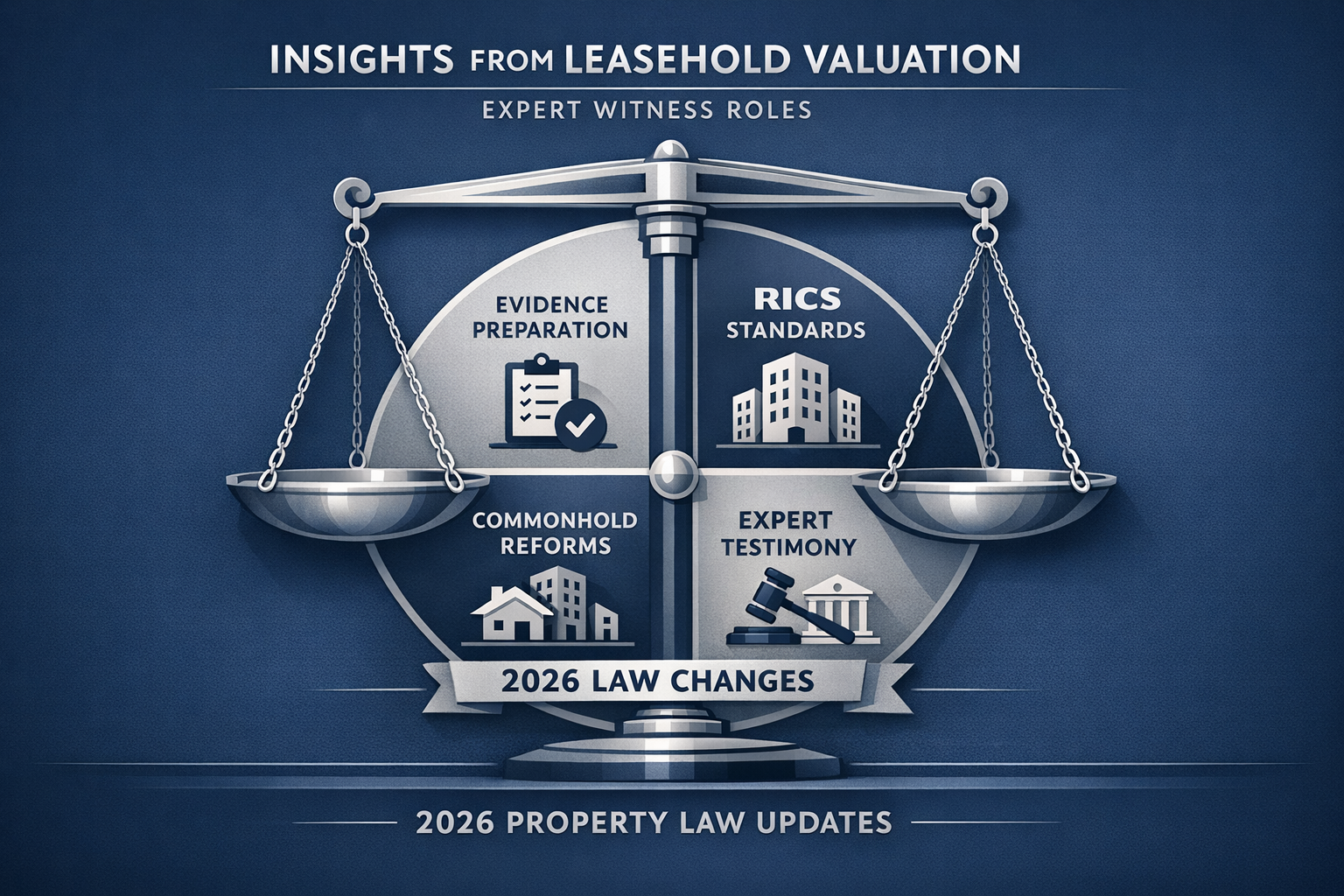
The role of an expert witness in leasehold valuation disputes extends far beyond simple property appraisal. These professionals serve as impartial advisors to tribunals, providing specialized knowledge that helps resolve complex ownership and valuation questions.
The Core Responsibilities of Expert Witnesses
Expert witnesses in leasehold disputes carry several critical responsibilities:
Primary Duty to the Tribunal 🏛️
The updated RICS Expert Witness Standard reinforces that an expert's primary duty is to the tribunal or court, not to the instructing party[1]. This fundamental principle ensures:
- Objective, unbiased analysis
- Complete disclosure of relevant facts
- Transparent methodology explanation
- Honest assessment of evidence limitations
Independence and Impartiality
Maintaining independence requires:
- Clear conflict-of-interest disclosure before accepting instructions
- Avoiding advocacy for either party's position
- Basing opinions solely on professional expertise
- Acknowledging alternative interpretations of evidence
Professional Competence
Expert witnesses must demonstrate:
- Current knowledge of valuation methodologies
- Understanding of relevant legislation and case law
- Familiarity with local market conditions
- Expertise in the specific property type under dispute
For those seeking professional expert witness report services in London, these competencies form the foundation of credible testimony.
Types of Leasehold Valuation Disputes
Leasehold disputes requiring expert witness testimony typically fall into several categories:
| Dispute Type | Key Valuation Issues | Common Challenges |
|---|---|---|
| Lease Extensions | Premium calculation, marriage value | Determining hope value in transitioning market |
| Collective Enfranchisement | Freehold purchase price, participating tenants | Apportioning value among multiple parties |
| Right to Manage | Property management valuations | Assessing service charge reasonableness |
| Lease Variations | Impact on property value | Quantifying benefit or detriment |
| Ground Rent Disputes | Capitalization rates, market evidence | Addressing reform impact on future income streams |
Understanding freehold valuation methodologies becomes essential as the market transitions toward commonhold structures.
The Commonhold Reform Context
The 2026 commonhold reforms fundamentally alter the expert witness landscape by:
Eliminating Traditional Ground Rent Structures
- Removing perpetual income streams from valuation calculations
- Changing investment value assessments for freeholders
- Requiring new comparable evidence from commonhold properties
Introducing Shared Ownership Models
- Collective decision-making on property management
- Distributed maintenance responsibilities
- New frameworks for assessing individual unit values
Creating Transitional Market Conditions
The shift from leasehold to commonhold creates unique valuation challenges:
- Limited comparable evidence from established commonhold properties
- Market uncertainty about long-term value implications
- Dual system operation during the transition period
- Buyer perception differences between leasehold and commonhold
Expert witnesses must navigate these complexities while maintaining objectivity and providing tribunals with reliable valuation evidence.
Preparing Court-Ready Evidence Under Updated RICS Standards
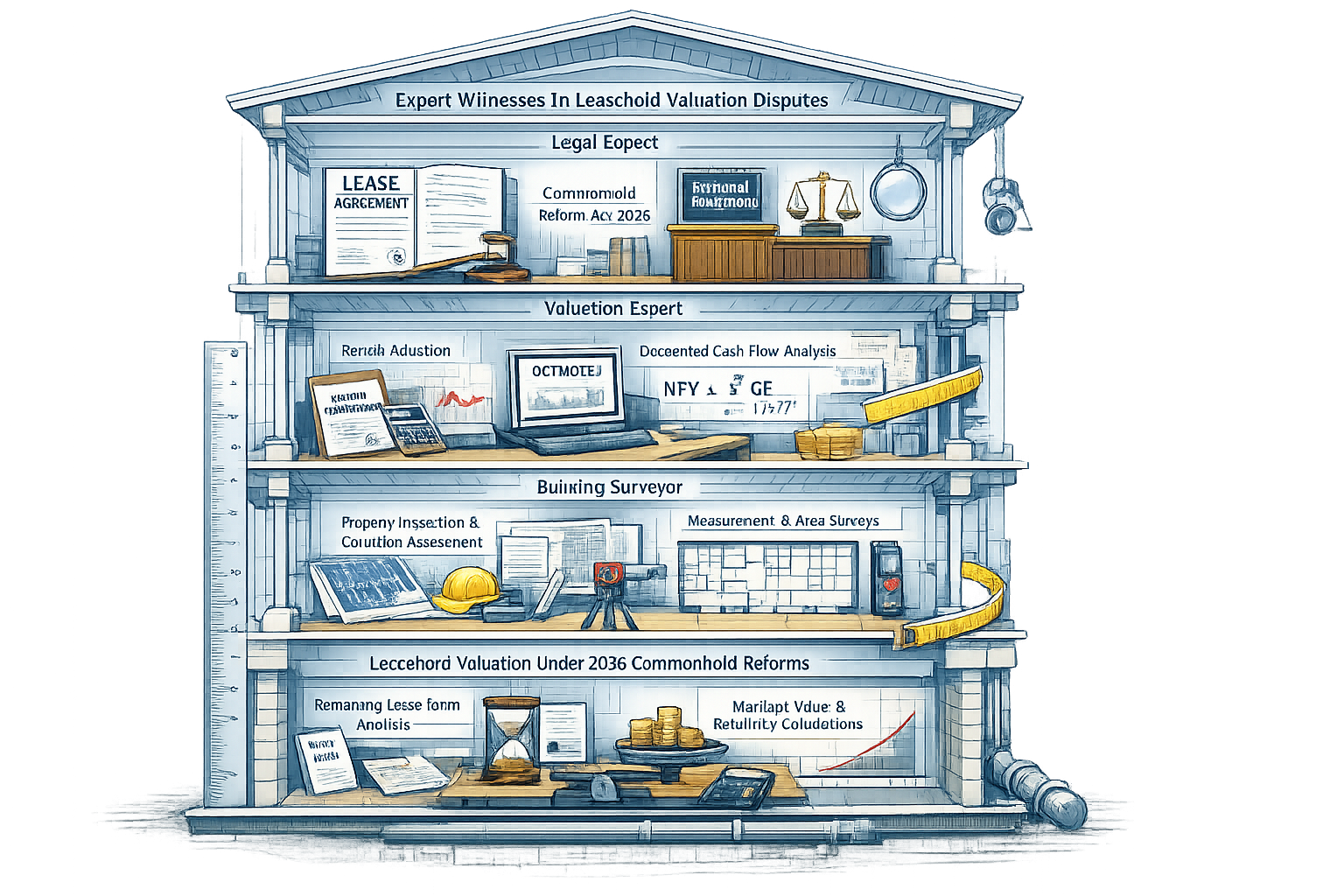
The RICS Expert Witness Standard 5th Edition introduces significant changes that directly impact how surveyors prepare and present evidence in leasehold valuation disputes[1]. Understanding these updates is crucial for Expert Witness Roles in Leasehold Valuation Disputes: Preparing Evidence Under 2026 Commonhold Reforms.
Key Updates to RICS Expert Witness Standards
Global Application Across Jurisdictions
The updated standard now applies globally, providing consistent guidance regardless of where RICS members practice[1]. This harmonization ensures:
- Standardized evidence preparation methodologies
- Consistent professional conduct expectations
- Transferable best practices across markets
- Enhanced credibility in international disputes
Enhanced Conflict-of-Interest Disclosure
The new standard strengthens requirements for identifying and disclosing potential conflicts[1]:
✅ Before Accepting Instructions:
- Previous relationships with parties involved
- Financial interests in the outcome
- Personal connections to the property or area
- Other professional engagements that may create bias
✅ During the Engagement:
- Emerging conflicts that develop during investigation
- New information affecting independence
- Changes in circumstances that impact objectivity
AI and Digital Evidence Provisions
Recognizing technological advancement, the updated standard addresses AI use in expert witness work[1]. This includes:
- Transparency requirements for AI-assisted analysis
- Methodology disclosure when using automated valuation models
- Data quality standards for digital evidence
- Human oversight requirements for AI-generated conclusions
Recent updates to bank lending valuation guidance effective January 1, 2026, reflect the Basel 3.1 framework changes that impact expert valuation methodologies[3], making digital competence essential.
Structuring Expert Witness Reports
A comprehensive expert witness report for leasehold valuation disputes should follow this structure:
1. Executive Summary
- Brief overview of the dispute
- Key valuation conclusions
- Summary of methodology employed
2. Expert's Qualifications and Experience
- Professional credentials (RICS membership, specializations)
- Relevant experience in similar disputes
- Continuing professional development related to the matter
3. Instructions and Scope
- Clear statement of questions to be answered
- Documents and information reviewed
- Site inspections conducted
- Limitations or constraints on the investigation
4. Factual Background
- Property description and location
- Lease terms and conditions
- Relevant planning and legal considerations
- Market context and comparable evidence
5. Methodology and Assumptions
- Valuation approach selection and justification
- Key assumptions underlying the analysis
- Data sources and reliability assessment
- Treatment of uncertainties
6. Analysis and Calculations
- Detailed valuation workings
- Comparable evidence analysis
- Adjustments and their rationale
- Sensitivity analysis for key variables
7. Conclusions and Opinion
- Clear statement of valuation conclusion
- Confidence level and range (if appropriate)
- Limitations and caveats
- Response to specific questions posed
8. Declaration of Truth
- Confirmation of expert's duty to the tribunal
- Statement of independence
- Acknowledgment that opinions are genuinely held
For guidance on related valuation services, professionals can reference RICS valuation cost structures to ensure appropriate fee arrangements.
Evidence Gathering and Documentation
Primary Evidence Sources
🏘️ Property-Specific Information:
- Title documents and lease terms
- Service charge accounts and management records
- Planning permissions and building regulations approvals
- Maintenance history and condition reports
📊 Market Evidence:
- Recent sales of comparable leasehold properties
- Lease extension and enfranchisement settlements
- Rental evidence for similar properties
- Investment yields for freehold interests
📈 Reform-Related Data:
- Commonhold property transactions (where available)
- Market sentiment surveys regarding reform impact
- Professional body guidance on transitional valuations
- Legislative commentary and case law developments
Digital Evidence Management
Modern expert witnesses must maintain:
- Secure data storage with audit trails
- Version control for all documents reviewed
- Metadata preservation for digital evidence
- Chain of custody documentation
Understanding retrospective valuation methodologies can provide valuable context when analyzing historical market conditions.
Addressing Commonhold Reform in Valuations
Valuation Adjustments for Reform Impact
Expert witnesses must consider several reform-related factors:
Ground Rent Capitalization Changes 💷
Traditional leasehold valuations capitalized ground rent income streams. Under commonhold reforms:
- Future ground rent income may be eliminated or capped
- Capitalization rates require adjustment for uncertainty
- Comparable evidence from pre-reform transactions needs careful interpretation
- Transitional provisions may create temporary value distortions
Marriage Value Considerations
The concept of marriage value (the additional value created when freehold and leasehold interests merge) requires reassessment:
- Reduced marriage value in properties approaching commonhold conversion
- Changed negotiation dynamics between freeholders and leaseholders
- Impact of reform timelines on present value calculations
Hope Value in Transitional Markets
Hope value (the potential for future development or lease restructuring) becomes more complex:
- Uncertainty about final reform implementation details
- Potential for legislative changes during transition
- Market pricing of reform-related risks and opportunities
For properties involved in disputes, understanding FAQ on lease extensions provides essential background knowledge.
Common Pitfalls to Avoid
❌ Advocacy Rather Than Objectivity
- Presenting only evidence favorable to the instructing party
- Selective disclosure of comparable transactions
- Overstating certainty in uncertain market conditions
❌ Inadequate Methodology Disclosure
- Failing to explain valuation approach selection
- Omitting key assumptions or limitations
- Using proprietary models without transparency
❌ Insufficient Market Evidence
- Relying on outdated comparables
- Ignoring relevant transactions that contradict conclusions
- Failing to adjust comparables for material differences
❌ Neglecting Reform Context
- Applying pre-reform methodologies without adjustment
- Ignoring legislative changes affecting value
- Failing to address transitional market uncertainty
Practical Strategies for Robust Evidence Preparation
Conducting Thorough Property Inspections
A comprehensive site inspection forms the foundation of credible expert evidence:
Pre-Inspection Preparation
- Review all available documentation
- Identify specific issues requiring investigation
- Prepare inspection checklist tailored to the dispute
- Arrange access with appropriate notice
During the Inspection
- Photograph all relevant features systematically
- Measure key dimensions and verify against plans
- Note condition issues affecting value
- Document surrounding area and location factors
- Interview property managers or residents (where appropriate)
Post-Inspection Documentation
- Organize photographs with clear captions
- Prepare detailed inspection notes
- Identify any follow-up investigations needed
- Cross-reference findings with documentary evidence
Comparable Evidence Analysis
Selecting Appropriate Comparables
The quality of comparable evidence directly impacts valuation credibility:
✓ Location Proximity: Properties in the same or similar neighborhoods
✓ Property Type: Similar size, age, and construction quality
✓ Lease Terms: Comparable remaining lease length and ground rent provisions
✓ Transaction Date: Recent transactions reflecting current market conditions
✓ Transaction Type: Similar transaction circumstances (open market, lease extension, etc.)
Making Appropriate Adjustments
Expert witnesses must transparently adjust comparable evidence for:
- Location differences: Premium or discount for relative desirability
- Size variations: Per-square-foot or per-room adjustments
- Condition disparities: Deductions for deferred maintenance or improvements
- Lease term differences: Time value adjustments for varying unexpired terms
- Market movement: Indexing for transaction date differences
Reform-Era Comparable Selection
During the commonhold transition, comparable evidence requires special consideration:
🔍 Pre-Reform Transactions: May overstate ground rent value and understate freehold acquisition costs
🔍 Post-Announcement Transactions: May reflect reform anticipation but lack clarity on final implementation
🔍 Commonhold Comparables: Limited availability but highly relevant where available
🔍 Mixed Evidence: Triangulating between different transaction types to establish reasonable value range
Dealing with Conflicting Expert Opinions
Leasehold valuation disputes often involve opposing expert witnesses with different conclusions. Preparing for this reality requires:
Anticipating Alternative Approaches
Before submitting a report, consider:
- What alternative valuation methodologies might opposing experts employ?
- Which assumptions might they challenge?
- What comparable evidence might they rely upon?
- How would you respond to these alternative approaches?
Preparing for Joint Expert Meetings
Tribunals often require experts to meet and identify areas of agreement and disagreement:
📋 Before the Meeting:
- Review the opposing expert's report thoroughly
- Identify specific points of agreement and disagreement
- Prepare clear explanations for any differences
- Bring supporting documentation for your position
📋 During the Meeting:
- Focus on technical issues rather than client interests
- Seek genuine agreement where professional judgment aligns
- Clearly articulate reasons for remaining disagreements
- Avoid adversarial posturing
📋 After the Meeting:
- Prepare accurate joint statement of agreed and disputed issues
- Ensure your individual position remains clear on disputed points
- Update your report if new information warrants revision
Incorporating Market Stabilization Data
As the property market adjusts to commonhold reforms, expert witnesses must track and incorporate stabilization indicators:
Key Market Indicators to Monitor
| Indicator | What It Reveals | Data Sources |
|---|---|---|
| Transaction volumes | Market confidence levels | Land Registry data, estate agent reports |
| Price trends | Value impact of reforms | Property indices, comparable sales |
| Time on market | Buyer sentiment | Estate agent listings, marketing periods |
| Lease extension activity | Urgency before reform implementation | Tribunal decisions, surveyor transactions |
| Commonhold adoptions | Reform uptake rate | Land Registry commonhold registrations |
Presenting Uncertainty Appropriately
Professional integrity requires acknowledging valuation uncertainty during transitional periods:
"Expert witnesses must balance providing definitive opinions with honest acknowledgment of market uncertainty. A range of reasonable values may be more appropriate than a single point estimate during periods of legislative transition."
This approach aligns with the RICS emphasis on transparency and objectivity in the updated expert witness standards[1].
Technology and Digital Tools
AI-Assisted Valuation Analysis
The updated RICS standards explicitly address AI use in expert witness work[1]. Appropriate applications include:
✅ Automated Comparable Searches: Using AI to identify relevant comparable transactions from large databases
✅ Statistical Analysis: Employing machine learning for regression analysis of value factors
✅ Market Trend Identification: Utilizing AI to detect patterns in transaction data
However, experts must:
- Disclose AI tool usage in their reports
- Explain the methodology and data sources
- Maintain human oversight and professional judgment
- Validate AI-generated outputs against professional experience
Digital Evidence Presentation
Modern tribunal proceedings increasingly accommodate digital evidence:
- Interactive valuation models that tribunal members can explore
- Digital photo documentation with location metadata
- Video property tours for complex or inaccessible properties
- Geographic information system (GIS) mapping for location analysis
For complex property matters, professionals may also need expertise in insurance reinstatement valuations to assess replacement costs accurately.
Cross-Examination Preparation
Expert witnesses must prepare for rigorous questioning:
Common Cross-Examination Strategies
Opposing counsel may attempt to:
- Challenge professional qualifications and experience
- Question methodology selection and application
- Highlight favorable evidence that was omitted
- Emphasize uncertainties or assumptions
- Compare conclusions with other expert opinions
Effective Response Techniques
🎯 Stay Calm and Professional: Maintain composure regardless of questioning style
🎯 Answer Only What's Asked: Avoid volunteering additional information
🎯 Acknowledge Limitations: Admit when something is outside your expertise
🎯 Refer to Your Report: Ground answers in your written evidence
🎯 Explain Technical Terms: Ensure tribunal members understand your testimony
Continuing Professional Development
Given the rapid changes in Expert Witness Roles in Leasehold Valuation Disputes: Preparing Evidence Under 2026 Commonhold Reforms, ongoing education is essential:
Recommended CPD Activities
- Attending RICS expert witness training courses
- Reviewing recent tribunal decisions in leasehold disputes
- Studying commonhold reform legislation and commentary
- Participating in professional forums on valuation methodology
- Completing case studies of complex leasehold valuations
Understanding related areas such as capital gains tax valuation and probate valuation can provide valuable context for comprehensive property valuation expertise.
Conclusion
Expert Witness Roles in Leasehold Valuation Disputes: Preparing Evidence Under 2026 Commonhold Reforms represent a critical evolution in property valuation practice. The convergence of updated RICS standards, legislative reform, and market transformation demands a sophisticated, adaptive approach from chartered surveyors serving as expert witnesses.
Key Success Factors
Surveyors who excel in this evolving landscape will:
✨ Embrace Updated Standards: Fully integrate the RICS Expert Witness Standard 5th Edition requirements, including enhanced conflict disclosure and AI provisions[1]
✨ Maintain Tribunal-First Duty: Prioritize objectivity and independence over client advocacy, ensuring credibility and professional protection
✨ Adapt Methodologies: Adjust traditional leasehold valuation approaches to account for commonhold reform impacts on ground rent, marriage value, and market dynamics
✨ Leverage Technology Appropriately: Utilize AI and digital tools while maintaining transparency and professional oversight
✨ Document Thoroughly: Prepare comprehensive, well-structured reports that withstand rigorous scrutiny and clearly explain methodology and assumptions
✨ Monitor Market Evolution: Track stabilization indicators and adjust valuations to reflect current market conditions during the transitional period
Actionable Next Steps
For surveyors preparing expert witness evidence in leasehold valuation disputes:
-
Review the Updated RICS Standards: Familiarize yourself with all provisions of the 5th Edition Expert Witness Standard, particularly sections on conflict disclosure and digital evidence[1]
-
Assess Your Competence: Ensure you have current knowledge of commonhold reforms and their valuation implications before accepting instructions
-
Develop Digital Capabilities: Invest in appropriate technology tools for evidence gathering, analysis, and presentation while understanding their limitations
-
Build Comparable Databases: Systematically collect and organize transaction evidence reflecting both pre-reform and transitional market conditions
-
Establish Quality Control Procedures: Implement peer review processes for complex valuations before submission to tribunals
-
Engage in Continuing Education: Participate in professional development specifically focused on expert witness skills and commonhold reform implications
-
Network with Peers: Join professional forums where surveyors share experiences and best practices in leasehold valuation disputes
The transition to commonhold represents the most significant change in English and Welsh property law in generations. Expert witnesses who adapt their practices to meet these challenges will provide invaluable service to tribunals, clients, and the broader property market. By combining rigorous methodology, professional integrity, and adaptive expertise, chartered surveyors can navigate this complex landscape while maintaining the highest standards of expert witness practice.
For professional assistance with expert witness services or leasehold valuations, consider consulting chartered surveyors with specialized expertise in these evolving areas of practice.
References
[1] Rics Launches Global Consultation On Updated Expert Witness Standard – https://www.rics.org/news-insights/rics-launches-global-consultation-on-updated-expert-witness-standard
[3] Expert Witness Challenges In 2026 Interest Rate Volatility Disputes Rics Data Driven Preparation – https://nottinghillsurveyors.com/blog/expert-witness-challenges-in-2026-interest-rate-volatility-disputes-rics-data-driven-preparation