{"cover":"Professional landscape format (1536x1024) hero image featuring bold text overlay 'Homebuying Process Reforms 2026: How Mandatory Upfront Surveys Will Transform Building Surveyors' Workflows' in extra large 70pt white sans-serif font with dark shadow and semi-transparent navy overlay box, positioned in upper third. Background shows modern British residential property with professional building surveyor in high-visibility vest conducting inspection with tablet and laser measuring device, RICS accreditation badge visible, architectural blueprints and digital property logbook interface elements subtly integrated. Color scheme: deep navy blue, white, professional orange accents. High contrast, magazine cover quality, editorial style with clean composition following rule of thirds, conveying authority and transformation in property sector.","content":["Detailed landscape format (1536x1024) infographic showing the transformation of homebuying timeline comparing traditional process versus 2026 reformed process. Split-screen design with left side showing old timeline with buyer-initiated surveys occurring mid-transaction, right side showing new mandatory upfront seller-provided surveys at listing stage. Visual elements include property icons, calendar markers, cost comparison boxes showing £38 versus £380 average survey costs, flow arrows indicating reduced transaction failures, clock symbols representing time savings, and professional surveyor silhouettes conducting pre-listing inspections. Color-coded stages in navy blue and orange with clear annotations, clean modern infographic aesthetic, data visualization style with percentage reduction in failed transactions highlighted prominently.","Comprehensive landscape format (1536x1024) illustration depicting building surveyor workflow transformation and professional development pathways. Central image shows diverse team of RICS-accredited surveyors in training session with digital CPD platform displayed on large screen, showing online modules and certification pathways. Surrounding elements include workflow diagrams comparing pre-2026 versus post-2026 survey processes, capacity planning charts showing increased demand projections, technology integration symbols including tablets with digital survey apps, property logbook interfaces, and AI-assisted defect detection tools. Professional training materials, RICS qualification badges, and upskilling pathway flowcharts visible. Modern corporate training environment aesthetic with professional blue and orange color scheme, conveying education and industry transformation.","Detailed landscape format (1536x1024) conceptual visualization of digital transformation in property surveying ecosystem for 2026 reforms. Central hub-and-spoke diagram showing interconnected digital platforms: property logbook system in center connected to surveyor databases, estate agent portals, conveyancer systems, lender platforms, and local authority search systems. Visual elements include data flow arrows, secure encryption symbols, digital ID verification badges, standardized data format icons, cloud storage representations, and mobile device interfaces showing real-time survey report access. Background features modern British properties with overlay of digital network connections, semi-transparent interface elements, and dashboard analytics. Futuristic yet professional aesthetic in navy blue, white, and tech orange, conveying seamless digital integration and efficiency gains across property transaction ecosystem."]
}
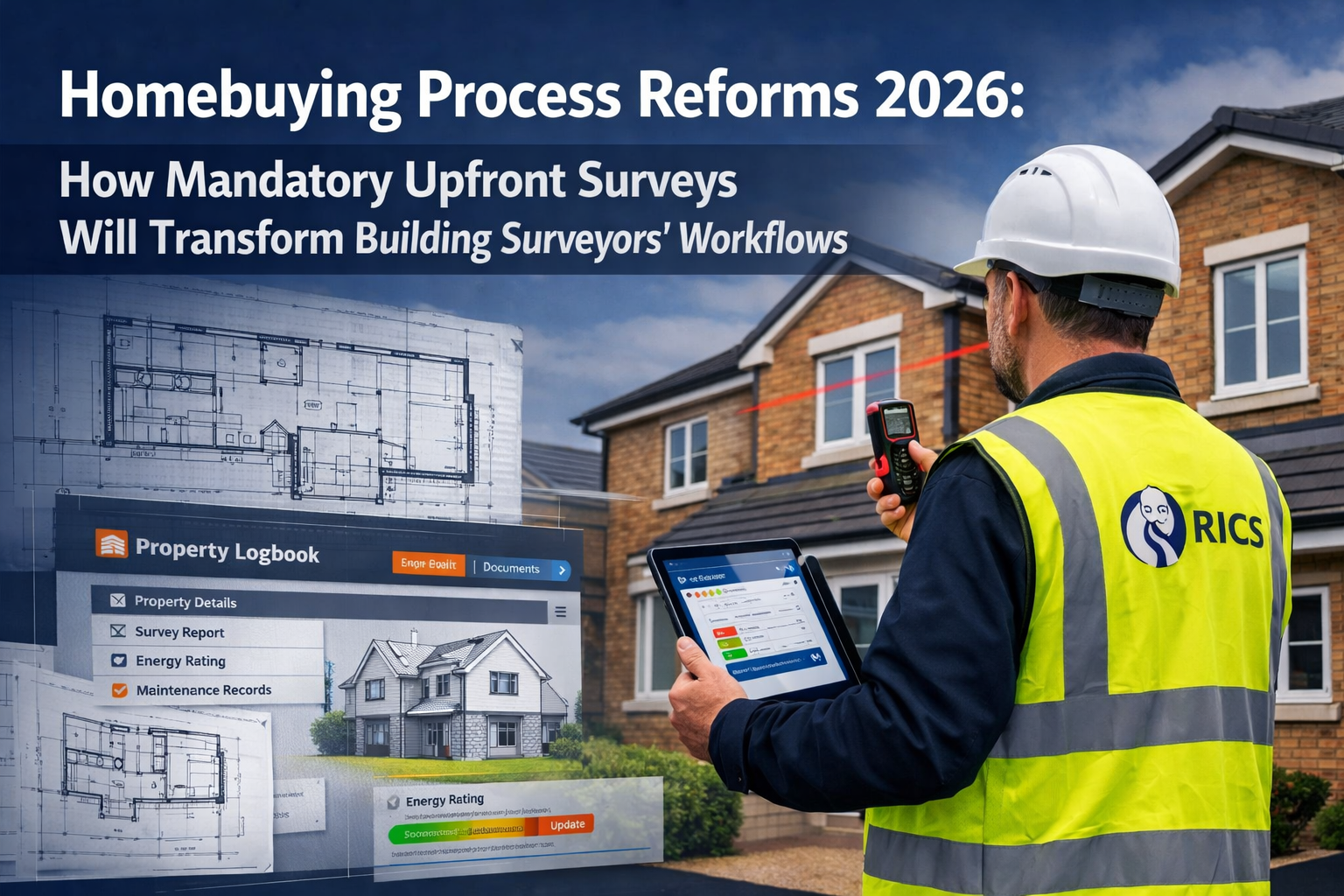
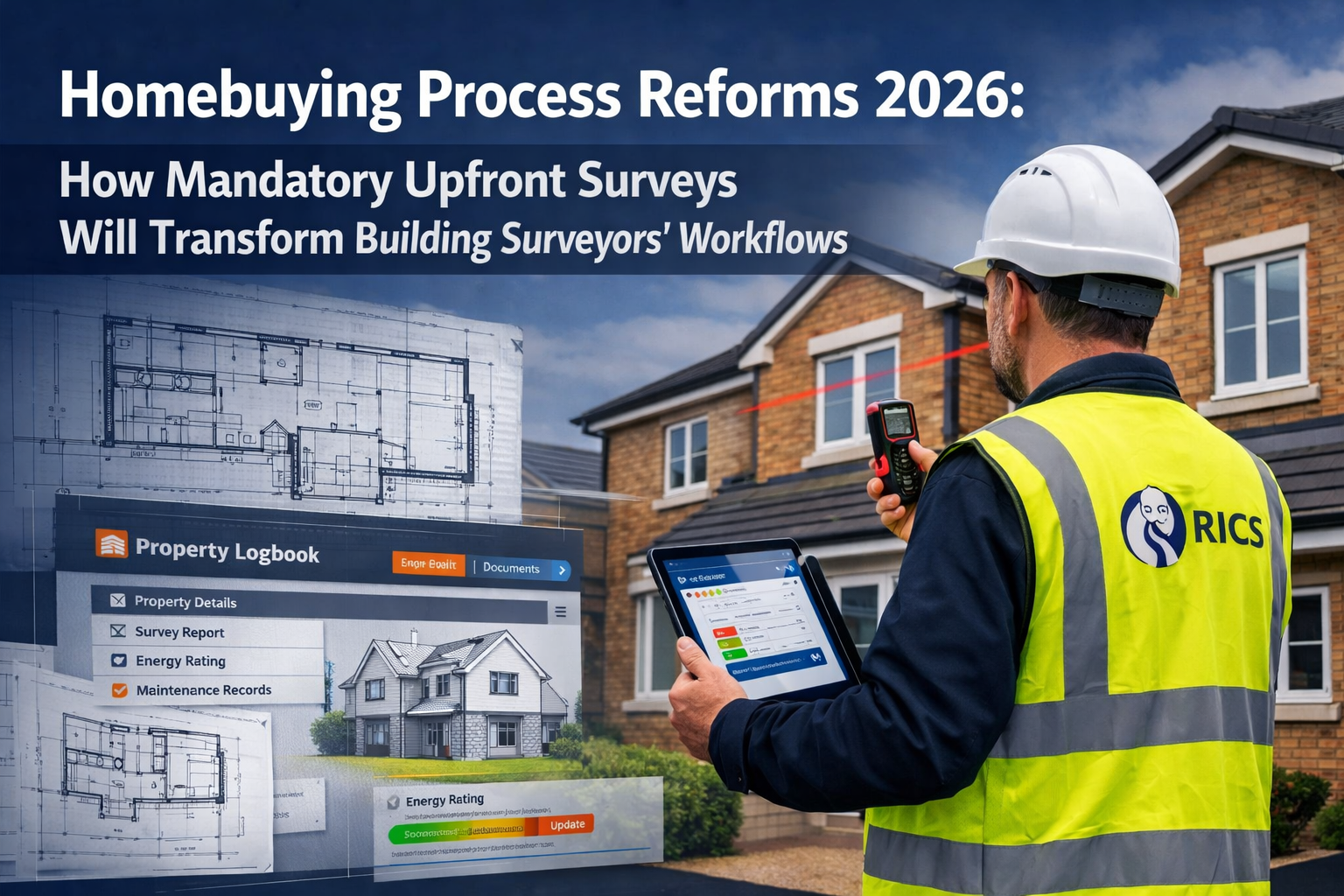
The British property market stands on the brink of its most significant transformation in decades. As 2026 unfolds, the government's proposed reforms to make property condition assessments mandatory before listing will fundamentally reshape how homes change hands—and create unprecedented demand for building surveyors. The Homebuying Process Reforms 2026: How Mandatory Upfront Surveys Will Transform Building Surveyors' Workflows represent more than just regulatory change; they signal a complete reimagining of professional responsibilities, capacity requirements, and industry standards.
For building surveyors, this shift from buyer-initiated to seller-mandated surveys means adapting workflows, embracing digital tools, and preparing for a surge in demand that could reshape career trajectories across the profession. 🏠
Key Takeaways
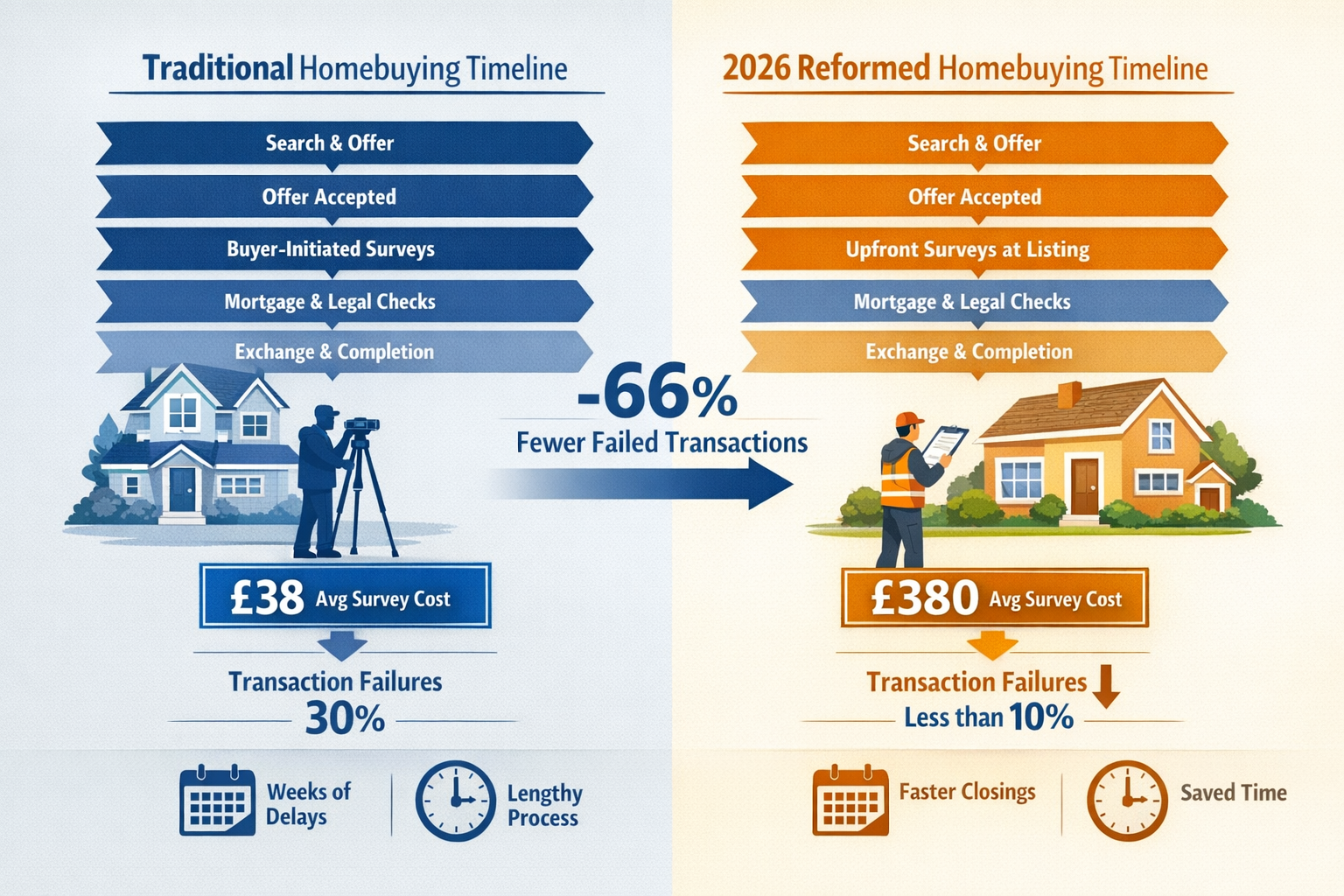
- Cost shift from buyers to sellers: Average survey spending will increase from £38 to £380, with sellers now bearing the upfront cost of mandatory property condition assessments before listing[1]
- Massive workflow transformation: Building surveyors must prepare for significantly increased demand, requiring capacity planning, digital integration, and streamlined processes to handle pre-listing survey requirements
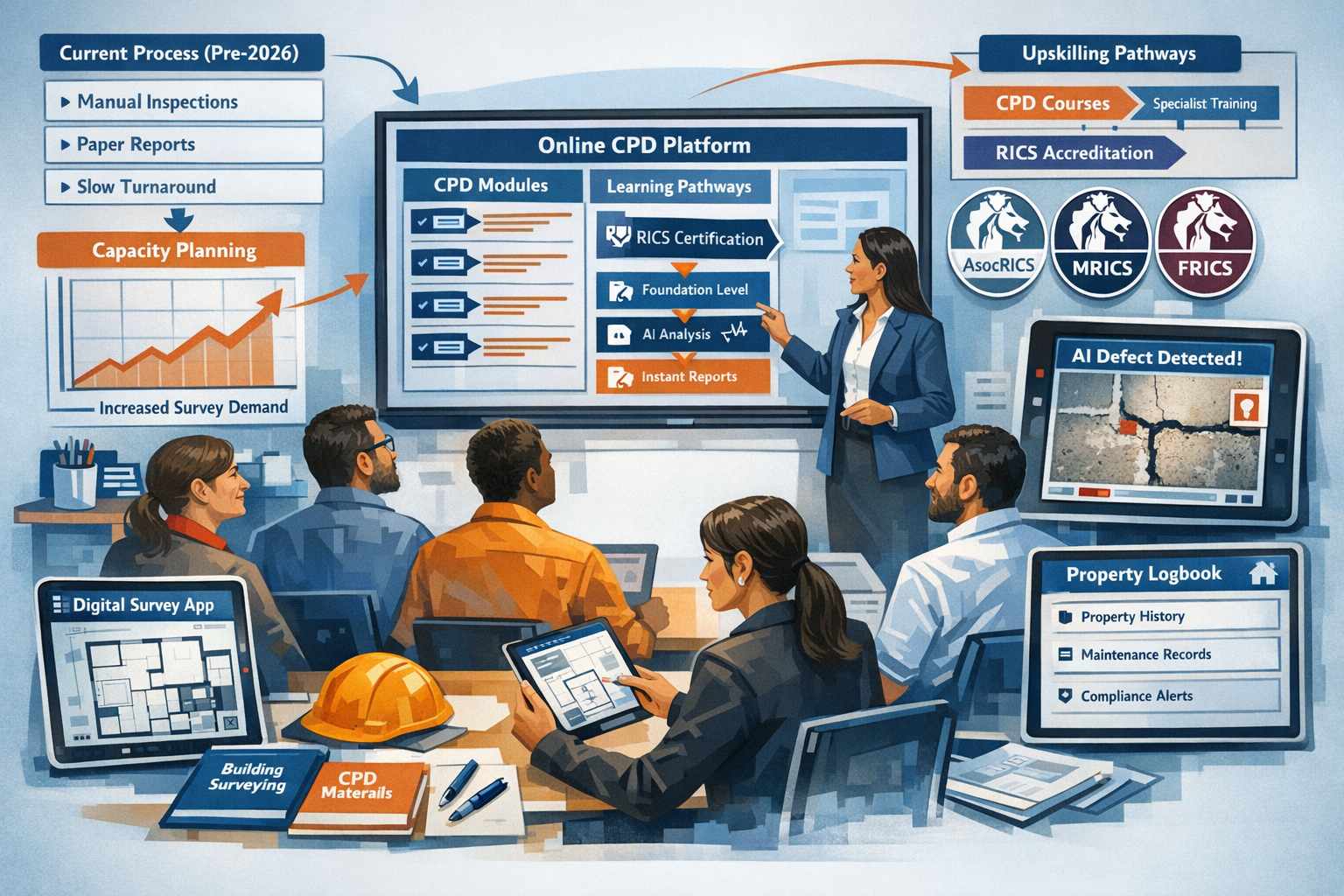
- Professional development imperative: RICS pathways and digital CPD tools will be essential for existing surveyors to upskill and for attracting new talent to meet industry demands
- Digital ecosystem integration: Surveyors will need to integrate with property logbooks, data-sharing platforms, and standardized digital reporting systems as part of the broader conveyancing transformation[1][4]
- Economic justification: The reforms aim to address £1.5 billion in annual costs from failed property transactions, making the upfront investment economically sound despite initial cost increases[5]
Understanding the 2026 Homebuying Process Reforms
The Current Problem: Why Reform Is Necessary
The traditional British homebuying process has long been criticized for inefficiency, opacity, and high failure rates. Currently, property transactions often collapse late in the process when surveys reveal unexpected defects or when buyers struggle to secure financing based on valuation concerns. This creates a cascade of costs, wasted time, and emotional stress for all parties involved.
The government's analysis reveals that failed property transactions cost the UK economy £1.5 billion annually[5]. These failures occur for various reasons:
- Late discovery of structural defects through buyer-initiated surveys
- Incomplete or misleading property information from sellers
- Gazumping and gazundering due to non-binding early agreements
- Lengthy conveyancing processes that allow circumstances to change
The proposed reforms directly address these pain points by requiring comprehensive upfront information before properties enter the market.
What the Reforms Actually Require
The Homebuying Process Reforms 2026: How Mandatory Upfront Surveys Will Transform Building Surveyors' Workflows center on several key requirements for sellers and estate agents[1]:
Pre-Listing Obligations Include:
- Property condition assessments tailored to property age and type
- Title information verification and documentation
- Seller identity verification to prevent fraud
- Leasehold terms (where applicable) clearly disclosed
- Building safety data including EWS1 forms and fire safety information
- Standard searches: local authority, drainage, environmental, and locality-specific risks
- Digital property logbooks containing maintenance history and alterations
These requirements represent a fundamental shift in when and how property information becomes available. Instead of buyers commissioning surveys after making offers, sellers will provide comprehensive assessments upfront.
Timeline and Implementation Approach
Following the Autumn Budget announcement on November 26, 2025, the government conducted two consultations in late 2025[2][4]. The formal roadmap is scheduled for publication in the first half of 2026, with implementation details to follow[4].
Important: These mandatory requirements will not be implemented immediately. The government has committed to extensive consultation with industry stakeholders on timing and methodology before legislation takes effect[1].
Professional bodies including the Law Society are pressing for further consultation opportunities and pilot programs before full implementation[4]. This measured approach recognizes the significant capacity and training challenges the reforms will create for building surveyors and related professionals.
How Mandatory Upfront Surveys Transform Building Surveyors' Workflows
The Capacity Challenge: Meeting Unprecedented Demand
The shift from buyer-initiated to seller-mandated surveys creates an immediate and substantial capacity challenge for the building surveying profession. Currently, many properties sell without any professional survey, with buyers relying solely on mortgage valuations. Under the new system, every property listed for sale will require a condition assessment.
Current vs. Reformed Market Dynamics:
| Aspect | Current System | Reformed System (2026) |
|---|---|---|
| Survey timing | After offer accepted | Before listing |
| Who pays | Buyer (optional) | Seller (mandatory) |
| Average cost | £38 (many skip surveys)[1] | £380 (mandatory for all)[1] |
| Survey coverage | ~30-40% of transactions | 100% of listings |
| Surveyor workload | Reactive, buyer-driven | Proactive, seller-driven |
This transformation means building surveyors must prepare for potentially 2-3 times current demand as the market adjusts to mandatory assessments.
Workflow Restructuring: From Buyer-Centric to Seller-Centric
Traditional surveying workflows centered on buyer needs and timelines. Buyers would commission surveys after making offers, creating tight turnaround pressures during the conveyancing process. The reformed system flips this model entirely.
New Workflow Characteristics:
✅ Earlier engagement: Surveyors work with sellers and estate agents during the pre-listing phase
✅ Standardized reporting: Digital property logbooks require consistent data formats and integration with broader platforms[1][4]
✅ Broader scope: Assessments must cover not just structural condition but also building safety data, environmental risks, and compliance issues
✅ Digital delivery: Reports must integrate with data-sharing platforms accessible to all transaction parties
✅ Ongoing updates: Property logbooks may require periodic updates, creating recurring engagement opportunities
For chartered surveyors in London and across the UK, this means developing new service packages, pricing models, and client relationship approaches focused on sellers rather than buyers.
Technology Integration Requirements
The Homebuying Process Reforms 2026: How Mandatory Upfront Surveys Will Transform Building Surveyors' Workflows cannot be fully realized without significant digital transformation. The government's proposals include[1][4]:
- Digital property logbooks serving as central repositories for all property information
- Digital ID verification for sellers and other parties
- Data-sharing platforms connecting surveyors, conveyancers, lenders, and estate agents
- Common data standards ensuring interoperability across systems
Building surveyors will need to adopt and integrate with these digital ecosystems. This requires:
- Software investments: Survey reporting tools compatible with standardized data formats
- Mobile technology: Tablets and apps for on-site data collection and real-time reporting
- Cloud infrastructure: Secure storage and sharing of survey reports and supporting documentation
- API integrations: Connections to property logbook platforms and estate agent systems
- Cybersecurity measures: Protection of sensitive property and client data
Surveyors who embrace these technologies early will gain competitive advantages as the market transitions.
Quality and Standardization Pressures
With surveys becoming mandatory and seller-funded, quality expectations and standardization requirements will intensify. The Royal Institution of Chartered Surveyors (RICS) already maintains comprehensive home survey standards[6], but the reforms will likely drive further refinement.
Expected Standardization Areas:
- Report templates: Consistent formats for digital logbook integration
- Defect classification: Standardized severity ratings and descriptions
- Photography requirements: Minimum documentation standards for key defects
- Scope definitions: Clear parameters for different property types and ages
- Turnaround times: Service level expectations for pre-listing assessments
Understanding the differences between a homebuyer report vs building survey will remain important, but standardization may create new hybrid products optimized for the reformed market.
Professional Development and Training for the Reformed Market
RICS Pathways for New Talent
Meeting the increased demand for building surveyors requires attracting and training new professionals. The RICS offers established pathways for qualification, but these may need expansion and acceleration to address capacity constraints.
Current RICS Routes to Qualification:
- AssocRICS: Entry-level pathway for those with relevant experience but without a degree
- MRICS: Primary professional qualification requiring accredited degree and Assessment of Professional Competence (APC)
- FRICS: Fellowship status recognizing senior professionals with extensive experience
The Homebuying Process Reforms 2026: How Mandatory Upfront Surveys Will Transform Building Surveyors' Workflows may drive RICS to develop:
- Accelerated pathways for career changers with transferable skills
- Specialized credentials focused specifically on residential property condition assessments
- Apprenticeship programs combining practical experience with academic learning
- International recruitment to address short-term capacity gaps
Universities and training providers will likely expand building surveying programs to meet anticipated demand, creating opportunities for both new graduates and mid-career professionals seeking to enter the field.
Digital CPD Tools for Existing Surveyors
Continuing Professional Development (CPD) will be crucial for existing surveyors adapting to the reformed market. Digital learning platforms offer flexible, scalable solutions for upskilling across the profession.
Priority CPD Areas for 2026 Reforms:
📚 Regulatory compliance: Understanding new legal requirements and seller obligations
📚 Digital tools mastery: Proficiency with property logbook systems and data-sharing platforms
📚 Report standardization: Adapting to new templates and formatting requirements
📚 Building safety: Enhanced focus on fire safety, cladding issues, and EWS1 assessments
📚 Client communication: Managing seller expectations and explaining findings effectively
📚 Technology integration: Using mobile apps, drones, thermal imaging, and other advanced tools
Digital CPD platforms allow surveyors to complete training modules on their own schedules, with micro-credentials and certificates demonstrating competency in specific reform-related areas. This flexibility is essential for busy professionals managing increased workloads during the transition period.
Specialization Opportunities
The reformed market will create opportunities for surveyors to develop specialized expertise in particular property types or assessment areas. Specialization can differentiate practices and command premium fees.
Emerging Specialization Areas:
- Period properties: Victorian, Edwardian, and Georgian homes requiring specialized knowledge
- Building safety: Cladding, fire safety, and structural integrity for multi-unit buildings
- Leasehold complexities: Assessments addressing lease terms, service charges, and management issues
- Environmental risks: Flooding, contamination, and climate resilience assessments
- Heritage properties: Listed buildings and conservation area constraints
- New builds: Snagging and defect identification for recently completed properties
Surveyors with expertise in subsidence surveys or roof surveys may find increased demand for detailed specialist assessments as part of comprehensive property condition reports.
Collaboration with Other Professionals
The reformed homebuying process emphasizes integration across professional disciplines. Building surveyors will increasingly work alongside:
- Estate agents: Coordinating pre-listing assessments and managing seller expectations
- Conveyancers: Providing early property information to streamline legal processes
- Structural engineers: Collaborating on complex defect assessments requiring specialist input
- Environmental consultants: Addressing contamination, flooding, and other environmental risks
- Building safety specialists: Assessing fire safety and cladding compliance
For surveyors, this means developing collaborative workflows and communication protocols with adjacent professions. Understanding how residential structural engineers approach complex issues can enhance the quality and credibility of survey reports.
Economic Implications and Market Dynamics
Cost Distribution and Market Impact
The shift in survey costs from buyers to sellers represents a significant economic redistribution. Combined with other mandatory requirements, sellers will face approximately £710 in fixed upfront costs[1], compared to minimal costs under the current system.
Seller Cost Breakdown (Estimated):
- Property condition assessment: £380[1]
- Standard searches: £250-300
- Legal document preparation: £80-100
- Total fixed costs: ~£710[1]
This cost shift has several market implications:
Potential Effects:
💰 Pricing adjustments: Sellers may factor upfront costs into listing prices
💰 Market velocity: Reduced transaction failures should accelerate overall market turnover
💰 Buyer confidence: Comprehensive upfront information may justify higher offers
💰 Negotiation dynamics: Transparent defect disclosure shifts negotiation focus to price rather than discovery
The government's economic analysis suggests these upfront costs are justified by the £1.5 billion in annual savings from reduced transaction failures[5]. However, the market will need time to adjust to the new cost structure.
Impact on First-Time Buyers
First-time buyers face particular challenges in 2026, as they navigate both the reformed homebuying process and ongoing affordability pressures[2]. While they won't directly pay for surveys, the cost shift to sellers may indirectly affect pricing.
First-Time Buyer Considerations:
- Greater transparency: Upfront surveys reduce risk of unexpected defects post-purchase
- Faster transactions: Streamlined processes may help buyers secure properties before circumstances change
- Competitive advantage: Pre-approved financing combined with comprehensive property information accelerates decision-making
- Potential price increases: Seller costs may be reflected in listing prices, though competition should moderate this effect
Understanding what survey you need remains important even with seller-provided assessments, as buyers may still commission independent surveys for peace of mind on significant purchases.
Opportunities for Surveying Practices
Forward-thinking surveying practices can position themselves advantageously for the reformed market by:
- Developing seller-focused marketing: Targeting estate agents and sellers rather than buyers
- Creating service packages: Bundling surveys with other pre-listing requirements
- Investing in technology: Early adoption of digital logbook platforms and reporting tools
- Building estate agent partnerships: Becoming preferred providers for agency networks
- Expanding capacity: Hiring and training additional surveyors ahead of demand surge
- Offering subscription models: Providing ongoing logbook updates and maintenance tracking
Practices that successfully navigate this transition can capture market share and establish themselves as leaders in the reformed ecosystem.
Preparing for Implementation: Practical Steps for Surveyors
Immediate Actions (2026)
Even before formal implementation, surveyors should take proactive steps to prepare for the coming changes:
✓ Monitor regulatory developments: Stay informed about roadmap publication and consultation outcomes[4]
✓ Assess current capacity: Evaluate how many additional surveys your practice could handle with existing resources
✓ Identify technology gaps: Research digital logbook platforms and reporting tools compatible with proposed standards
✓ Review RICS standards: Ensure current practices align with latest home survey standards[6]
✓ Engage with professional bodies: Participate in consultations and industry discussions about implementation
✓ Develop estate agent relationships: Begin conversations with agencies about pre-listing survey services
✓ Plan CPD activities: Identify digital and regulatory training needs for your team
Medium-Term Planning (2026-2027)
As implementation details emerge, surveyors should focus on:
Strategic investments: Commit to technology platforms and infrastructure upgrades
Recruitment and training: Hire additional surveyors or begin training programs for support staff
Process documentation: Develop standardized workflows for seller-initiated assessments
Quality assurance: Implement review procedures ensuring consistency across reports
Marketing repositioning: Shift messaging from buyer-focused to seller-focused services
Partnership development: Formalize relationships with estate agents, conveyancers, and other professionals
Pilot participation: Engage with any government or industry pilot programs testing reformed processes
Long-Term Adaptation (2027+)
Once reforms are fully implemented, ongoing adaptation will be essential:
- Continuous improvement: Regularly review and refine workflows based on experience
- Technology evolution: Stay current with platform updates and emerging tools
- Market intelligence: Monitor transaction data and adjust capacity planning accordingly
- Specialization development: Build expertise in high-demand property types or assessment areas
- Professional development: Maintain cutting-edge knowledge through ongoing CPD
- Client feedback: Systematically gather and act on feedback from sellers and estate agents
The most successful practices will view the Homebuying Process Reforms 2026: How Mandatory Upfront Surveys Will Transform Building Surveyors' Workflows not as a one-time adjustment but as the beginning of continuous evolution in professional practice.
Challenges and Considerations
Capacity Constraints and Quality Risks
The most significant risk facing the profession is the potential mismatch between demand and capacity. If reforms are implemented too quickly without adequate surveyor availability, several problems could emerge:
⚠️ Extended turnaround times: Delays in obtaining surveys could slow property listings
⚠️ Quality degradation: Pressure to meet demand might compromise thoroughness
⚠️ Price inflation: Surveyor shortages could drive costs above projected levels
⚠️ Market disruption: Bottlenecks in survey availability could temporarily freeze property transactions
These risks underscore the importance of the government's commitment to gradual implementation with industry consultation[1][4]. Pilot programs and phased rollouts can help identify and address capacity issues before full-scale implementation.
Professional Liability Considerations
Mandatory seller-funded surveys create new liability dynamics. Traditionally, surveyors owe duties to the clients who commission them (buyers). Under the reformed system, sellers commission surveys but buyers rely on them for decision-making.
Liability Questions:
- To whom does the surveyor owe a duty of care?
- Can buyers sue surveyors for defects missed in seller-commissioned surveys?
- How does insurance coverage adapt to the new commissioning structure?
- What disclosure obligations do surveyors have regarding client conflicts?
Professional indemnity insurance policies and RICS guidance will need to evolve to address these questions. Surveyors should engage with insurers early to understand coverage implications and ensure adequate protection.
Resistance and Market Friction
Not all stakeholders will embrace the reforms enthusiastically. Potential sources of resistance include:
- Sellers: Objecting to upfront costs and perceived bureaucracy
- Estate agents: Adapting business models and client relationships
- Conveyancers: Managing workflow changes and technology integration
- Lenders: Adjusting valuation processes and lending criteria
Building surveyors may find themselves navigating these tensions, particularly when working with reluctant sellers or explaining the value proposition of mandatory assessments. Strong communication skills and client education will be essential.
Conclusion

The Homebuying Process Reforms 2026: How Mandatory Upfront Surveys Will Transform Building Surveyors' Workflows represent a watershed moment for the British property market and the surveying profession. By shifting property condition assessments from optional buyer-initiated activities to mandatory seller-provided requirements, these reforms promise to reduce the £1.5 billion annual cost of failed transactions[5] while creating unprecedented demand for surveying services.
For building surveyors, success in this transformed market requires:
🎯 Strategic preparation: Investing in technology, capacity, and partnerships before implementation
🎯 Professional development: Embracing RICS pathways and digital CPD to build necessary competencies
🎯 Workflow innovation: Redesigning processes for seller-centric, digitally integrated service delivery
🎯 Quality commitment: Maintaining high standards despite increased demand pressures
🎯 Collaborative mindset: Working effectively with estate agents, conveyancers, and other professionals
The reforms will undoubtedly create challenges, from capacity constraints to liability questions. However, they also offer extraordinary opportunities for surveyors who position themselves as essential facilitators of transparent, efficient property transactions.
Next Steps for Building Surveyors
Immediate actions to take:
- Stay informed: Monitor the government's roadmap publication in the first half of 2026 and engage with RICS updates
- Assess readiness: Evaluate your practice's current capacity, technology, and processes
- Invest in development: Begin CPD activities focused on digital tools and reformed market requirements
- Build relationships: Develop partnerships with estate agents and other professionals in the transaction ecosystem
- Plan strategically: Create a 12-24 month implementation plan addressing technology, capacity, and marketing
The homebuying process is evolving, and building surveyors stand at the center of this transformation. Those who embrace change, invest in capability, and commit to excellence will not only survive the transition—they will thrive as essential professionals in a more transparent, efficient, and reliable property market.
For expert guidance on navigating these reforms and accessing professional surveying services, consult with chartered surveyors who understand both current best practices and emerging requirements.
References
[1] Home Buying And Selling Reform – https://www.gov.uk/government/consultations/home-buying-and-selling-reform/home-buying-and-selling-reform
[2] First Time Buyer 2026 Changes Challenges Solutions – https://www.homewardlegal.co.uk/guides-advice/post/first-time-buyer-2026-changes-challenges-solutions
[4] Home Buying Selling Reforms – https://www.lawsociety.org.uk/topics/property/home-buying-selling-reforms
[5] Homebuying Process Reforms 2026 How Mandatory Upfront Surveys Will Transform Building Surveyor Workloads – https://nottinghillsurveyors.com/blog/homebuying-process-reforms-2026-how-mandatory-upfront-surveys-will-transform-building-surveyor-workloads
[6] Home Survey Standards – https://www.rics.org/profession-standards/rics-standards-and-guidance/sector-standards/building-surveying-standards/home-surveys/home-survey-standards