}
The UK property market stands on the brink of its most significant transformation in decades. With the government's October 2025 consultation paper signaling mandatory upfront property condition assessments, building surveyors across the nation face a watershed moment that will fundamentally reshape their role in residential transactions. The Homebuying Reforms 2026: Preparing Building Surveyors for Mandatory Upfront Level 3 Condition Reports initiative represents more than regulatory change—it's a complete reimagining of when, how, and why property surveys occur.
For building surveyors, this shift from post-offer to pre-listing assessments creates both unprecedented challenges and remarkable opportunities. Understanding these reforms and preparing for their implementation isn't just advisable—it's essential for professional survival and growth in 2026 and beyond.
Key Takeaways
- 🏠 Mandatory upfront condition reports will move property surveys from the transaction phase to pre-listing, fundamentally changing surveyor workflows and timing requirements
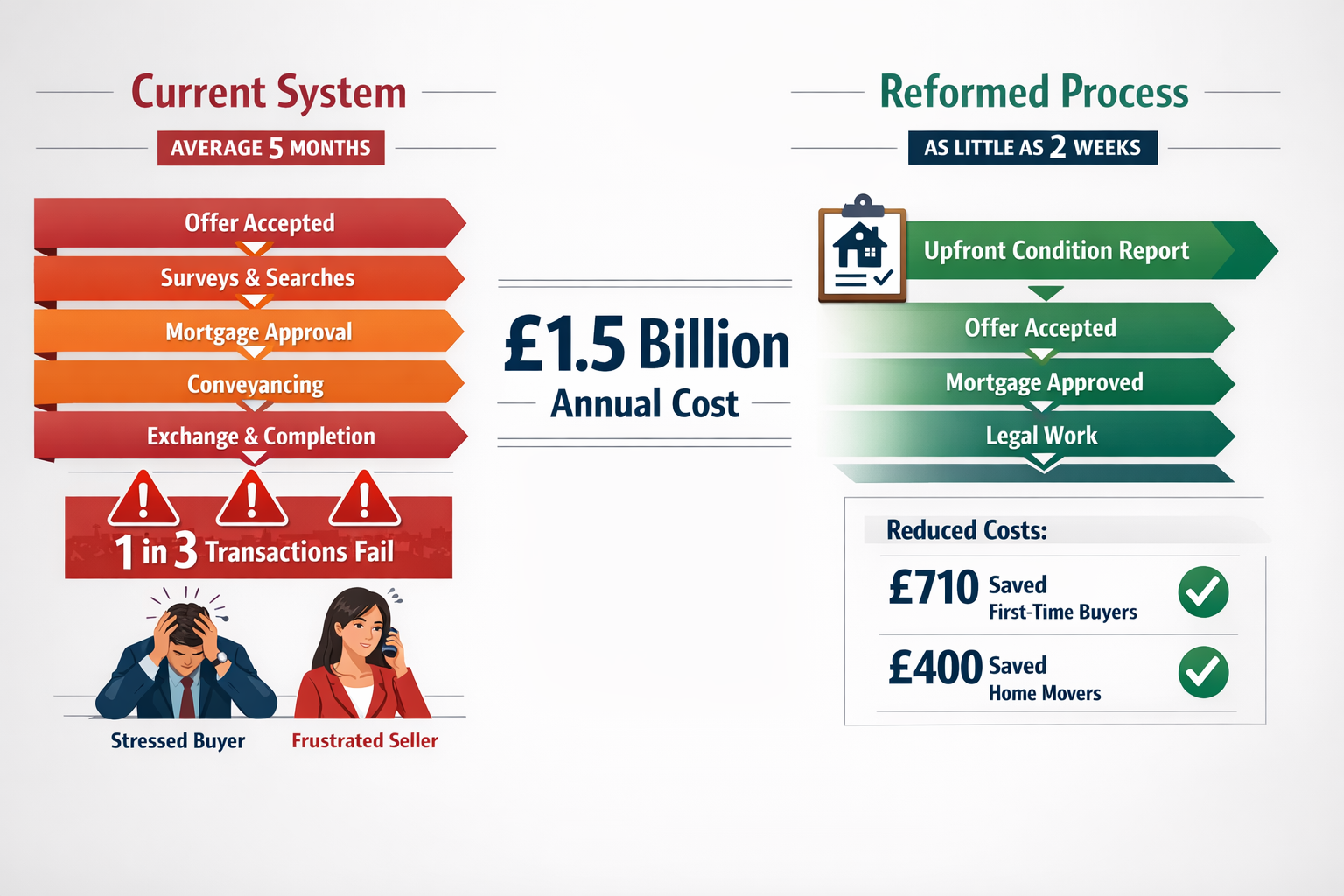
- 💰 Significant cost redistribution sees sellers facing increased upfront costs of £310-£710, while first-time buyers save approximately £710 per transaction and home movers save £400
- ⏱️ Transaction time reduction of two weeks on average, with the current five-month process costing the economy £1.5 billion annually due to inefficiencies and failed sales
- 📋 Professional qualification requirements for estate agents and surveyors will become mandatory, with RICS standards and a new Code of Practice setting minimum competency levels
- 📈 Workload uplift and hiring opportunities for qualified building surveyors as demand shifts to pre-listing assessments, creating contract and permanent employment growth
Understanding the Homebuying Reforms 2026 Framework
The Government's Vision for Transaction Reform
On October 5, 2025, the UK Government launched what it described as the "largest shake-up to the homebuying process in many years" through its comprehensive "Home Buying and Selling Reform" consultation paper [1]. At the heart of these reforms lies a simple but powerful premise: providing essential property information earlier in the transaction process will reduce delays, cut costs, and prevent the emotional and financial devastation of failed sales.
The statistics driving this reform are sobering. The current average time from issuing a sales memorandum to completing a residential transaction stretches to five months, costing the UK economy an estimated £1.5 billion annually [2]. Perhaps even more troubling, RICS research reveals that nearly one in three agreed sales collapse before completion, leading to significant financial setbacks and emotional strain for both buyers and sellers [3].
The government identifies the lack of standardized, essential information at the right transaction stage as the primary culprit for these inefficiencies [2]. The solution? A comprehensive package of mandatory upfront information requirements that fundamentally restructures the homebuying timeline.
Mandatory Upfront Information Requirements
Under the proposed reforms, sellers and estate agents must publish comprehensive key information before a property listing goes live. This represents a dramatic departure from current practice, where much of this information emerges piecemeal during negotiations or even after offers are accepted.
The mandatory upfront information package includes [1]:
- Property condition assessments tailored to property age and type
- Standard searches (local authority, environmental, drainage)
- Tenure information and title details
- Council tax band and EPC rating
- Seller identity verification
- Lease terms (for leasehold properties)
- Building safety data (particularly for multi-unit buildings)
- Flood risk information
For building surveyors, the property condition assessment requirement represents the most immediate and impactful change under these reforms [4]. Rather than conducting surveys during the transaction process—typically after an offer is accepted—surveyors will now be engaged by sellers to complete comprehensive assessments before the property even reaches the market.
Those considering what survey they need should understand that the Level 3 condition report will become the standard pre-listing requirement for most residential properties.
Homebuying Reforms 2026: Preparing Building Surveyors for Workflow Transformation
The Shift from Reactive to Proactive Survey Commissioning
The traditional surveyor workflow follows a predictable pattern: a buyer identifies a property, makes an offer, secures acceptance, then commissions a survey to inform their purchase decision. This reactive model has defined residential surveying for generations.
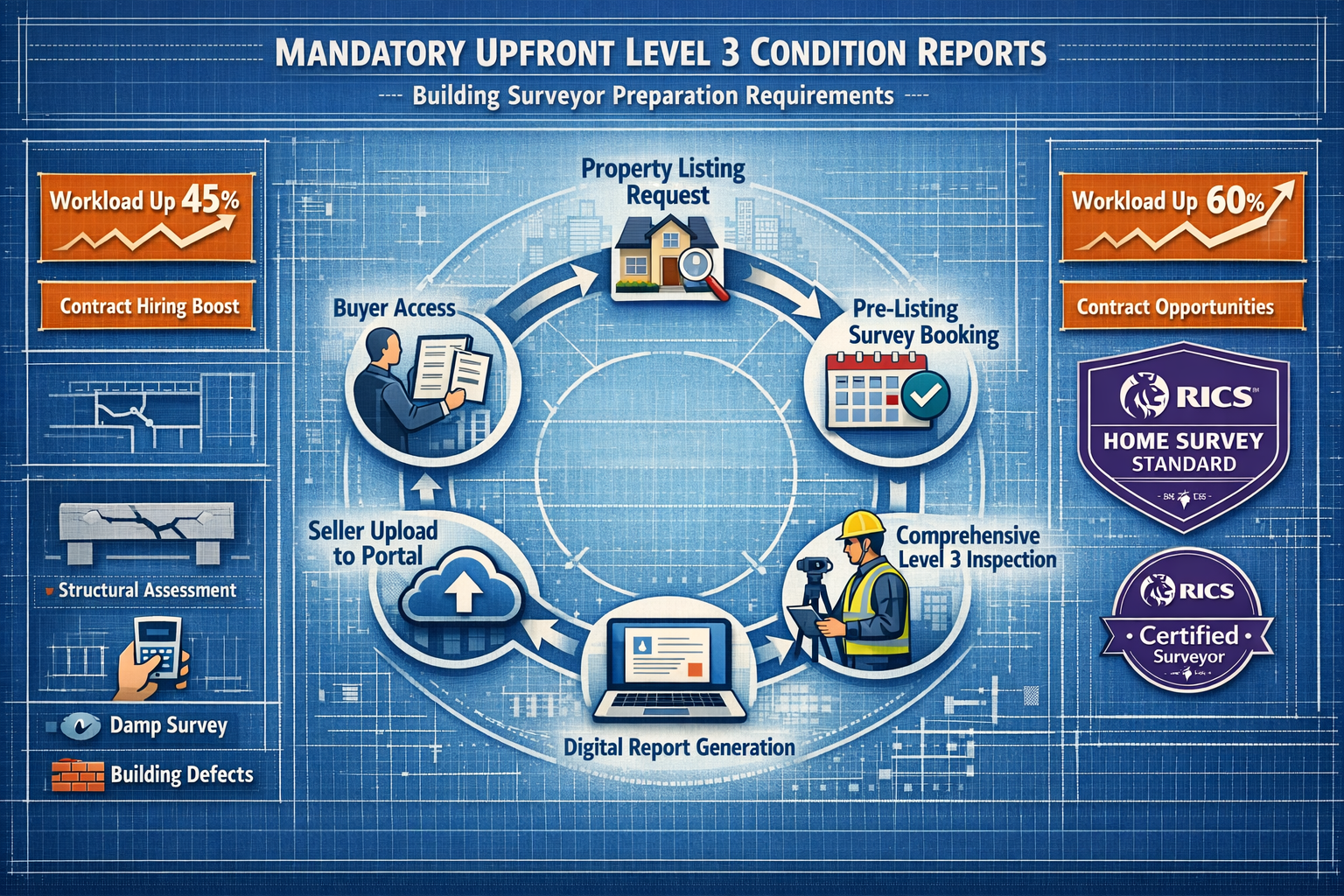
The Homebuying Reforms 2026: Preparing Building Surveyors for Mandatory Upfront Level 3 Condition Reports framework inverts this entirely. Surveyors will now work with sellers and their conveyancers to conduct comprehensive property assessments before marketing begins. This proactive model creates several immediate implications:
Timeline Compression: Sellers preparing to list will need surveys completed quickly to avoid delaying their marketing launch. Surveyors must develop faster turnaround capabilities while maintaining the thoroughness that Level 3 reports demand.
Client Relationship Shift: The primary client becomes the seller rather than the buyer, changing the dynamic of report communication, defect disclosure, and professional liability considerations.
Scheduling Predictability: Rather than responding to sporadic buyer-initiated requests, surveyors can anticipate more consistent workflow from estate agents and sellers preparing listings, enabling better resource planning.
Level 3 Survey Requirements and RICS Home Survey Standards
The government consultation doesn't explicitly mandate "Level 3" surveys by name, but the requirement for comprehensive property condition assessments "tailored to property age and type" strongly suggests that the detailed inspection standards associated with RICS Level 3 Building Surveys will become the benchmark [2].
Understanding the difference between survey types is crucial. Our guide comparing Homebuyer Reports versus Building Surveys explains that Level 3 surveys provide the most thorough inspection, examining all accessible areas and providing detailed advice on defects, repairs, and maintenance.
For the mandatory upfront reports, surveyors should prepare for:
- Comprehensive structural assessment of all major building elements
- Detailed defect identification with severity ratings and repair urgency
- Accessible area inspection including roof spaces, underfloor areas, and outbuildings
- Service system evaluation covering heating, electrical, plumbing, and drainage
- Material condition analysis identifying age-related deterioration
- Maintenance recommendations with prioritization and cost guidance
The RICS Home Survey Standard will likely undergo updates to accommodate the pre-listing context, potentially including standardized data fields for digital platform integration and enhanced guidance on reporting defects that might affect marketability.
Workload Uplift and Capacity Planning
The mandatory nature of upfront condition reports creates an inevitable workload surge for qualified building surveyors. Every residential property entering the market will require a professional assessment, dramatically expanding the total survey market beyond the current buyer-initiated model.
Consider the mathematics: if approximately 1 million residential transactions complete annually in England and Wales, and the reforms reduce the current 33% failure rate [3], the market might see 1.3-1.5 million properties initially listed (accounting for multiple listing attempts). Even with the failure rate reduction, this represents a substantial increase in survey demand compared to the current system where only successful transactions typically generate surveys.
This workload uplift creates several capacity challenges:
Qualified Surveyor Shortage: The supply of RICS-qualified surveyors capable of conducting Level 3 assessments may not immediately match demand, potentially creating bottlenecks in the early implementation phase.
Geographic Distribution: Areas with high transaction volumes, such as London and the South East, may experience particularly acute capacity constraints.
Seasonal Demand Spikes: Traditional property market seasonality (spring/summer peaks) will create predictable surge periods requiring flexible staffing solutions.
Contract Hiring Opportunities and Professional Development
The Growing Demand for Qualified Surveyors
The Homebuying Reforms 2026: Preparing Building Surveyors for Mandatory Upfront Level 3 Condition Reports initiative creates a golden opportunity for building surveyors at all career stages. The workload uplift discussed above translates directly into employment growth across multiple engagement models:
Permanent Positions: Established surveying firms will expand their teams to handle increased baseline demand, creating stable career opportunities for qualified professionals.
Contract Roles: Seasonal demand fluctuations and implementation uncertainty make contract positions particularly attractive to firms managing capacity risk. Experienced surveyors can command premium rates for fixed-term or project-based engagements.
Freelance Opportunities: Self-employed surveyors with appropriate professional indemnity insurance can build thriving practices serving estate agents, conveyancers, and sellers directly.
Regional Expansion: Firms based in high-demand areas like Central London, West London, and Hertfordshire may establish satellite operations or contract networks to serve broader geographic markets.
For surveyors who have traditionally focused on specific defect reports or specialized assessments like roof surveys, the reforms create incentives to expand service offerings to include comprehensive Level 3 condition reports.
Mandatory Professional Qualifications and Standards
A critical component of the reforms involves establishing mandatory qualification requirements for property professionals, including both estate agents and building surveyors [1]. This professionalization agenda recognizes that the increased responsibilities placed on these professionals under the new system demand corresponding competency assurance.
The government proposes introducing a Code of Practice setting minimum standards for all residential property agents, including estate, letting, and managing agents [2]. RICS has already developed such a code in collaboration with The Property Ombudsman and offered to work with government to incorporate it into the final regulatory framework [3].
For building surveyors, this professionalization trend reinforces several important principles:
RICS Membership Value: Chartered status and adherence to RICS standards will likely become de facto requirements for conducting mandatory upfront assessments, increasing the professional and commercial value of RICS qualifications.
Continuing Professional Development: Surveyors must stay current with evolving standards, digital reporting tools, and regulatory requirements through structured CPD programs.
Quality Assurance Protocols: Firms will need robust internal quality control processes to ensure consistency and accuracy across multiple surveyors conducting pre-listing assessments.
Professional Indemnity Insurance: The shift to seller-commissioned reports may alter liability profiles, requiring careful review of insurance coverage and policy terms.
RICS explicitly emphasizes that "it is critical that such decisions on upfront information, including property condition surveys, be undertaken by those professionally qualified" [3], underscoring the organization's commitment to maintaining high professional standards as the market expands.

Technology Integration and Digital Reporting
The mandatory upfront information regime requires digital accessibility of property condition reports through centralized platforms or portals. This technological dimension creates both challenges and opportunities for building surveyors preparing for 2026 implementation.
Standardized Report Formats: Digital platforms will likely require reports in standardized formats with consistent data fields, necessitating updates to current reporting templates and software.
Integration with Estate Agent Systems: Surveyors may need to deliver reports through specific portals or APIs that integrate with estate agent listing platforms, requiring technical adaptation.
Mobile Inspection Technology: Tablets and specialized software enabling on-site data capture, photo annotation, and preliminary report generation will become increasingly valuable for maintaining fast turnaround times.
Cloud-Based Collaboration: Sellers, conveyancers, estate agents, and ultimately buyers will need secure access to reports, favoring cloud-based document management systems.
Surveyors who invest early in appropriate technology infrastructure will gain competitive advantages in efficiency, turnaround time, and client service quality. Those offering services in areas like Kingston or Essex should consider how digital capabilities can differentiate their practice in increasingly competitive markets.
Cost Implications and Economic Impact
Seller Cost Increases and Value Proposition
The reforms create a significant cost redistribution between sellers and buyers. Under the current system, buyers bear most survey costs, typically paying £400-£1,000+ for comprehensive building surveys. The mandatory upfront model shifts this burden to sellers.
According to government impact assessments, final sellers face increased upfront costs of £310, though survey spending for sellers is expected to increase from £38 to £380 on average, raising fixed costs to around £710 [2]. This represents a substantial new expense for sellers preparing to list their properties.
However, this cost must be viewed in context. Failed transactions currently cost sellers around £800 in wasted legal fees, survey costs (if they've also purchased onward), and other expenses [2]. By providing comprehensive property information upfront, sellers significantly reduce the risk of sale collapse, potentially offsetting the survey investment through higher completion rates.
For building surveyors, communicating this value proposition becomes crucial. Sellers may initially resist the new expense, requiring clear explanation of how upfront transparency:
- Attracts serious buyers who can make informed offers based on property condition
- Reduces negotiation friction by eliminating surprise defects discovered late in the process
- Accelerates transactions by frontloading information gathering
- Demonstrates transparency that builds buyer confidence and trust
Buyer Cost Savings and Market Efficiency
While sellers face increased costs, buyers benefit substantially from the reforms. First-time buyers are expected to save around £710 per transaction, while home movers could save £400 [2]. These savings result from:
- Eliminated survey duplication: Buyers no longer need to commission individual surveys, relying instead on seller-provided reports
- Reduced conveyancing costs: With searches and information gathered upfront, conveyancing becomes more streamlined, with average costs currently around £1,540 expected to fall as competition increases [2]
- Lower risk of wasted costs: Fewer failed transactions mean buyers waste less money on aborted purchases
The average time spent on transactions for sellers is expected to reduce by two weeks [2], providing households with greater certainty and supporting wider market confidence. This efficiency gain, multiplied across hundreds of thousands of annual transactions, contributes to the reforms' goal of reducing the £1.5 billion annual economic cost of the current system's inefficiencies.
Phased Implementation and Preparation Timeline
Government's Staged Approach
Recognizing the complexity of implementing such comprehensive reforms, the government has committed to a phased implementation approach. The consultation paper explicitly states that mandatory requirements for sellers to work with conveyancers and surveyors to carry out searches and property condition assessments prior to listing "would not happen immediately," with the government committed to working with industry to understand how and when this should be introduced [2].
This staged approach provides building surveyors with valuable preparation time. Rather than facing an immediate implementation deadline in early 2026, the profession can expect:
Consultation Period: Feedback from industry stakeholders (including RICS, surveying firms, estate agents, and conveyancers) will shape the final regulatory framework.
Pilot Programs: Selected regions or property types may serve as testing grounds for the mandatory upfront assessment model, allowing refinement before national rollout.
Transition Period: Once regulations are finalized, a transition period will likely allow existing listings to complete under current rules while new listings adopt the reformed requirements.
Gradual Enforcement: Initial enforcement may focus on compliance support rather than penalties, with stricter oversight developing as the market adapts.
Preparing Your Practice for 2026 and Beyond
Building surveyors should use this preparation window strategically. Key actions include:
1. Skills Assessment and Training
- Evaluate current team capabilities for Level 3 survey delivery
- Identify training needs for junior staff or those primarily conducting Level 2 Homebuyer Reports
- Invest in CPD focused on comprehensive condition assessment methodologies
- Develop expertise in reporting defects with appropriate context for seller disclosure
2. Operational Capacity Planning
- Model potential demand increases based on local market transaction volumes
- Develop flexible staffing strategies incorporating permanent, contract, and freelance resources
- Establish relationships with contract surveyors for surge capacity management
- Consider geographic expansion to underserved areas with capacity constraints
3. Technology Investment
- Research and pilot digital reporting platforms compatible with anticipated portal requirements
- Implement mobile inspection tools for efficient on-site data capture
- Establish secure cloud-based systems for report delivery and client access
- Develop standardized templates adaptable to digital platform specifications
4. Business Development
- Build relationships with estate agents who will be key referral sources for seller-commissioned surveys
- Educate conveyancers about the new workflow and collaboration requirements
- Develop marketing materials explaining the value proposition to sellers
- Create service packages that bundle condition reports with other seller needs (like Schedule of Condition reports for rental properties)
5. Quality Assurance Systems
- Implement robust internal review processes for report accuracy and consistency
- Develop standardized checklists ensuring comprehensive coverage of all required elements
- Establish peer review protocols for complex or high-value properties
- Create feedback mechanisms to continuously improve service quality
Conclusion: Embracing the Future of Property Surveying
The Homebuying Reforms 2026: Preparing Building Surveyors for Mandatory Upfront Level 3 Condition Reports initiative represents a fundamental transformation of the UK property market—one that places building surveyors at the very foundation of every residential transaction. Rather than viewing these reforms as regulatory burden, forward-thinking surveyors should recognize the extraordinary professional opportunity they create.
By moving property condition assessments from the transaction phase to the pre-listing stage, the reforms elevate the surveyor's role from optional due diligence to mandatory market infrastructure. This shift brings increased demand, enhanced professional status, and the satisfaction of contributing to a more efficient, transparent, and fair property market.
The challenges are real: compressed timelines, workflow reorganization, technology adaptation, and capacity constraints will test the profession's agility and resilience. But the rewards—expanded employment opportunities, professional growth, and the chance to shape a reformed market—make the preparation effort worthwhile.
Actionable Next Steps
For Individual Surveyors:
- ✅ Ensure RICS qualifications and memberships are current and in good standing
- ✅ Invest in CPD focused on comprehensive Level 3 survey methodologies
- ✅ Familiarize yourself with digital reporting tools and mobile inspection technology
- ✅ Network with estate agents and conveyancers in your service area to understand their preparation efforts
- ✅ Consider contract or freelance opportunities if you're not currently in permanent employment
For Surveying Firms:
- ✅ Conduct capacity modeling based on local transaction volumes and projected demand increases
- ✅ Develop flexible staffing strategies incorporating multiple engagement models
- ✅ Invest in technology infrastructure supporting digital report delivery and platform integration
- ✅ Create marketing and education materials explaining the value proposition to sellers
- ✅ Establish quality assurance protocols ensuring consistency across your surveyor team
For the Profession:
- ✅ Engage actively with RICS and government consultations to shape final implementation details
- ✅ Share best practices and lessons learned as pilot programs and early implementations occur
- ✅ Advocate for realistic timelines and adequate transition periods supporting quality service delivery
- ✅ Collaborate across the property industry to ensure seamless integration of the new workflow
The homebuying reforms of 2026 will define the next generation of property transactions in the UK. Building surveyors who prepare thoughtfully, invest strategically, and embrace the opportunities these changes create will not only survive the transition—they'll thrive in the reformed market for decades to come.
For expert guidance on property surveys and condition assessments, chartered surveyors across London and the South East stand ready to help you navigate these transformative changes.
References
[1] Breaking Down The Home Buying Shake Up Key Reforms For Buyers Sellers And Agents – https://www.russell-cooke.co.uk/news-and-insights/news/breaking-down-the-home-buying-shake-up-key-reforms-for-buyers-sellers-and-agents
[2] Home Buying And Selling Reform – https://www.gov.uk/government/consultations/home-buying-and-selling-reform/home-buying-and-selling-reform
[3] Rics Responds To Major Changes In Home Buying And Selling – https://www.rics.org/news-insights/rics-responds-to-major-changes-in-home-buying-and-selling
[4] Homebuying Process Reforms 2026 How Mandatory Upfront Surve – https://nottinghillsurveyors.com/blog/homebuying-process-reforms-2026-how-mandatory-upfront-surve