

The British buy-to-let market stands at a crossroads in 2026. With steeper tax bills, tightening regulations, and shifting market dynamics, smaller landlords are making difficult decisions about their property portfolios. Understanding Landlord Exit Strategies Post-2026 Budget: Building Survey Protocols for Selling Buy-to-Let Assets has become essential for maximizing returns and ensuring smooth transactions in today's challenging environment.
While approximately one in three landlords are considering selling their rental properties, the market isn't collapsing—it's rebalancing.[3] Buy-to-let lending has actually increased by 17%, with a 28% uplift in loans for new purchases, indicating healthy buyer demand for investment properties. This creates opportunities for strategic landlords who prepare their assets properly before sale, particularly through comprehensive building surveys that identify issues early and support accurate valuations.

Key Takeaways
- 📊 Market rebalancing creates strategic exit opportunities with rental listings up 11% and demand stabilizing at sustainable levels
- 🏗️ RICS-compliant building surveys are essential for maximizing sale values and avoiding post-sale disputes in the current high-scrutiny environment
- 💰 Capital gains tax planning requires 60-day action protocols and strategic timing across tax years to minimize liabilities
- 📋 Pre-sale property preparation including defect remediation and compliance documentation can increase sale prices by 5-15%
- ⚖️ Incorporation relief strategies offer CGT deferral opportunities for partnership landlords exiting through business transfers
Understanding the 2026 Budget Impact on Landlord Exit Decisions
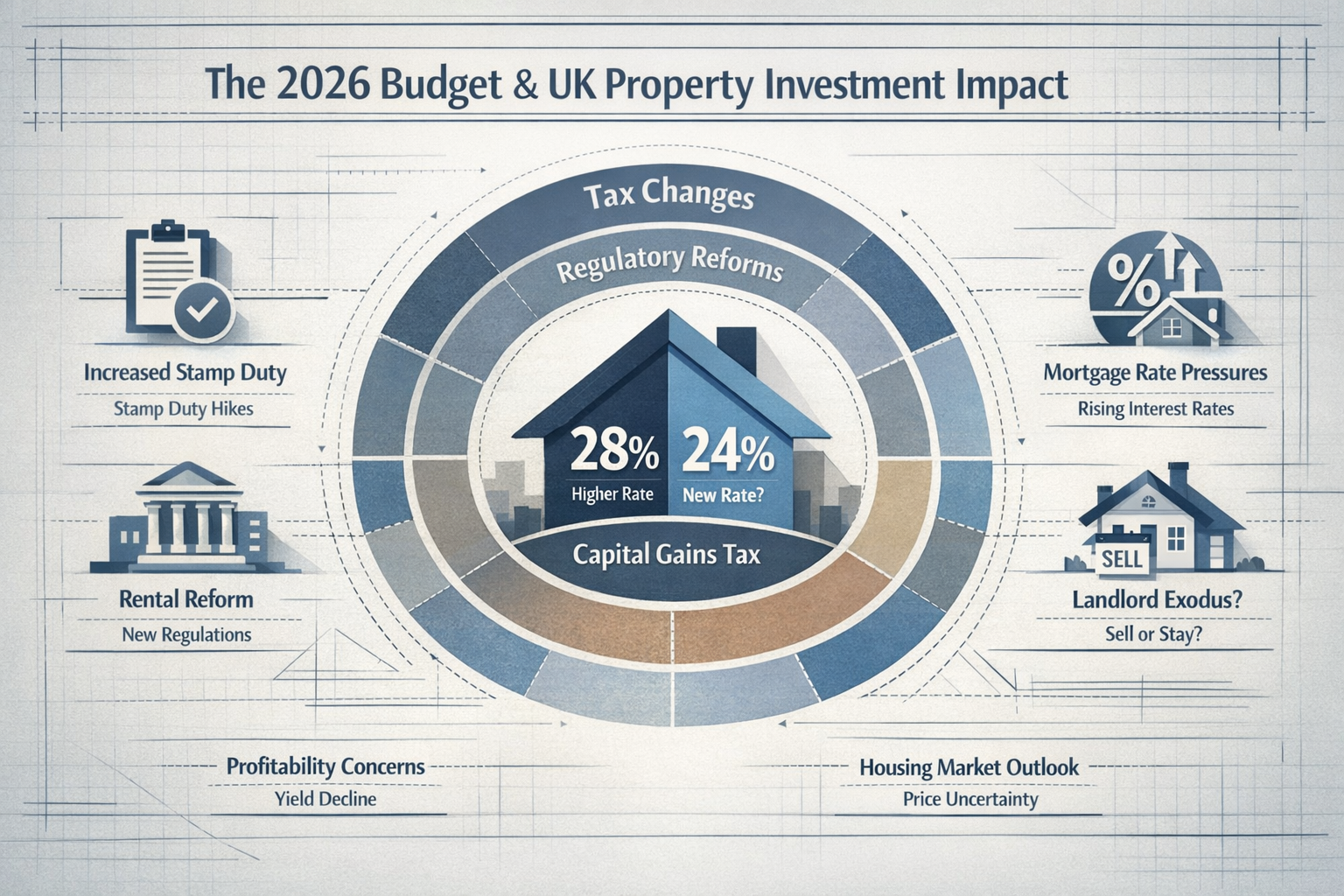
The 2026 budget landscape has fundamentally altered the economics of buy-to-let property ownership. While capital gains tax rates on property disposals remain unchanged, maintaining existing rate structures, several reliefs are becoming narrower and more restrictive.[5]
Tax Changes Driving Exit Decisions
Business Asset Disposal Relief and Investors' Relief will now see gains taxed at 18% from April 2026, up from previous preferential rates.[5] Additionally, disposals to Employee Ownership Trusts receive only 50% relief instead of full relief, tightening options for structured exits.
The continuation of Section 24 mortgage interest restrictions means individual landlords can no longer deduct full mortgage interest from rental income before calculating tax. This has pushed many portfolios into negative cash flow territory, particularly those with higher loan-to-value ratios.
Market Dynamics Creating Strategic Opportunities
Despite negative headlines, the rental market data reveals a more nuanced picture:
| Market Indicator | 2026 Status | Implication for Sellers |
|---|---|---|
| Rental Listings | ↑ 11% | More supply, balanced market |
| Unique Demand | ↓ 12% | Stabilization from peak frenzy |
| Enquiries per Property | Moderate | Still above pre-2020 levels |
| BTL Lending | ↑ 17% | Strong buyer financing available |
| New Purchase Loans | ↑ 28% | Active investor demand |
This rebalancing creates optimal selling conditions for well-prepared properties. Buyers have more choice, but quality assets with clear documentation and resolved defects command premium prices.[3]
Strategic Framework for Exit Timing
Rather than panic-selling, successful landlords in 2026 are using a clear framework based on three pillars:
- Return on Investment (ROI) – Calculate net yield after all tax changes and compare against alternative investments
- Risk Assessment – Evaluate upcoming regulatory compliance costs, particularly for older properties requiring EPC upgrades
- Compliance Position – Determine current standing against evolving standards and cost to achieve full compliance
Properties requiring substantial investment to meet future regulations often make strong candidates for strategic disposal, especially when building surveys reveal significant hidden defects.
Building Survey Protocols: The Foundation of Landlord Exit Strategies Post-2026 Budget
When preparing buy-to-let assets for sale, a comprehensive building survey forms the cornerstone of effective exit planning. Unlike basic valuations, detailed surveys identify structural issues, compliance gaps, and maintenance requirements that directly impact sale price negotiations and transaction success rates.
Why RICS-Compliant Surveys Matter for BTL Sales
RICS (Royal Institution of Chartered Surveyors) standards provide the gold standard for property assessments in the UK market. For landlords exiting their portfolios, commissioning a homebuyer report or building survey before listing offers multiple strategic advantages:
✅ Price Justification – Documented property condition supports asking price negotiations with evidence-based valuations
✅ Issue Resolution – Identifying defects early allows strategic decisions about pre-sale repairs versus price adjustments
✅ Transaction Speed – Proactive disclosure reduces buyer survey surprises that delay or derail sales
✅ Legal Protection – Comprehensive documentation protects against misrepresentation claims post-completion
✅ Competitive Advantage – Properties with recent surveys signal transparency and attract serious buyers
Selecting the Appropriate Survey Level
For Landlord Exit Strategies Post-2026 Budget: Building Survey Protocols for Selling Buy-to-Let Assets, choosing the right survey depth depends on property characteristics:
RICS Level 2 (HomeBuyer Report) suits:
- Properties built after 1900
- Standard construction methods
- Reasonable condition
- No obvious major defects
RICS Level 3 (Building Survey) essential for:
- Pre-1900 properties
- Non-standard construction
- Properties with known issues
- Assets requiring substantial work
- High-value portfolios
Most buy-to-let properties benefit from Level 3 surveys, as rental wear and deferred maintenance often mask underlying issues. The comprehensive nature helps landlords make informed decisions about repair investments versus discounted sales.
Critical Survey Components for BTL Asset Disposal
When commissioning surveys specifically for sale preparation, ensure coverage includes:
🏠 Structural Integrity Assessment
- Foundation condition and movement indicators
- Load-bearing wall stability
- Roof structure and covering condition
- Subsidence risk evaluation in vulnerable areas
🔧 Building Services Evaluation
- Electrical installation condition and certification status
- Plumbing systems, including hidden leaks
- Heating system efficiency and compliance
- Drainage adequacy and condition
🛡️ Compliance and Safety Documentation
- Gas safety certificates
- Electrical Installation Condition Reports (EICR)
- Energy Performance Certificate (EPC) ratings
- Fire safety compliance for HMOs
🌧️ Damp and Timber Assessment
- Rising damp indicators
- Penetrating moisture sources
- Condensation risk areas
- Timber decay and infestation evidence
📏 Boundary and Access Rights
- Boundary definitions and disputes
- Rights of way and easements
- Party wall condition and responsibilities
- Shared access arrangements
Timing Your Survey Strategically
For optimal exit planning, commission building surveys 6-12 months before intended sale. This timeline allows:
- Remediation window – Time to address critical defects cost-effectively
- Multiple quote comparison – Obtaining competitive repair estimates
- Tax year planning – Timing major expenditure and disposal across tax years strategically
- Market positioning – Listing when repairs are complete and documentation current
Properties with specific defect concerns may require specialist investigations, such as roof surveys or structural engineering assessments, which need additional lead time.
Capital Gains Tax Planning and Documentation Requirements
Effective Landlord Exit Strategies Post-2026 Budget: Building Survey Protocols for Selling Buy-to-Let Assets must integrate comprehensive tax planning with property preparation. The 60-day CGT reporting requirement creates tight deadlines that catch unprepared sellers.
The 60-Day CGT Reporting Protocol
Since April 2020, landlords must report capital gains on UK residential property disposals and pay any tax due within 60 days of completion.[2] This compressed timeline demands advance preparation:
Pre-Completion Phase (Days -90 to -1)
- Establish preliminary gain estimates using current market valuations
- Gather acquisition documentation (purchase contracts, legal fees, SDLT receipts)
- Compile enhancement expenditure records (not repairs, but improvements adding value)
- Calculate indexation allowances and reliefs available
- Model tax scenarios under different sale price outcomes
Immediate Post-Completion (Days 1-30)
- Finalize actual sale proceeds and transaction costs
- Complete HMRC online return via UK Property Reporting Service
- Calculate exact CGT liability using current rates
- Arrange payment through approved methods
- Retain confirmation receipts and reference numbers
Reconciliation Phase (Days 31-60)
- Verify all calculations against completion statement
- Ensure payment processed successfully
- Prepare documentation for subsequent Self Assessment return
- File supporting evidence systematically for future reference
Late filing penalties start at £100 and escalate rapidly, making adherence to this protocol essential for protecting exit proceeds.[2]
Maximizing CGT Reliefs During Portfolio Exit
Several relief mechanisms can significantly reduce tax liabilities when properly structured:
Private Residence Relief (PRR)
If any rental property previously served as your main residence, PRR may apply to the ownership period when you lived there, plus the final 9 months of ownership regardless of use. Strategic timing of disposal can maximize this relief.
Lettings Relief
Though substantially reduced in recent years, lettings relief still applies in specific circumstances when PRR is available, providing up to £40,000 additional relief per person.
Section 162 Incorporation Relief
For landlords operating as genuine property partnerships, Section 162 offers powerful CGT deferral when transferring the entire business to a company structure in exchange for shares.[2] Critical requirements include:
- Transfer of whole business as going concern (not just property assets)
- Evidence of genuine partnership trading activity
- Exclusion of cash from transfer
- Receipt of shares as consideration
- Continuation of business within company structure
This strategy works particularly well for landlords with multiple properties operated as an integrated business, though professional advice is essential for HMRC compliance.
Company Structure Considerations for Exit Planning
Incorporation can provide strategic advantages for landlords planning medium-term exits:
Tax Benefits:
- Avoids Section 24 mortgage interest restrictions
- Corporate tax rates (19-25%) may be lower than higher-rate income tax
- More flexible profit extraction through dividends and salary combinations
- CGT deferral through incorporation relief
Exit Flexibility:
- Share sales potentially qualify for Business Asset Disposal Relief (10% CGT)
- Easier to transfer ownership incrementally
- Better succession planning options
- Enhanced borrowing capacity with some lenders
Considerations:
- Stamp Duty Land Tax on property transfer to company (typically 3% additional rate)
- Ongoing corporate compliance costs
- Potential difficulty extracting funds without further tax charges
- Mortgage lender consent requirements
Landlords should model outcomes over 3-5 year horizons, comparing personal versus company structures across different exit scenarios before committing.[2] Working with chartered surveyors and tax advisors creates comprehensive exit strategies aligned with both property and financial goals.
Digital Tax Reporting Impact on Exit Timing
From April 2026, Making Tax Digital (MTD) for Income Tax requires sole-trader landlords with combined gross income exceeding £50,000 to maintain digital records and submit quarterly updates using MTD-compatible software.[2]
This affects exit strategies by:
- Increasing compliance burden – More frequent reporting reduces time for portfolio management
- Requiring software investment – MTD-compatible systems add operational costs
- Creating disposal incentives – Landlords near the £50,000 threshold may sell to avoid MTD requirements
- Affecting timing decisions – Disposing before MTD obligations commence simplifies administration
For landlords planning exits, completing disposals before MTD obligations begin eliminates the need for software investment and quarterly reporting setup, particularly attractive for those exiting the sector entirely.
Pre-Sale Property Preparation: Maximizing Asset Value Through Strategic Improvements
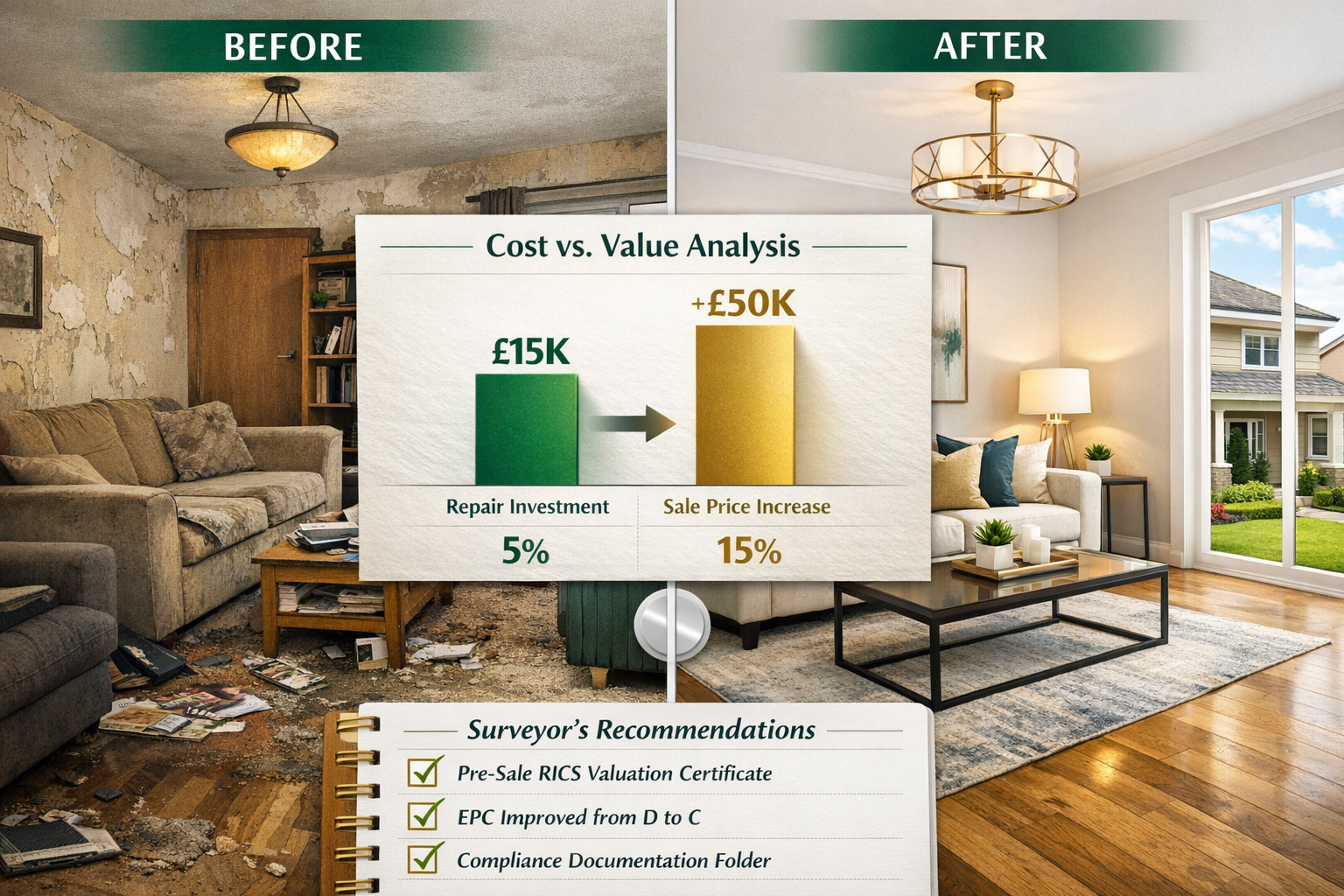
The difference between a well-prepared buy-to-let asset and one sold "as-is" can represent 5-15% of final sale price. Strategic preparation guided by building survey findings optimizes returns while avoiding over-investment in improvements buyers won't value.
Interpreting Survey Findings for Investment Decisions
When your building survey report arrives, it typically categorizes defects using a traffic light system:
🔴 Condition Rating 3 (Urgent) – Defects requiring immediate attention
- Structural movement or instability
- Significant damp penetration
- Dangerous electrical installations
- Roof failures causing water ingress
🟠 Condition Rating 2 (Significant) – Defects needing attention but not urgent
- Aging heating systems
- Minor damp issues
- Worn roof coverings with remaining life
- Outdated but functional services
🟢 Condition Rating 1 (Satisfactory) – No repair currently needed
- Recently replaced components
- Well-maintained elements
- Items performing as expected
Strategic Repair Prioritization Framework
Not all defects warrant pre-sale remediation. Apply this decision framework:
ALWAYS REPAIR:
- Safety hazards – Electrical faults, gas leaks, structural instability
- Mortgage impediments – Issues that prevent buyer financing
- Progressive damage – Problems that worsen rapidly if left (active leaks, rot)
- High ROI repairs – Fixes costing £1,000 but preventing £5,000+ price reductions
CONSIDER REPAIRING:
- Cosmetic improvements – Fresh decoration, minor repairs enhancing presentation
- Energy efficiency – Boiler upgrades, insulation improving EPC ratings
- Compliance updates – Bringing installations to current standards
- Buyer expectation items – Fixes typical buyers demand in your property segment
PRICE ADJUST INSTEAD:
- Low ROI repairs – Extensive work with minimal value impact
- Buyer preference items – Kitchens/bathrooms where buyers want their own choices
- Specialist work – Complex repairs requiring ongoing monitoring
- End-of-life replacements – Systems functioning but nearing replacement age
High-Impact, Cost-Effective Improvements
Focus pre-sale investment on improvements delivering measurable returns:
Presentation Enhancement (ROI: 200-500%)
- Professional deep cleaning (£200-500)
- Fresh neutral decoration (£1,000-3,000)
- Garden tidying and maintenance (£300-800)
- Minor repairs and touch-ups (£500-1,500)
Compliance and Certification (ROI: 100-300%)
- Updated EICR (£200-400)
- Gas safety certificate (£80-150)
- EPC improvement from E to D (£500-2,000)
- Remediation of specific hazards (variable)
Functional Repairs (ROI: 150-400%)
- Damp treatment and replastering (£1,500-5,000)
- Roof repairs preventing leaks (£800-3,000)
- Boiler servicing or replacement if critical (£500-3,500)
- Drainage clearance and repairs (£300-1,500)
Avoid Over-Improvement:
- Premium kitchen installations in mid-market properties
- Extensive landscaping beyond basic tidiness
- Luxury bathrooms exceeding area standards
- High-end finishes inappropriate for rental stock
Documentation Package Assembly
Comprehensive documentation significantly enhances buyer confidence and transaction speed. Assemble:
📄 Property History File
- Original purchase documentation
- Title deeds and land registry documents
- Planning permissions and building regulation approvals
- Guarantees and warranties for works completed
🔍 Survey and Inspection Reports
- Recent building survey
- Specialist reports (subsidence, drainage, timber, etc.)
- Structural engineer assessments if applicable
- Pre-sale valuation report
✅ Compliance Certificates
- Current EPC (valid 10 years)
- EICR within last 5 years
- Gas safety certificate (annual)
- Legionella risk assessment for HMOs
- Fire safety documentation
💰 Financial Records
- Rental income history
- Service charge and ground rent documentation
- Utility bills and council tax records
- Insurance policy details
🏘️ Tenancy Information
- Current tenancy agreements
- Deposit protection documentation
- Tenant references and check-in reports
- Correspondence regarding property condition
This comprehensive package positions the property as a professional investment opportunity rather than a distressed disposal, supporting premium pricing.
Navigating Buyer Surveys and Negotiation Dynamics
Even with thorough pre-sale preparation, buyer surveys will identify issues requiring skilled negotiation. Understanding this process protects your exit strategy from unexpected value erosion.
Common Buyer Survey Findings and Response Strategies
Structural Movement or Subsidence Concerns
Buyer surveys frequently flag historic movement, particularly in properties with Victorian or Edwardian origins. Response strategies include:
- Providing evidence of previous underpinning or repairs
- Commissioning specialist subsidence surveys demonstrating stability
- Offering structural warranties covering identified risks
- Price adjustment reflecting genuine ongoing risk
Damp and Moisture Issues
Damp readings trigger buyer concern even when non-critical. Address through:
- Specialist damp surveys distinguishing condensation from rising/penetrating damp
- Evidence of recent damp-proofing work with guarantees
- Dehumidifier readings demonstrating controlled moisture levels
- Targeted price reductions for genuine remediation costs
Electrical Installation Concerns
Outdated wiring or failed EICR tests require clear responses:
- Recent EICR demonstrating compliance
- Quotes for remedial works if issues identified
- Completion of critical safety work pre-exchange
- Retention arrangements for agreed post-completion works
Roof Condition Questions
Roof concerns frequently appear in surveys of older properties:
- Recent roof survey reports with remaining life estimates
- Evidence of recent re-roofing or repairs
- Drone roof surveys providing detailed visual documentation
- Realistic price adjustments for end-of-life coverings
Negotiation Tactics for Protecting Sale Price
When buyers request price reductions based on survey findings:
1. Distinguish Between Issues and Defects
Many survey "issues" represent normal wear or age-appropriate condition rather than actionable defects. Challenge inappropriate reduction requests with evidence.
2. Obtain Counter-Quotes
Buyer estimates for repair costs often exceed market rates. Commission independent quotes demonstrating realistic remediation costs.
3. Offer Targeted Solutions
Rather than blanket price reductions, propose specific remedies:
- Completion of defined works pre-completion
- Retention of agreed sums released upon work completion
- Contribution toward specific repairs (not general reduction)
- Provision of warranties or insurance products
4. Demonstrate Disclosure
When issues were disclosed upfront via your pre-sale survey, buyers have limited grounds for renegotiation. Reference your earlier documentation.
5. Know Your Walk-Away Point
Calculate minimum acceptable proceeds considering:
- CGT liability on different sale prices
- Alternative buyer prospects
- Holding costs if sale falls through
- Market trajectory and timing pressures
Managing Investor vs. Owner-Occupier Buyers
Investor Buyers typically:
- Focus on yield and cash flow rather than cosmetic condition
- Accept higher levels of wear and deferred maintenance
- Value tenanted properties with income continuity
- Negotiate harder on price but proceed more reliably
Owner-Occupier Buyers generally:
- Prioritize presentation and move-in condition
- React emotionally to survey findings
- Require vacant possession and higher finish standards
- May pay premiums but negotiate extensively post-survey
For landlord exits, targeting investor buyers often produces smoother transactions with fewer survey-related complications, particularly for properties with sitting tenants or requiring modernization.
Compliance, Legal, and Transaction Management Considerations
Successful Landlord Exit Strategies Post-2026 Budget: Building Survey Protocols for Selling Buy-to-Let Assets require meticulous attention to legal compliance and transaction mechanics that differ from standard residential sales.
Tenancy Status and Vacant Possession Decisions
Selling with Sitting Tenants:
✅ Advantages:
- Continued rental income during marketing
- Appeals to investor buyers seeking immediate yield
- Demonstrates tenancy quality and income reliability
- Avoids void period costs
❌ Disadvantages:
- Reduced buyer pool (excludes owner-occupiers)
- Typically 10-20% price discount versus vacant possession
- Viewing logistics more complex
- Tenant cooperation required
Selling with Vacant Possession:
✅ Advantages:
- Broader buyer appeal including owner-occupiers
- Higher achievable prices
- Easier property presentation and viewing
- Flexibility for pre-sale improvements
❌ Disadvantages:
- Void period costs (mortgage, insurance, utilities, council tax)
- Notice period requirements (2-6 months typically)
- Potential tenant disputes during notice period
- Lost rental income during marketing
Disclosure Obligations and Risk Management
Sellers have legal obligations to disclose known material information affecting property value:
Required Disclosures:
- Structural defects or movement
- Damp, rot, or infestation issues
- Boundary disputes or party wall matters
- Planning enforcement notices
- Flood history or subsidence claims
- Disputes with neighbors or tenants
Documentation Protection:
Maintain comprehensive records demonstrating:
- When issues were discovered
- Actions taken to investigate and remedy
- Professional advice received
- Disclosure to prospective buyers
Your pre-sale building survey provides crucial evidence of disclosure compliance, protecting against post-completion misrepresentation claims.
Conveyancing Considerations for BTL Disposals
Buy-to-let sales involve additional legal complexities:
TA6 Property Information Form
Complete accurately regarding:
- Rental history and tenant issues
- Building insurance claims
- Alterations and planning permissions
- Guarantees and warranties
- Environmental matters
Leasehold Properties
If disposing of leasehold BTL assets, provide:
- Lease terms and ground rent details
- Service charge history and accounts
- Freeholder contact information
- Major works notices or planned expenditure
- Lease extension documentation if applicable
Company-Owned Properties
Disposals by limited companies require:
- Board resolutions authorizing sale
- Company accounts and tax compliance confirmation
- Beneficial ownership declarations
- Anti-money laundering documentation
Transaction Timeline Management
Typical BTL disposal timelines in 2026:
| Phase | Duration | Key Activities |
|---|---|---|
| Pre-Marketing | 2-4 months | Survey, repairs, documentation, valuation |
| Marketing | 4-12 weeks | Viewings, offers, negotiation |
| Under Offer | 2-4 weeks | Buyer survey, renegotiation, mortgage offer |
| Conveyancing | 8-12 weeks | Legal work, searches, contract exchange |
| Completion | 1-2 weeks | Final arrangements, completion, handover |
Total Timeline: 6-9 months from decision to proceed through completion.
Critical path items requiring early attention:
- Building survey commissioning (longest lead time for complex properties)
- CGT planning and documentation assembly
- Tenancy status decisions and notice service if required
- Compliance certificate renewal where expired
Working with experienced chartered surveyors and specialist BTL conveyancers significantly reduces timeline risks and transaction failure rates.
Alternative Exit Strategies Beyond Outright Sale
While outright disposal suits many landlords, alternative strategies may better serve specific circumstances in the 2026 market environment.
Portfolio Refinancing and Selective Retention
Rather than wholesale exit, strategic portfolio optimization involves:
Dispose of:
- Properties with lowest yields after tax
- Assets requiring substantial compliance investment
- Locations with weakening rental demand
- Properties approaching major capital expenditure cycles
Retain:
- High-yielding properties in strong rental markets
- Recently refurbished assets requiring minimal investment
- Properties with significant unrealized capital gains (defer CGT)
- Assets benefiting from strong tenant demand and rent growth
This approach maximizes post-tax returns while reducing management burden and compliance risk.
Incorporation and Business Structure Transformation
For landlords with substantial portfolios operated as genuine businesses, incorporation offers an alternative to exit:
Process Overview:
- Evidence business trading activity (not passive investment)
- Obtain professional valuations for all properties
- Transfer entire business to newly formed company
- Receive shares as consideration (triggering Section 162 relief)
- Continue business within corporate structure
Long-term Benefits:
- CGT deferral until eventual share disposal
- Corporate tax advantages on rental profits
- Enhanced borrowing capacity
- Improved succession planning options
- Potential Business Asset Disposal Relief on eventual exit
Considerations:
- SDLT costs on property transfer (typically 3% surcharge)
- Ongoing corporate compliance requirements
- Lender consent for mortgage transfers
- Professional fees for complex restructuring
This strategy works best for committed landlords seeking tax efficiency rather than immediate exit, but positions the business for eventual disposal on favorable terms.
Lease Option Arrangements
Lease options provide exit flexibility while maintaining upside potential:
- Grant buyer option to purchase at predetermined price
- Receive option fee (typically 3-5% of property value)
- Continue receiving rent during option period
- Buyer exercises option or arrangement expires
This approach suits landlords uncertain about exit timing or seeking to defer CGT while testing market conditions.
Family Transfers and Succession Planning
For landlords with family members interested in property investment:
Gift with Reservation of Benefit:
Transfer properties to family members while retaining rental income temporarily, managing CGT and inheritance tax exposure.
Gradual Share Transfers:
If incorporated, transfer company shares incrementally using annual CGT allowances and potentially Business Asset Disposal Relief.
Trust Arrangements:
Place properties in trust structures for long-term family wealth management, though complex tax implications require specialist advice.
These strategies require early planning and professional guidance to navigate tax implications effectively.
Regional Considerations and Local Market Dynamics
Landlord Exit Strategies Post-2026 Budget: Building Survey Protocols for Selling Buy-to-Let Assets vary significantly by location, with regional market conditions affecting optimal approaches.
London and Southeast Market Characteristics
Properties in London and surrounding areas face unique considerations:
Higher Property Values:
- Larger absolute CGT liabilities requiring careful planning
- Greater scope for value optimization through strategic improvements
- More sophisticated buyer pool with detailed due diligence expectations
Regulatory Complexity:
- Stricter local authority licensing requirements
- More stringent EPC standards in some boroughs
- Higher compliance costs for older properties
Market Depth:
- Stronger investor buyer demand
- More active BTL lending market
- Better prospects for premium pricing with proper preparation
Landlords in areas like Kingston, West London, Barnes, and Islington benefit from strong underlying demand but face higher buyer expectations regarding property condition and documentation.
Home Counties and Regional Markets
Properties in Hertfordshire, Essex, Hampshire, and Oxfordshire present different dynamics:
Commuter Belt Advantages:
- Strong rental demand from London workers
- Good capital appreciation prospects
- Lower entry costs attracting first-time landlords
Survey Considerations:
- More properties with non-standard construction
- Greater prevalence of older housing stock
- Potential boundary and access issues in rural areas
Exit Timing:
- Seasonal market variations more pronounced
- School calendar affects family rental demand
- Transport link improvements drive local value changes
Specialist Property Types
Certain BTL asset classes require tailored approaches:
HMOs (Houses in Multiple Occupation):
- Enhanced licensing requirements
- More complex compliance obligations
- Specialist investor buyer market
- Higher yields but greater regulatory risk
Leasehold Flats:
- Service charge and ground rent considerations
- Remaining lease length critical to value
- Freeholder relationships affect saleability
- Lease extension implications
Period Properties:
- Higher survey costs due to age and complexity
- Listed building constraints in some cases
- Character features appeal to specific buyers
- Greater scope for hidden defects
Working with Professional Advisors: Building Your Exit Team
Successful execution of Landlord Exit Strategies Post-2026 Budget: Building Survey Protocols for Selling Buy-to-Let Assets requires coordinated professional support across multiple disciplines.
Chartered Surveyors and Building Professionals
RICS Chartered Surveyors provide:
- Pre-sale building surveys identifying defects and compliance gaps
- Accurate market valuations supporting pricing strategies
- Specialist investigations for complex issues
- Expert witness services if disputes arise
Select surveyors with specific BTL experience who understand investor buyer expectations and can provide commercially focused advice beyond technical reporting.
Tax Advisors and Accountants
Specialist property tax advisors deliver:
- CGT calculations and optimization strategies
- Incorporation feasibility assessments
- MTD compliance planning
- Multi-year tax modeling for timing decisions
- HMRC correspondence and dispute resolution
Engage advisors early in the planning process to maximize available reliefs and structure disposals tax-efficiently.
Estate Agents and Marketing Specialists
BTL-specialist estate agents offer:
- Accurate market appraisals based on investor criteria
- Targeted marketing to investor buyer audiences
- Negotiation skills protecting sale prices post-survey
- Transaction management reducing fall-through risks
Choose agents with proven investor networks rather than general residential specialists for optimal results.
Solicitors and Conveyancers
Property lawyers handle:
- Contract preparation and negotiation
- Disclosure compliance and risk management
- Leasehold and freehold title complexities
- Company disposal mechanics if applicable
Select conveyancers with BTL transaction experience who understand investor buyer requirements and can navigate tenancy-related complications.
Building a Coordinated Exit Strategy
The most successful exits involve early coordination among all advisors:
- Initial Planning Meeting – Surveyor, accountant, and agent discuss property condition, tax position, and market strategy
- Survey and Valuation Phase – Technical assessment informs repair decisions and pricing strategy
- Tax Optimization – Accountant structures disposal timing and entity arrangements
- Marketing Launch – Agent implements strategy with full documentation package
- Transaction Management – Solicitor coordinates completion with tax advisor ensuring CGT compliance
This integrated approach maximizes net proceeds while minimizing transaction risks and timeline delays.
Conclusion: Strategic Decision-Making for Optimal Landlord Exits in 2026
The landscape for Landlord Exit Strategies Post-2026 Budget: Building Survey Protocols for Selling Buy-to-Let Assets demands careful planning, professional guidance, and strategic execution. While tax pressures and regulatory changes are driving some landlords toward disposal, the market remains active with strong investor demand for well-prepared properties.
Key Success Factors for Landlord Exits
🎯 Strategic Timing – Rather than panic-selling, successful landlords analyze their portfolio systematically, identifying which properties to retain for strong yields and which to dispose of due to compliance costs or poor returns.
📋 Comprehensive Preparation – Investing in professional building surveys and addressing critical defects before marketing maximizes sale prices and reduces transaction friction.
💰 Tax Optimization – Early engagement with specialist advisors enables CGT planning, incorporation assessment, and strategic timing across tax years to minimize liabilities legally.
📄 Documentation Excellence – Assembling comprehensive property files with surveys, compliance certificates, and financial records positions assets as professional investment opportunities commanding premium prices.
🤝 Professional Support – Building coordinated teams of chartered surveyors, tax advisors, specialist agents, and experienced conveyancers significantly improves outcomes versus DIY approaches.
Immediate Action Steps
For landlords considering exit strategies in 2026, take these concrete steps:
-
Conduct Portfolio Analysis – Calculate post-tax yields on each property and identify disposal candidates based on ROI, risk, and compliance position
-
Commission Building Surveys – Engage RICS chartered surveyors for comprehensive assessments 6-12 months before intended sale
-
Develop Tax Strategy – Consult specialist accountants regarding CGT planning, incorporation feasibility, and MTD implications
-
Address Critical Defects – Prioritize high-ROI repairs identified in surveys, focusing on safety, compliance, and mortgage-ability
-
Assemble Documentation – Compile comprehensive property files including surveys, certificates, financial records, and tenancy information
-
Engage Specialist Agents – Select estate agents with proven BTL investor networks and transaction success rates
-
Plan Timeline – Work backward from target completion dates, allowing adequate time for each phase of preparation and transaction
Looking Forward: The 2026 Market Opportunity
Despite challenges, the 2026 market presents genuine opportunities for prepared landlords. With rental demand remaining robust, investor buyers actively seeking properties, and BTL lending increasing, well-presented assets with clear documentation achieve strong prices.
The key differentiator lies in professional preparation. Properties sold with comprehensive building surveys, resolved defects, and complete compliance documentation command premiums of 5-15% versus comparable assets sold "as-is" with issues left for buyers to discover.
For landlords committed to exit, the current market rebalancing creates optimal conditions—sufficient buyer demand without the frenzied competition of 2021-2023, allowing quality assets to stand out. For those retaining properties, strategic portfolio optimization through selective disposals improves overall returns while reducing compliance burden.
The landlords who will thrive in 2026 and beyond are those who approach exit strategies systematically, invest in professional assessments, optimize tax positions legally, and present properties as investment-grade assets rather than distressed disposals.
Whether planning immediate exit or positioning for future disposal, the foundation remains constant: comprehensive building surveys, strategic defect remediation, meticulous documentation, and coordinated professional support. These elements transform challenging market conditions into opportunities for maximizing returns and achieving clean, efficient transactions.
References
[1] Five Big Changes For Landlords 2026 – https://www.telegraph.co.uk/money/property/buy-to-let/five-big-changes-for-landlords-2026/
[2] Tax Changes For Landlords 2026 Complete Guide – https://www.djh.co.uk/latest-news/news-insights/tax-changes-for-landlords-2026-complete-guide/
[3] 2026 Market Reset From Confusion To Clarity For Landlords – https://www.martinco.com/guides/landlord/2026-market-reset-from-confusion-to-clarity-for-landlords/
[5] Property Post Budget What Landlords And Investors Need To Know – https://www.cottonsgroup.com/resources/blog/property-post-budget-what-landlords-and-investors-need-to-know/