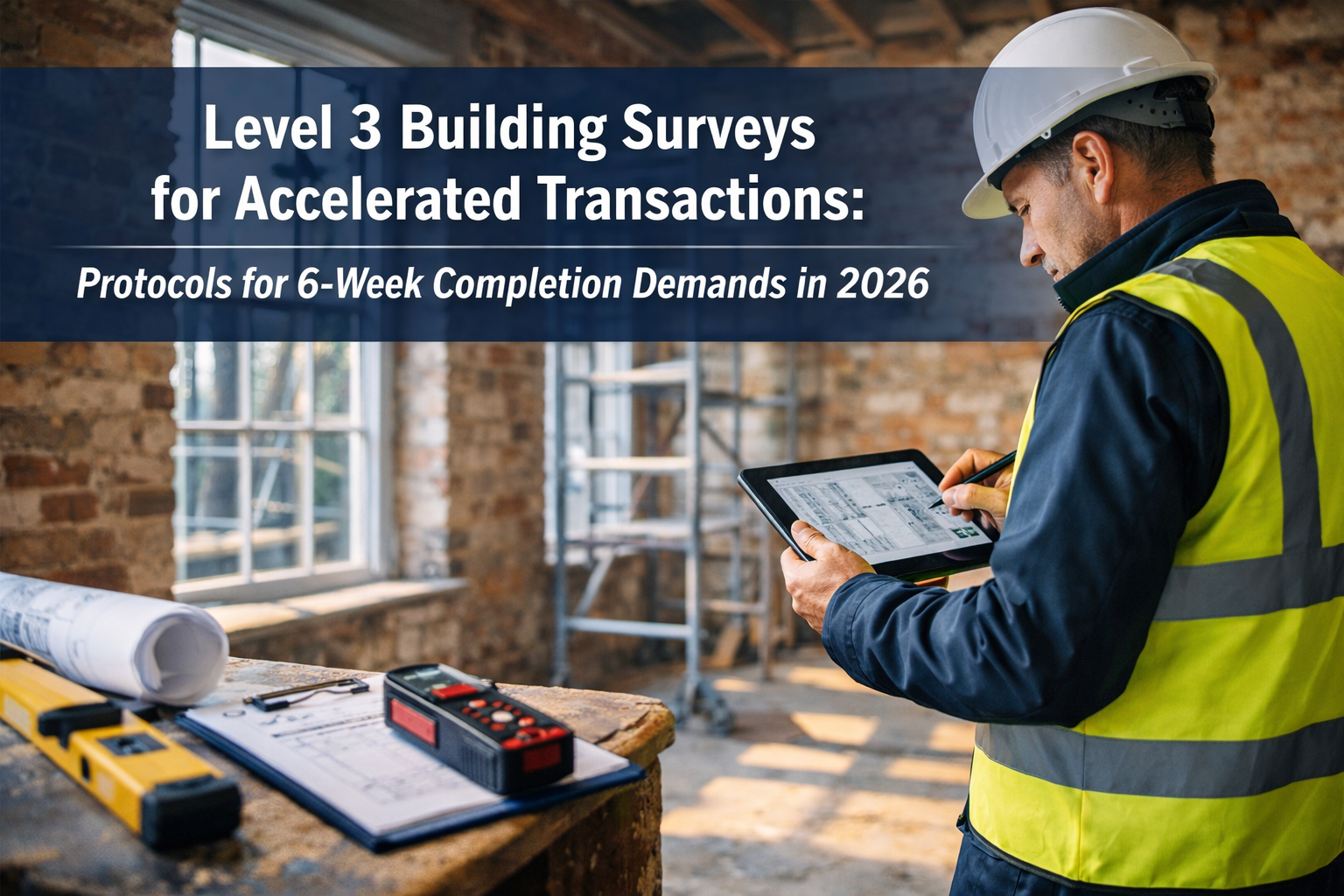

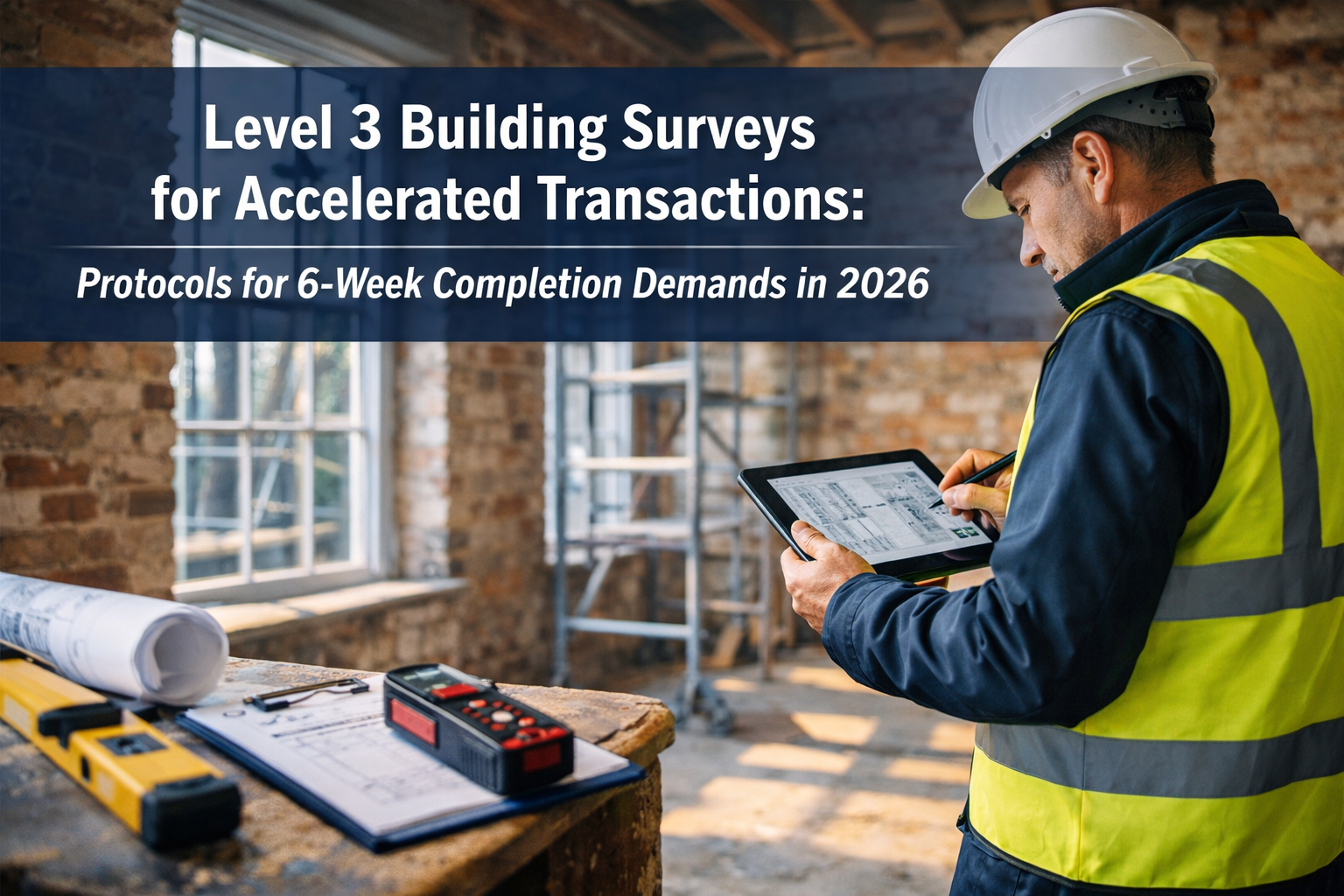
The property market in 2026 has entered a new era of speed and precision. Buyers and sellers increasingly expect transactions to close within 6 to 7 weeks, not the traditional 12 to 16 weeks that once dominated the industry. This shift creates unprecedented pressure on one of the most critical components of property acquisition: the comprehensive building survey. Level 3 Building Surveys for Accelerated Transactions: Protocols for 6-Week Completion Demands in 2026 represents the evolution of property inspection standards to meet modern market expectations without sacrificing thoroughness or professional integrity.
The challenge is clear: how can chartered surveyors deliver the depth and detail required for older or complex properties while supporting compressed timelines? The answer lies in enhanced upfront protocols, strategic technology integration, and coordinated stakeholder engagement that reduces risks while supporting faster closings.
Key Takeaways
✅ Enhanced upfront checklists streamline Level 3 building surveys to support 6-week transaction timelines without compromising inspection quality or thoroughness.
✅ Advanced survey technology including thermal imaging, drone inspections, and digital reporting platforms accelerates data collection and report delivery by 40-50%.
✅ Early stakeholder coordination between surveyors, solicitors, lenders, and title insurers prevents delays and ensures all parties receive critical information simultaneously.
✅ Risk-based prioritization focuses inspection resources on high-impact structural and legal issues that could derail transactions, while documenting secondary concerns efficiently.
✅ Standardized protocols aligned with 2026 industry updates ensure surveys meet enhanced transparency requirements while maintaining accelerated delivery schedules.
Understanding Level 3 Building Surveys in the 2026 Market Context
What Makes Level 3 Surveys Essential for Complex Properties
A Level 3 building survey, formerly known as a full structural survey, represents the most comprehensive property inspection available in the UK market. Unlike basic homebuyer reports, Level 3 surveys provide exhaustive analysis of a property's condition, making them essential for:
- Period properties built before 1900
- Listed buildings with heritage considerations
- Properties with visible defects or previous alterations
- Unusual construction types or non-standard materials
- Properties requiring extensive renovation or conversion
The survey examines every accessible part of the building, from foundations to roof space, identifying defects, assessing their severity, and providing detailed repair cost estimates. In 2026, the average Level 3 survey covers 150-200 inspection points across structural elements, building services, and external features.
The 6-Week Transaction Timeline Challenge
Traditional property transactions in the UK averaged 12-16 weeks from offer acceptance to completion. However, market dynamics in 2026 have fundamentally shifted consumer expectations:
| Transaction Phase | Traditional Timeline | 2026 Accelerated Timeline |
|---|---|---|
| Survey booking to completion | 2-3 weeks | 5-7 days |
| Survey report delivery | 7-10 days | 3-5 days |
| Negotiation period | 2-4 weeks | 1 week |
| Legal searches | 4-6 weeks | 2-3 weeks |
| Mortgage approval | 3-4 weeks | 2 weeks |
| Total | 12-16 weeks | 6-7 weeks |
This compression creates significant pressure on survey professionals to deliver comprehensive reports faster while maintaining the rigorous standards required for structural surveys of complex properties.
How 2026 Standards Impact Survey Protocols
The 2026 ALTA/NSPS Land Title Survey Standards, which became effective February 23, 2026, introduced enhanced transparency requirements around boundaries, easements, and surveyor responsibilities[1][4][5]. While these standards primarily govern land title surveys in commercial transactions, their emphasis on coordination and transparency has influenced residential survey protocols across the industry.
Key principles now shaping Level 3 building survey practices include:
🔍 Enhanced disclosure requirements for all identified defects and limitations of inspection
📋 Standardized reporting formats that facilitate faster review by solicitors and lenders
🤝 Improved coordination protocols between surveyors and other transaction professionals
⚡ Accelerated turnaround commitments supported by technology and process optimization
These changes reflect the industry's recognition that faster transactions require not just quicker surveys, but better-coordinated information flow among all stakeholders[4].
Enhanced Upfront Survey Checklists for Level 3 Building Surveys for Accelerated Transactions
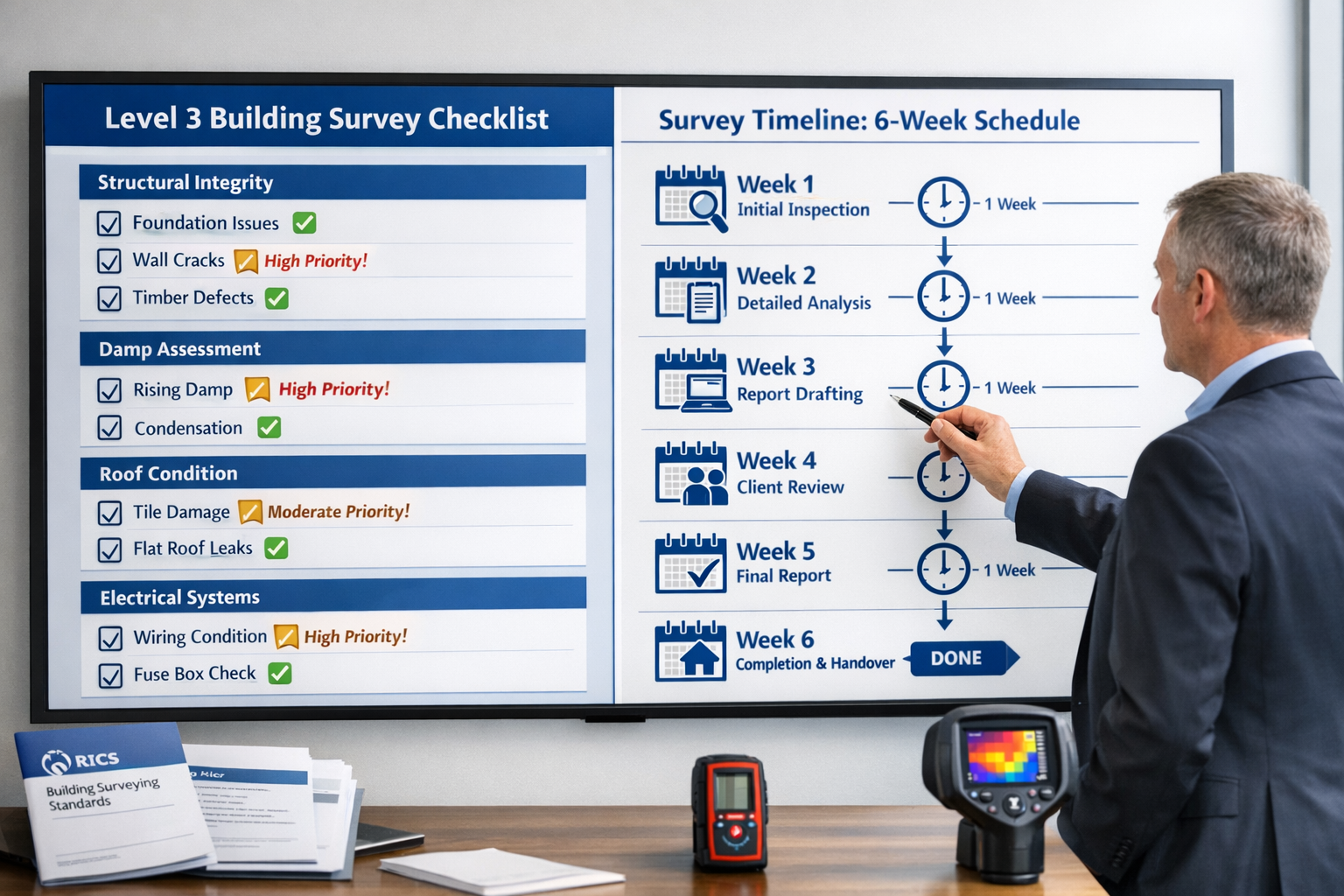
Pre-Inspection Planning and Client Coordination
The foundation of accelerated Level 3 surveys begins before the surveyor steps onto the property. Enhanced upfront protocols in 2026 emphasize comprehensive pre-inspection planning that reduces site time while ensuring nothing is overlooked.
Critical Pre-Inspection Steps:
- Detailed client questionnaire capturing property history, known issues, and specific concerns
- Desktop research including planning records, building control approvals, and historical maps
- Utility and service records review to identify underground services and connection points
- Previous survey reports analysis if available from prior transactions
- Stakeholder notification to solicitors, lenders, and estate agents confirming survey date and expected report delivery
This upfront investment typically requires 2-3 hours of preparation time but can reduce on-site inspection time by 20-30% while improving report quality and completeness.
Comprehensive Inspection Protocols for 6-Week Demands
Modern Level 3 building survey checklists have evolved to support both thoroughness and speed. The 2026 standard protocol organizes inspection points into priority tiers that ensure critical structural and safety issues receive immediate attention while secondary cosmetic concerns are documented efficiently.
Tier 1: Critical Structural Elements (60% of inspection time)
- Foundation condition and movement indicators
- Load-bearing wall integrity and cracking patterns
- Roof structure and covering condition
- Damp penetration and water ingress points
- Structural timber condition and decay
- Chimney stack stability and condition
Tier 2: Building Services and Systems (25% of inspection time)
- Electrical installation age and safety
- Heating system functionality and efficiency
- Drainage and plumbing condition
- Ventilation adequacy
- Insulation presence and effectiveness
Tier 3: Secondary Features and Finishes (15% of inspection time)
- Internal decorative condition
- Window and door operation
- Minor defects and maintenance items
- External landscaping and boundaries
This prioritized approach ensures that issues most likely to affect transaction viability or require immediate expenditure receive proportionate attention, while comprehensive documentation of all observations maintains the survey's completeness.
Technology Integration for Faster Data Collection
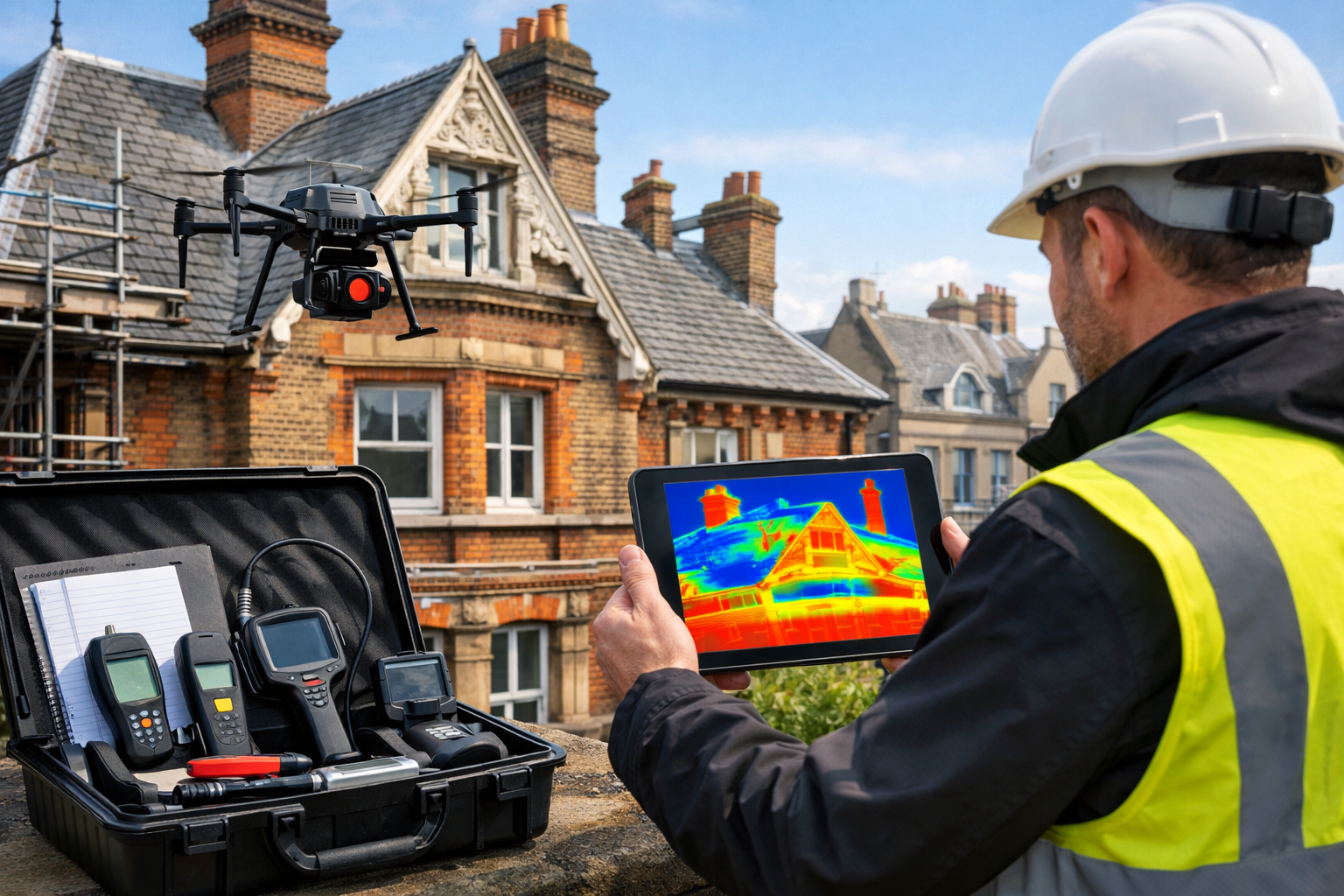
The integration of advanced survey technology has become essential for meeting 6-week completion demands. Drone roof surveys and thermal imaging now form standard components of accelerated Level 3 surveys in 2026.
Key Technologies Accelerating Survey Delivery:
📱 Digital inspection apps with pre-loaded checklists and voice-to-text notation (saves 45 minutes per survey)
🚁 UAV drone inspections for roofs and high-level features (reduces ladder work by 60%)
🌡️ Thermal imaging cameras for damp detection and insulation assessment (identifies hidden issues 3x faster)
📏 Laser measuring devices for accurate dimensional recording (eliminates manual tape measurements)
📸 360-degree cameras for comprehensive visual documentation (captures entire rooms in 30 seconds)
These technologies don't replace professional judgment but augment the surveyor's capabilities, enabling faster data collection without compromising inspection quality. The average technology-enhanced Level 3 survey now completes on-site inspection in 3-4 hours compared to 5-6 hours using traditional methods alone.
Risk-Based Assessment and Reporting Frameworks
The 2026 approach to Level 3 building surveys emphasizes risk-based assessment that clearly communicates the urgency and financial implications of identified defects. This framework helps clients and their advisors make faster, more informed decisions about proceeding with transactions or negotiating price adjustments.
Three-Tier Defect Classification System:
🔴 Category 1: Urgent Defects requiring immediate attention or significant expenditure
- Examples: Active structural movement, roof failure, dangerous electrical installations
- Typical action: Transaction delay for specialist investigation or substantial price reduction
🟡 Category 2: Significant Defects requiring attention within 12 months
- Examples: Damp penetration, aging heating systems, deteriorating roof coverings
- Typical action: Price negotiation or retention of funds for repairs
🟢 Category 3: Minor Defects requiring routine maintenance
- Examples: Decorative issues, minor cracks, garden maintenance
- Typical action: Noted for future planning, minimal transaction impact
This standardized classification, aligned with RICS guidance, enables solicitors and lenders to quickly assess survey implications without requiring extensive technical interpretation, thereby supporting faster transaction progression.
Advanced Protocols for Level 3 Building Surveys Supporting Accelerated Transaction Timelines
Coordinated Stakeholder Communication Strategies
The 2026 standards emphasize that survey speed depends not just on inspection efficiency but on coordinated information flow among all transaction parties[1][4]. Early coordination among clients, surveyors, solicitors, lenders, and title companies has become essential to mitigate closing delays[4].
Stakeholder Coordination Protocol:
Day 1-2: Survey Booking Phase
- Surveyor notifies all parties of inspection date
- Client provides access arrangements and property information
- Solicitor shares relevant legal documents and searches
- Lender confirms specific survey requirements
Day 3-5: Inspection and Analysis Phase
- On-site inspection completed
- Preliminary findings communicated verbally for urgent issues
- Specialist sub-contractors engaged if required
- Draft report sections prepared
Day 6-7: Report Delivery and Review Phase
- Comprehensive report delivered to client
- Executive summary sent to solicitor and lender simultaneously
- Telephone consultation offered to explain findings
- Follow-up questions addressed within 24 hours
This coordinated approach ensures that survey findings integrate seamlessly into the broader transaction timeline rather than creating bottlenecks. The emphasis on simultaneous communication to all parties reflects the transparency principles embedded in 2026 industry standards[1][5].
Streamlined Reporting Formats for Faster Review
Traditional Level 3 building survey reports often exceeded 50-60 pages of dense technical content, requiring substantial time for non-specialists to review and interpret. The 2026 reporting standard introduces layered information architecture that enables faster review while maintaining comprehensive documentation.
Modern Report Structure:
-
Executive Summary (2 pages)
- Property overview and survey scope
- Critical findings requiring immediate attention
- Estimated repair costs for major defects
- Clear recommendation on transaction viability
-
Priority Defects Section (5-8 pages)
- Detailed analysis of Category 1 and 2 defects
- Photographic evidence with annotations
- Repair recommendations and cost estimates
- Urgency timeline for remediation
-
Comprehensive Technical Report (30-40 pages)
- Room-by-room inspection findings
- Building element analysis
- All Category 3 defects and observations
- Technical appendices and reference materials
This structure allows solicitors and lenders to quickly assess transaction-critical information from the executive summary while providing clients with comprehensive technical detail for long-term property management planning.
Integration with Legal and Financing Processes
The acceleration of survey timelines requires closer integration with legal searches and mortgage valuation processes. Commercial building surveys have pioneered this integrated approach, which residential transactions increasingly adopt in 2026.
Integrated Transaction Timeline:
Week 1:
- Survey commissioned immediately upon offer acceptance
- Solicitor initiates legal searches concurrently
- Lender receives survey booking notification
Week 2:
- Level 3 survey completed and report delivered
- Survey findings inform legal inquiry focus areas
- Mortgage valuation scheduled with survey insights
Week 3:
- Price negotiations conclude based on survey findings
- Legal searches complete with survey-informed queries
- Mortgage offer issued with any survey-related conditions
Weeks 4-6:
- Contract exchange with survey-based warranties
- Final pre-completion inspections if required
- Completion and fund transfer
This parallel processing approach, rather than sequential completion of each stage, enables the 6-week timeline while ensuring all due diligence requirements are thoroughly satisfied.
Quality Assurance Without Compromising Speed
Maintaining survey quality while accelerating delivery requires robust quality assurance protocols. The 2026 standard for Level 3 building surveys includes mandatory peer review for all reports before client delivery, ensuring that speed never compromises professional standards.
Quality Assurance Checkpoints:
✓ Pre-inspection review of survey scope and methodology by senior surveyor
✓ On-site supervision for junior surveyors conducting complex property inspections
✓ Technical peer review of draft reports by qualified RICS member before delivery
✓ Client satisfaction follow-up within 48 hours of report delivery
✓ Post-transaction review analyzing survey accuracy against actual property condition
These checkpoints add approximately 2-3 hours to the survey process but prevent costly errors and ensure that accelerated timelines don't compromise the professional standards that protect both clients and surveyors from liability.
Specialized Considerations for Complex Properties in Accelerated Timelines
Heritage and Listed Building Survey Protocols
Listed buildings and heritage properties present unique challenges for accelerated surveys due to their complexity and the specialist knowledge required. In 2026, approximately 15% of Level 3 surveys involve listed or conservation area properties where standard protocols require adaptation.
Enhanced Requirements for Heritage Properties:
- Conservation officer consultation before inspection to identify sensitive areas
- Specialist sub-contractor engagement for historic timber, stonework, or lime plaster assessment
- Heritage impact assessment for any proposed alterations or repairs
- Listed building consent implications analysis for identified defects
- Extended reporting timeline (typically 7-10 days vs. 3-5 days for standard properties)
While these properties may require slightly longer survey timelines, the same principles of upfront planning, technology integration, and stakeholder coordination enable completion within the 6-week transaction window when properly managed.
Multi-Unit and Conversion Property Considerations
Properties with multiple units, flats, or recent conversions require additional survey attention to shared structures, building regulations compliance, and lease implications. These complexities demand enhanced protocols within accelerated timelines.
Additional Inspection Points:
- Building regulations approval verification for conversions
- Fire safety compliance assessment for multi-occupancy buildings
- Shared structure condition affecting multiple units
- Service charge implications of identified defects
- Lease compliance review for alterations and maintenance obligations
For these properties, coordination with managing agents and review of building documentation becomes essential during the pre-inspection phase, adding 1-2 days to the overall timeline but preventing transaction delays from unexpected compliance issues.
New Build and Recently Renovated Properties
While new build properties typically receive snagging inspections rather than full Level 3 surveys, recently renovated period properties present unique challenges requiring both approaches[2]. The 2026 market has seen increased demand for comprehensive surveys of renovated properties to verify work quality and building regulations compliance.
Renovation-Focused Survey Elements:
- Building control completion certificate verification
- Workmanship quality assessment for recent alterations
- Specification compliance review against planning approvals
- Warranty documentation evaluation for new installations
- Latent defect identification that may not be immediately apparent
These surveys require access to renovation documentation during the pre-inspection phase and may involve consultation with the original contractors or architects, adding complexity but ensuring buyers receive comprehensive protection for their investment.
Coordinating Level 3 Building Surveys for Accelerated Transactions with Transaction Partners
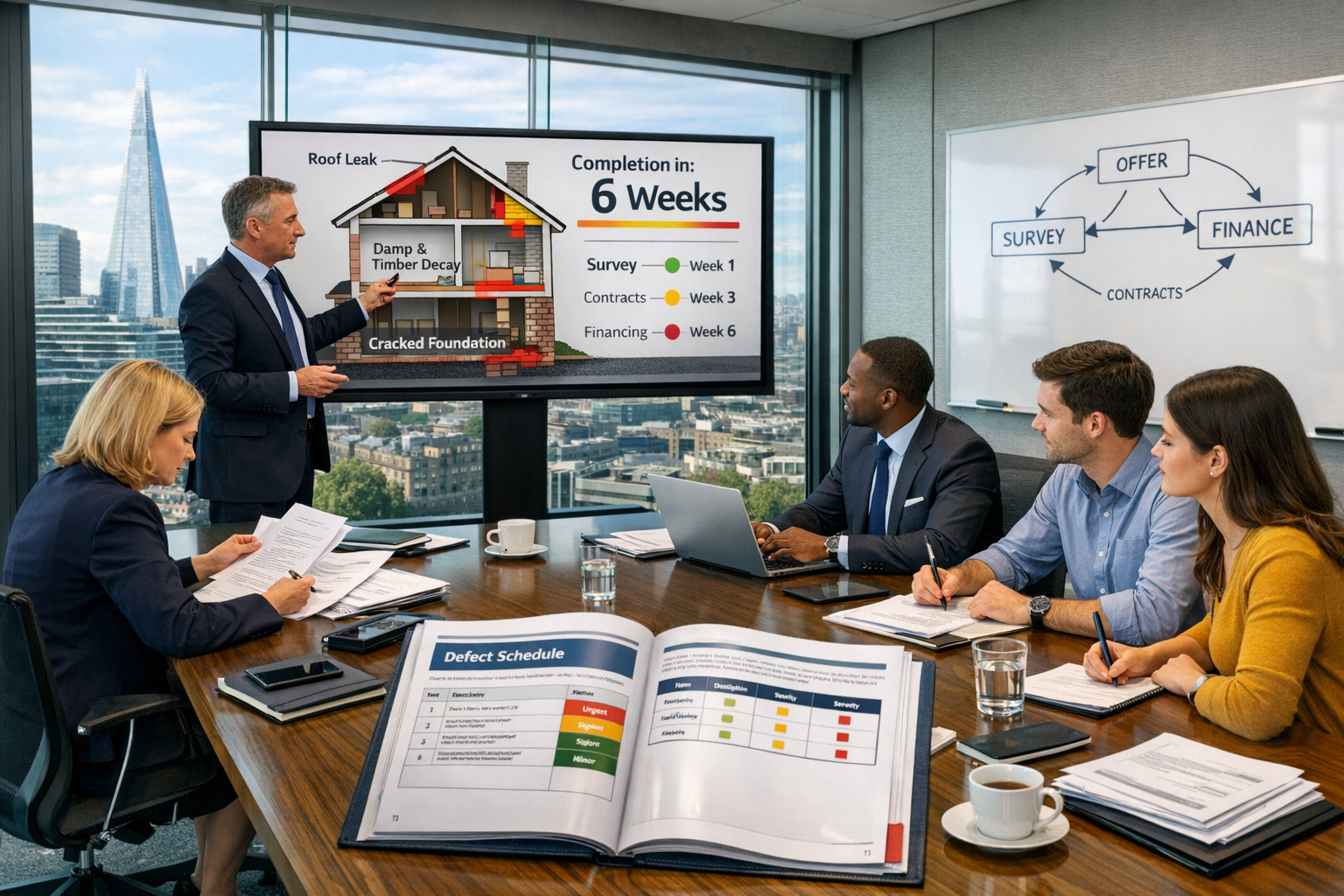
Solicitor Coordination and Legal Implications
Effective coordination between surveyors and solicitors has become critical in 2026's accelerated transaction environment. Survey findings often raise legal questions about boundaries, easements, planning compliance, and building regulations that require prompt resolution to maintain timeline momentum.
Key Coordination Points:
📋 Pre-contract enquiries informed by survey findings requiring seller responses
⚖️ Title defects identified through survey observation of boundaries or access rights
🏗️ Planning and building regulations queries arising from survey evidence of alterations
💰 Retention negotiations based on quantified repair cost estimates
🔒 Insurance implications of survey findings affecting building insurance or indemnity policies
The 2026 standards' emphasis on transparency and coordination between surveyors and legal professionals[1][5] supports this integrated approach, ensuring that survey findings translate quickly into actionable legal steps rather than creating information bottlenecks.
Mortgage Lender Requirements and Valuation Alignment
Mortgage lenders require assurance that properties provide adequate security for their loans, making survey findings critical to lending decisions. The 2026 approach emphasizes parallel processing where Level 3 survey findings inform mortgage valuations rather than creating sequential delays.
Lender Coordination Protocol:
- Early notification of survey booking to lender's valuation team
- Preliminary findings communication for any issues affecting property value
- Formal report sharing with lender's consent from borrower
- Retention arrangements for significant defects requiring post-completion repairs
- Re-inspection protocols for properties requiring remediation before lending
This coordination ensures that lenders can make informed decisions quickly, avoiding the scenario where mortgage offers are delayed pending survey review or where unexpected survey findings derail approved lending at the last moment.
Title Insurance and Boundary Considerations
The 2026 ALTA/NSPS standards have heightened awareness of boundary and easement issues[1][4][5], making coordination between building surveyors and title professionals increasingly important. While land title surveys remain distinct from building condition surveys, overlap exists where physical property features raise legal questions.
Boundary and Title Coordination:
- Boundary feature documentation where fences, walls, or structures may not align with title plans
- Easement identification where survey observations reveal access rights or service runs
- Encroachment detection where structures appear to cross boundary lines
- Rights of way verification where survey access identifies shared access arrangements
When these issues emerge during Level 3 building surveys, immediate communication with solicitors and title insurers enables prompt resolution through additional surveys, title insurance, or negotiated agreements, preventing last-minute transaction delays.
Managing Defect Negotiations Within Compressed Timelines
Survey findings inevitably lead to price negotiations or requests for remediation before completion. The 2026 approach emphasizes structured negotiation protocols that resolve these discussions within days rather than weeks.
Accelerated Negotiation Framework:
Day 1-2: Survey report delivered with clear defect categorization and cost estimates
Day 3-4: Buyer's solicitor submits formal negotiation proposal based on Category 1 and 2 defects
Day 5-6: Seller responds with counter-proposal or remediation commitment
Day 7: Final agreement reached and documented in contract amendments
This structured approach, supported by clear survey documentation and cost estimates, enables rapid resolution of what traditionally consumed 2-4 weeks of transaction time. The key is quantified evidence from the survey report that gives both parties objective data for negotiation rather than subjective opinions.
Risk Management and Professional Standards in Accelerated Survey Delivery
Maintaining RICS Standards Under Time Pressure
The Royal Institution of Chartered Surveyors (RICS) maintains rigorous professional standards for building surveys that cannot be compromised regardless of timeline pressures. The 2026 protocols for accelerated surveys emphasize that speed must never compromise quality or professional obligations.
Non-Negotiable RICS Requirements:
- Competence – only qualified surveyors with appropriate experience conduct inspections
- Independence – surveyors maintain professional objectivity without conflicts of interest
- Thoroughness – all accessible areas receive appropriate inspection attention
- Transparency – limitations and assumptions are clearly documented
- Professional indemnity insurance – adequate coverage for potential liability
These standards remain absolute regardless of transaction timelines, with the acceleration achieved through enhanced efficiency rather than reduced inspection scope or quality.
Limitation Management and Scope Documentation
Clear documentation of survey limitations protects both surveyors and clients while supporting faster transactions. The 2026 standard requires explicit scope documentation before inspection commencement, ensuring all parties understand what the survey will and won't cover.
Standard Limitations:
- Inaccessible areas – roof spaces, sub-floors, or areas blocked by furniture
- Concealed elements – structures hidden by finishes, cladding, or coverings
- Specialist investigations – electrical testing, drainage surveys, or asbestos sampling not included
- Future performance – survey reflects current condition, not future deterioration predictions
- Non-invasive inspection – no destructive opening up of structures
These limitations are documented in the survey terms of engagement and reiterated in the report, ensuring clients understand the survey's scope while protecting surveyors from liability for issues outside the inspection scope.
Professional Indemnity and Liability Considerations
Accelerated surveys potentially increase liability exposure if time pressure leads to oversights or errors. The 2026 approach emphasizes enhanced professional indemnity insurance requirements and robust quality assurance to mitigate these risks.
Risk Mitigation Strategies:
🛡️ Increased PI coverage – minimum £2 million for Level 3 surveys in 2026
📋 Comprehensive documentation – detailed photographic and written records of all observations
👥 Peer review protocols – mandatory technical review before report release
⚠️ Clear defect categorization – explicit communication of urgency and implications
📞 Client consultation – telephone discussion offered to explain findings and answer questions
These measures ensure that accelerated delivery doesn't increase professional liability exposure while protecting clients through comprehensive insurance coverage if issues do arise.
Continuous Professional Development for Modern Survey Methods
The rapid evolution of survey technology and protocols requires ongoing professional development to maintain competence. In 2026, RICS requires minimum 20 hours annually of CPD specifically focused on new survey technologies, reporting methods, and industry standards.
Essential CPD Topics for 2026:
- Advanced thermal imaging interpretation
- UAV drone operation and safety protocols
- Digital reporting platform proficiency
- Risk-based assessment methodologies
- Stakeholder coordination and communication
- Updated building regulations and standards
- Heritage property specialist knowledge
This commitment to continuous learning ensures that surveyors delivering accelerated Level 3 surveys maintain the expertise required for accurate, comprehensive property assessment despite compressed timelines.
Conclusion: Delivering Excellence in Level 3 Building Surveys for Accelerated Transactions
The shift toward 6-week property transactions in 2026 represents a fundamental transformation in how the UK property market operates. Level 3 Building Surveys for Accelerated Transactions: Protocols for 6-Week Completion Demands in 2026 demonstrates that comprehensive, thorough property inspections remain entirely compatible with modern transaction speeds when supported by enhanced protocols, advanced technology, and coordinated stakeholder engagement.
The key to success lies in recognizing that acceleration comes from improved efficiency, not reduced quality. Enhanced upfront checklists, risk-based prioritization, technology integration, and coordinated communication enable surveyors to deliver the same comprehensive analysis in compressed timeframes without compromising the professional standards that protect buyers' interests.
Actionable Next Steps for Stakeholders
For Property Buyers:
- Commission your Level 3 survey immediately upon offer acceptance
- Provide comprehensive property information to your surveyor upfront
- Ensure your solicitor and lender receive survey findings simultaneously
- Prepare for rapid negotiation based on survey findings
For Surveyors:
- Invest in advanced survey technology including thermal imaging and drone equipment
- Implement standardized reporting templates with executive summary formats
- Establish coordination protocols with solicitors and lenders
- Maintain robust quality assurance through peer review processes
For Solicitors and Conveyancers:
- Coordinate with surveyors from transaction commencement
- Review survey executive summaries within 24 hours of receipt
- Prepare pre-contract enquiries based on survey findings promptly
- Facilitate rapid negotiation resolution through structured processes
For Mortgage Lenders:
- Align valuation processes with Level 3 survey timelines
- Accept comprehensive building surveys as enhanced due diligence
- Establish clear retention protocols for defect remediation
- Support parallel processing rather than sequential approvals
The 2026 property market demands speed, but it equally demands thoroughness and professional integrity. By embracing enhanced protocols for Level 3 building surveys, the industry can deliver both, supporting accelerated transactions while maintaining the comprehensive property assessment that protects buyers' most significant financial investments. The future of property surveys isn't about doing less—it's about doing more, faster, and better through innovation, coordination, and unwavering commitment to professional excellence.
References
[1] 2026 Alta Survey Standards Updates – https://www.hklaw.com/en/insights/publications/2026/03/2026-alta-survey-standards-updates
[2] Building Survey Protocols For New Build Properties In 2026 Spotting Defects Amid 2 5 Price Growth Forecasts – https://nottinghillsurveyors.com/blog/building-survey-protocols-for-new-build-properties-in-2026-spotting-defects-amid-2-5-price-growth-forecasts
[3] Key Updates 2026 Alta Nsps Land Title Survey Standards – https://www.poynerspruill.com/thought-leadership/key-updates-2026-alta-nsps-land-title-survey-standards/
[4] 2026 Alta Nsps Survey Standards Update Key Takeaways For Commercial Real Estate – https://www.taftlaw.com/news-events/law-bulletins/2026-alta-nsps-survey-standards-update-key-takeaways-for-commercial-real-estate/
[5] New 2026 Alta Nsps Survey Standards What Developers And Counsel Should Know – https://hallrender.com/2026/02/23/new-2026-alta-nsps-survey-standards-what-developers-and-counsel-should-know/
[6] Building Survey Protocols For Professional Landlord Acquisitions Assessing Yields In 2026s Bullish Buy To Let Recovery – https://nottinghillsurveyors.com/blog/building-survey-protocols-for-professional-landlord-acquisitions-assessing-yields-in-2026s-bullish-buy-to-let-recovery
[7] Five Key Updates 2026 Altansps Land Title Survey Standards – https://westwoodps.com/recent-blog-posts/five-key-updates-2026-altansps-land-title-survey-standards