
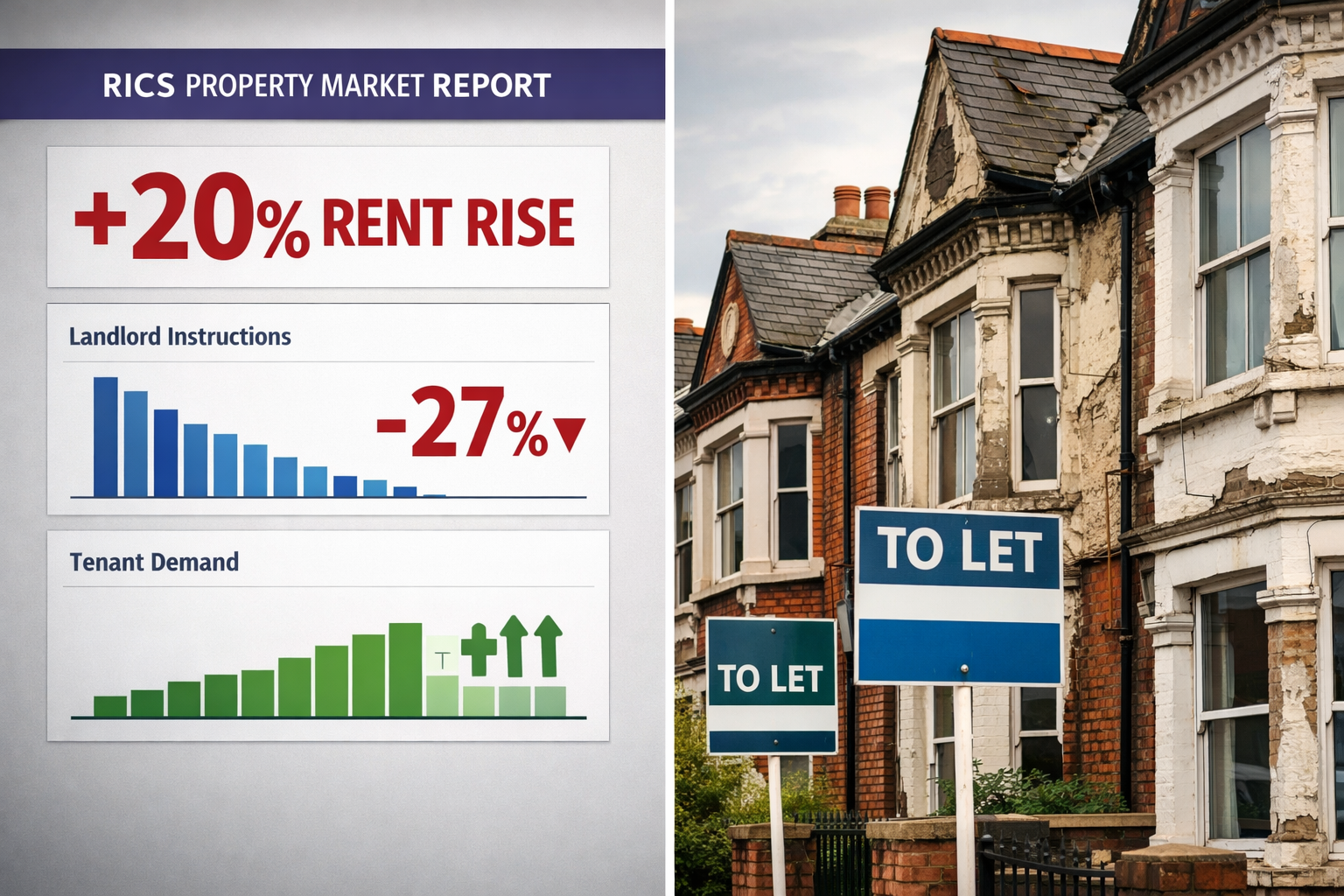
The rental market in 2026 faces an unprecedented squeeze. With landlord instructions plummeting to -27% and a staggering +20% net balance of survey participants expecting rental prices to surge over the coming three months, the UK lettings sector stands at a critical juncture[1]. This perfect storm of constrained supply and rising rents makes Level 3 Building Surveys in Lettings Shortages: Spotting Defects for 2026's +20% Rent Rise Expectations not just advisable—but essential for protecting both investment viability and tenant safety.
As institutional landlords continue to invest in buy-to-let properties while smaller landlords exit the market, the need for comprehensive defect detection has never been more urgent. A thorough understanding of property condition directly impacts rental valuations, maintenance budgets, and long-term investment returns in an increasingly competitive market.
Key Takeaways
- 📊 Market pressure is intense: RICS data shows landlord instructions at -27% while rent expectations hit +20%, creating severe supply constraints that make property condition assessment critical[1]
- 🏚️ Level 3 surveys identify costly defects: Comprehensive inspections reveal damp, subsidence, structural issues, and roofing problems that could derail rental investment returns[3]
- 💷 Defect detection protects ROI: With rental yields under pressure, identifying repair costs early (typically £5,000-£50,000+ for major issues) prevents unexpected financial shocks
- 🔍 Professional landlords prioritize surveys: Institutional investors increasingly rely on building surveyor services to maintain portfolio quality and tenant safety standards
- ⏰ Timing matters in 2026: Government reforms may soon make condition assessments mandatory upfront, increasing demand for professional surveys earlier in the acquisition process[6]
Understanding the 2026 Rental Market Crisis and Survey Implications
The Perfect Storm: Supply Constraints Meet Rent Inflation
The rental market data from February 2026 paints a stark picture. Landlord instructions remain deeply constrained at -27% net balance, worsening from -24% in January—signaling a subdued flow of rental listings coming onto the market[1]. This represents one of the most severe supply squeezes in recent UK rental history.
Meanwhile, tenant demand has stabilized at +2% net balance after experiencing significant volatility, including a pandemic-era low of -27% in January 2026[2]. This stabilization, combined with chronic undersupply, creates the conditions for the anticipated +20% upward pressure on rents over the coming three months[1].
For property investors and landlords, these market dynamics make Level 3 Building Surveys in Lettings Shortages: Spotting Defects for 2026's +20% Rent Rise Expectations a strategic imperative. Here's why:
| Market Factor | 2026 Status | Survey Impact |
|---|---|---|
| Landlord Instructions | -27% net balance | Fewer properties = higher competition for quality stock |
| Rent Expectations | +20% anticipated rise | Higher rents justify investment in comprehensive surveys |
| Tenant Demand | +2% (stabilized) | Stable demand supports rental income projections |
| Supply Shortage | Severe constraint | Premium on defect-free, rentable properties |
Why Institutional Landlords Are Doubling Down on Surveys
Professional and institutional landlords remain bullish on buy-to-let investments in 2026, continuing to acquire properties while working with property professionals who understand the value of proper condition assessments[6]. This contrasts sharply with smaller landlords exiting the market due to regulatory pressures and tax changes.
The difference? Sophisticated investors recognize that comprehensive structural surveys protect their capital in three critical ways:
- Risk mitigation: Identifying defects before purchase prevents costly surprises
- Negotiation leverage: Survey findings enable price reductions or seller-funded repairs
- Portfolio management: Understanding maintenance requirements supports accurate cash flow forecasting
With average rent growth of approximately 3% forecast over the year ahead[2], the margins for error have narrowed considerably. A property with undiscovered structural issues could quickly transform from a profitable asset into a financial liability.
What Makes Level 3 Building Surveys Essential for Rental Properties
Comprehensive Defect Detection: Beyond Surface-Level Inspections
A Level 3 survey—also known as a Building Survey—represents the most thorough property inspection available. Unlike basic valuation surveys or HomeBuyer Reports, Level 3 surveys typically take 4–8 hours depending on the property's size, age, and complexity, with reports usually delivered within a few working days[3].
For rental properties in 2026's competitive market, this level of scrutiny is invaluable. Level 3 Building Surveys in Lettings Shortages: Spotting Defects for 2026's +20% Rent Rise Expectations specifically target the types of properties that dominate the rental sector:
✅ Older properties (pre-1900 Victorian and Edwardian stock)
✅ Larger properties (HMOs and multi-unit conversions)
✅ Listed buildings (with conservation restrictions)
✅ Heavily altered properties (conversions and extensions)
✅ Properties with visible defects (requiring detailed assessment)
These property types are common in the buy-to-let sector where landlords must assess both rental potential and ongoing maintenance costs. A comprehensive survey provides the intelligence needed to make informed acquisition decisions.
Critical Defects That Impact Rental Viability
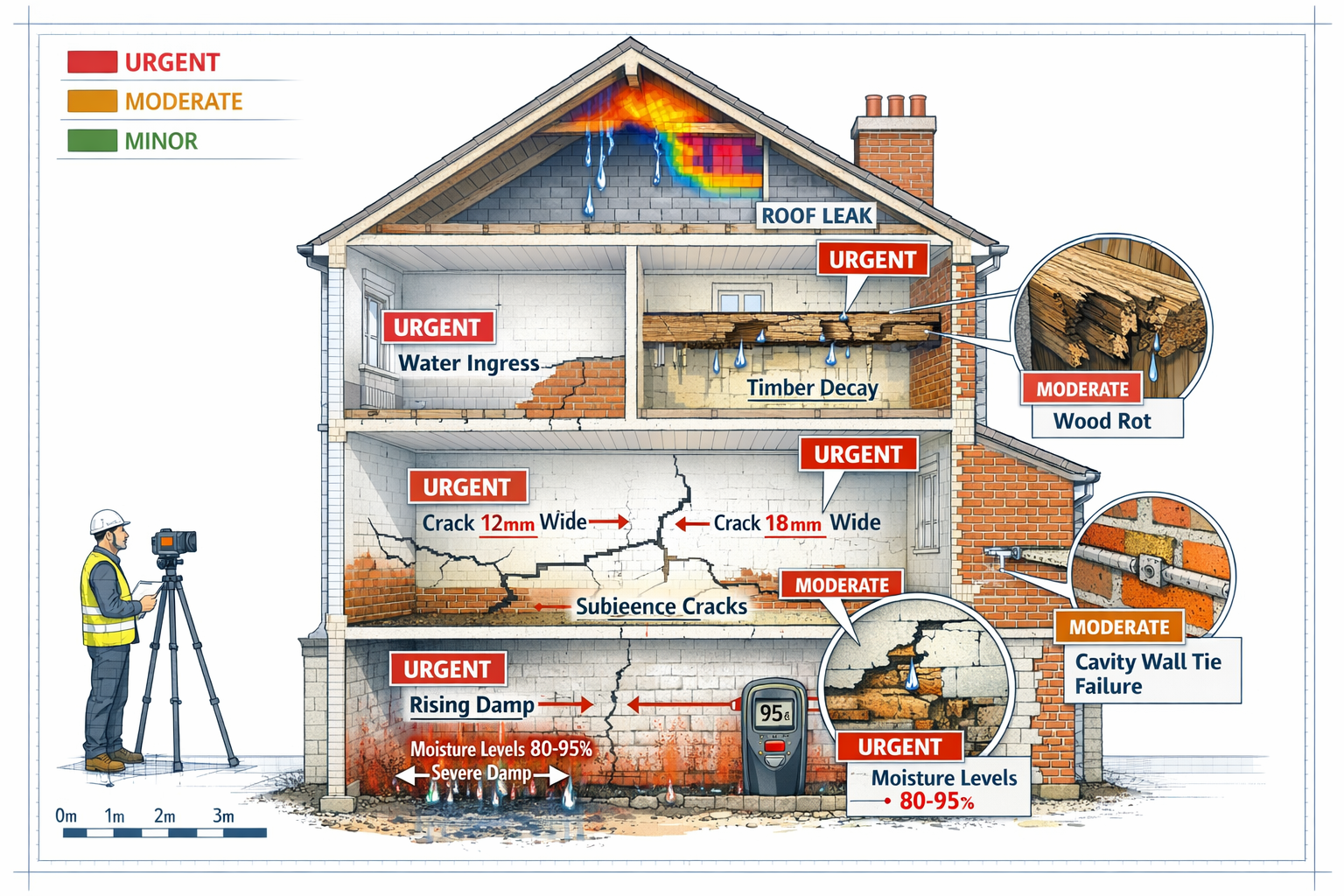
Level 3 surveys identify major defects that can significantly affect a property's rental value and tenant safety. The most common issues discovered include:
🌧️ Damp and moisture problems
Rising damp, penetrating damp, and condensation issues affect approximately 30% of older rental properties. Left untreated, these conditions lead to mold growth, structural timber decay, and tenant health concerns. Remediation costs typically range from £2,000-£15,000 depending on severity.
🏚️ Subsidence and structural movement
Foundation issues, particularly in clay soil areas, can cause progressive structural damage. Subsidence surveys may reveal cracks requiring underpinning work costing £10,000-£50,000+ per affected wall.
🏠 Roofing defects
Roof covering deterioration, failed flashing, and rafter decay are common in period properties. A comprehensive roof survey can identify issues requiring £5,000-£30,000 in repairs or replacement.
⚡ Electrical and plumbing obsolescence
Outdated wiring and plumbing systems may not meet current safety standards, requiring complete replacement (£3,000-£8,000 for rewiring, £2,000-£5,000 for replumbing).
🪵 Timber defects
Wet rot, dry rot, and woodworm infestations affect structural timbers, floor joists, and roof members. Treatment and replacement costs vary from £1,000-£20,000 depending on extent.
"In 2026's constrained rental market, a property with undiscovered defects isn't just a bad investment—it's a potential liability that could result in tenant injury, legal action, and reputational damage." — Industry Survey Expert
The Financial Case: Repair Cost Estimates and Investment Protection
One of the most valuable aspects of Level 3 surveys is their inclusion of repair cost estimates. These provide guidance on the nature of repairs, timelines, and approximate costs to help identify the financial implications of defects[3].
For landlords evaluating potential acquisitions in 2026's competitive market, these cost estimates enable:
- Accurate investment appraisal: Understanding total acquisition cost (purchase price + repairs)
- Cash flow planning: Scheduling major works to minimize rental void periods
- Price negotiation: Using survey findings to reduce purchase price or request seller remediation
- Insurance considerations: Identifying issues that may affect buildings insurance premiums or coverage
Consider this example: A landlord considering a Victorian terraced house listed at £450,000 with an expected rental yield of 5% (£22,500 annually). A Level 3 survey reveals:
- Rising damp requiring chemical injection and replastering: £8,000
- Roof covering nearing end of life: £12,000
- Outdated electrical installation: £5,000
- Total remediation cost: £25,000
Armed with this information, the landlord can:
- Negotiate a £25,000 price reduction (new price: £425,000)
- Factor repair costs into their investment model
- Schedule works strategically to minimize rental void periods
- Achieve their target yield based on accurate total investment
Without the survey, these issues would likely emerge during tenancy—resulting in emergency repairs, tenant disputes, and potential legal liability.
Level 3 Building Surveys in Lettings Shortages: Spotting Defects for 2026's +20% Rent Rise Expectations—Implementation Guide
When to Commission a Level 3 Survey in the Rental Investment Process
Timing is critical when integrating surveys into your property acquisition strategy. In 2026, government reforms to property condition assessments are under consultation, potentially making condition assessments a standard upfront requirement[6]. This could significantly increase demand for surveys earlier in the buying process.
Optimal survey timing for rental investments:
📅 Stage 1: Pre-offer (ideal for competitive markets)
Some sophisticated investors commission surveys before making offers, particularly in auction scenarios or competitive bidding situations. This provides maximum confidence and negotiating power.
📅 Stage 2: Offer accepted, subject to survey (most common)
The traditional approach involves making an offer "subject to survey" and commissioning the inspection during the due diligence period. This balances cost (avoiding surveys on properties you don't secure) with protection.
📅 Stage 3: Pre-exchange (final opportunity)
The absolute latest point to commission a survey is before exchanging contracts. After exchange, you're legally committed to purchase regardless of defects discovered.
For landlords building rental portfolios in 2026's supply-constrained market, working with chartered surveyors who understand lettings-specific considerations is essential.
Selecting the Right Surveyor for Rental Property Assessments
Not all surveyors offer the same expertise when assessing rental properties. When commissioning Level 3 Building Surveys in Lettings Shortages: Spotting Defects for 2026's +20% Rent Rise Expectations, look for professionals who demonstrate:
🎓 RICS qualification and registration
Ensure your surveyor is a Member or Fellow of the Royal Institution of Chartered Surveyors (MRICS or FRICS) with appropriate Professional Indemnity Insurance.
🏘️ Local market knowledge
Surveyors familiar with regional building types, common defects, and local market conditions provide more relevant insights. Consider location-specific expertise for your target area.
🏠 Rental sector experience
Surveyors who regularly work with landlords and letting agents understand rental-specific considerations like HMO regulations, tenant safety requirements, and maintenance cost implications.
🔧 Specialist capabilities
For complex properties, ensure your surveyor can coordinate specialist investigations (e.g., drone roof surveys for large buildings, structural engineer consultations for subsidence concerns).
💼 Clear reporting standards
Request sample reports to evaluate clarity, comprehensiveness, and usefulness for investment decision-making.
Interpreting Survey Findings: From Report to Action Plan
Receiving a comprehensive Level 3 survey report can be overwhelming—often running 30-50+ pages with detailed technical descriptions. Here's how to extract actionable intelligence:
Priority 1: Urgent defects requiring immediate attention
These issues affect structural integrity, safety, or legal compliance. Examples include active subsidence, dangerous electrical installations, or structural timber failure. Address before letting the property.
Priority 2: Significant defects requiring attention within 12 months
Issues that will worsen if neglected but don't pose immediate danger. Examples include deteriorating roof coverings, damp problems, or aging heating systems. Budget for remediation within your first year of ownership.
Priority 3: Minor defects and maintenance items
Cosmetic issues, routine maintenance requirements, and minor repairs. Address as part of ongoing property management or between tenancies.
Long-term considerations
Items nearing end of useful life that will require replacement in 5-10 years. Factor these into your long-term investment model and maintenance reserve fund.
For complex legal or technical issues, your surveyor may recommend specialist consultations or expert witness reports for dispute resolution.

Maximizing Rental Investment Returns Through Strategic Survey Use
Leveraging Survey Findings in Purchase Negotiations
Survey findings provide powerful negotiation leverage in property transactions. In 2026's competitive rental market, this can make the difference between a profitable investment and an overpriced liability.
Negotiation strategies based on survey findings:
💰 Price reduction approach
Request a purchase price reduction equivalent to estimated repair costs. This is most effective for significant defects (£10,000+) that weren't disclosed or apparent during viewings.
🔧 Seller remediation approach
Request that the seller complete specific repairs before completion. This works well for urgent safety issues or items that could affect mortgage lending.
📄 Retention approach
Agree to complete at the original price but retain a portion of the purchase price (held by solicitors) until specified works are completed post-purchase.
🤝 Hybrid approach
Negotiate a combination of price reduction and seller-funded repairs, particularly effective for properties with multiple issues of varying urgency.
In February 2026's market, where landlord instructions remain severely constrained at -27%[1], sellers may be less willing to negotiate. However, evidence of significant defects—particularly those affecting safety or lettability—provides legitimate grounds for price adjustment.
Building a Defect-Free Rental Portfolio in a Supply-Constrained Market
Professional landlords in 2026 are adopting a quality-over-quantity approach to portfolio building. With rent expectations at +20%[1], properties in excellent condition command premium rents and attract quality tenants with minimal void periods.
Strategic considerations for portfolio building:
🎯 Target property types strategically
Focus on property types where Level 3 surveys provide maximum value—typically older, larger properties that competitors may overlook due to perceived risk.
📊 Build a defect database
Track common issues across your portfolio to identify patterns and develop preventive maintenance strategies. This intelligence becomes increasingly valuable as your portfolio grows.
🔄 Plan cyclical maintenance
Use survey findings to create a rolling maintenance program that addresses issues proactively before they become emergencies or affect tenant satisfaction.
💼 Maintain surveyor relationships
Develop ongoing relationships with trusted surveyors who understand your portfolio and investment criteria. Many offer reduced rates for repeat clients.
📋 Document property condition
Use surveys alongside schedule of condition reports to document property condition at acquisition, protecting against future disputes.
Regulatory Compliance and Tenant Safety Considerations
In 2026, landlord regulatory obligations have never been more stringent. Level 3 surveys help ensure compliance with:
- Housing Health and Safety Rating System (HHSRS): Identifying Category 1 and 2 hazards that could result in enforcement action
- Electrical Safety Standards: Confirming installations meet current regulations
- Energy Performance Requirements: Identifying insulation and heating system improvements needed to meet minimum EPC ratings
- Fire Safety Regulations: Particularly critical for HMOs and multi-unit properties
- Damp and Mold Prevention: Following the 2023 Awaab's Law, landlords face increased liability for damp and mold issues
Failure to address defects identified in surveys could result in:
- 🚫 Prohibition orders preventing letting
- 💰 Civil penalties up to £30,000
- ⚖️ Criminal prosecution for serious breaches
- 📉 Reputational damage affecting future lettings
Working with surveyors who understand these regulatory frameworks ensures your survey identifies compliance-critical issues before they become legal problems.
Future-Proofing Rental Investments: 2026 and Beyond
Anticipated Regulatory Changes and Survey Requirements
The surveying sector anticipates significant changes in 2026 and beyond. Government reforms to property condition assessments are under consultation, potentially making condition assessments a standard upfront requirement[6]. This could fundamentally change how property transactions work.
Potential regulatory developments:
📋 Mandatory seller condition reports
Similar to systems in some European countries, sellers may be required to commission surveys before marketing properties. This could increase transparency but also raise transaction costs.
🏗️ Enhanced energy efficiency requirements
Minimum EPC ratings for rental properties may increase from current levels, requiring surveys to identify necessary improvements.
🔍 Periodic inspection requirements
Some proposals suggest mandatory periodic inspections for rental properties, similar to MOT requirements for vehicles.
📱 Digital survey standards
Increasing adoption of digital survey tools, 3D modeling, and AI-assisted defect detection may change survey methodologies and reporting formats.
For landlords, staying ahead of these changes means commissioning comprehensive surveys now—building a documented understanding of property condition that will satisfy future regulatory requirements.
Technology Integration: Modern Survey Techniques for Rental Properties
2026 is expected to be a positive year for the surveying sector, with anticipated uplift in volumes and increased adoption of advanced survey technologies[6]. Modern Level 3 surveys increasingly incorporate:
🚁 Drone technology
Drone roof surveys enable safe, detailed inspection of roofs, chimneys, and high-level building elements without expensive scaffolding or access equipment.
🌡️ Thermal imaging
Infrared cameras identify heat loss, moisture ingress, and insulation defects invisible to the naked eye—particularly valuable for energy efficiency assessments.
📏 Laser measurement
Precise dimensional surveys using laser technology ensure accurate floor plans and identify structural irregularities.
💻 Digital reporting platforms
Interactive digital reports with embedded photographs, floor plans, and clickable defect markers improve usability and accessibility.
🤖 AI-assisted analysis
Emerging artificial intelligence tools help surveyors identify defect patterns and predict maintenance requirements based on building age, type, and condition.
These technological advances make Level 3 Building Surveys in Lettings Shortages: Spotting Defects for 2026's +20% Rent Rise Expectations more comprehensive and valuable than ever before.
Building Long-Term Value Through Proactive Property Management
The most successful landlords in 2026's rental market view surveys not as one-time compliance exercises but as foundational documents for ongoing property management. This approach includes:
📅 Annual condition reviews
Conducting annual walk-through inspections referencing the original Level 3 survey to track condition changes and identify emerging issues early.
💰 Maintenance reserve funds
Using survey-identified long-term replacement requirements to calculate appropriate reserve fund contributions (typically 1-2% of property value annually).
📈 Value-add improvements
Prioritizing improvements that enhance rental value and tenant satisfaction while addressing survey-identified defects.
🔄 Pre-tenancy condition documentation
Using professional condition reports before each new tenancy to protect against deposit disputes and document property condition.
📊 Portfolio performance tracking
Analyzing maintenance costs, void periods, and tenant satisfaction across properties to identify which building types and conditions deliver optimal returns.
This systematic approach transforms survey findings from static documents into dynamic management tools that protect and enhance investment value over time.
Conclusion
Level 3 Building Surveys in Lettings Shortages: Spotting Defects for 2026's +20% Rent Rise Expectations represent far more than due diligence exercises—they are strategic investment tools essential for navigating the most challenging rental market in recent UK history. With landlord instructions at -27% and rent expectations surging to +20%[1], the margin for error has never been smaller.
Professional and institutional landlords who continue to invest successfully in 2026 share a common characteristic: they prioritize comprehensive property condition assessment before acquisition. This approach protects capital, enables informed negotiation, ensures regulatory compliance, and supports accurate long-term financial modeling.
Actionable Next Steps
For landlords and property investors looking to build or expand rental portfolios in 2026:
-
Commission Level 3 surveys for all potential acquisitions of older, larger, or complex properties before making final purchase decisions
-
Develop relationships with qualified chartered surveyors who understand rental sector requirements and local market conditions
-
Integrate survey findings into investment appraisals by factoring repair costs, maintenance requirements, and long-term replacement needs into financial models
-
Use survey evidence in negotiations to achieve fair purchase prices that reflect true property condition and required remediation
-
Maintain ongoing condition monitoring by conducting annual reviews and building maintenance reserve funds based on survey-identified requirements
-
Stay informed about regulatory changes affecting property condition requirements and survey standards
-
Consider specialist surveys for specific concerns like subsidence, structural issues, or commercial properties
The rental market in 2026 rewards landlords who invest intelligently in quality properties with documented condition and planned maintenance strategies. As supply constraints persist and rents continue rising, properties with comprehensive survey documentation and proactive maintenance will command premium valuations and deliver superior returns.
Don't let undiscovered defects transform a promising investment into a financial liability. Commission a comprehensive Level 3 survey and build your rental portfolio on a foundation of professional condition assessment and strategic property management. To discuss your specific survey requirements, contact qualified building surveyor services today.
References
[1] UK Residential Market Survey February 2026 – https://www.rics.org/content/dam/ricsglobal/documents/market-surveys/uk-residential-market-survey/UK-Residential-Market-Survey_February-2026.pdf
[2] RICS Survey Shows Subdued Housing Market But Confidence Improves Heading Into 2026 – https://theintermediary.co.uk/2026/01/rics-survey-shows-subdued-housing-market-but-confidence-improves-heading-into-2026/
[3] Level 3 Survey – https://surveymatch.co.uk/level-3-survey/
[4] UK Residential Market Survey January 2026 – https://www.rics.org/content/dam/ricsglobal/documents/market-surveys/uk-residential-market-survey/UK-Residential-Market-Survey_January-2026.pdf
[6] Surveying In 2026 Reform Recovery And Renewed Demand – https://www.lrg.co.uk/news-and-insights/surveying-in-2026-reform-recovery-and-renewed-demand/