The UK property market is experiencing a remarkable resurgence in 2026, with transaction volumes climbing steadily after years of uncertainty. Yet beneath the gleaming facades of new build developments lies a troubling reality: latent defects that won't appear on standard warranty inspections are causing significant disputes between homeowners and builders. As building surveyors face an unprecedented wave of new build snagging and warranty claims, understanding how Level 3 Surveys for New Build Warranty Claims: Spotting Latent Defects in 2026's Rising Transaction Volumes can protect buyers has never been more critical.

While builder warranties from NHBC, LABC, and similar providers offer some peace of mind, they're "not a condition survey" and often exclude workmanship defects after the initial coverage period[2]. This gap in protection makes independent RICS surveys essential for identifying hidden construction issues—from poor insulation and thermal bridging to drainage failures and fire-stopping documentation gaps—before they escalate into costly problems.
Key Takeaways
✅ Level 3 surveys provide comprehensive defect detection that builder warranties cannot match, identifying latent issues in thermal performance, drainage, and structural integrity
✅ Independent RICS surveys strengthen warranty claims by providing clear, documented evidence that can accelerate dispute resolution and repairs
✅ Common hidden defects in new builds include cold bridging, missing insulation, drainage mis-connections, flat roof ponding, and ventilation failures
✅ Survey costs range from £700-£1,200+ depending on property complexity, but can save thousands in undetected repair costs
✅ 2026's rising transaction volumes mean more buyers need protection against rushed construction and quality shortcuts in high-demand markets
Understanding Level 3 Surveys for New Build Properties in 2026
What Makes Level 3 Surveys Different?
A Level 3 survey (formerly known as a Building Survey) represents the most comprehensive property inspection available through RICS-accredited surveyors. Unlike basic valuations or Level 2 HomeBuyer Reports, Level 3 surveys provide a "detailed assessment of any current or potential issues, including defects, and the extent of necessary repairs," along with guidance on maintenance and repair methods[3].
For new build properties—particularly those under 10 years old—this depth of investigation proves invaluable. Level 3 surveys are specifically recommended for:
- 🏗️ Larger, complex architectural designs
- 🌱 Eco-homes with advanced building systems
- 📐 Properties with extensions or modifications
- ⚠️ Buildings with known or suspected issues
- 🔍 Any property where comprehensive defect identification is essential[2]
The Cost-Benefit Analysis
Level 3 surveys typically cost between £700 and £1,200+ depending on the property's size, complexity, and location[2]. While this represents a significant upfront investment, the financial protection it provides far outweighs the cost when considering:
| Benefit | Value |
|---|---|
| Early defect detection | Identifies issues before warranty expires |
| Negotiation leverage | Provides documented evidence for price reductions |
| Warranty claim support | Strengthens claims with independent professional evidence |
| Future cost avoidance | Prevents expensive repairs from undetected problems |
| Peace of mind | Comprehensive understanding of property condition |
For guidance on determining which survey type best suits your needs, explore our resource on what survey you need.
How Level 3 Surveys Support Warranty Claims
Independent RICS surveys create "clear, independent evidence" that can "speed up warranty claims"[2]. When disputes arise with builders or warranty providers, having professional documentation of defects—complete with photographs, technical descriptions, and repair recommendations—transforms the claims process from adversarial negotiation to evidence-based resolution.
This becomes particularly important because builder warranties have significant limitations. They may exclude certain defects, impose strict notification deadlines, or dispute whether issues constitute workmanship failures versus design choices. A Level 3 survey from a chartered surveyor provides the independent technical assessment needed to overcome these barriers.
Common Latent Defects in New Build Properties: What Level 3 Surveys Reveal
Drainage and Groundworks Issues
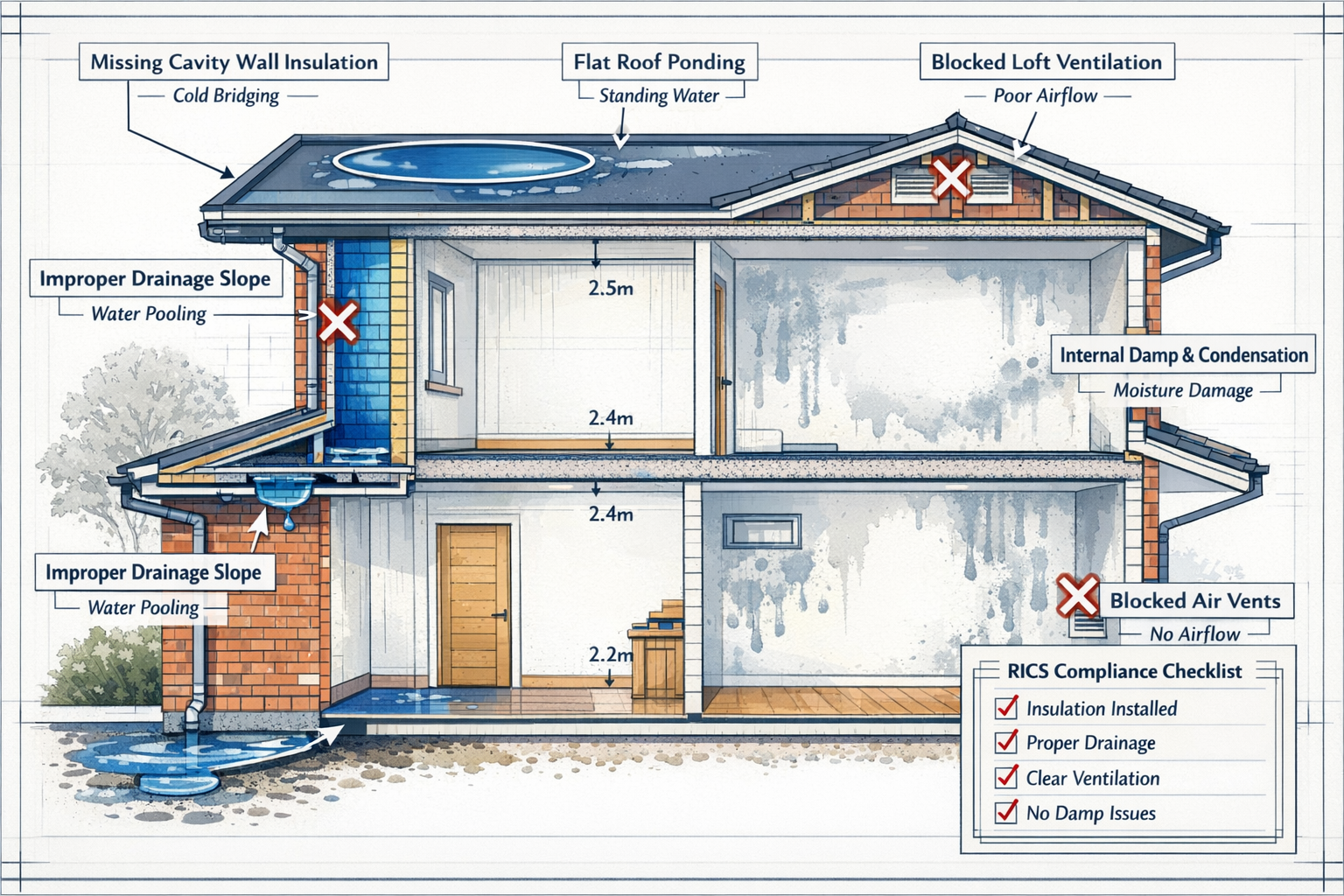
Poor drainage design represents one of the most common yet overlooked defects in modern construction. Level 3 surveys routinely uncover:
- Inadequate falls in drainage pipes causing water backup
- Blocked gullies from construction debris left in systems
- Mis-connections where foul and surface water systems are incorrectly joined
- Settlement issues around inspection chambers and manholes
- Inadequate soakaway capacity for surface water disposal
These problems often don't manifest immediately but can cause significant damage over time, including flooding, subsidence risk, and structural movement. For properties showing signs of ground-related issues, a subsidence survey may be recommended as a follow-up investigation.
Thermal Performance and Ventilation Problems
Modern building regulations demand high thermal efficiency, yet construction shortcuts frequently compromise performance:
- Cold bridging at junctions between walls, floors, and roofs
- Missing or inadequate insulation in cavity walls and roof spaces
- Thermal bypass where insulation layers are incomplete
- Condensation issues from poor ventilation design
- Air leakage through unsealed penetrations and joints
These defects not only increase energy costs but can lead to mold growth, damp damage, and unhealthy indoor air quality. Thermal imaging equipment used during Level 3 surveys can identify these invisible problems before they cause visible damage.
Roofing Failures and Water Ingress
Flat roof installations on modern developments present particular challenges:
- Ponding water from inadequate falls or membrane sagging
- Detailing failures at upstands, outlets, and penetrations
- Membrane defects including blistering, splitting, or poor welding
- Inadequate edge details allowing wind uplift or water ingress
- Missing or defective flashing at roof-wall junctions
For comprehensive roof condition assessment, specialized roof surveys or drone roof surveys can provide detailed photographic evidence of defects that might otherwise go unnoticed.
Cladding and Fire Safety Documentation
Following the Grenfell tragedy, fire safety compliance has become paramount. Level 3 surveys examine:
- Cladding material specifications and fire ratings
- Cavity barriers and fire-stopping installation
- Compartmentation integrity between units
- Documentation completeness for Building Control approval
- Compliance with current regulations versus construction date requirements
Missing or inadequate documentation can affect property value, insurability, and saleability—making thorough investigation essential.
Joinery and Finishing Defects
While seemingly minor, joinery issues often indicate broader construction quality problems:
- Movement cracks around door and window frames
- Poor sealing allowing air and water infiltration
- Inadequate fixing of external joinery elements
- Thermal bridging at frame-to-wall junctions
- Condensation on poorly specified glazing units
A comprehensive snagging report can document these finishing defects alongside more serious structural concerns.
The 2026 Market Context: Why Level 3 Surveys Matter More Than Ever
Rising Transaction Volumes and Quality Pressures
The UK property market's 2026 recovery has created intense pressure on construction timelines. With transaction volumes rising and demand outstripping supply in many regions, builders face competing priorities between speed and quality. This environment increases the risk of construction shortcuts and inadequate supervision—making independent verification through Level 3 surveys more valuable than ever.
Recent changes to homebuying protocols have emphasized the importance of earlier inspections and comprehensive risk mitigation[4]. Buyers who commission Level 3 surveys gain crucial leverage in negotiations and protection against defects that might otherwise remain hidden until after purchase completion.
The Warranty Coverage Gap
Builder warranties typically provide:
- 2 years for non-structural defects
- 10 years for major structural problems
- Limited coverage for design versus workmanship issues
- Exclusions for items considered maintenance or wear-and-tear
This coverage structure creates a dangerous gap: many latent defects don't become apparent until years 3-7, after initial warranty protection expires but before major structural guarantees would apply. Level 3 surveys identify these time-bomb issues while options for remedy still exist.
Strengthening Your Position in Warranty Disputes
When warranty claims arise, providers often challenge whether defects constitute covered issues. Independent Level 3 survey evidence transforms these disputes by:
✅ Establishing baseline condition with professional documentation
✅ Providing technical analysis of defect causes and implications
✅ Demonstrating non-compliance with building regulations or standards
✅ Supporting cost estimates for remedial works
✅ Creating accountability through independent professional opinion
For specific defects requiring targeted investigation, a specific defect report can provide focused technical analysis to support warranty claims.
The Level 3 Survey Process for New Build Warranty Claims
Pre-Survey Preparation
Maximizing the value of a Level 3 survey requires proper preparation:
- Gather documentation: Building Control certificates, warranty documents, floor plans, and specifications
- Note concerns: Document any issues you've observed, however minor
- Access arrangements: Ensure surveyor can access all areas including lofts, garages, and external spaces
- Timing considerations: Commission surveys before warranty periods expire
- Weather planning: Some defects only manifest in certain conditions
The Inspection Process
A comprehensive Level 3 survey for new build properties typically includes:
Visual Inspection
- External envelope examination
- Internal room-by-room assessment
- Roof space investigation
- Below-ground drainage testing (where accessible)
- Services and utilities review
Technical Testing
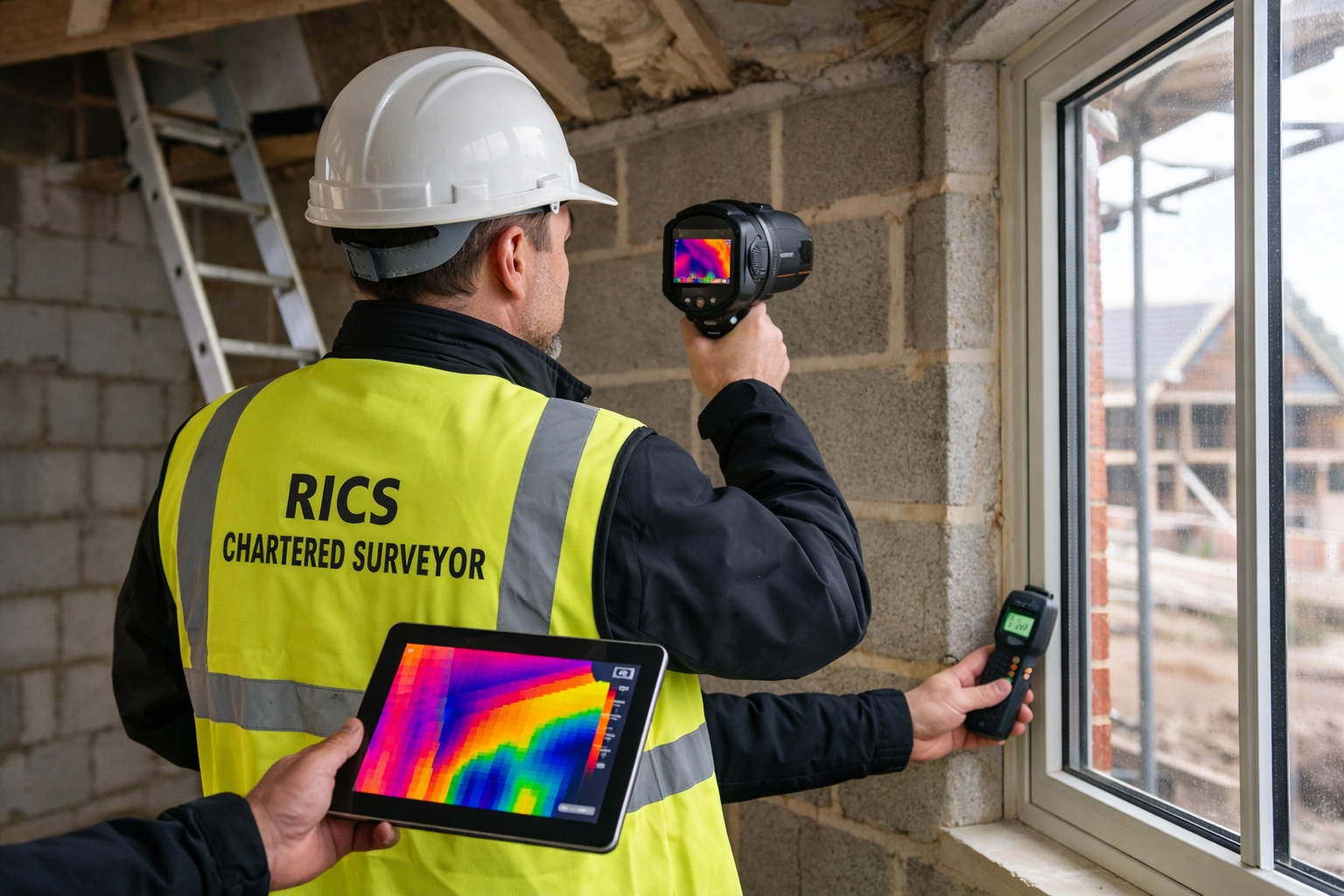
- Moisture meter readings at key locations
- Thermal imaging for insulation defects
- Level checks for drainage falls
- Opening up investigations (if authorized)
- Photographic documentation throughout
Documentation Review
- Building Control approval verification
- Warranty terms and conditions analysis
- Compliance certificate examination
- Fire safety documentation check
- Energy Performance Certificate assessment
The Survey Report
Level 3 survey reports provide:
📋 Executive summary highlighting critical issues
📋 Detailed findings organized by building element
📋 Photographic evidence with annotations
📋 Technical explanations of defect causes and implications
📋 Repair recommendations with urgency ratings
📋 Cost guidance for remedial works
📋 Maintenance advice for ongoing property care
This comprehensive documentation serves multiple purposes: informing your purchase decision, supporting price negotiations, guiding warranty claims, and planning future maintenance.
Maximizing the Value of Level 3 Surveys in Warranty Claims
Timing Your Survey Strategically
Optimal timing for Level 3 surveys on new build properties:
- Before purchase: Maximum negotiation leverage and informed decision-making
- Year 1-2: Document baseline condition while initial warranty active
- Year 6-8: Identify emerging issues before 10-year structural warranty expires
- Before resale: Demonstrate property condition to prospective buyers
- When issues suspected: Provide evidence for warranty claims or legal action
Integrating Survey Findings with Warranty Claims
To maximize claim success:
- Review warranty terms carefully to understand coverage and exclusions
- Cross-reference survey findings with warranty covered items
- Notify warranty provider promptly within required timeframes
- Provide complete documentation including survey report and photographs
- Request specific remedies based on surveyor recommendations
- Escalate systematically if initial responses are inadequate
- Consider independent expert evidence if disputes arise
Professional building surveyor services can provide ongoing support throughout the claims process, including expert witness testimony if legal action becomes necessary.
Beyond Warranties: Additional Protection Strategies
Level 3 surveys support multiple protection strategies:
Legal Remedies
- Evidence for breach of contract claims
- Support for negligence actions against builders
- Documentation for adjudication or arbitration
- Expert witness foundation for litigation
Insurance Claims
- Professional documentation of defects
- Causation analysis for damage events
- Cost substantiation for repairs
- Timeline establishment for policy coverage
Regulatory Complaints
- Evidence for Building Control enforcement
- Support for NHBC or warranty provider complaints
- Documentation for professional body referrals
- Basis for consumer protection actions
Selecting the Right Surveyor for New Build Warranty Claims
Essential Qualifications and Experience
When commissioning Level 3 surveys for warranty claim purposes, prioritize surveyors with:
✓ RICS accreditation (Chartered status)
✓ Building survey specialization rather than valuation focus
✓ New build experience understanding modern construction methods
✓ Defect investigation expertise including thermal imaging and moisture testing
✓ Warranty claim experience familiar with NHBC and similar schemes
✓ Expert witness capability if legal proceedings become necessary
✓ Professional indemnity insurance providing additional protection
Questions to Ask Prospective Surveyors
Before commissioning a Level 3 survey, ask:
- How many new build surveys have you conducted in the past year?
- What specialist equipment do you use for defect detection?
- Can you provide examples of warranty claims your surveys have supported?
- What is your typical report turnaround time?
- Do you offer post-survey consultation to discuss findings?
- Can you provide expert witness services if disputes escalate?
- What is included in your standard fee versus additional costs?
Understanding Survey Limitations
Even comprehensive Level 3 surveys have boundaries:
⚠️ Non-invasive inspection: Surveyors cannot open up concealed areas without authorization
⚠️ Visual assessment: Some defects remain hidden until failure occurs
⚠️ Weather dependency: Certain issues only manifest in specific conditions
⚠️ Access limitations: Inaccessible areas cannot be fully assessed
⚠️ Specialist referrals: Complex issues may require additional expert investigation
Understanding these limitations helps set realistic expectations while recognizing the substantial value Level 3 surveys provide.
The Future of New Build Quality Assurance in 2026 and Beyond
Regulatory Evolution
The UK construction industry faces increasing scrutiny following high-profile building safety failures. Anticipated developments include:
- Enhanced Building Control requirements for new developments
- Stricter warranty provider standards and inspection protocols
- Improved fire safety documentation and verification processes
- Greater accountability for developers and contractors
- Consumer protection strengthening through regulatory reform
These changes will likely increase the importance of independent verification through Level 3 surveys as buyers seek assurance beyond minimum regulatory compliance.
Technology Integration
Modern survey practice increasingly incorporates advanced technology:
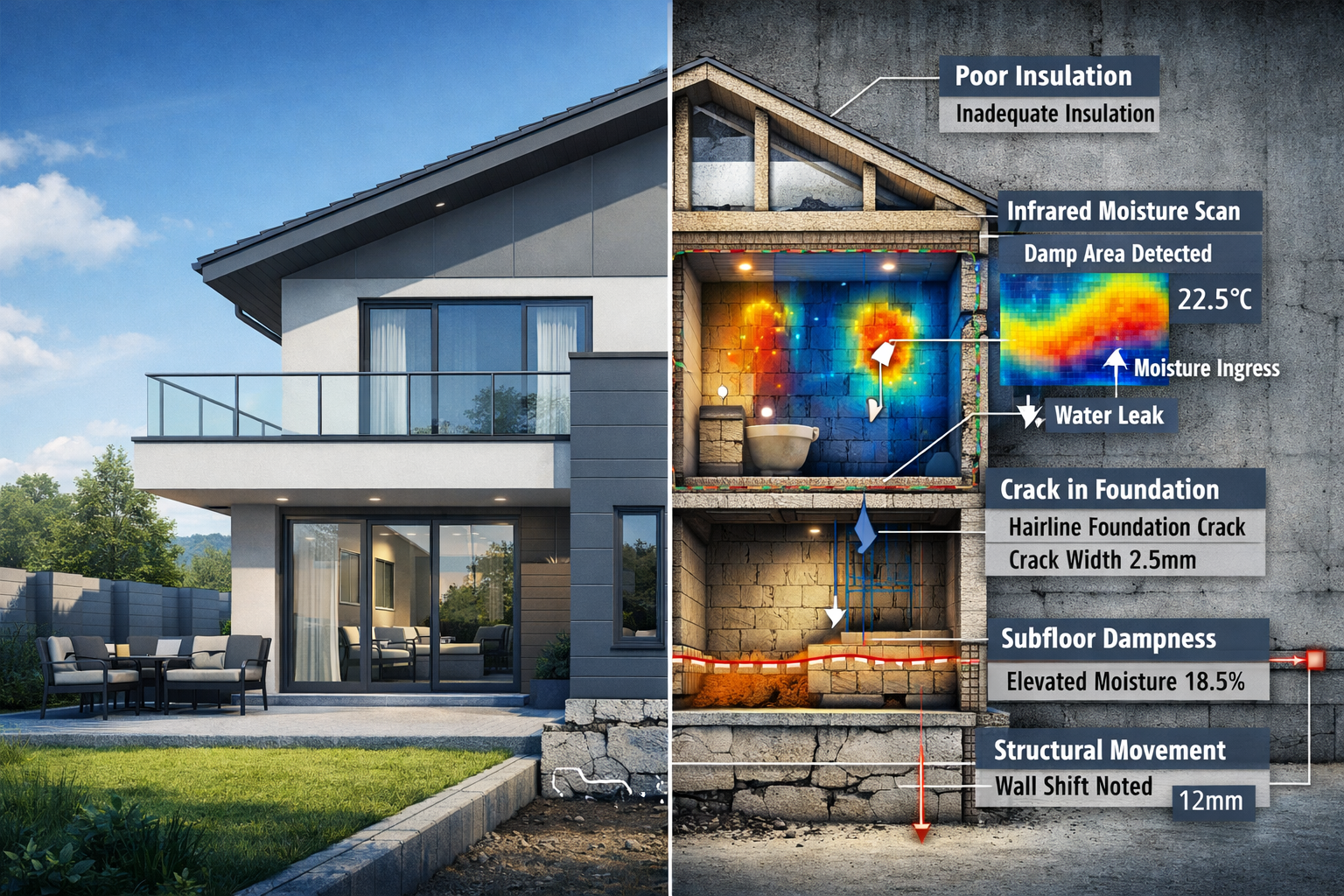
- Thermal imaging cameras detecting insulation defects and air leakage
- Moisture meters identifying hidden damp and water ingress
- Drone surveys providing safe roof and chimney inspection
- 3D scanning creating detailed property records
- Digital reporting platforms enabling interactive findings review
These tools enhance defect detection capabilities while providing more compelling evidence for warranty claims.
Market Transparency Improvements
Growing consumer awareness and regulatory pressure are driving improvements in new build quality disclosure:
- Pre-completion snagging becoming standard practice
- Independent quality certification schemes gaining traction
- Enhanced warranty disclosure requirements for developers
- Consumer review platforms increasing accountability
- Professional body enforcement of construction standards
Despite these positive trends, independent Level 3 surveys remain essential for protecting individual buyer interests.
Conclusion: Protecting Your Investment Through Comprehensive Survey Intelligence
As 2026's property market recovery accelerates transaction volumes, the importance of Level 3 Surveys for New Build Warranty Claims: Spotting Latent Defects in 2026's Rising Transaction Volumes has never been more critical. While builder warranties provide baseline protection, they cannot replace the comprehensive defect identification and independent evidence that RICS Level 3 surveys deliver.
The latent defects commonly found in modern construction—from thermal bridging and drainage failures to fire safety documentation gaps—often remain invisible until they cause significant damage or financial loss. By investing in professional survey intelligence before purchase, during early ownership, or when issues emerge, property owners gain:
🔑 Informed decision-making based on comprehensive condition understanding
🔑 Negotiation leverage supported by professional evidence
🔑 Warranty claim strength through independent technical documentation
🔑 Long-term cost avoidance by identifying issues before they escalate
🔑 Peace of mind knowing property condition has been professionally verified
Take Action Today
Don't wait for defects to manifest or warranty periods to expire. Consider these immediate steps:
- Commission a Level 3 survey if purchasing a new build or experiencing concerns with a recent purchase
- Review existing warranty coverage to understand protection gaps and timeframes
- Document any observed issues with photographs and written descriptions
- Consult qualified professionals about specific concerns or emerging problems
- Act within warranty timeframes to maximize claim opportunities
The modest investment in a comprehensive Level 3 survey provides protection worth many times its cost—identifying hidden defects, strengthening warranty claims, and ensuring your property investment remains sound for years to come.
For expert guidance on property condition assessment and warranty claim support, contact experienced RICS chartered surveyors who understand the complexities of modern construction and the evidence required to protect your interests in 2026's dynamic property market.
References
[1] Home Warranty Survey – https://www.thisoldhouse.com/home-finances/home-warranty-survey
[2] Survey Under 10 Years 2025 – https://surveymatch.co.uk/survey-under-10-years-2025/
[3] Understanding The Difference Between A Level 2 And Level 3 Property Survey – https://www.simonlevy.net/understanding-the-difference-between-a-level-2-and-level-3-property-survey
[4] Building Surveys Under New Homebuying Rules Earlier Inspections And Risk Mitigation In 2026 – https://nottinghillsurveyors.com/blog/building-surveys-under-new-homebuying-rules-earlier-inspections-and-risk-mitigation-in-2026
[5] 2026 Us Property Claims Satisfaction Study – https://www.jdpower.com/business/press-releases/2026-us-property-claims-satisfaction-study